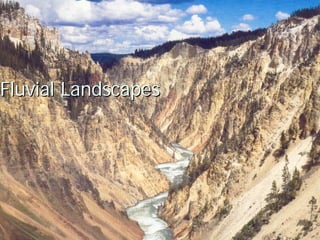
Fluvial Landscapes
Overview
Fluvial Processes
  Basel Level
  Down-cutting and meandering
Drainage
  Watersheds
  Drainage Patterns
Stream flow and fluvial processes
Meandering Streams
Floodplains
Flooding
Base Level and Fluvial Landscapes
 A Profound Concept: Water flows downhill
   Abrades and erodes the landscape as it happens
      Abrasion = erosion process
      Creates erosional landforms – drainage patterns, cut banks
   Carries eroded material downstream as either dissolved,
   suspended or bed load
      Load = Transport
   Load becomes deposited, creating depositional landforms
      Depositional landforms: Deltas, point bars
 Base Level: The lowest level that a river can erode
 down to.
   Gravity sets the water in motion
   Ultimately, the water is trying to reach sea level
   Local impediments to flow create local base levels
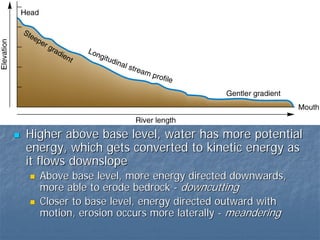
Higher above base level, water has more potential
energy, which gets converted to kinetic energy as
it flows downslope
  Above base level, more energy directed downwards,
  more able to erode bedrock - downcutting
  Closer to base level, energy directed outward with
  motion, erosion occurs more laterally - meandering
Landforms associated with rivers vary by how
high above base level the river is
  Above base level
     Steep V-shaped valley walls
     Narrow stream channels
     Distinct drainage patterns based on underlying
     geography
     Downcutting (erosion) and transportation are the main
     geomorphological forces acting
  Closer to base level
     Wide stream channels (floodplains)
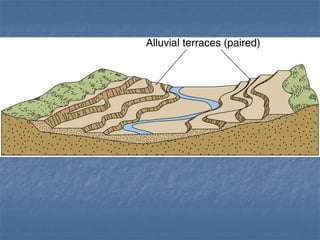
     Valley walls characterized by terracing
     Meandering river patterns, river deltas
     lateral abrasion, transport and deposition
  Tectonic forces can cause areas close to base level
  to become uplifted
     Meandering gives way to downcutting
     Entrenched meanders, canyons
Drainage
When rain falls on a landscape, it drains
from higher to lower elevations
  erodes surfaces as it happens
    largely an erosional process
    Occurs above base level - downcutting
  over time, forms regions of consistent
  drainage patterns that concentrate runoff
  into specific streams and rivers
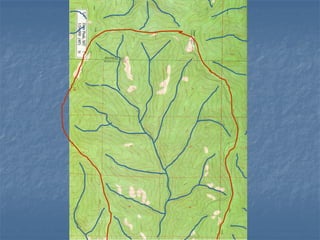
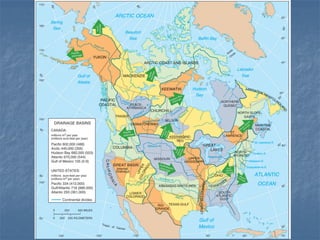
    watersheds or drainage basins
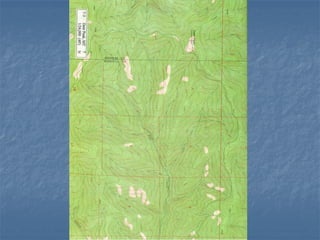
    drainage pattern
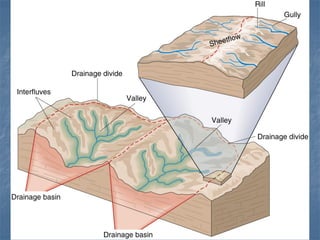
Watersheds
 topography directs flow of surface water
 into various downslope areas
 at high points in the topography, surface
 flow separates down different slopes, and
 channels water into separate drainage
 systems
   these high points are called drainage divides or
   interfluves
   drainage divides form the boundaries between
   watersheds
Drainage Patterns
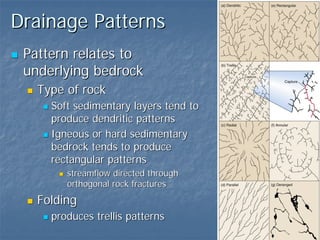
 Pattern relates to
 underlying bedrock
   Type of rock
     Soft sedimentary layers tend to
     produce dendritic patterns
     Igneous or hard sedimentary
     bedrock tends to produce
     rectangular patterns
        streamflow directed through
        orthogonal rock fractures
   Folding
     produces trellis patterns
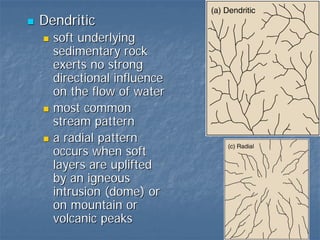
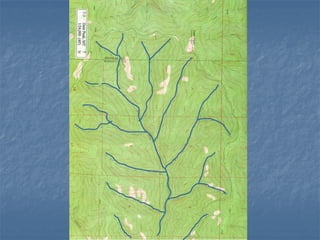
Dendritic
  soft underlying
  sedimentary rock
  exerts no strong
  directional influence
  on the flow of water
  most common
  stream pattern
  a radial pattern
  occurs when soft
  layers are uplifted
  by an igneous
  intrusion (dome) or
  on mountain or
  volcanic peaks
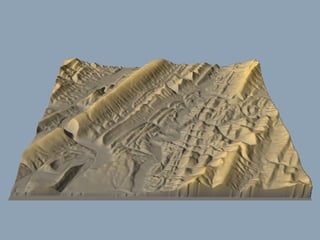
Trellis
  Occurs where there is intense folding
     antiforms and synforms
     alternating layers of soft and resistant rock
  Common in Appalachia
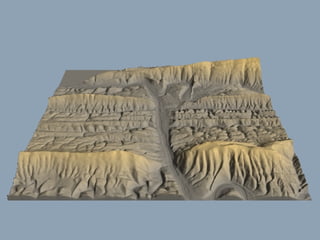
Rectangular
  Occurs on areas with
  resistant bedrock
  Surface flow follows
  rectilinear fracture
  pattern of the rock
  produces an annular
  pattern when this
  occurs on a dome
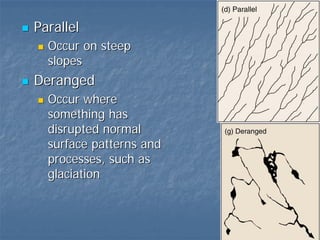
Parallel
  Occur on steep
  slopes
Deranged
  Occur where
  something has
  disrupted normal
  surface patterns and
  processes, such as
  glaciation
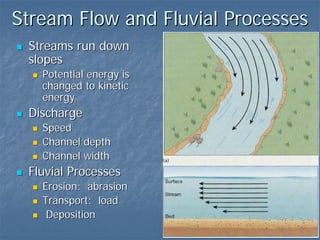
Stream Flow and Fluvial Processes
 Streams run down
 slopes
   Potential energy is
   changed to kinetic
   energy
 Discharge
   Speed
   Channel depth
   Channel width
 Fluvial Processes
   Erosion: abrasion
   Transport: load
    Deposition
Load
Dissolved Load
Suspended Load
  Greatest part
Bed Load
  Traction
  Saltation
General Principle: The greater the speed, the
more load a stream can carry
  Slowing causes deposition
  Largest and heaviest materials deposited first
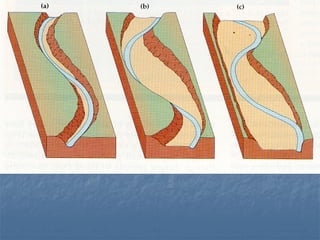
Meandering Streams
Erosion and
Deposition
Undercut bank and
point bar
Floodplain

Formation
  Widening of valley through meandering
  process
Features
  Floodplain
  Natural levees
  Oxbow lakes and swamps
  Meander scars
  Terraces
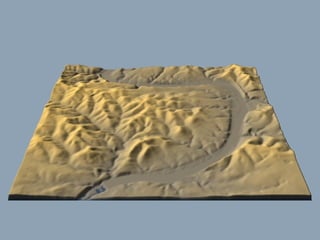
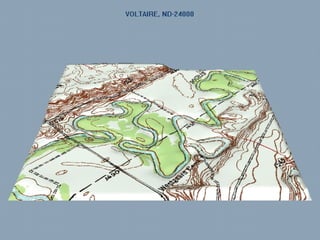
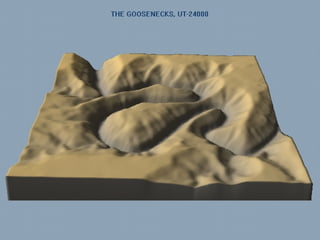
Entrenched Meanders
Landscape was once near base
level, and meanders formed.
Later, tectonic uplift caused the
river to be raised above base
level, recommencing down-
cutting, and carving these
canyons
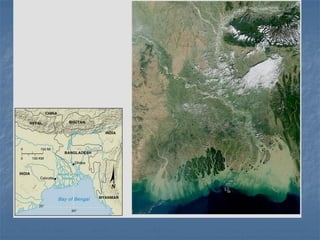
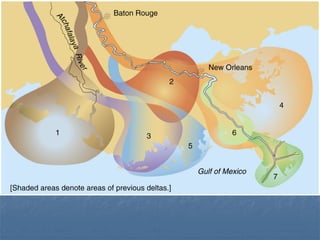
Deltas
Deposition
  River reaches sea level (base level)
  Velocity decreases dramatically
  Load is deposited
  Distributaries
Flooding
Rating (10-year flood, 100-year flood, etc)
  an expression of probability (10%, 1%, resp.)
Contributing factors
  Rainfall, of course
     Oscillations, hurricanes
  Human activities that increase runoff and reduce
  soil moisture storage capacity
     urbanization (increasing paved surfaces)
     agricultural practices
Midwest Flood of 1993, North Carolina flood
of 1999
  1000 year flood events (0.1% probability of
  occurring)
  Contributed to formations of “Dead Zones”
     Dead Zone (The Zone of Hypoxia in the Gulf of Mexico)
     Pamlico Sound, NC
Fluvial Geomorphology

Fluvial Geomorphology

  • 1.
  • 2.
    Overview Fluvial Processes Basel Level Down-cutting and meandering Drainage Watersheds Drainage Patterns Stream flow and fluvial processes Meandering Streams Floodplains Flooding
  • 3.
    Base Level andFluvial Landscapes A Profound Concept: Water flows downhill Abrades and erodes the landscape as it happens Abrasion = erosion process Creates erosional landforms – drainage patterns, cut banks Carries eroded material downstream as either dissolved, suspended or bed load Load = Transport Load becomes deposited, creating depositional landforms Depositional landforms: Deltas, point bars Base Level: The lowest level that a river can erode down to. Gravity sets the water in motion Ultimately, the water is trying to reach sea level Local impediments to flow create local base levels
  • 4.
    Higher above baselevel, water has more potential energy, which gets converted to kinetic energy as it flows downslope Above base level, more energy directed downwards, more able to erode bedrock - downcutting Closer to base level, energy directed outward with motion, erosion occurs more laterally - meandering
  • 6.
    Landforms associated withrivers vary by how high above base level the river is Above base level Steep V-shaped valley walls Narrow stream channels Distinct drainage patterns based on underlying geography Downcutting (erosion) and transportation are the main geomorphological forces acting Closer to base level Wide stream channels (floodplains) Valley walls characterized by terracing Meandering river patterns, river deltas lateral abrasion, transport and deposition Tectonic forces can cause areas close to base level to become uplifted Meandering gives way to downcutting Entrenched meanders, canyons
  • 11.
    Drainage When rain fallson a landscape, it drains from higher to lower elevations erodes surfaces as it happens largely an erosional process Occurs above base level - downcutting over time, forms regions of consistent drainage patterns that concentrate runoff into specific streams and rivers watersheds or drainage basins drainage pattern
  • 12.
    Watersheds topography directsflow of surface water into various downslope areas at high points in the topography, surface flow separates down different slopes, and channels water into separate drainage systems these high points are called drainage divides or interfluves drainage divides form the boundaries between watersheds
  • 20.
    Drainage Patterns Patternrelates to underlying bedrock Type of rock Soft sedimentary layers tend to produce dendritic patterns Igneous or hard sedimentary bedrock tends to produce rectangular patterns streamflow directed through orthogonal rock fractures Folding produces trellis patterns
  • 21.
    Dendritic softunderlying sedimentary rock exerts no strong directional influence on the flow of water most common stream pattern a radial pattern occurs when soft layers are uplifted by an igneous intrusion (dome) or on mountain or volcanic peaks
  • 24.
    Trellis Occurswhere there is intense folding antiforms and synforms alternating layers of soft and resistant rock Common in Appalachia
  • 30.
    Rectangular Occurson areas with resistant bedrock Surface flow follows rectilinear fracture pattern of the rock produces an annular pattern when this occurs on a dome
  • 31.
    Parallel Occuron steep slopes Deranged Occur where something has disrupted normal surface patterns and processes, such as glaciation
  • 32.
    Stream Flow andFluvial Processes Streams run down slopes Potential energy is changed to kinetic energy Discharge Speed Channel depth Channel width Fluvial Processes Erosion: abrasion Transport: load Deposition
  • 34.
    Load Dissolved Load Suspended Load Greatest part Bed Load Traction Saltation General Principle: The greater the speed, the more load a stream can carry Slowing causes deposition Largest and heaviest materials deposited first
  • 35.
  • 37.
    Floodplain Formation Wideningof valley through meandering process Features Floodplain Natural levees Oxbow lakes and swamps Meander scars Terraces
  • 48.
    Entrenched Meanders Landscape wasonce near base level, and meanders formed. Later, tectonic uplift caused the river to be raised above base level, recommencing down- cutting, and carving these canyons
  • 53.
    Deltas Deposition Riverreaches sea level (base level) Velocity decreases dramatically Load is deposited Distributaries
  • 58.
    Flooding Rating (10-year flood,100-year flood, etc) an expression of probability (10%, 1%, resp.) Contributing factors Rainfall, of course Oscillations, hurricanes Human activities that increase runoff and reduce soil moisture storage capacity urbanization (increasing paved surfaces) agricultural practices Midwest Flood of 1993, North Carolina flood of 1999 1000 year flood events (0.1% probability of occurring) Contributed to formations of “Dead Zones” Dead Zone (The Zone of Hypoxia in the Gulf of Mexico) Pamlico Sound, NC