Hydrology & fluvial geomorphology Terms Flow in drainage basin Storm Hydrograph Water balance Human actions Flood
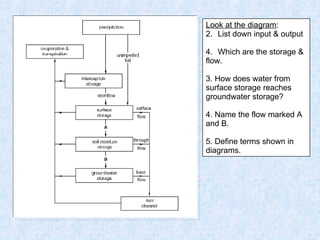
Look at the diagram : List down input & output  Which are the storage &  flow. 3. How does water from  surface storage reaches  groundwater storage? 4. Name the flow marked A  and B. 5. Define terms shown in diagrams.
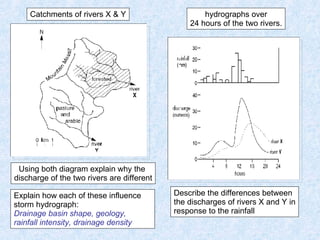
Describe the differences between  the discharges of rivers X and Y in response to the rainfall hydrographs over 24 hours of the two rivers. Catchments of rivers X & Y Using both diagram explain why the  discharge of the two rivers are different Explain how each of these influence  storm hydrograph: Drainage basin shape, geology,  rainfall intensity, drainage density
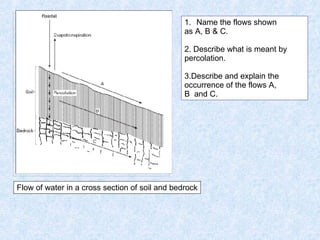
Flow of water in a cross section of soil and bedrock Name the flows shown  as A, B & C. 2. Describe what is meant by  percolation. 3.Describe and explain the  occurrence of the flows A,  B  and C.
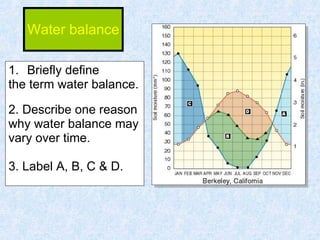
Water balance Briefly define  the term water balance. 2. Describe one reason  why water balance may  vary over time. 3. Label A, B, C & D.
Rivers River processes: erosion, transport & deposition Describe flows: helicoidal, laminar & turbulence flow. Landforms Urbanisation & river flows.
River erosion 1.  Briefly describe the processes by which rivers can erode their channels.    [8] 2.  Describe the general effects of erosion on the  shape  of the river channel.  [3]
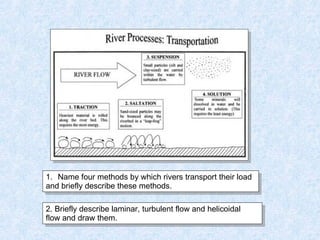
Name four   methods by which rivers transport their load  and briefly describe these methods. 2. Briefly describe laminar, turbulent flow and helicoidal  flow and draw them.
Hjustrom curve. 1.  Name the type of sediment that requires the lowest velocity to be  eroded . [1] 2.  Name the type of sediment that is likely to be  transported  at all velocities. [1] 3.  Describe and explain the relationship between  water velocity and the  erosion  of clay and sand particles. [4] 4.  Explain the variation in water velocity that is  required to  transport  and to  deposit sediments of different particle diameter. [4]
River deposition Describe what is river deposition and what  are the condition needed for it to occur.
landforms 1. Draw a labelled diagram to show each of the following landforms & explain how they are formed: Meandering Flood plain and levees. Delta (d) ox-bow lake (e) Water fall (f) Braided channel.
Flood Explain how river floods might be predicted. Giving examples, describe the methods which may be used to reduce the effects of flooding.  Describe the main features of river flood plains and explain why flood plains may present problems for human settlements.
Human activities on flow Suggest how human activities might affect flows within a river channel. How can changes in land use affect flows and stores in a drainage basin? How can the abstraction (removal) and the storage of water by humans affect flows and stores within a drainage basin.  Explain how urbanisation can affect river channel flows.

Hydrology & Fluvial Geomorphology

  • 1.
    Hydrology & fluvialgeomorphology Terms Flow in drainage basin Storm Hydrograph Water balance Human actions Flood
  • 2.
    Look at thediagram : List down input & output Which are the storage & flow. 3. How does water from surface storage reaches groundwater storage? 4. Name the flow marked A and B. 5. Define terms shown in diagrams.
  • 3.
    Describe the differencesbetween the discharges of rivers X and Y in response to the rainfall hydrographs over 24 hours of the two rivers. Catchments of rivers X & Y Using both diagram explain why the discharge of the two rivers are different Explain how each of these influence storm hydrograph: Drainage basin shape, geology, rainfall intensity, drainage density
  • 4.
    Flow of waterin a cross section of soil and bedrock Name the flows shown as A, B & C. 2. Describe what is meant by percolation. 3.Describe and explain the occurrence of the flows A, B and C.
  • 5.
    Water balance Brieflydefine the term water balance. 2. Describe one reason why water balance may vary over time. 3. Label A, B, C & D.
  • 6.
    Rivers River processes:erosion, transport & deposition Describe flows: helicoidal, laminar & turbulence flow. Landforms Urbanisation & river flows.
  • 7.
    River erosion 1. Briefly describe the processes by which rivers can erode their channels. [8] 2. Describe the general effects of erosion on the shape of the river channel. [3]
  • 8.
    Name four methods by which rivers transport their load and briefly describe these methods. 2. Briefly describe laminar, turbulent flow and helicoidal flow and draw them.
  • 9.
    Hjustrom curve. 1. Name the type of sediment that requires the lowest velocity to be eroded . [1] 2. Name the type of sediment that is likely to be transported at all velocities. [1] 3. Describe and explain the relationship between water velocity and the erosion of clay and sand particles. [4] 4. Explain the variation in water velocity that is required to transport and to deposit sediments of different particle diameter. [4]
  • 10.
    River deposition Describewhat is river deposition and what are the condition needed for it to occur.
  • 11.
    landforms 1. Drawa labelled diagram to show each of the following landforms & explain how they are formed: Meandering Flood plain and levees. Delta (d) ox-bow lake (e) Water fall (f) Braided channel.
  • 12.
    Flood Explain howriver floods might be predicted. Giving examples, describe the methods which may be used to reduce the effects of flooding. Describe the main features of river flood plains and explain why flood plains may present problems for human settlements.
  • 13.
    Human activities onflow Suggest how human activities might affect flows within a river channel. How can changes in land use affect flows and stores in a drainage basin? How can the abstraction (removal) and the storage of water by humans affect flows and stores within a drainage basin. Explain how urbanisation can affect river channel flows.