Mass Movement
Overview
Geomorphology
Slope Processes
Mass Movement (Mass Wasting)
Geomorphology
The science of landforms
  Origin
  Processes of change
  Distribution on the planet
Landforms are the product of
  Forces that build up the landforms
  Forces that wear it down or modify it
    Denudation
       weathering
       mass movement
       erosion, transportation and deposition
           Gravity and moving air, water, waves, and ice
Dynamic Equilibrium Model
Energy constantly flowing through landscapes
  Potential energy: energy of position (gravity): uplift
  Kinetic energy: energy of motion: hydrologic cycle
  Heat energy: solar energy: sun
  Chemical energy: from atmosphere and within the crust
Landforms are a balance between stabilizing forces
(friction, inertia, cohesion) and destabilizing forces
that can set things in motion
Cycle
  Equilibrium stability
  A destabilizing event
  Adjustment
  New equilibrium stability
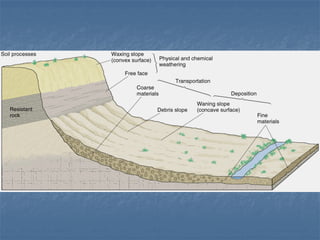
Slope
Processes

Erosion:
weathering
Transportation:
Mass wasting
Deposition:
Debris slope,
talus cone
Mass Movements
Also called: Mass Wasting
Weathering prepares material for movement
Gravity sets material in motion
  Steepness of slope
  Friction and cohesive nature of the material
  Angle of repose
  Amount of moisture available
Characteristics of a particular mass movement
depend on speed of movement and amount of
water mixed with the material
Fall, slide, flow, creep
Angle of Repose
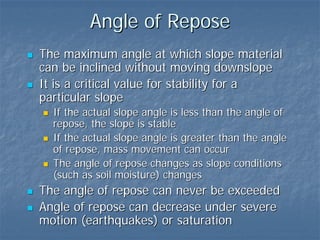
The maximum angle at which slope material
can be inclined without moving downslope
It is a critical value for stability for a
particular slope
  If the actual slope angle is less than the angle of
  repose, the slope is stable
  If the actual slope angle is greater than the angle
  of repose, mass movement can occur
  The angle of repose changes as slope conditions
  (such as soil moisture) changes
The angle of repose can never be exceeded
Angle of repose can decrease under severe
motion (earthquakes) or saturation
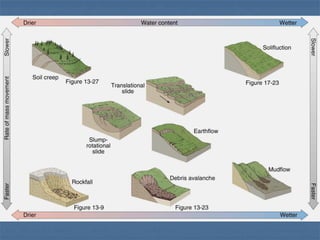
Types of Mass Movements
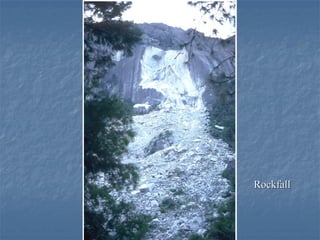
Rockfall
  Loose rocks fall through the air, accumulate in a talus cone
  High angle of repose
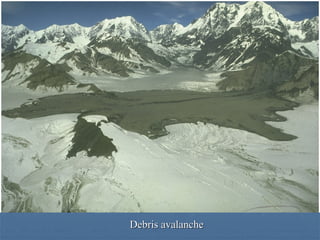
Debris avalanche
  Rocks, debris and soil
  Extremely high velocity
      Water and ice often fluidize debris
Landslide
  Unsaturated mass of bedrock and regolith that moves suddenly and
  rapidly
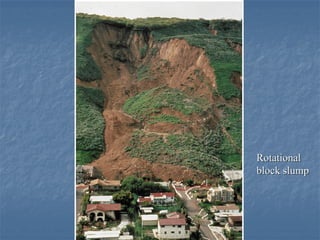
      Rotational slumping
      Translational slides
Flows
  earthflow
  mudflow
Creep: a persistent movement of soil down slope
Rockfall
Rotational
block slump
Debris
avalanche
Debris avalanche
Soil Creep

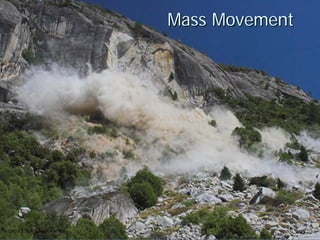
Mass Movement

  • 1.
  • 2.
  • 3.
    Geomorphology The science oflandforms Origin Processes of change Distribution on the planet Landforms are the product of Forces that build up the landforms Forces that wear it down or modify it Denudation weathering mass movement erosion, transportation and deposition Gravity and moving air, water, waves, and ice
  • 4.
    Dynamic Equilibrium Model Energyconstantly flowing through landscapes Potential energy: energy of position (gravity): uplift Kinetic energy: energy of motion: hydrologic cycle Heat energy: solar energy: sun Chemical energy: from atmosphere and within the crust Landforms are a balance between stabilizing forces (friction, inertia, cohesion) and destabilizing forces that can set things in motion Cycle Equilibrium stability A destabilizing event Adjustment New equilibrium stability
  • 5.
  • 8.
    Mass Movements Also called:Mass Wasting Weathering prepares material for movement Gravity sets material in motion Steepness of slope Friction and cohesive nature of the material Angle of repose Amount of moisture available Characteristics of a particular mass movement depend on speed of movement and amount of water mixed with the material Fall, slide, flow, creep
  • 9.
    Angle of Repose Themaximum angle at which slope material can be inclined without moving downslope It is a critical value for stability for a particular slope If the actual slope angle is less than the angle of repose, the slope is stable If the actual slope angle is greater than the angle of repose, mass movement can occur The angle of repose changes as slope conditions (such as soil moisture) changes The angle of repose can never be exceeded Angle of repose can decrease under severe motion (earthquakes) or saturation
  • 10.
    Types of MassMovements Rockfall Loose rocks fall through the air, accumulate in a talus cone High angle of repose Debris avalanche Rocks, debris and soil Extremely high velocity Water and ice often fluidize debris Landslide Unsaturated mass of bedrock and regolith that moves suddenly and rapidly Rotational slumping Translational slides Flows earthflow mudflow Creep: a persistent movement of soil down slope
  • 12.
  • 13.
  • 14.
  • 15.
  • 16.