Weathering
Weathering
Bedrock provides the parent material for soil and
mass movement on slopes
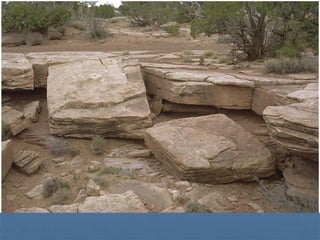
Joints (fractures) in the bedrock provide the
location for weathering to further break apart the
rock
  Joints fracture according to the properties of the bedrock
As bedrock weathers, it turns into regolith and
finer sediment
  A major constituent of soil
Types of weathering
  physical: dominant in dry, cool climates
     Produces gravel, sand and silt sized particles of soil
  chemical: dominant in wetter, warmer climates
     Produces silt and clay sized soil particles
  Typically operate together
Physical Weathering
Fragments and disintegrates rock without changing
its chemical composition
Types of physical weathering
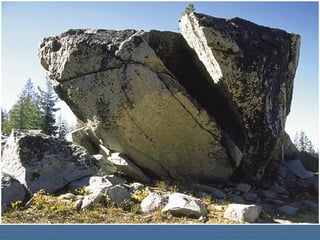
  Frost Action
     moisture in rock joints freeze and expand
     expansion forces rock apart
  Crystallization
     Evaporation of water in rock joints deposits salt crystals
     Accumulation of crystals exerts an outward pressure in the joint,
     forces rock apart
  Hydration
     Some minerals in rocks are capable of absorbing water
     Gypsum: CaSO4·H2O
     Hydration of crystals cause them to expand, forcing rock apart
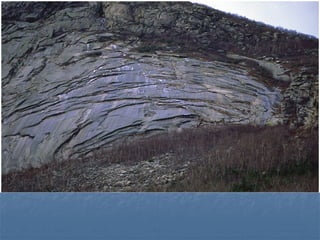
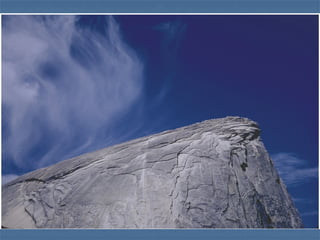
  Pressure-release jointing (exfoliation)
     Erosion of sedimentary layers over igneous intrusions removes
     weight, and outer layers of igneous rock break off in sheets
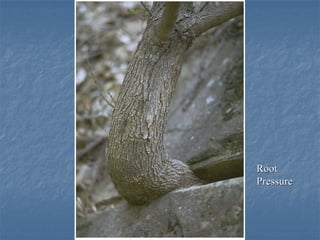
Root
Pressure
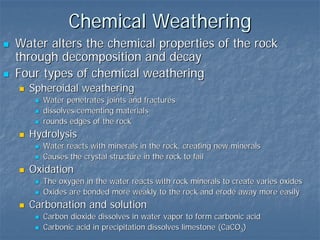
Chemical Weathering
Water alters the chemical properties of the rock
through decomposition and decay
Four types of chemical weathering
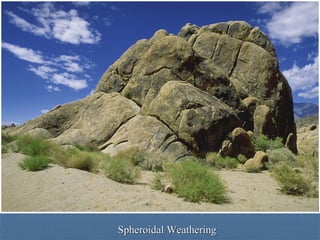
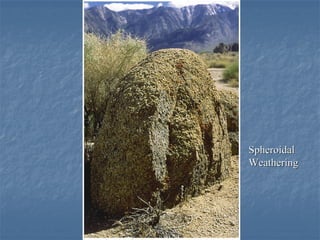
  Spheroidal weathering
     Water penetrates joints and fractures
     dissolves cementing materials
     rounds edges of the rock
  Hydrolysis
     Water reacts with minerals in the rock, creating new minerals
     Causes the crystal structure in the rock to fail
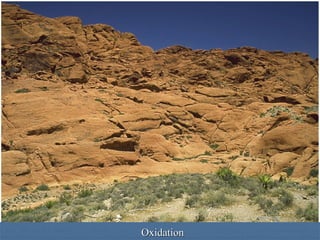
  Oxidation
     The oxygen in the water reacts with rock minerals to create varies oxides
     Oxides are bonded more weakly to the rock and erode away more easily
  Carbonation and solution
     Carbon dioxide dissolves in water vapor to form carbonic acid
     Carbonic acid in precipitation dissolves limestone (CaCO3)
Spheroidal Weathering
Spheroidal
Weathering
Oxidation

Weathering

  • 1.
  • 2.
    Weathering Bedrock provides theparent material for soil and mass movement on slopes Joints (fractures) in the bedrock provide the location for weathering to further break apart the rock Joints fracture according to the properties of the bedrock As bedrock weathers, it turns into regolith and finer sediment A major constituent of soil Types of weathering physical: dominant in dry, cool climates Produces gravel, sand and silt sized particles of soil chemical: dominant in wetter, warmer climates Produces silt and clay sized soil particles Typically operate together
  • 3.
    Physical Weathering Fragments anddisintegrates rock without changing its chemical composition Types of physical weathering Frost Action moisture in rock joints freeze and expand expansion forces rock apart Crystallization Evaporation of water in rock joints deposits salt crystals Accumulation of crystals exerts an outward pressure in the joint, forces rock apart Hydration Some minerals in rocks are capable of absorbing water Gypsum: CaSO4·H2O Hydration of crystals cause them to expand, forcing rock apart Pressure-release jointing (exfoliation) Erosion of sedimentary layers over igneous intrusions removes weight, and outer layers of igneous rock break off in sheets
  • 8.
  • 9.
    Chemical Weathering Water altersthe chemical properties of the rock through decomposition and decay Four types of chemical weathering Spheroidal weathering Water penetrates joints and fractures dissolves cementing materials rounds edges of the rock Hydrolysis Water reacts with minerals in the rock, creating new minerals Causes the crystal structure in the rock to fail Oxidation The oxygen in the water reacts with rock minerals to create varies oxides Oxides are bonded more weakly to the rock and erode away more easily Carbonation and solution Carbon dioxide dissolves in water vapor to form carbonic acid Carbonic acid in precipitation dissolves limestone (CaCO3)
  • 10.
  • 11.
  • 12.