A collaboration of:
Design Thinking:
A More Insightful Approach to Problem-Solving
Alice Dawson
SAP
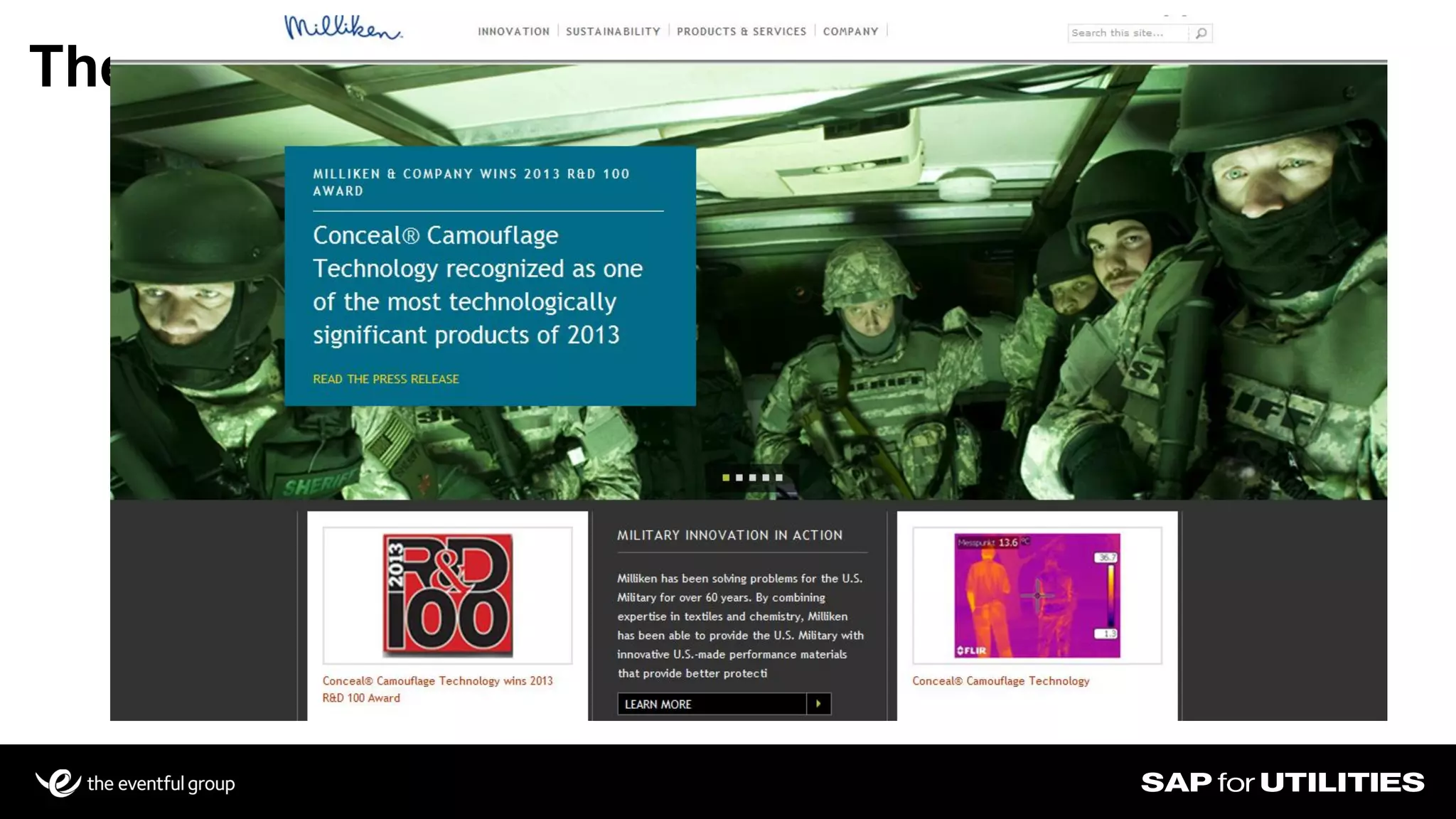
The “Never Say Never” Hallway
“Heavier-than-air flying machines are
impossible.”
- Lord Kelvin, president, Royal Society, 1895
“The concept is interesting and well-formed, but
in order to earn better than a ‘C’, the idea must be
feasible.”
- Yale University management professor in response to Fred Smith’s
paper proposing reliable overnight delivery service.
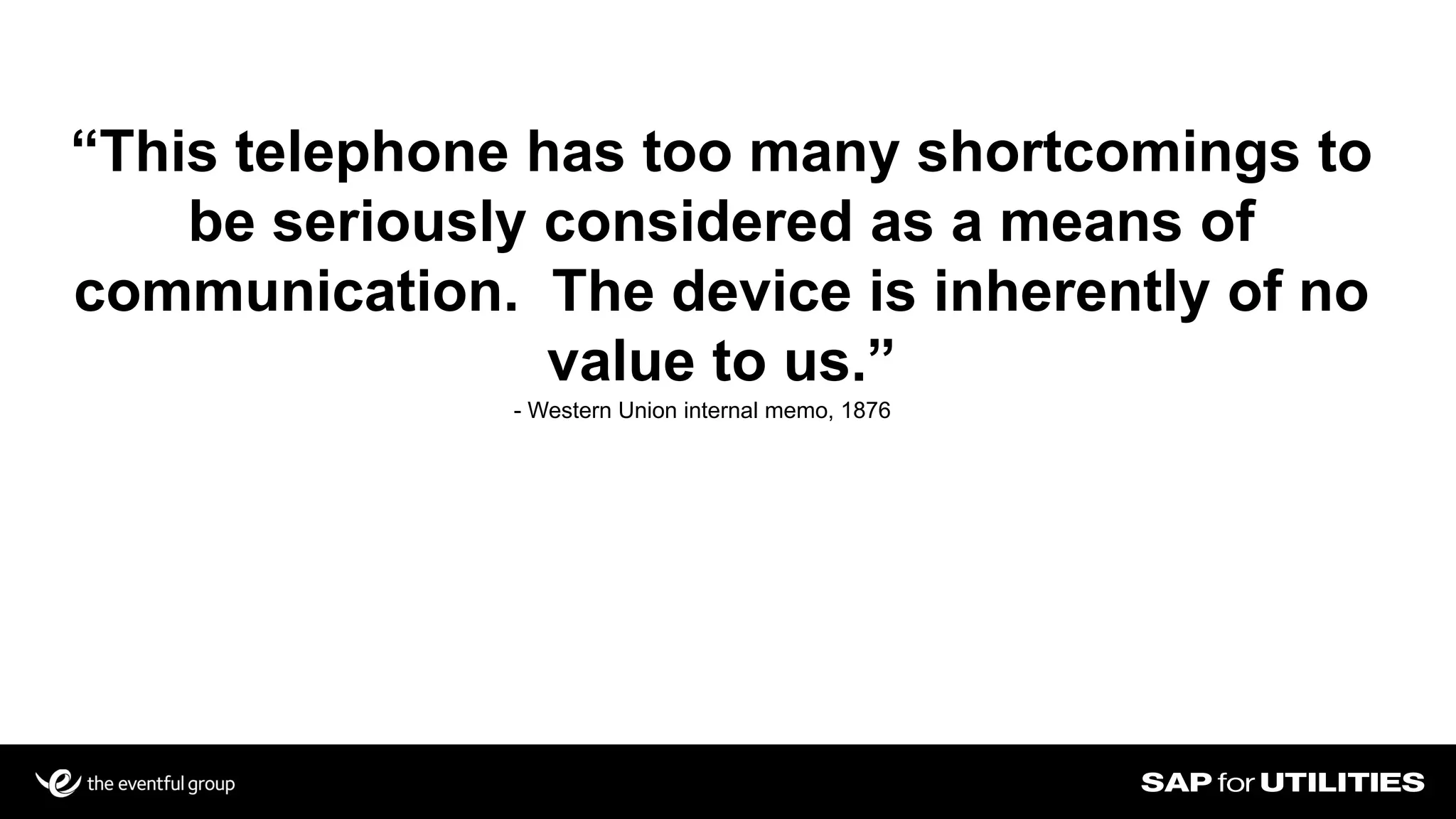
“This telephone has too many shortcomings to
be seriously considered as a means of
communication. The device is inherently of no
value to us.”
- Western Union internal memo, 1876
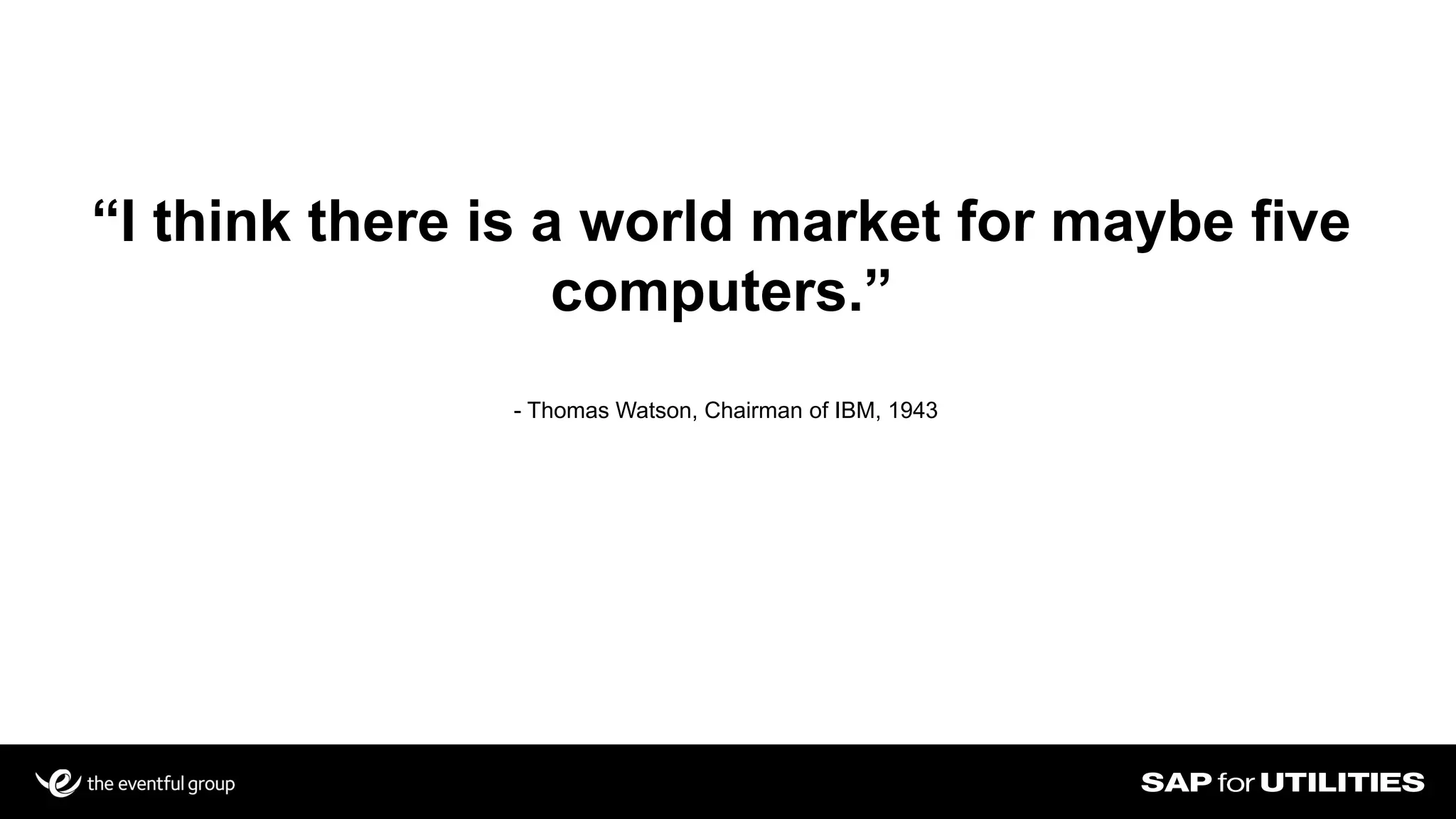
“I think there is a world market for maybe five
computers.”
- Thomas Watson, Chairman of IBM, 1943
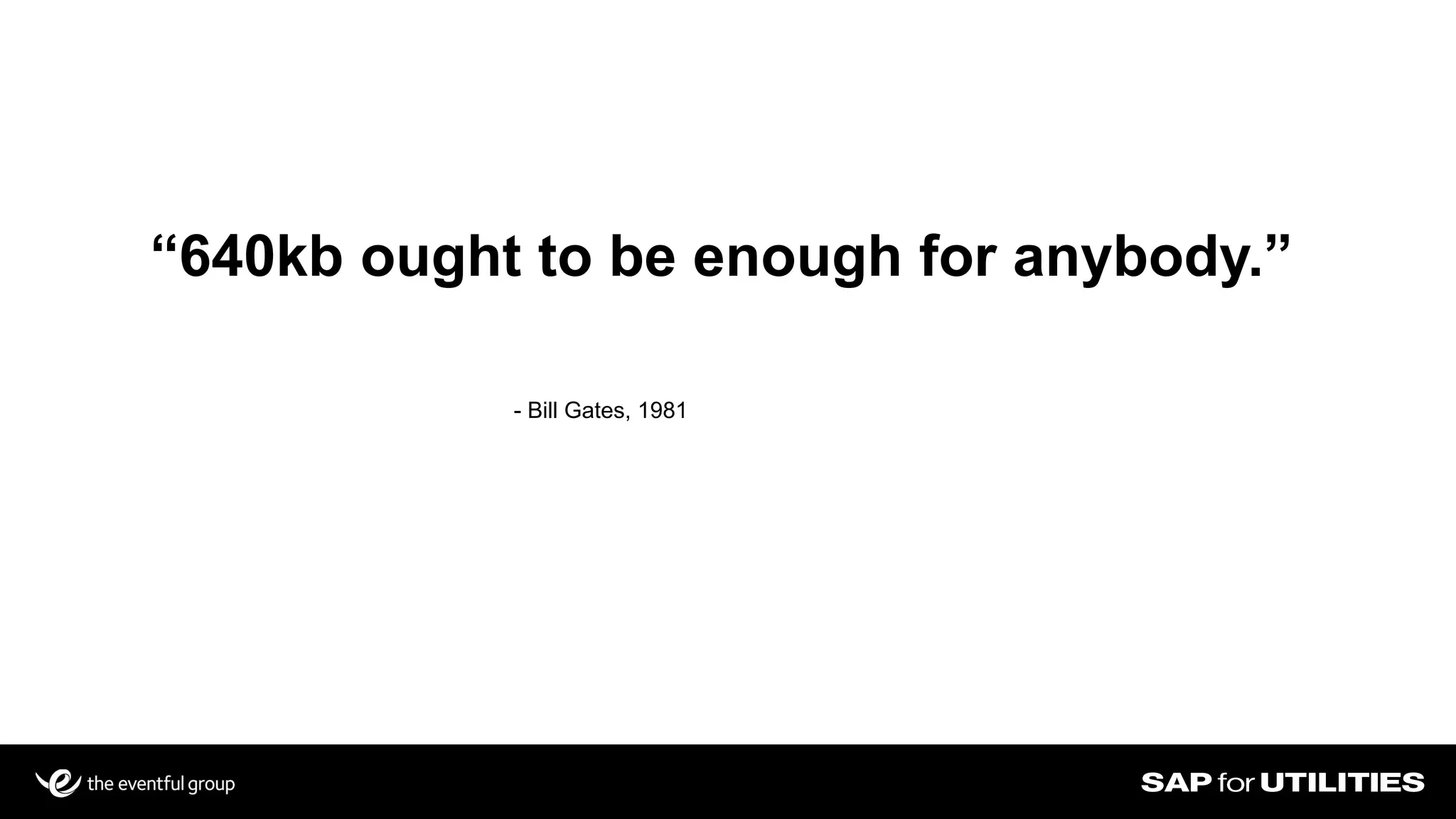
“640kb ought to be enough for anybody.”
- Bill Gates, 1981
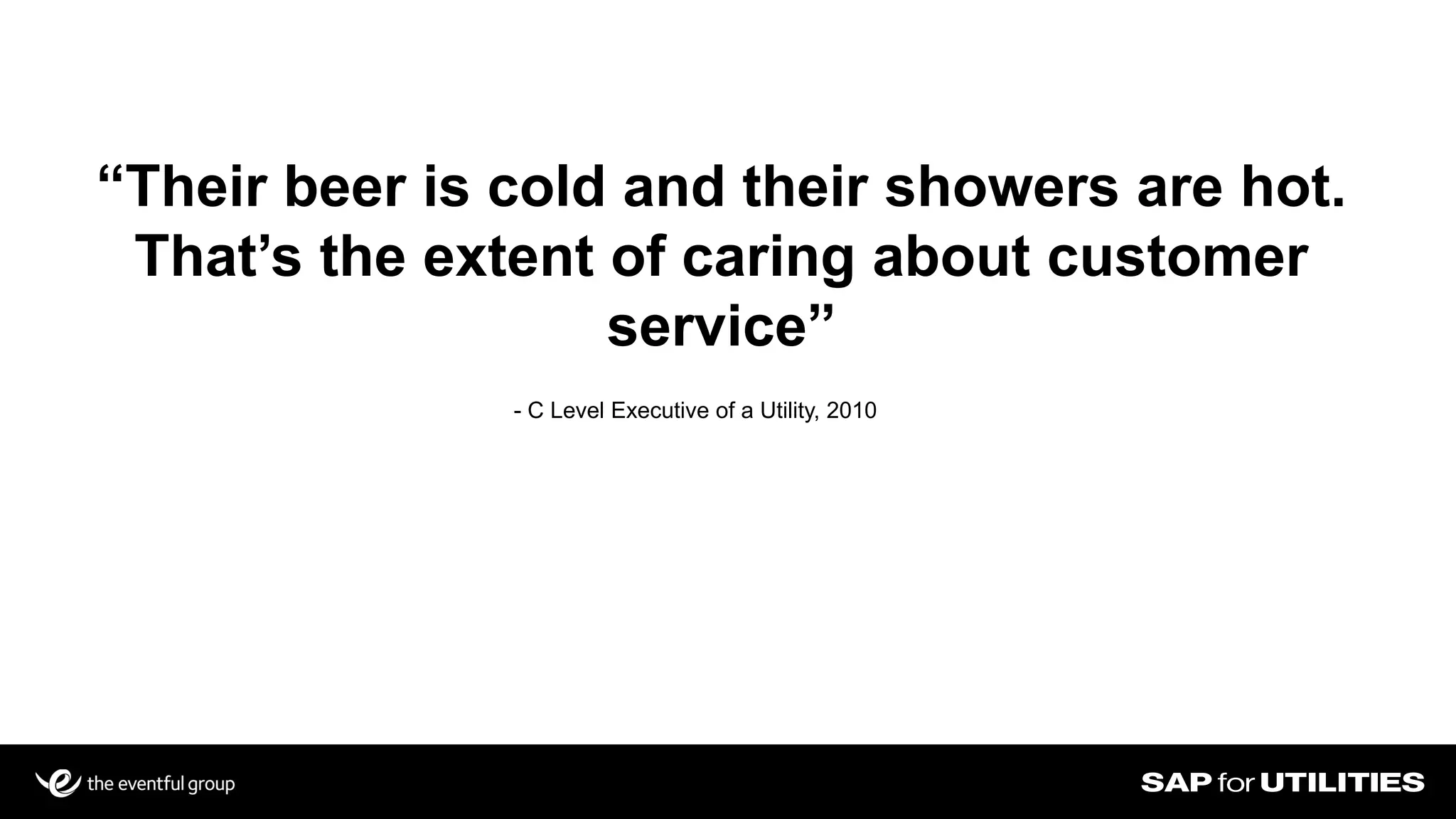
“Their beer is cold and their showers are hot.
That’s the extent of caring about customer
service”
- C Level Executive of a Utility, 2010
Introduction and Overview
The Value
Engaging in the Process
Questions
Design Thinking
Introduction and Overview
The Value
Engaging in the Process
Questions
Design Thinking
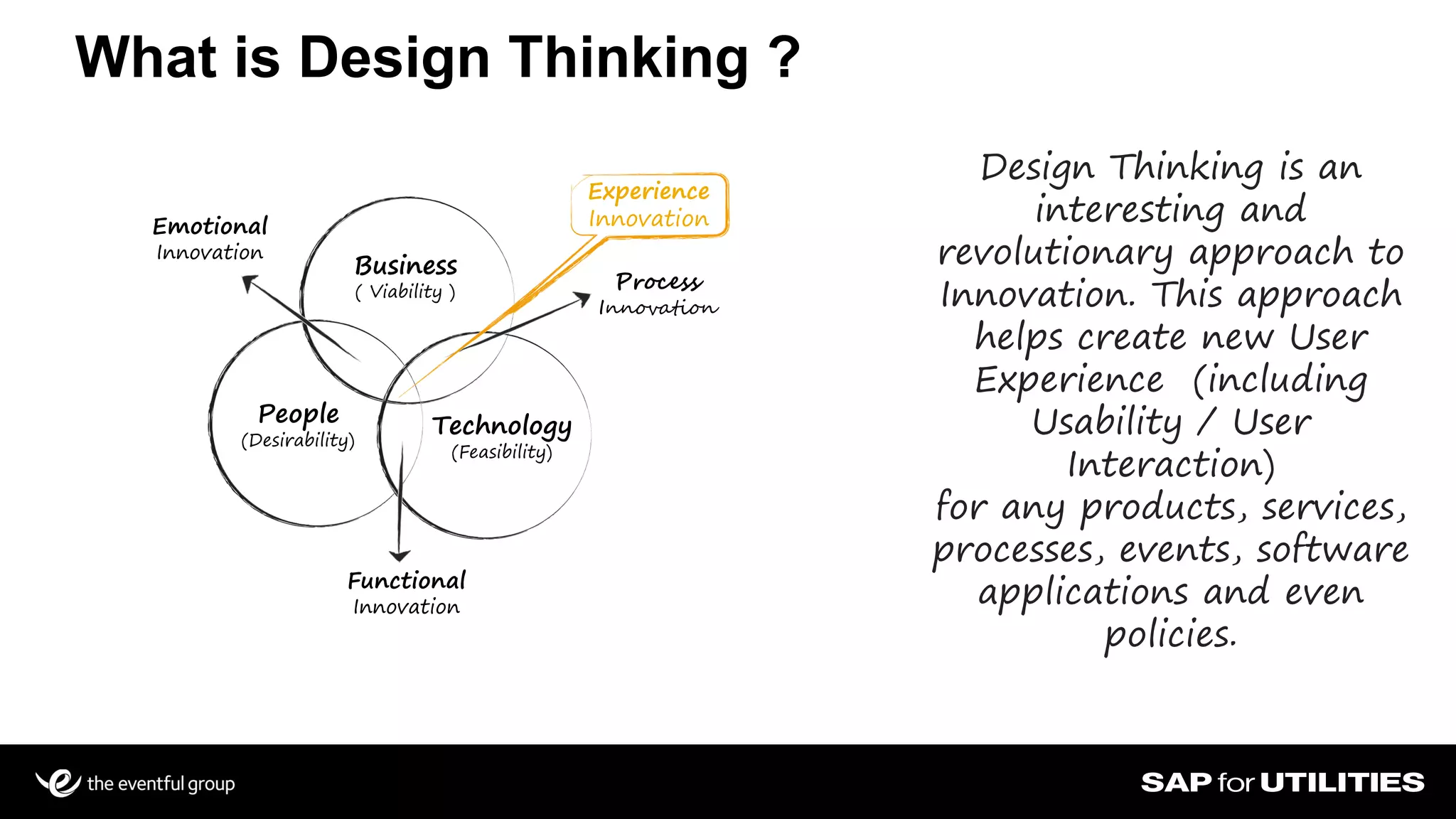
What is Design Thinking ?
Design Thinking is an
interesting and
revolutionary approach to
Innovation. This approach
helps create new User
Experience (including
Usability / User
Interaction)
for any products, services,
processes, events, software
applications and even
policies.
Business
( Viability )
People
(Desirability)
Technology
(Feasibility)
Experience
InnovationEmotional
Innovation
Functional
Innovation
Process
Innovation
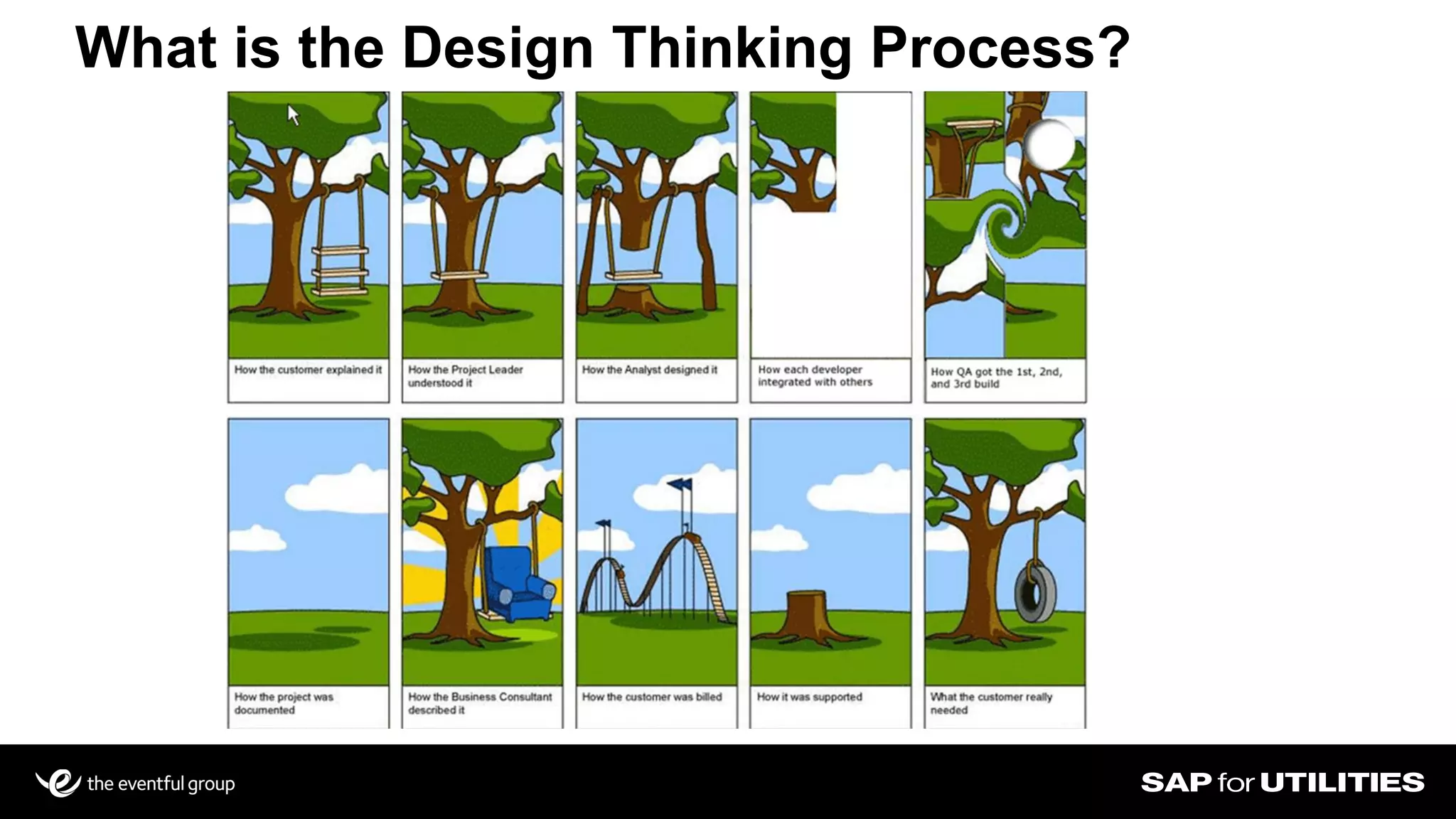
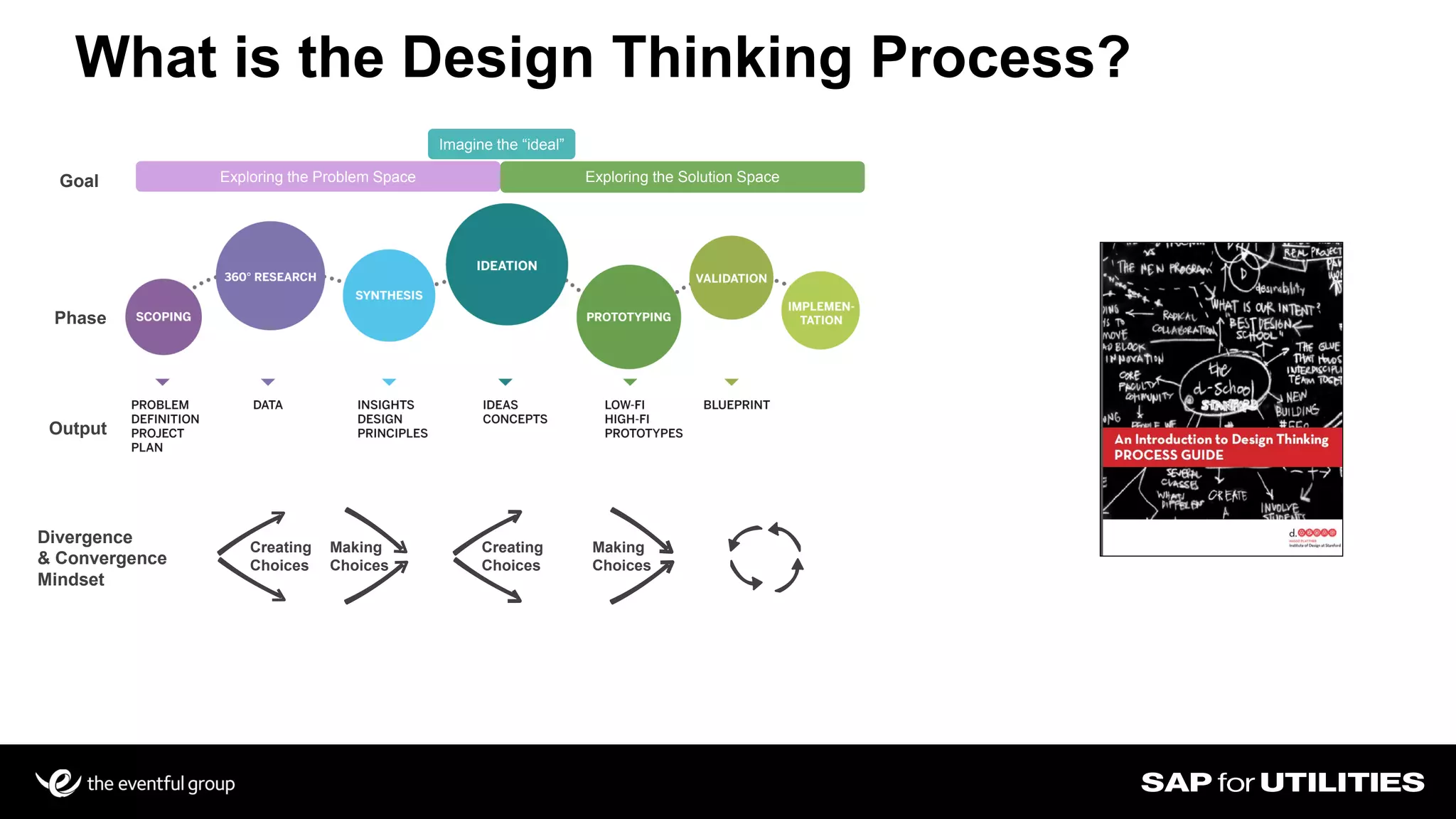
What is the Design Thinking Process?
Slide 12
Slide 13
What is the Design Thinking Process?
Goal
Phase
Divergence
& Convergence
Mindset
Creating
Choices
Making
Choices
Creating
Choices
Making
Choices
Exploring the Problem Space Exploring the Solution Space
Imagine the “ideal”
Output
Introduction and Overview
The Value
Engaging in the Process
Questions
Design Thinking
Slide 15
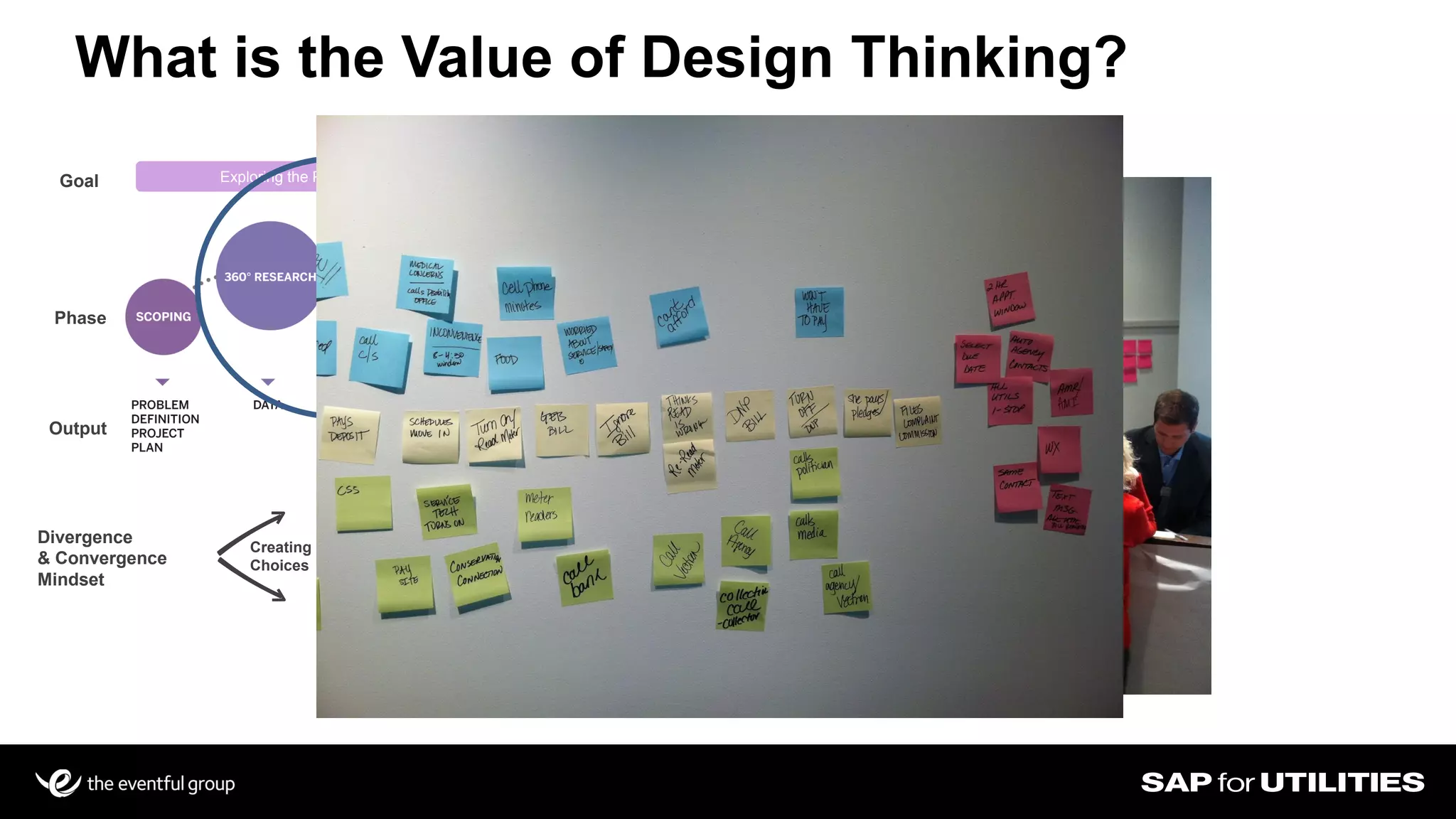
What is the Value of Design Thinking?
Goal
Phase
Divergence
& Convergence
Mindset
Creating
Choices
Making
Choices
Creating
Choices
Making
Choices
Exploring the Problem Space Exploring the Solution Space
Imagine the “ideal”
Output
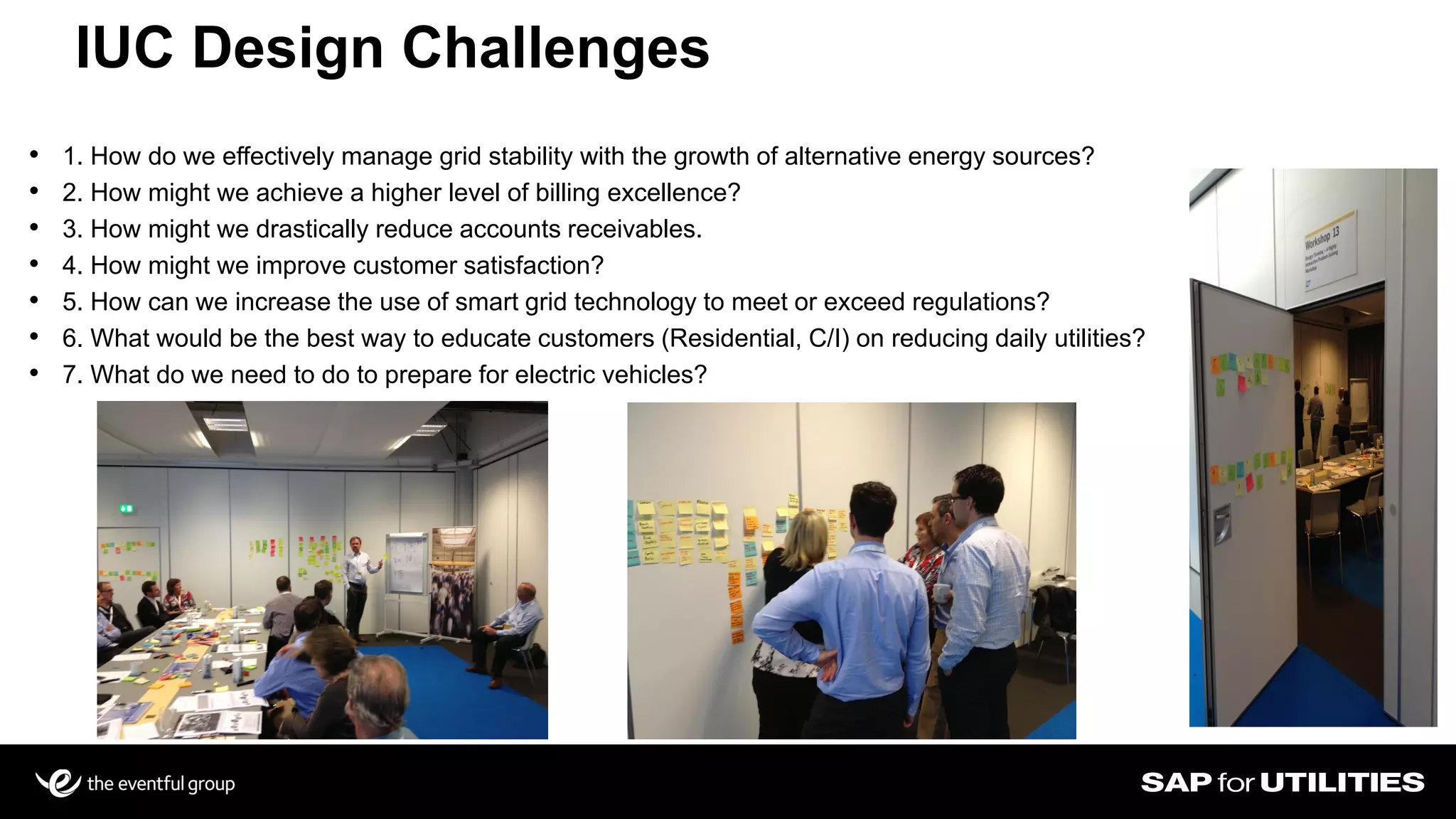
IUC Design Challenges
Slide 16
• 1. How do we effectively manage grid stability with the growth of alternative energy sources?
• 2. How might we achieve a higher level of billing excellence?
• 3. How might we drastically reduce accounts receivables.
• 4. How might we improve customer satisfaction?
• 5. How can we increase the use of smart grid technology to meet or exceed regulations?
• 6. What would be the best way to educate customers (Residential, C/I) on reducing daily utilities?
• 7. What do we need to do to prepare for electric vehicles?
Introduction and Overview
The Value
Engaging in the Process
Questions
Design Thinking
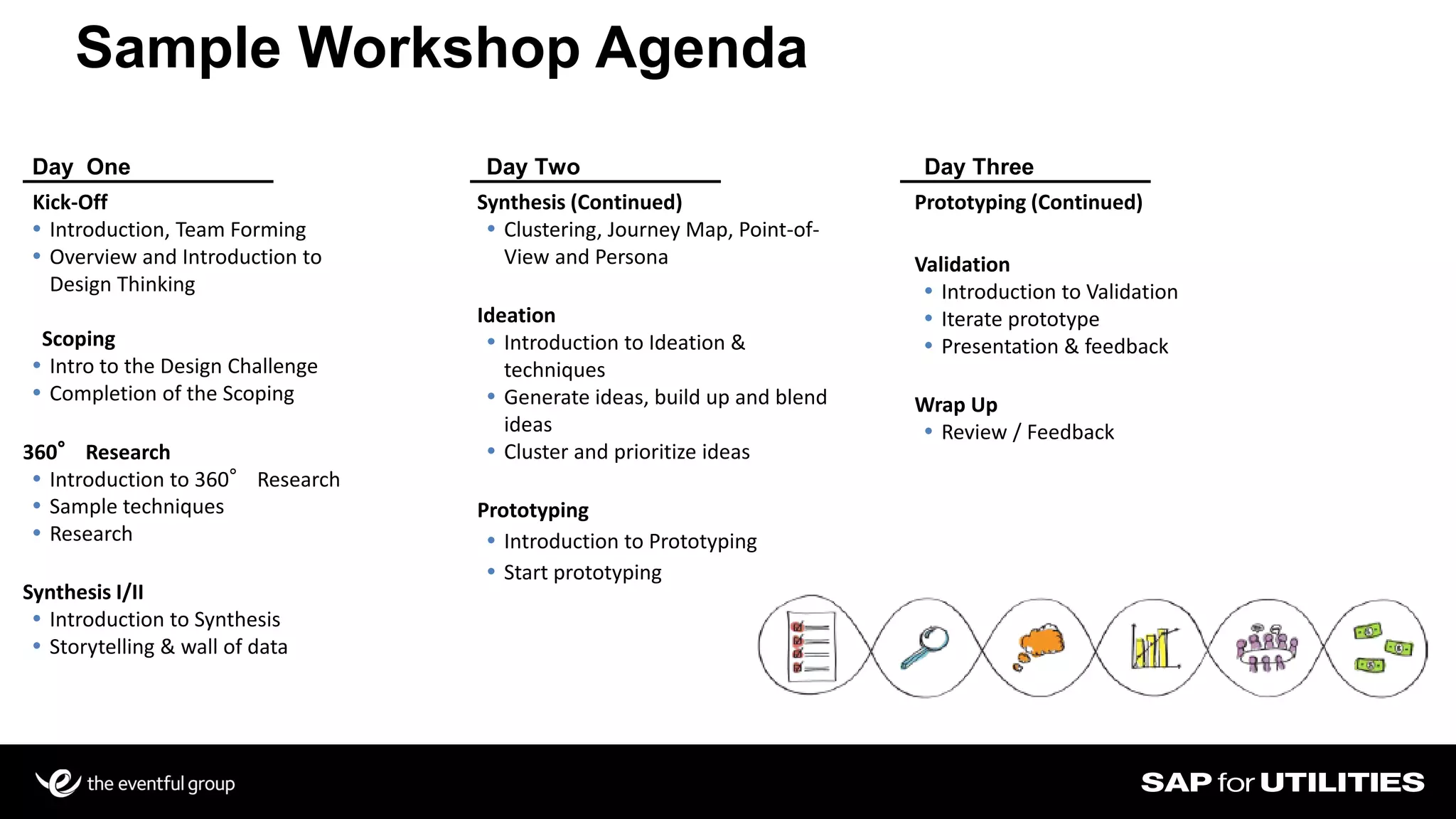
Sample Workshop Agenda
Slide 18
Day One Day Two
Synthesis (Continued)
 Clustering, Journey Map, Point-of-
View and Persona
Ideation
 Introduction to Ideation &
techniques
 Generate ideas, build up and blend
ideas
 Cluster and prioritize ideas
Prototyping
 Introduction to Prototyping
 Start prototyping
Kick-Off
 Introduction, Team Forming
 Overview and Introduction to
Design Thinking
Scoping
 Intro to the Design Challenge
 Completion of the Scoping
360° Research
 Introduction to 360° Research
 Sample techniques
 Research
Synthesis I/II
 Introduction to Synthesis
 Storytelling & wall of data
Day Three
Prototyping (Continued)
Validation
 Introduction to Validation
 Iterate prototype
 Presentation & feedback
Wrap Up
 Review / Feedback
What is on Your “Never Say Never”?
Slide 19
A collaboration of:
Alice Dawson
SAP
alice.dawson@sap.com

Design thinking a more insightful approach to problem-solving

  • 1.
    A collaboration of: DesignThinking: A More Insightful Approach to Problem-Solving Alice Dawson SAP
  • 2.
    The “Never SayNever” Hallway
  • 3.
    “Heavier-than-air flying machinesare impossible.” - Lord Kelvin, president, Royal Society, 1895
  • 4.
    “The concept isinteresting and well-formed, but in order to earn better than a ‘C’, the idea must be feasible.” - Yale University management professor in response to Fred Smith’s paper proposing reliable overnight delivery service.
  • 5.
    “This telephone hastoo many shortcomings to be seriously considered as a means of communication. The device is inherently of no value to us.” - Western Union internal memo, 1876
  • 6.
    “I think thereis a world market for maybe five computers.” - Thomas Watson, Chairman of IBM, 1943
  • 7.
    “640kb ought tobe enough for anybody.” - Bill Gates, 1981
  • 8.
    “Their beer iscold and their showers are hot. That’s the extent of caring about customer service” - C Level Executive of a Utility, 2010
  • 9.
    Introduction and Overview TheValue Engaging in the Process Questions Design Thinking
  • 10.
    Introduction and Overview TheValue Engaging in the Process Questions Design Thinking
  • 11.
    What is DesignThinking ? Design Thinking is an interesting and revolutionary approach to Innovation. This approach helps create new User Experience (including Usability / User Interaction) for any products, services, processes, events, software applications and even policies. Business ( Viability ) People (Desirability) Technology (Feasibility) Experience InnovationEmotional Innovation Functional Innovation Process Innovation
  • 12.
    What is theDesign Thinking Process? Slide 12
  • 13.
    Slide 13 What isthe Design Thinking Process? Goal Phase Divergence & Convergence Mindset Creating Choices Making Choices Creating Choices Making Choices Exploring the Problem Space Exploring the Solution Space Imagine the “ideal” Output
  • 14.
    Introduction and Overview TheValue Engaging in the Process Questions Design Thinking
  • 15.
    Slide 15 What isthe Value of Design Thinking? Goal Phase Divergence & Convergence Mindset Creating Choices Making Choices Creating Choices Making Choices Exploring the Problem Space Exploring the Solution Space Imagine the “ideal” Output
  • 16.
    IUC Design Challenges Slide16 • 1. How do we effectively manage grid stability with the growth of alternative energy sources? • 2. How might we achieve a higher level of billing excellence? • 3. How might we drastically reduce accounts receivables. • 4. How might we improve customer satisfaction? • 5. How can we increase the use of smart grid technology to meet or exceed regulations? • 6. What would be the best way to educate customers (Residential, C/I) on reducing daily utilities? • 7. What do we need to do to prepare for electric vehicles?
  • 17.
    Introduction and Overview TheValue Engaging in the Process Questions Design Thinking
  • 18.
    Sample Workshop Agenda Slide18 Day One Day Two Synthesis (Continued)  Clustering, Journey Map, Point-of- View and Persona Ideation  Introduction to Ideation & techniques  Generate ideas, build up and blend ideas  Cluster and prioritize ideas Prototyping  Introduction to Prototyping  Start prototyping Kick-Off  Introduction, Team Forming  Overview and Introduction to Design Thinking Scoping  Intro to the Design Challenge  Completion of the Scoping 360° Research  Introduction to 360° Research  Sample techniques  Research Synthesis I/II  Introduction to Synthesis  Storytelling & wall of data Day Three Prototyping (Continued) Validation  Introduction to Validation  Iterate prototype  Presentation & feedback Wrap Up  Review / Feedback
  • 19.
    What is onYour “Never Say Never”? Slide 19
  • 20.
    A collaboration of: AliceDawson SAP alice.dawson@sap.com