What is
Design Thinking
Presented by Michael Melnick | @UpStart | January 19, 2016
and how can it change your life?
The
Selfie
Stick
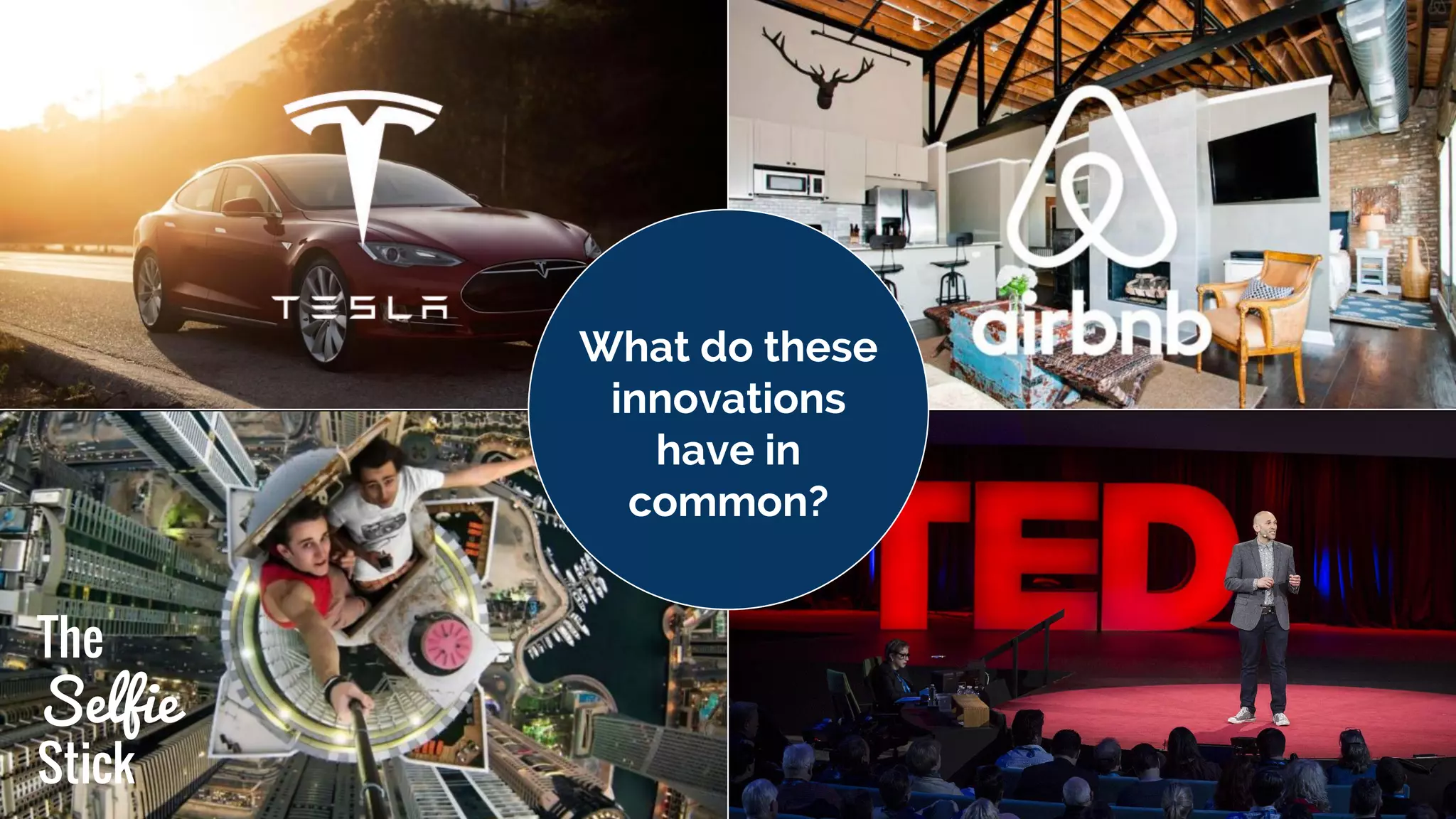
What do these
innovations
have in
common?
Creating value by design
Tesla - Turning a disruptive technology into a desirable one
Airbnb - Making hospitality more hospitable
TED - Making science popular and accessible
The Selfie Stick - Improving self-documentation
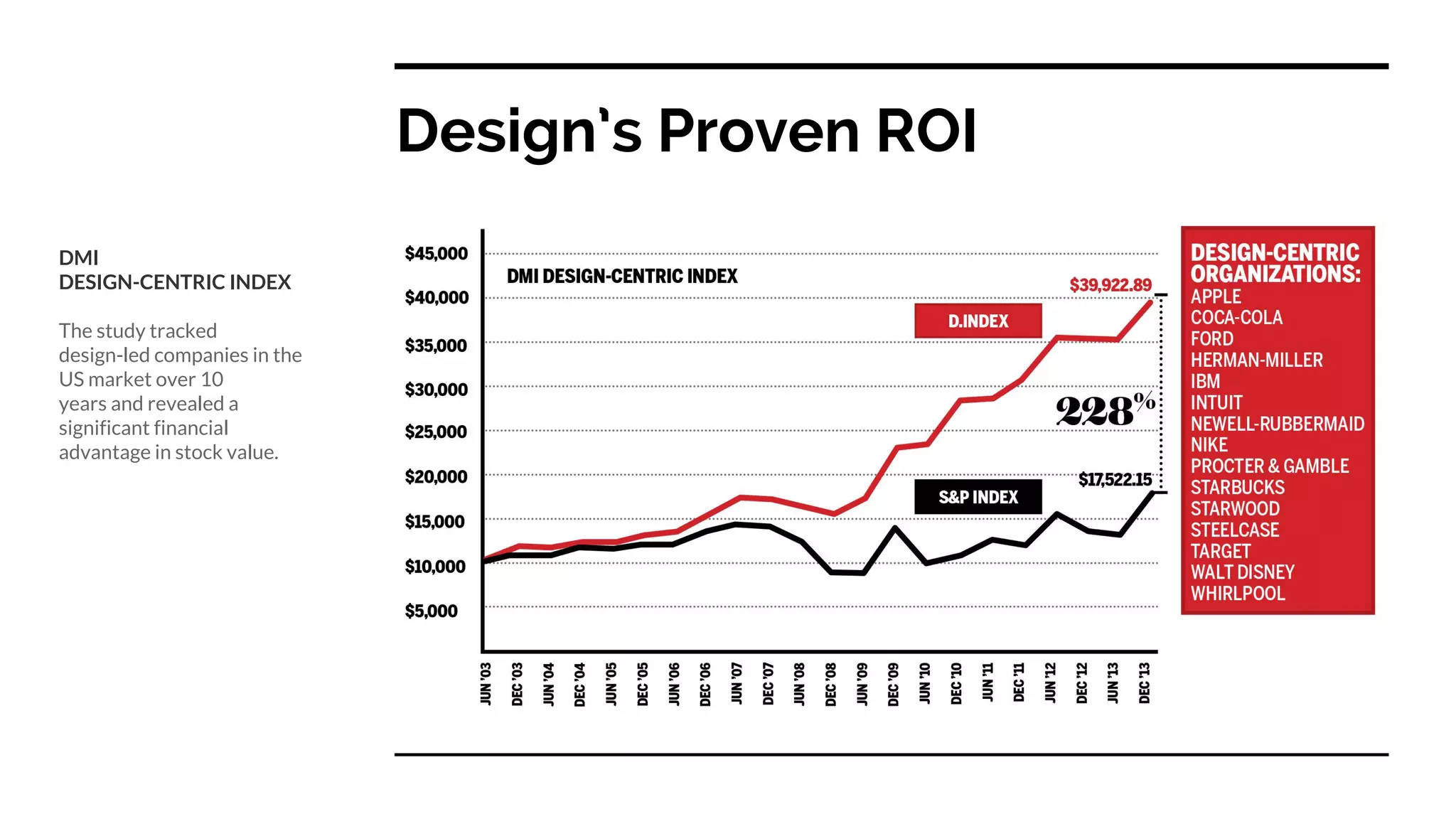
Design’s Proven ROI
DMI
DESIGN-CENTRIC INDEX
The study tracked
design-led companies in the
US market over 10
years and revealed a
significant financial
advantage in stock value.
What is Design?
Design is not just what it
looks like or feels like.
Design is how it works.
Steve Jobs
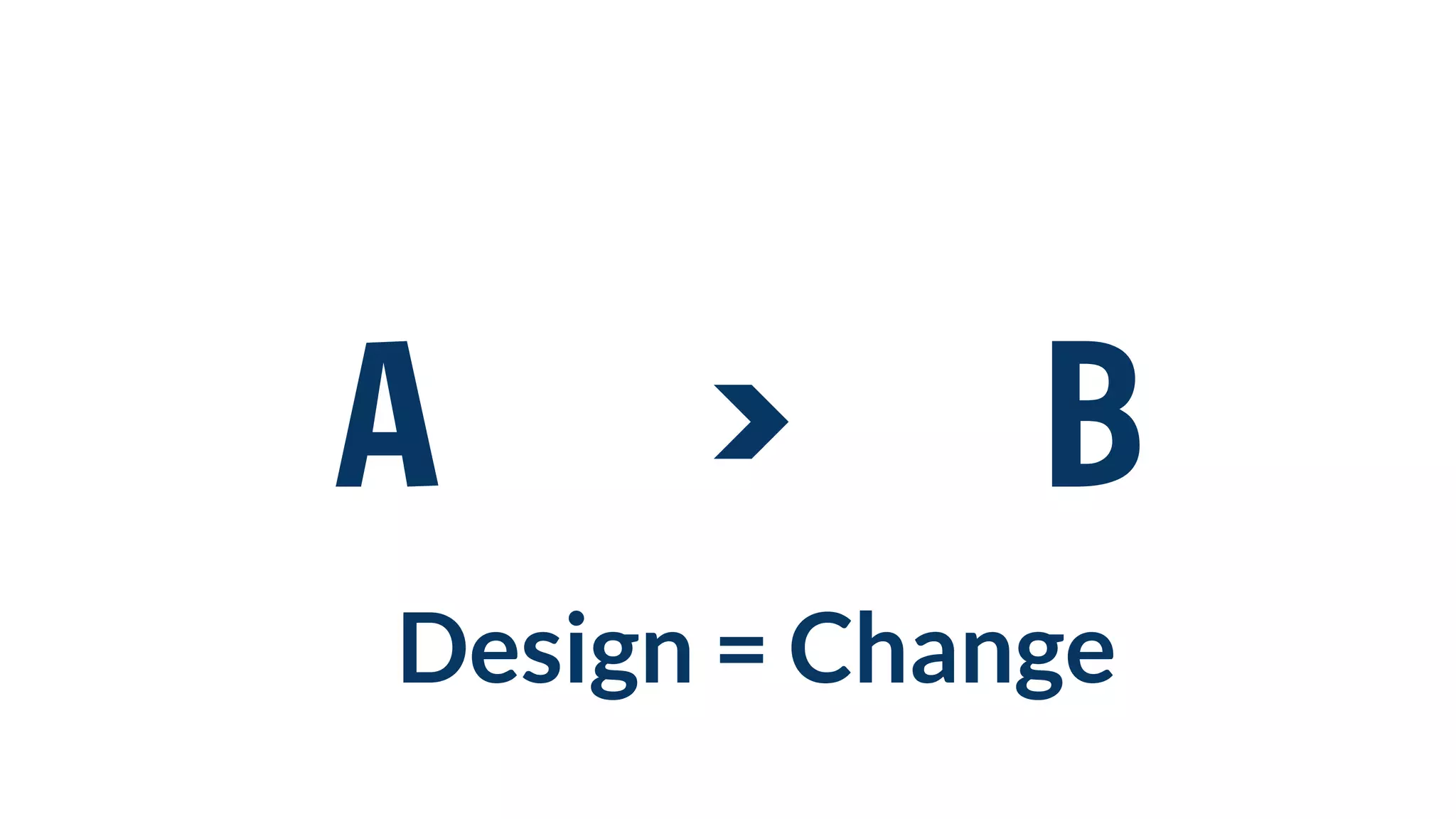
A B
A B
Design = Change
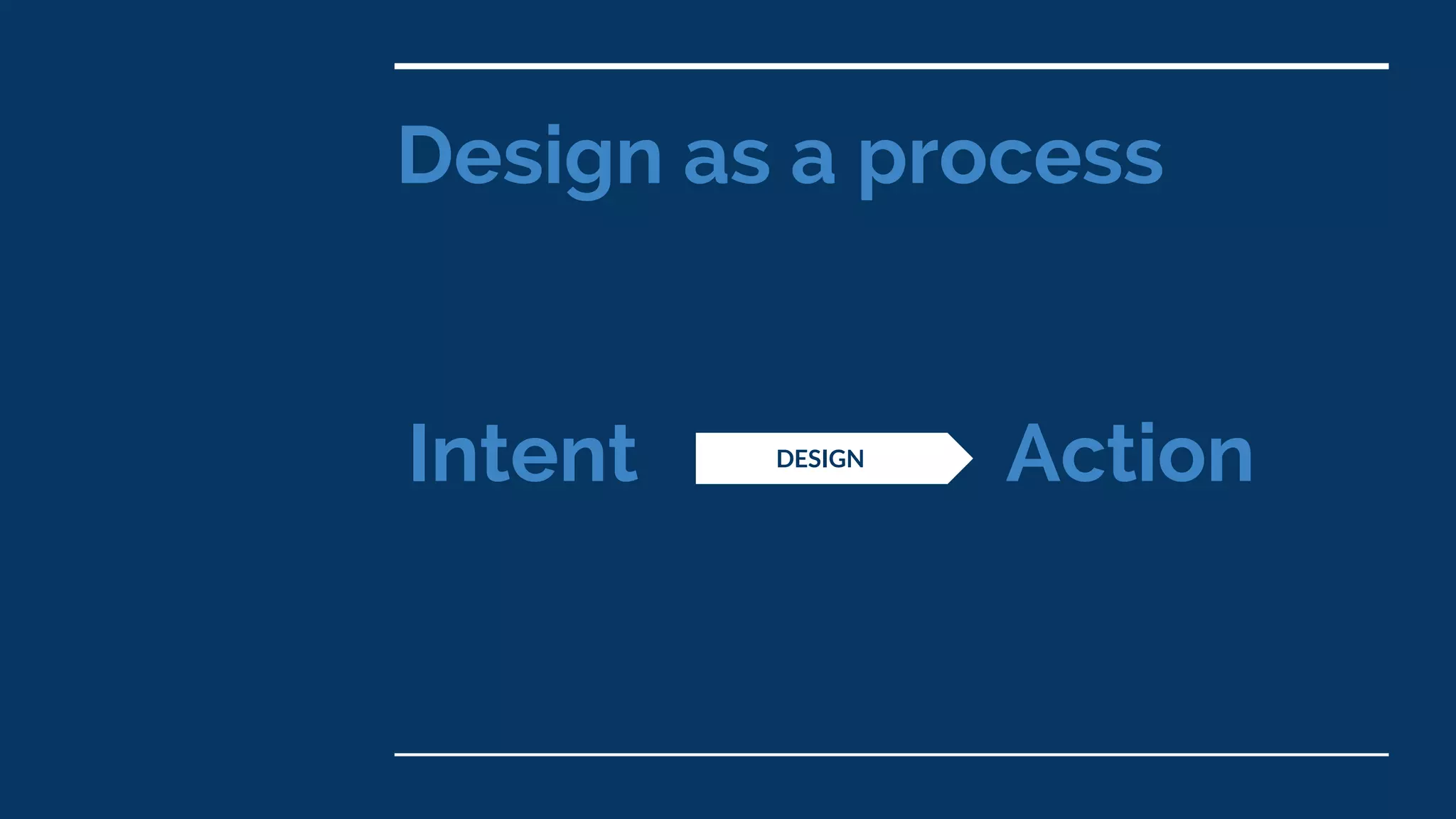
Design as a process
Intent ActionDESIGN
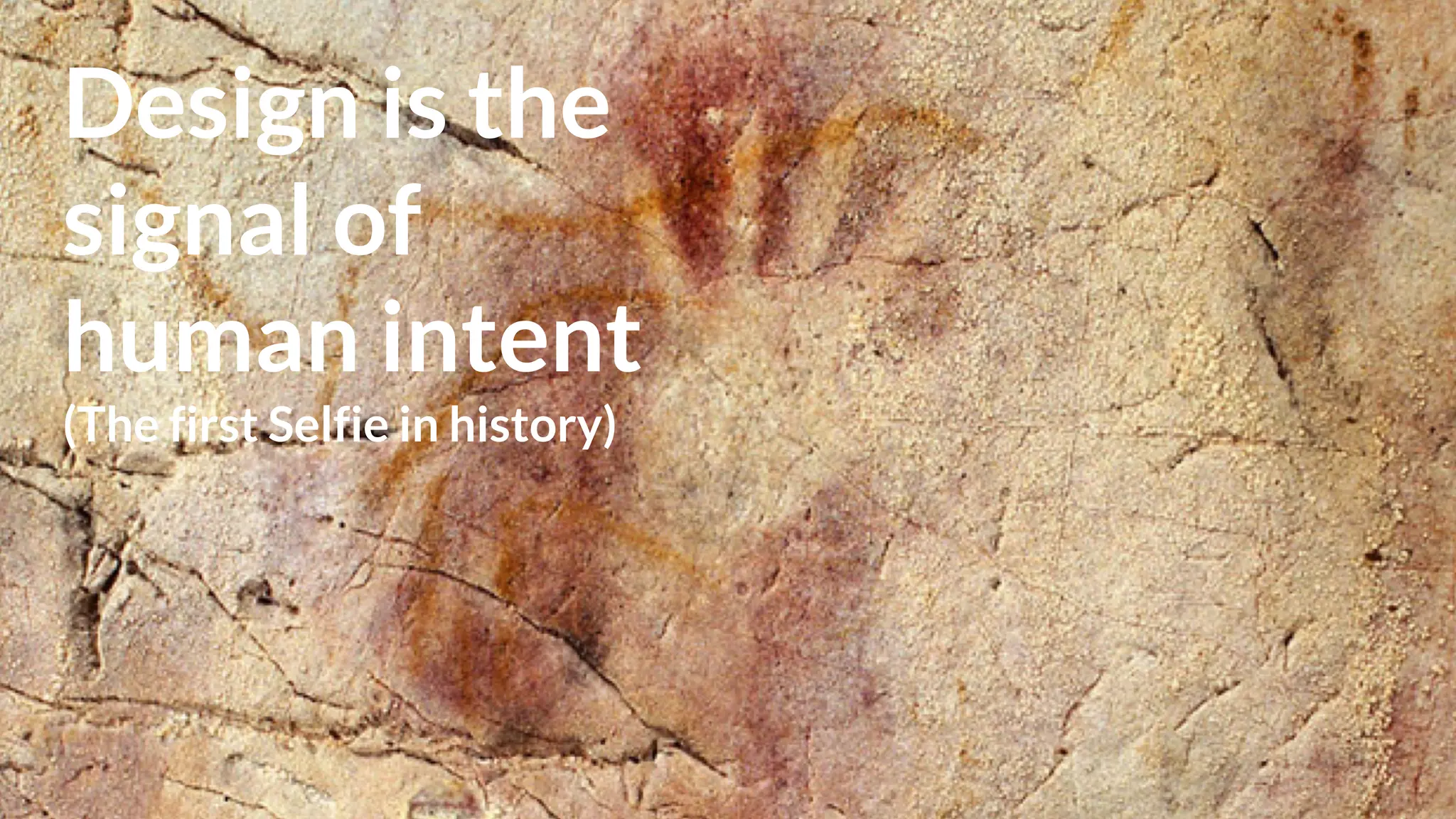
Design is the
signal of
human intent
(The first Selfie in history)
So, what’s your problem?
You cannot
predict what the
end result will be.
The New Challenge:
What is
Design Thinking?
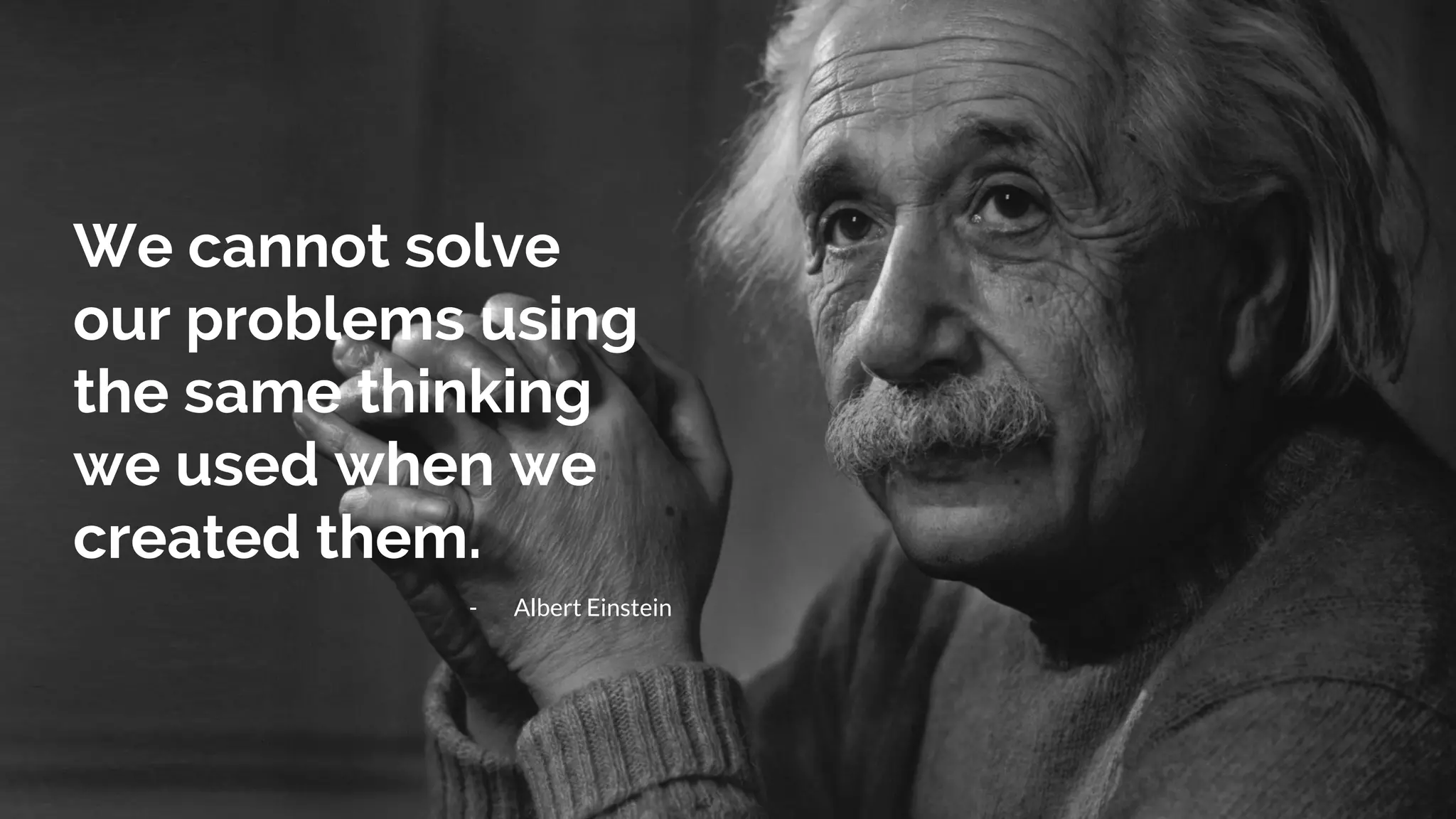
We cannot solve
our problems using
the same thinking
we used when we
created them.
- Albert Einstein
Problem solving based on a systematic, human-centric,
multidisciplinary process that generates value through
creative and analytical thinking.
The Design Thinking
Methodology
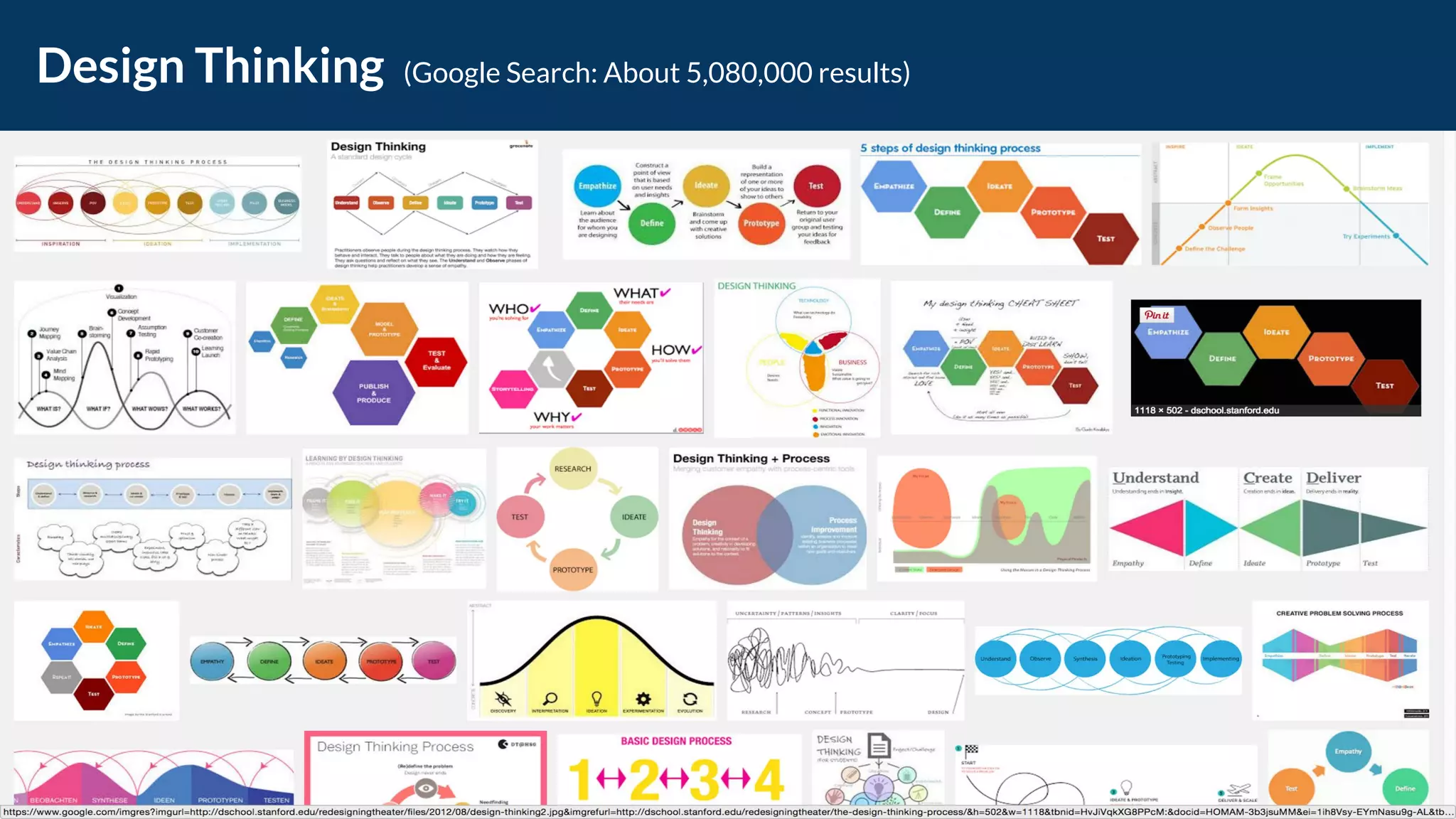
Design Thinking (Google Search: About 5,080,000 results)
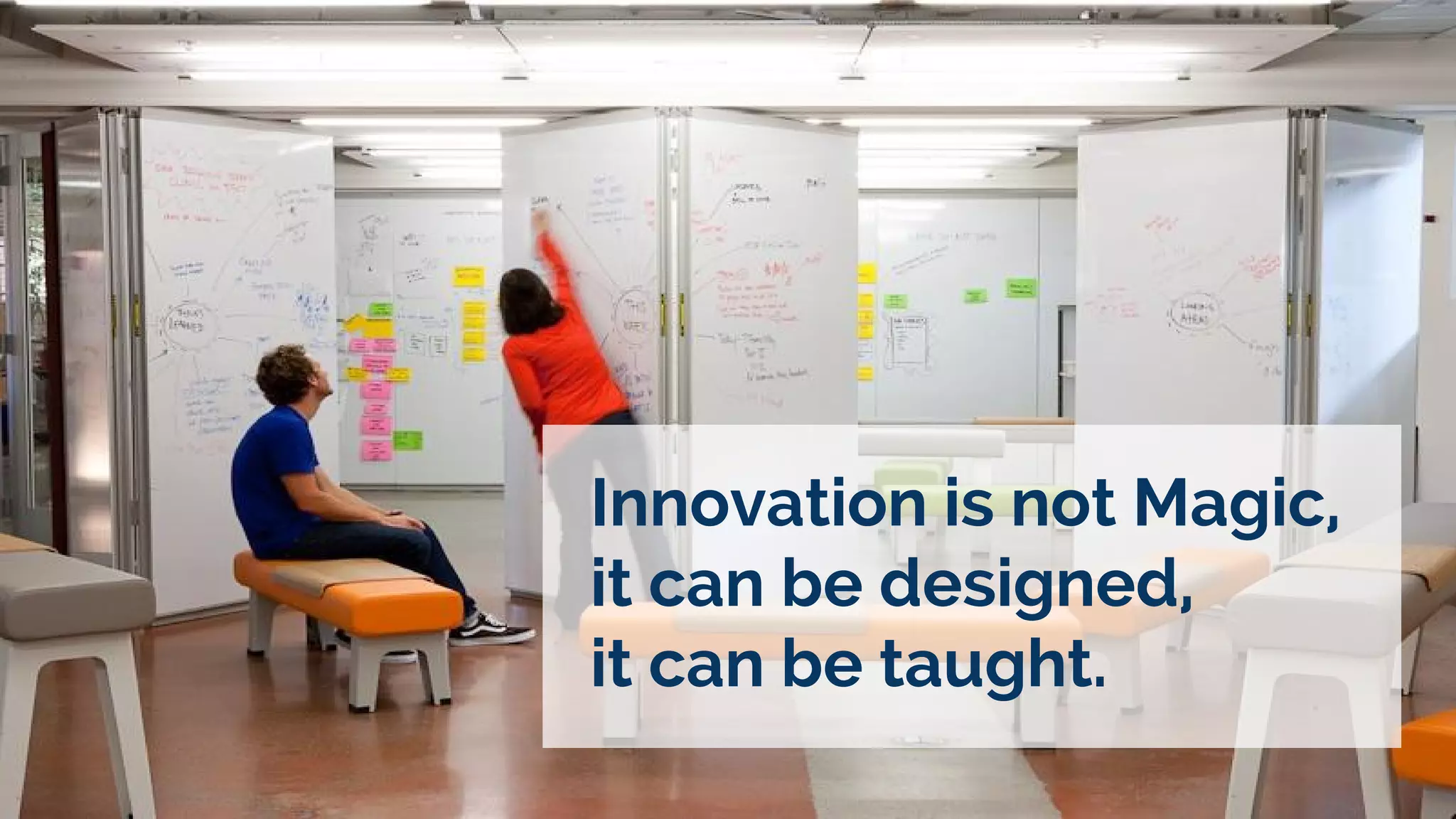
Innovation is not Magic,
it can be designed,
it can be taught.
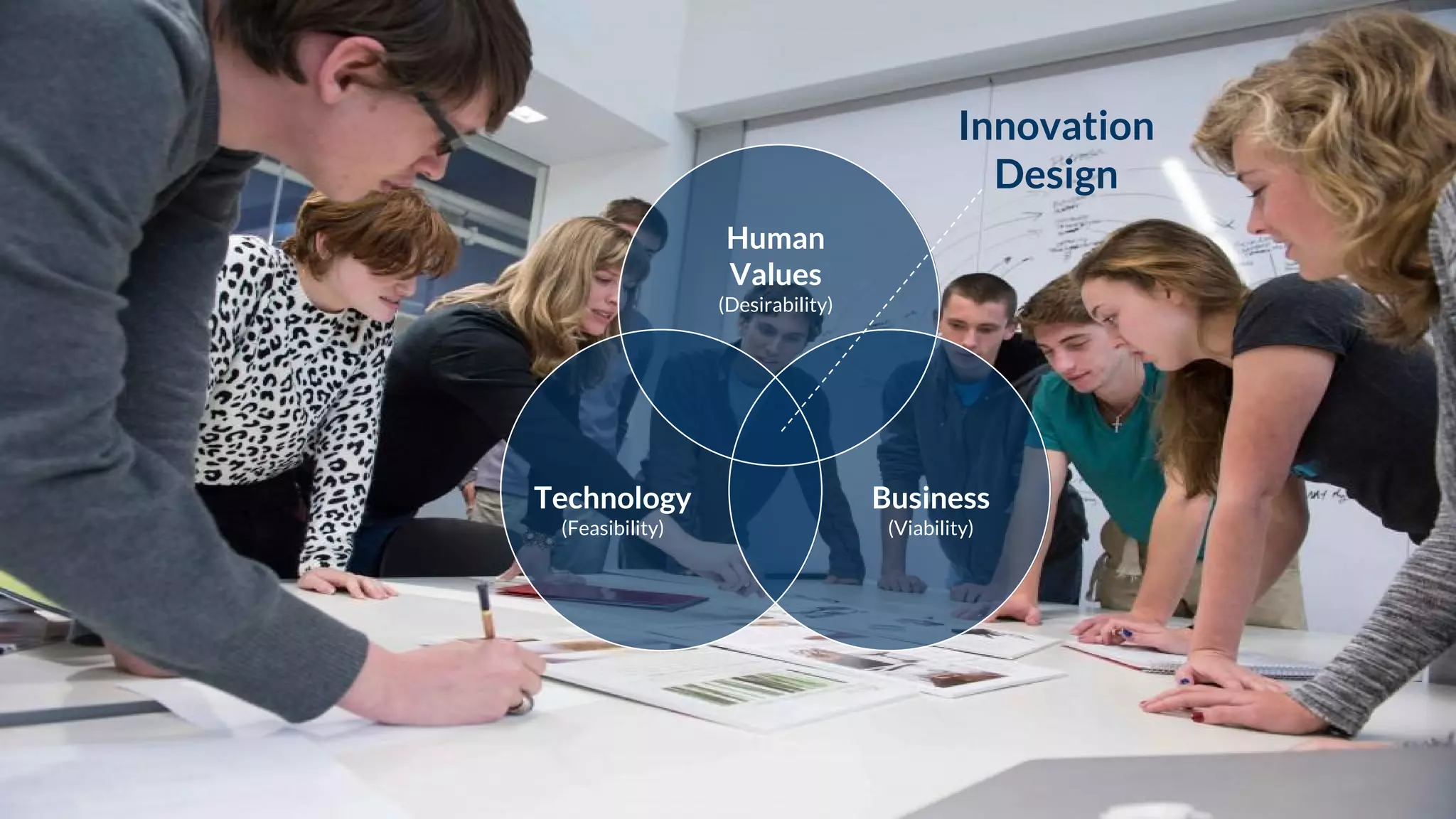
Technology
(Feasibility)
Business
(Viability)
Human
Values
(Desirability)
Innovation
Design
Design Thinking is not
about solving design
problems, it is about
solving business
problems with the
design process.
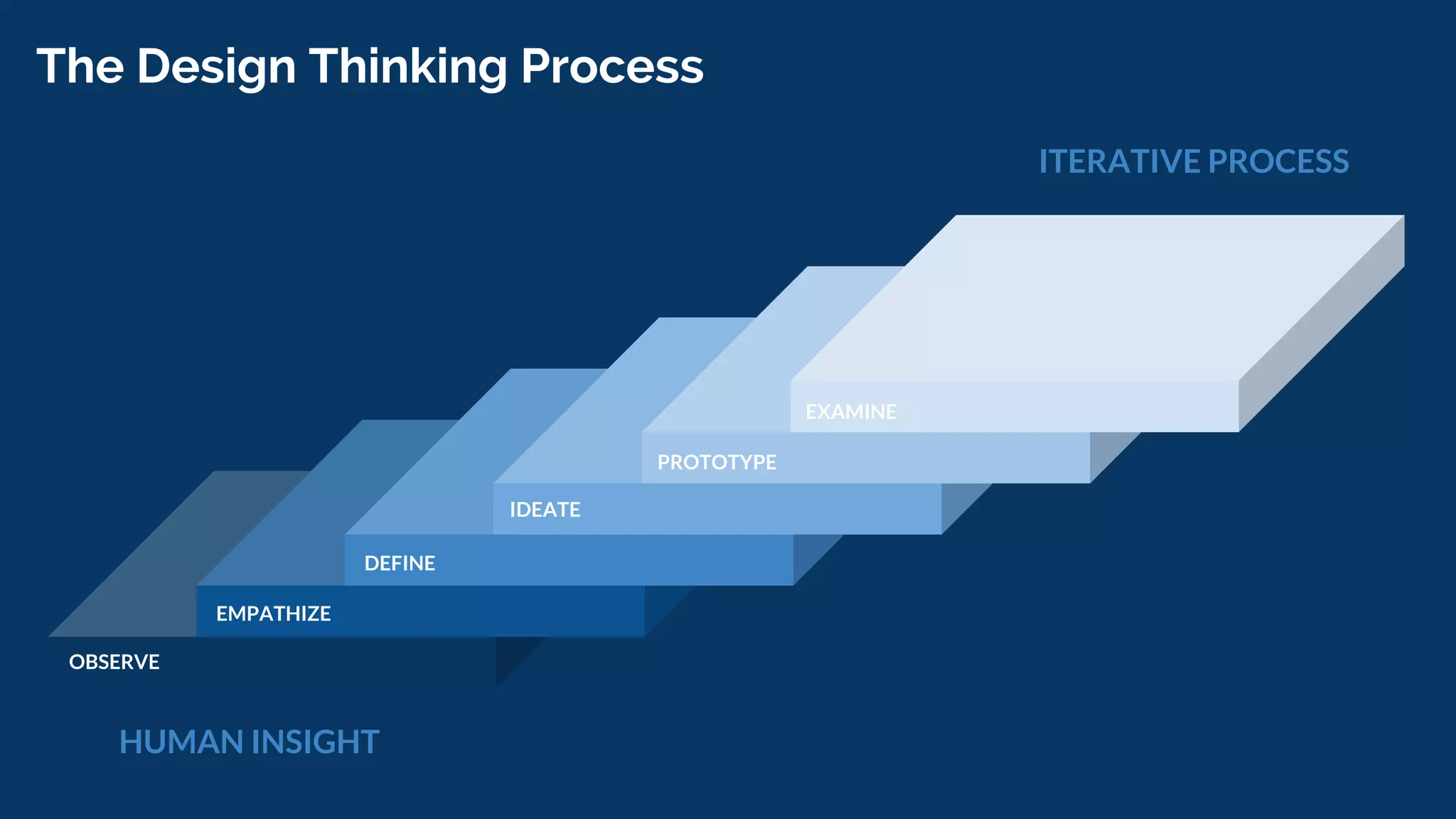
The Design Thinking Process
EMPATHIZE
DEFINE
PROTOTYPE
EXAMINE
OBSERVE
IDEATE
HUMAN INSIGHT
ITERATIVE PROCESS
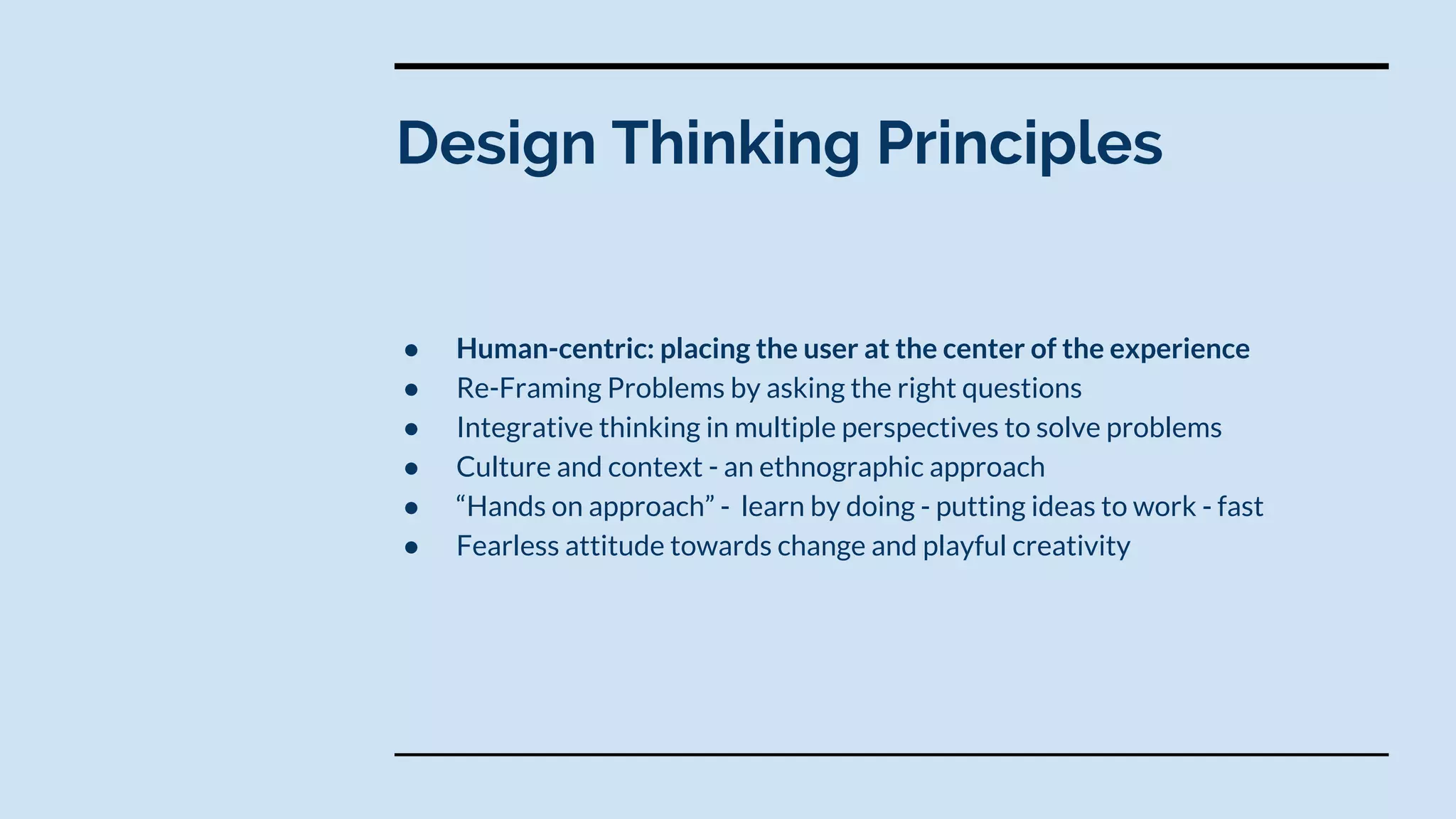
● Human-centric: placing the user at the center of the experience
● Re-Framing Problems by asking the right questions
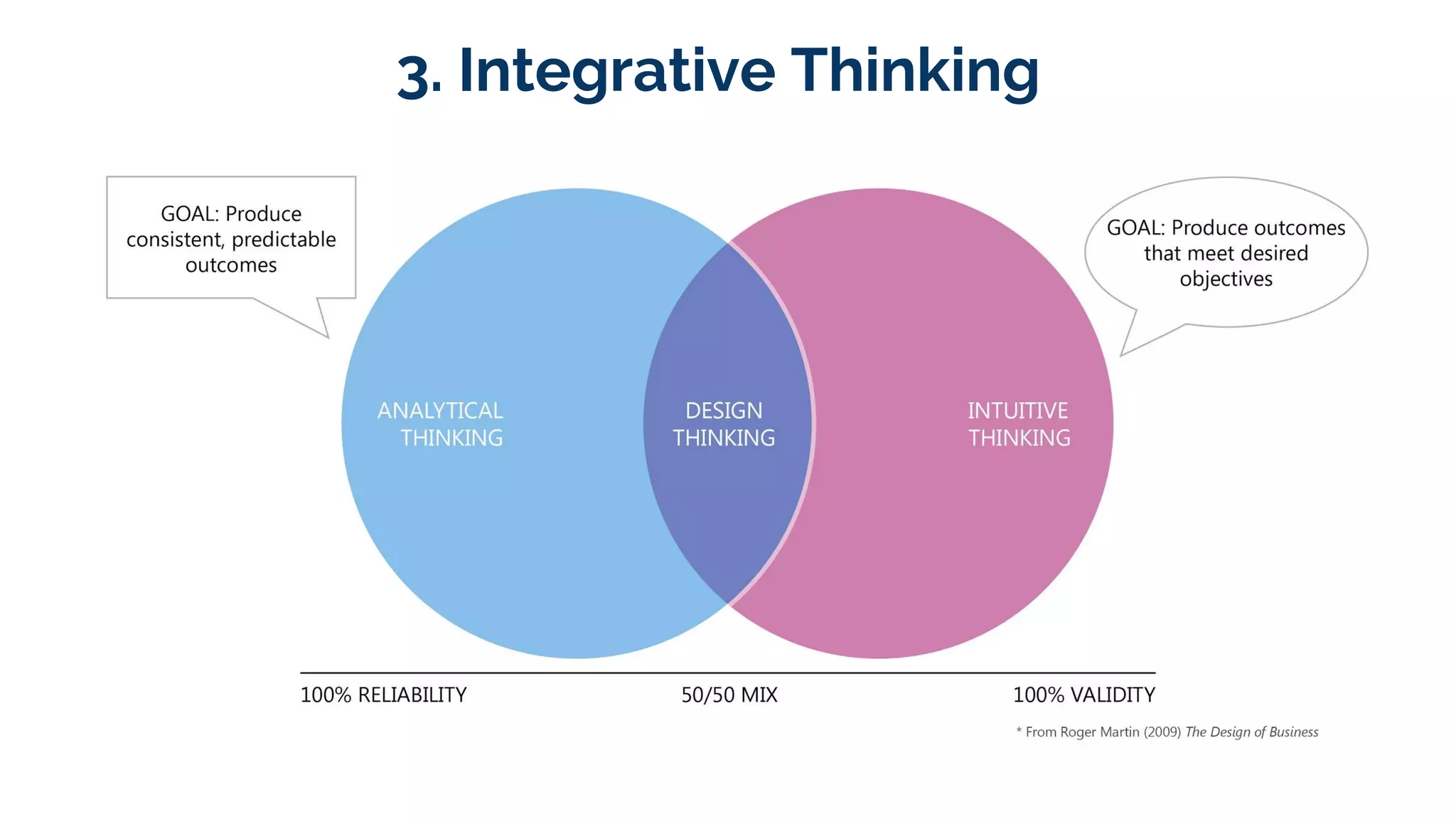
● Integrative thinking in multiple perspectives to solve problems
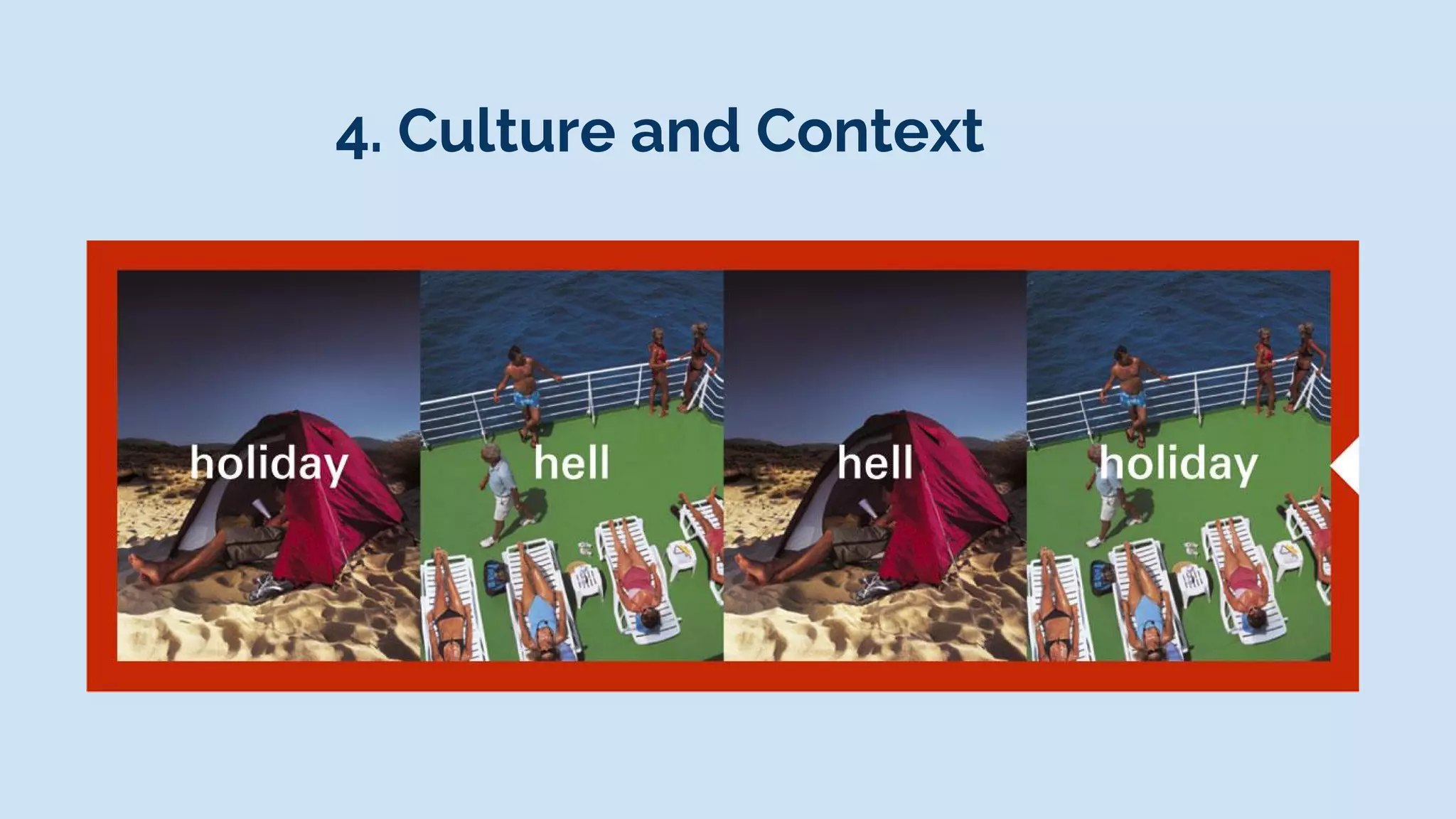
● Culture and context - an ethnographic approach
● “Hands on approach” - learn by doing - putting ideas to work - fast
● Fearless attitude towards change and playful creativity
Design Thinking Principles
1. Human Centric Focus
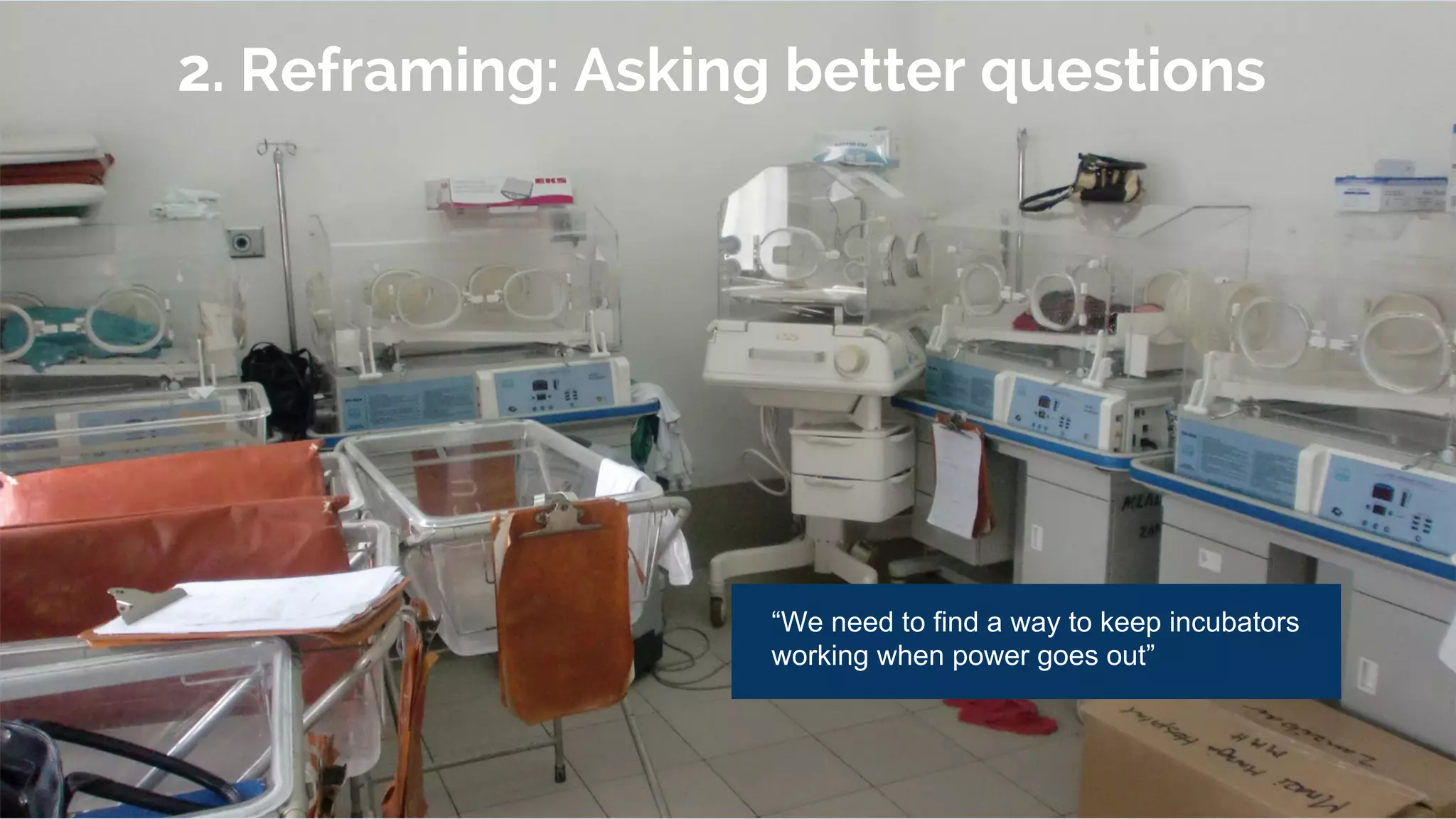
2. Reframing: Asking better questions
“We need to find a way to keep incubators
working when power goes out”
“How can we keep our
newborn babies warm?”
2. Reframing: Asking better questions
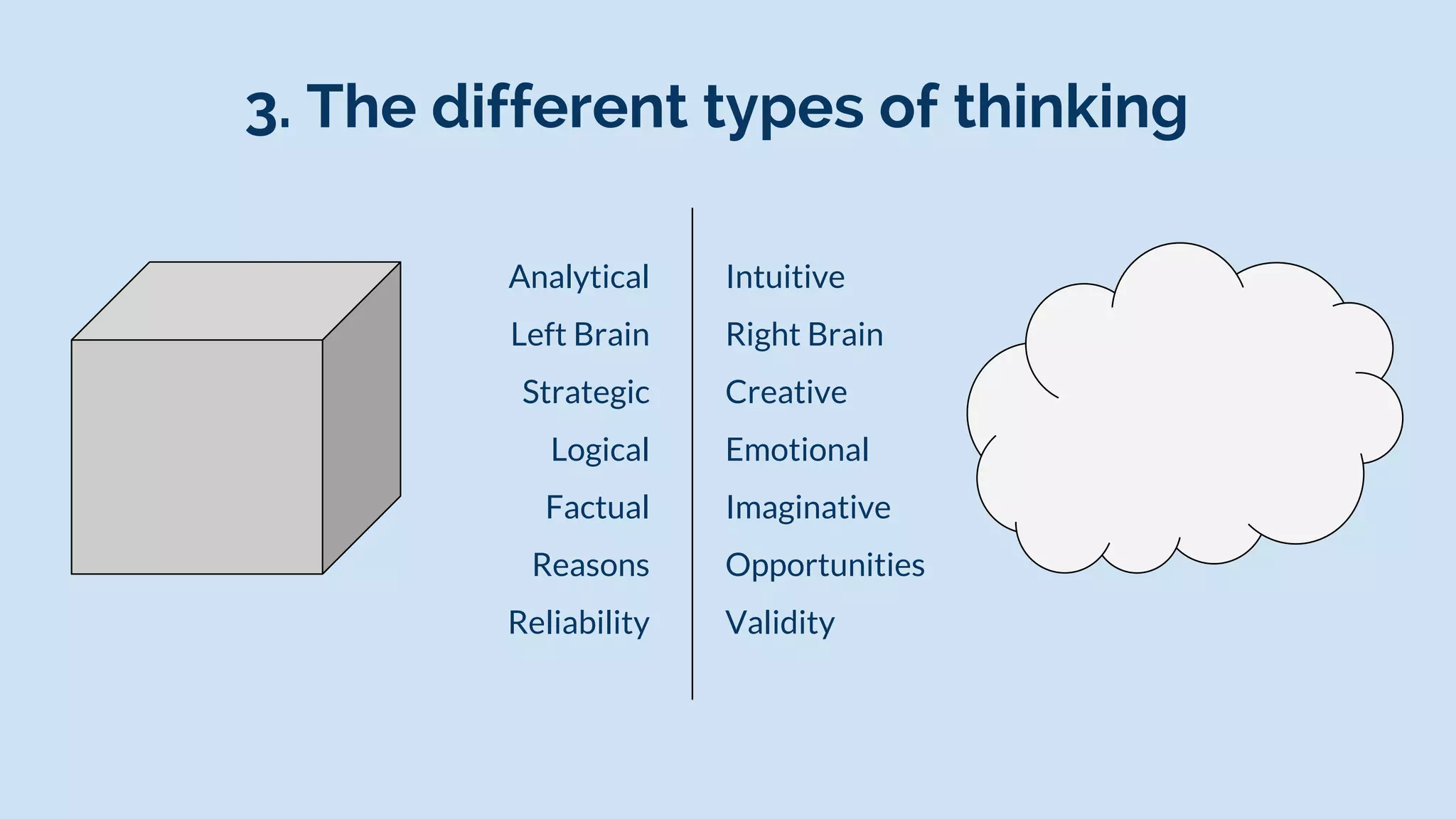
3. The different types of thinking
Analytical
Left Brain
Strategic
Logical
Factual
Reasons
Reliability
Intuitive
Right Brain
Creative
Emotional
Imaginative
Opportunities
Validity
3. Integrative Thinking
4. Culture and Context
4. Ethnography
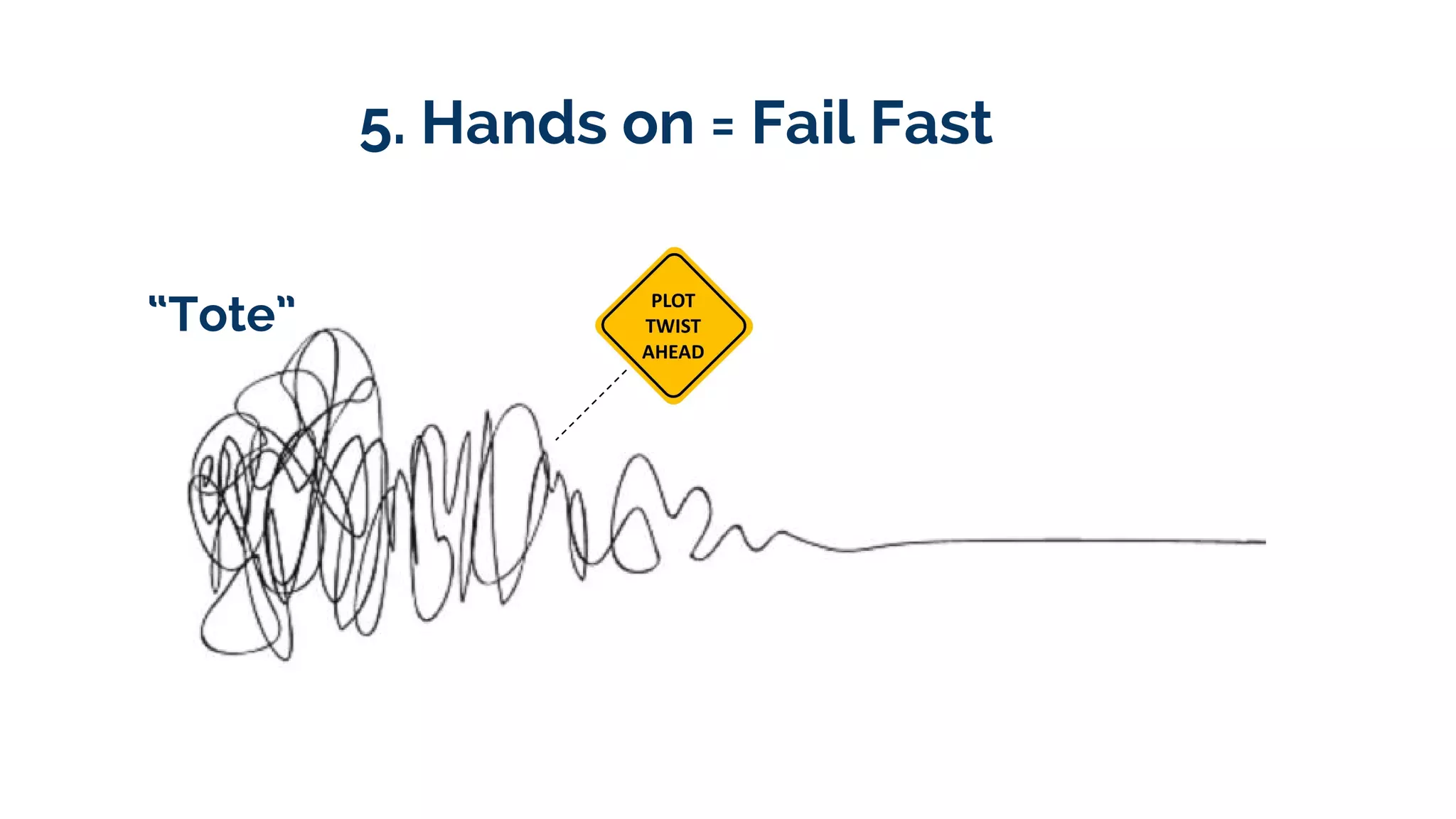
5. Hands on = Fail Fast
“Tote”?
Have you ever heard of
“Tote”
5. Hands on = Fail Fast
“Tote”
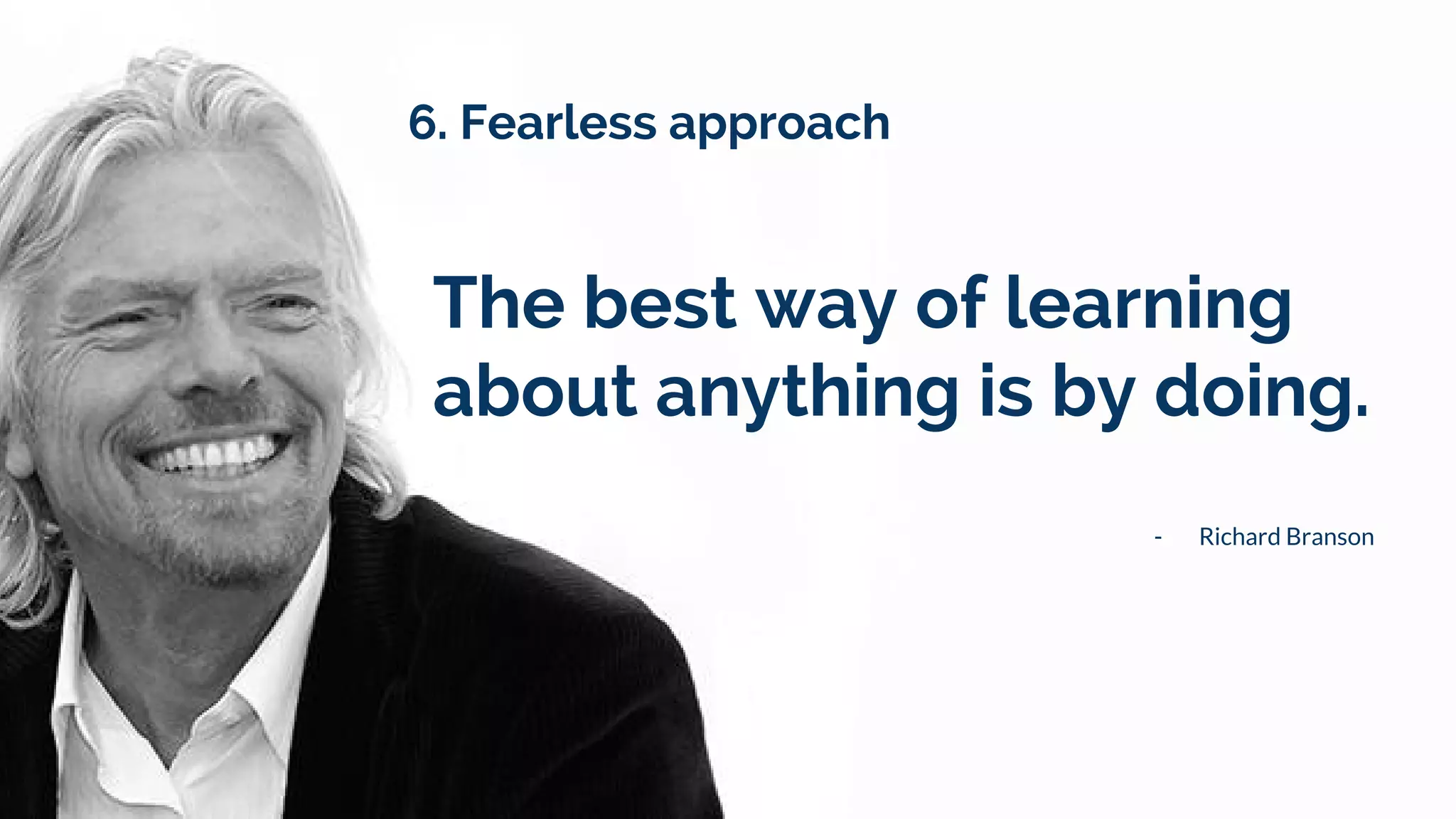
The best way of learning
about anything is by doing.
- Richard Branson
6. Fearless approach
How Can This Help?
Translating a human
need or a desire into a
business solution.
Be Relevant
Be Authentic
Be Adaptive
How can we motivate people to
lead a healthier lifestyle?
Cases of problems solved using
design thinking at IDC
FITBUDDY
Most people find it very difficult
to commit to a steady fitness
routine and spend a lot of
money on gym memberships
that go unused. This app utilizes
social networking to empower
groups of people to workout
together, set group goals and
harness positive social
‘pressure’ for leading a healthier
lifestyle.
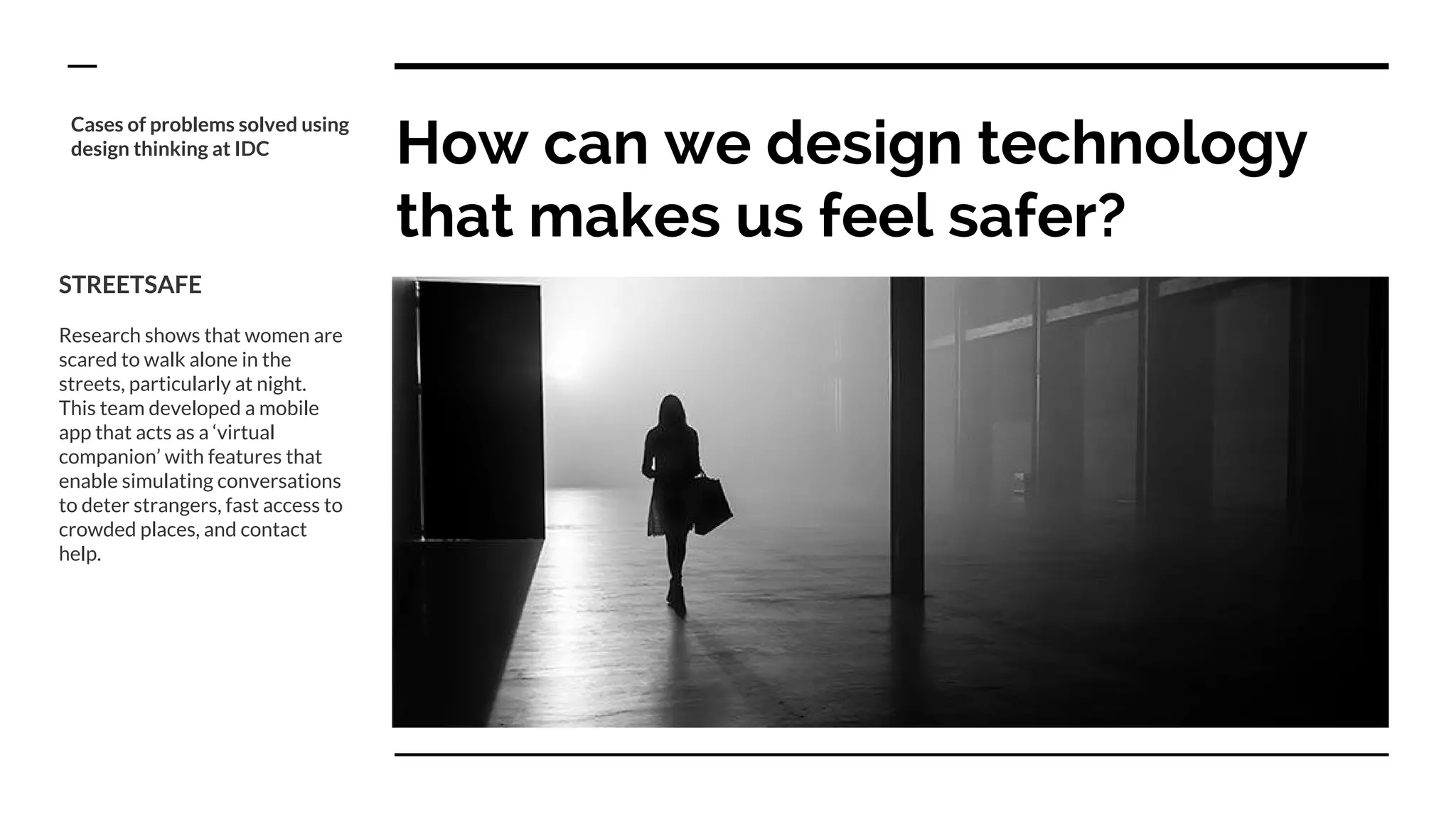
How can we design technology
that makes us feel safer?
STREETSAFE
Research shows that women are
scared to walk alone in the
streets, particularly at night.
This team developed a mobile
app that acts as a ‘virtual
companion’ with features that
enable simulating conversations
to deter strangers, fast access to
crowded places, and contact
help.
Cases of problems solved using
design thinking at IDC
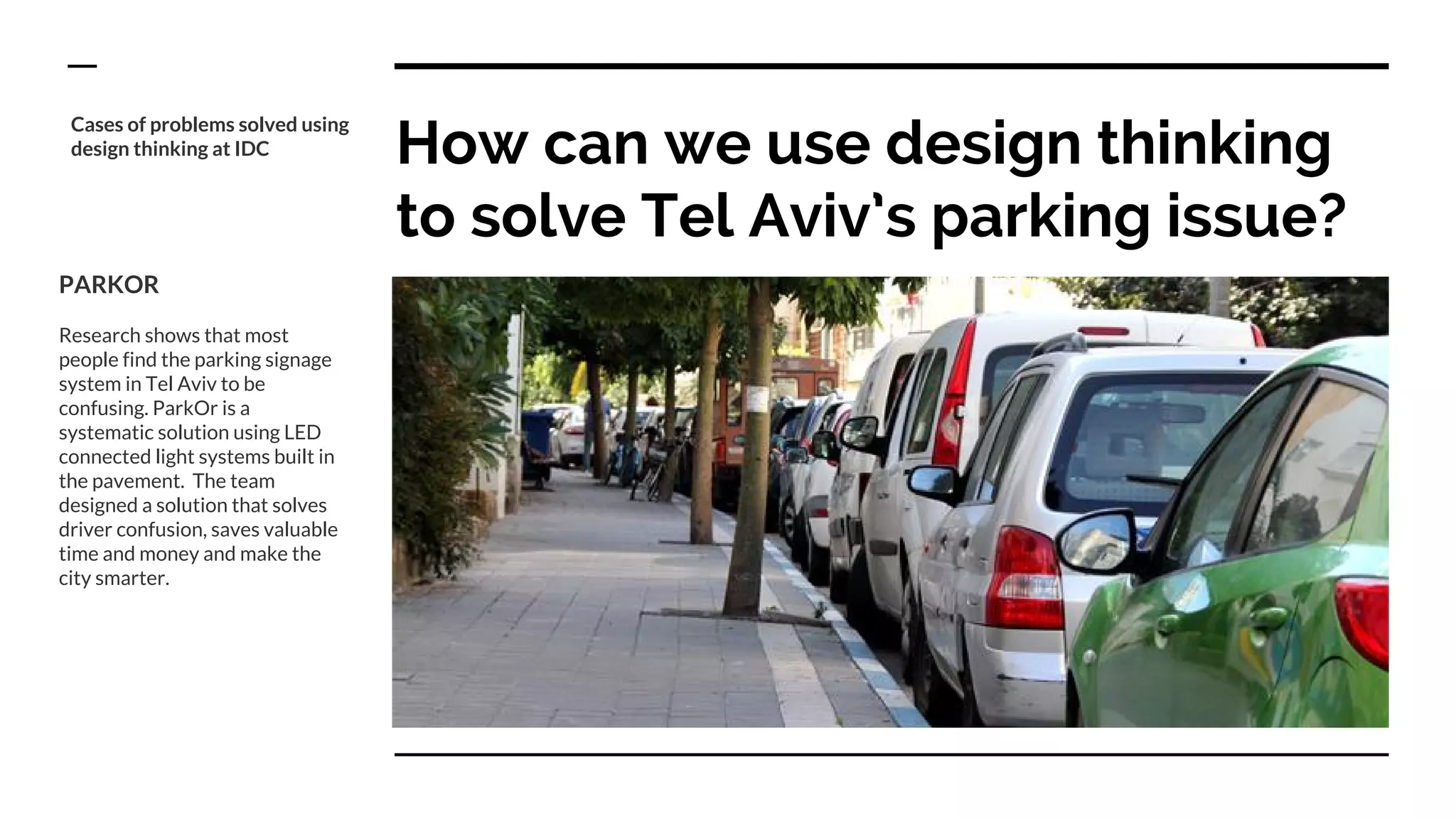
How can we use design thinking
to solve Tel Aviv’s parking issue?
PARKOR
Research shows that most
people find the parking signage
system in Tel Aviv to be
confusing. ParkOr is a
systematic solution using LED
connected light systems built in
the pavement. The team
designed a solution that solves
driver confusion, saves valuable
time and money and make the
city smarter.
Cases of problems solved using
design thinking at IDC
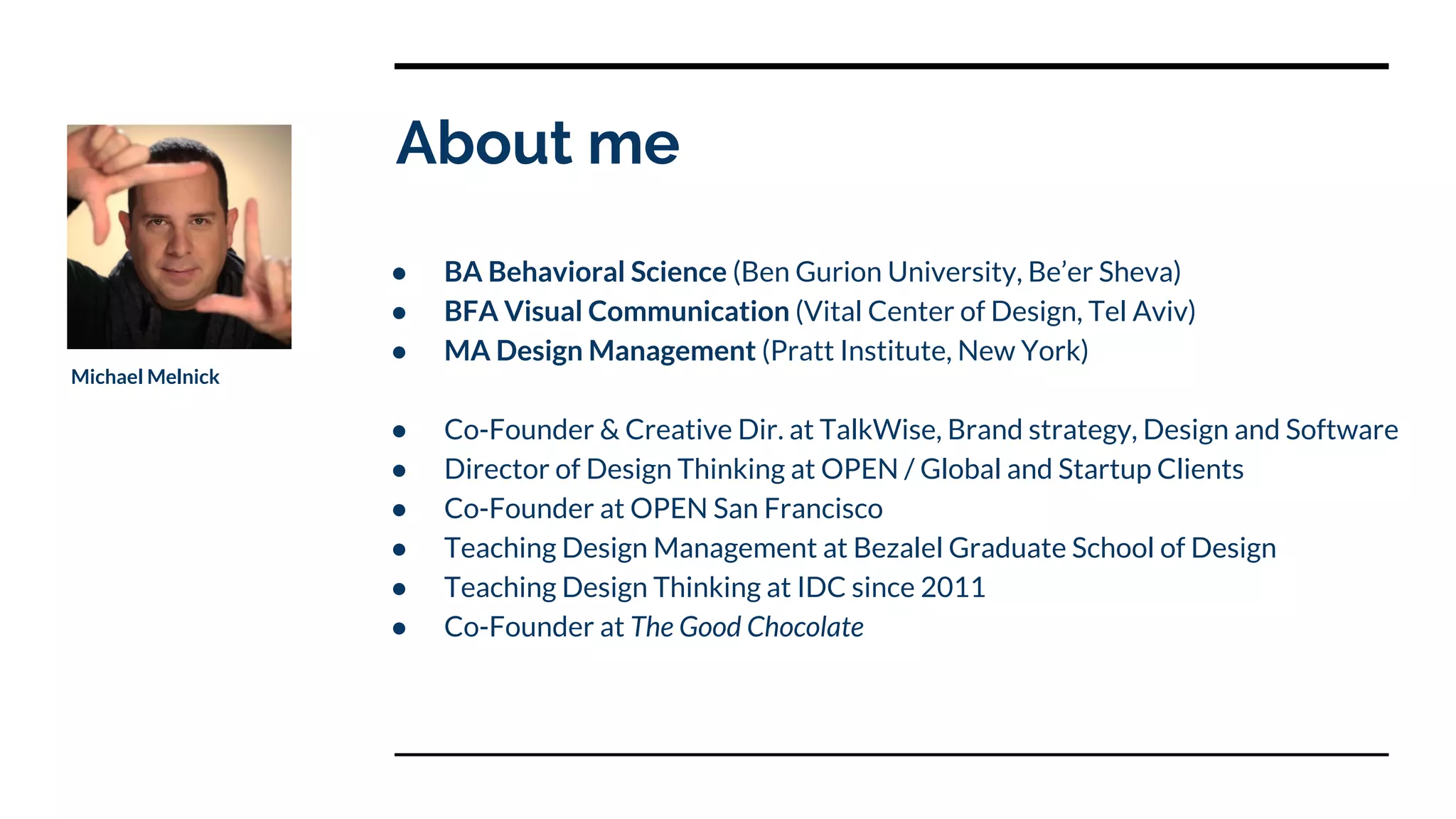
About me
● BA Behavioral Science (Ben Gurion University, Be’er Sheva)
● BFA Visual Communication (Vital Center of Design, Tel Aviv)
● MA Design Management (Pratt Institute, New York)
● Co-Founder & Creative Dir. at TalkWise, Brand strategy, Design and Software
● Director of Design Thinking at OPEN / Global and Startup Clients
● Co-Founder at OPEN San Francisco
● Teaching Design Management at Bezalel Graduate School of Design
● Teaching Design Thinking at IDC since 2011
● Co-Founder at The Good Chocolate
Michael Melnick
Thank you!
Find out more:
● Twitter: @mikimel
● Facebook.com/designthinkingIsrael
● YouTube: Michael Melnick / Design Thinking (Playlist)

What is Design Thinking?

  • 1.
    What is Design Thinking Presentedby Michael Melnick | @UpStart | January 19, 2016 and how can it change your life?
  • 2.
  • 3.
    Creating value bydesign Tesla - Turning a disruptive technology into a desirable one Airbnb - Making hospitality more hospitable TED - Making science popular and accessible The Selfie Stick - Improving self-documentation
  • 4.
    Design’s Proven ROI DMI DESIGN-CENTRICINDEX The study tracked design-led companies in the US market over 10 years and revealed a significant financial advantage in stock value.
  • 5.
  • 6.
    Design is notjust what it looks like or feels like. Design is how it works. Steve Jobs
  • 8.
  • 9.
  • 10.
    Design as aprocess Intent ActionDESIGN
  • 11.
    Design is the signalof human intent (The first Selfie in history)
  • 12.
  • 13.
    You cannot predict whatthe end result will be. The New Challenge:
  • 14.
  • 15.
    We cannot solve ourproblems using the same thinking we used when we created them. - Albert Einstein
  • 16.
    Problem solving basedon a systematic, human-centric, multidisciplinary process that generates value through creative and analytical thinking. The Design Thinking Methodology
  • 18.
    Design Thinking (GoogleSearch: About 5,080,000 results)
  • 19.
    Innovation is notMagic, it can be designed, it can be taught.
  • 20.
  • 21.
    Design Thinking isnot about solving design problems, it is about solving business problems with the design process.
  • 22.
    The Design ThinkingProcess EMPATHIZE DEFINE PROTOTYPE EXAMINE OBSERVE IDEATE HUMAN INSIGHT ITERATIVE PROCESS
  • 23.
    ● Human-centric: placingthe user at the center of the experience ● Re-Framing Problems by asking the right questions ● Integrative thinking in multiple perspectives to solve problems ● Culture and context - an ethnographic approach ● “Hands on approach” - learn by doing - putting ideas to work - fast ● Fearless attitude towards change and playful creativity Design Thinking Principles
  • 24.
  • 27.
    2. Reframing: Askingbetter questions “We need to find a way to keep incubators working when power goes out”
  • 28.
    “How can wekeep our newborn babies warm?”
  • 29.
    2. Reframing: Askingbetter questions
  • 30.
    3. The differenttypes of thinking Analytical Left Brain Strategic Logical Factual Reasons Reliability Intuitive Right Brain Creative Emotional Imaginative Opportunities Validity
  • 31.
  • 32.
  • 35.
  • 36.
    5. Hands on= Fail Fast “Tote”? Have you ever heard of
  • 37.
    “Tote” 5. Hands on= Fail Fast “Tote”
  • 39.
    The best wayof learning about anything is by doing. - Richard Branson 6. Fearless approach
  • 40.
  • 41.
    Translating a human needor a desire into a business solution.
  • 42.
  • 43.
    How can wemotivate people to lead a healthier lifestyle? Cases of problems solved using design thinking at IDC FITBUDDY Most people find it very difficult to commit to a steady fitness routine and spend a lot of money on gym memberships that go unused. This app utilizes social networking to empower groups of people to workout together, set group goals and harness positive social ‘pressure’ for leading a healthier lifestyle.
  • 44.
    How can wedesign technology that makes us feel safer? STREETSAFE Research shows that women are scared to walk alone in the streets, particularly at night. This team developed a mobile app that acts as a ‘virtual companion’ with features that enable simulating conversations to deter strangers, fast access to crowded places, and contact help. Cases of problems solved using design thinking at IDC
  • 45.
    How can weuse design thinking to solve Tel Aviv’s parking issue? PARKOR Research shows that most people find the parking signage system in Tel Aviv to be confusing. ParkOr is a systematic solution using LED connected light systems built in the pavement. The team designed a solution that solves driver confusion, saves valuable time and money and make the city smarter. Cases of problems solved using design thinking at IDC
  • 46.
    About me ● BABehavioral Science (Ben Gurion University, Be’er Sheva) ● BFA Visual Communication (Vital Center of Design, Tel Aviv) ● MA Design Management (Pratt Institute, New York) ● Co-Founder & Creative Dir. at TalkWise, Brand strategy, Design and Software ● Director of Design Thinking at OPEN / Global and Startup Clients ● Co-Founder at OPEN San Francisco ● Teaching Design Management at Bezalel Graduate School of Design ● Teaching Design Thinking at IDC since 2011 ● Co-Founder at The Good Chocolate Michael Melnick
  • 47.
    Thank you! Find outmore: ● Twitter: @mikimel ● Facebook.com/designthinkingIsrael ● YouTube: Michael Melnick / Design Thinking (Playlist)