August 2014
 Intro and objectives
 What is Design Thinking?
 Identifying challenges – understanding principles and mind-sets
 Frameworks from around the world to use when applying design thinking
 Tools in action – co create to innovate
This course is an action learning experience that help the participant learn to
unravel messy challenges and co-create innovative solutions.
The course objectives are to embed design thinking in teams for individuals to:
 Discover new ways of connecting to users and/or customer needs
 Transform insights and data into actionable ideas and good design
 Set-up a conducive working environment to enable co-creation
 Build an appreciation of the mind-set needed to unlock opportunities
 Learn about early stage testing to accelerate learning (and reduce risk)
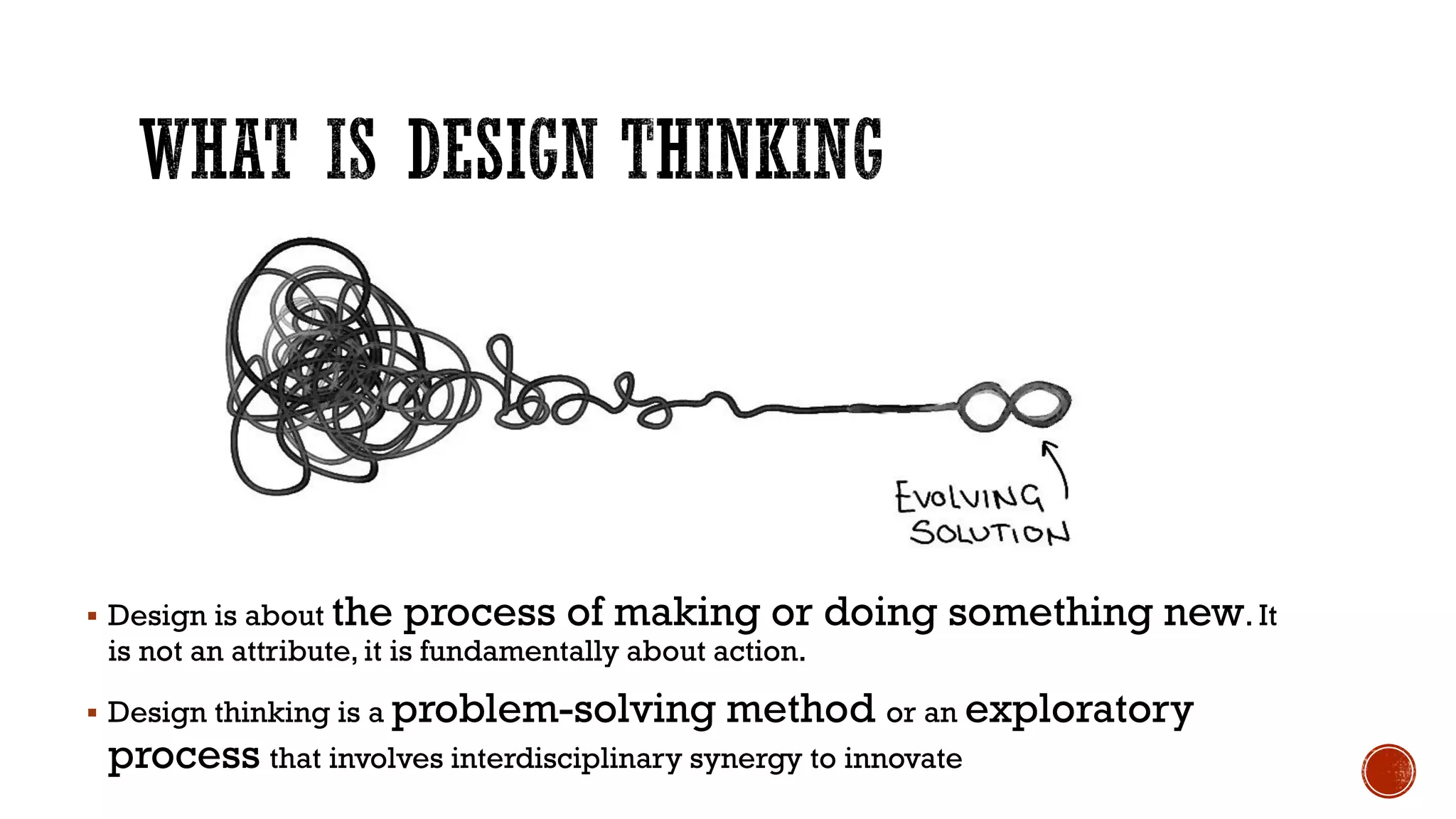
 Design is about the process of making or doing something new. It
is not an attribute, it is fundamentally about action.
 Design thinking is a problem-solving method or an exploratory
process that involves interdisciplinary synergy to innovate
“Design is not a one stop vaccine; it’s an innovation fitness program that puts
an organisation at the top of its game” – Heather Fraser
Design thinking is a problem solving framework that embraces design principles to
derive desirable results. It is a process that is needs focused that aims to deliver
feasible and viable outcomes.
“Design is human centered.
It may integrate technology and economics but it starts with what humans (or any
subject) needs or might need, what makes life easier or enjoyable …
The best designers match necessity to utility, constraint to possibility, and
need to demand.”
(Brown,2009)
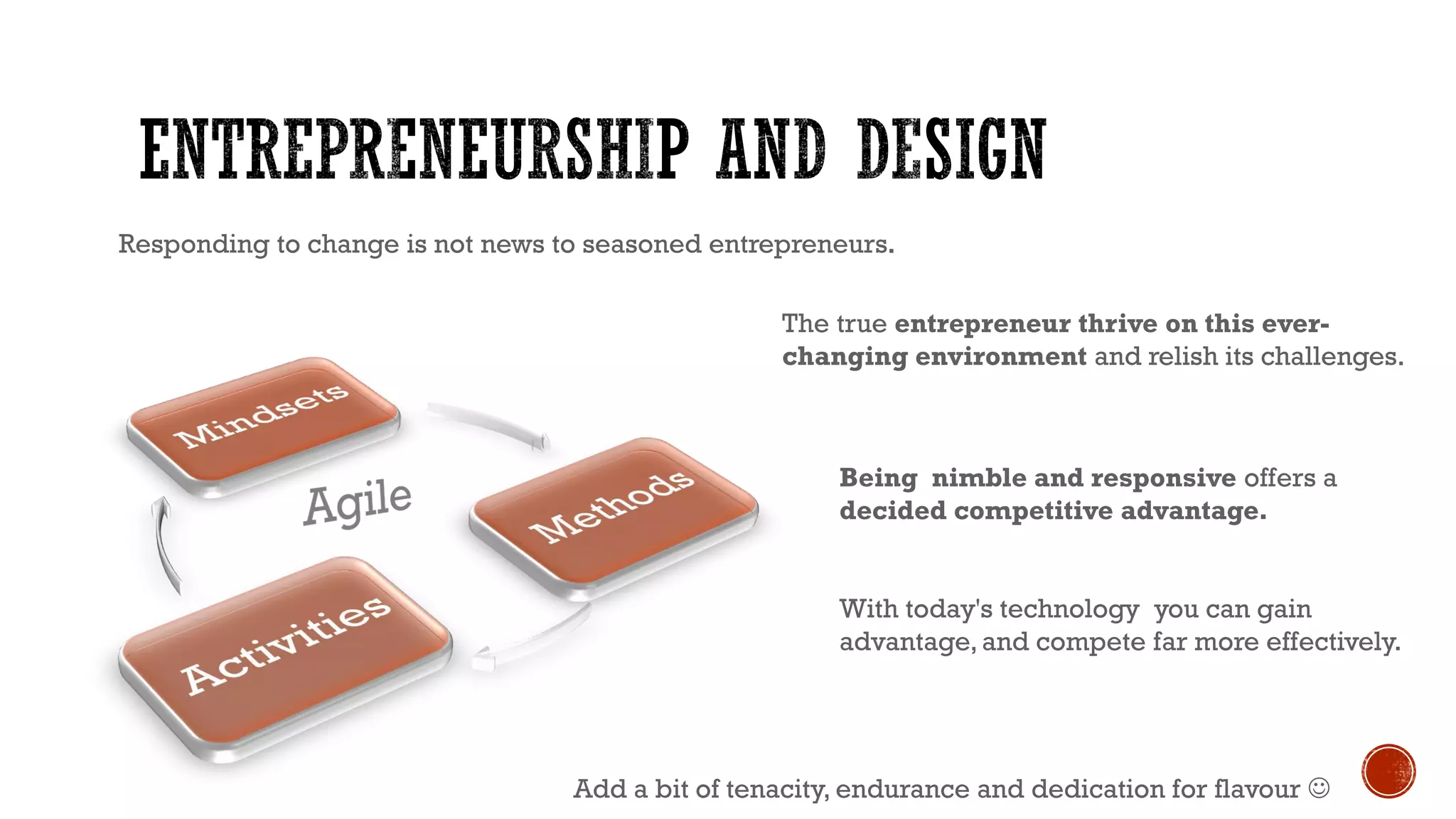
Responding to change is not news to seasoned entrepreneurs.
The true entrepreneur thrive on this ever-
changing environment and relish its challenges.
Being nimble and responsive offers a
decided competitive advantage.
With today's technology you can gain
advantage,and compete far more effectively.
Add a bit of tenacity, endurance and dedication for flavour 
 Spaghetti Game
 Role Play
 Experience Walk-through
 Persona review
 Empathy development exerecise
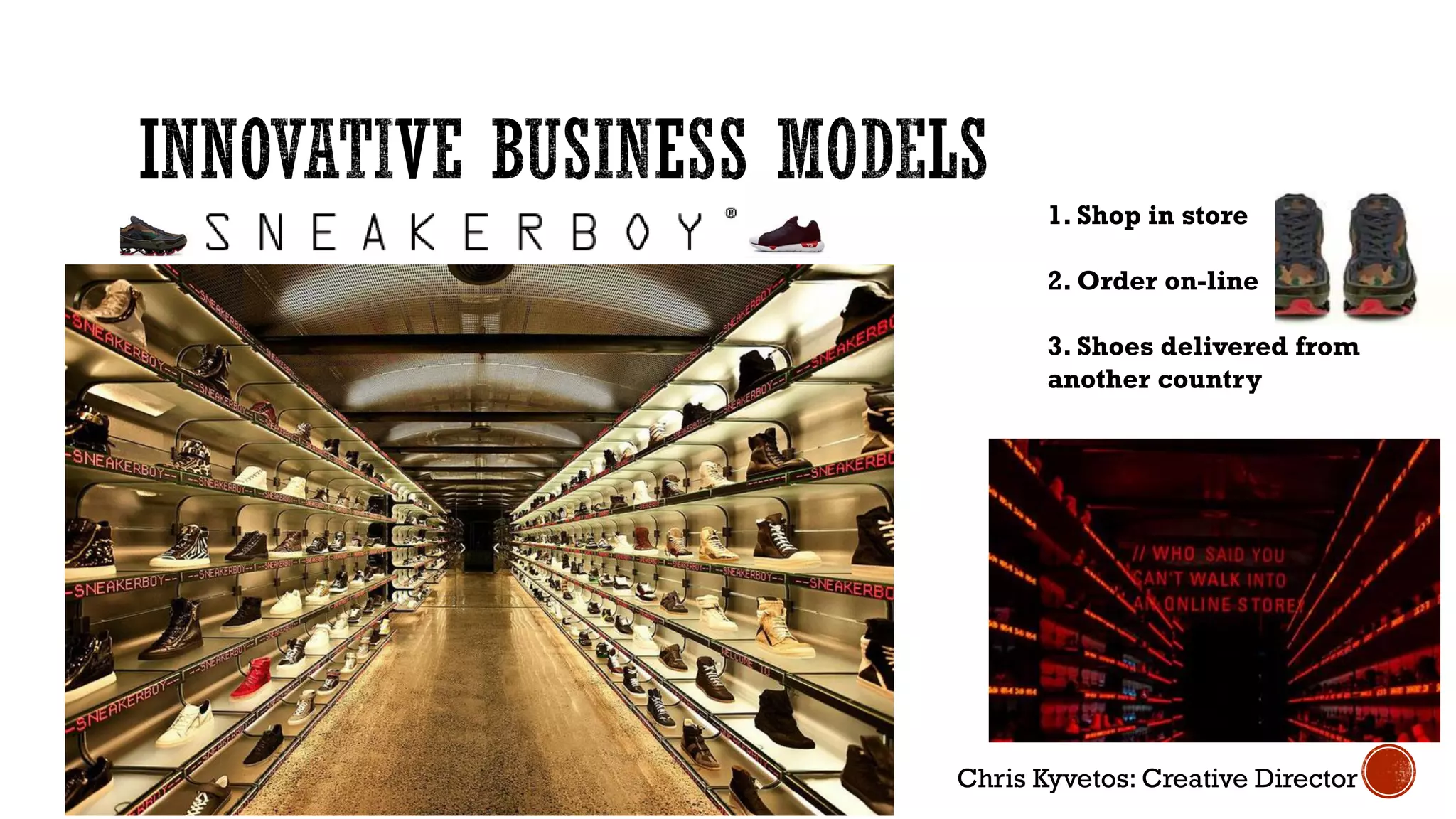
1. Shop in store
2. Order on-line
3. Shoes delivered from
another country
Chris Kyvetos: Creative Director
Designing your business and thinking out-of-the box
 Building a user-centred empathetic culture and teamwork
 Innovation in your business, in your product and/or your service
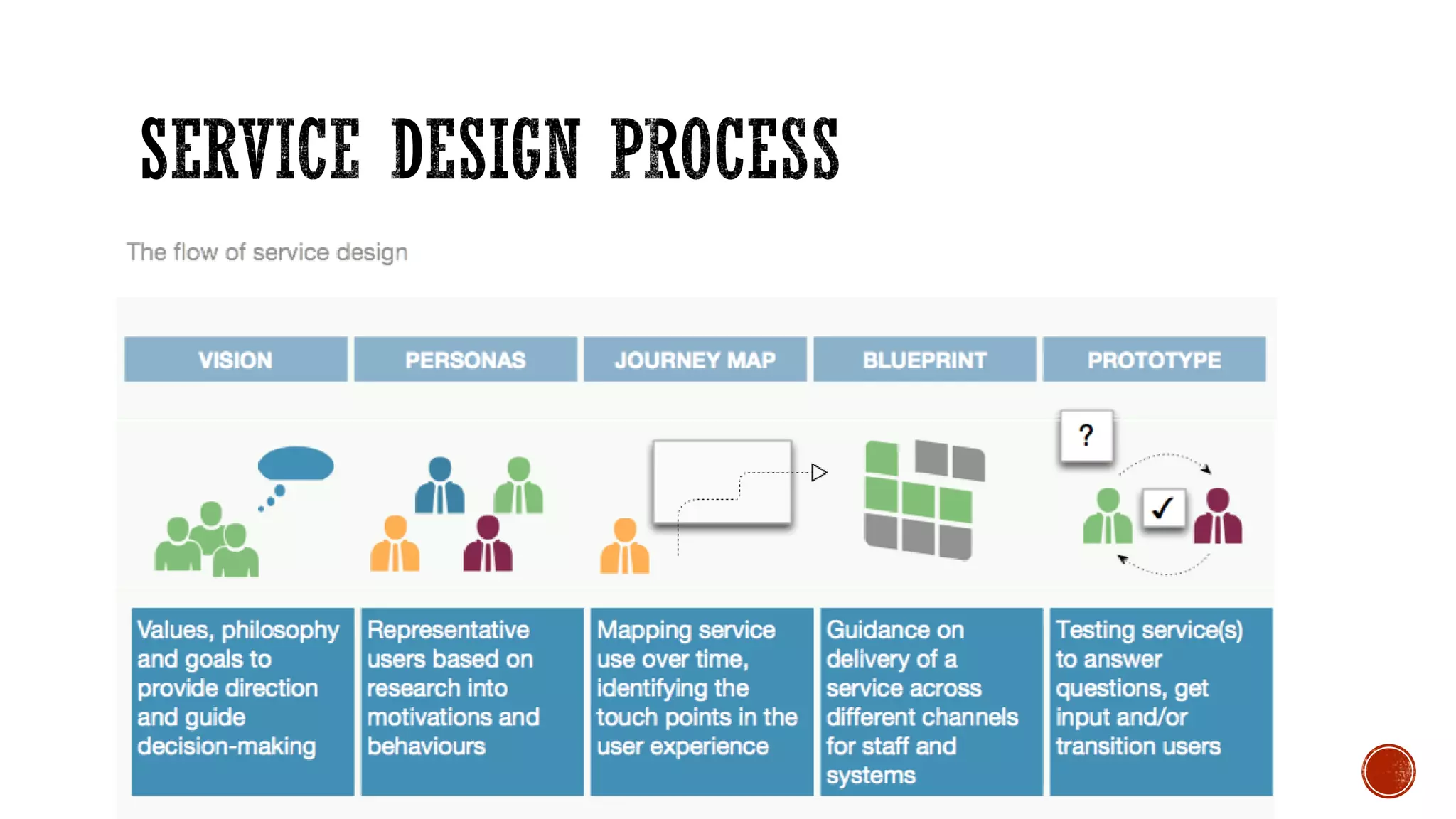
 Morphing into the Experience economy (Service design)
 Business model differentiation and competitive advantage
 Learning where to focus / cutting development costs / lowering risk
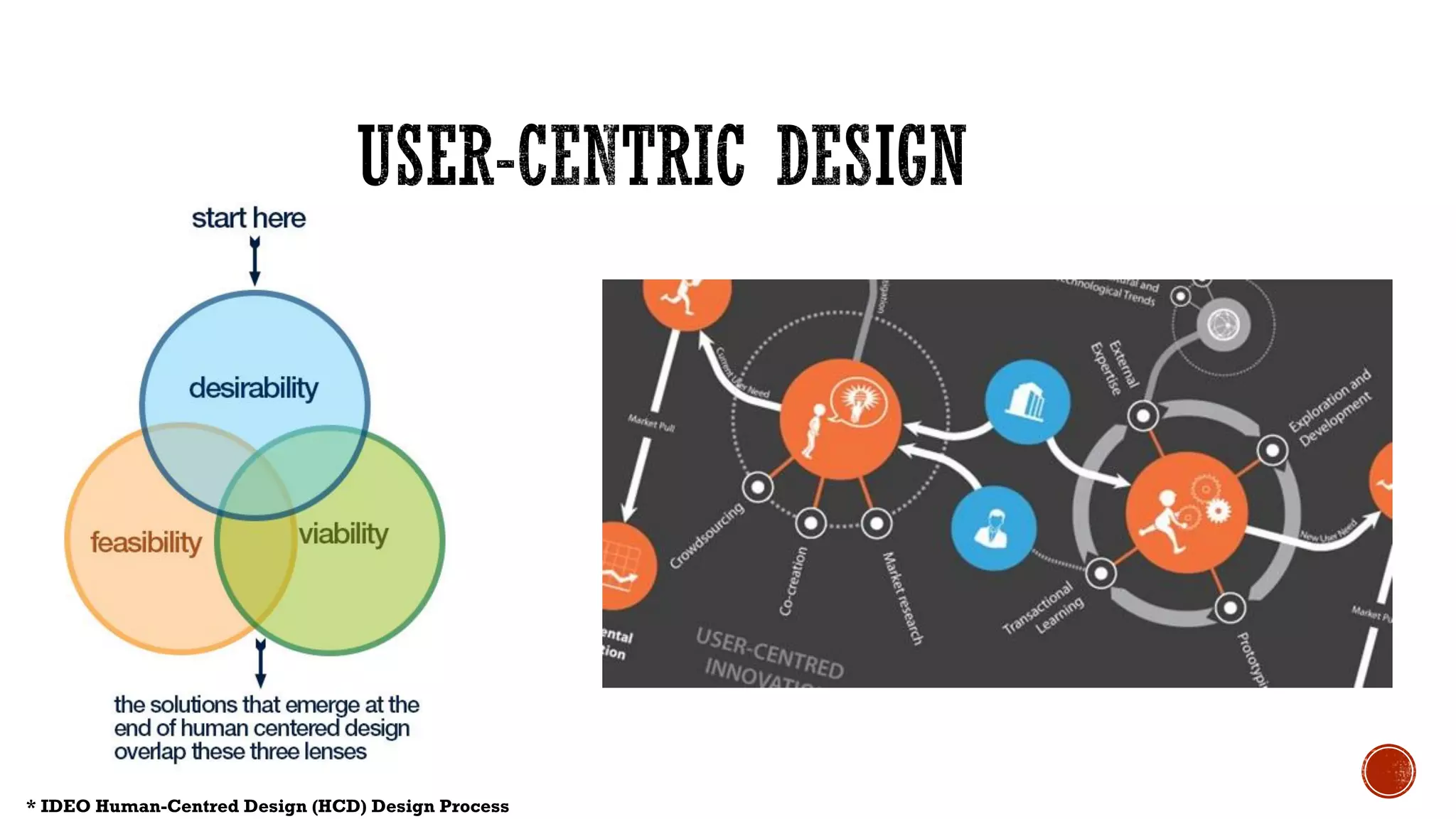
* IDEO Human-Centred Design (HCD) Design Process
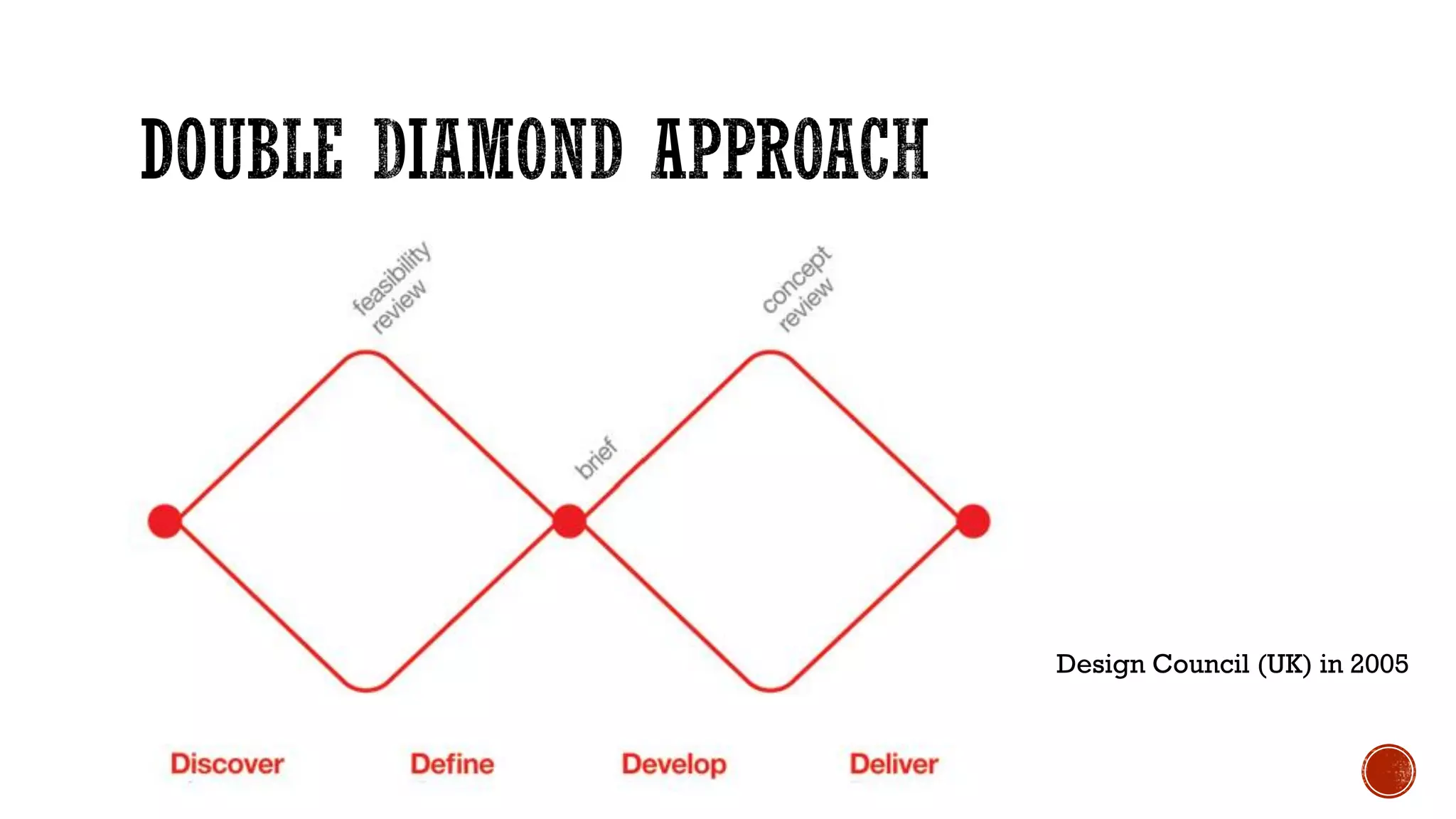
Design Council (UK) in 2005
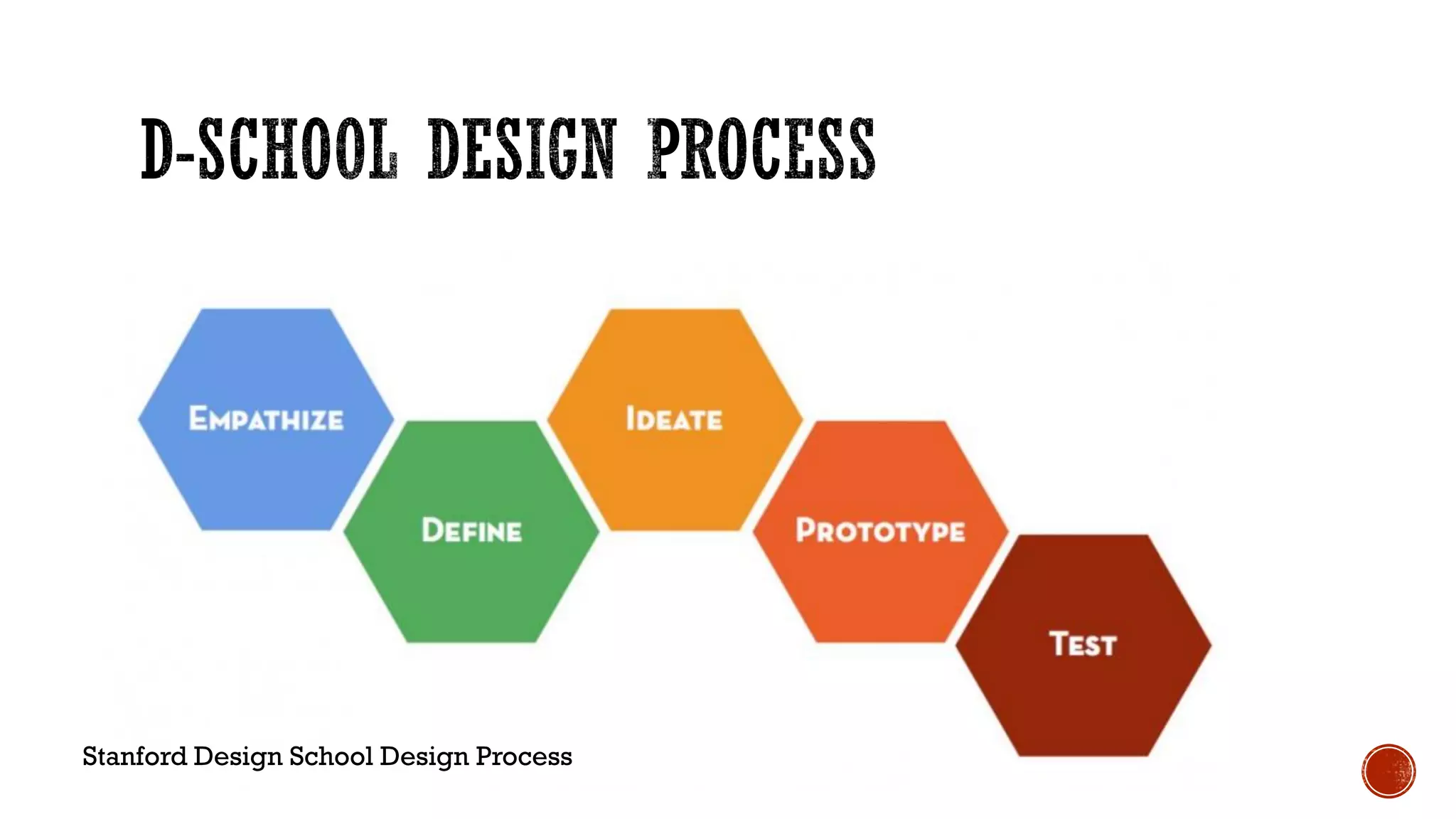
Stanford Design School Design Process
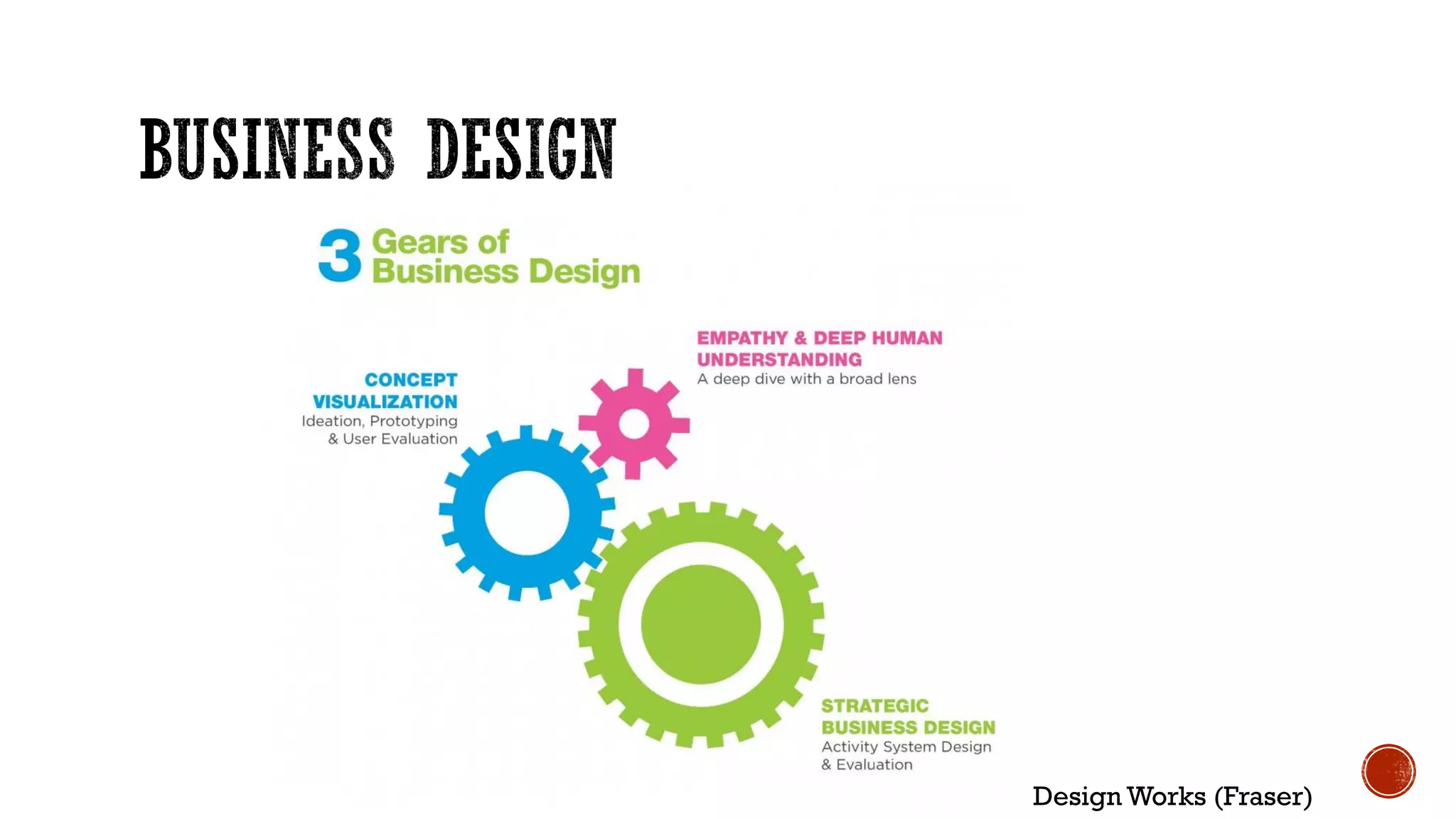
Design Works (Fraser)
Exercises

Design thinking innovation training course outline - building a co-design approach to innovation

  • 1.
  • 2.
     Intro andobjectives  What is Design Thinking?  Identifying challenges – understanding principles and mind-sets  Frameworks from around the world to use when applying design thinking  Tools in action – co create to innovate
  • 3.
    This course isan action learning experience that help the participant learn to unravel messy challenges and co-create innovative solutions. The course objectives are to embed design thinking in teams for individuals to:  Discover new ways of connecting to users and/or customer needs  Transform insights and data into actionable ideas and good design  Set-up a conducive working environment to enable co-creation  Build an appreciation of the mind-set needed to unlock opportunities  Learn about early stage testing to accelerate learning (and reduce risk)
  • 4.
     Design isabout the process of making or doing something new. It is not an attribute, it is fundamentally about action.  Design thinking is a problem-solving method or an exploratory process that involves interdisciplinary synergy to innovate
  • 5.
    “Design is nota one stop vaccine; it’s an innovation fitness program that puts an organisation at the top of its game” – Heather Fraser Design thinking is a problem solving framework that embraces design principles to derive desirable results. It is a process that is needs focused that aims to deliver feasible and viable outcomes.
  • 6.
    “Design is humancentered. It may integrate technology and economics but it starts with what humans (or any subject) needs or might need, what makes life easier or enjoyable … The best designers match necessity to utility, constraint to possibility, and need to demand.” (Brown,2009)
  • 7.
    Responding to changeis not news to seasoned entrepreneurs. The true entrepreneur thrive on this ever- changing environment and relish its challenges. Being nimble and responsive offers a decided competitive advantage. With today's technology you can gain advantage,and compete far more effectively. Add a bit of tenacity, endurance and dedication for flavour 
  • 8.
     Spaghetti Game Role Play  Experience Walk-through  Persona review  Empathy development exerecise
  • 10.
    1. Shop instore 2. Order on-line 3. Shoes delivered from another country Chris Kyvetos: Creative Director
  • 11.
    Designing your businessand thinking out-of-the box
  • 12.
     Building auser-centred empathetic culture and teamwork  Innovation in your business, in your product and/or your service  Morphing into the Experience economy (Service design)  Business model differentiation and competitive advantage  Learning where to focus / cutting development costs / lowering risk
  • 13.
    * IDEO Human-CentredDesign (HCD) Design Process
  • 14.
  • 15.
    Stanford Design SchoolDesign Process
  • 17.
  • 18.