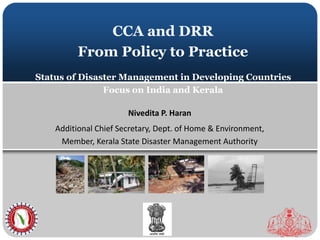
CCA and DRR 
From Policy to Practice 
Status of Disaster Management in Developing Countries 
Focus on India and Kerala 
Nivedita P. Haran 
Additional Chief Secretary, Dept. of Home & Environment, 
Member, Kerala State Disaster Management Authority
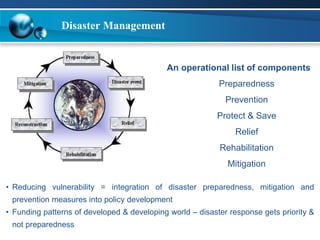
Disaster Management 
An operational list of components 
Preparedness 
Prevention 
Protect & Save 
Relief 
Rehabilitation 
Mitigation 
• Reducing vulnerability = integration of disaster preparedness, mitigation and 
prevention measures into policy development 
• Funding patterns of developed & developing world – disaster response gets priority & 
not preparedness
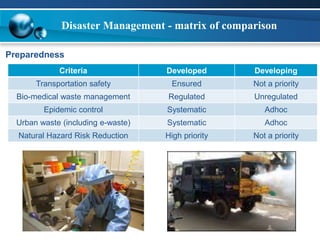
Disaster Management - matrix of comparison 
Preparedness 
Criteria Developed Developing 
Transportation safety Ensured Not a priority 
Bio-medical waste management Regulated Unregulated 
Epidemic control Systematic Adhoc 
Urban waste (including e-waste) Systematic Adhoc 
Natural Hazard Risk Reduction High priority Not a priority
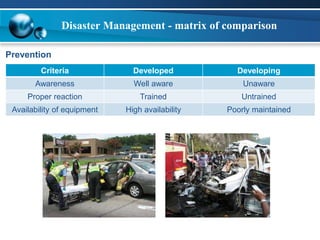
Disaster Management - matrix of comparison 
Prevention 
Criteria Developed Developing 
Awareness Well aware Unaware 
Proper reaction Trained Untrained 
Availability of equipment High availability Poorly maintained
Disaster Management - matrix of comparison 
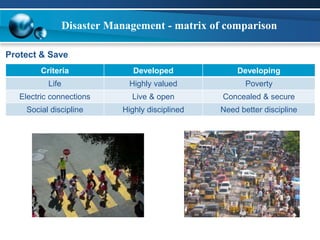
Protect & Save 
Criteria Developed Developing 
Life Highly valued Poverty 
Electric connections Live & open Concealed & secure 
Social discipline Highly disciplined Need better discipline
Disaster Management - matrix of comparison 
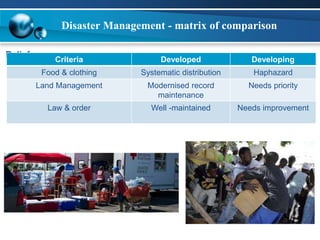
Relief 
Criteria Developed Developing 
Food & clothing Systematic distribution Haphazard 
Land Management Modernised record 
maintenance 
Needs priority 
Law & order Well -maintained Needs improvement
Disaster Management - matrix of comparison 
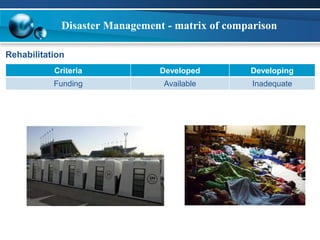
Rehabilitation 
Criteria Developed Developing 
Funding Available Inadequate
Disaster Management - matrix of comparison 
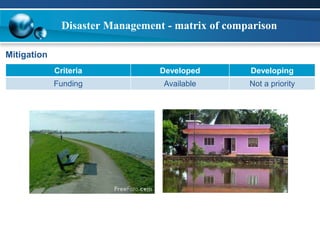
Mitigation 
Criteria Developed Developing 
Funding Available Not a priority
Disaster Management - matrix of comparison 
Information & communication technology 
• Necessary, but at times is over-rated 
• Distribute in areas where people are literate and seem to imbibe 
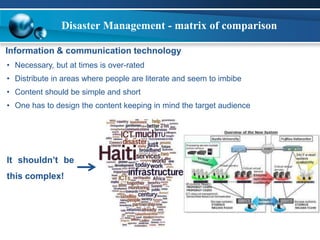
• Content should be simple and short 
• One has to design the content keeping in mind the target audience 
It shouldn’t be 
this complex!
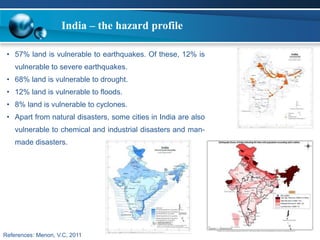
India – the hazard profile 
• 57% land is vulnerable to earthquakes. Of these, 12% is 
vulnerable to severe earthquakes. 
• 68% land is vulnerable to drought. 
• 12% land is vulnerable to floods. 
• 8% land is vulnerable to cyclones. 
• Apart from natural disasters, some cities in India are also 
vulnerable to chemical and industrial disasters and man-made 
disasters. 
References: Menon, V.C, 2011
India – National arrangements for Disaster Management 
• National Disaster Management Act, 2005 
– National Disaster Management Authority 
– State Disaster Management Authority 
– National Disaster Response Force - 2009 
• National Disaster Response Fund administered by Govt. of India. States administer 
State Disaster Response Fund with 75% contribution from Govt. of India and 25% 
from State Government. 
• National Disaster Mitigation Fund yet to be formed. Pro-active states like Kerala has 
constituted State Disaster Mitigation Fund with own funds. 
• Multiple projects with support of UNDP, World Bank, ADB, USAID etc. running on 
various components of Disaster Management 
References: Menon, V.C, 2011
Kerala – the hazard profile 
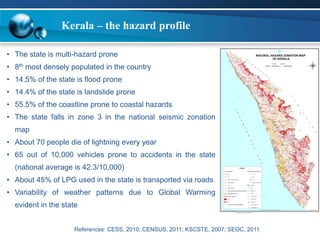
• The state is multi-hazard prone 
• 8th most densely populated in the country 
• 14.5% of the state is flood prone 
• 14.4% of the state is landslide prone 
• 55.5% of the coastline prone to coastal hazards 
• The state falls in zone 3 in the national seismic zonation 
map 
• About 70 people die of lightning every year 
• 65 out of 10,000 vehicles prone to accidents in the state 
(national average is 42.3/10,000) 
• About 45% of LPG used in the state is transported via roads 
• Variability of weather patterns due to Global Warming 
evident in the state 
References: CESS, 2010; CENSUS, 2011; KSCSTE, 2007; SEOC, 2011
Kerala - Current status 
• KSDMA constituted (2007) 
• DDMAs established in 14 districts (2008) 
• Office of KSDMA established (2008) 
• State DM Policy formulated and 
promulgated (2010) 
• State Disaster Management Plan Profile 
published (2010) 
• VHF network established – 295 village 
offices, 63 taluks, 14 collectorates & 4 
state level offices (2009-11) 
• SEOC made functional (2012) 
• Five year plan budget head for KSDMA 
(2012) 
• DDMPs prepared and published (2007-12) 
• State Disaster Mitigation Fund created 
(2012)
Crisis Management Group – Anthropogenic Hazards 
Adl. Chief Secretary, Home – Chairman 
Prl. Secretary, Revenue & DM – Member 
State Police Chief – Convener 
IG, Intelligence – Member 
Commandant General, Fire and Rescue – Member 
Commandant, SDRF – Member 
Director, ILDM – Member 
Head (Scientist), SEOC - Member
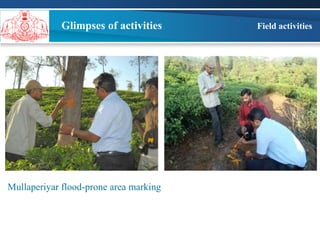
Field activities 
Glimpses of activities 
Mullaperiyar flood-prone area marking
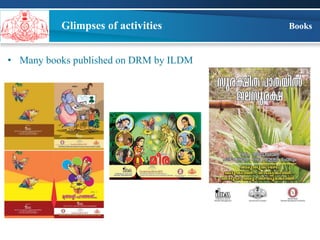
Books 
Glimpses of activities 
• Many books published on DRM by ILDM
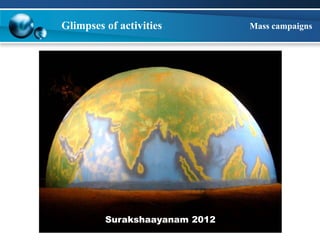
Glimpses of activities Mass campaigns 
Surakshaayanam 2012
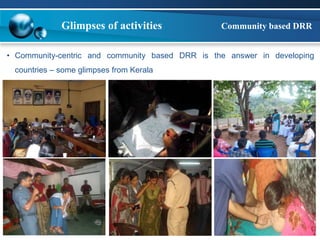
Glimpses of activities Community based DRR 
• Community-centric and community based DRR is the answer in developing 
countries – some glimpses from Kerala
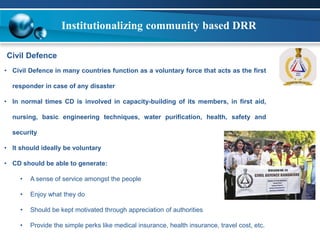
Institutionalizing community based DRR 
Civil Defence 
• Civil Defence in many countries function as a voluntary force that acts as the first 
responder in case of any disaster 
• In normal times CD is involved in capacity-building of its members, in first aid, 
nursing, basic engineering techniques, water purification, health, safety and 
security 
• It should ideally be voluntary 
• CD should be able to generate: 
• A sense of service amongst the people 
• Enjoy what they do 
• Should be kept motivated through appreciation of authorities 
• Provide the simple perks like medical insurance, health insurance, travel cost, etc.
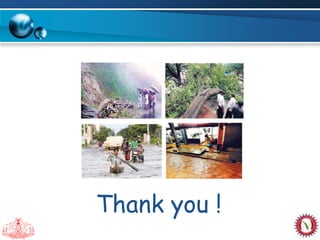
Thank you !

Davos2014 Status of DM Developing Countries

  • 1.
    CCA and DRR From Policy to Practice Status of Disaster Management in Developing Countries Focus on India and Kerala Nivedita P. Haran Additional Chief Secretary, Dept. of Home & Environment, Member, Kerala State Disaster Management Authority
  • 2.
    Disaster Management Anoperational list of components Preparedness Prevention Protect & Save Relief Rehabilitation Mitigation • Reducing vulnerability = integration of disaster preparedness, mitigation and prevention measures into policy development • Funding patterns of developed & developing world – disaster response gets priority & not preparedness
  • 3.
    Disaster Management -matrix of comparison Preparedness Criteria Developed Developing Transportation safety Ensured Not a priority Bio-medical waste management Regulated Unregulated Epidemic control Systematic Adhoc Urban waste (including e-waste) Systematic Adhoc Natural Hazard Risk Reduction High priority Not a priority
  • 4.
    Disaster Management -matrix of comparison Prevention Criteria Developed Developing Awareness Well aware Unaware Proper reaction Trained Untrained Availability of equipment High availability Poorly maintained
  • 5.
    Disaster Management -matrix of comparison Protect & Save Criteria Developed Developing Life Highly valued Poverty Electric connections Live & open Concealed & secure Social discipline Highly disciplined Need better discipline
  • 6.
    Disaster Management -matrix of comparison Relief Criteria Developed Developing Food & clothing Systematic distribution Haphazard Land Management Modernised record maintenance Needs priority Law & order Well -maintained Needs improvement
  • 7.
    Disaster Management -matrix of comparison Rehabilitation Criteria Developed Developing Funding Available Inadequate
  • 8.
    Disaster Management -matrix of comparison Mitigation Criteria Developed Developing Funding Available Not a priority
  • 9.
    Disaster Management -matrix of comparison Information & communication technology • Necessary, but at times is over-rated • Distribute in areas where people are literate and seem to imbibe • Content should be simple and short • One has to design the content keeping in mind the target audience It shouldn’t be this complex!
  • 10.
    India – thehazard profile • 57% land is vulnerable to earthquakes. Of these, 12% is vulnerable to severe earthquakes. • 68% land is vulnerable to drought. • 12% land is vulnerable to floods. • 8% land is vulnerable to cyclones. • Apart from natural disasters, some cities in India are also vulnerable to chemical and industrial disasters and man-made disasters. References: Menon, V.C, 2011
  • 11.
    India – Nationalarrangements for Disaster Management • National Disaster Management Act, 2005 – National Disaster Management Authority – State Disaster Management Authority – National Disaster Response Force - 2009 • National Disaster Response Fund administered by Govt. of India. States administer State Disaster Response Fund with 75% contribution from Govt. of India and 25% from State Government. • National Disaster Mitigation Fund yet to be formed. Pro-active states like Kerala has constituted State Disaster Mitigation Fund with own funds. • Multiple projects with support of UNDP, World Bank, ADB, USAID etc. running on various components of Disaster Management References: Menon, V.C, 2011
  • 12.
    Kerala – thehazard profile • The state is multi-hazard prone • 8th most densely populated in the country • 14.5% of the state is flood prone • 14.4% of the state is landslide prone • 55.5% of the coastline prone to coastal hazards • The state falls in zone 3 in the national seismic zonation map • About 70 people die of lightning every year • 65 out of 10,000 vehicles prone to accidents in the state (national average is 42.3/10,000) • About 45% of LPG used in the state is transported via roads • Variability of weather patterns due to Global Warming evident in the state References: CESS, 2010; CENSUS, 2011; KSCSTE, 2007; SEOC, 2011
  • 13.
    Kerala - Currentstatus • KSDMA constituted (2007) • DDMAs established in 14 districts (2008) • Office of KSDMA established (2008) • State DM Policy formulated and promulgated (2010) • State Disaster Management Plan Profile published (2010) • VHF network established – 295 village offices, 63 taluks, 14 collectorates & 4 state level offices (2009-11) • SEOC made functional (2012) • Five year plan budget head for KSDMA (2012) • DDMPs prepared and published (2007-12) • State Disaster Mitigation Fund created (2012)
  • 14.
    Crisis Management Group– Anthropogenic Hazards Adl. Chief Secretary, Home – Chairman Prl. Secretary, Revenue & DM – Member State Police Chief – Convener IG, Intelligence – Member Commandant General, Fire and Rescue – Member Commandant, SDRF – Member Director, ILDM – Member Head (Scientist), SEOC - Member
  • 15.
    Field activities Glimpsesof activities Mullaperiyar flood-prone area marking
  • 16.
    Books Glimpses ofactivities • Many books published on DRM by ILDM
  • 17.
    Glimpses of activitiesMass campaigns Surakshaayanam 2012
  • 18.
    Glimpses of activitiesCommunity based DRR • Community-centric and community based DRR is the answer in developing countries – some glimpses from Kerala
  • 19.
    Institutionalizing community basedDRR Civil Defence • Civil Defence in many countries function as a voluntary force that acts as the first responder in case of any disaster • In normal times CD is involved in capacity-building of its members, in first aid, nursing, basic engineering techniques, water purification, health, safety and security • It should ideally be voluntary • CD should be able to generate: • A sense of service amongst the people • Enjoy what they do • Should be kept motivated through appreciation of authorities • Provide the simple perks like medical insurance, health insurance, travel cost, etc.
  • 20.