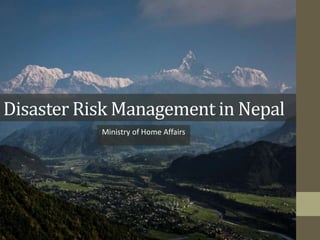

Disaster Risk Management in Nepal
Ministry of Home Affairs
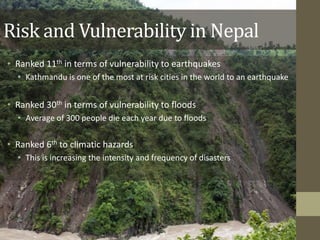
Risk and Vulnerability in Nepal
• Ranked 11th in terms of vulnerability to earthquakes
• Kathmandu is one of the most at risk cities in the world to an earthquake
• Ranked 30th in terms of vulnerability to floods
• Average of 300 people die each year due to floods
• Ranked 6th to climatic hazards
• This is increasing the intensity and frequency of disasters
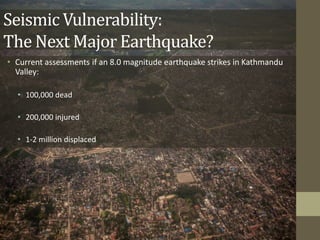
Seismic Vulnerability:
The Next Major Earthquake?
• Current assessments if an 8.0 magnitude earthquake strikes in Kathmandu
Valley:
• 100,000 dead
• 200,000 injured
• 1-2 million displaced
Existing Institutional
Arrangements
• Natural Calamity Relief Act, 1982
• Local Self-Governance Act, 1999
• National Strategy for DRM, 2009
• Disaster Management Act, drafted
• Nepal Risk Reduction Consortium, 2011
The Nepal Risk Reduction Consortium
(NRRC)
• Government led arrangement that unites humanitarian, development and
financial partners to strengthen DRR in Nepal
• Members include ADB, AusAid, ECHO, Japan, IFRC, UK Aid, US Embassy, United
Nations and World Bank
• Based on the NSDRM and HFA
• Five Flagship priorities identified (each coordinated by international partner
and government ministry):
• School and Hospital Safety
• Emergency Preparedness and Response
• Flood Management in the Kosi River Basin
• Community Based DRR
• Policy/Institutional Support for DRM
NRRC and the HFA
• 5 Priorities for HFA
• Ensure DRM is a priority
• Identify, assess and understand risk and enhance early warning
• Strengthen knowledge and awareness
• Reduce underlying risk factors
• Strengthen response
• These priorities are aligned with NRRC Flagships
• Flagship 1: Priorities 2 and 3
• Flagship 2: Priority 5
• Flagship 3: Priorities 2 and 3
• Flagship 4: Priorities 1, 2 and 3
• Flagship 5: Priorities 1 and 4
NRRC: Progress
• Flagship 1: School and Hospital Safety (coordinated by
ADB, WHO, MoE, MoHP)
• 65 school buildings retrofitted in 2011 and 2012
• Work beginning on retrofitting another 260 school buildings by 2014
• Flagship 2: Emergency Preparedness and Response (coordinated by UNOCHA
and MoHA)
• National Disaster Response Framework being finalised
• 36 District and Regional Emergency Operating Centres established
• 83 open spaced identified and secured
• Flagship: Flood Management in the Kosi River Basin (coordinated by World
Bank and MoI)
• Emergency embankment strengthening completed
• Now looking to expand work to another river basin in Nepal
NRRC: Progress
• Flagship 4: Community Based DRR (coordinated by IFRC and MoFALD)
• 9 minimum characteristics for a disaster resilient community agreed upon
• Over 500 VDCs/municipalities (out of a targeted 1,000) covered with
CBDRR activities
• Flagship 5: Policy/institutional Support for DRM (coordinated by
UNDP and MoHA)
• DRM focal points established in over 20 government ministries
• Building code application and enforcement being strengthened through
permit systems, masons trainings, etc.
• Mainstreaming DRM being piloted at the local level
NRRC: Policy Issues
• Meeting ambitious targets in a pre-emergency environment and in a 5 year
time frame
• Ensuring our ambitious operational targets have leverage over policy. For
example using our ambitious retrofitting programme to address the issue of
new build schools and hospitals and the issue of legislation of private
schools and hospitals
• Ensuring immediate action with sustainability and ensuring we minimise the
creation of new risk in the fasting growing urban environment in south Asia
• Strengthening institutional capacity across Government and in Municipalities
when there have not been local elections in over a decade and there are no
Mayors.
• Promoting coordination within and between Flagships and Ministries
DRM in Nepal: Challenges
• Technical capacity limits the scale and scope to implement programs
• Maintaining commitment and engagement from Government,
international and national partners
• Resource constraints on key issues
• Coordination amongst partners and various platforms to avoid
duplication and maximise use of resources
Thank You

Disaster risk management in nepal

  • 1.
    Disaster Risk Managementin Nepal Ministry of Home Affairs
  • 2.
    Risk and Vulnerabilityin Nepal • Ranked 11th in terms of vulnerability to earthquakes • Kathmandu is one of the most at risk cities in the world to an earthquake • Ranked 30th in terms of vulnerability to floods • Average of 300 people die each year due to floods • Ranked 6th to climatic hazards • This is increasing the intensity and frequency of disasters
  • 3.
    Seismic Vulnerability: The NextMajor Earthquake? • Current assessments if an 8.0 magnitude earthquake strikes in Kathmandu Valley: • 100,000 dead • 200,000 injured • 1-2 million displaced
  • 4.
    Existing Institutional Arrangements • NaturalCalamity Relief Act, 1982 • Local Self-Governance Act, 1999 • National Strategy for DRM, 2009 • Disaster Management Act, drafted • Nepal Risk Reduction Consortium, 2011
  • 5.
    The Nepal RiskReduction Consortium (NRRC) • Government led arrangement that unites humanitarian, development and financial partners to strengthen DRR in Nepal • Members include ADB, AusAid, ECHO, Japan, IFRC, UK Aid, US Embassy, United Nations and World Bank • Based on the NSDRM and HFA • Five Flagship priorities identified (each coordinated by international partner and government ministry): • School and Hospital Safety • Emergency Preparedness and Response • Flood Management in the Kosi River Basin • Community Based DRR • Policy/Institutional Support for DRM
  • 6.
    NRRC and theHFA • 5 Priorities for HFA • Ensure DRM is a priority • Identify, assess and understand risk and enhance early warning • Strengthen knowledge and awareness • Reduce underlying risk factors • Strengthen response • These priorities are aligned with NRRC Flagships • Flagship 1: Priorities 2 and 3 • Flagship 2: Priority 5 • Flagship 3: Priorities 2 and 3 • Flagship 4: Priorities 1, 2 and 3 • Flagship 5: Priorities 1 and 4
  • 7.
    NRRC: Progress • Flagship1: School and Hospital Safety (coordinated by ADB, WHO, MoE, MoHP) • 65 school buildings retrofitted in 2011 and 2012 • Work beginning on retrofitting another 260 school buildings by 2014 • Flagship 2: Emergency Preparedness and Response (coordinated by UNOCHA and MoHA) • National Disaster Response Framework being finalised • 36 District and Regional Emergency Operating Centres established • 83 open spaced identified and secured • Flagship: Flood Management in the Kosi River Basin (coordinated by World Bank and MoI) • Emergency embankment strengthening completed • Now looking to expand work to another river basin in Nepal
  • 8.
    NRRC: Progress • Flagship4: Community Based DRR (coordinated by IFRC and MoFALD) • 9 minimum characteristics for a disaster resilient community agreed upon • Over 500 VDCs/municipalities (out of a targeted 1,000) covered with CBDRR activities • Flagship 5: Policy/institutional Support for DRM (coordinated by UNDP and MoHA) • DRM focal points established in over 20 government ministries • Building code application and enforcement being strengthened through permit systems, masons trainings, etc. • Mainstreaming DRM being piloted at the local level
  • 9.
    NRRC: Policy Issues •Meeting ambitious targets in a pre-emergency environment and in a 5 year time frame • Ensuring our ambitious operational targets have leverage over policy. For example using our ambitious retrofitting programme to address the issue of new build schools and hospitals and the issue of legislation of private schools and hospitals • Ensuring immediate action with sustainability and ensuring we minimise the creation of new risk in the fasting growing urban environment in south Asia • Strengthening institutional capacity across Government and in Municipalities when there have not been local elections in over a decade and there are no Mayors. • Promoting coordination within and between Flagships and Ministries
  • 10.
    DRM in Nepal:Challenges • Technical capacity limits the scale and scope to implement programs • Maintaining commitment and engagement from Government, international and national partners • Resource constraints on key issues • Coordination amongst partners and various platforms to avoid duplication and maximise use of resources
  • 11.