Natural Disaster
Chan Sing You Katie (02)
Lok Voon Shing (18)
Lim Siew Phing (17)
A natural disaster is a major effect of a natural hazard
that affects the environment, and leads to financial,
environmental and human losses.
• Floods
• Tsunami
• Tornadoes
• Hurricanes
• Cyclones
• Volcanic Eruptions
• Earthquakes
• Heatwaves
• Droughts
• Wild Fires
• Landslides
• Blizzards
• Ice Storms
• Avalanches
Natural Disasters that cause the most deaths
Earthquake
• Manifest themselves by vibration, shaking and
displacement of the ground
• Caused mostly by slippage within geological
faults
• Rarely kill people or wildlife
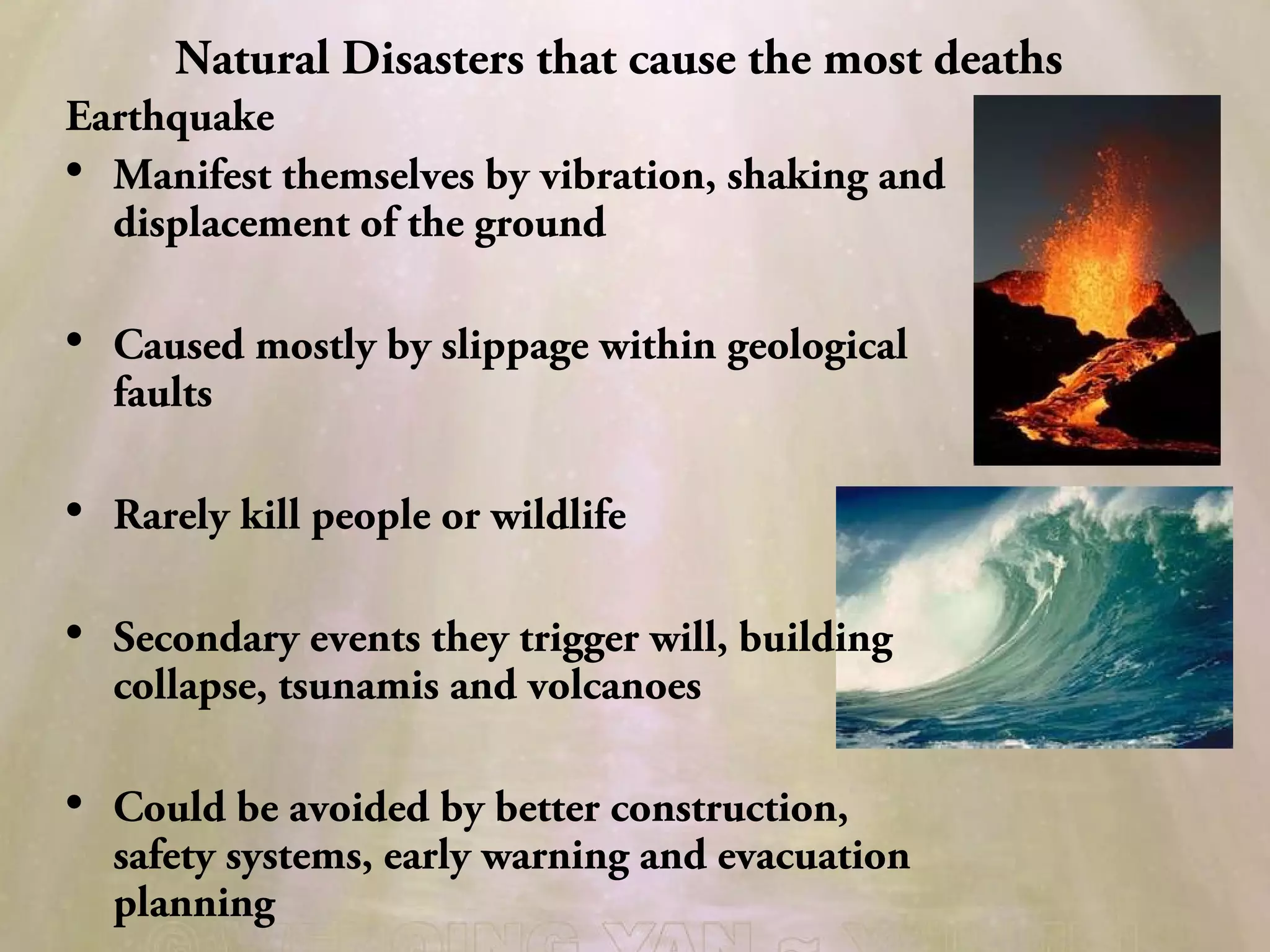
• Secondary events they trigger will, building
collapse, tsunamis and volcanoes
• Could be avoided by better construction,
safety systems, early warning and evacuation
planning
Floods
• Regular natural disaster in Malaysia during
monsoon season
• Result from the water within a body of water, such as
river or lake, which overflows or breaks levees, with
the result that the water escapes its usual boundaries
• Caused by inadequate drainage
• Could be prevent by reducing the disposal of
garbage into river or lake
Volcanic Eruptions
• May cause the explosion of
volcano, the fall of rock, and
lava may be produced
• Volcanic ash :-
• May cause roofs to collapse under its weight
• Even small quantities will harm humans if inhaled
• Cause abrasion damage to moving parts such as engines
• Pyroclastic flows (a cloud of hot volcanic ash) is the
main killer of humans
Impact of Natural Disasters
Individual Impact
• Can be felt physically, mentally and emotionally
• Destruction of property, loss of financial resources
and personal injury or illness
• Develop severe post-traumatic stress disorders or
withdraw into states of depression
• Lead to significant population migrations
Community Impact
• Loss of economic resources that recovery becomes
difficult, if not almost impossible
• Opportunity in the aftermath of a disaster to rebuild
better and stronger communities than before
• Population, demographic and cultural shifts are also
result of the impact
Economic Impact
• Reduced tax revenue
• Loss of infrastructure
• Expense of reclamation efforts
• Loss of normal revenue
• Huge sums of federal assistance were necessary to
held jump start recovery efforts
Environment
• Our ecosystems can be dramatically damaged
• Global climate changes
• Sea level increases that will completely swamp some
island nations
• Edible fish supply decreases
• Loss of coral reefs
Solution
Not all natural disasters can be prevented.
Each natural disaster has its own factors
and complications. Understanding the
basic principles of ecology can provide keys
to lessening their effects. Nature evolved
with natural disasters and disturbance. The
best prevention is looking at strategies
found in nature.
Natural disasters' Impacts & Prevention

Natural disasters' Impacts & Prevention

  • 1.
    Natural Disaster Chan SingYou Katie (02) Lok Voon Shing (18) Lim Siew Phing (17)
  • 2.
    A natural disasteris a major effect of a natural hazard that affects the environment, and leads to financial, environmental and human losses. • Floods • Tsunami • Tornadoes • Hurricanes • Cyclones • Volcanic Eruptions
  • 3.
    • Earthquakes • Heatwaves •Droughts • Wild Fires • Landslides • Blizzards • Ice Storms • Avalanches
  • 4.
    Natural Disasters thatcause the most deaths Earthquake • Manifest themselves by vibration, shaking and displacement of the ground • Caused mostly by slippage within geological faults • Rarely kill people or wildlife • Secondary events they trigger will, building collapse, tsunamis and volcanoes • Could be avoided by better construction, safety systems, early warning and evacuation planning
  • 5.
    Floods • Regular naturaldisaster in Malaysia during monsoon season • Result from the water within a body of water, such as river or lake, which overflows or breaks levees, with the result that the water escapes its usual boundaries • Caused by inadequate drainage • Could be prevent by reducing the disposal of garbage into river or lake
  • 6.
    Volcanic Eruptions • Maycause the explosion of volcano, the fall of rock, and lava may be produced • Volcanic ash :- • May cause roofs to collapse under its weight • Even small quantities will harm humans if inhaled • Cause abrasion damage to moving parts such as engines • Pyroclastic flows (a cloud of hot volcanic ash) is the main killer of humans
  • 7.
    Impact of NaturalDisasters Individual Impact • Can be felt physically, mentally and emotionally • Destruction of property, loss of financial resources and personal injury or illness • Develop severe post-traumatic stress disorders or withdraw into states of depression • Lead to significant population migrations
  • 8.
    Community Impact • Lossof economic resources that recovery becomes difficult, if not almost impossible • Opportunity in the aftermath of a disaster to rebuild better and stronger communities than before • Population, demographic and cultural shifts are also result of the impact
  • 9.
    Economic Impact • Reducedtax revenue • Loss of infrastructure • Expense of reclamation efforts • Loss of normal revenue • Huge sums of federal assistance were necessary to held jump start recovery efforts
  • 10.
    Environment • Our ecosystemscan be dramatically damaged • Global climate changes • Sea level increases that will completely swamp some island nations • Edible fish supply decreases • Loss of coral reefs
  • 11.
    Solution Not all naturaldisasters can be prevented. Each natural disaster has its own factors and complications. Understanding the basic principles of ecology can provide keys to lessening their effects. Nature evolved with natural disasters and disturbance. The best prevention is looking at strategies found in nature.