Downloaded 50 times


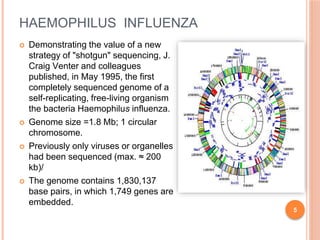


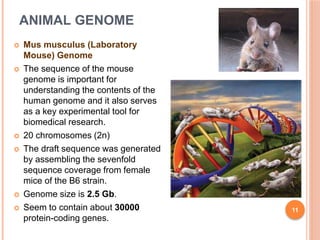


The document summarizes genomic comparisons across different organisms. It discusses: 1) The first sequencing of bacterial genomes including Haemophilus influenzae, which has 1.8 million base pairs and 1,749 genes. 2) The sequencing of eukaryotic genomes including Saccharomyces cerevisiae, which has 16 chromosomes and approximately 5,885 protein-coding genes. 3) Key animal and plant genomes sequenced including Arabidopsis thaliana, Drosophila melanogaster, Mus musculus, and Homo sapiens. The human genome is approximately 3 billion base pairs long and contains around 30,000 genes.


