Genome
Database
Systems
H.C Korala
114072l
Overview
• Introduction
• Background
• Major research areas
• Applications and Impact on society
• Discussion
Introduction
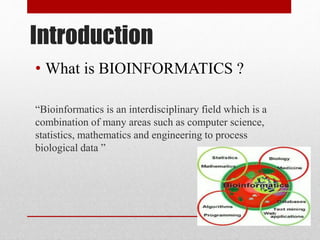
“Bioinformatics is an interdisciplinary field which is a
combination of many areas such as computer science,
statistics, mathematics and engineering to process
biological data ”
• What is BIOINFORMATICS ?
• GENOME
“The genome encodes all the information of the
Deoxyribonucleic Acid (DNA), the
macromolecule containing the genetic heritage
of each living being.”
• Increased electronically stored biological data
• Role of databases in the field of biology
• The study of genes and proteins has become an extremely
important area in the modern day biology and they are
better known as genomics and proteomics
• Genome databases store this information and differently
from gene databases the genome databases contain both
coding and non-coding intergenic sequences.
Background
Genome Databases
• Saccharomyces genome database
• Mouse genome database
• Human genome database
• European mutant mouse pathology database
• Mito Map
• Kyoto Encyclopedia of Genes and Genomes
Genome Databases
• High complex data
• Schema changes at a rapid pace
• Range of variability in data is high
• Complex queries
Characteristics of genome database
systems
• Non standard and unstructured data
• Complex query processing
• Data interpretation and meta data management
• Data integration across related databases
• Uniform data management solutions
Key Areas in Data Management in
Genome Database Systems
• Graph Based Genome Database Systems
• Generic genome browser
• Networked database environment for human
genome data
• The ENSEMBL genome database project
• MITOMAP
• The BIOGRID Interaction Database
• Data management for high throughput genomics
Major researches
• For research purposes
• Health Industry
• Study how variation in human genetics leads to
variation in response to drugs.
• Disease studies for large populations
• Drug Designing
Applications and Impact
on Society
• Genome database systems is one of the major research
areas in the world
• Health care, pharmaceutical organizations spend tons of
money to do researches to maintain genome databases
and implement effective and efficient tools to analyze
data.
• The main concerns in genome database systems are the
variability of the data types that they are associated with,
high throughput of genomic data, Meta data management,
data storage problem, complex query and complex
calculations are needed and data integration with different
databases
DISCUSSION
• Mainly the issues have occurred because of the
complexity of the data types in genome databases and
therefore the traditional relational DBMS concepts and
Object DBMS concepts are not the most suitable
concepts to tackle these issues.
• Researches have been carried out to discover novel
methods of representing data types in genome databases
• Some of the researches are targeting to identifying ways
which can be used to couple with the existing database
management systems so that only an extension is needed
for the usage.
• The people who use genome database systems are
scientists, academics and other people who are in the field
of genomics.
• Most of these people do not have a good knowledge in
Information Technology.
• Therefore improving the synergy between these two
fields is an important task,
Thank you !

Genome Database Systems

  • 1.
  • 2.
    Overview • Introduction • Background •Major research areas • Applications and Impact on society • Discussion
  • 3.
    Introduction “Bioinformatics is aninterdisciplinary field which is a combination of many areas such as computer science, statistics, mathematics and engineering to process biological data ” • What is BIOINFORMATICS ?
  • 4.
    • GENOME “The genomeencodes all the information of the Deoxyribonucleic Acid (DNA), the macromolecule containing the genetic heritage of each living being.” • Increased electronically stored biological data • Role of databases in the field of biology
  • 5.
    • The studyof genes and proteins has become an extremely important area in the modern day biology and they are better known as genomics and proteomics • Genome databases store this information and differently from gene databases the genome databases contain both coding and non-coding intergenic sequences. Background Genome Databases
  • 6.
    • Saccharomyces genomedatabase • Mouse genome database • Human genome database • European mutant mouse pathology database • Mito Map • Kyoto Encyclopedia of Genes and Genomes Genome Databases
  • 7.
    • High complexdata • Schema changes at a rapid pace • Range of variability in data is high • Complex queries Characteristics of genome database systems
  • 8.
    • Non standardand unstructured data • Complex query processing • Data interpretation and meta data management • Data integration across related databases • Uniform data management solutions Key Areas in Data Management in Genome Database Systems
  • 9.
    • Graph BasedGenome Database Systems • Generic genome browser • Networked database environment for human genome data • The ENSEMBL genome database project • MITOMAP • The BIOGRID Interaction Database • Data management for high throughput genomics Major researches
  • 10.
    • For researchpurposes • Health Industry • Study how variation in human genetics leads to variation in response to drugs. • Disease studies for large populations • Drug Designing Applications and Impact on Society
  • 11.
    • Genome databasesystems is one of the major research areas in the world • Health care, pharmaceutical organizations spend tons of money to do researches to maintain genome databases and implement effective and efficient tools to analyze data. • The main concerns in genome database systems are the variability of the data types that they are associated with, high throughput of genomic data, Meta data management, data storage problem, complex query and complex calculations are needed and data integration with different databases DISCUSSION
  • 12.
    • Mainly theissues have occurred because of the complexity of the data types in genome databases and therefore the traditional relational DBMS concepts and Object DBMS concepts are not the most suitable concepts to tackle these issues. • Researches have been carried out to discover novel methods of representing data types in genome databases • Some of the researches are targeting to identifying ways which can be used to couple with the existing database management systems so that only an extension is needed for the usage.
  • 13.
    • The peoplewho use genome database systems are scientists, academics and other people who are in the field of genomics. • Most of these people do not have a good knowledge in Information Technology. • Therefore improving the synergy between these two fields is an important task,
  • 14.