
Socio-economic /
bioethical issues
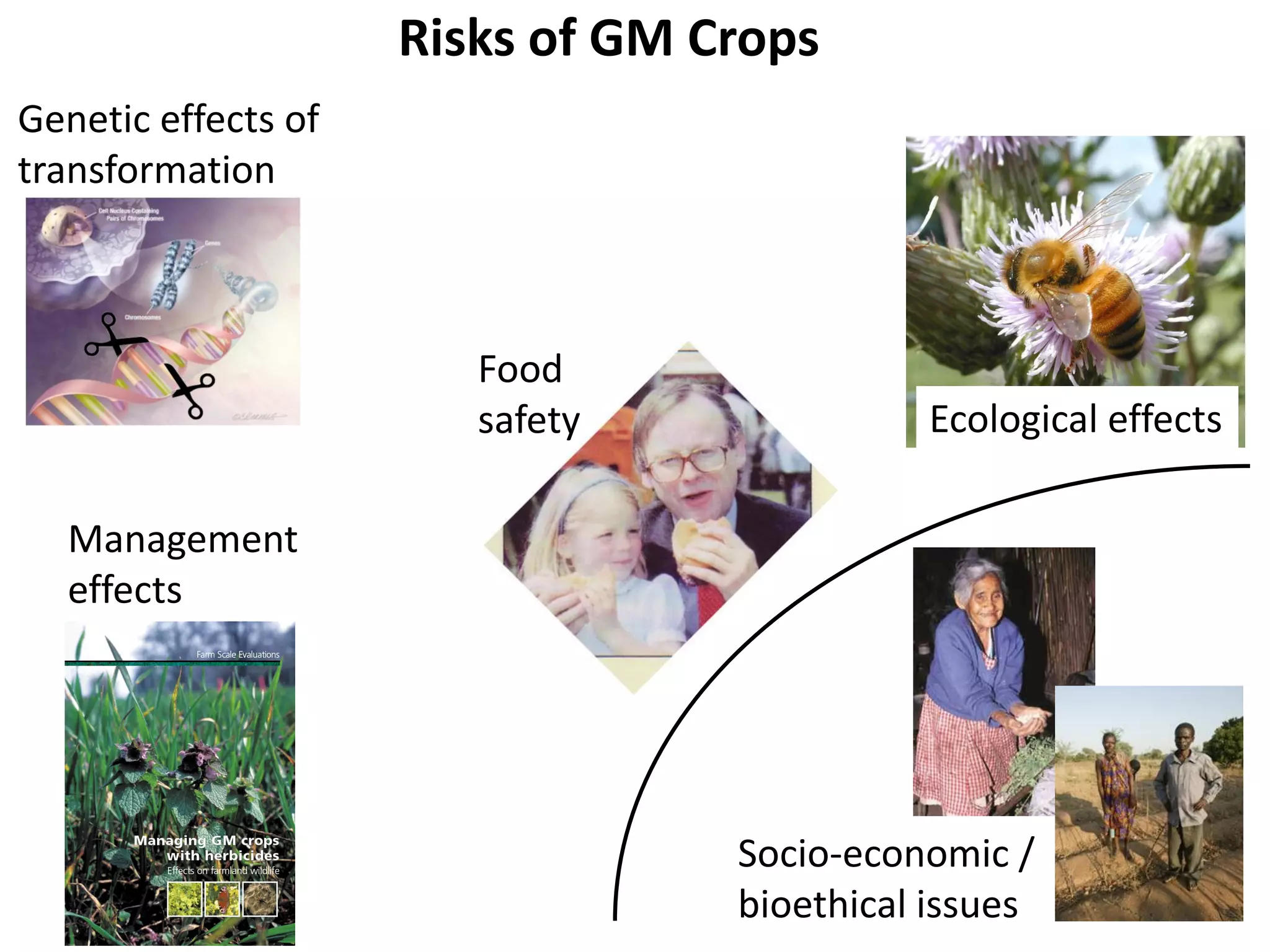
Risks of GM Crops
Food
safety Ecological effects
Management
effects
Genetic effects of
transformation
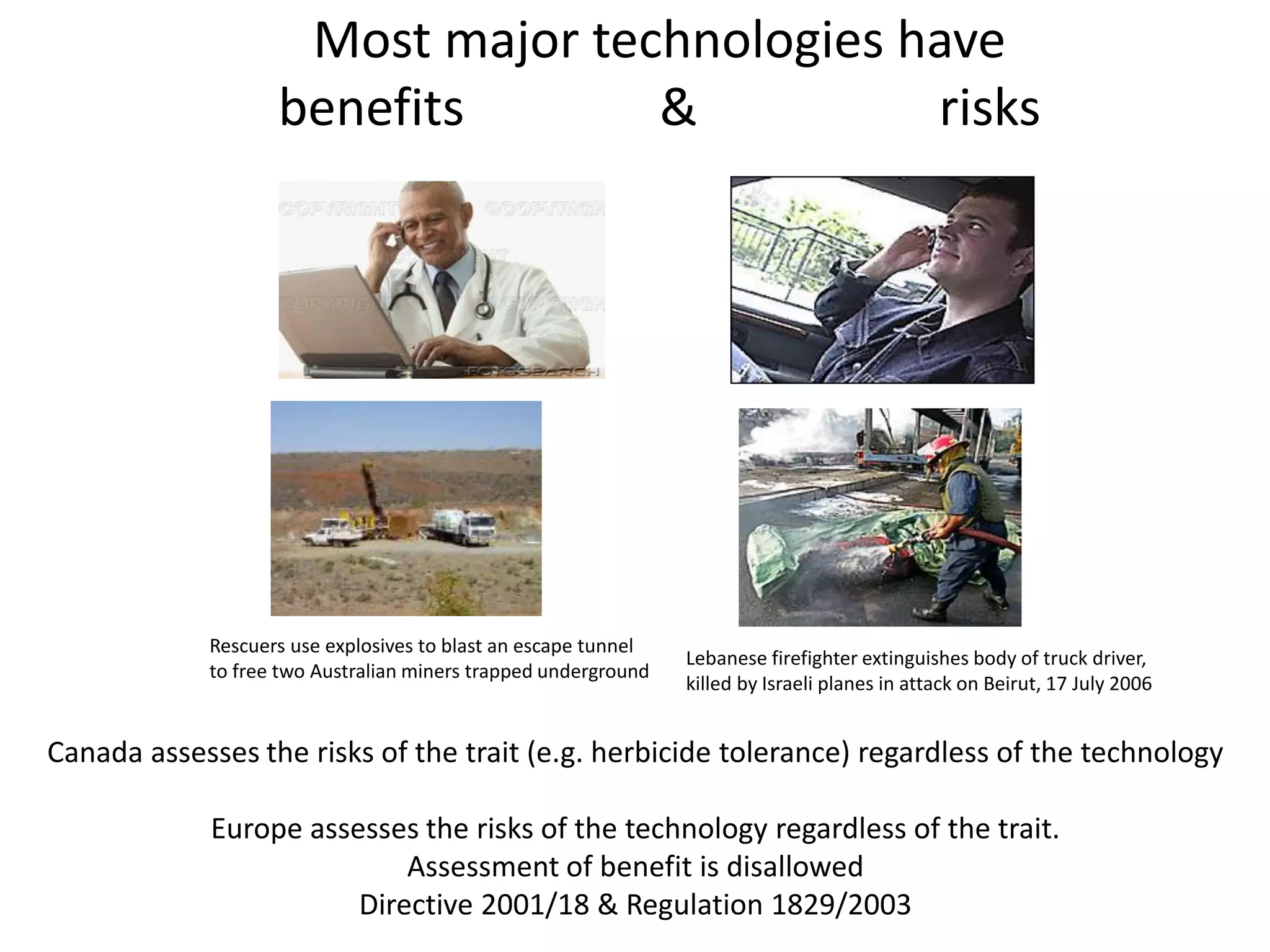
Rescuers use explosives to blast an escape tunnel
to free two Australian miners trapped underground
Lebanese firefighter extinguishes body of truck driver,
killed by Israeli planes in attack on Beirut, 17 July 2006
Most major technologies have
benefits & risks
Canada assesses the risks of the trait (e.g. herbicide tolerance) regardless of the technology
Europe assesses the risks of the technology regardless of the trait.
Assessment of benefit is disallowed
Directive 2001/18 & Regulation 1829/2003
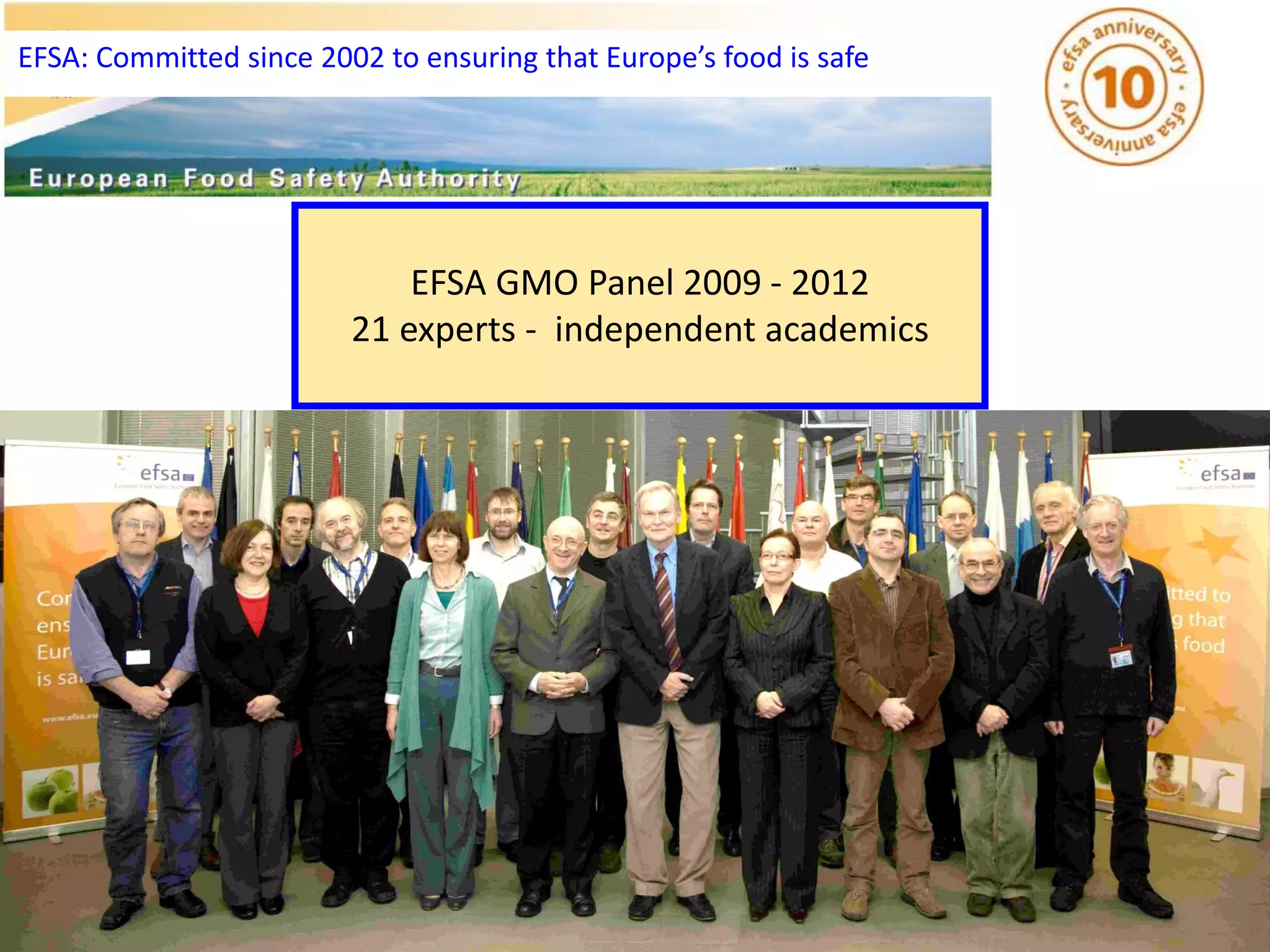
EFSA: Committed since 2002 to ensuring that Europe’s food is safe
EFSA GMO Panel 2009 - 2012
21 experts - independent academics
EFSA’s role in GMO applications
In the EU, products that are, contain, or are produced from
GMOs must have an authorisation at the Community level prior
to entering the market.
• Protection
 Human and animal health
 Environment
• Risk assessment (RA)
 Characterisation of potential adverse effects associated
with GM plant deployment/use
– Direct; indirect; immediate; delayed; cumulative effects
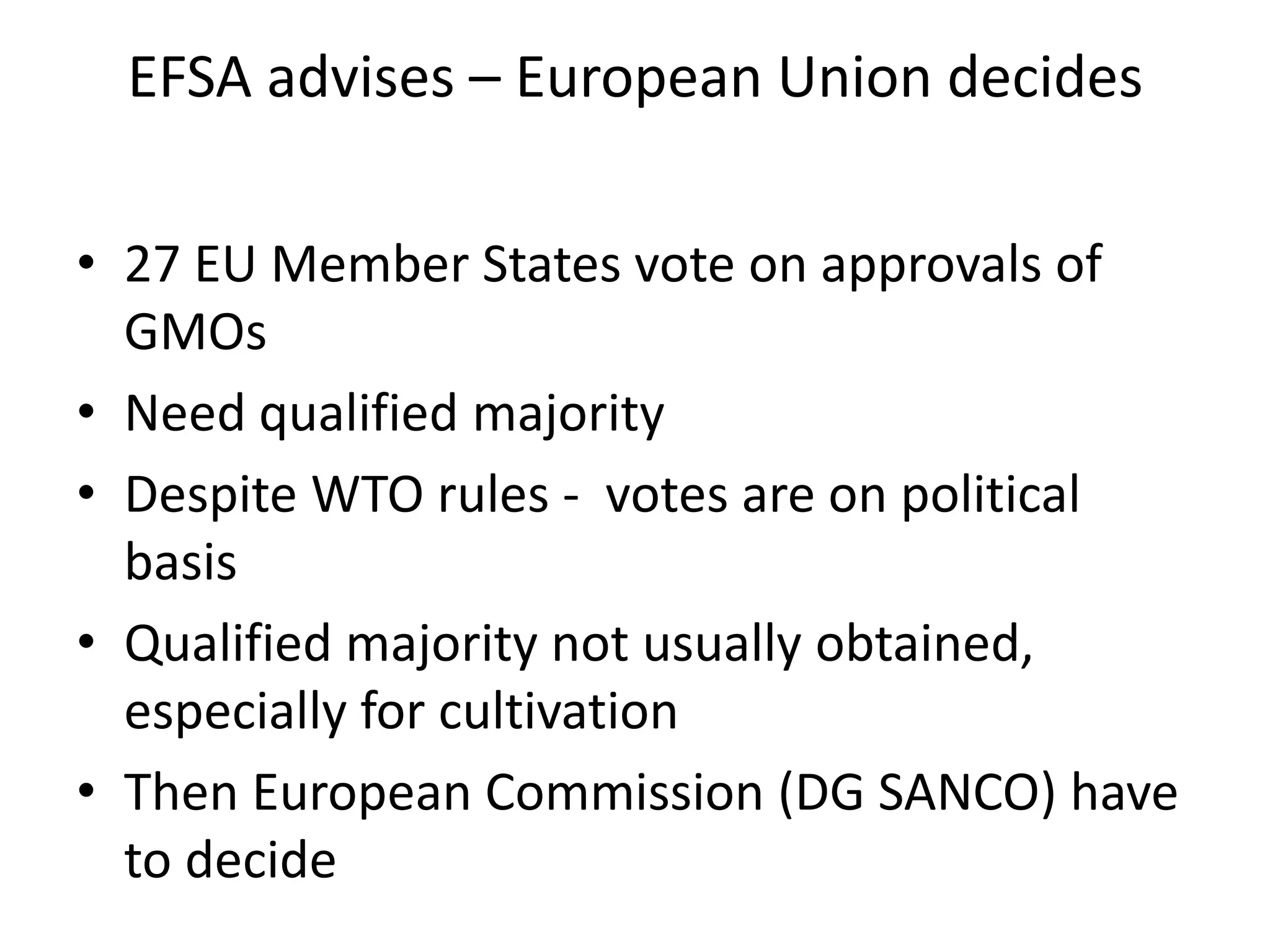
EFSA advises – European Union decides
• 27 EU Member States vote on approvals of
GMOs
• Need qualified majority
• Despite WTO rules - votes are on political
basis
• Qualified majority not usually obtained,
especially for cultivation
• Then European Commission (DG SANCO) have
to decide
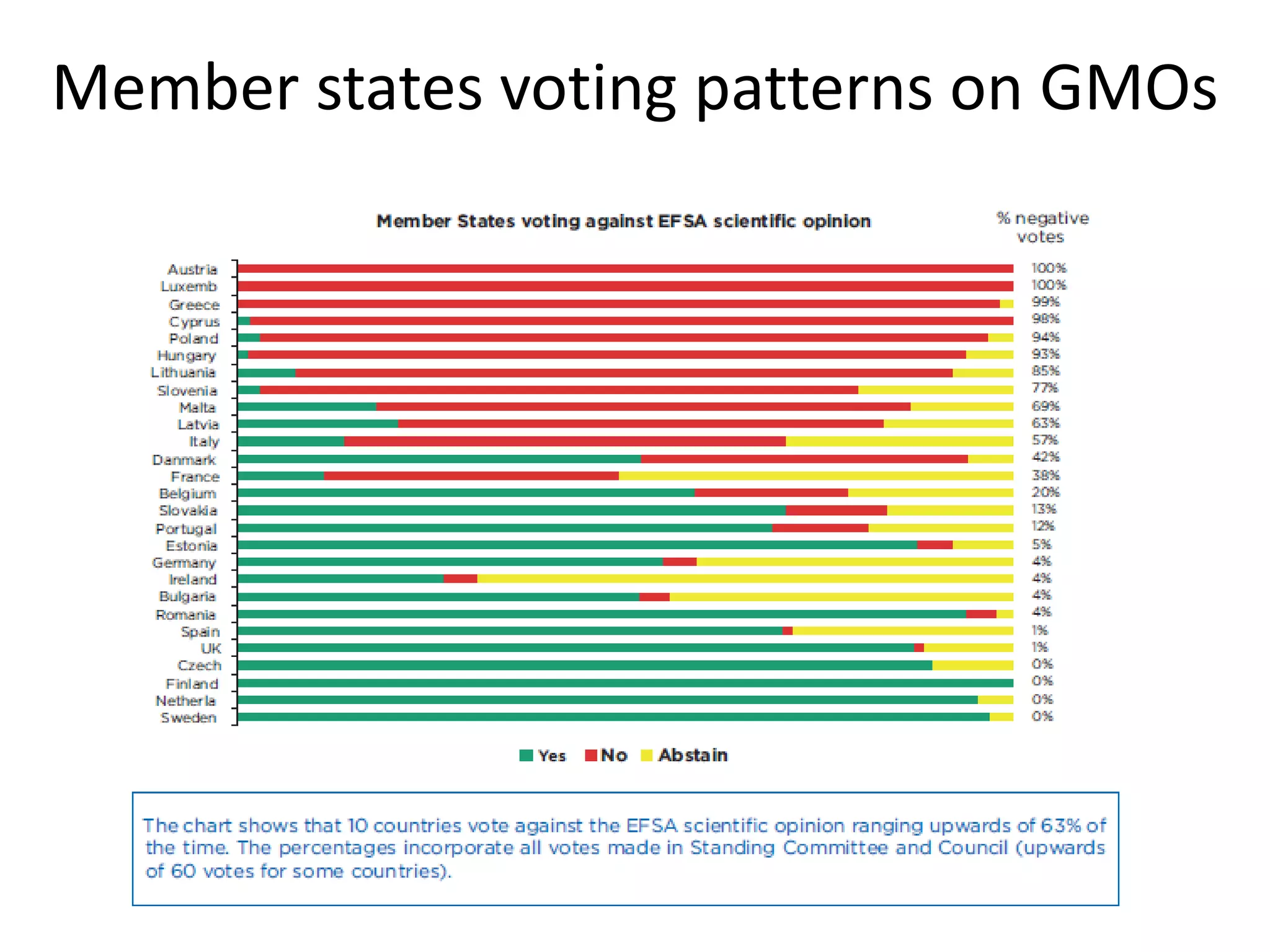
Member states voting patterns on GMOs
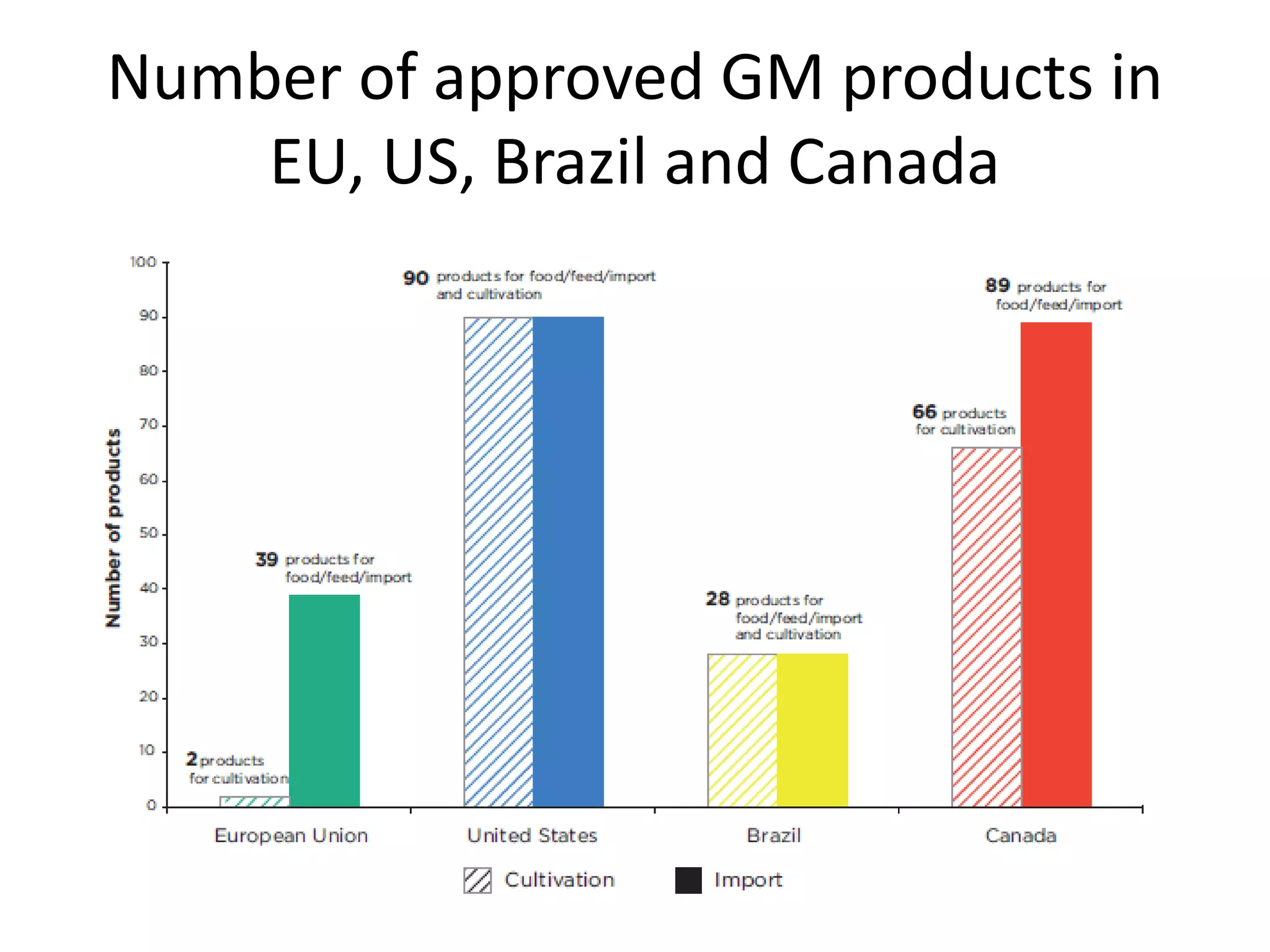
Number of approved GM products in
EU, US, Brazil and Canada
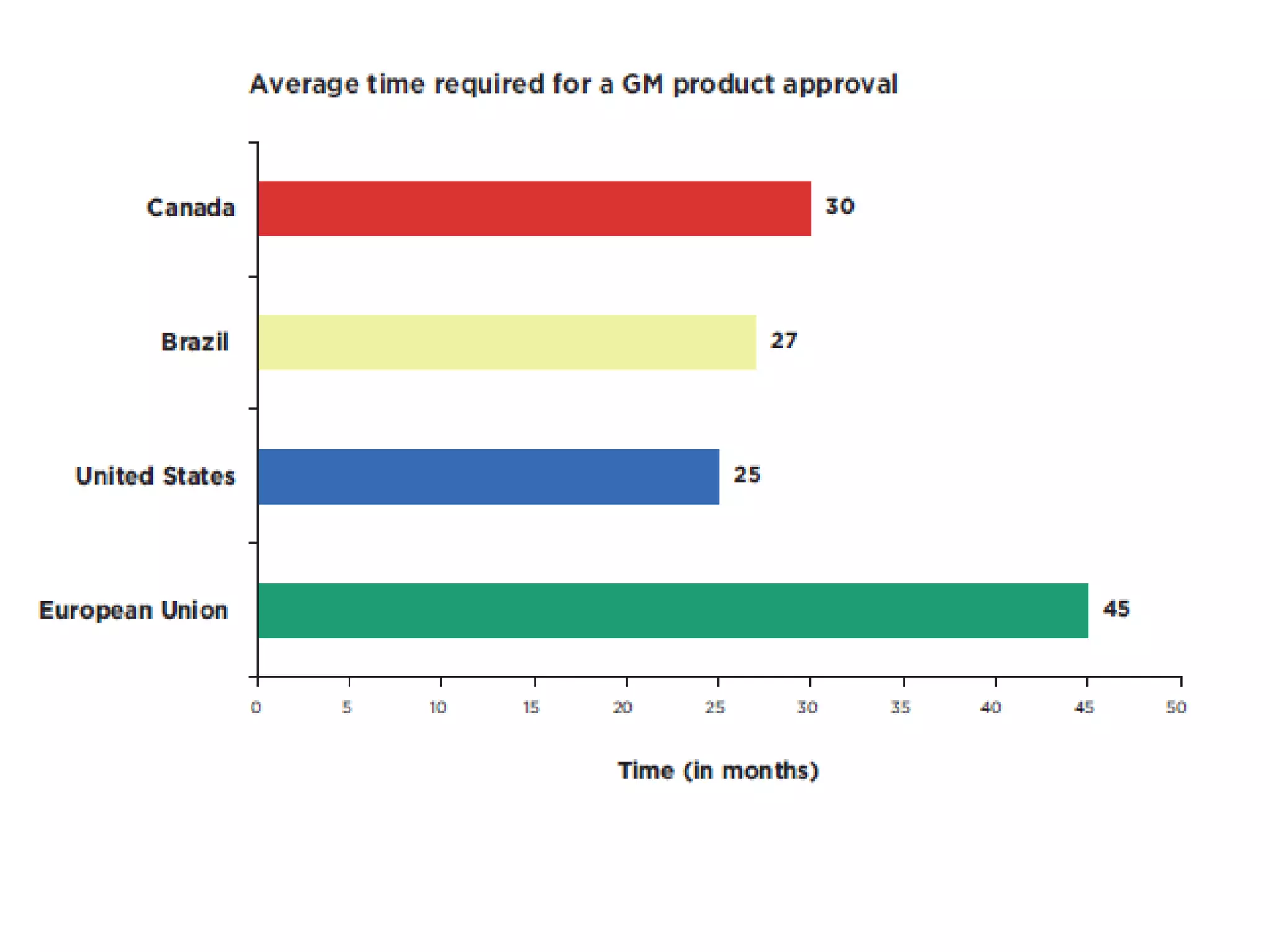
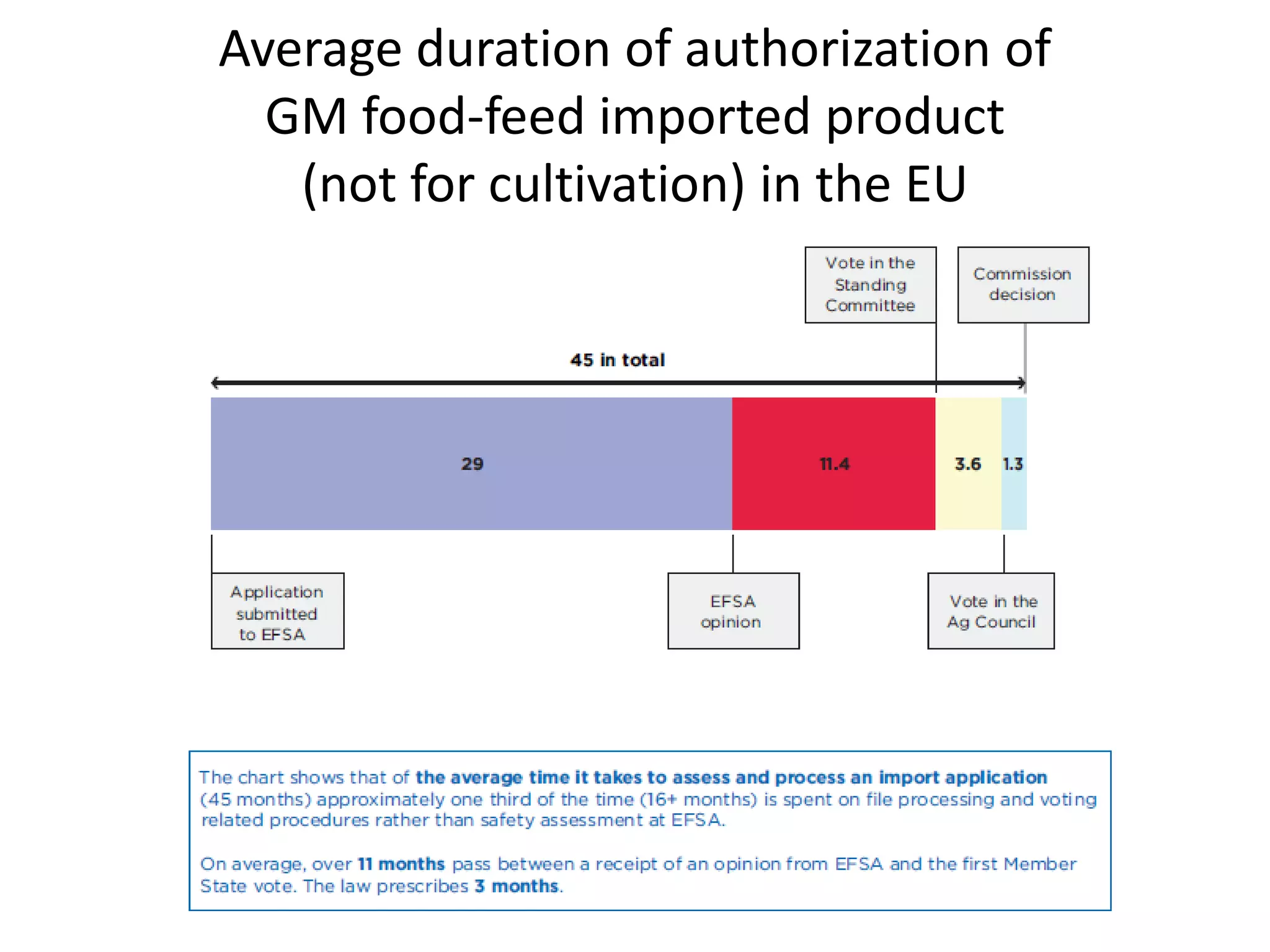
Average duration of authorization of
GM food-feed imported product
(not for cultivation) in the EU
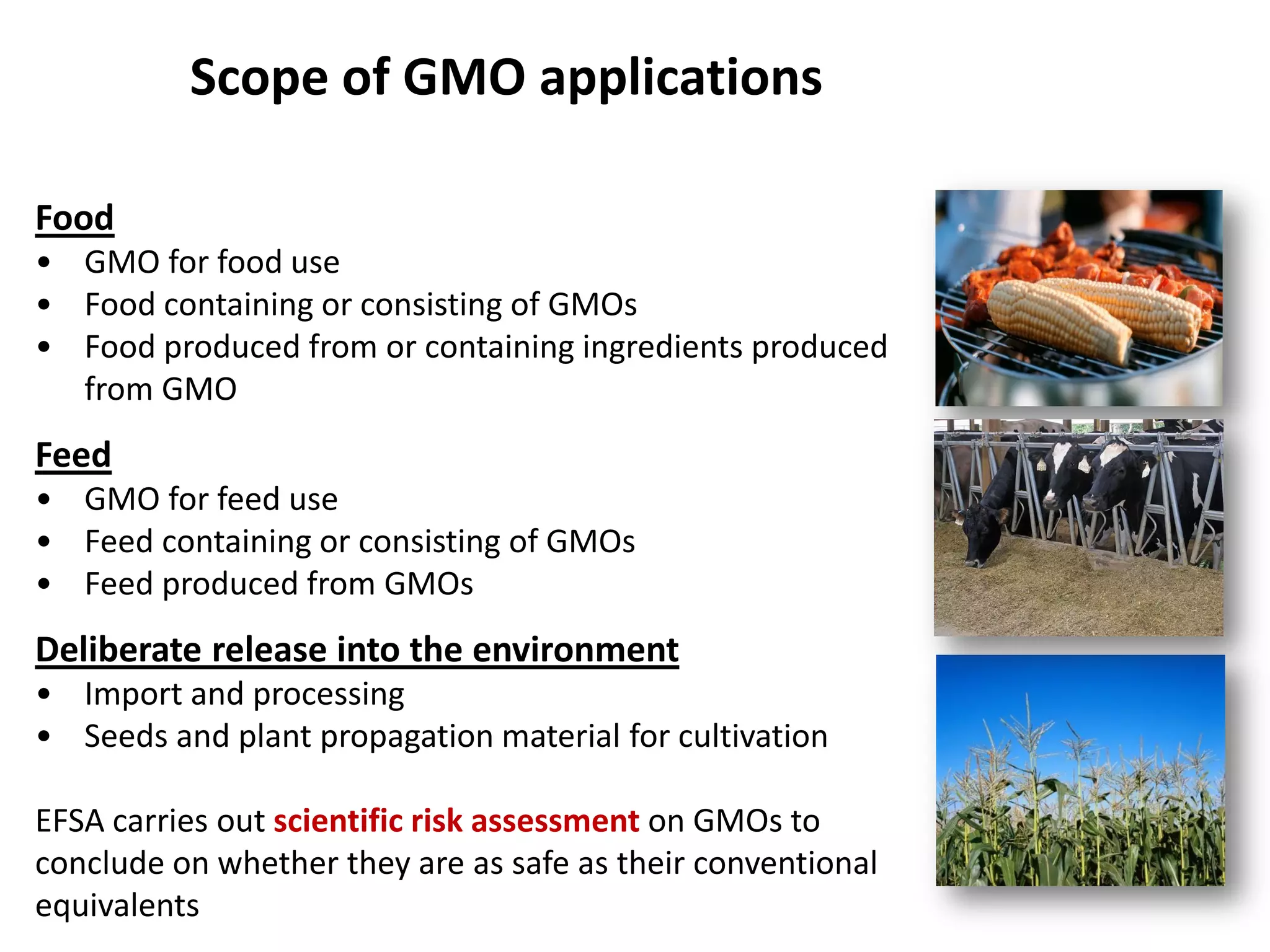
Scope of GMO applications
Food
• GMO for food use
• Food containing or consisting of GMOs
• Food produced from or containing ingredients produced
from GMO
Feed
• GMO for feed use
• Feed containing or consisting of GMOs
• Feed produced from GMOs
Deliberate release into the environment
• Import and processing
• Seeds and plant propagation material for cultivation
EFSA carries out scientific risk assessment on GMOs to
conclude on whether they are as safe as their conventional
equivalents
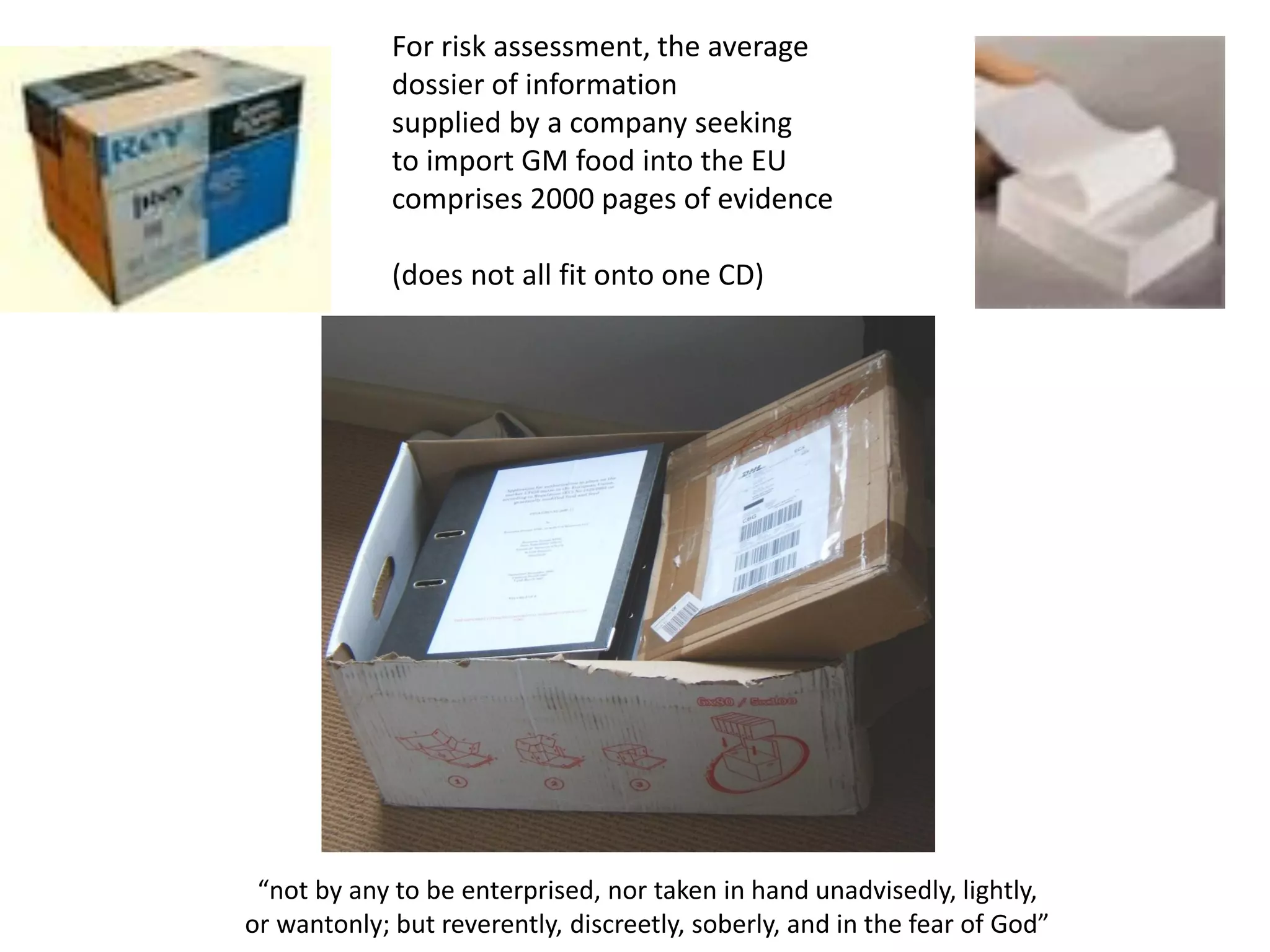
For risk assessment, the average
dossier of information
supplied by a company seeking
to import GM food into the EU
comprises 2000 pages of evidence
(does not all fit onto one CD)
“not by any to be enterprised, nor taken in hand unadvisedly, lightly,
or wantonly; but reverently, discreetly, soberly, and in the fear of God”
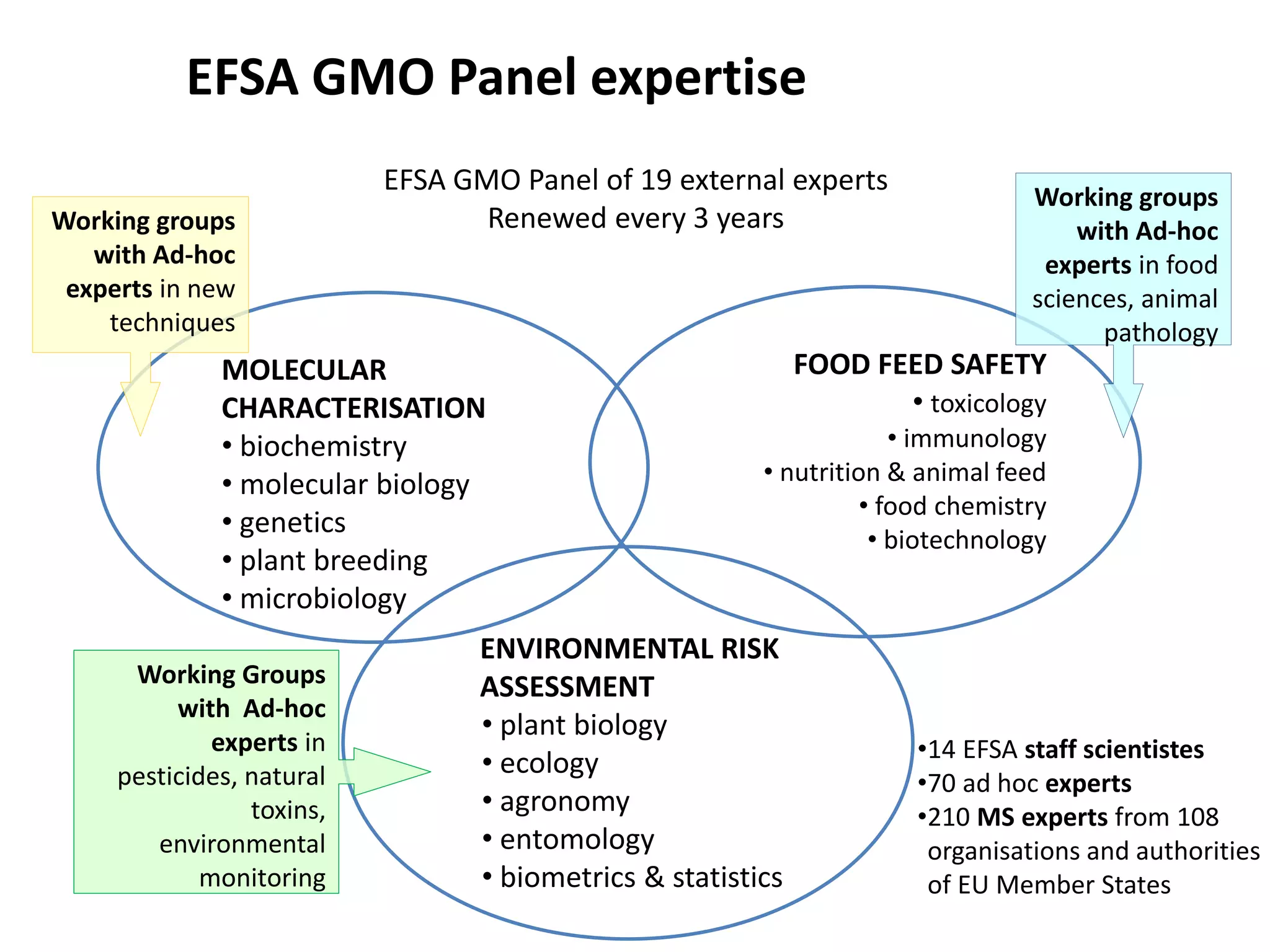
EFSA GMO Panel expertise
MOLECULAR
CHARACTERISATION
• biochemistry
• molecular biology
• genetics
• plant breeding
• microbiology
FOOD FEED SAFETY
• toxicology
• immunology
• nutrition & animal feed
• food chemistry
• biotechnology
ENVIRONMENTAL RISK
ASSESSMENT
• plant biology
• ecology
• agronomy
• entomology
• biometrics & statistics
Working groups
with Ad-hoc
experts in new
techniques
Working Groups
with Ad-hoc
experts in
pesticides, natural
toxins,
environmental
monitoring
Working groups
with Ad-hoc
experts in food
sciences, animal
pathology
•14 EFSA staff scientistes
•70 ad hoc experts
•210 MS experts from 108
organisations and authorities
of EU Member States
EFSA GMO Panel of 19 external experts
Renewed every 3 years
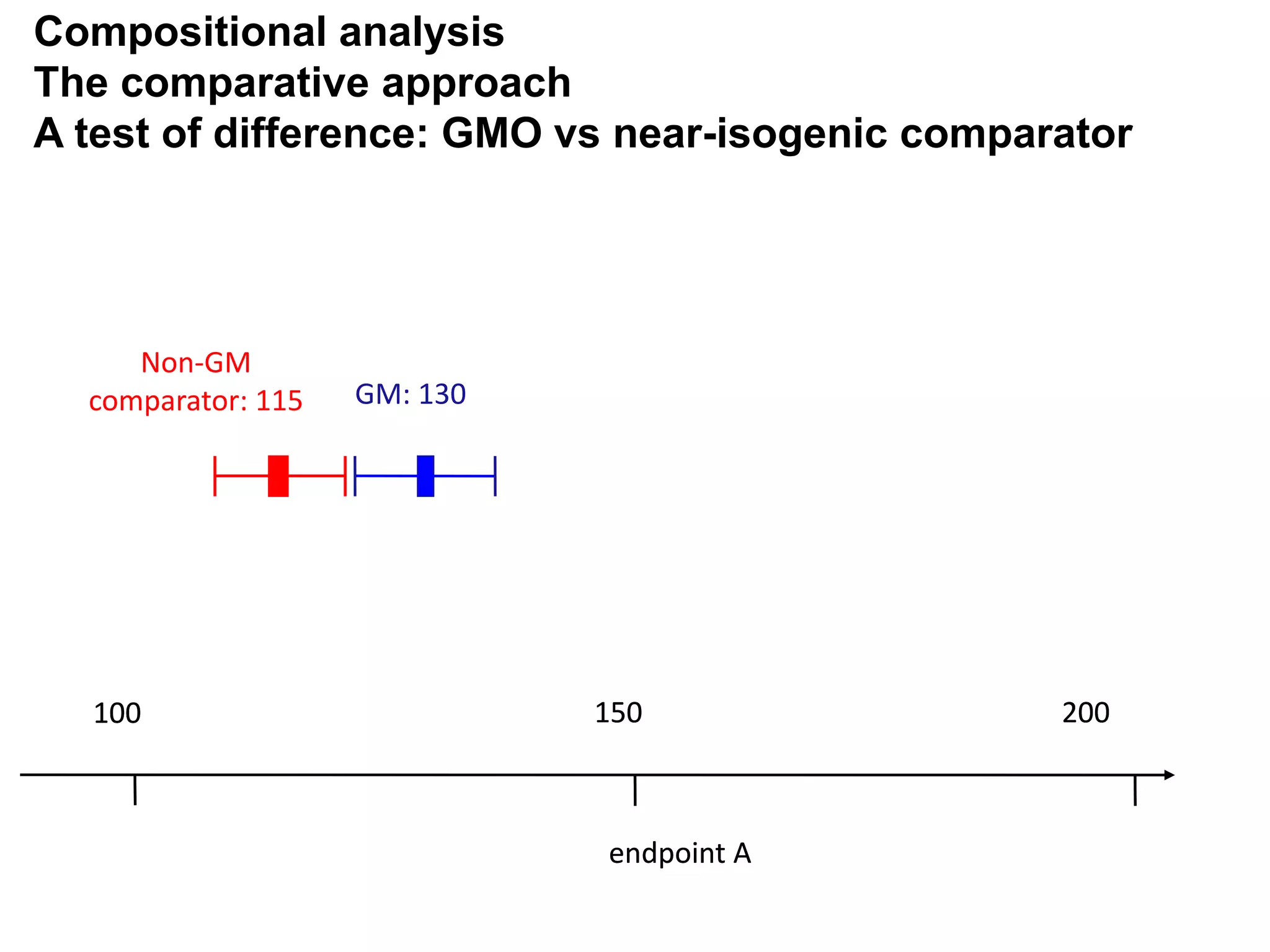
GM: 130
Non-GM
comparator: 115
Compositional analysis
The comparative approach
A test of difference: GMO vs near-isogenic comparator
100 150 200
endpoint Aendpoint A
100 150 200
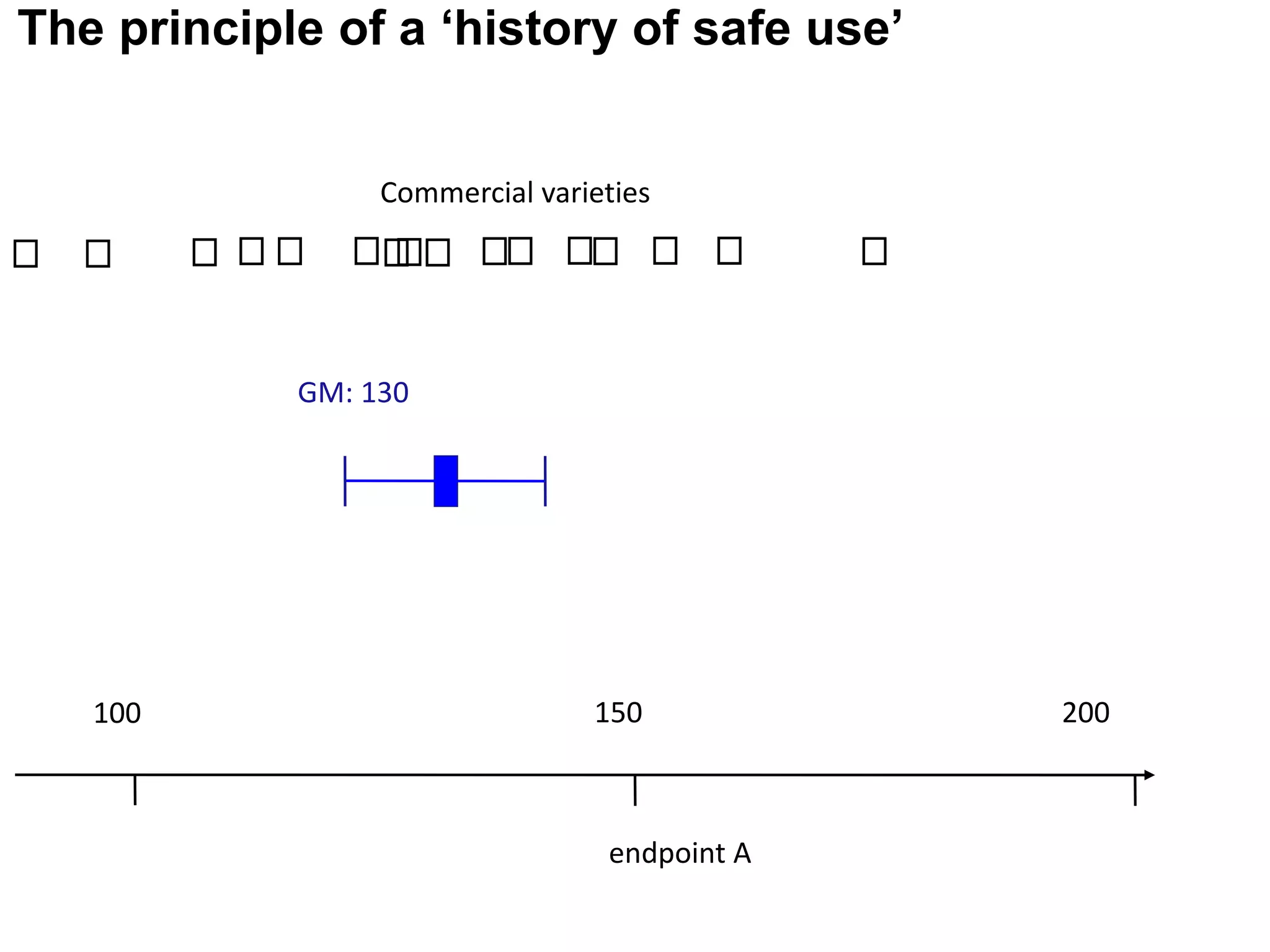
GM: 130
The principle of a ‘history of safe use’
Commercial varieties
endpoint A
100 150 200
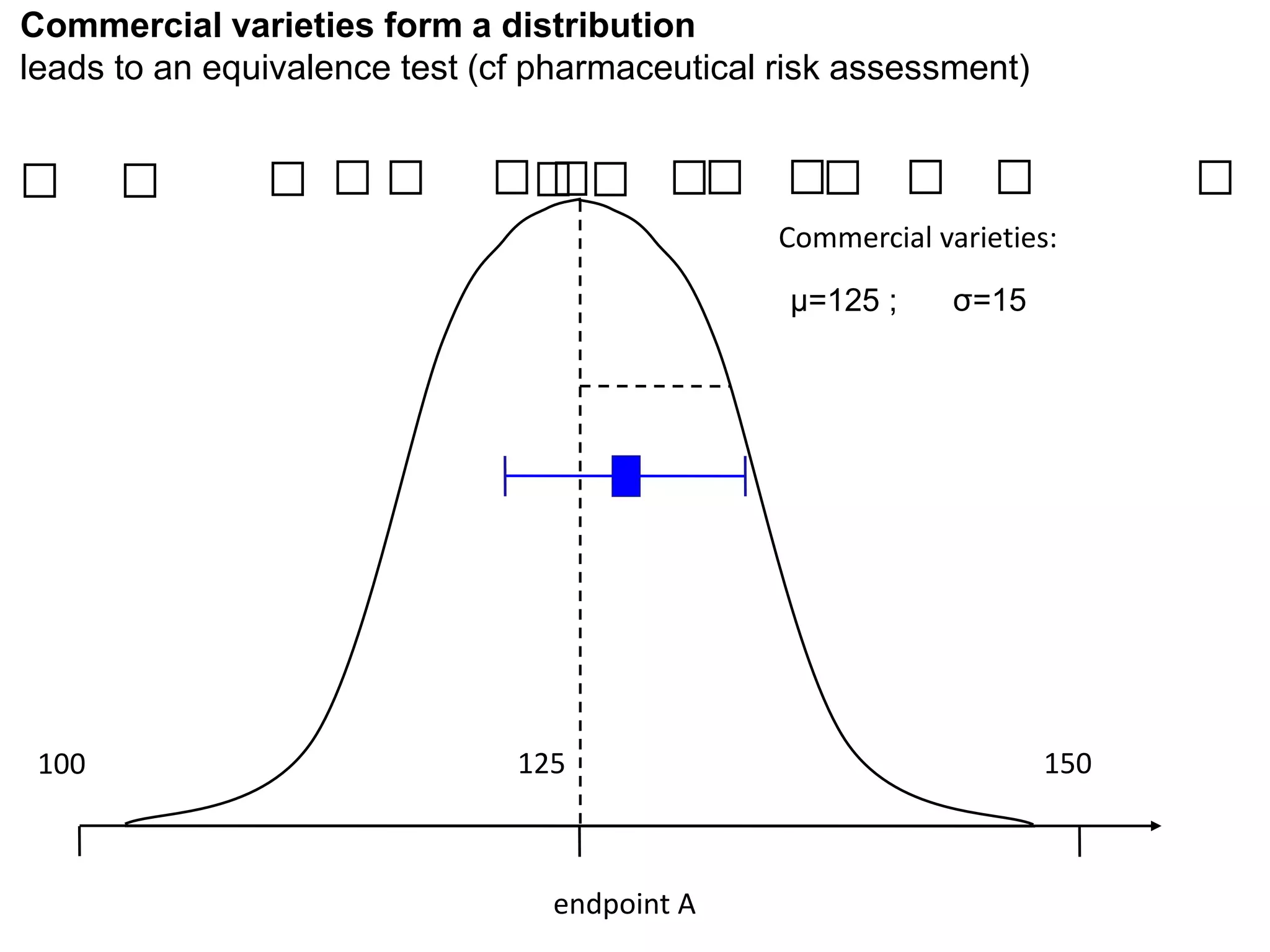
Commercial varieties form a distribution
leads to an equivalence test (cf pharmaceutical risk assessment)
Commercial varieties:
μ=125 ; σ=15
endpoint A
100 125 150
What is the (statistical) power
of an experiment?
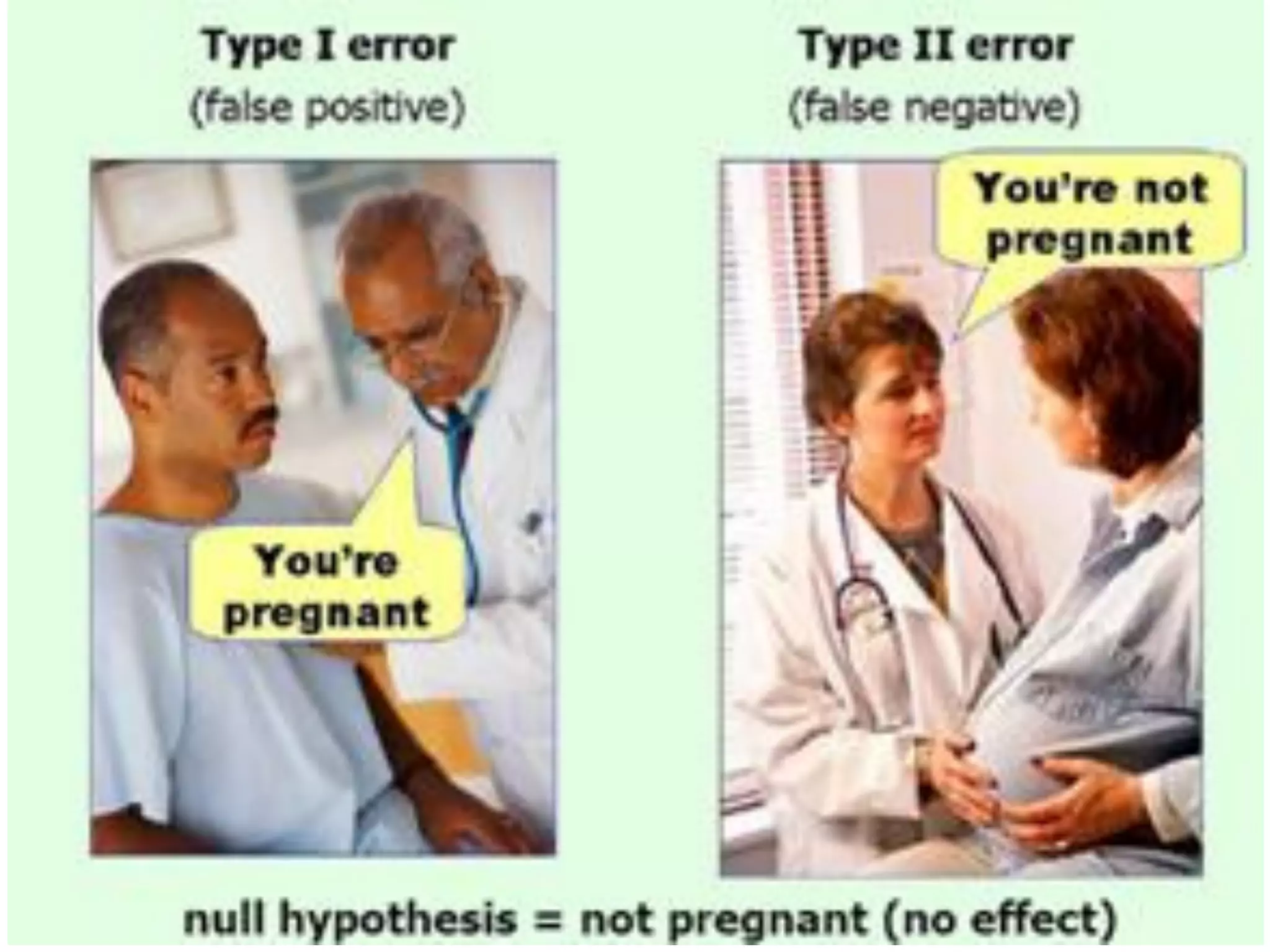
• Usually in biology we set up a null hypothesis of
equality and try to disprove it in order to
demonstrate an effect.
• Power is the probability that the experiment will
detect an effect (i.e. that the null hypothesis will be
rejected) if the effect exists
• Power depends on replication, baseline variability,
size of effect sought (Note this is not easy to set and
may be difficult to estimate)
• Power is inverse of (i.e. it is 1 - ) chance of finding a
false negative
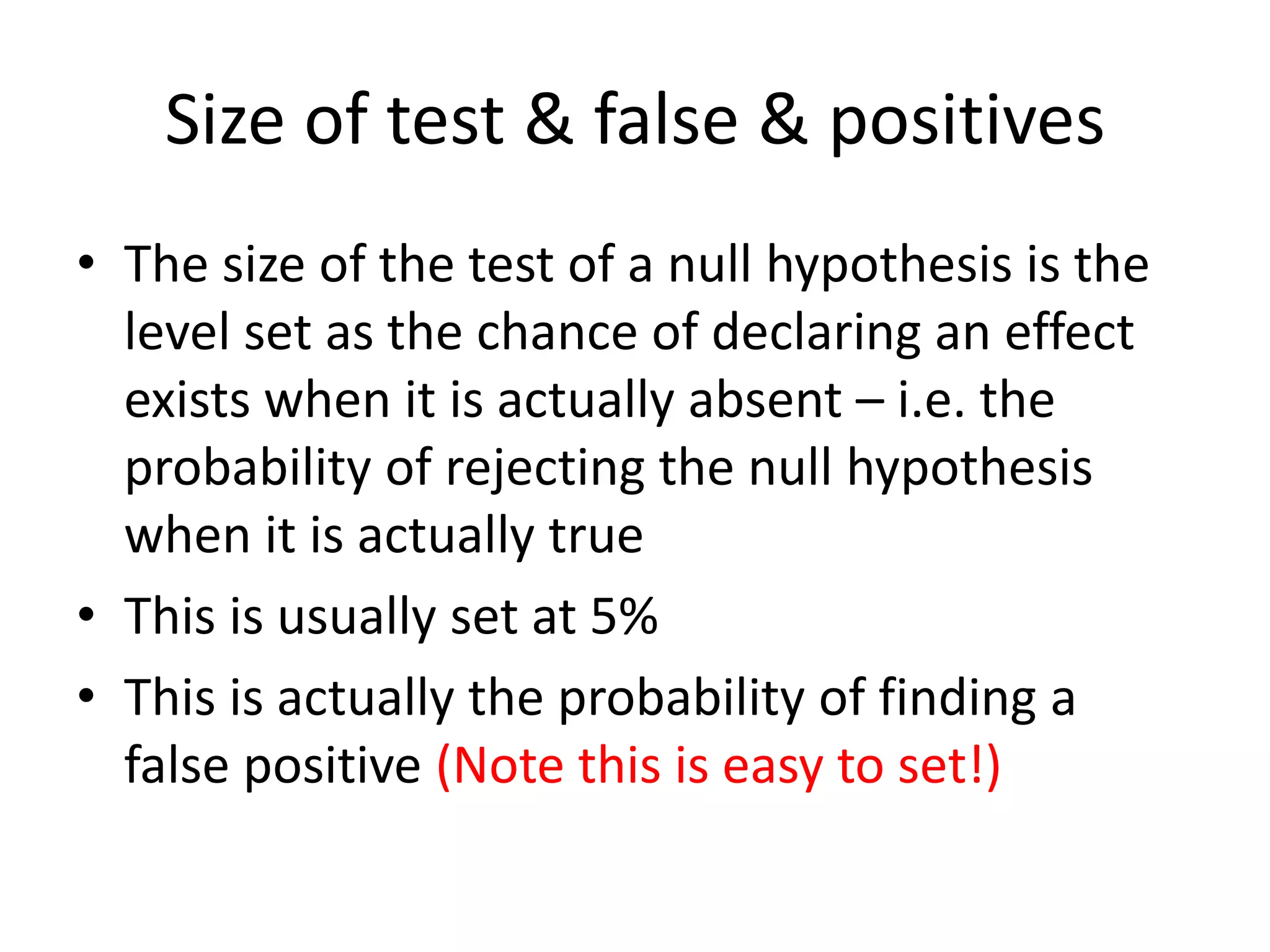
Size of test & false & positives
• The size of the test of a null hypothesis is the
level set as the chance of declaring an effect
exists when it is actually absent – i.e. the
probability of rejecting the null hypothesis
when it is actually true
• This is usually set at 5%
• This is actually the probability of finding a
false positive (Note this is easy to set!)
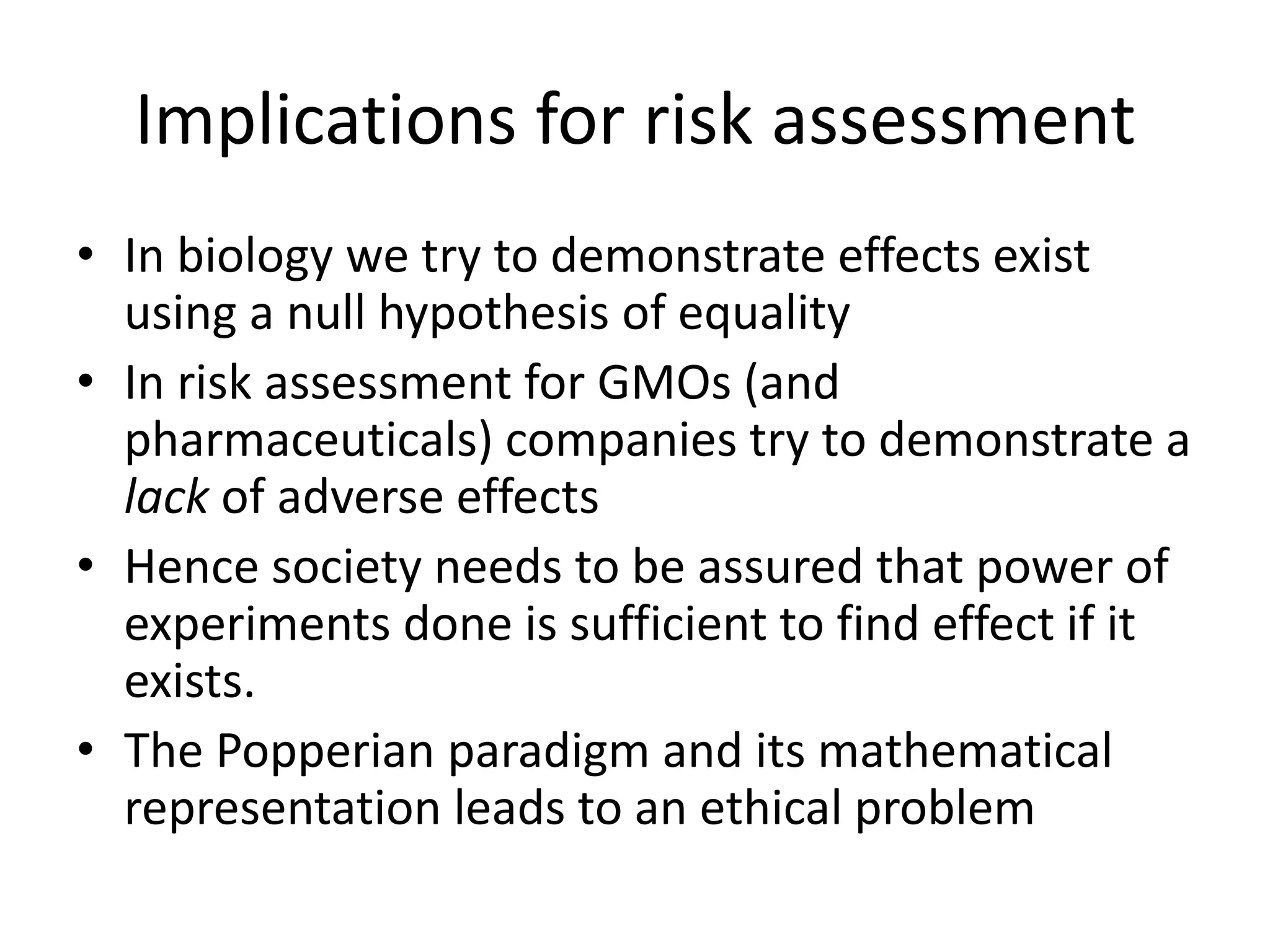
Implications for risk assessment
• In biology we try to demonstrate effects exist
using a null hypothesis of equality
• In risk assessment for GMOs (and
pharmaceuticals) companies try to demonstrate a
lack of adverse effects
• Hence society needs to be assured that power of
experiments done is sufficient to find effect if it
exists.
• The Popperian paradigm and its mathematical
representation leads to an ethical problem
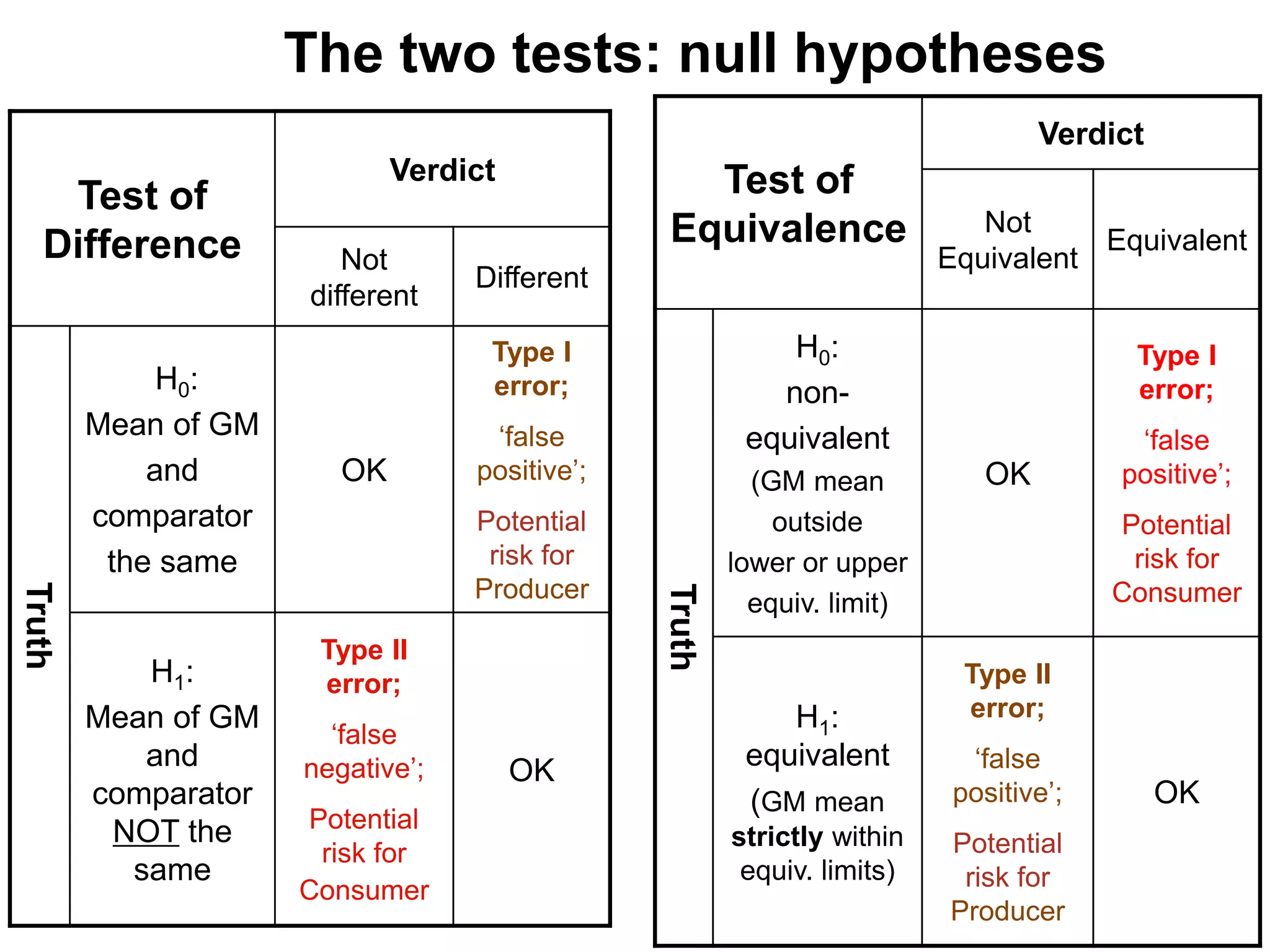
The two tests: null hypotheses
Test of
Difference
Verdict
Not
different
Different
Truth
H0:
Mean of GM
and
comparator
the same
OK
Type I
error;
‘false
positive’;
Potential
risk for
Producer
H1:
Mean of GM
and
comparator
NOT the
same
Type II
error;
‘false
negative’;
Potential
risk for
Consumer
OK
Test of
Equivalence
Verdict
Not
Equivalent
Equivalent
Truth
H0:
non-
equivalent
(GM mean
outside
lower or upper
equiv. limit)
OK
Type I
error;
‘false
positive’;
Potential
risk for
Consumer
H1:
equivalent
(GM mean
strictly within
equiv. limits)
Type II
error;
‘false
positive’;
Potential
risk for
Producer
OK
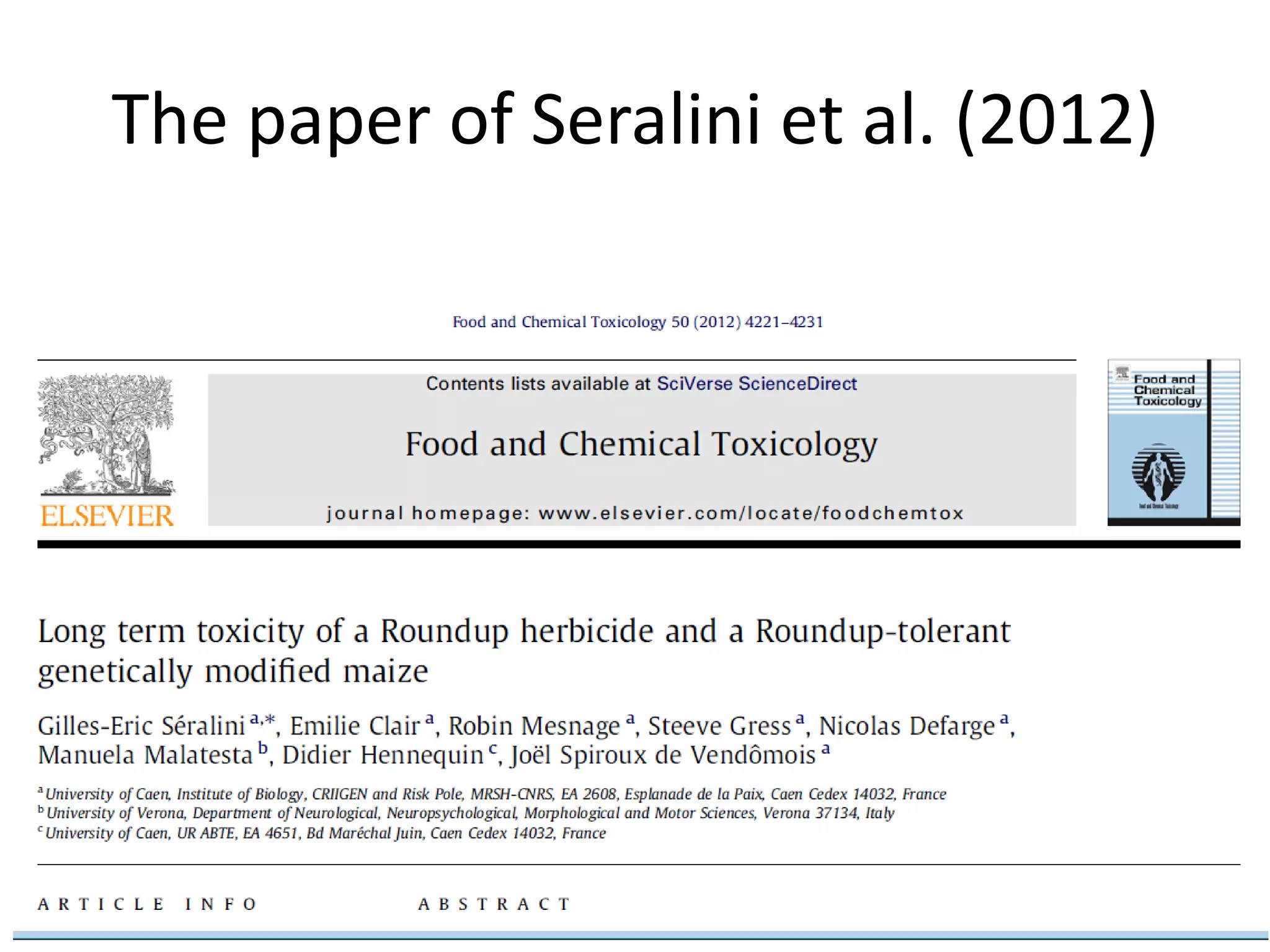
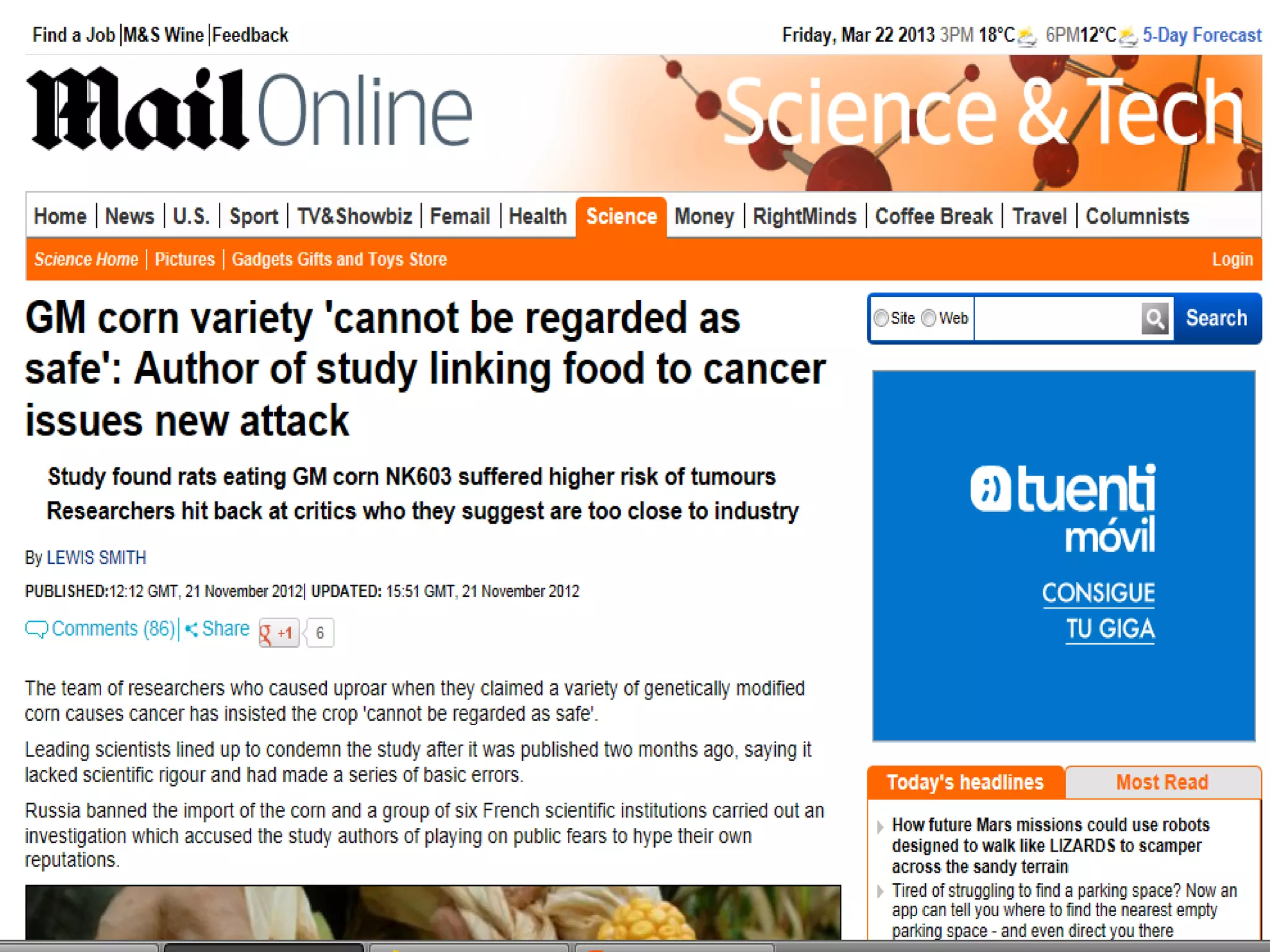
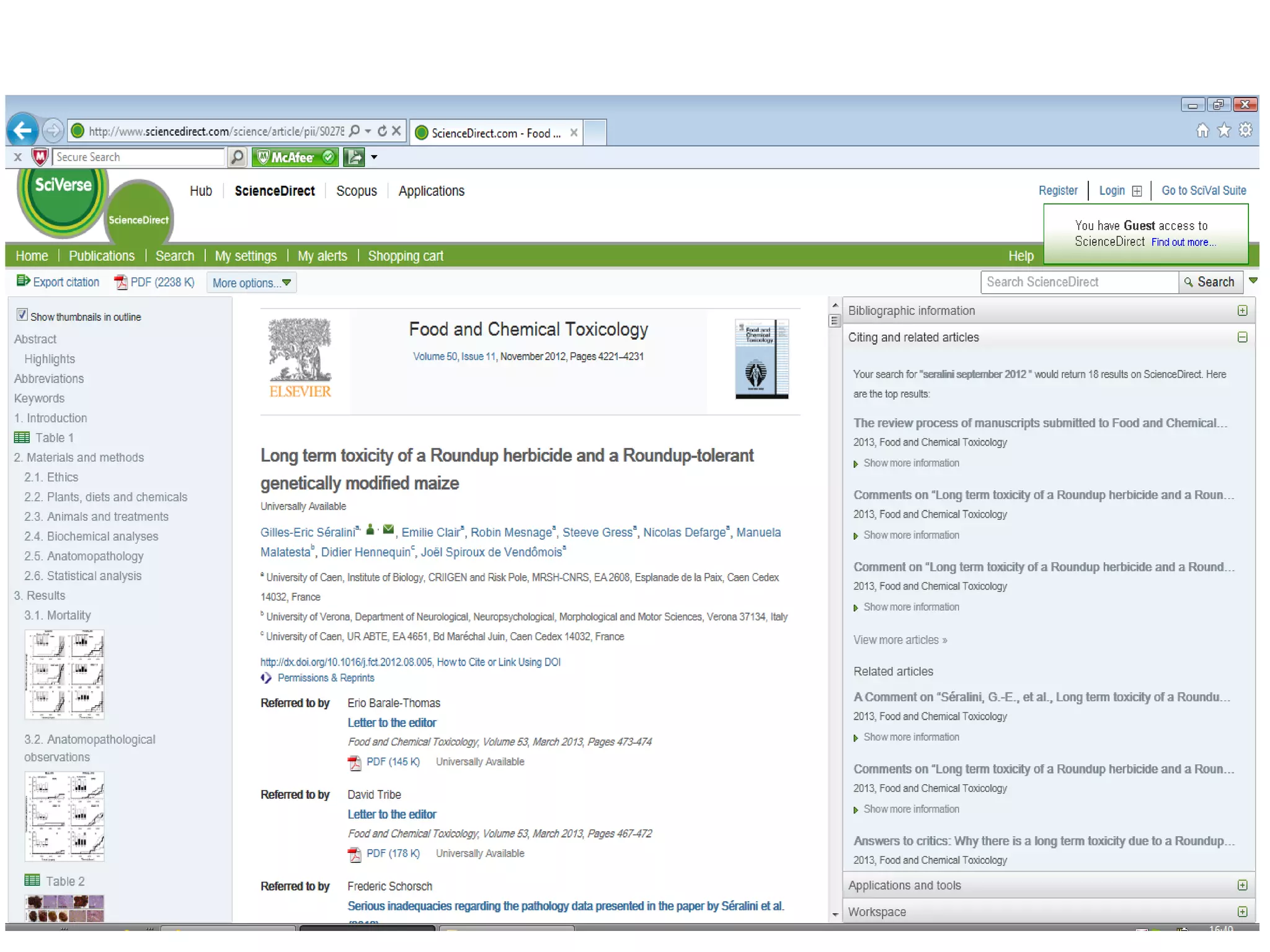
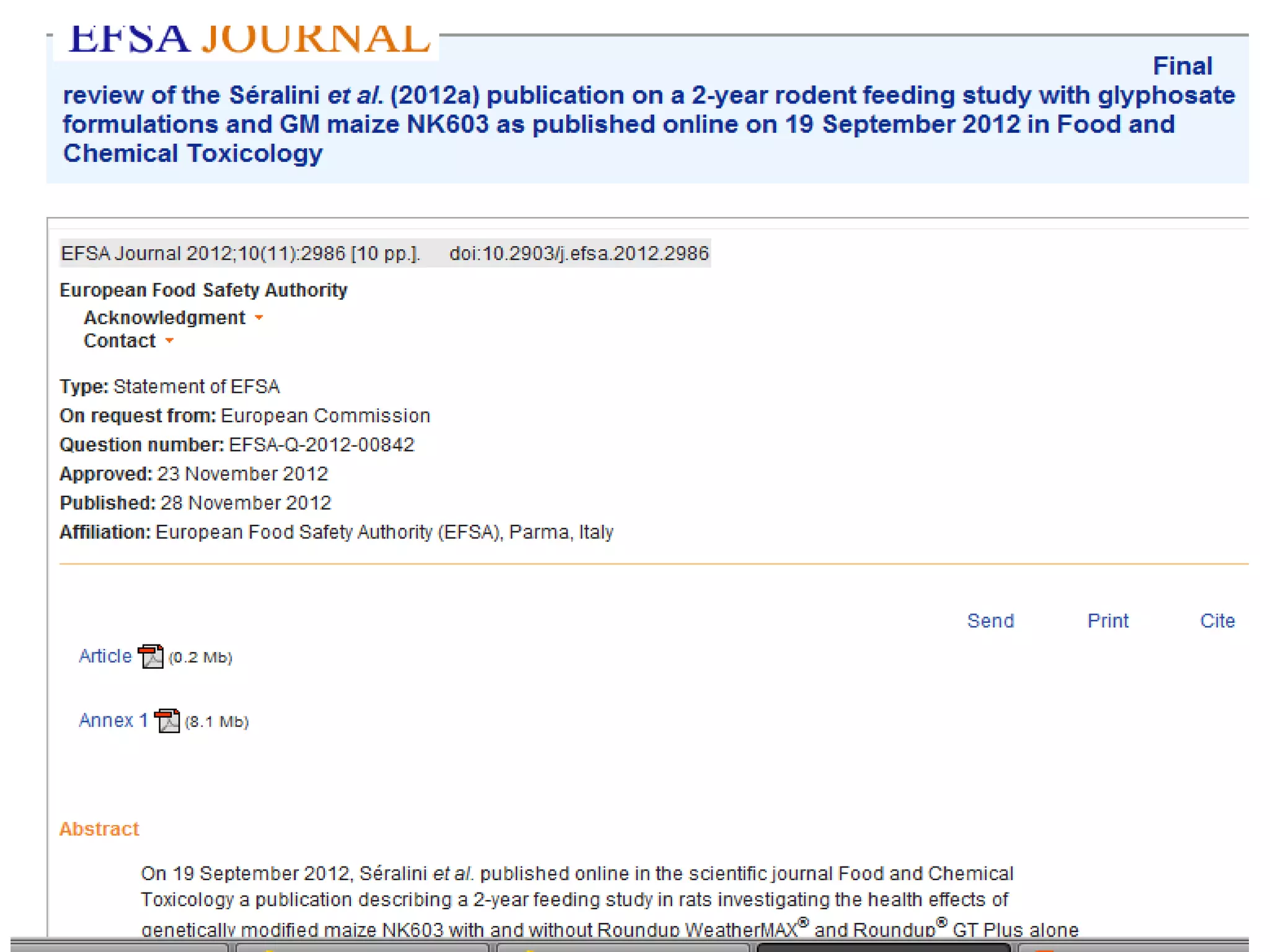
The paper of Seralini et al. (2012)
Issues raised by NGOs
• Conflicts of interest, because EFSA was
reviewing an article that attacked its previous
risk assessments
• The work of Seralini was expected to adhere
to far greater standards than those applied by
EFSA to applications from industry under
which NK603 was assessed in the first place.
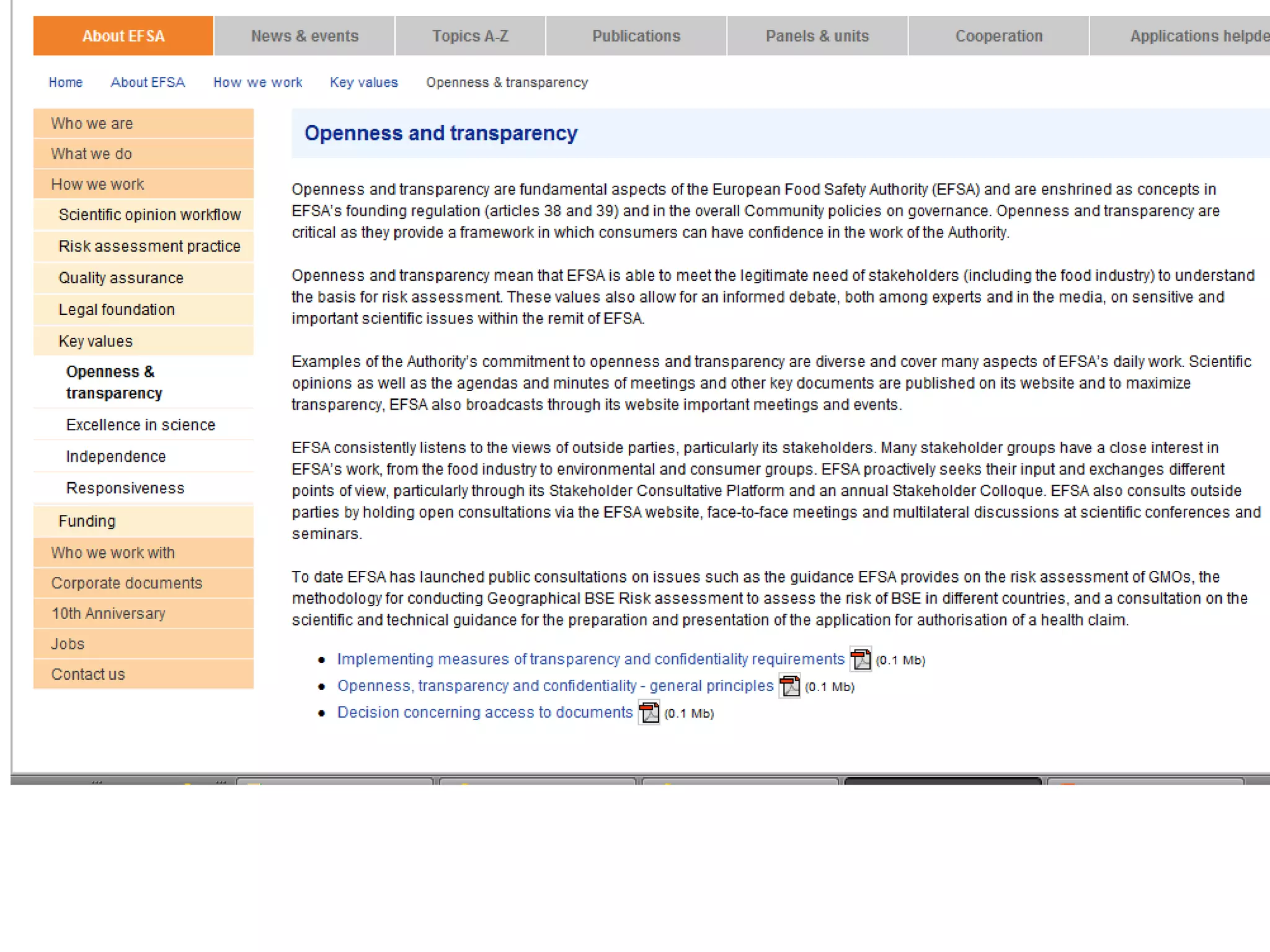
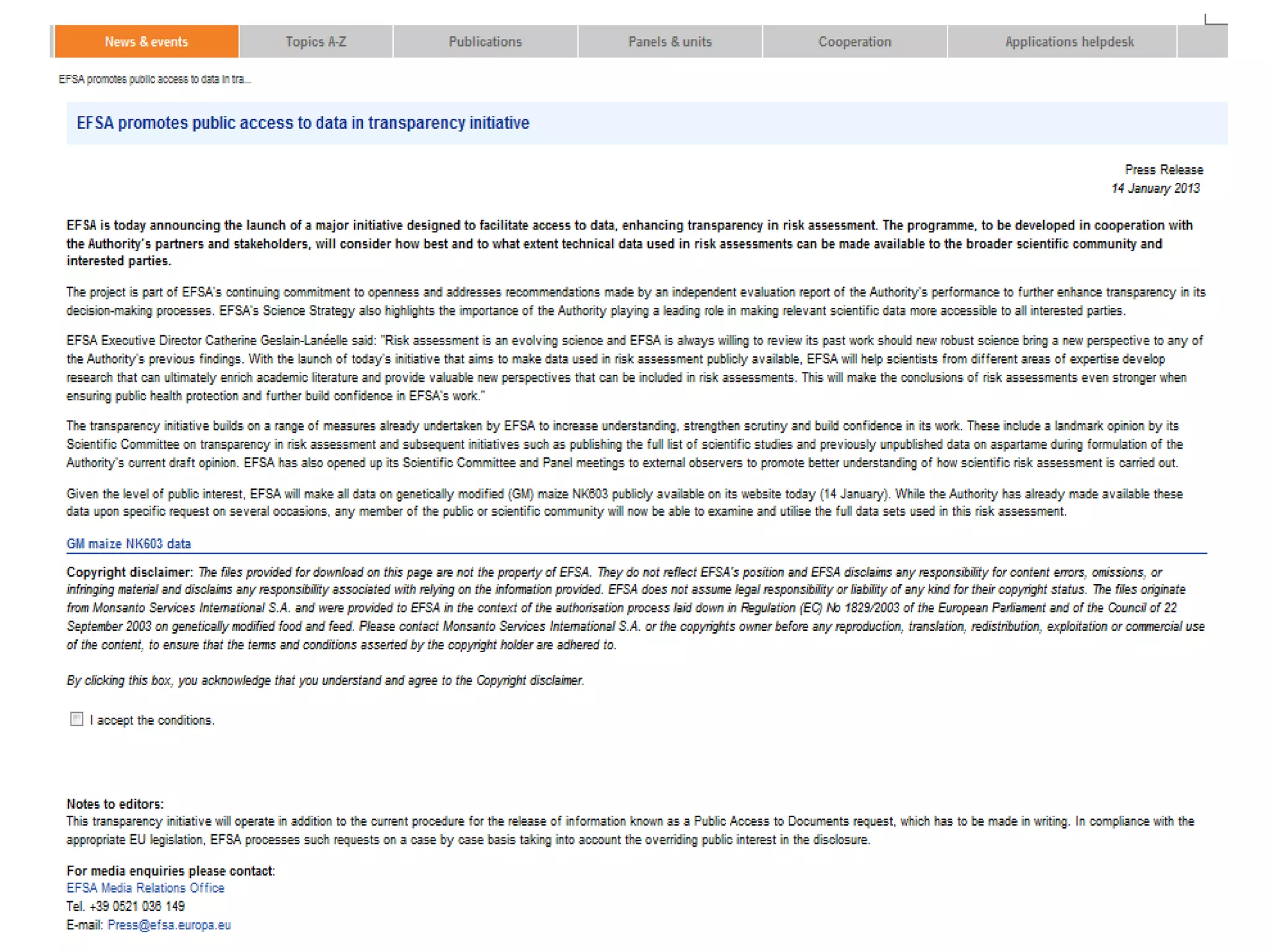
“Why should applicants, seeking to obtain
authorization for food to be given to our
children, not make publically available all the
data on which that authorization depends?”
Per Bergman,
Director REPRO, EFSA,
January 2013
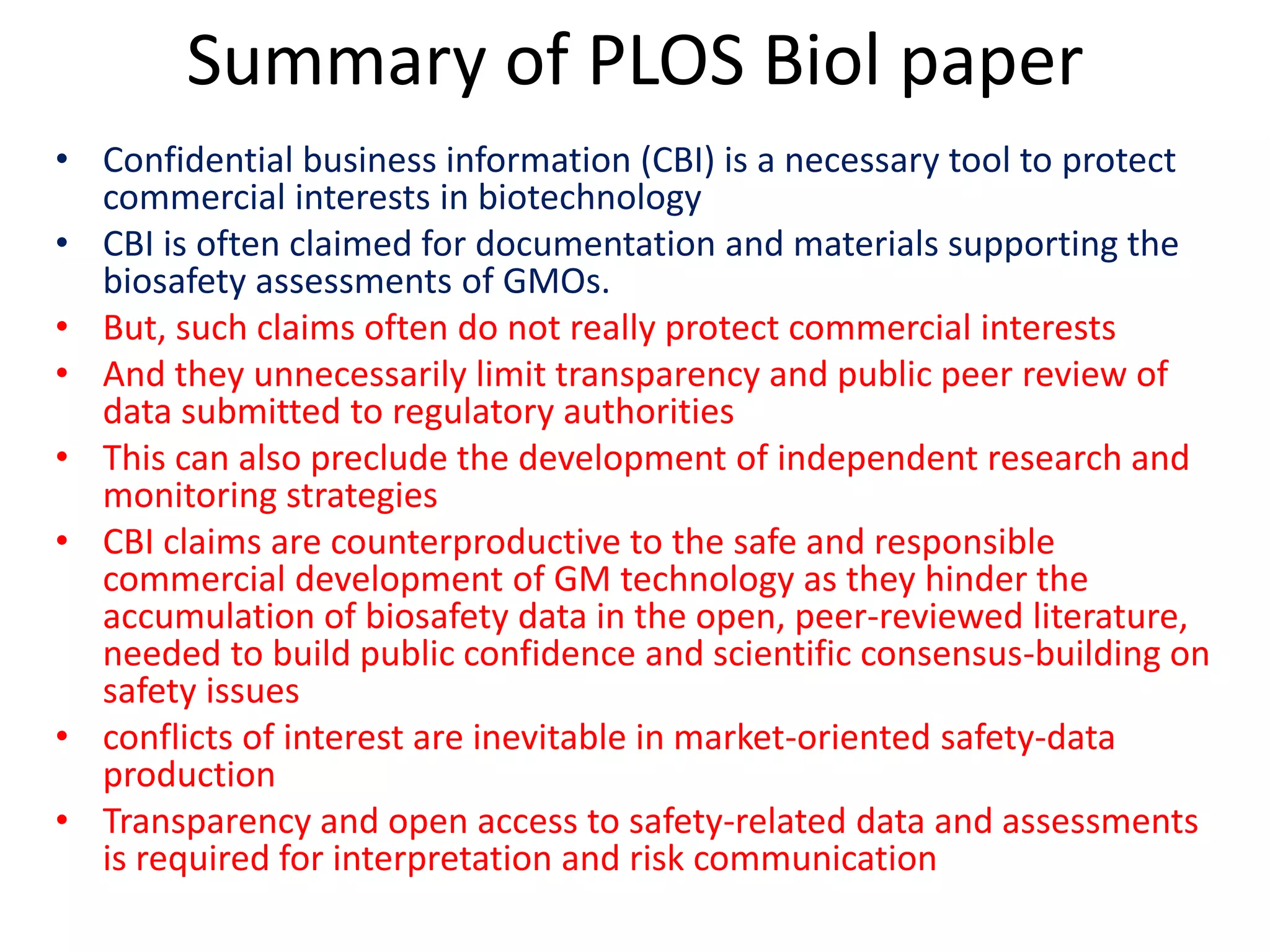
Summary of PLOS Biol paper
• Confidential business information (CBI) is a necessary tool to protect
commercial interests in biotechnology
• CBI is often claimed for documentation and materials supporting the
biosafety assessments of GMOs.
• But, such claims often do not really protect commercial interests
• And they unnecessarily limit transparency and public peer review of
data submitted to regulatory authorities
• This can also preclude the development of independent research and
monitoring strategies
• CBI claims are counterproductive to the safe and responsible
commercial development of GM technology as they hinder the
accumulation of biosafety data in the open, peer-reviewed literature,
needed to build public confidence and scientific consensus-building on
safety issues
• conflicts of interest are inevitable in market-oriented safety-data
production
• Transparency and open access to safety-related data and assessments
is required for interpretation and risk communication
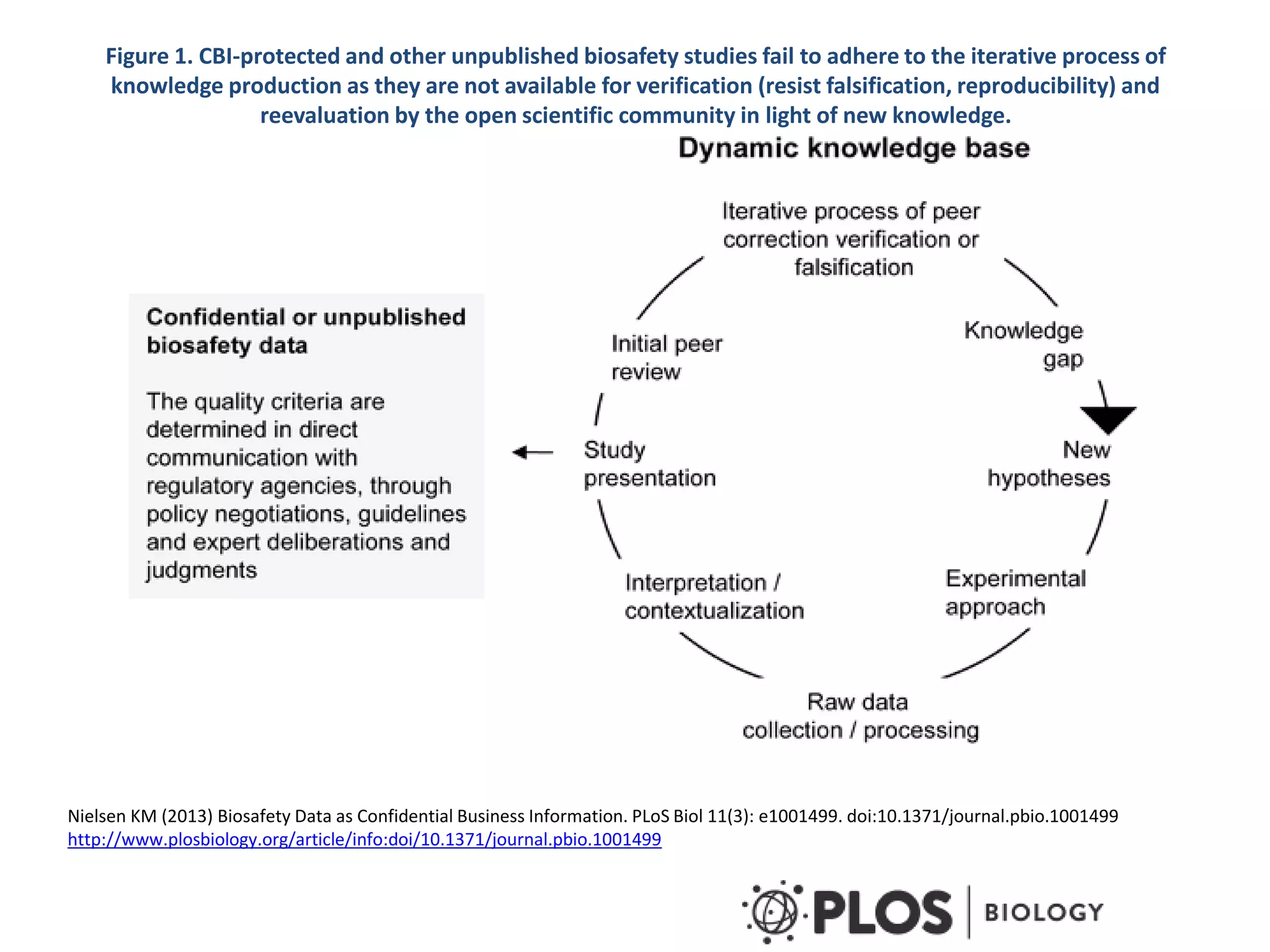
Figure 1. CBI-protected and other unpublished biosafety studies fail to adhere to the iterative process of
knowledge production as they are not available for verification (resist falsification, reproducibility) and
reevaluation by the open scientific community in light of new knowledge.
Nielsen KM (2013) Biosafety Data as Confidential Business Information. PLoS Biol 11(3): e1001499. doi:10.1371/journal.pbio.1001499
http://www.plosbiology.org/article/info:doi/10.1371/journal.pbio.1001499
The two Youtube videos from well-recognized researchers below
are also quite informative on this subject
http://www.youtube.com/watch?v=3XEDzhjW9fU
(Peter Gøtzche – )
http://www.youtube.com/watch?v=pTrqsif0KWM
(Tom Jefferson – Tamiflu)
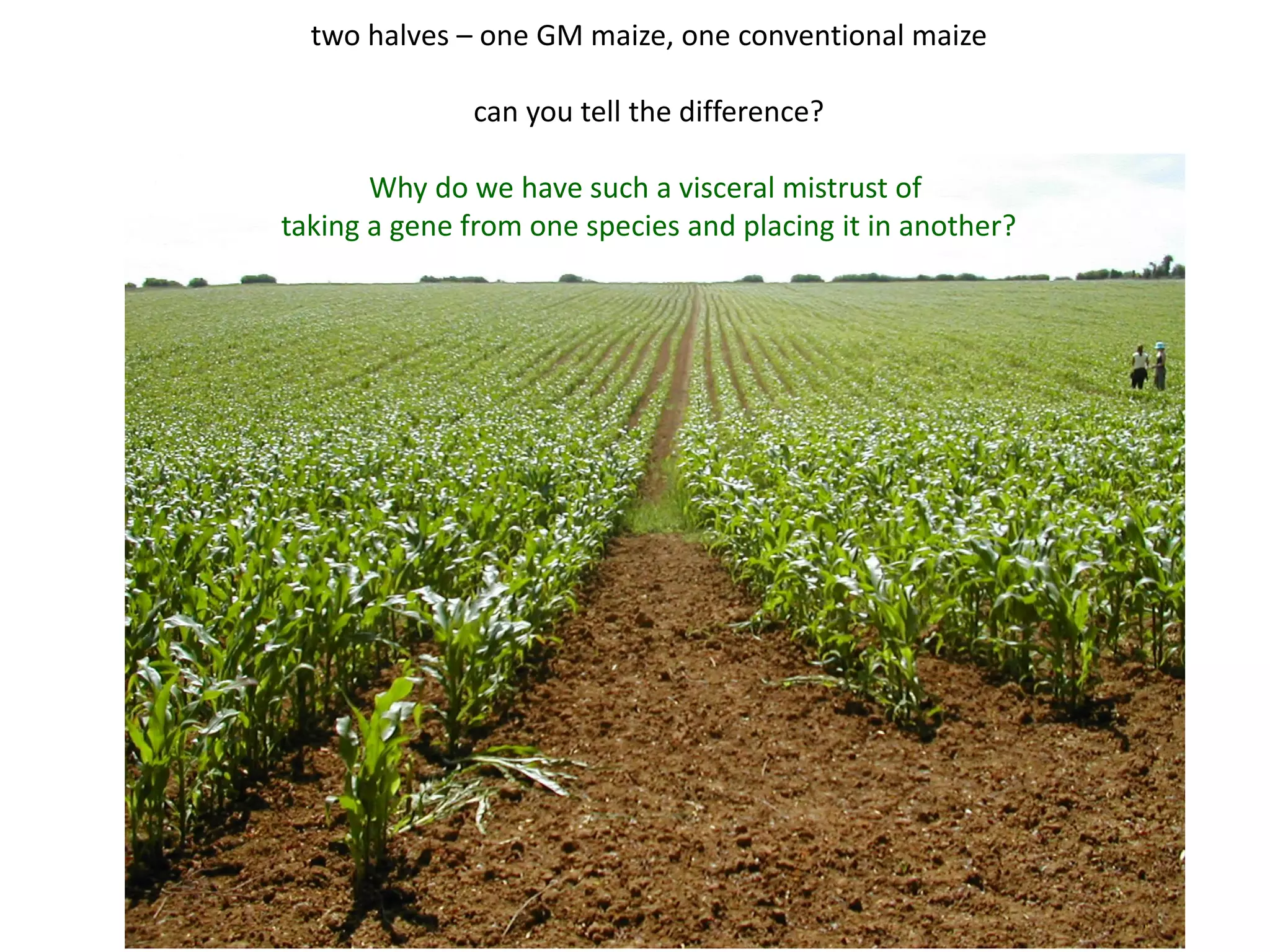
two halves – one GM maize, one conventional maize
can you tell the difference?
Why do we have such a visceral mistrust of
taking a gene from one species and placing it in another?
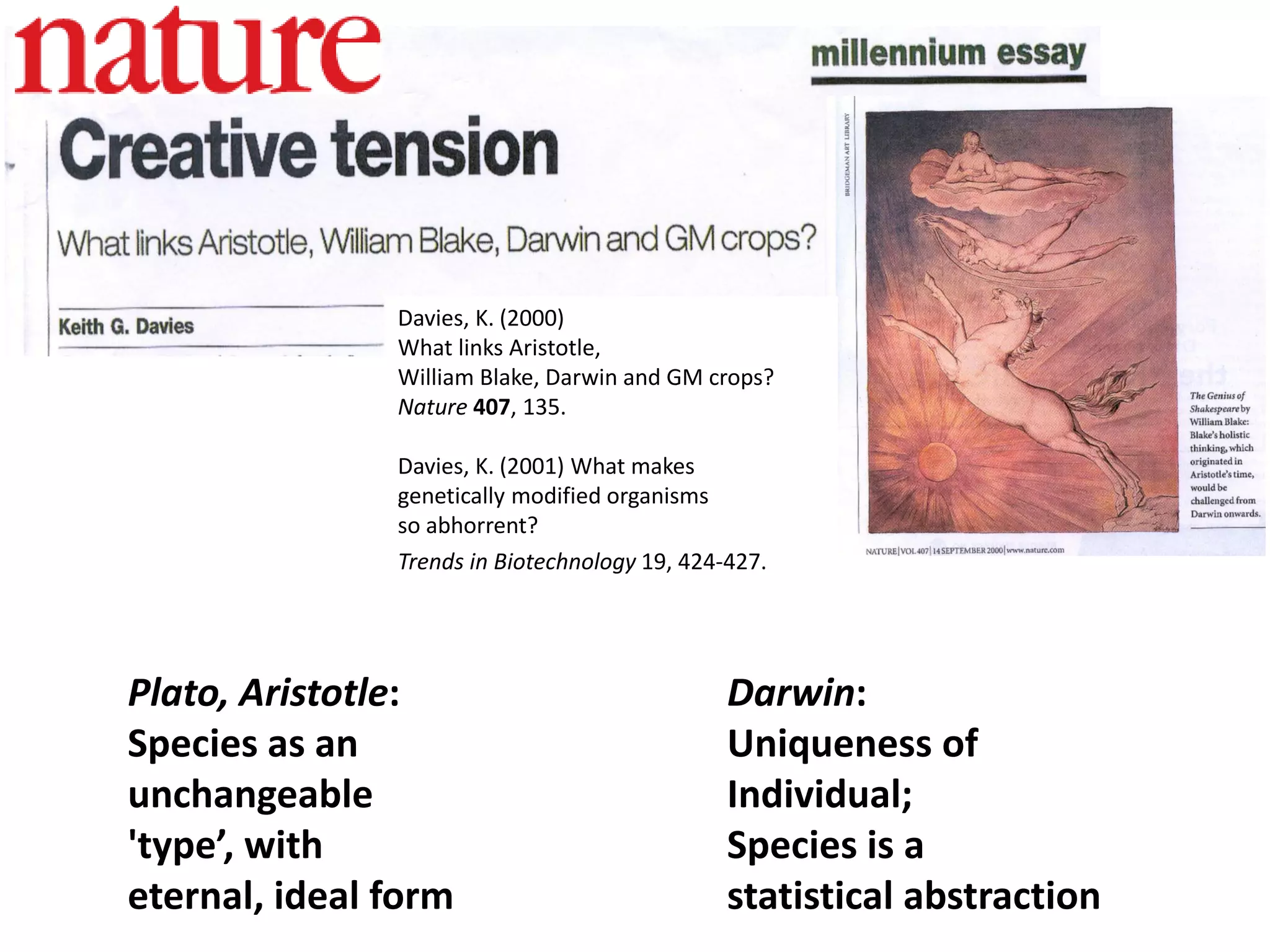
Plato, Aristotle:
Species as an
unchangeable
'type’, with
eternal, ideal form
Darwin:
Uniqueness of
Individual;
Species is a
statistical abstraction
Davies, K. (2000)
What links Aristotle,
William Blake, Darwin and GM crops?
Nature 407, 135.
Davies, K. (2001) What makes
genetically modified organisms
so abhorrent?
Trends in Biotechnology 19, 424-427.
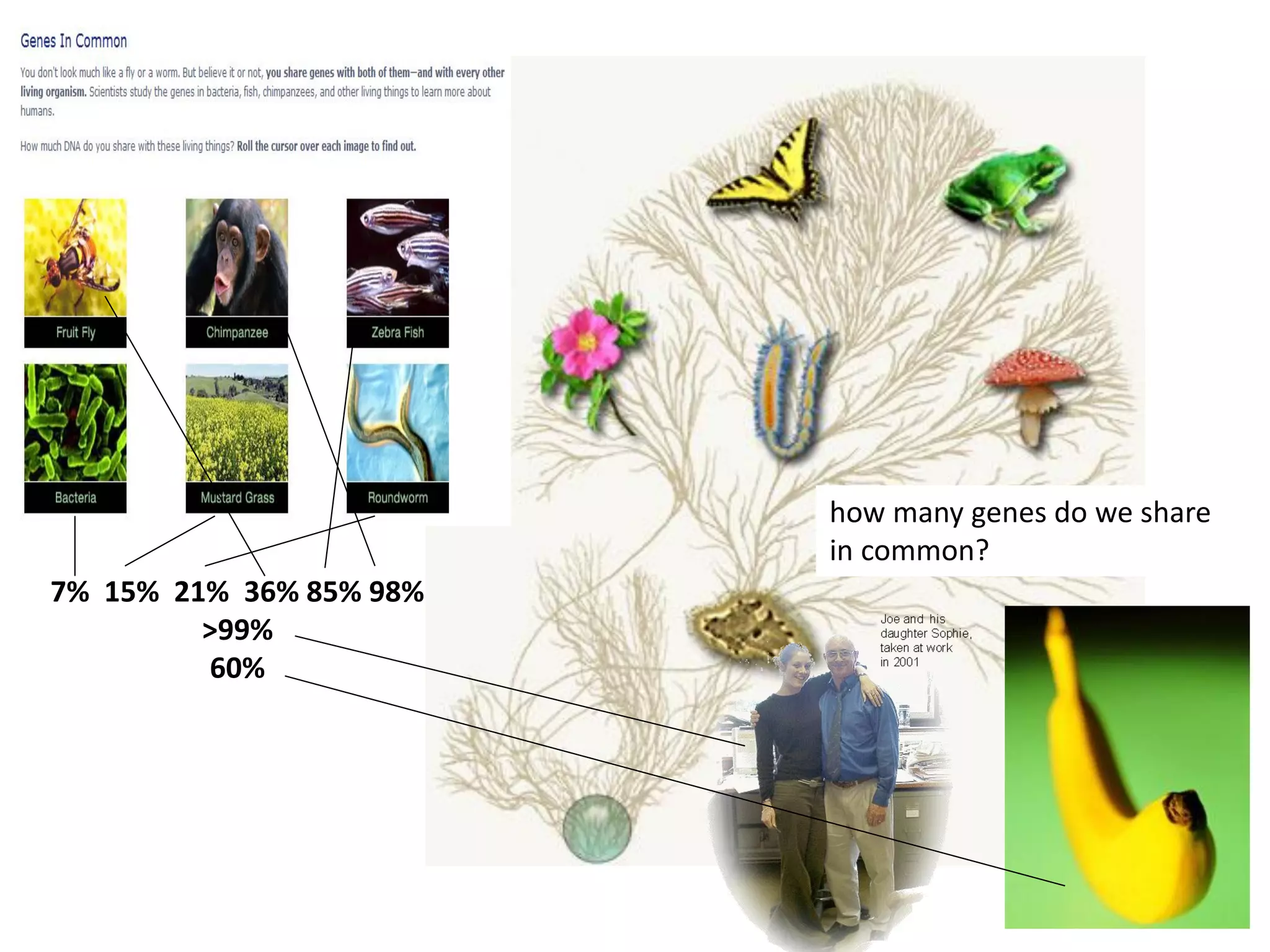
how many genes do we share
in common?
7% 15% 21% 36% 85% 98%
>99%
60%
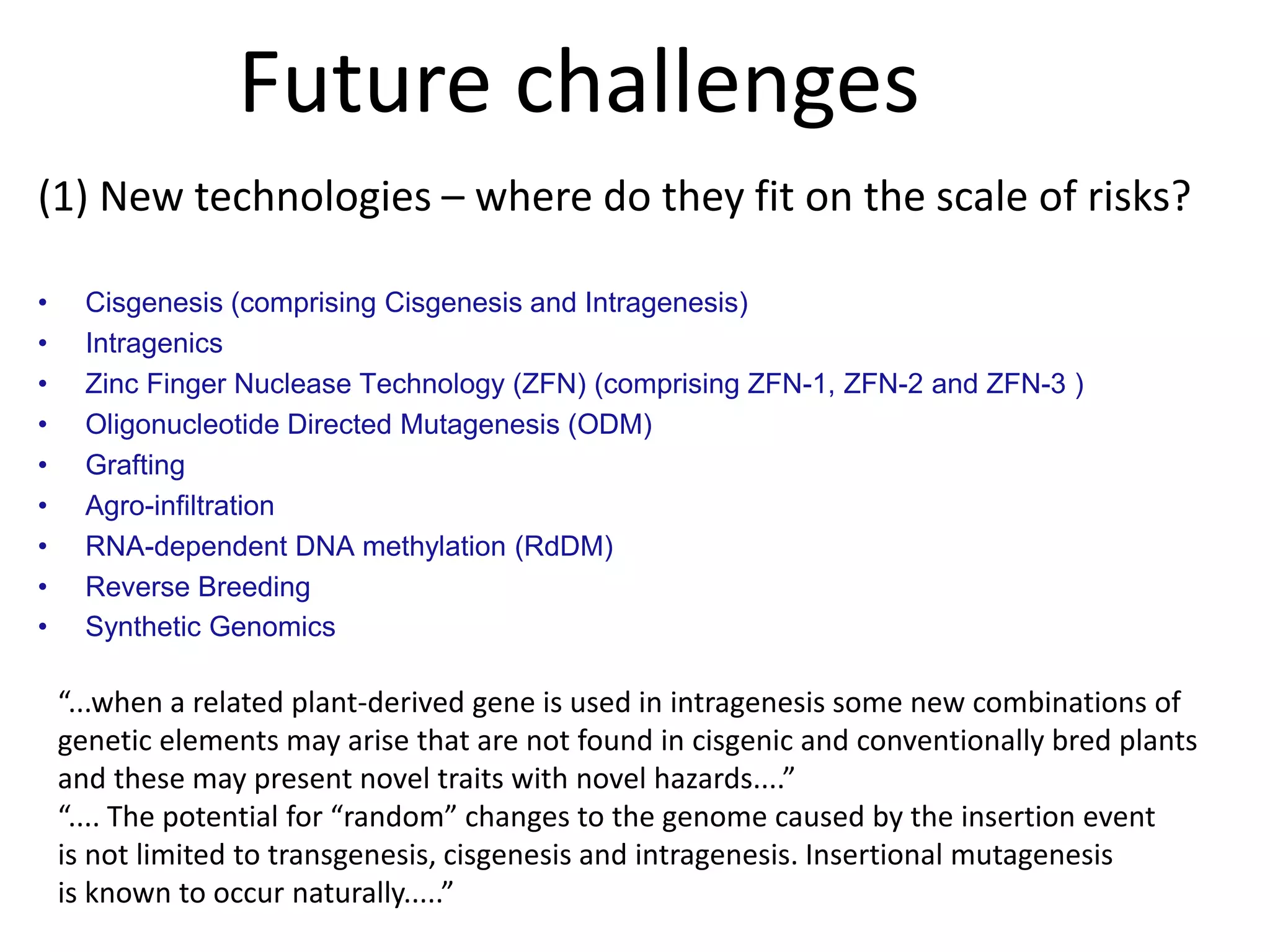
Future challenges
(1) New technologies – where do they fit on the scale of risks?
• Cisgenesis (comprising Cisgenesis and Intragenesis)
• Intragenics
• Zinc Finger Nuclease Technology (ZFN) (comprising ZFN-1, ZFN-2 and ZFN-3 )
• Oligonucleotide Directed Mutagenesis (ODM)
• Grafting
• Agro-infiltration
• RNA-dependent DNA methylation (RdDM)
• Reverse Breeding
• Synthetic Genomics
“...when a related plant-derived gene is used in intragenesis some new combinations of
genetic elements may arise that are not found in cisgenic and conventionally bred plants
and these may present novel traits with novel hazards....”
“.... The potential for “random” changes to the genome caused by the insertion event
is not limited to transgenesis, cisgenesis and intragenesis. Insertional mutagenesis
is known to occur naturally.....”
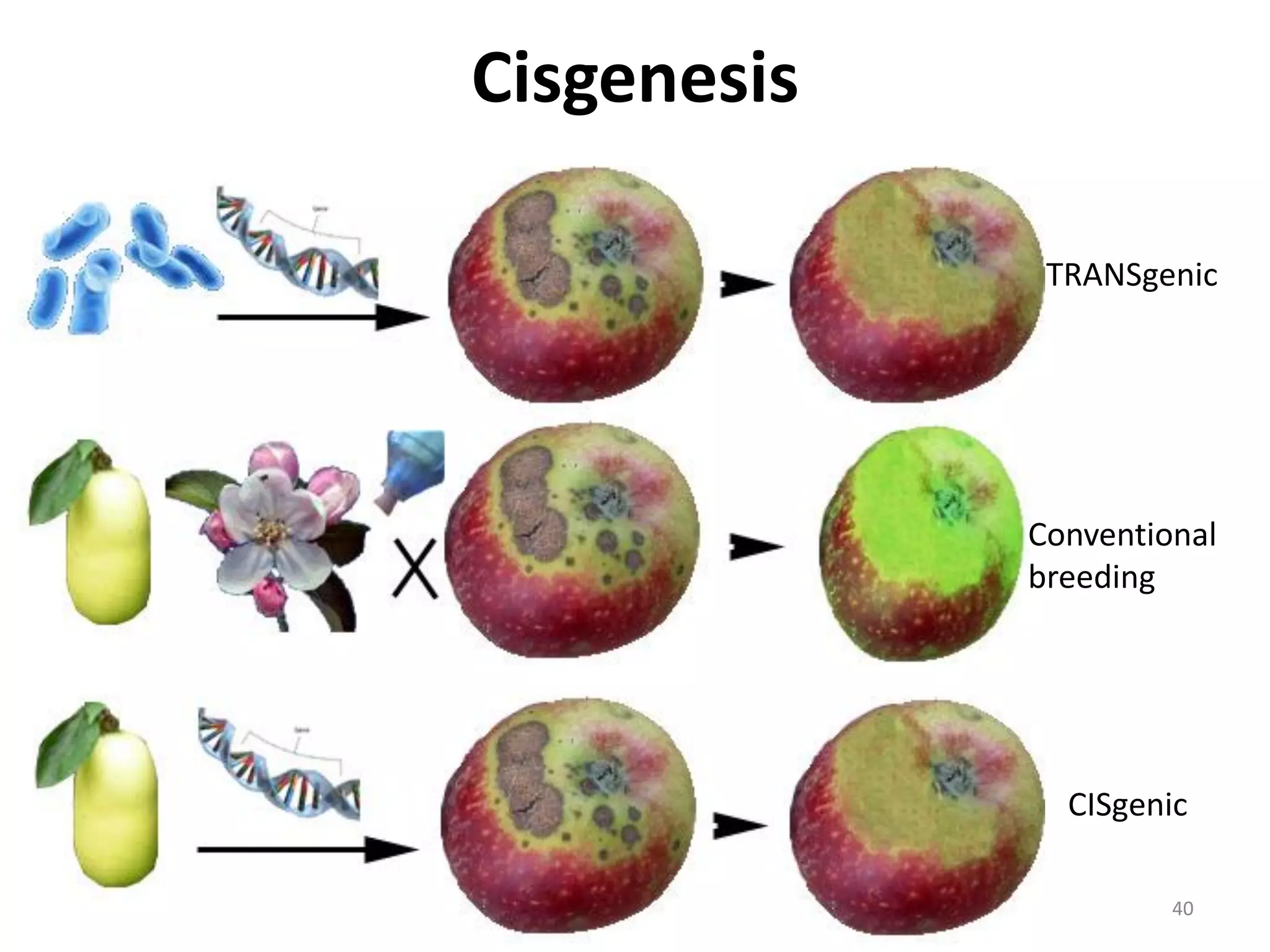
Cisgenesis
40
TRANSgenic
Conventional
breeding
CISgenic
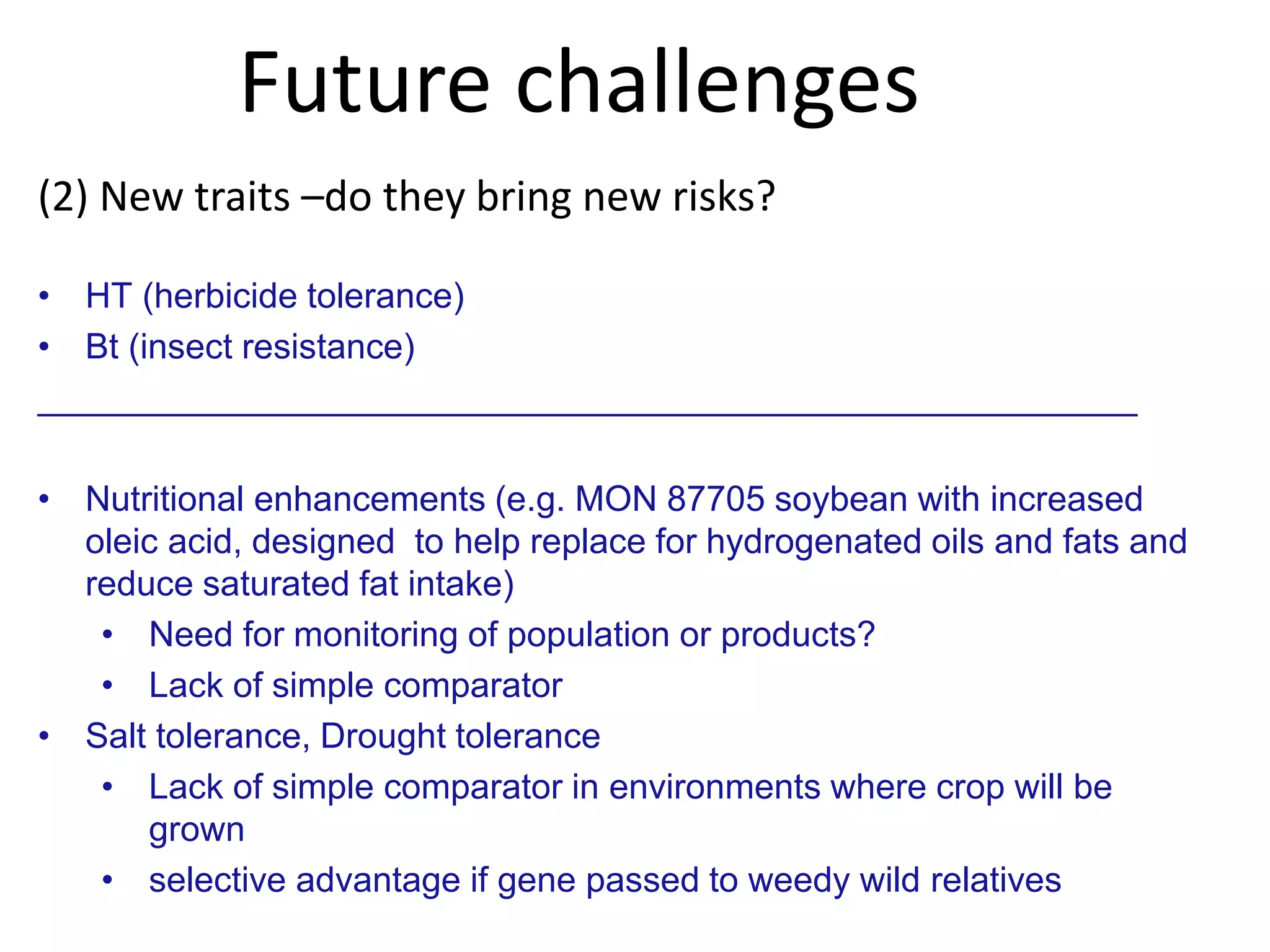
Future challenges
(2) New traits –do they bring new risks?
• HT (herbicide tolerance)
• Bt (insect resistance)
________________________________________________________
• Nutritional enhancements (e.g. MON 87705 soybean with increased
oleic acid, designed to help replace for hydrogenated oils and fats and
reduce saturated fat intake)
• Need for monitoring of population or products?
• Lack of simple comparator
• Salt tolerance, Drought tolerance
• Lack of simple comparator in environments where crop will be
grown
• selective advantage if gene passed to weedy wild relatives
Future challenges
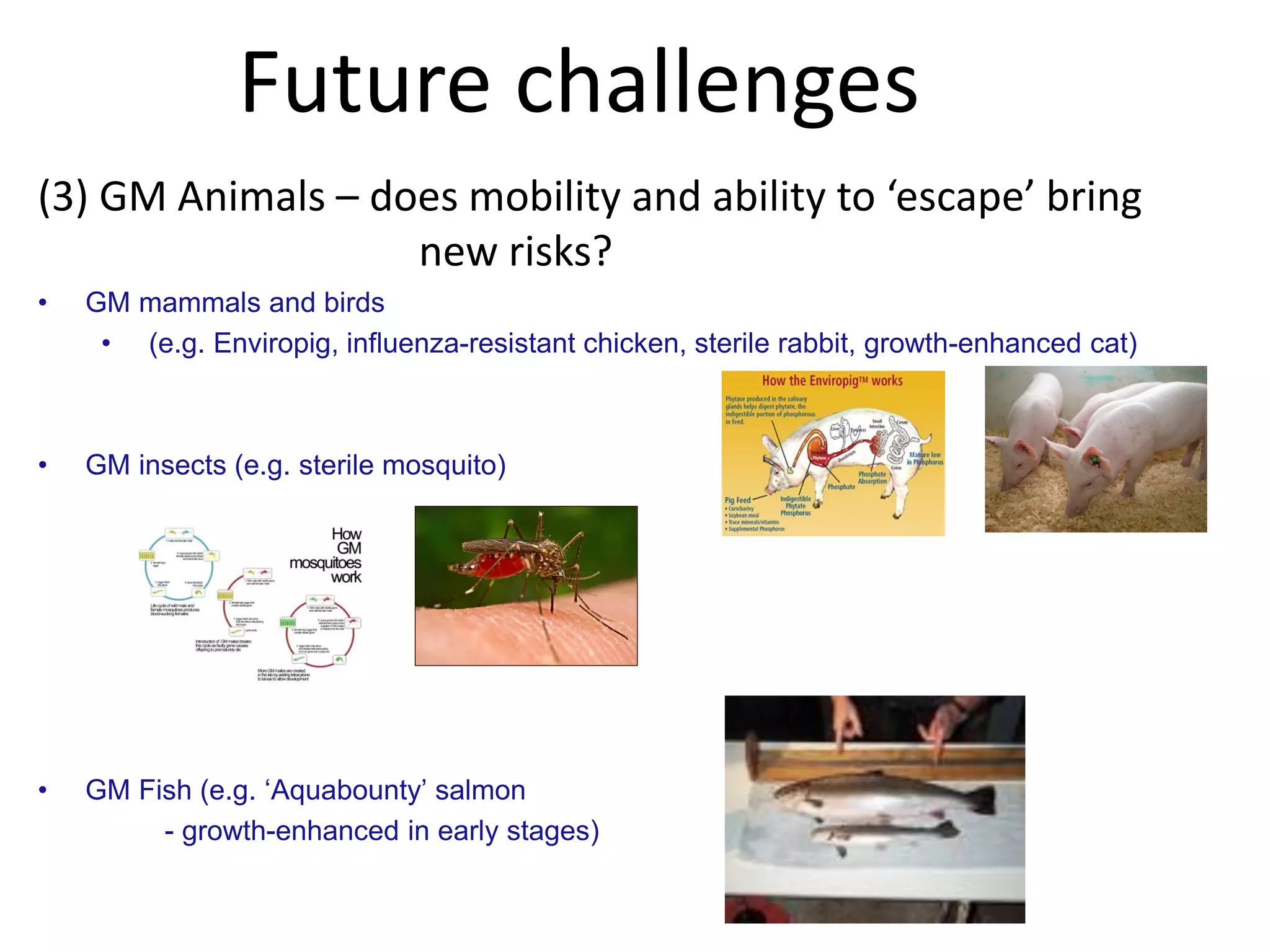
(3) GM Animals – does mobility and ability to ‘escape’ bring
new risks?
• GM mammals and birds
• (e.g. Enviropig, influenza-resistant chicken, sterile rabbit, growth-enhanced cat)
• GM insects (e.g. sterile mosquito)
• GM Fish (e.g. ‘Aquabounty’ salmon
- growth-enhanced in early stages)
Further reading:
http://www.efsa.europa.eu/en/topics/topic/gmo.htm
http://www.defra.gov.uk/acre/
http://acnfp.food.gov.uk/

Risks of GM crops

  • 1.
    Socio-economic / bioethical issues Risksof GM Crops Food safety Ecological effects Management effects Genetic effects of transformation
  • 2.
    Rescuers use explosivesto blast an escape tunnel to free two Australian miners trapped underground Lebanese firefighter extinguishes body of truck driver, killed by Israeli planes in attack on Beirut, 17 July 2006 Most major technologies have benefits & risks Canada assesses the risks of the trait (e.g. herbicide tolerance) regardless of the technology Europe assesses the risks of the technology regardless of the trait. Assessment of benefit is disallowed Directive 2001/18 & Regulation 1829/2003
  • 3.
    EFSA: Committed since2002 to ensuring that Europe’s food is safe EFSA GMO Panel 2009 - 2012 21 experts - independent academics
  • 4.
    EFSA’s role inGMO applications In the EU, products that are, contain, or are produced from GMOs must have an authorisation at the Community level prior to entering the market. • Protection  Human and animal health  Environment • Risk assessment (RA)  Characterisation of potential adverse effects associated with GM plant deployment/use – Direct; indirect; immediate; delayed; cumulative effects
  • 5.
    EFSA advises –European Union decides • 27 EU Member States vote on approvals of GMOs • Need qualified majority • Despite WTO rules - votes are on political basis • Qualified majority not usually obtained, especially for cultivation • Then European Commission (DG SANCO) have to decide
  • 6.
    Member states votingpatterns on GMOs
  • 7.
    Number of approvedGM products in EU, US, Brazil and Canada
  • 9.
    Average duration ofauthorization of GM food-feed imported product (not for cultivation) in the EU
  • 10.
    Scope of GMOapplications Food • GMO for food use • Food containing or consisting of GMOs • Food produced from or containing ingredients produced from GMO Feed • GMO for feed use • Feed containing or consisting of GMOs • Feed produced from GMOs Deliberate release into the environment • Import and processing • Seeds and plant propagation material for cultivation EFSA carries out scientific risk assessment on GMOs to conclude on whether they are as safe as their conventional equivalents
  • 11.
    For risk assessment,the average dossier of information supplied by a company seeking to import GM food into the EU comprises 2000 pages of evidence (does not all fit onto one CD) “not by any to be enterprised, nor taken in hand unadvisedly, lightly, or wantonly; but reverently, discreetly, soberly, and in the fear of God”
  • 12.
    EFSA GMO Panelexpertise MOLECULAR CHARACTERISATION • biochemistry • molecular biology • genetics • plant breeding • microbiology FOOD FEED SAFETY • toxicology • immunology • nutrition & animal feed • food chemistry • biotechnology ENVIRONMENTAL RISK ASSESSMENT • plant biology • ecology • agronomy • entomology • biometrics & statistics Working groups with Ad-hoc experts in new techniques Working Groups with Ad-hoc experts in pesticides, natural toxins, environmental monitoring Working groups with Ad-hoc experts in food sciences, animal pathology •14 EFSA staff scientistes •70 ad hoc experts •210 MS experts from 108 organisations and authorities of EU Member States EFSA GMO Panel of 19 external experts Renewed every 3 years
  • 13.
    GM: 130 Non-GM comparator: 115 Compositionalanalysis The comparative approach A test of difference: GMO vs near-isogenic comparator 100 150 200 endpoint Aendpoint A 100 150 200
  • 14.
    GM: 130 The principleof a ‘history of safe use’ Commercial varieties endpoint A 100 150 200
  • 15.
    Commercial varieties forma distribution leads to an equivalence test (cf pharmaceutical risk assessment) Commercial varieties: μ=125 ; σ=15 endpoint A 100 125 150
  • 16.
    What is the(statistical) power of an experiment? • Usually in biology we set up a null hypothesis of equality and try to disprove it in order to demonstrate an effect. • Power is the probability that the experiment will detect an effect (i.e. that the null hypothesis will be rejected) if the effect exists • Power depends on replication, baseline variability, size of effect sought (Note this is not easy to set and may be difficult to estimate) • Power is inverse of (i.e. it is 1 - ) chance of finding a false negative
  • 18.
    Size of test& false & positives • The size of the test of a null hypothesis is the level set as the chance of declaring an effect exists when it is actually absent – i.e. the probability of rejecting the null hypothesis when it is actually true • This is usually set at 5% • This is actually the probability of finding a false positive (Note this is easy to set!)
  • 19.
    Implications for riskassessment • In biology we try to demonstrate effects exist using a null hypothesis of equality • In risk assessment for GMOs (and pharmaceuticals) companies try to demonstrate a lack of adverse effects • Hence society needs to be assured that power of experiments done is sufficient to find effect if it exists. • The Popperian paradigm and its mathematical representation leads to an ethical problem
  • 20.
    The two tests:null hypotheses Test of Difference Verdict Not different Different Truth H0: Mean of GM and comparator the same OK Type I error; ‘false positive’; Potential risk for Producer H1: Mean of GM and comparator NOT the same Type II error; ‘false negative’; Potential risk for Consumer OK Test of Equivalence Verdict Not Equivalent Equivalent Truth H0: non- equivalent (GM mean outside lower or upper equiv. limit) OK Type I error; ‘false positive’; Potential risk for Consumer H1: equivalent (GM mean strictly within equiv. limits) Type II error; ‘false positive’; Potential risk for Producer OK
  • 21.
    The paper ofSeralini et al. (2012)
  • 25.
    Issues raised byNGOs • Conflicts of interest, because EFSA was reviewing an article that attacked its previous risk assessments • The work of Seralini was expected to adhere to far greater standards than those applied by EFSA to applications from industry under which NK603 was assessed in the first place.
  • 31.
    “Why should applicants,seeking to obtain authorization for food to be given to our children, not make publically available all the data on which that authorization depends?” Per Bergman, Director REPRO, EFSA, January 2013
  • 32.
    Summary of PLOSBiol paper • Confidential business information (CBI) is a necessary tool to protect commercial interests in biotechnology • CBI is often claimed for documentation and materials supporting the biosafety assessments of GMOs. • But, such claims often do not really protect commercial interests • And they unnecessarily limit transparency and public peer review of data submitted to regulatory authorities • This can also preclude the development of independent research and monitoring strategies • CBI claims are counterproductive to the safe and responsible commercial development of GM technology as they hinder the accumulation of biosafety data in the open, peer-reviewed literature, needed to build public confidence and scientific consensus-building on safety issues • conflicts of interest are inevitable in market-oriented safety-data production • Transparency and open access to safety-related data and assessments is required for interpretation and risk communication
  • 33.
    Figure 1. CBI-protectedand other unpublished biosafety studies fail to adhere to the iterative process of knowledge production as they are not available for verification (resist falsification, reproducibility) and reevaluation by the open scientific community in light of new knowledge. Nielsen KM (2013) Biosafety Data as Confidential Business Information. PLoS Biol 11(3): e1001499. doi:10.1371/journal.pbio.1001499 http://www.plosbiology.org/article/info:doi/10.1371/journal.pbio.1001499
  • 34.
    The two Youtubevideos from well-recognized researchers below are also quite informative on this subject http://www.youtube.com/watch?v=3XEDzhjW9fU (Peter Gøtzche – ) http://www.youtube.com/watch?v=pTrqsif0KWM (Tom Jefferson – Tamiflu)
  • 35.
    two halves –one GM maize, one conventional maize can you tell the difference? Why do we have such a visceral mistrust of taking a gene from one species and placing it in another?
  • 36.
    Plato, Aristotle: Species asan unchangeable 'type’, with eternal, ideal form Darwin: Uniqueness of Individual; Species is a statistical abstraction Davies, K. (2000) What links Aristotle, William Blake, Darwin and GM crops? Nature 407, 135. Davies, K. (2001) What makes genetically modified organisms so abhorrent? Trends in Biotechnology 19, 424-427.
  • 38.
    how many genesdo we share in common? 7% 15% 21% 36% 85% 98% >99% 60%
  • 39.
    Future challenges (1) Newtechnologies – where do they fit on the scale of risks? • Cisgenesis (comprising Cisgenesis and Intragenesis) • Intragenics • Zinc Finger Nuclease Technology (ZFN) (comprising ZFN-1, ZFN-2 and ZFN-3 ) • Oligonucleotide Directed Mutagenesis (ODM) • Grafting • Agro-infiltration • RNA-dependent DNA methylation (RdDM) • Reverse Breeding • Synthetic Genomics “...when a related plant-derived gene is used in intragenesis some new combinations of genetic elements may arise that are not found in cisgenic and conventionally bred plants and these may present novel traits with novel hazards....” “.... The potential for “random” changes to the genome caused by the insertion event is not limited to transgenesis, cisgenesis and intragenesis. Insertional mutagenesis is known to occur naturally.....”
  • 40.
  • 41.
    Future challenges (2) Newtraits –do they bring new risks? • HT (herbicide tolerance) • Bt (insect resistance) ________________________________________________________ • Nutritional enhancements (e.g. MON 87705 soybean with increased oleic acid, designed to help replace for hydrogenated oils and fats and reduce saturated fat intake) • Need for monitoring of population or products? • Lack of simple comparator • Salt tolerance, Drought tolerance • Lack of simple comparator in environments where crop will be grown • selective advantage if gene passed to weedy wild relatives
  • 42.
    Future challenges (3) GMAnimals – does mobility and ability to ‘escape’ bring new risks? • GM mammals and birds • (e.g. Enviropig, influenza-resistant chicken, sterile rabbit, growth-enhanced cat) • GM insects (e.g. sterile mosquito) • GM Fish (e.g. ‘Aquabounty’ salmon - growth-enhanced in early stages)
  • 43.