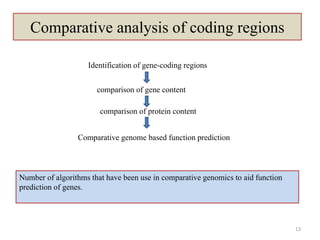
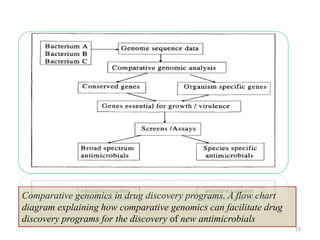
Comparative genomics involves comparing genomes to discover similarities and differences. It can provide insights into evolutionary relationships, help predict gene function, and aid in drug discovery. The first step is often aligning genome sequences using tools like BLAST or MUMmer. Genomes can then be compared at various levels, such as overall nucleotide statistics, genome structure, and coding/non-coding regions. Comparing gene and protein content across genomes helps predict functions. Conserved genomic features across species also aid prediction. Insights into genome evolution come from studying molecular events like inversions and duplications. Comparative genomics has impacted phylogenetics and drug target identification.