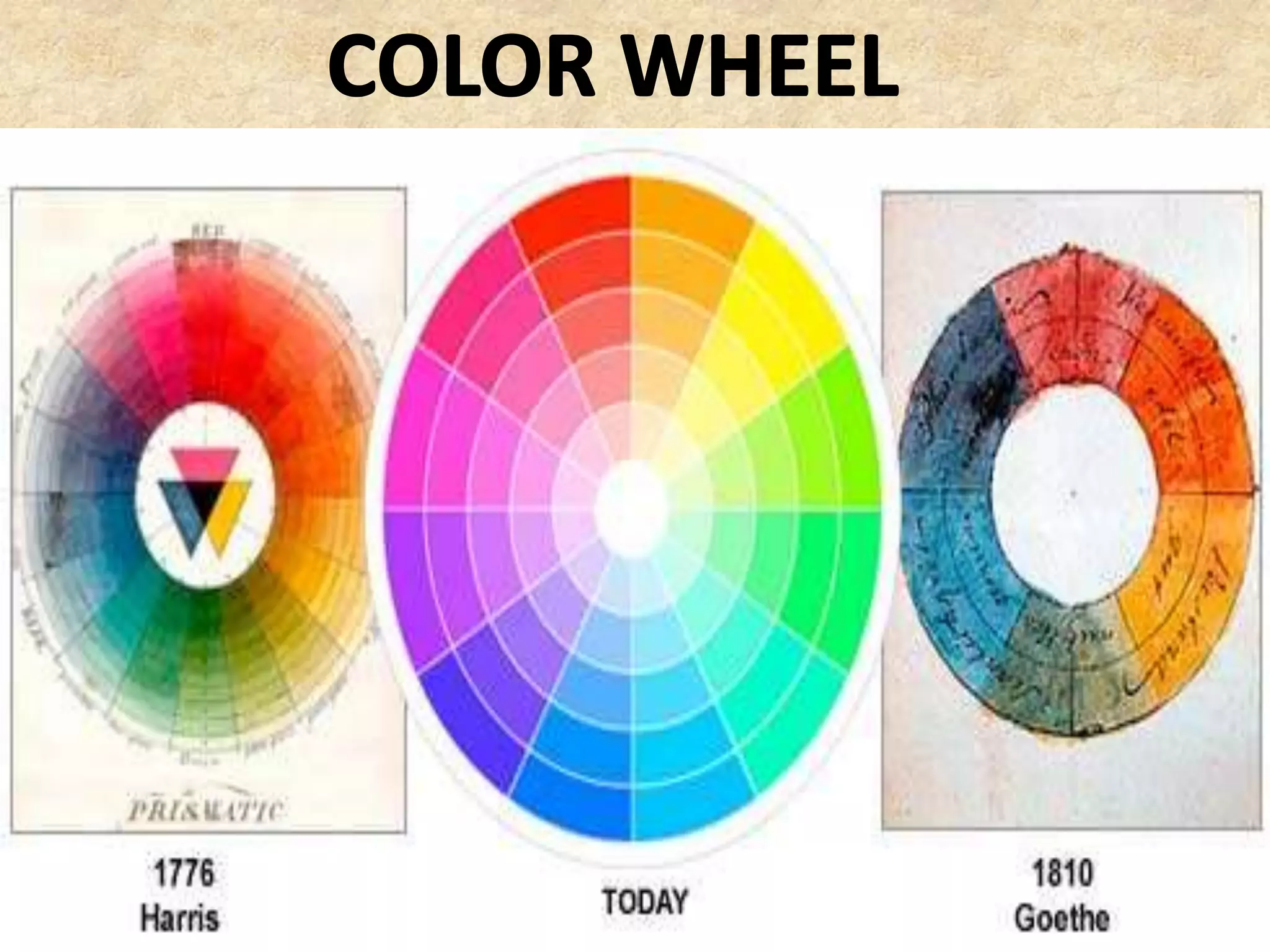
Hue,
Saturation,
Value (HSV)
Color Model
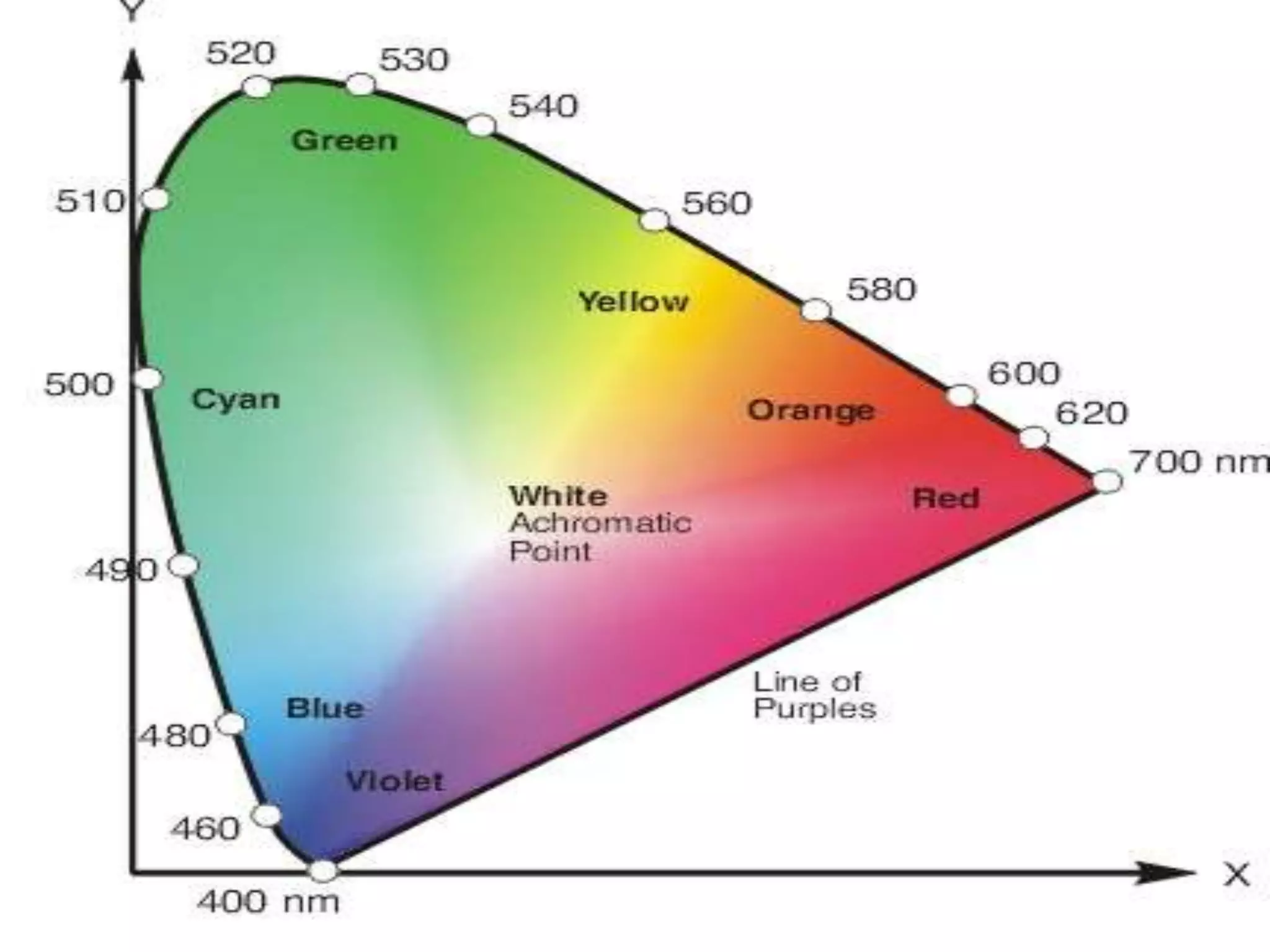
Wavelength (nm) Region name Observed
<380 Ultraviolet Invisible
380-440 Visible Violet
440-500 Visible Blue
500-580 Visible Green
580-600 Visible Yellow
600-620 Visible Orange
620-750 Visible Red
800-2500 Near-infrared Not visible
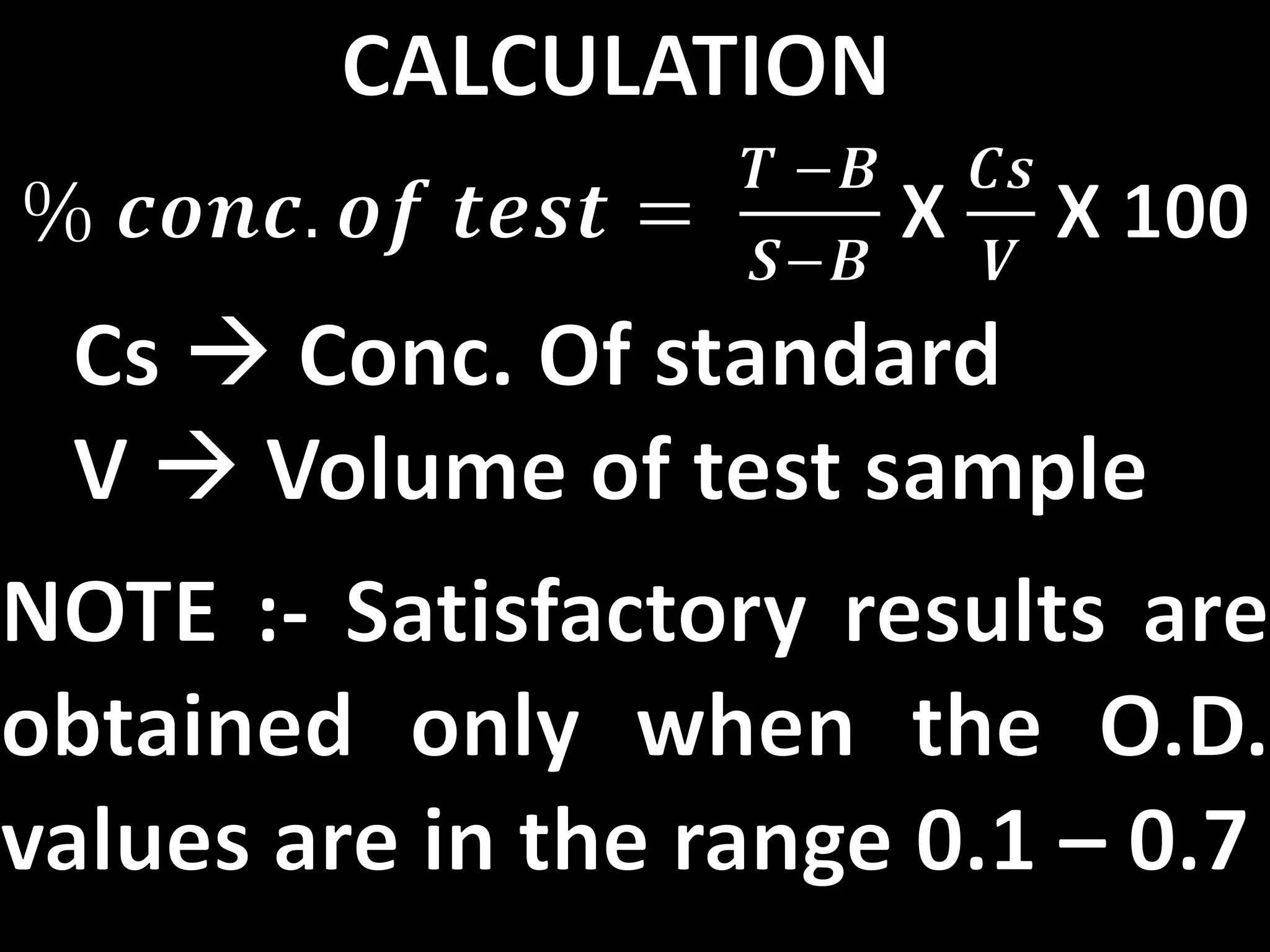
AT
AS
=
K X CT X L
K X CS X L
; since L is same
AT
AS
=
CT
CS
;
CT =
AT
AS
X
CS
𝓍
X 100 (Conc. in 100 ml
of test sample [% conc.]; 𝓍 is ml of
sample taken)
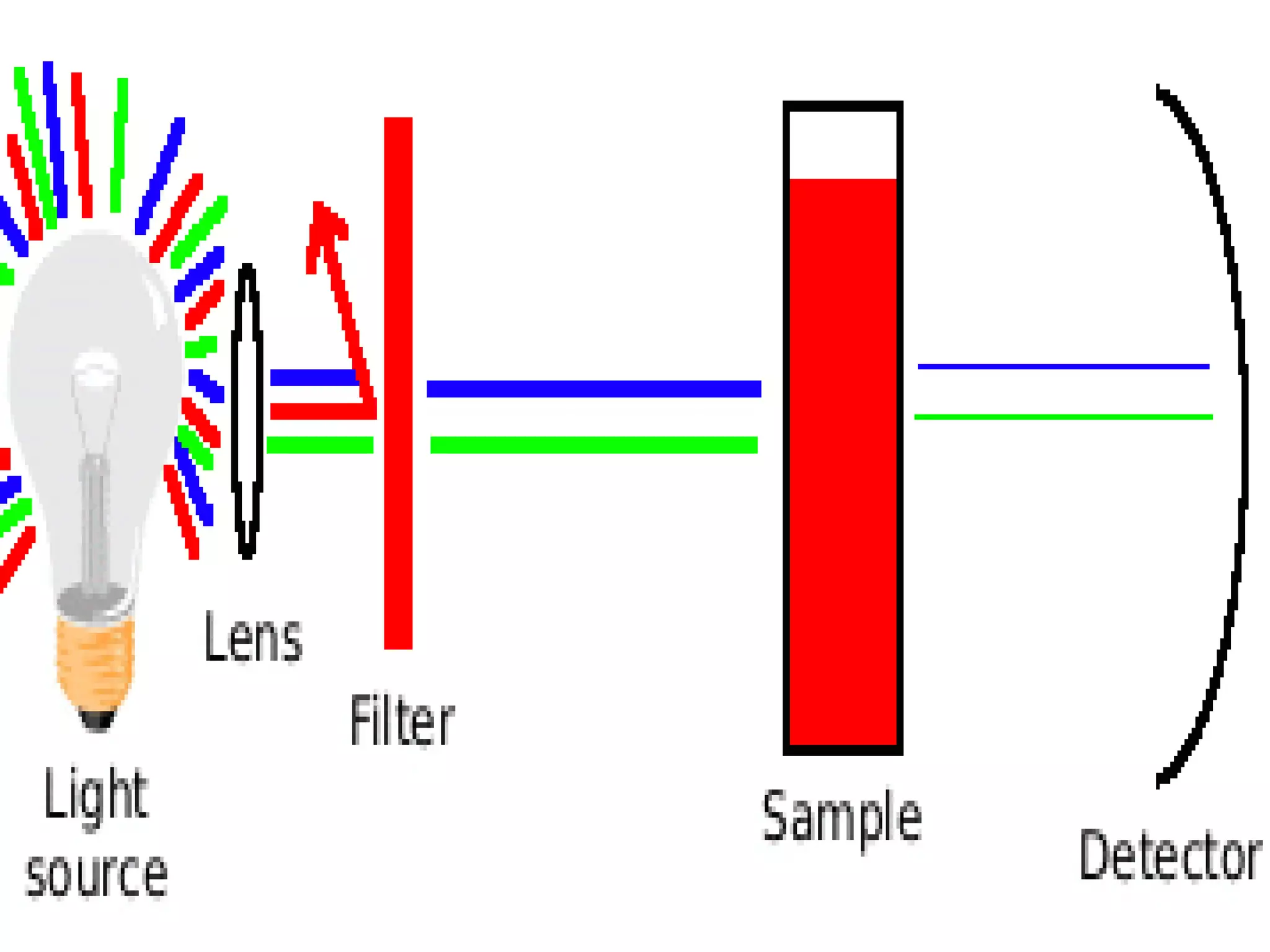
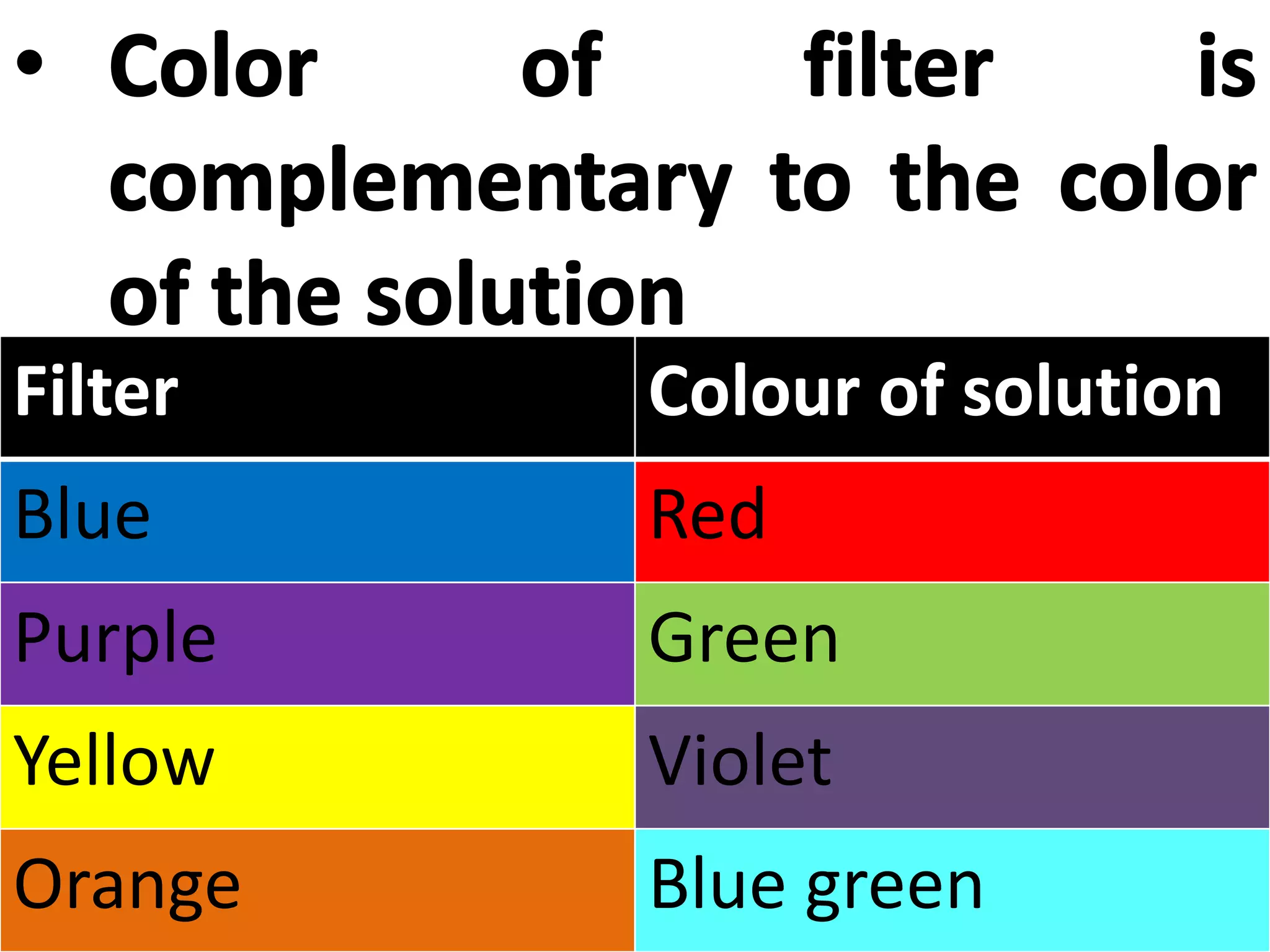
Filter Colour of solution
Blue Red
Purple Green
Yellow Violet
Orange Blue green
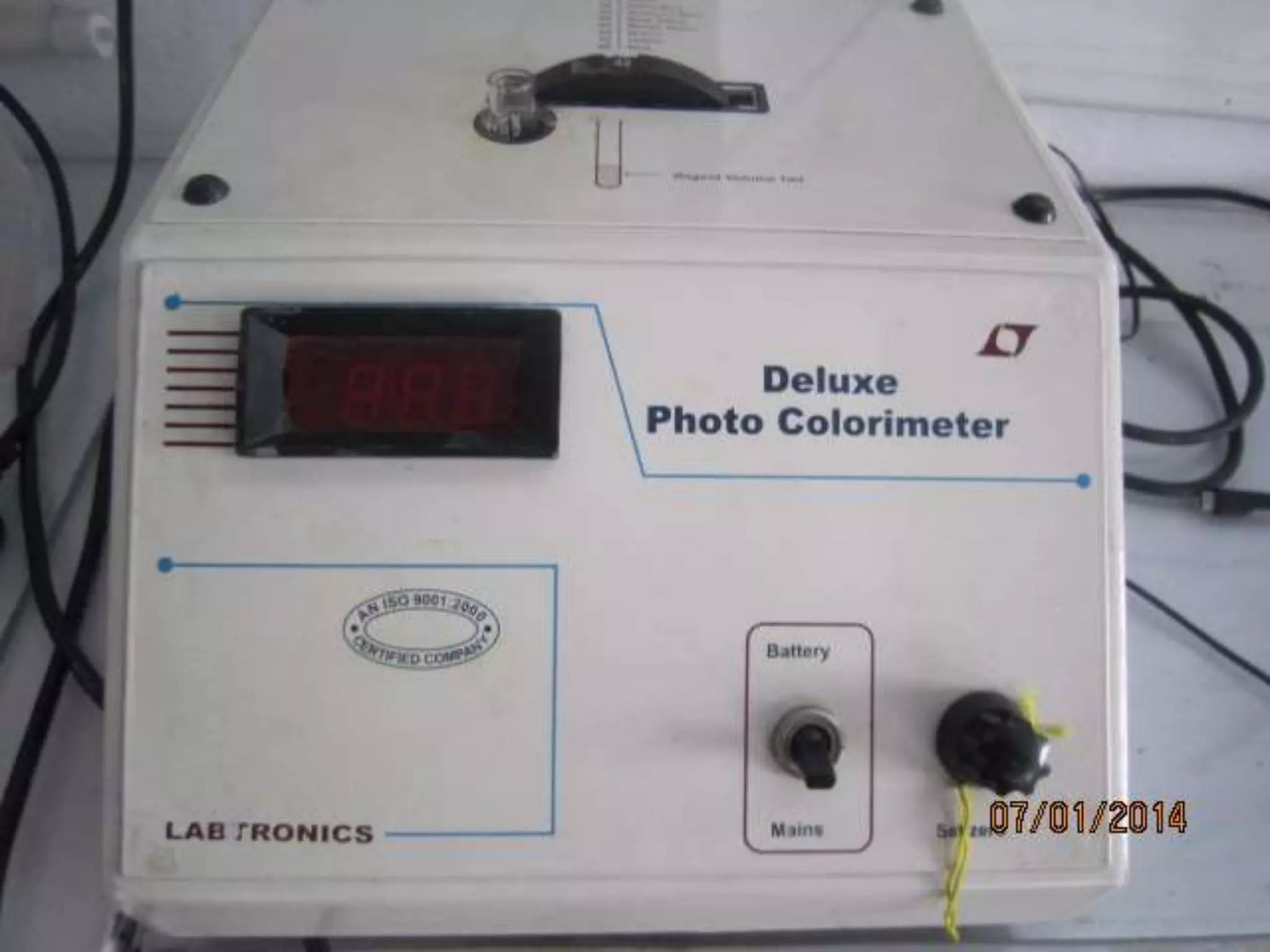
Glass filter is placed in the filter slot
3/4th of cuvette is filled with distilled water
and placed in the cuvette slot
Instrument is switched ‘on’ and allowed to
warm-up for 4-5 minutes
Button is adjusted using ‘coarse’ and ‘fine’
knobs to give zero optical activity in the
galvanometer
Blank solution is placed in an identical
cuvette and the OD is read (‘B’)
Blank solution is transferred to the original
test tube
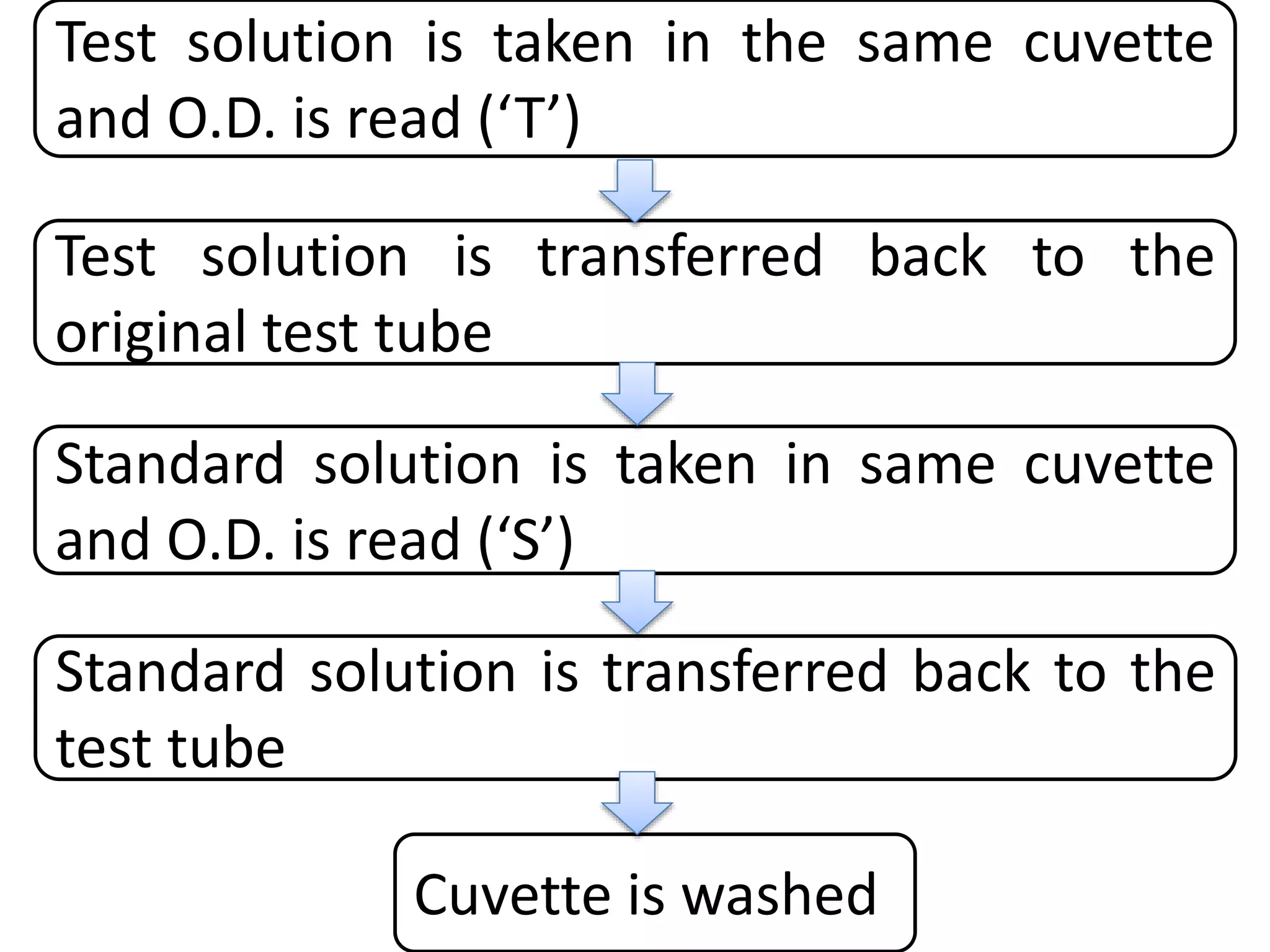
Test solution is taken in the same cuvette
and O.D. is read (‘T’)
Test solution is transferred back to the
original test tube
Standard solution is taken in same cuvette
and O.D. is read (‘S’)
Standard solution is transferred back to the
test tube
Cuvette is washed
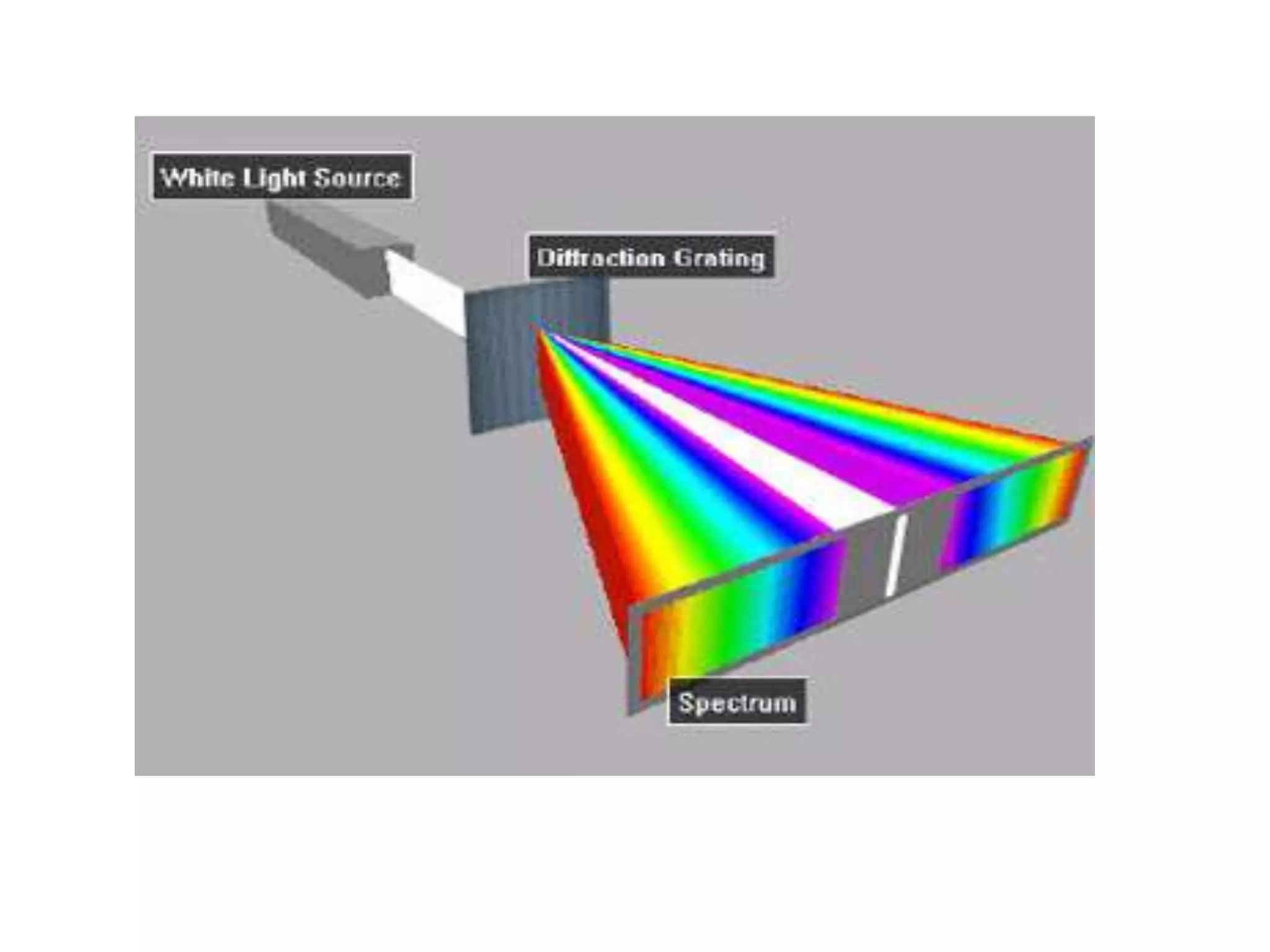
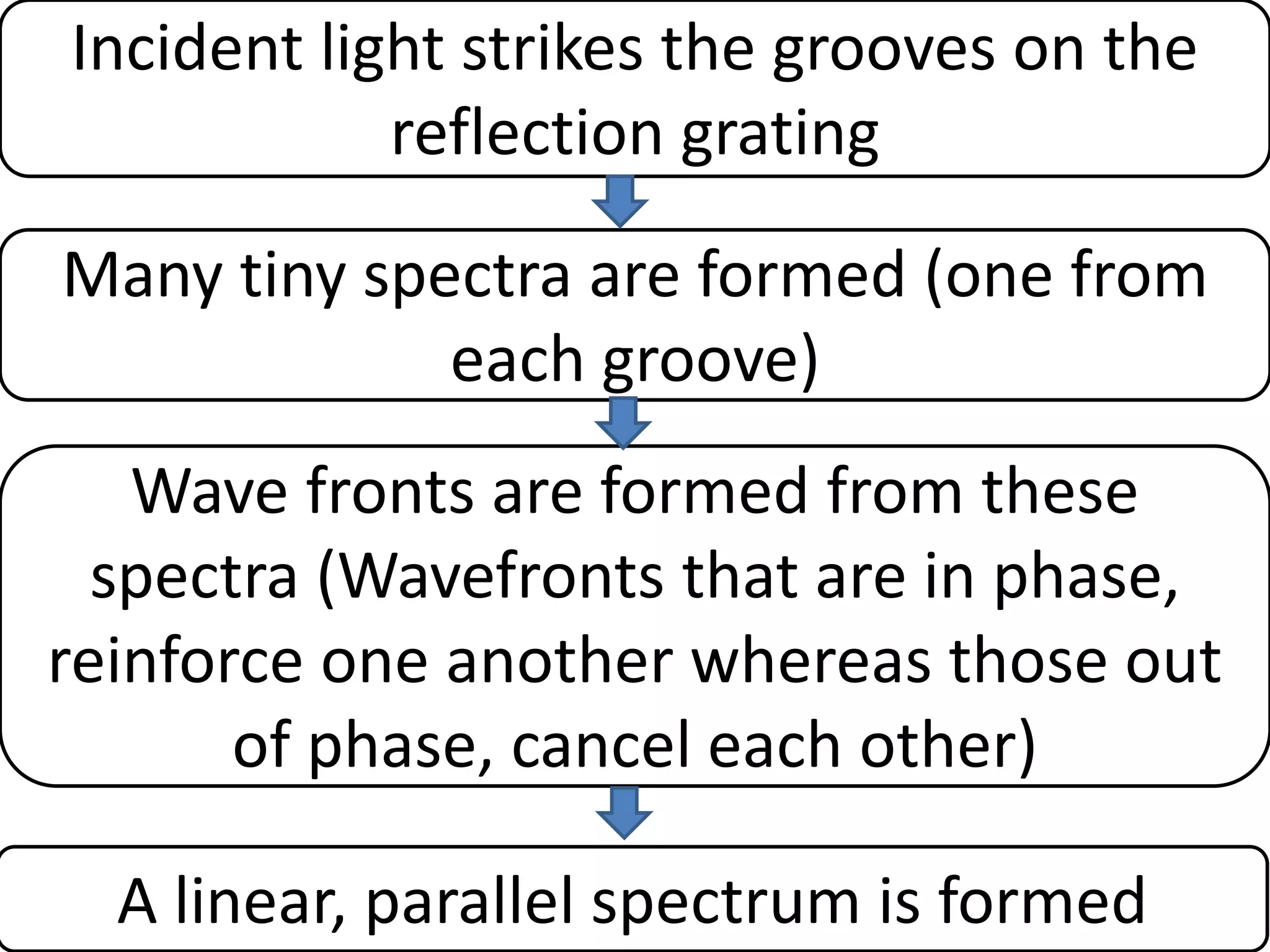
Incident light strikes the grooves on the
reflection grating
Many tiny spectra are formed (one from
each groove)
Wave fronts are formed from these
spectra (Wavefronts that are in phase,
reinforce one another whereas those out
of phase, cancel each other)
A linear, parallel spectrum is formed

Colorimetry and spectroscopy

Colorimetry and spectroscopy

  • 10.
  • 14.
    Wavelength (nm) Regionname Observed <380 Ultraviolet Invisible 380-440 Visible Violet 440-500 Visible Blue 500-580 Visible Green 580-600 Visible Yellow 600-620 Visible Orange 620-750 Visible Red 800-2500 Near-infrared Not visible
  • 22.
    AT AS = K X CTX L K X CS X L ; since L is same AT AS = CT CS ; CT = AT AS X CS 𝓍 X 100 (Conc. in 100 ml of test sample [% conc.]; 𝓍 is ml of sample taken)
  • 31.
    Filter Colour ofsolution Blue Red Purple Green Yellow Violet Orange Blue green
  • 38.
    Glass filter isplaced in the filter slot 3/4th of cuvette is filled with distilled water and placed in the cuvette slot Instrument is switched ‘on’ and allowed to warm-up for 4-5 minutes
  • 39.
    Button is adjustedusing ‘coarse’ and ‘fine’ knobs to give zero optical activity in the galvanometer Blank solution is placed in an identical cuvette and the OD is read (‘B’) Blank solution is transferred to the original test tube
  • 40.
    Test solution istaken in the same cuvette and O.D. is read (‘T’) Test solution is transferred back to the original test tube Standard solution is taken in same cuvette and O.D. is read (‘S’) Standard solution is transferred back to the test tube Cuvette is washed
  • 72.
    Incident light strikesthe grooves on the reflection grating Many tiny spectra are formed (one from each groove) Wave fronts are formed from these spectra (Wavefronts that are in phase, reinforce one another whereas those out of phase, cancel each other) A linear, parallel spectrum is formed
  • 87.