Chemiluminescence
BY
Dr. Kapil
3rd year postgraduate
LUMINESCENCE
“ Cold light” that can be emitted at lower
temperature
Source kicks an electron of an atom out of its
lowest energy “ground” state into a higher
energy “excited” state
 Finally electron returns the energy in the form
of light so it can fall back to its “ground” state
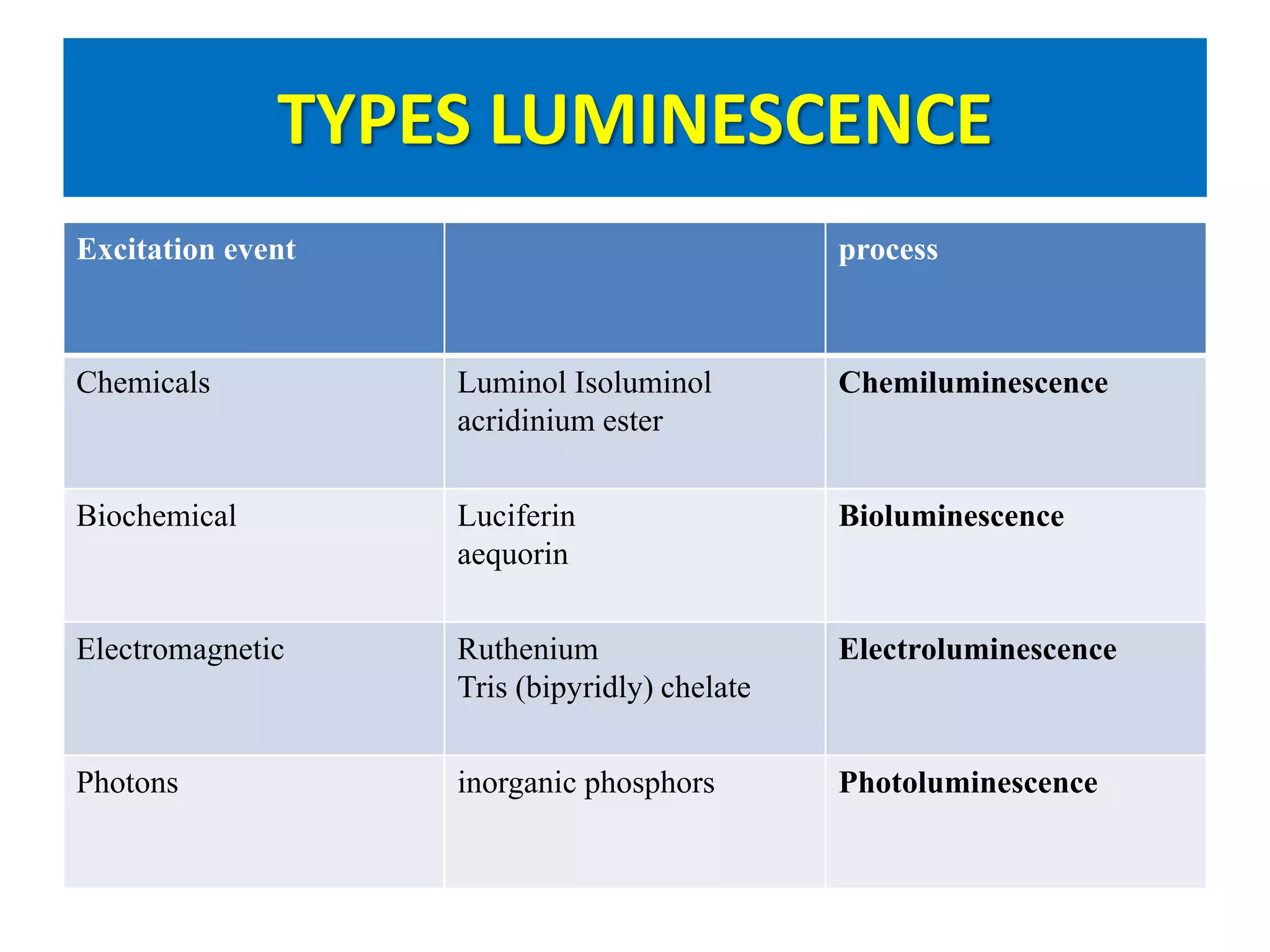
Excitation event process
Chemicals Luminol Isoluminol
acridinium ester
Chemiluminescence
Biochemical Luciferin
aequorin
Bioluminescence
Electromagnetic Ruthenium
Tris (bipyridly) chelate
Electroluminescence
Photons inorganic phosphors Photoluminescence
TYPES LUMINESCENCE
CHEMILUMINESCENCE
Emission of light with limited emission of heat
(luminescence), as the result of a chemical
reaction.
[A] + [B] → [◊] → [Products] + light
[A], [B]: reactants
[◊]: excited intermediate
For example, if [A] is luminol and [B] is hydrogen
peroxide in the presence of a suitable catalyst we
have:
luminol + H2O2 →3-APA[◊] →3-APA + light
Where:
3-APA is 3-aminophthalate
3-APA[◊] is the excited state producing light as
it decays to a lower energy level.
CHEMILUMINISCENCE
Luminol and peroxidase
before adding H2O2
Chemiluminiscence after
addition H2O2
Application of Chemiluninescence
Chemiluminesence immunoassay
DNA hybridization detection
Western blotting
Forensic science
Food analysis
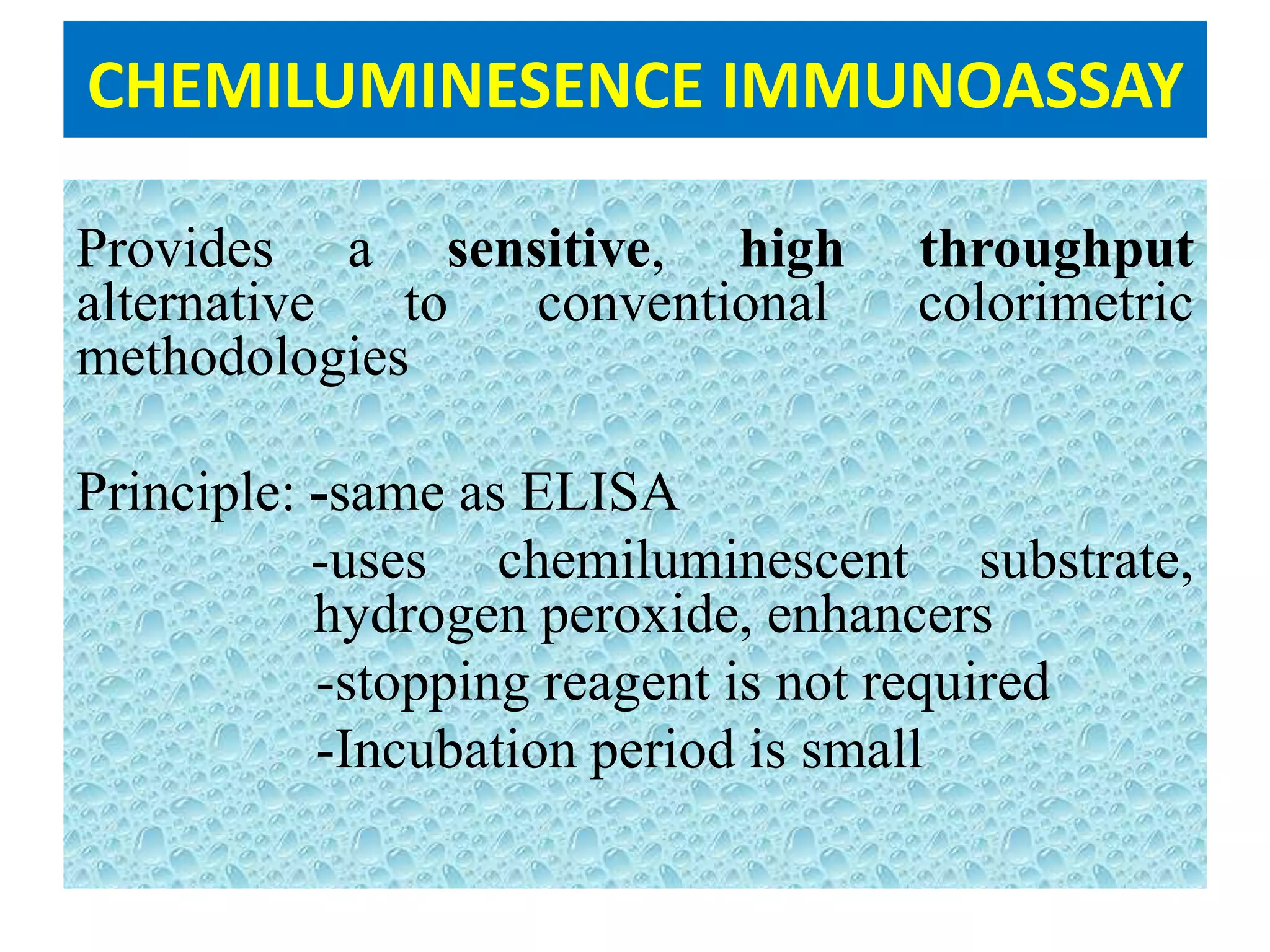
CHEMILUMINESENCE IMMUNOASSAY
Provides a sensitive, high throughput
alternative to conventional colorimetric
methodologies
Principle: -same as ELISA
-uses chemiluminescent substrate,
hydrogen peroxide, enhancers
-stopping reagent is not required
-Incubation period is small
Monoclonal antibody coated well
Test specimen (serum)
HRP labelled antibody conjugate
Test antigen: sandwich between solid phase Ab
and enzyme labelled Ab
Incubate for 1 hr at 37° C
Remove unbound enzyme labeled Ab
Chemiluminescence reagent added
Read relative light unit with luminometer
• USES
Hormones: insulin, thyroxin, estradiol,
testosterone, progesterone
Vitamin: vit B12
Tumor markers: bone morphogenic
protein-2, carcino embryonic antigen (CEA),
alpha fetoprotein (AFP)
Human beta chorionic gonadotropin
C-reactive protein
Tumor necrosis factor
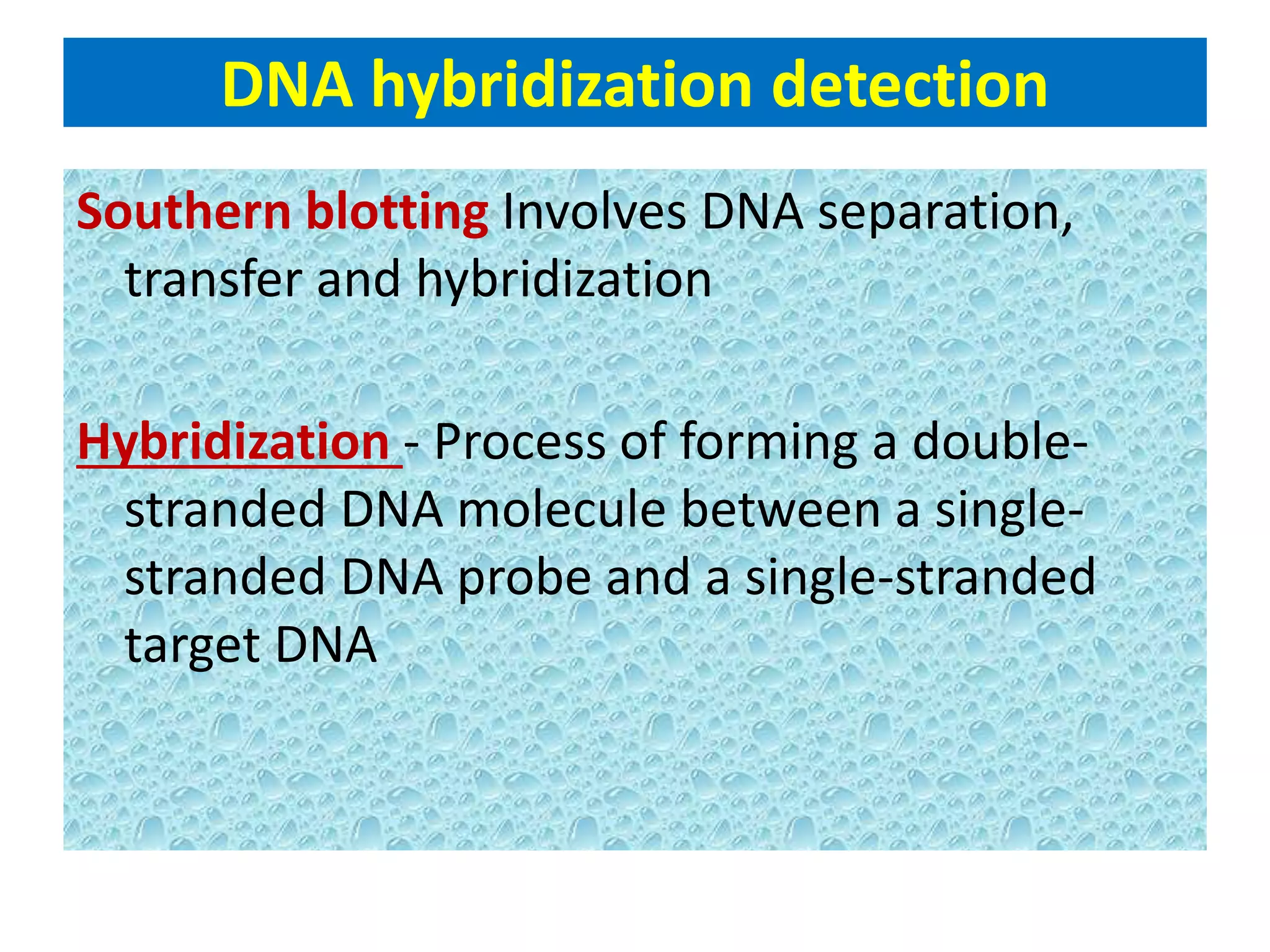
DNA hybridization detection
Southern blotting Involves DNA separation,
transfer and hybridization
Hybridization - Process of forming a double-
stranded DNA molecule between a single-
stranded DNA probe and a single-stranded
target DNA
3.The restriction
fragments present in
the gel are denatured
with alkali and
transferred onto a
nitrocellulose filter or
nylon membrane by
blotting.
• This procedure
preserves the
distribution of the
fragments in the gel,
creating a replica of the
gel on the filter.
4. The filter is incubated
under hybridization
conditions with a specific
HRP labelled DNA probe.
• The probe hybridizes to the
complementary DNA
restriction fragment.
• Detection reagent
containing H2O2 & luminol is
added onto the membrane
• USES
Identifying DNA in crime case
Paternal Dispute
Classify DNAs of various organism
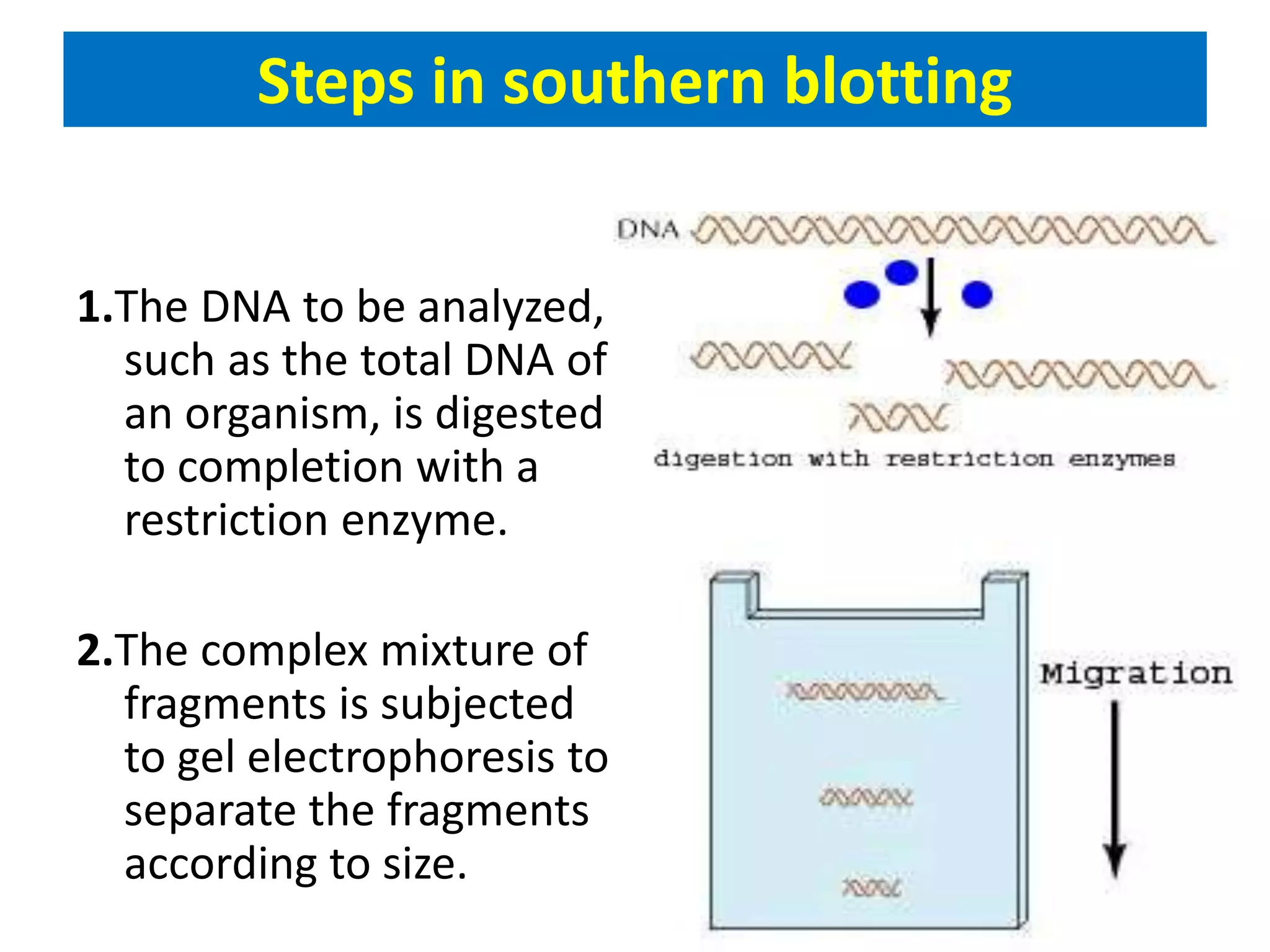
Steps in southern blotting
1.The DNA to be analyzed,
such as the total DNA of
an organism, is digested
to completion with a
restriction enzyme.
2.The complex mixture of
fragments is subjected
to gel electrophoresis to
separate the fragments
according to size.
Western blotting
Western blotting (or protein immunoblotting)
is a technique widely used to detect specific
proteins in samples of tissue homogenate, cell
lysates, cell culture supernatants or body fluids.
Western blotting
Forensic science
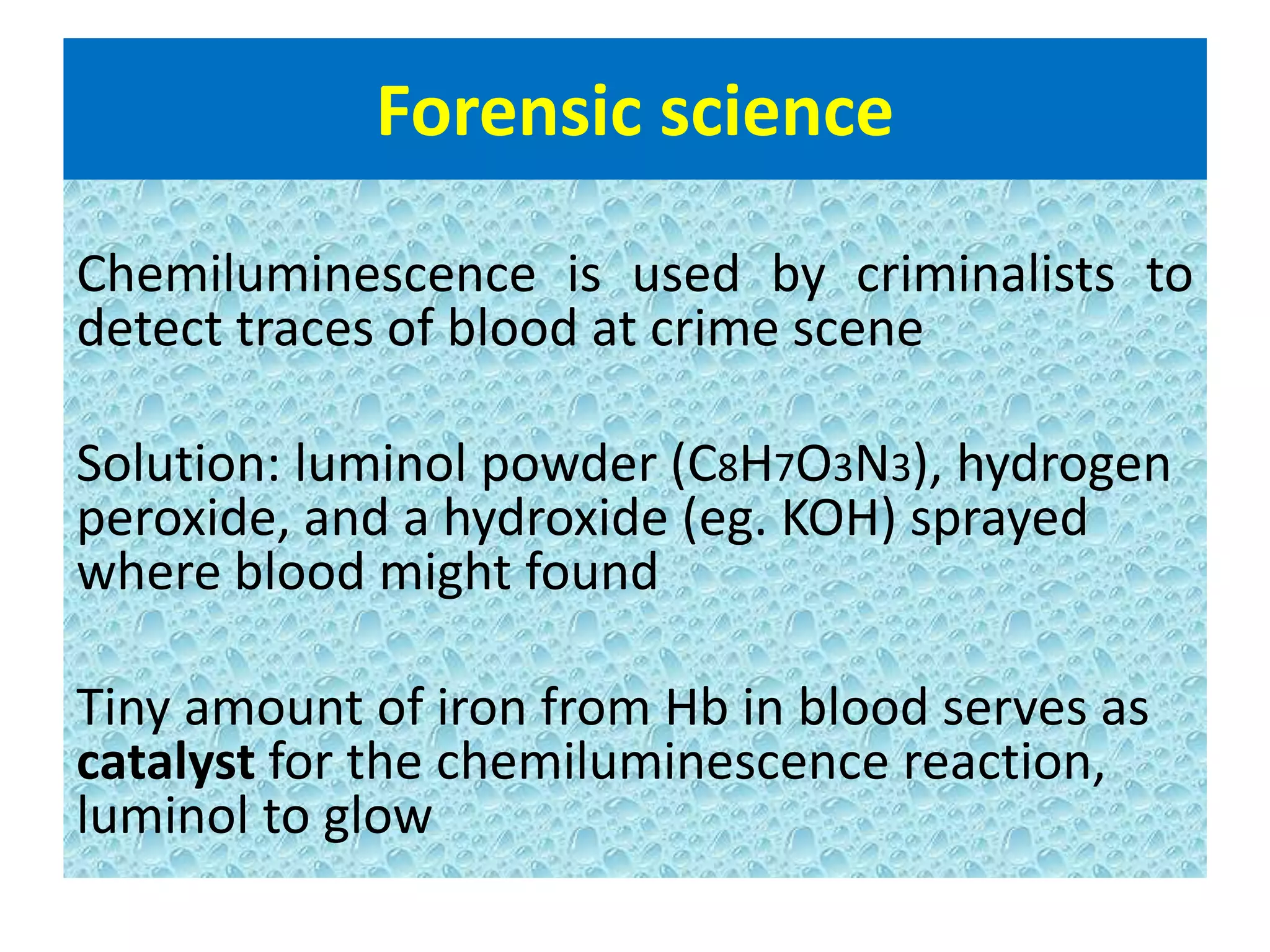
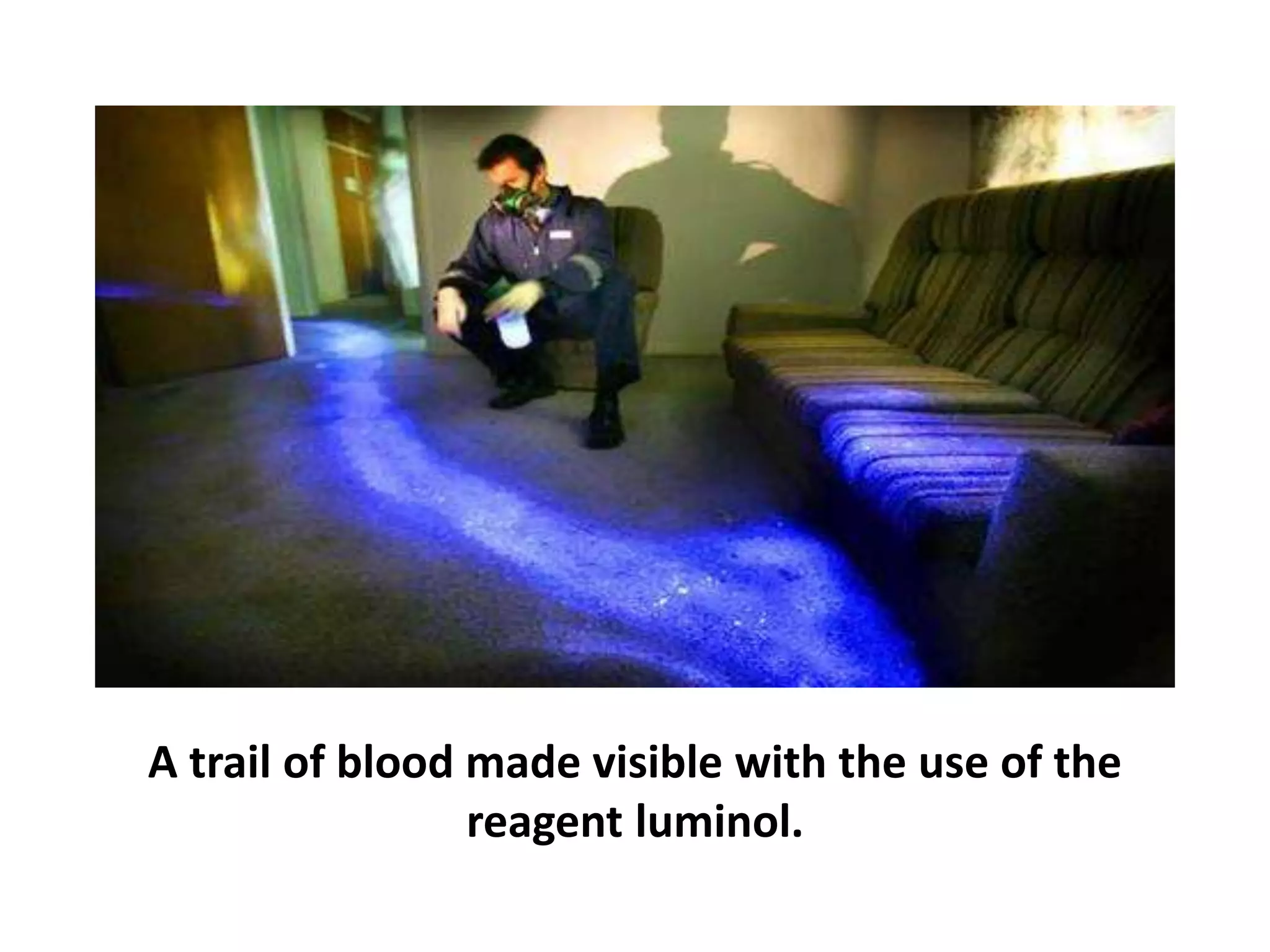
Chemiluminescence is used by criminalists to
detect traces of blood at crime scene
Solution: luminol powder (C8H7O3N3), hydrogen
peroxide, and a hydroxide (eg. KOH) sprayed
where blood might found
Tiny amount of iron from Hb in blood serves as
catalyst for the chemiluminescence reaction,
luminol to glow
A trail of blood made visible with the use of the
reagent luminol.
Food analysis
Organophosphorous most popular pesticide
Most commonly used organophosphorous:
QUINALPHOS (O,O diethyl-o-quinoxalinly
phosphorothioate)
Quinalphos +H2O2 peroxophosphonate
Peroxophosphonate+ luminol 3aminophthalate
anion*
3-aminophthalate* 3-aminophthalate
+
observed emission
Food analysis
• Light leaks from assay reagent & reaction
vessels
• Ultra sensitive – stringent controls on purity of
reagents
• High intensity light emission leads to pulse
pileup in photomultiplier tubes leads to
underestimation
Limitations
THANK YOU

Chemiluminescence

  • 1.
  • 2.
    LUMINESCENCE “ Cold light”that can be emitted at lower temperature Source kicks an electron of an atom out of its lowest energy “ground” state into a higher energy “excited” state  Finally electron returns the energy in the form of light so it can fall back to its “ground” state
  • 3.
    Excitation event process ChemicalsLuminol Isoluminol acridinium ester Chemiluminescence Biochemical Luciferin aequorin Bioluminescence Electromagnetic Ruthenium Tris (bipyridly) chelate Electroluminescence Photons inorganic phosphors Photoluminescence TYPES LUMINESCENCE
  • 4.
    CHEMILUMINESCENCE Emission of lightwith limited emission of heat (luminescence), as the result of a chemical reaction. [A] + [B] → [◊] → [Products] + light [A], [B]: reactants [◊]: excited intermediate
  • 5.
    For example, if[A] is luminol and [B] is hydrogen peroxide in the presence of a suitable catalyst we have: luminol + H2O2 →3-APA[◊] →3-APA + light Where: 3-APA is 3-aminophthalate 3-APA[◊] is the excited state producing light as it decays to a lower energy level.
  • 6.
    CHEMILUMINISCENCE Luminol and peroxidase beforeadding H2O2 Chemiluminiscence after addition H2O2
  • 7.
    Application of Chemiluninescence Chemiluminesenceimmunoassay DNA hybridization detection Western blotting Forensic science Food analysis
  • 8.
    CHEMILUMINESENCE IMMUNOASSAY Provides asensitive, high throughput alternative to conventional colorimetric methodologies Principle: -same as ELISA -uses chemiluminescent substrate, hydrogen peroxide, enhancers -stopping reagent is not required -Incubation period is small
  • 9.
    Monoclonal antibody coatedwell Test specimen (serum) HRP labelled antibody conjugate Test antigen: sandwich between solid phase Ab and enzyme labelled Ab
  • 10.
    Incubate for 1hr at 37° C Remove unbound enzyme labeled Ab Chemiluminescence reagent added Read relative light unit with luminometer
  • 11.
    • USES Hormones: insulin,thyroxin, estradiol, testosterone, progesterone Vitamin: vit B12 Tumor markers: bone morphogenic protein-2, carcino embryonic antigen (CEA), alpha fetoprotein (AFP) Human beta chorionic gonadotropin C-reactive protein Tumor necrosis factor
  • 12.
    DNA hybridization detection Southernblotting Involves DNA separation, transfer and hybridization Hybridization - Process of forming a double- stranded DNA molecule between a single- stranded DNA probe and a single-stranded target DNA
  • 13.
    3.The restriction fragments presentin the gel are denatured with alkali and transferred onto a nitrocellulose filter or nylon membrane by blotting. • This procedure preserves the distribution of the fragments in the gel, creating a replica of the gel on the filter.
  • 14.
    4. The filteris incubated under hybridization conditions with a specific HRP labelled DNA probe. • The probe hybridizes to the complementary DNA restriction fragment. • Detection reagent containing H2O2 & luminol is added onto the membrane
  • 16.
    • USES Identifying DNAin crime case Paternal Dispute Classify DNAs of various organism
  • 17.
    Steps in southernblotting 1.The DNA to be analyzed, such as the total DNA of an organism, is digested to completion with a restriction enzyme. 2.The complex mixture of fragments is subjected to gel electrophoresis to separate the fragments according to size.
  • 18.
    Western blotting Western blotting(or protein immunoblotting) is a technique widely used to detect specific proteins in samples of tissue homogenate, cell lysates, cell culture supernatants or body fluids.
  • 19.
  • 20.
    Forensic science Chemiluminescence isused by criminalists to detect traces of blood at crime scene Solution: luminol powder (C8H7O3N3), hydrogen peroxide, and a hydroxide (eg. KOH) sprayed where blood might found Tiny amount of iron from Hb in blood serves as catalyst for the chemiluminescence reaction, luminol to glow
  • 22.
    A trail ofblood made visible with the use of the reagent luminol.
  • 23.
    Food analysis Organophosphorous mostpopular pesticide Most commonly used organophosphorous: QUINALPHOS (O,O diethyl-o-quinoxalinly phosphorothioate)
  • 24.
    Quinalphos +H2O2 peroxophosphonate Peroxophosphonate+luminol 3aminophthalate anion* 3-aminophthalate* 3-aminophthalate + observed emission Food analysis
  • 25.
    • Light leaksfrom assay reagent & reaction vessels • Ultra sensitive – stringent controls on purity of reagents • High intensity light emission leads to pulse pileup in photomultiplier tubes leads to underestimation Limitations
  • 26.

Editor's Notes

  • #20 Rabit anti human beta actin antibodies