BIO-CHEMISTRY
PHOTOMETRY AND SPECTOPHOTOMETRY.
TODAY WE GO THROUGH
What is the photometry?
Principle of photometry?
Uses of photometry?
What is spectrophotometry?
Principle of spectrophotometry?
Applications of spectrophotometry?
Difference between the photometry and spectrophotometry?
BEFORE GOING INTO THE TOPIC, LETS
LEARN FEW POINTS:
LIGHT: Light is electromagnetic radiation that shows
properties of both waves and particles. It exists in tiny energy
packets called photons.
FREQUENCY: It is the number of occurrences of a repeating
event per unit of time.
WAVE LENGTH: It is the distance between the two crest or
two troughs
WAVE: It is a kind of oscillation that travels through
space(peak) and matter(troughs).
SPEED OF LIGHT(C): 3×10⁸ms.
PHOTOMETRY
Photometry is the technique that measures the
concentration of organic and inorganic compounds in a
solution by determining the absorbance of wavelengths of
light.
Photometry instruments have many laboratory and
practical applications.
It is the science of measurememt of light, in terms of its
perceived brightness to the human eye.
PRINCIPLE OF PHOTOMETRY
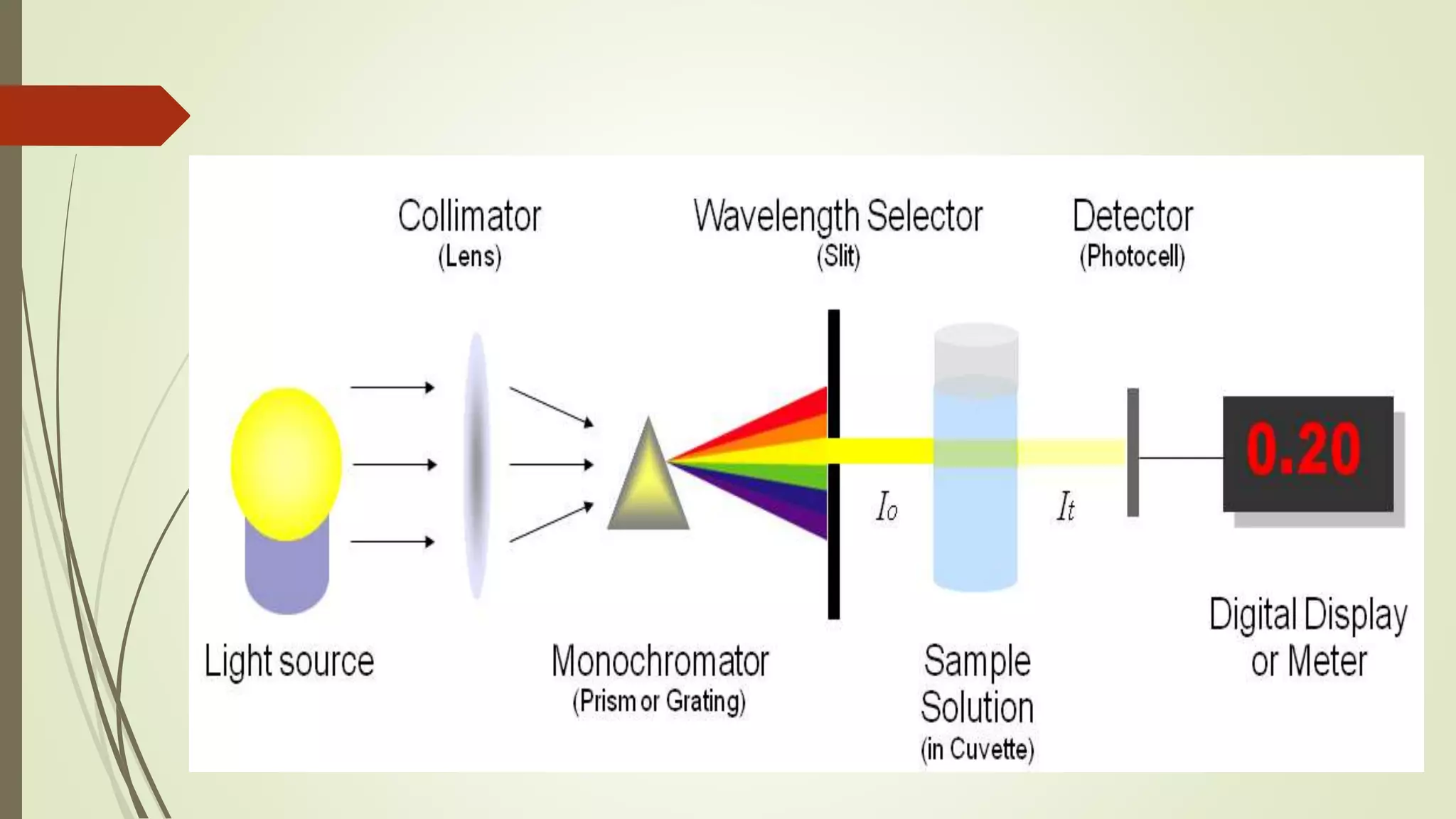
The basic principle of this technology involves
measurement of quantity of light absorbing analyte in a
solution.
This results in reflection of a light of lower intensity.
This can only applied to solution which follow the Beer
Lambert’s law.
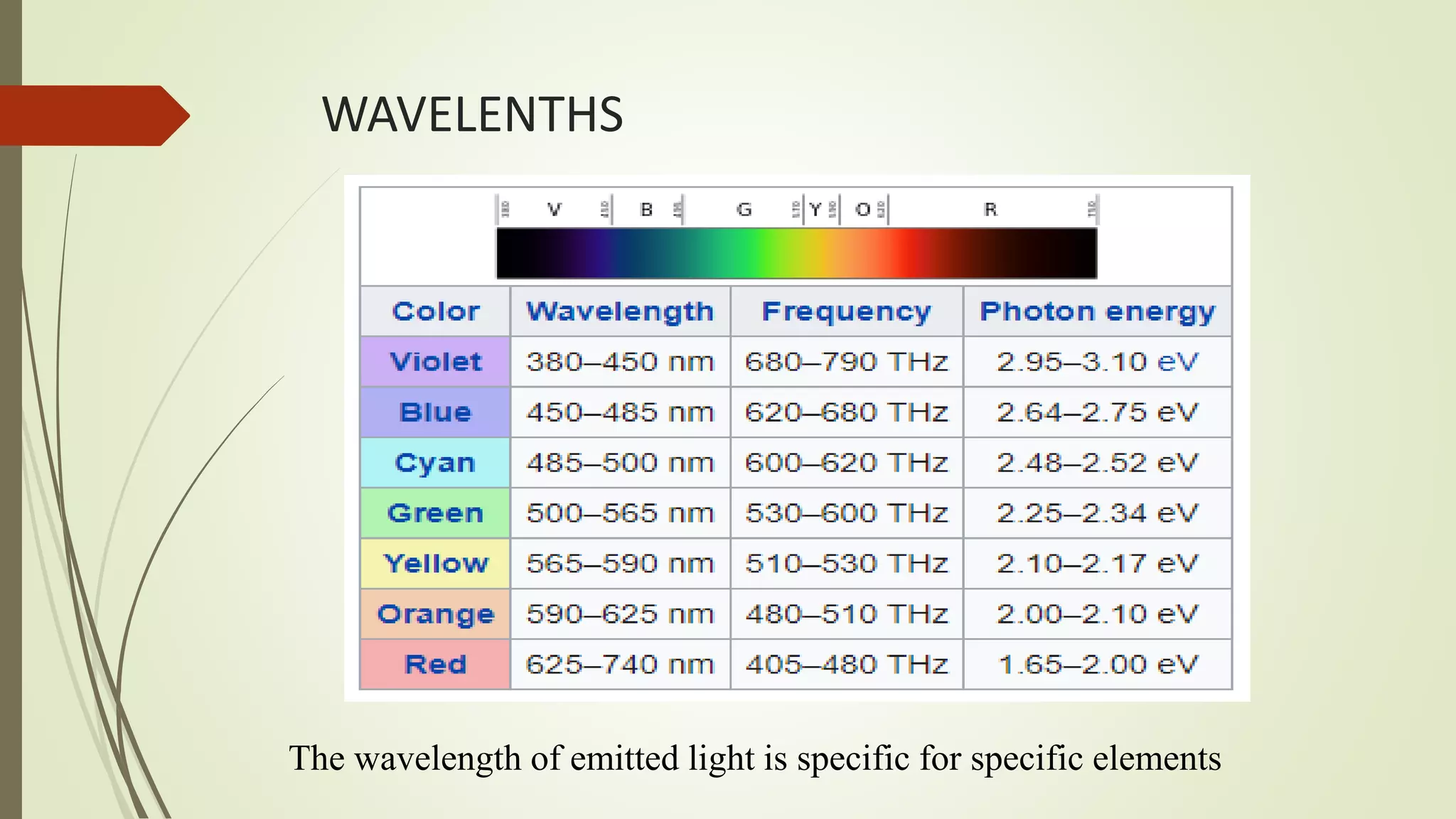
WAVELENTHS
The wavelength of emitted light is specific for specific elements
USES OF PHOTOMETRY
Photometry is used in various industries like chemicals, soils,
agriculture, pharmaceuticals, in plants and water, and in
biological and microbiological laboratories.
It is used in determination of potassium, sodium, magnesium,
and calcium in biological fluids like serum, plasma, urine etc ,
is routinely carried out by photometer.
Analysis of industrial water natural water for determining
elements responsible for hard water is standard procedure in
many laboratories.
SPECTROPHOTOMETRY
It is a method to measure how much a chemical substance
absorb light y measuring the intensity of light as a beam of
light passes through sample solution.
These are widely used in various disciplines such as physics,
molecular biology, chemistry, and biochemistry.
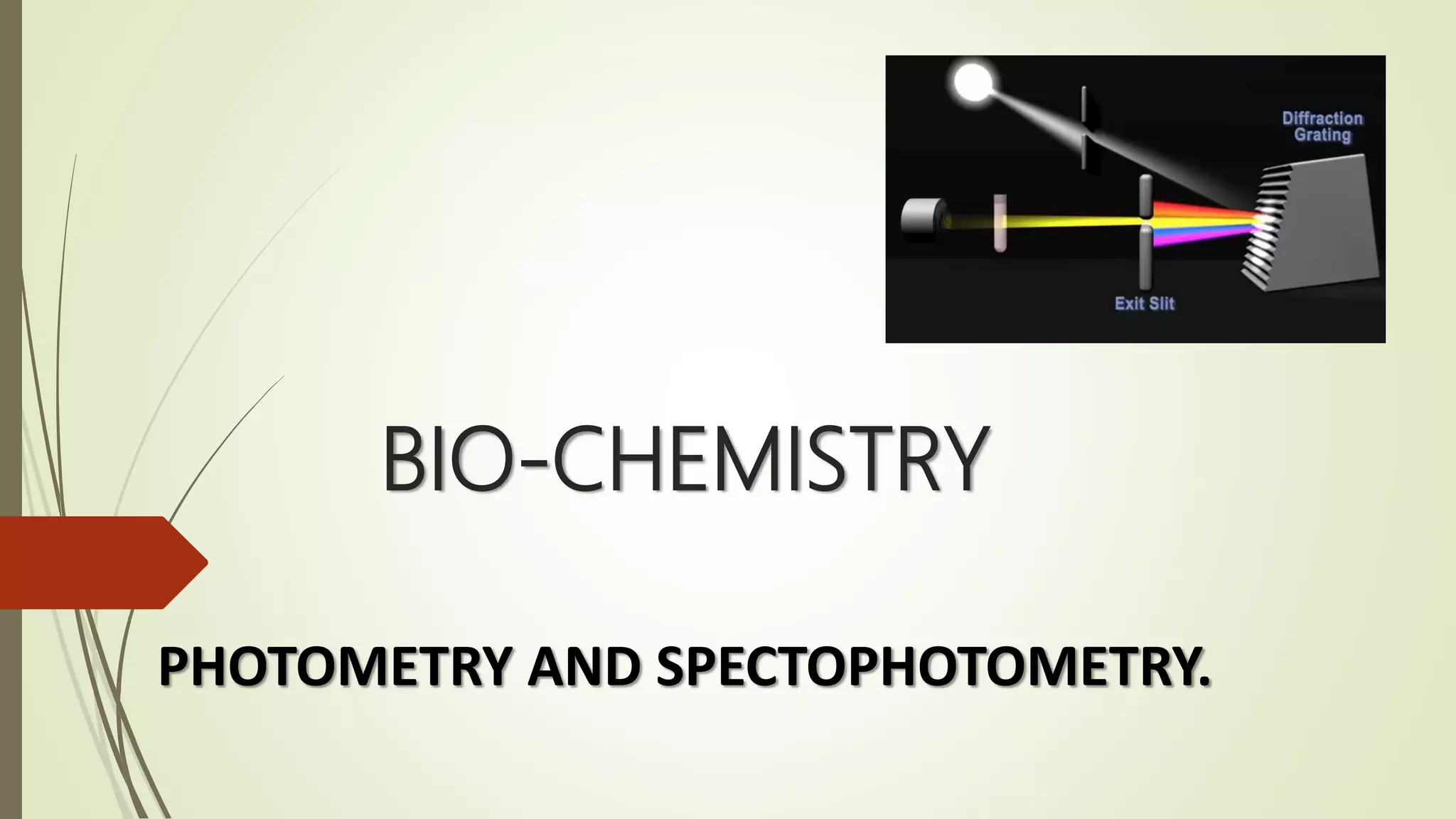
The difference between the spectrometer and
spectrophotometer:
A spectrometer measures emission spectrum, as the light focused
on its entrance slit, dispersed and registered at different
wavelengths.
Spectrophotometer measures absorption spectrum of a sample
placed inside.
APPLICATIONS OF SPECTROPHOTOMETER
Qualitative analysis: used to identify classes of compound in
both pure state and in biological preparations.
Determination of double standard DNA: DNA absorbed at
260 nm. This absorbance increase with rise in temperature, as
double standard DNA become single standard.
Molecular weight determination: the molecular weight of
amines, sugars, and many aldehyde and ketone compounds can
be determined.
DIFFERENCE BTW PHOTOMETRY AND
SPECTROPHOTOMETRY
Photometry measures the total brightness as seen
by the human eye.
Spectrophotometry measures the intensity at each
wavelength on the whole range of electromagnetic
spectrum for which the measurement are
necessary.
Photometry and spectrophotometry

Photometry and spectrophotometry

  • 1.
  • 2.
    TODAY WE GOTHROUGH What is the photometry? Principle of photometry? Uses of photometry? What is spectrophotometry? Principle of spectrophotometry? Applications of spectrophotometry? Difference between the photometry and spectrophotometry?
  • 3.
    BEFORE GOING INTOTHE TOPIC, LETS LEARN FEW POINTS: LIGHT: Light is electromagnetic radiation that shows properties of both waves and particles. It exists in tiny energy packets called photons. FREQUENCY: It is the number of occurrences of a repeating event per unit of time. WAVE LENGTH: It is the distance between the two crest or two troughs WAVE: It is a kind of oscillation that travels through space(peak) and matter(troughs). SPEED OF LIGHT(C): 3×10⁸ms.
  • 4.
    PHOTOMETRY Photometry is thetechnique that measures the concentration of organic and inorganic compounds in a solution by determining the absorbance of wavelengths of light. Photometry instruments have many laboratory and practical applications. It is the science of measurememt of light, in terms of its perceived brightness to the human eye.
  • 5.
    PRINCIPLE OF PHOTOMETRY Thebasic principle of this technology involves measurement of quantity of light absorbing analyte in a solution. This results in reflection of a light of lower intensity. This can only applied to solution which follow the Beer Lambert’s law.
  • 6.
    WAVELENTHS The wavelength ofemitted light is specific for specific elements
  • 7.
    USES OF PHOTOMETRY Photometryis used in various industries like chemicals, soils, agriculture, pharmaceuticals, in plants and water, and in biological and microbiological laboratories. It is used in determination of potassium, sodium, magnesium, and calcium in biological fluids like serum, plasma, urine etc , is routinely carried out by photometer. Analysis of industrial water natural water for determining elements responsible for hard water is standard procedure in many laboratories.
  • 8.
    SPECTROPHOTOMETRY It is amethod to measure how much a chemical substance absorb light y measuring the intensity of light as a beam of light passes through sample solution. These are widely used in various disciplines such as physics, molecular biology, chemistry, and biochemistry. The difference between the spectrometer and spectrophotometer: A spectrometer measures emission spectrum, as the light focused on its entrance slit, dispersed and registered at different wavelengths. Spectrophotometer measures absorption spectrum of a sample placed inside.
  • 9.
    APPLICATIONS OF SPECTROPHOTOMETER Qualitativeanalysis: used to identify classes of compound in both pure state and in biological preparations. Determination of double standard DNA: DNA absorbed at 260 nm. This absorbance increase with rise in temperature, as double standard DNA become single standard. Molecular weight determination: the molecular weight of amines, sugars, and many aldehyde and ketone compounds can be determined.
  • 11.
    DIFFERENCE BTW PHOTOMETRYAND SPECTROPHOTOMETRY Photometry measures the total brightness as seen by the human eye. Spectrophotometry measures the intensity at each wavelength on the whole range of electromagnetic spectrum for which the measurement are necessary.