+
Cell Cycle and cell
division-1: Mitosis
Dr. A. S. naik
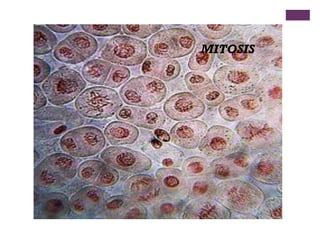
MITOSIS
+
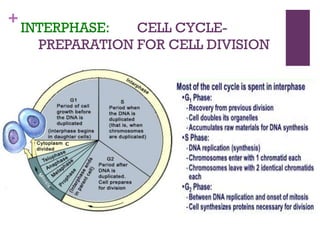
INTERPHASE: CELL CYCLE-
PREPARATION FOR CELL DIVISION
+
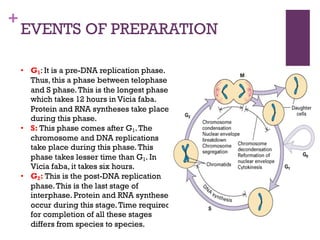
EVENTS OF PREPARATION
• G1: It is a pre-DNA replication phase.
Thus, this a phase between telophase
and S phase.This is the longest phase
which takes 12 hours in Vicia faba.
Protein and RNA syntheses take place
during this phase.
• S: This phase comes after G1.The
chromosome and DNA replications
take place during this phase.This
phase takes lesser time than G1. In
Vicia faba, it takes six hours.
• G2: This is the post-DNA replication
phase.This is the last stage of
interphase. Protein and RNA syntheses
occur during this stage.Time required
for completion of all these stages
differs from species to species.
+
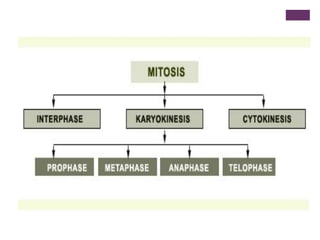
CELL DIVISION-MITOSIS
n The term mitosis was coined
by Flemming in 1882.
n Mitosis refers to the nuclear
division which produces two
identical daughter nuclei from
the parent nucleus.
n Since mitosis occurs in
somatic cells, it is also known
as somatic cell division.
+
POINTS TO REMEMBER ABOUT MITOSIS
n Mitosis leads to production of two daughter cells from a
mother cell in each cycle of cell division.
n The daughter cells are similar to the mother cell in shape,
size and chromosome complement. Since the chromosome
number is the same in the daughter cells and mother cell,
also known as homotypic or equational division.
n In plants, mitosis takes place in somatic organs like root tip,
stem tip and leaf base. It leads to growth of vegetative parts.
n Segregation and recombination do not take place during
mitosis-genetically also chromosomes are exactly identical to
mother cell.-number and position of genes not altered.
+
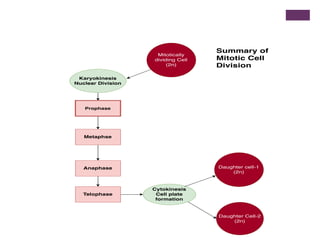
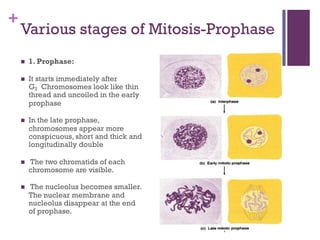
Various stages of Mitosis-Prophase
n 1. Prophase:
n It starts immediately after
G2 Chromosomes look like thin
thread and uncoiled in the early
prophase
n In the late prophase,
chromosomes appear more
conspicuous, short and thick and
longitudinally double
n The two chromatids of each
chromosome are visible.
n The nucleolus becomes smaller.
The nuclear membrane and
nucleolus disappear at the end
of prophase.
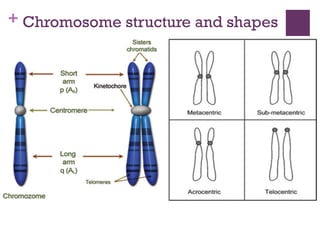
+ Chromosome structure and shapes
+
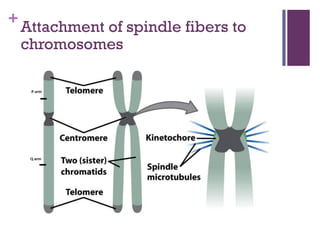
Attachment of spindle fibers to
chromosomes
+
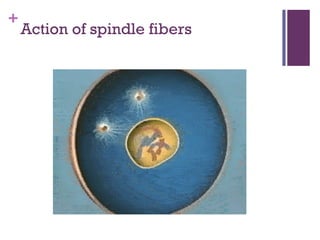
Action of spindle fibers
+
+
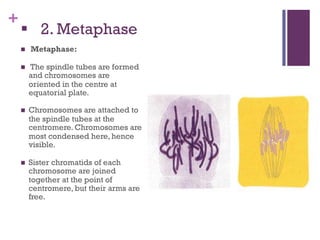
§ 2. Metaphase
n Metaphase:
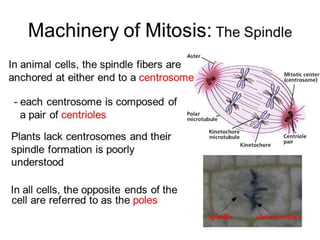
n The spindle tubes are formed
and chromosomes are
oriented in the centre at
equatorial plate.
n Chromosomes are attached to
the spindle tubes at the
centromere. Chromosomes are
most condensed here, hence
visible.
n Sister chromatids of each
chromosome are joined
together at the point of
centromere, but their arms are
free.
+
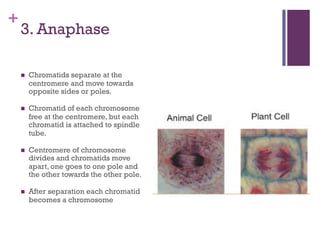
3. Anaphase
n Chromatids separate at the
centromere and move towards
opposite sides or poles.
n Chromatid of each chromosome
free at the centromere, but each
chromatid is attached to spindle
tube.
n Centromere of chromosome
divides and chromatids move
apart, one goes to one pole and
the other towards the other pole.
n After separation each chromatid
becomes a chromosome
+
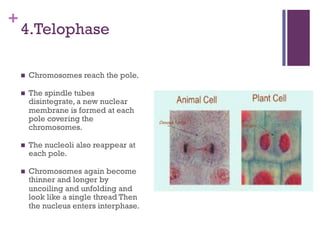
4.Telophase
n Chromosomes reach the pole.
n The spindle tubes
disintegrate, a new nuclear
membrane is formed at each
pole covering the
chromosomes.
n The nucleoli also reappear at
each pole.
n Chromosomes again become
thinner and longer by
uncoiling and unfolding and
look like a single thread Then
the nucleus enters interphase.
+
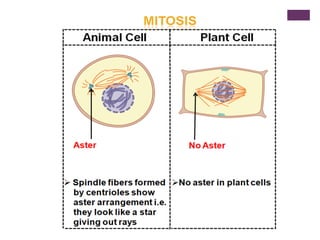
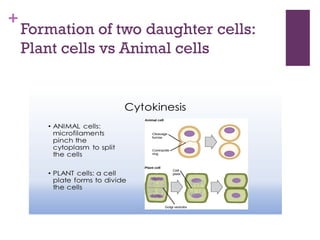
Formation of two daughter cells:
Plant cells vs Animal cells
+
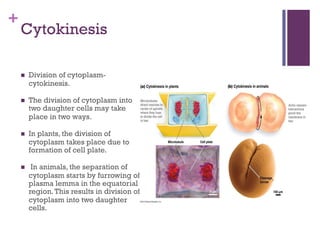
Cytokinesis
n Division of cytoplasm-
cytokinesis.
n The division of cytoplasm into
two daughter cells may take
place in two ways.
n In plants, the division of
cytoplasm takes place due to
formation of cell plate.
n In animals, the separation of
cytoplasm starts by furrowing of
plasma lemma in the equatorial
region.This results in division of
cytoplasm into two daughter
cells.
+
Significance of Mitosis
1. After fusion of male and female gametes zygote is formed. Mitosis is
responsible for development of a zygote into adult organism.
2. Mitosis is essential for normal growth and development of living
organisms. It gives a definite shape to a specific organism.
3. In plants, mitosis leads to formation of new parts, viz., roots, leaves,
stems and branches. It also helps in repairing of damaged parts.
4. In case of vegetatively propagated crops like sugarcane, sweet potato,
potato, etc., mitosis helps in asexual propagation. Mitosis leads to
production of identical progeny in such crops.
5. Mitosis is useful in maintaining the purity of types because it leads to
production of identical daughter cells and does not allow segregation and
recombination to occur.
6. In animals, it helps in continuous replacement of old tissues with new
ones, such as gut epithelium and blood cells.
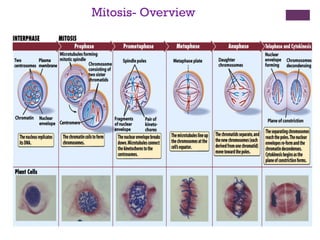
Mitosis- Overview
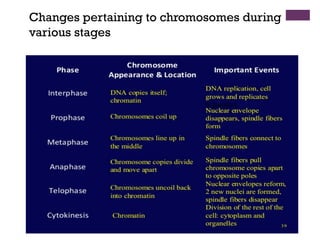
Changes pertaining to chromosomes during
various stages

Cell cycle & cell division. 1.02.28 pm

  • 1.
    + Cell Cycle andcell division-1: Mitosis Dr. A. S. naik
  • 2.
  • 5.
  • 6.
    + EVENTS OF PREPARATION •G1: It is a pre-DNA replication phase. Thus, this a phase between telophase and S phase.This is the longest phase which takes 12 hours in Vicia faba. Protein and RNA syntheses take place during this phase. • S: This phase comes after G1.The chromosome and DNA replications take place during this phase.This phase takes lesser time than G1. In Vicia faba, it takes six hours. • G2: This is the post-DNA replication phase.This is the last stage of interphase. Protein and RNA syntheses occur during this stage.Time required for completion of all these stages differs from species to species.
  • 7.
    + CELL DIVISION-MITOSIS n Theterm mitosis was coined by Flemming in 1882. n Mitosis refers to the nuclear division which produces two identical daughter nuclei from the parent nucleus. n Since mitosis occurs in somatic cells, it is also known as somatic cell division.
  • 8.
    + POINTS TO REMEMBERABOUT MITOSIS n Mitosis leads to production of two daughter cells from a mother cell in each cycle of cell division. n The daughter cells are similar to the mother cell in shape, size and chromosome complement. Since the chromosome number is the same in the daughter cells and mother cell, also known as homotypic or equational division. n In plants, mitosis takes place in somatic organs like root tip, stem tip and leaf base. It leads to growth of vegetative parts. n Segregation and recombination do not take place during mitosis-genetically also chromosomes are exactly identical to mother cell.-number and position of genes not altered.
  • 9.
    + Various stages ofMitosis-Prophase n 1. Prophase: n It starts immediately after G2 Chromosomes look like thin thread and uncoiled in the early prophase n In the late prophase, chromosomes appear more conspicuous, short and thick and longitudinally double n The two chromatids of each chromosome are visible. n The nucleolus becomes smaller. The nuclear membrane and nucleolus disappear at the end of prophase.
  • 10.
  • 11.
    + Attachment of spindlefibers to chromosomes
  • 14.
  • 15.
  • 16.
    + § 2. Metaphase nMetaphase: n The spindle tubes are formed and chromosomes are oriented in the centre at equatorial plate. n Chromosomes are attached to the spindle tubes at the centromere. Chromosomes are most condensed here, hence visible. n Sister chromatids of each chromosome are joined together at the point of centromere, but their arms are free.
  • 17.
    + 3. Anaphase n Chromatidsseparate at the centromere and move towards opposite sides or poles. n Chromatid of each chromosome free at the centromere, but each chromatid is attached to spindle tube. n Centromere of chromosome divides and chromatids move apart, one goes to one pole and the other towards the other pole. n After separation each chromatid becomes a chromosome
  • 18.
    + 4.Telophase n Chromosomes reachthe pole. n The spindle tubes disintegrate, a new nuclear membrane is formed at each pole covering the chromosomes. n The nucleoli also reappear at each pole. n Chromosomes again become thinner and longer by uncoiling and unfolding and look like a single thread Then the nucleus enters interphase.
  • 19.
    + Formation of twodaughter cells: Plant cells vs Animal cells
  • 20.
    + Cytokinesis n Division ofcytoplasm- cytokinesis. n The division of cytoplasm into two daughter cells may take place in two ways. n In plants, the division of cytoplasm takes place due to formation of cell plate. n In animals, the separation of cytoplasm starts by furrowing of plasma lemma in the equatorial region.This results in division of cytoplasm into two daughter cells.
  • 21.
    + Significance of Mitosis 1.After fusion of male and female gametes zygote is formed. Mitosis is responsible for development of a zygote into adult organism. 2. Mitosis is essential for normal growth and development of living organisms. It gives a definite shape to a specific organism. 3. In plants, mitosis leads to formation of new parts, viz., roots, leaves, stems and branches. It also helps in repairing of damaged parts. 4. In case of vegetatively propagated crops like sugarcane, sweet potato, potato, etc., mitosis helps in asexual propagation. Mitosis leads to production of identical progeny in such crops. 5. Mitosis is useful in maintaining the purity of types because it leads to production of identical daughter cells and does not allow segregation and recombination to occur. 6. In animals, it helps in continuous replacement of old tissues with new ones, such as gut epithelium and blood cells.
  • 22.
  • 23.
    Changes pertaining tochromosomes during various stages