Cell Division
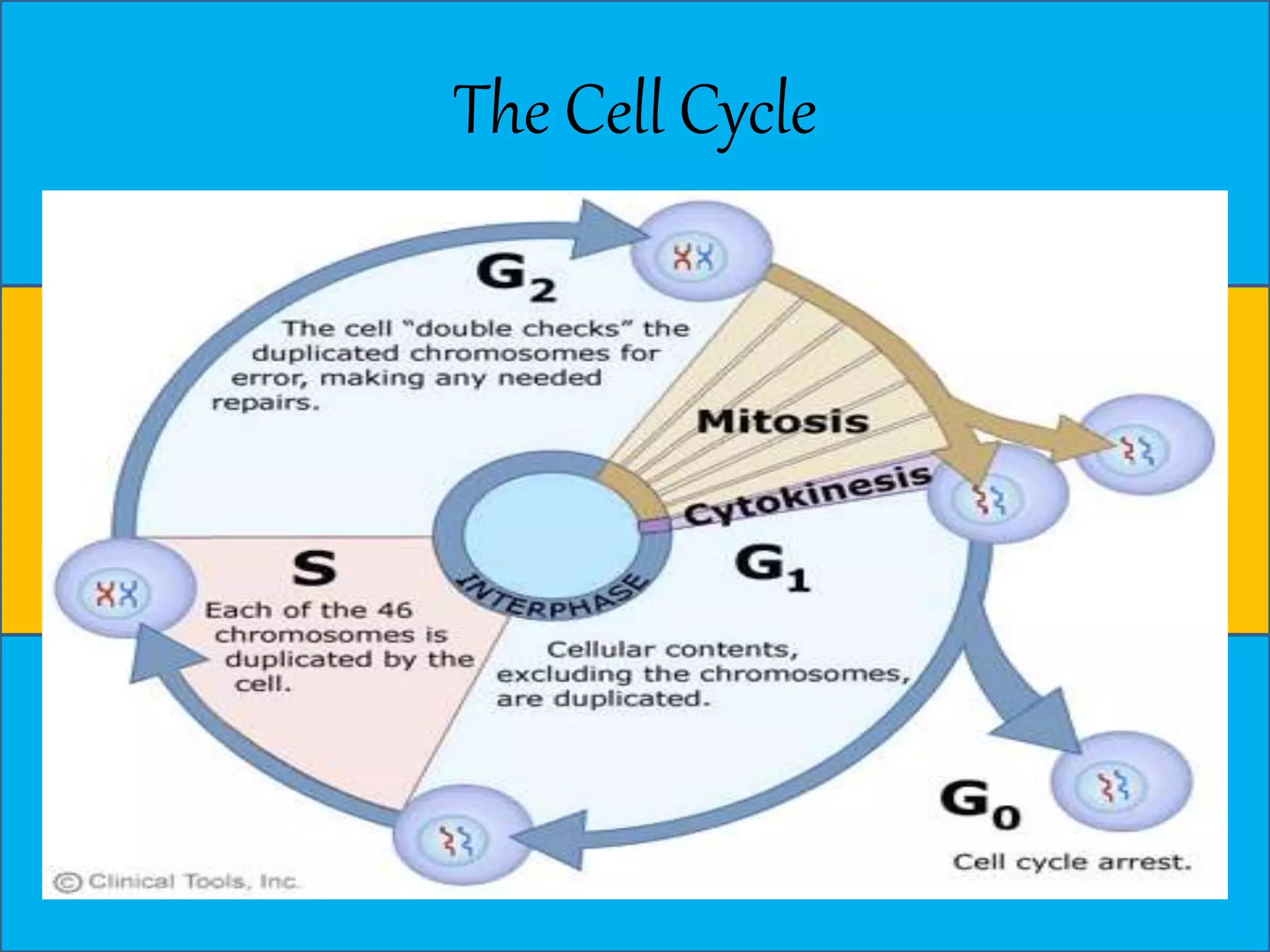
The Cell Cycle 
Mitosis 
Meiosis
The Cell Cycle
• G1 (Growth Stage) – the 
organelles start to double in 
number. 
• S (Synthesis Stage) – the 
DNA strands replicate. 
• G2 (Growth Stage) – more 
protein is made.
Mitosis 
• A process of cell division herein 
two new daughter cells receive 
exactly the same number of 
chromosomes as the parent cell. 
• It includes four stages namely: 
Prophase, Metaphase, Anaphase 
and Telophase.
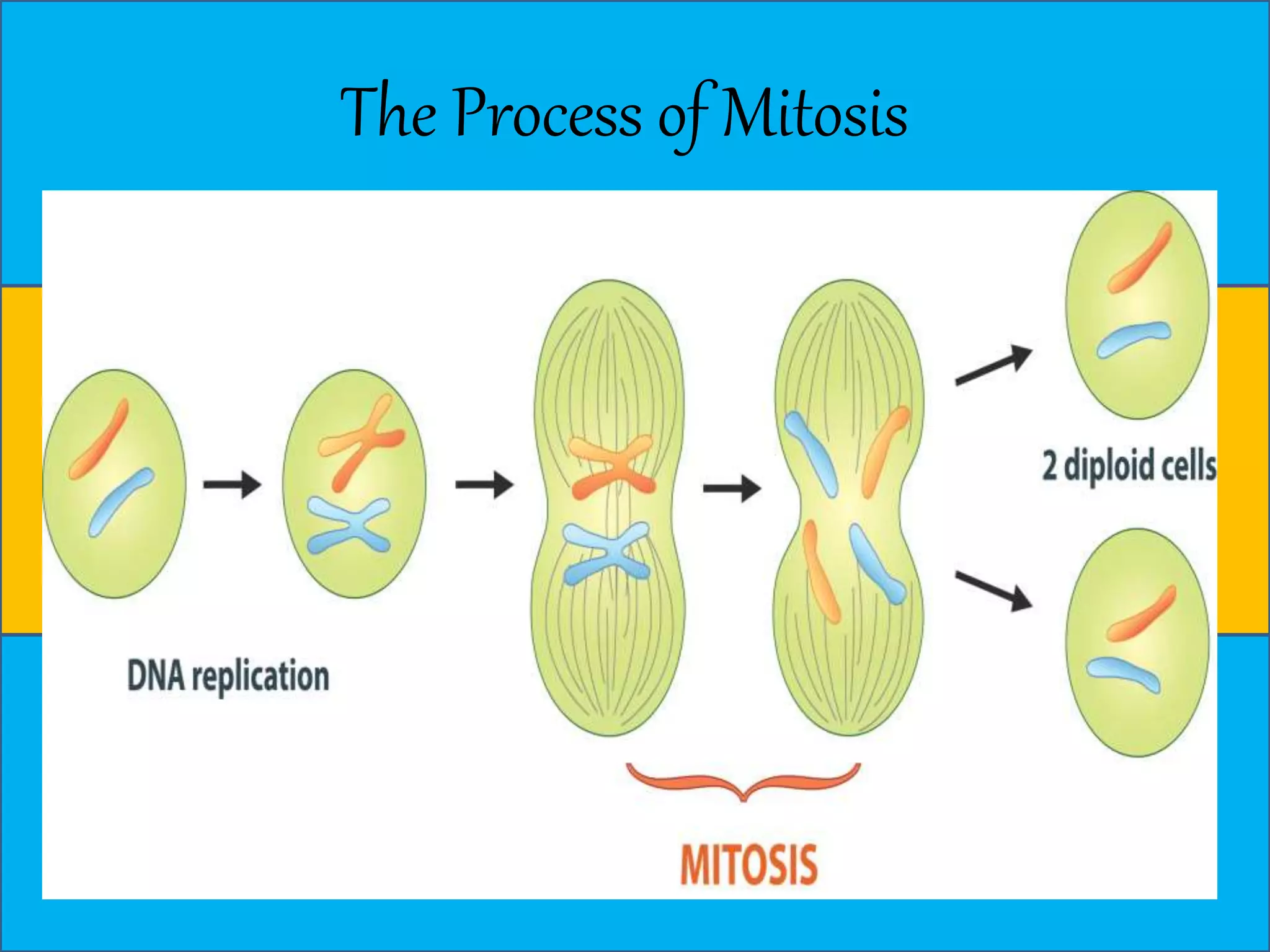
The Process of Mitosis
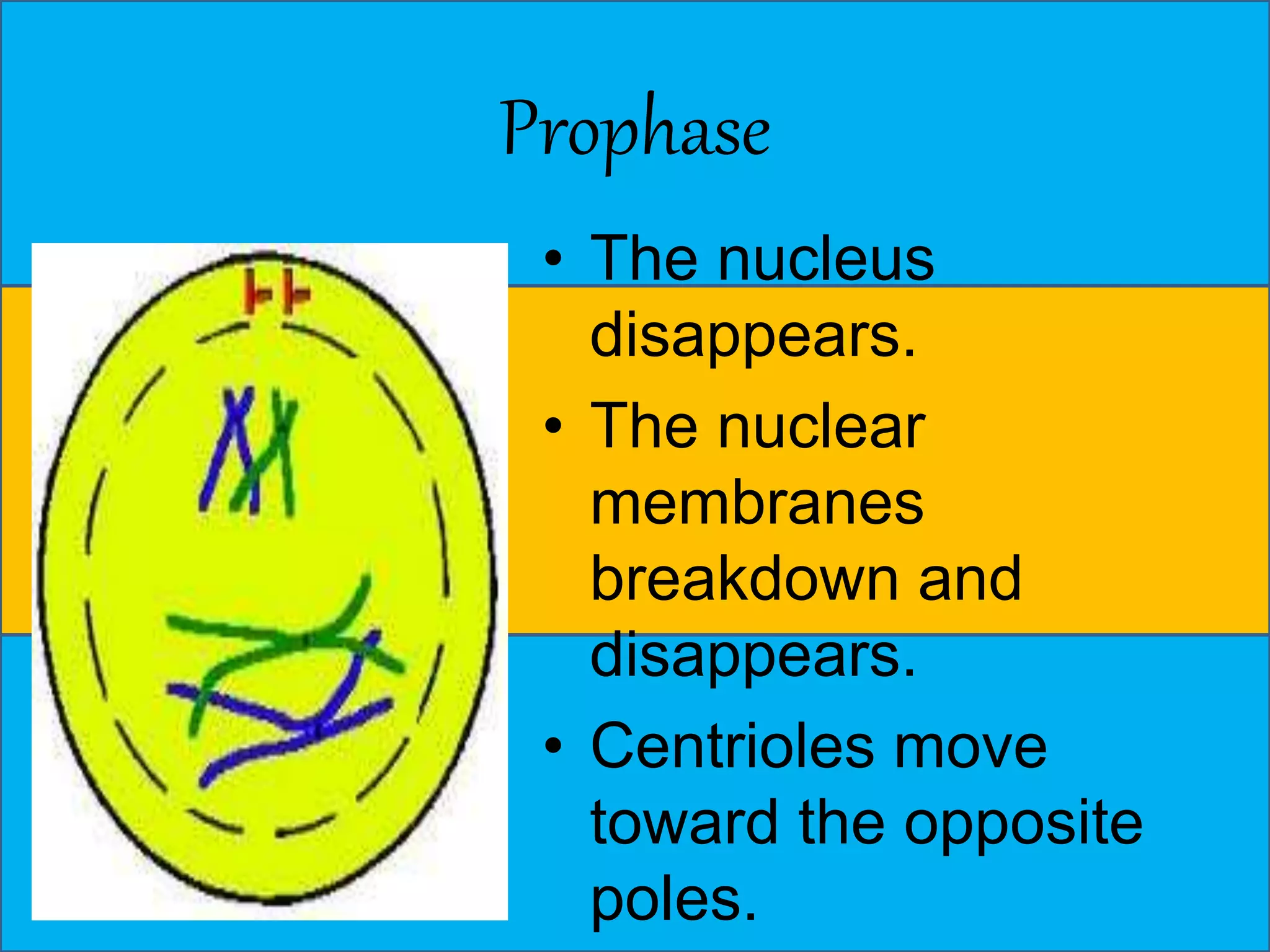
Prophase 
• The nucleus 
disappears. 
• The nuclear 
membranes 
breakdown and 
disappears. 
• Centrioles move 
toward the opposite 
poles.
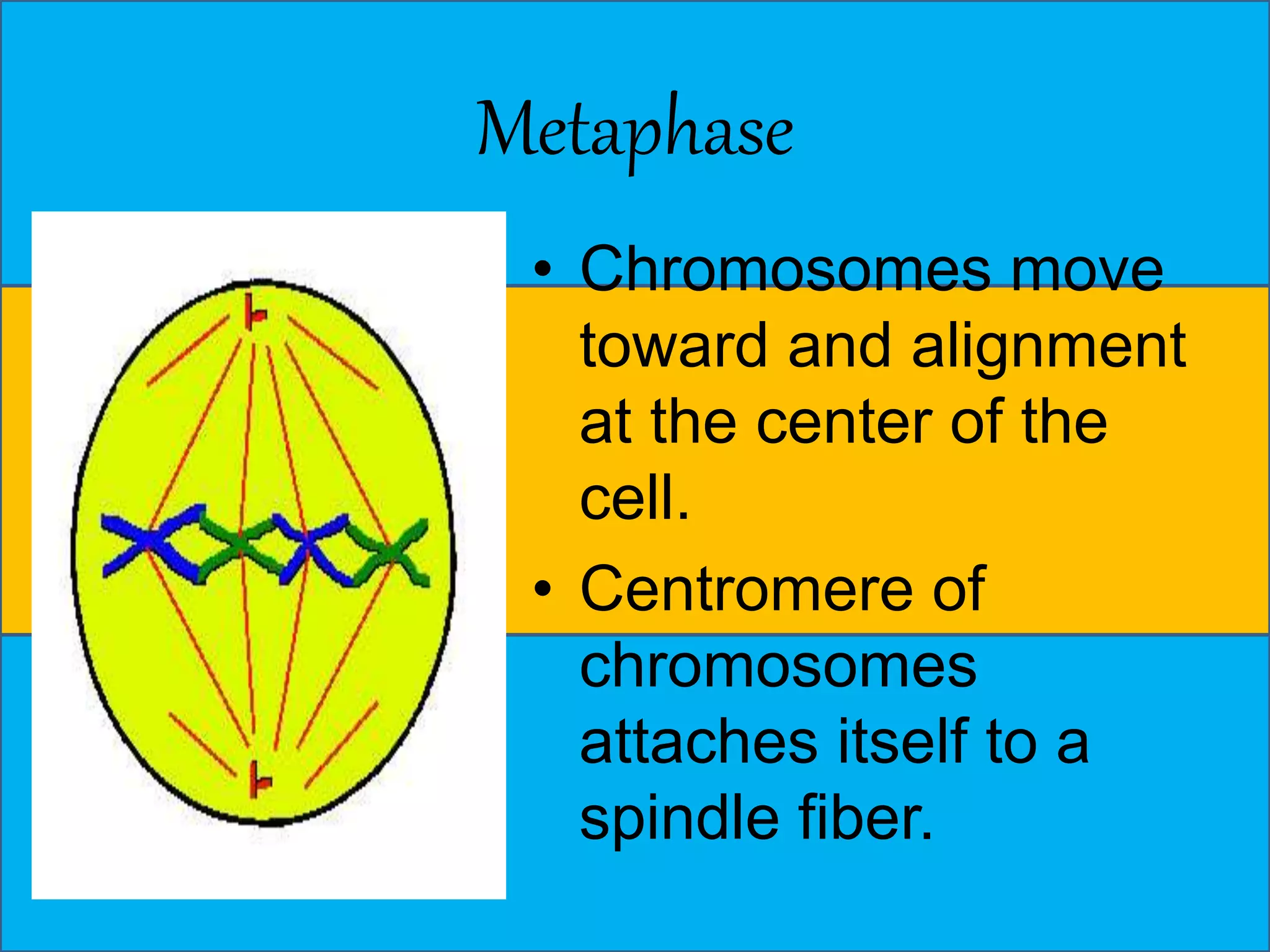
Metaphase 
• Chromosomes move 
toward and alignment 
at the center of the 
cell. 
• Centromere of 
chromosomes 
attaches itself to a 
spindle fiber.
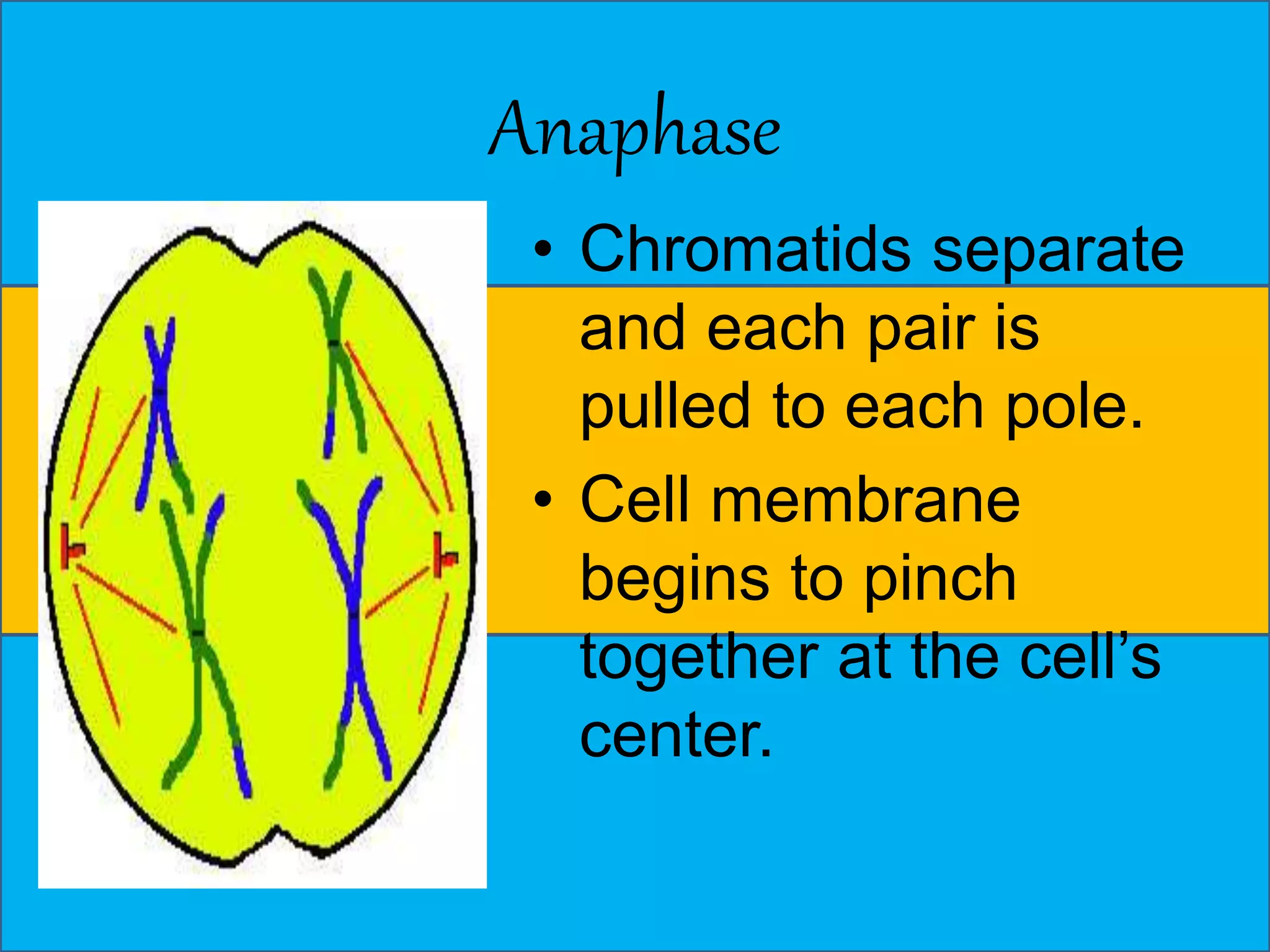
Anaphase 
• Chromatids separate 
and each pair is 
pulled to each pole. 
• Cell membrane 
begins to pinch 
together at the cell’s 
center.
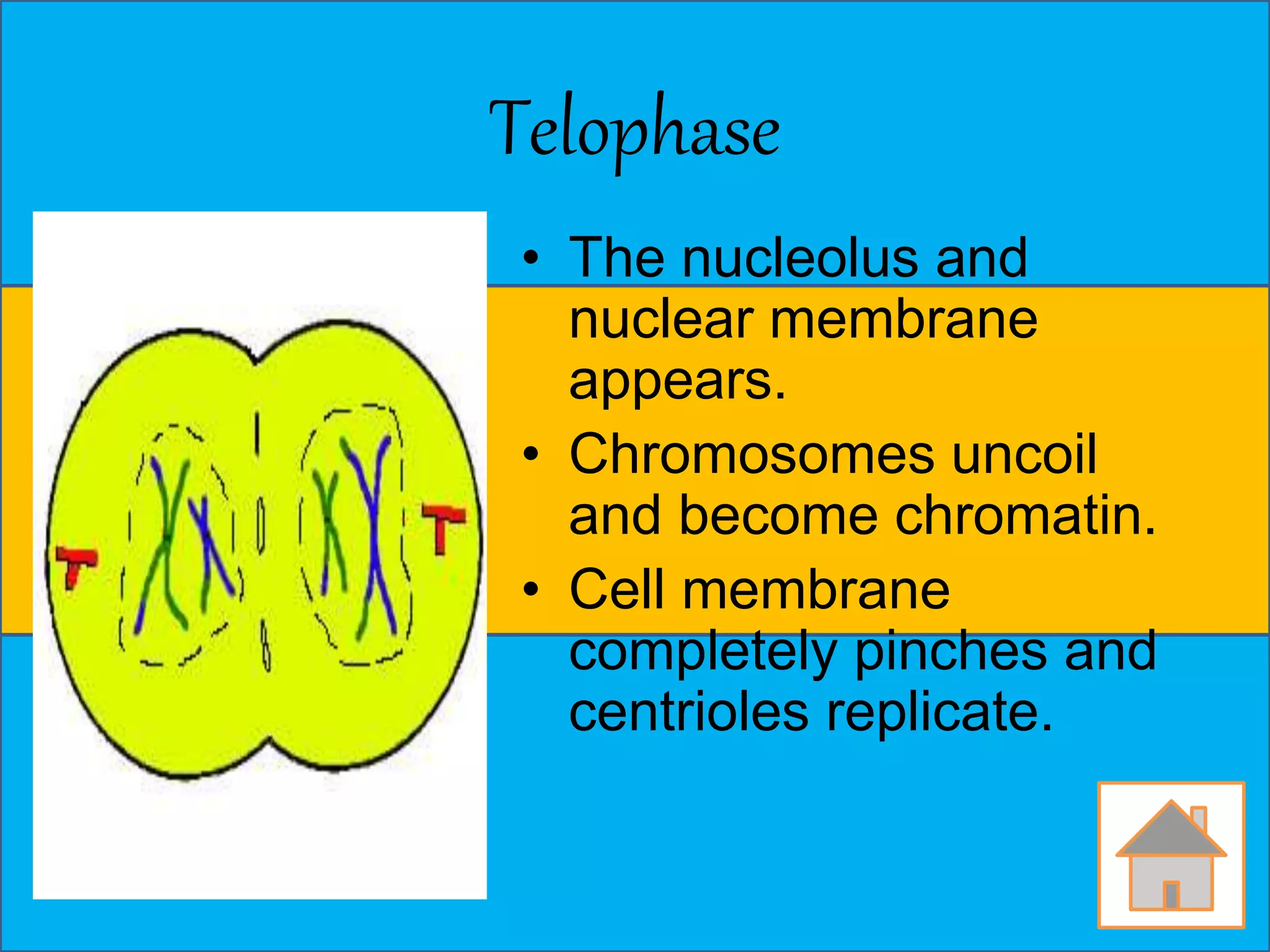
Telophase 
• The nucleolus and 
nuclear membrane 
appears. 
• Chromosomes uncoil 
and become chromatin. 
• Cell membrane 
completely pinches and 
centrioles replicate.
Meiosis 
• A cell division of diploid cells 
that produces haploid cells like 
sex cells. 
• It require to nuclear division: 
Meiosis I and Meiosis II.
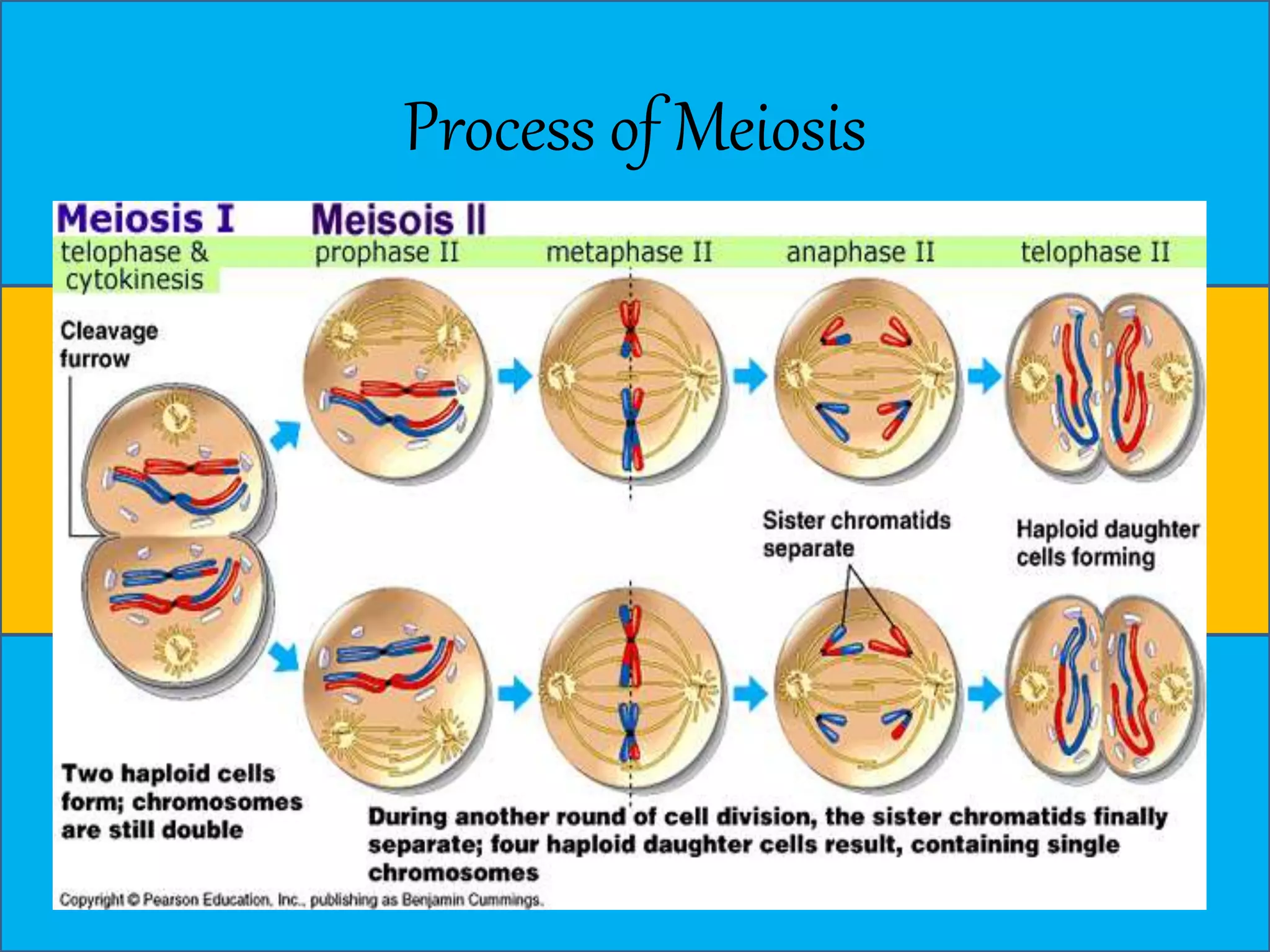
Process of Meiosis
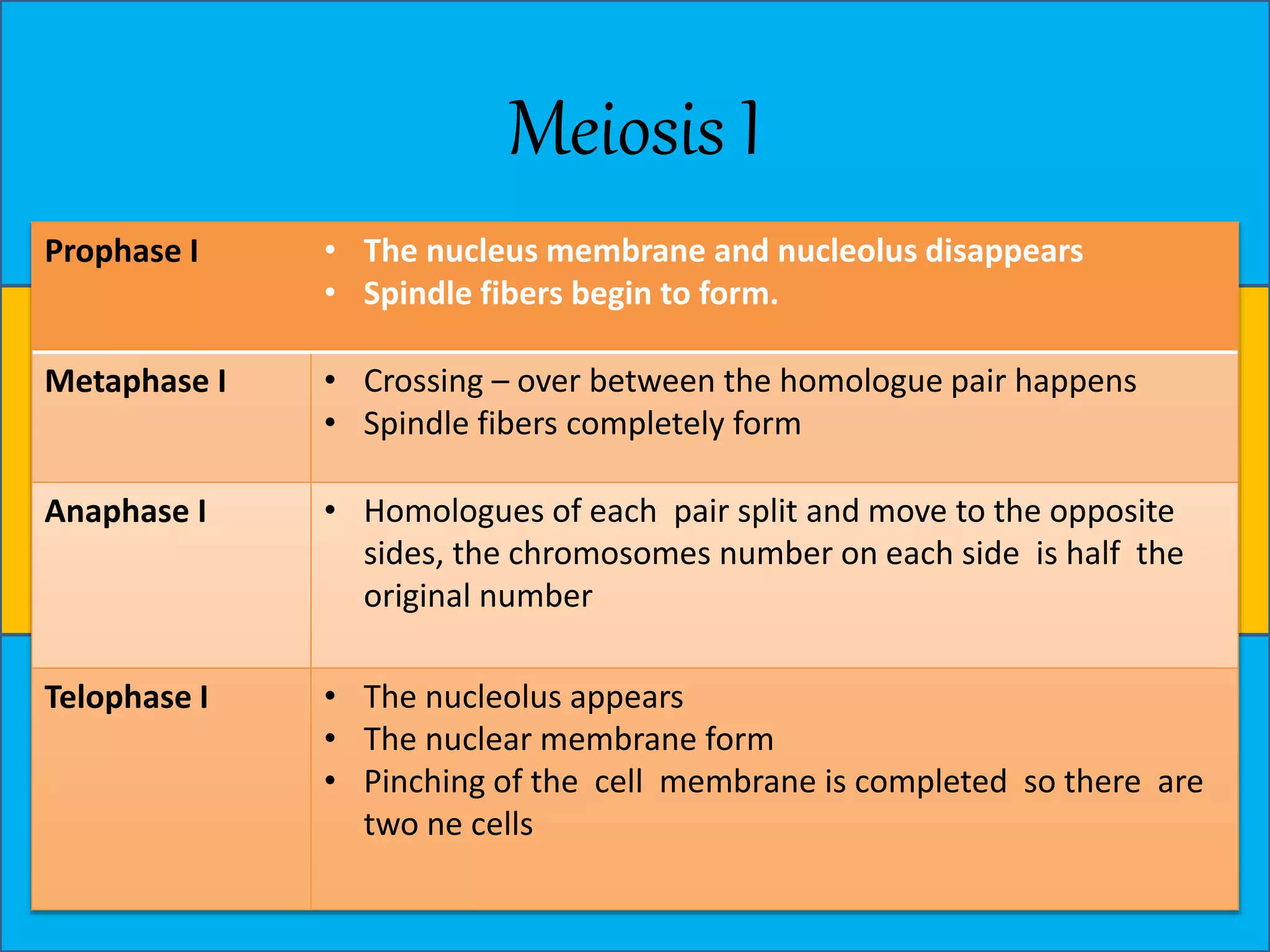
Meiosis I 
Prophase I • The nucleus membrane and nucleolus disappears 
• Spindle fibers begin to form. 
Metaphase I • Crossing – over between the homologue pair happens 
• Spindle fibers completely form 
Anaphase I • Homologues of each pair split and move to the opposite 
sides, the chromosomes number on each side is half the 
original number 
Telophase I • The nucleolus appears 
• The nuclear membrane form 
• Pinching of the cell membrane is completed so there are 
two ne cells
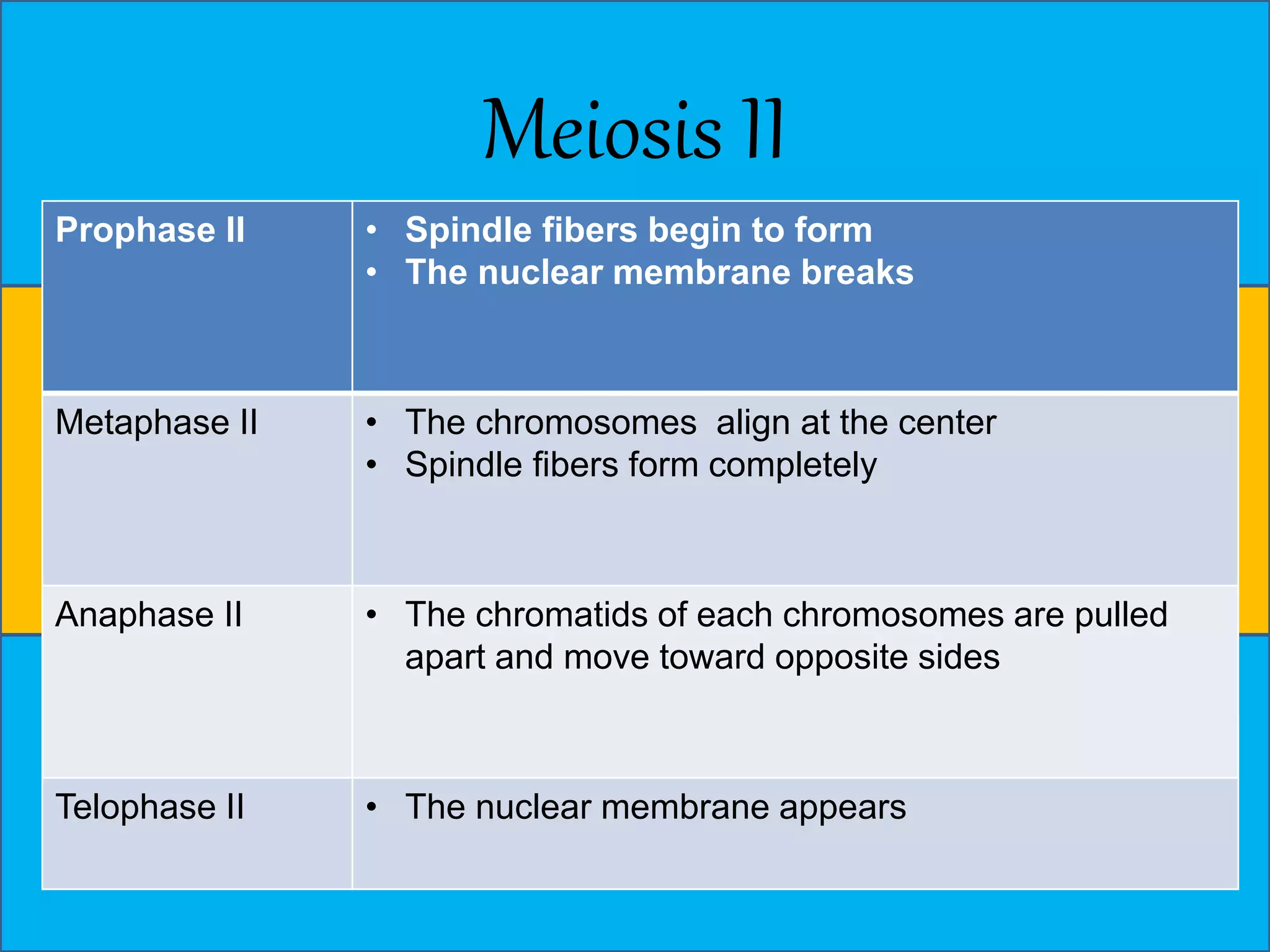
Meiosis II 
Prophase II • Spindle fibers begin to form 
• The nuclear membrane breaks 
Metaphase II • The chromosomes align at the center 
• Spindle fibers form completely 
Anaphase II • The chromatids of each chromosomes are pulled 
apart and move toward opposite sides 
Telophase II • The nuclear membrane appears
References 
• Olivares, Maria, et. al. Science 
and Technology for the modern 
world. Textbook for second 
year. 2003. DIWA Scholastic 
Press Inc. Makati City

Cell division

  • 1.
  • 2.
    The Cell Cycle Mitosis Meiosis
  • 3.
  • 4.
    • G1 (GrowthStage) – the organelles start to double in number. • S (Synthesis Stage) – the DNA strands replicate. • G2 (Growth Stage) – more protein is made.
  • 5.
    Mitosis • Aprocess of cell division herein two new daughter cells receive exactly the same number of chromosomes as the parent cell. • It includes four stages namely: Prophase, Metaphase, Anaphase and Telophase.
  • 6.
  • 7.
    Prophase • Thenucleus disappears. • The nuclear membranes breakdown and disappears. • Centrioles move toward the opposite poles.
  • 8.
    Metaphase • Chromosomesmove toward and alignment at the center of the cell. • Centromere of chromosomes attaches itself to a spindle fiber.
  • 9.
    Anaphase • Chromatidsseparate and each pair is pulled to each pole. • Cell membrane begins to pinch together at the cell’s center.
  • 10.
    Telophase • Thenucleolus and nuclear membrane appears. • Chromosomes uncoil and become chromatin. • Cell membrane completely pinches and centrioles replicate.
  • 11.
    Meiosis • Acell division of diploid cells that produces haploid cells like sex cells. • It require to nuclear division: Meiosis I and Meiosis II.
  • 12.
  • 13.
    Meiosis I ProphaseI • The nucleus membrane and nucleolus disappears • Spindle fibers begin to form. Metaphase I • Crossing – over between the homologue pair happens • Spindle fibers completely form Anaphase I • Homologues of each pair split and move to the opposite sides, the chromosomes number on each side is half the original number Telophase I • The nucleolus appears • The nuclear membrane form • Pinching of the cell membrane is completed so there are two ne cells
  • 14.
    Meiosis II ProphaseII • Spindle fibers begin to form • The nuclear membrane breaks Metaphase II • The chromosomes align at the center • Spindle fibers form completely Anaphase II • The chromatids of each chromosomes are pulled apart and move toward opposite sides Telophase II • The nuclear membrane appears
  • 15.
    References • Olivares,Maria, et. al. Science and Technology for the modern world. Textbook for second year. 2003. DIWA Scholastic Press Inc. Makati City