Downloaded 58 times

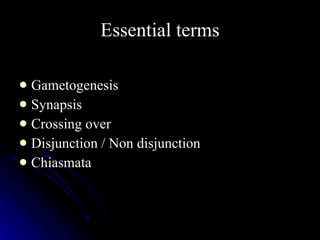
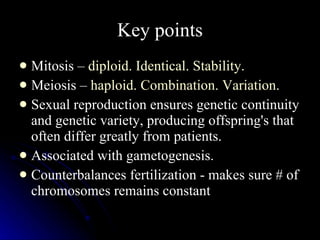
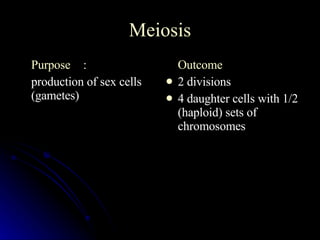
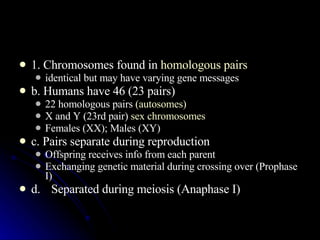
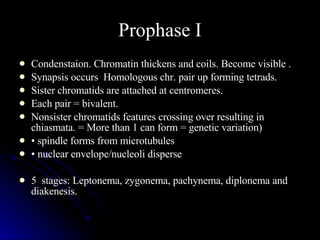
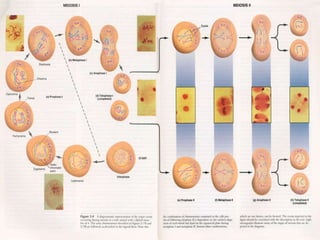

This document summarizes the key stages and purpose of meiosis. Meiosis involves two cell divisions that result in four haploid daughter cells, each with half the number of chromosomes as the original cell. This ensures genetic variation in offspring. The stages include prophase I with synapsis and crossing over, metaphase I and II, anaphase I and II, telophase I and II, and cytokinesis. Meiosis reduces the chromosome number through homologous chromosome separation in meiosis I and sister chromatid separation in meiosis II, allowing for genetic recombination and independent assortment of maternal and paternal chromosomes in gametes. Errors can result in conditions like Down syndrome.


![Unit%203%20 meiosis[1]](https://cdn.slidesharecdn.com/ss_thumbnails/unit20320meiosis1-130608060005-phpapp01-thumbnail.jpg?width=640&height=640&fit=bounds)


