Chromosomal Aberrations
P R E S E N T E D B Y
D R . A N J A L I N A I K
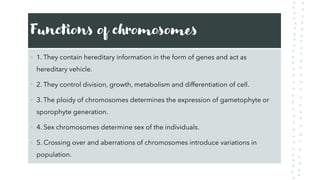
Functions of chromosomes
• 1. They contain hereditary information in the form of genes and act as
hereditary vehicle.
• 2. They control division, growth, metabolism and differentiation of cell.
• 3. The ploidy of chromosomes determines the expression of gametophyte or
sporophyte generation.
• 4. Sex chromosomes determine sex of the individuals.
• 5. Crossing over and aberrations of chromosomes introduce variations in
population.
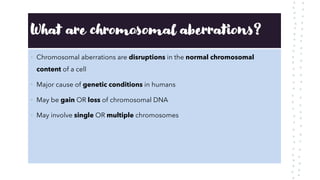
What are chromosomal aberrations?
• Chromosomal aberrations are disruptions in the normal chromosomal
content of a cell
• Major cause of genetic conditions in humans
• May be gain OR loss of chromosomal DNA
• May involve single OR multiple chromosomes
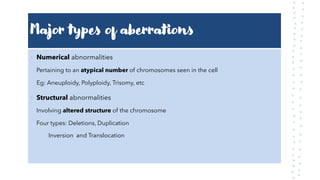
Major types of aberrations
• Numerical abnormalities
Pertaining to an atypical number of chromosomes seen in the cell
Eg: Aneuploidy, Polyploidy, Trisomy, etc
• Structural abnormalities
Involving altered structure of the chromosome
Four types: Deletions, Duplication
Inversion and Translocation
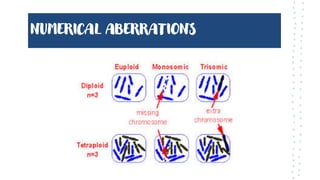
Numeric aberrations
• Based on number of chromosomes that are added / missing, it can be
classified as
• Aneuploidy: Refers to an abnormal number of chromosomes
Monosomy: Lack of one chromosome of the normal complement
Disomy: Presence of two copies of a chromosome
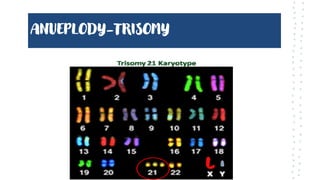
Trisomy: Presence of three copies of a chromosome, instead of two
Tetra/Pentasomy: Presence of four or five copies (respectively) of the
chromosome
Non-disjunction in chromosomes
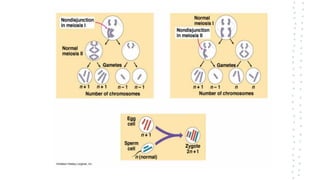
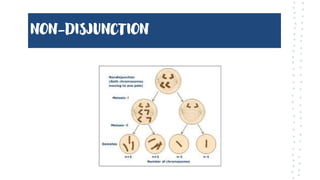
• Nondisjunction ("not coming apart") is the failure of chromosome
pairs to separate properly during meiosis stage I or stage II
• This could arise from a failure of homologous chromosomes to
separate in meiosis I, or the failure of sister chromatids to separate
during meiosis II or mitosis
• This error causes an imbalance of chromosomes, and the cell is said
to be aneuploid
NON-DISJUNCTION
NUMERICAL ABERRATIONS
ANUEPLODY-TRISOMY
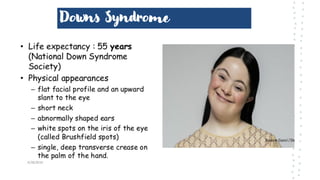
Downs Syndrome
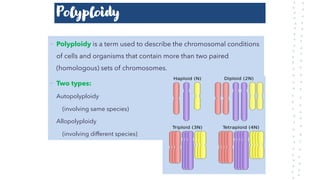
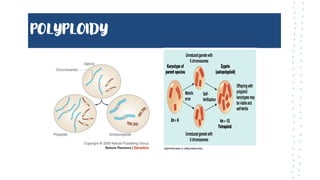
Polyploidy
• Polyploidy is a term used to describe the chromosomal conditions
of cells and organisms that contain more than two paired
(homologous) sets of chromosomes.
• Two types:
Autopolyploidy
(involving same species)
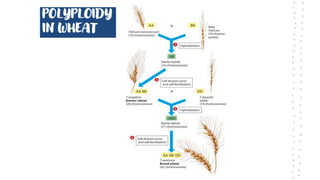
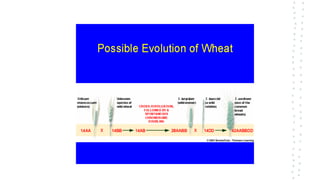
Allopolyploidy
(involving different species)
POLYPLOIDY
POLYPLOIDY
IN WHEAT
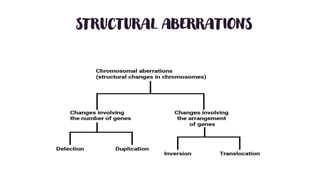
STRUCTURAL ABERRATIONS
Structural aberrations
• The altered structure of a chromosome may exist in several forms:
Deletion: a part of the chromosome is missing or deleted.
Duplication: a portion of the chromosome is duplicated, leading to extra genetic material
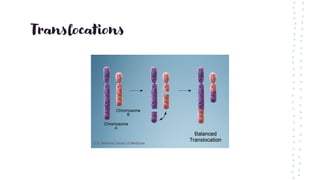
Translocation: a portion of one chromosome is transferred to another chromosome
Inversion: a portion of the chromosome breaks off, inverts itself and reattaches, rendering that part
of the DNA inverted
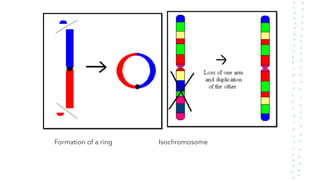
Rings: a part of the chromosome breaks off and forms a ring
Isochromosome: loss of one arm of the chromosome followed by its replacement with an exact
copy of the other arm
Inversion
Translocations
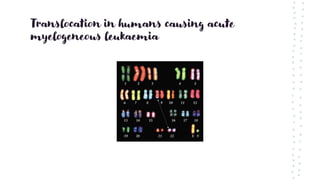
Translocation in humans causing acute
myelogeneous leukaemia
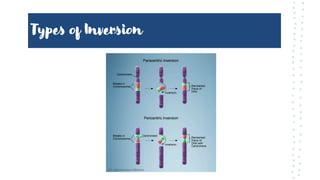
Types of Inversion
Inversions contd.
• Inversions occur when a chromosome breaks in two places and the resulting
piece of DNA is reversed and re-inserted into the chromosome.
• Inversions that involve the centromere are called pericentric inversions; those
that do not involve the centromere are called paracentric inversions
Formation of a ring Isochromosome
Genetic disorders associated with chromosomal
aberrations
• Cri du chat syndrome: deletion in short arm of chromosome 5
• Down syndrome: trisomy of chromosome 21
• Edward’s syndrome: trisomy of chromosome 18
• Jacobsen syndrome: deletion of terminal region of chromosome
11
• Klinefelter’s syndrome: extra X chromosome in human males
• Turner syndrome: monosomy X in females (1 X chromosome
instead of 2)

Chromosomal aberrations copy

  • 1.
    Chromosomal Aberrations P RE S E N T E D B Y D R . A N J A L I N A I K
  • 2.
    Functions of chromosomes •1. They contain hereditary information in the form of genes and act as hereditary vehicle. • 2. They control division, growth, metabolism and differentiation of cell. • 3. The ploidy of chromosomes determines the expression of gametophyte or sporophyte generation. • 4. Sex chromosomes determine sex of the individuals. • 5. Crossing over and aberrations of chromosomes introduce variations in population.
  • 3.
    What are chromosomalaberrations? • Chromosomal aberrations are disruptions in the normal chromosomal content of a cell • Major cause of genetic conditions in humans • May be gain OR loss of chromosomal DNA • May involve single OR multiple chromosomes
  • 4.
    Major types ofaberrations • Numerical abnormalities Pertaining to an atypical number of chromosomes seen in the cell Eg: Aneuploidy, Polyploidy, Trisomy, etc • Structural abnormalities Involving altered structure of the chromosome Four types: Deletions, Duplication Inversion and Translocation
  • 5.
    Numeric aberrations • Basedon number of chromosomes that are added / missing, it can be classified as • Aneuploidy: Refers to an abnormal number of chromosomes Monosomy: Lack of one chromosome of the normal complement Disomy: Presence of two copies of a chromosome Trisomy: Presence of three copies of a chromosome, instead of two Tetra/Pentasomy: Presence of four or five copies (respectively) of the chromosome
  • 6.
    Non-disjunction in chromosomes •Nondisjunction ("not coming apart") is the failure of chromosome pairs to separate properly during meiosis stage I or stage II • This could arise from a failure of homologous chromosomes to separate in meiosis I, or the failure of sister chromatids to separate during meiosis II or mitosis • This error causes an imbalance of chromosomes, and the cell is said to be aneuploid
  • 8.
  • 9.
  • 10.
  • 11.
  • 12.
    Polyploidy • Polyploidy isa term used to describe the chromosomal conditions of cells and organisms that contain more than two paired (homologous) sets of chromosomes. • Two types: Autopolyploidy (involving same species) Allopolyploidy (involving different species)
  • 13.
  • 14.
  • 16.
  • 17.
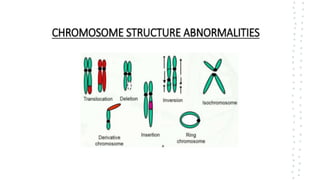
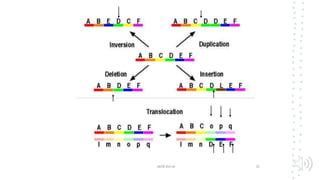
    Structural aberrations • Thealtered structure of a chromosome may exist in several forms: Deletion: a part of the chromosome is missing or deleted. Duplication: a portion of the chromosome is duplicated, leading to extra genetic material Translocation: a portion of one chromosome is transferred to another chromosome Inversion: a portion of the chromosome breaks off, inverts itself and reattaches, rendering that part of the DNA inverted Rings: a part of the chromosome breaks off and forms a ring Isochromosome: loss of one arm of the chromosome followed by its replacement with an exact copy of the other arm
  • 18.
  • 20.
  • 21.
    Translocation in humanscausing acute myelogeneous leukaemia
  • 22.
  • 23.
    Inversions contd. • Inversionsoccur when a chromosome breaks in two places and the resulting piece of DNA is reversed and re-inserted into the chromosome. • Inversions that involve the centromere are called pericentric inversions; those that do not involve the centromere are called paracentric inversions
  • 24.
    Formation of aring Isochromosome
  • 25.
    Genetic disorders associatedwith chromosomal aberrations • Cri du chat syndrome: deletion in short arm of chromosome 5 • Down syndrome: trisomy of chromosome 21 • Edward’s syndrome: trisomy of chromosome 18 • Jacobsen syndrome: deletion of terminal region of chromosome 11 • Klinefelter’s syndrome: extra X chromosome in human males • Turner syndrome: monosomy X in females (1 X chromosome instead of 2)