
Cell Division
All cells are derived from pre-
 existing cells
New cells are produced for
 growth and to replace damaged or
 old cells
Differs in prokaryotes (bacteria)
 and eukaryotes (protists, fungi,
 plants, & animals)

                                     2
Keeping Cells Identical

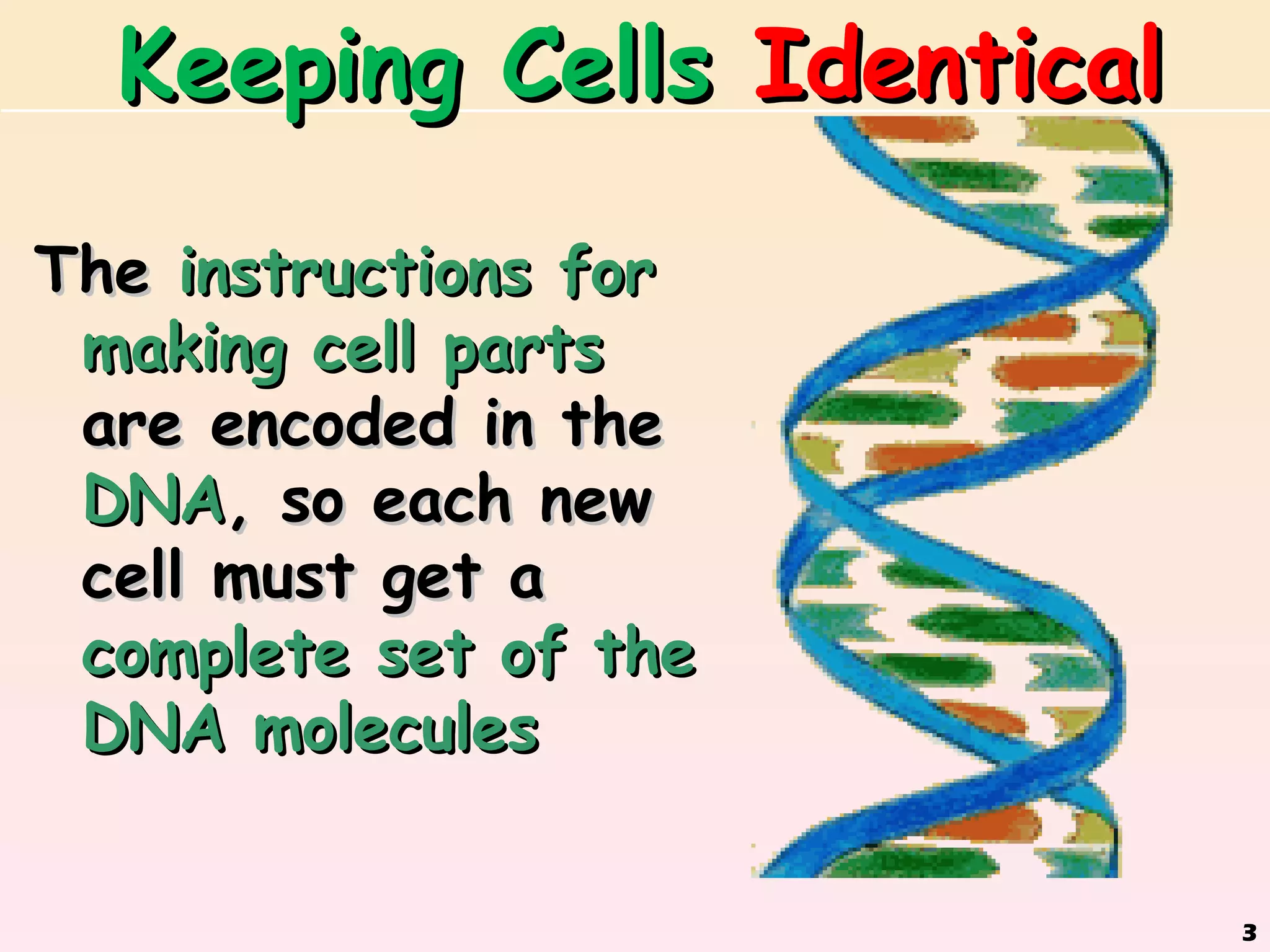
The instructions for
 making cell parts
 are encoded in the
 DNA, so each new
 cell must get a
 complete set of the
 DNA molecules


                            3
DNA Replication
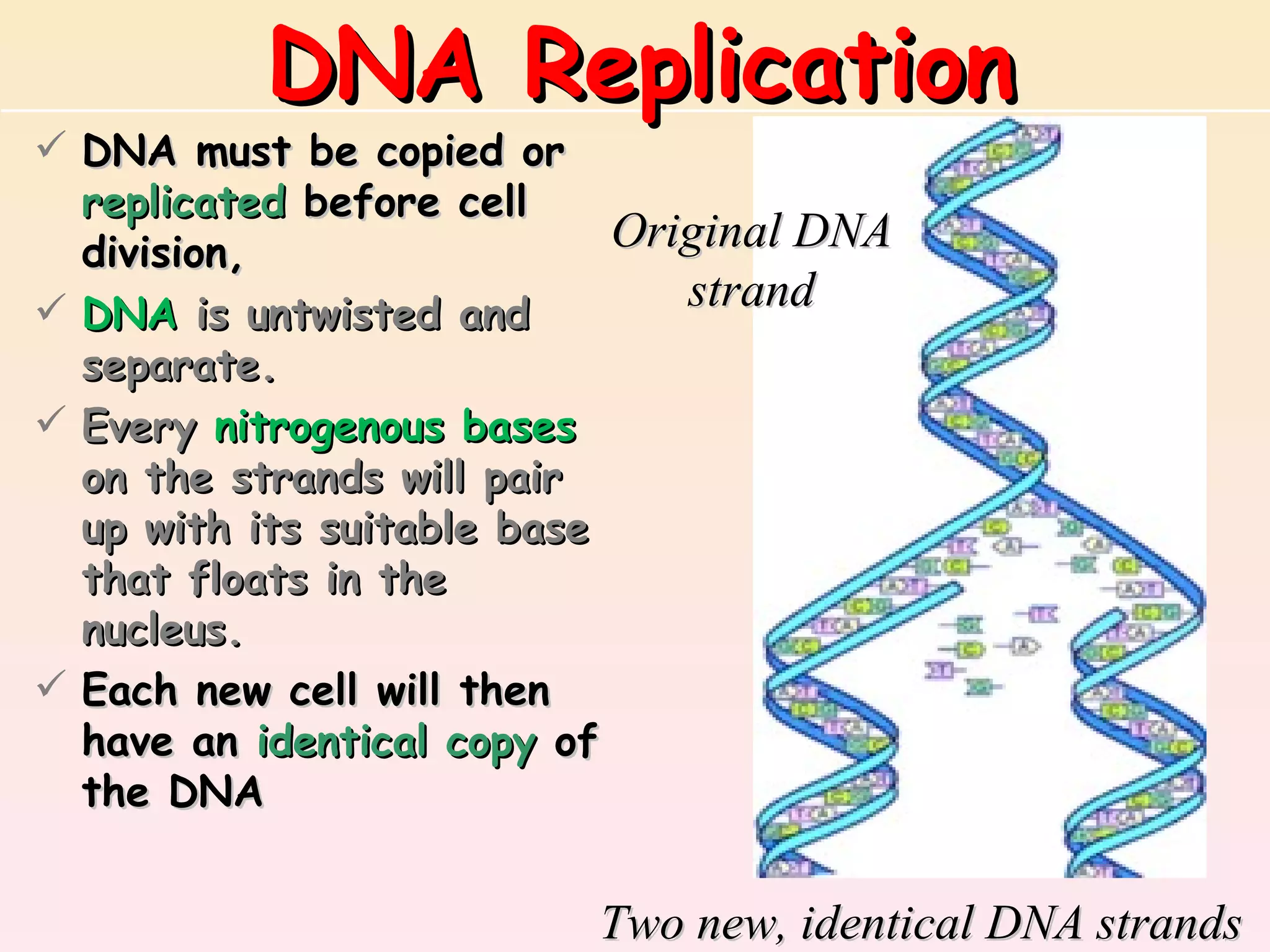
 DNA must be copied or
  replicated before cell
  division,                 Original DNA
 DNA is untwisted and         strand
  separate.
 Every nitrogenous bases
  on the strands will pair
  up with its suitable base
  that floats in the
  nucleus.
 Each new cell will then
  have an identical copy of
  the DNA


                          Two new, identical DNA strands
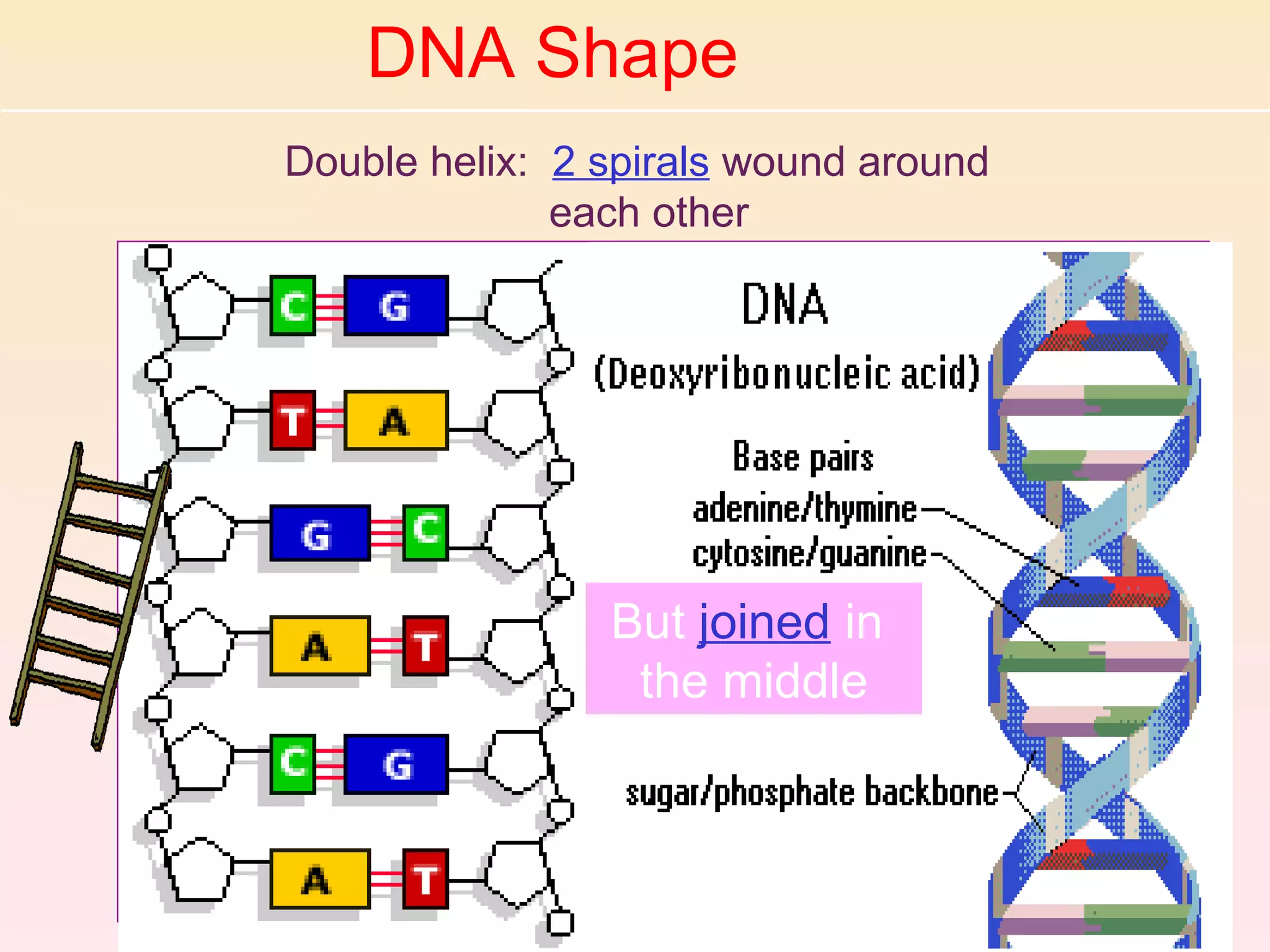
DNA Shape
Double helix: 2 spirals wound around
              each other


                But joined in
                 the middle
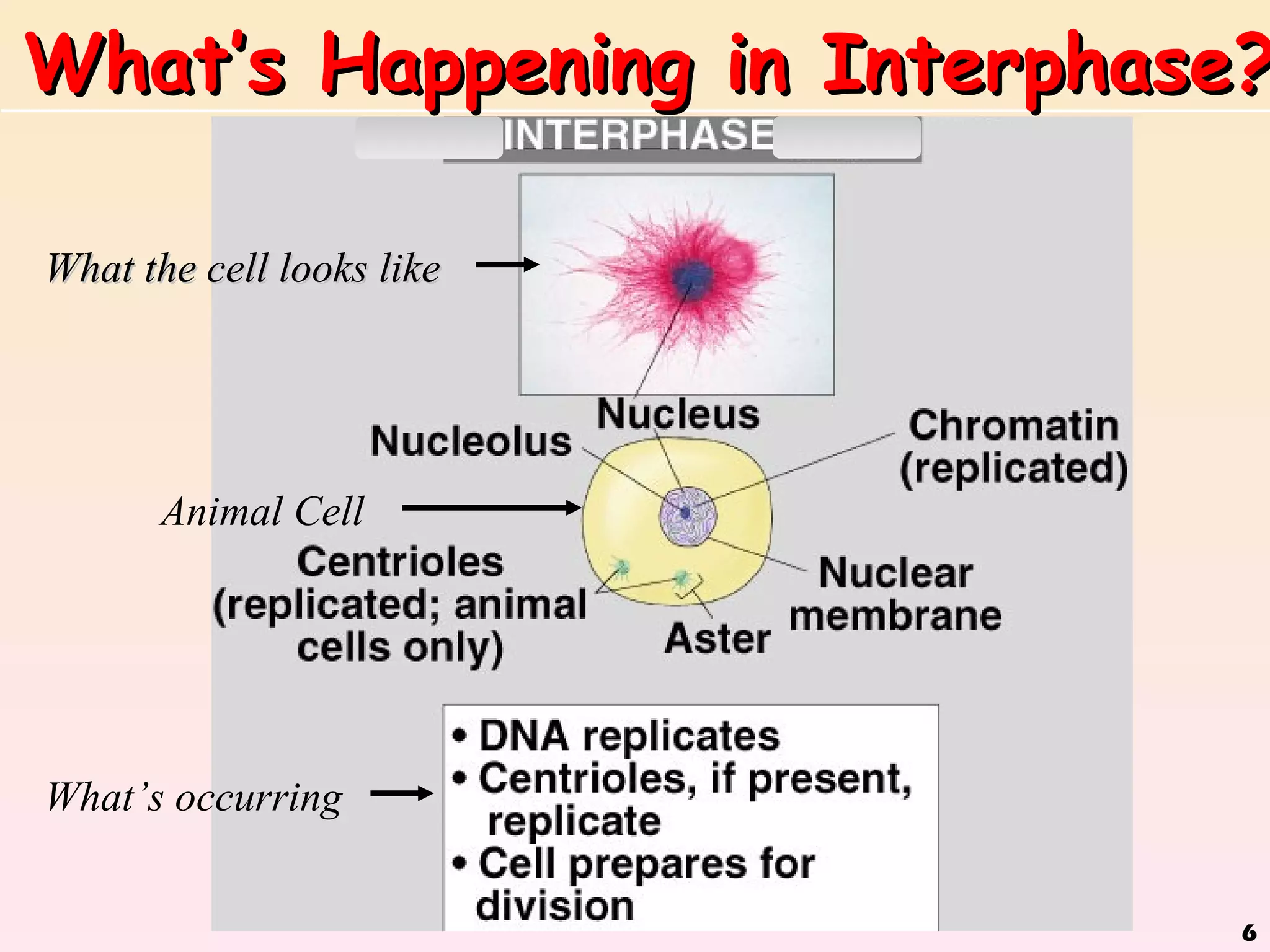
What’s Happening in Interphase?

What the cell looks like


       Animal Cell


What’s occurring


                              6
Mitosis

          7
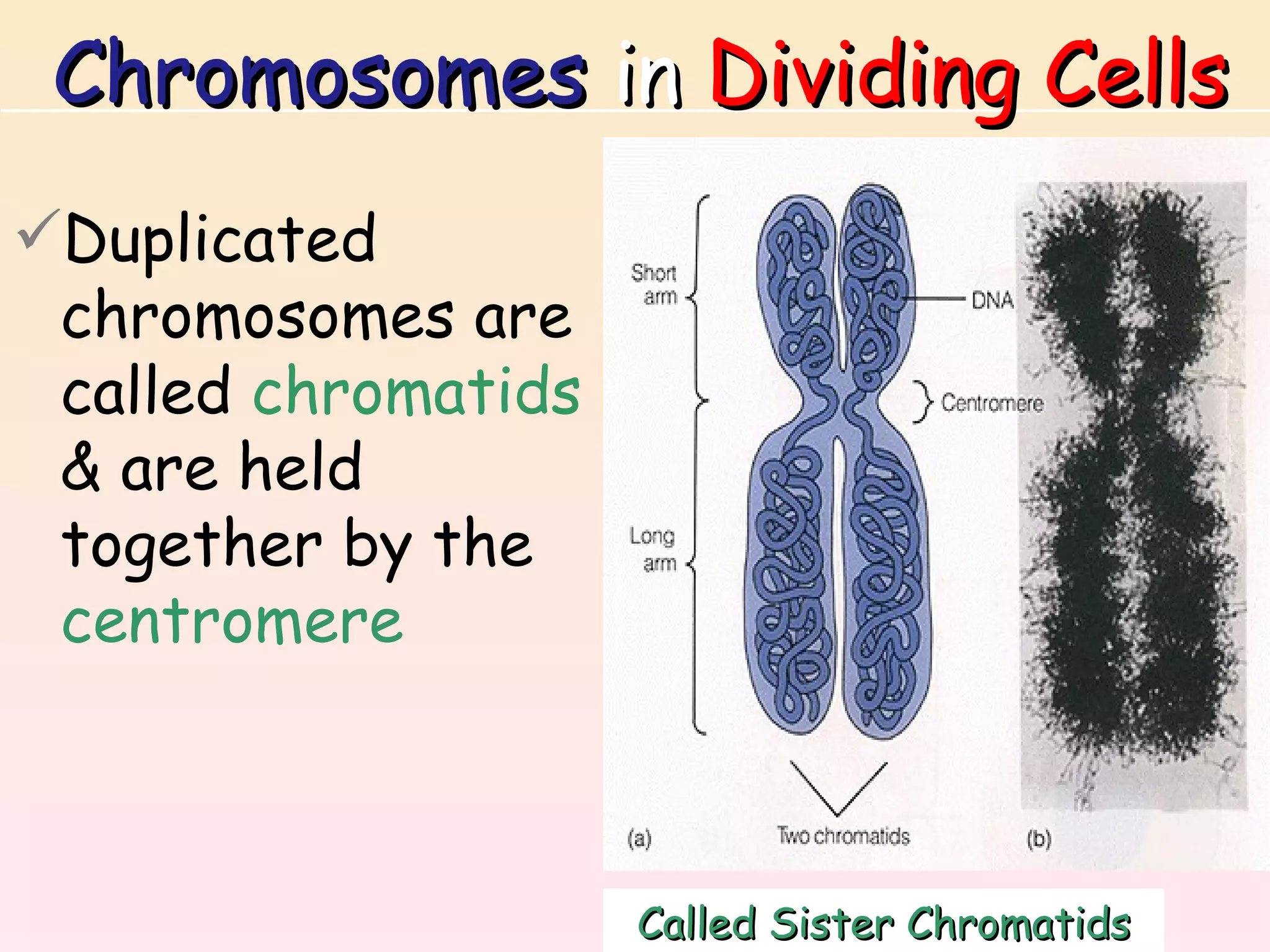
Chromosomes in Dividing Cells
Duplicated
 chromosomes are
 called chromatids
 & are held
 together by the
 centromere


                     Called Sister Chromatids
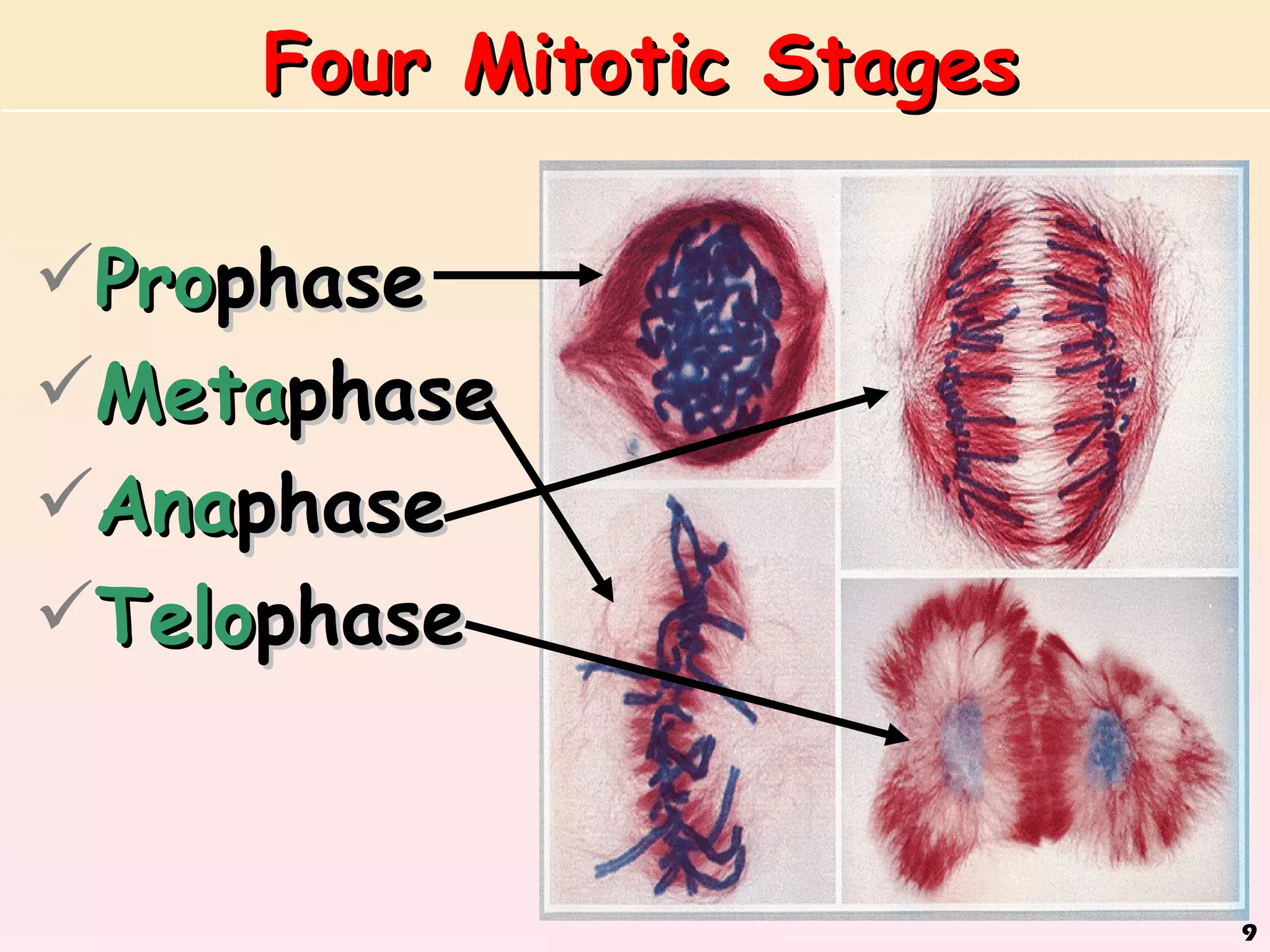
Four Mitotic Stages

Prophase
Metaphase
Anaphase
Telophase


                          9
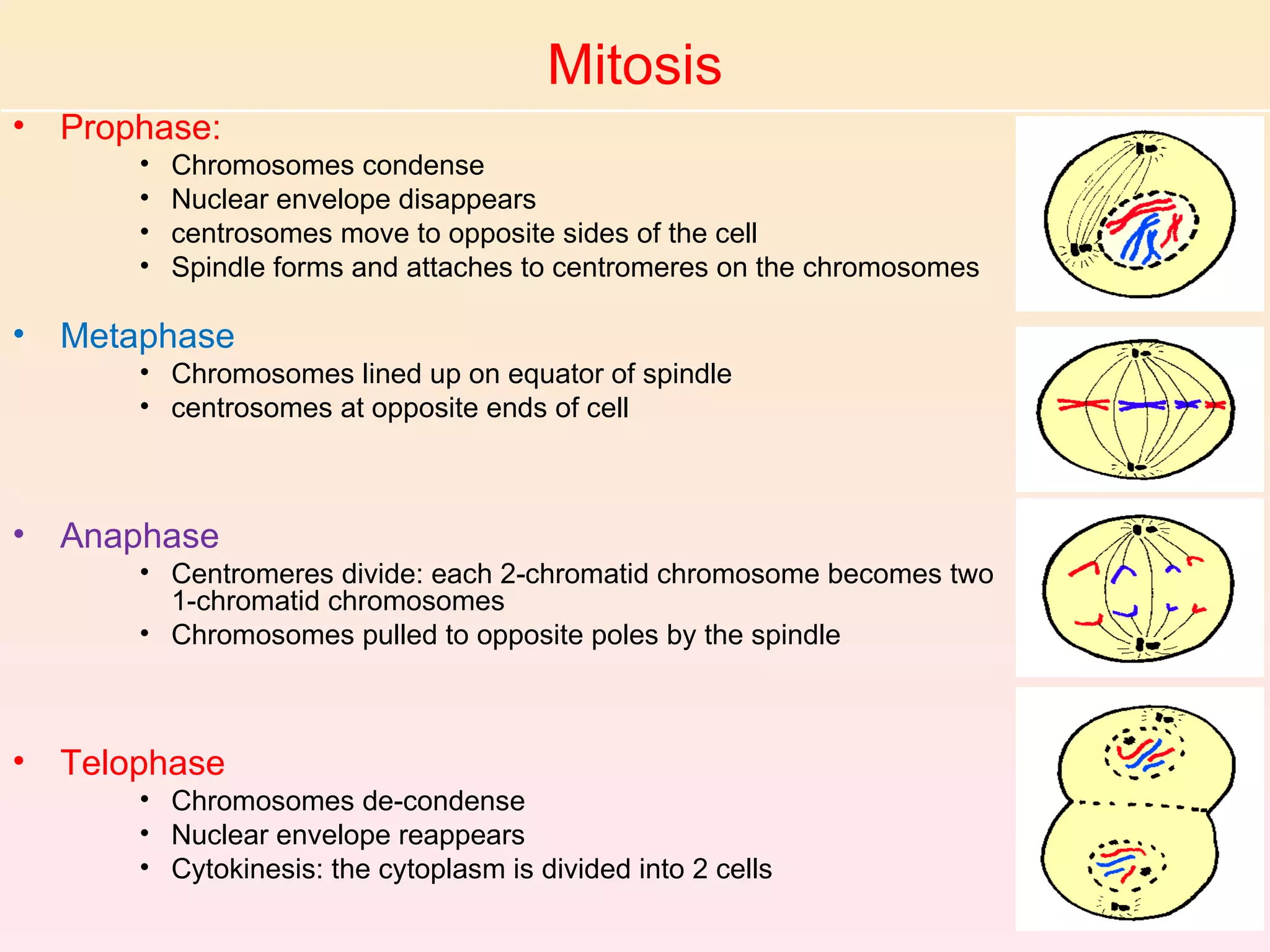
Mitosis
•   Prophase:
        •   Chromosomes condense
        •   Nuclear envelope disappears
        •   centrosomes move to opposite sides of the cell
        •   Spindle forms and attaches to centromeres on the chromosomes

•   Metaphase
        • Chromosomes lined up on equator of spindle
        • centrosomes at opposite ends of cell


•   Anaphase
        • Centromeres divide: each 2-chromatid chromosome becomes two
          1-chromatid chromosomes
        • Chromosomes pulled to opposite poles by the spindle


•   Telophase
        • Chromosomes de-condense
        • Nuclear envelope reappears
        • Cytokinesis: the cytoplasm is divided into 2 cells
Cytokinesis
 Means division of the cytoplasm
 Division of cell into two, identical halves
  called daughter cells.

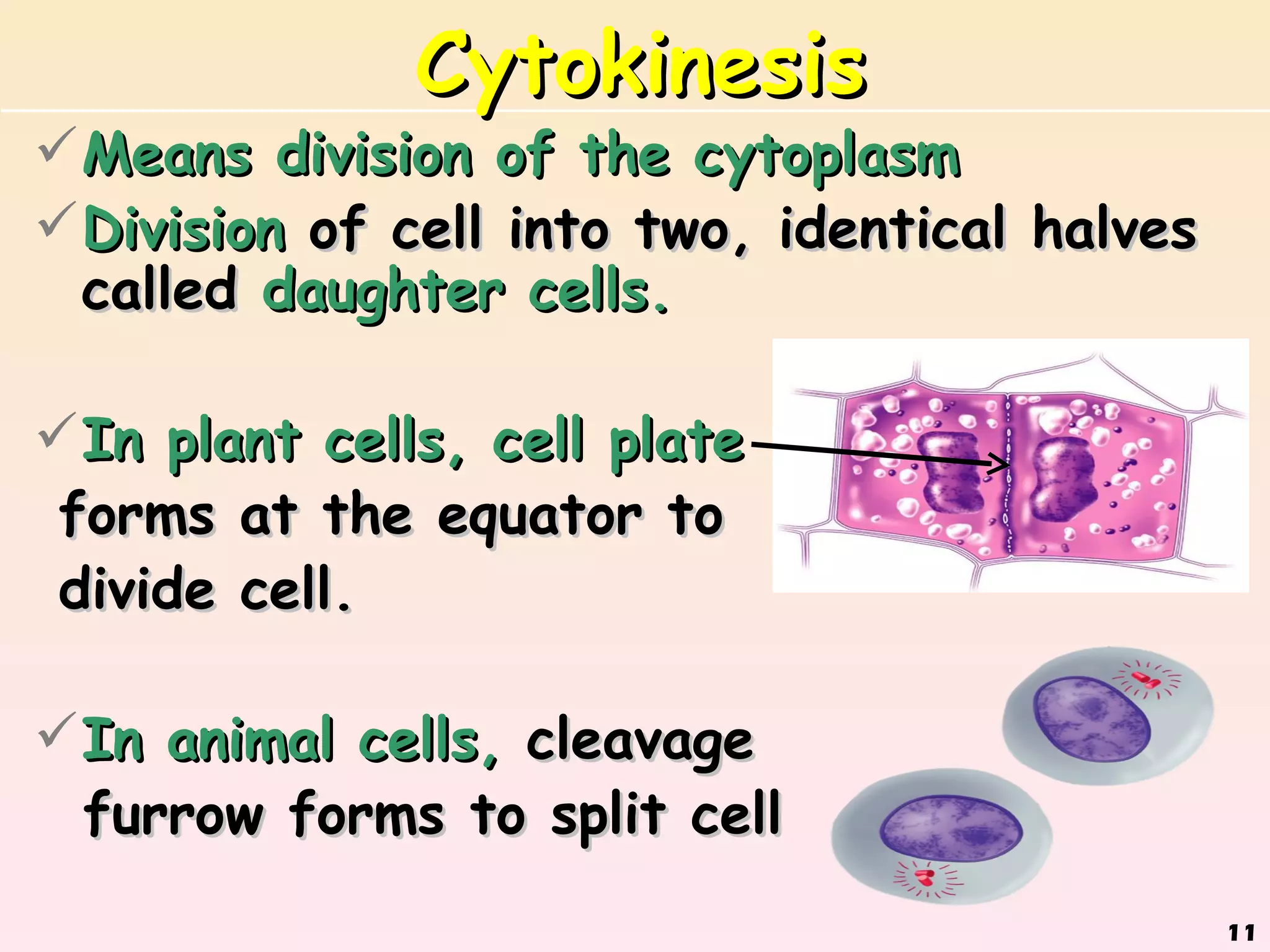
 In plant cells, cell plate
 forms at the equator to
 divide cell.

 In animal cells, cleavage
  furrow forms to split cell
                                                11
Cytokinesis
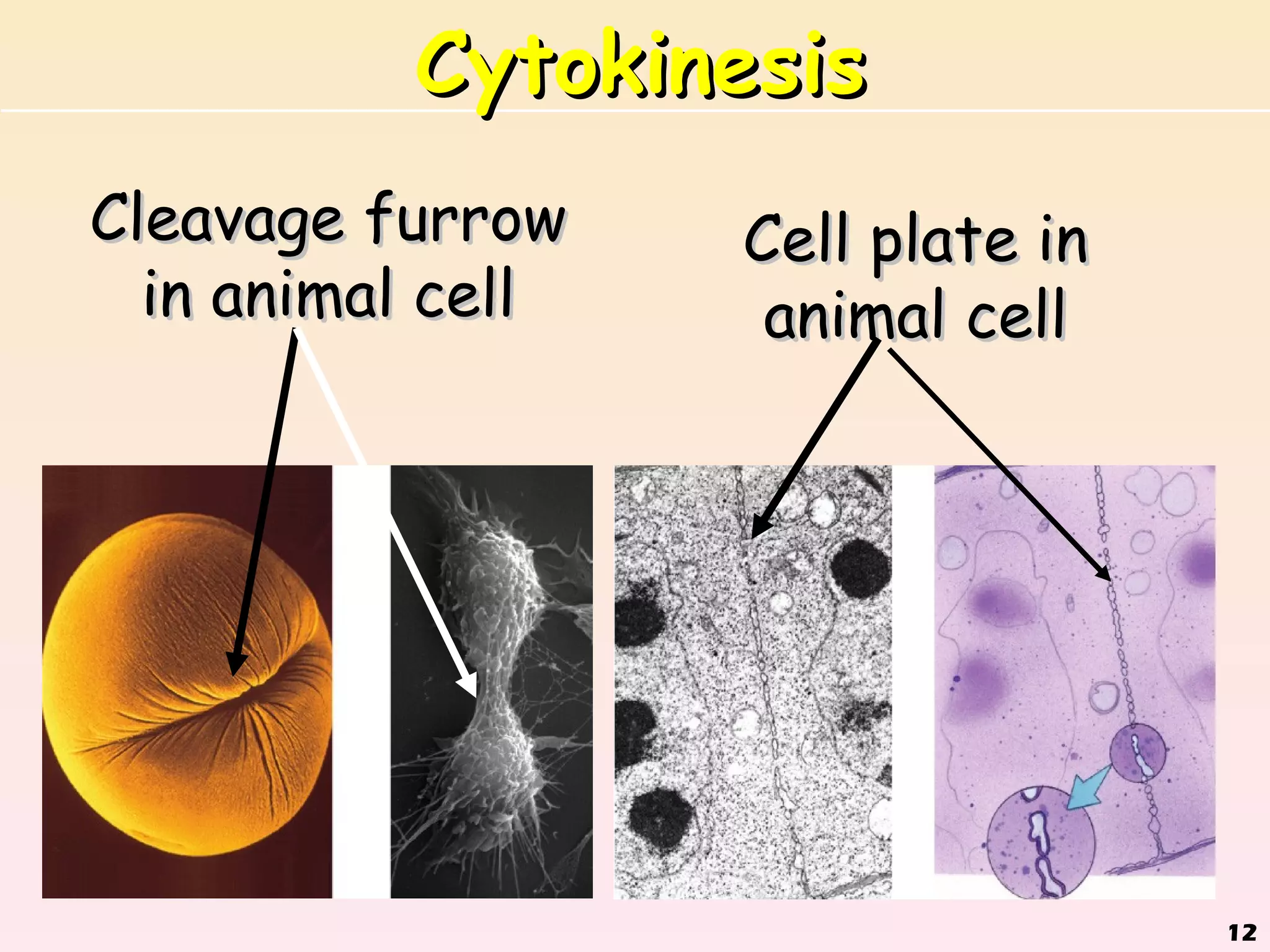
Cleavage furrow    Cell plate in
  in animal cell    animal cell


                                   12
Revise and Test Yourself


Review
  of
Mitosis

                               13
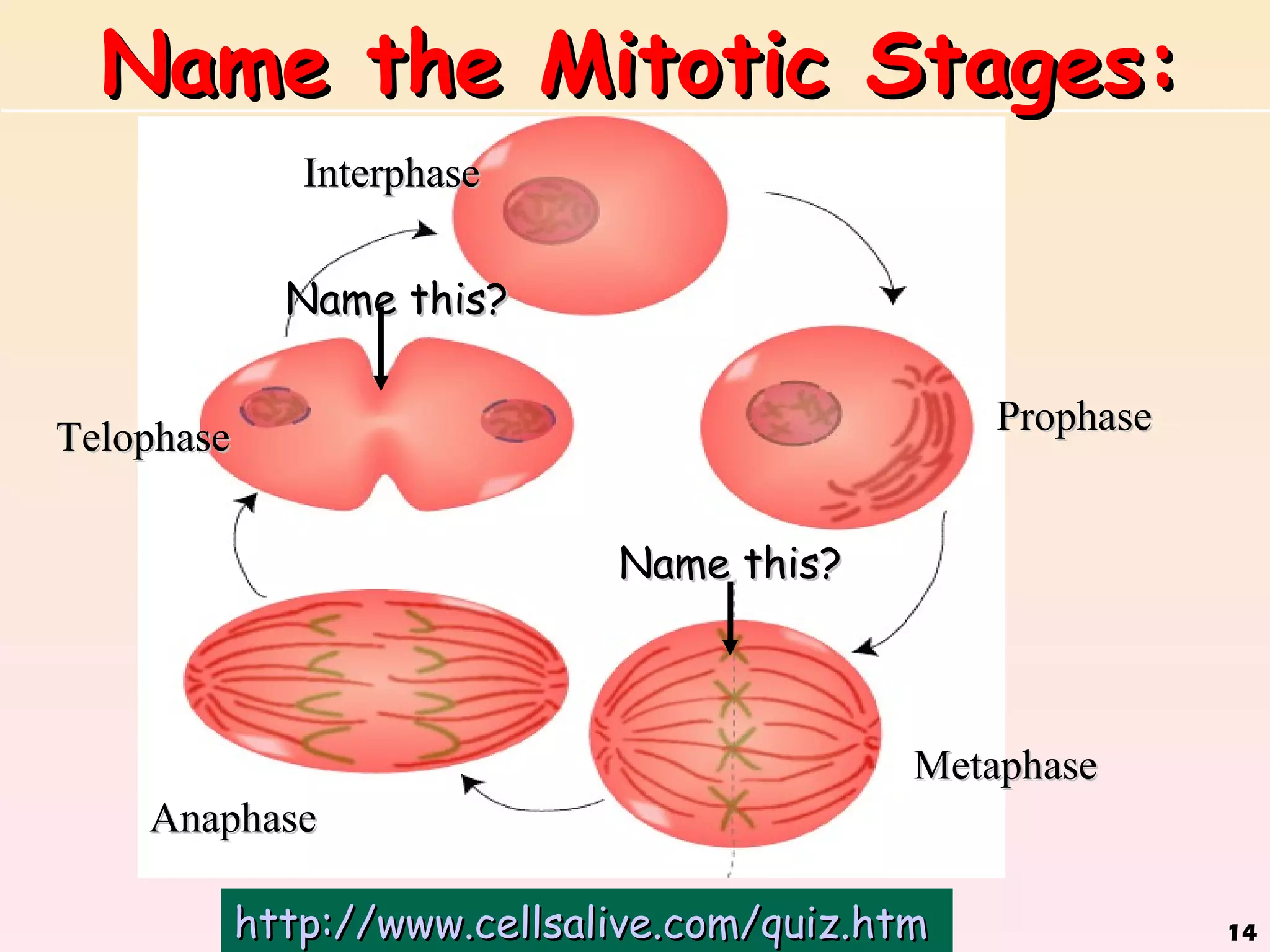
Name the Mitotic Stages:
               Interphase


              Name this?


Telophase                                        Prophase


                              Name this?


                                             Metaphase
    Anaphase

            http://www.cellsalive.com/quiz.htm              14
15

Sec.3, cell cycle & cell division

  • 2.
    Cell Division All cellsare derived from pre- existing cells New cells are produced for growth and to replace damaged or old cells Differs in prokaryotes (bacteria) and eukaryotes (protists, fungi, plants, & animals) 2
  • 3.
    Keeping Cells Identical Theinstructions for making cell parts are encoded in the DNA, so each new cell must get a complete set of the DNA molecules 3
  • 4.
    DNA Replication  DNAmust be copied or replicated before cell division, Original DNA  DNA is untwisted and strand separate.  Every nitrogenous bases on the strands will pair up with its suitable base that floats in the nucleus.  Each new cell will then have an identical copy of the DNA Two new, identical DNA strands
  • 5.
    DNA Shape Double helix:2 spirals wound around each other But joined in the middle
  • 6.
    What’s Happening inInterphase? What the cell looks like Animal Cell What’s occurring 6
  • 7.
  • 8.
    Chromosomes in DividingCells Duplicated chromosomes are called chromatids & are held together by the centromere Called Sister Chromatids
  • 9.
  • 10.
    Mitosis • Prophase: • Chromosomes condense • Nuclear envelope disappears • centrosomes move to opposite sides of the cell • Spindle forms and attaches to centromeres on the chromosomes • Metaphase • Chromosomes lined up on equator of spindle • centrosomes at opposite ends of cell • Anaphase • Centromeres divide: each 2-chromatid chromosome becomes two 1-chromatid chromosomes • Chromosomes pulled to opposite poles by the spindle • Telophase • Chromosomes de-condense • Nuclear envelope reappears • Cytokinesis: the cytoplasm is divided into 2 cells
  • 11.
    Cytokinesis  Means divisionof the cytoplasm  Division of cell into two, identical halves called daughter cells.  In plant cells, cell plate forms at the equator to divide cell.  In animal cells, cleavage furrow forms to split cell 11
  • 12.
    Cytokinesis Cleavage furrow Cell plate in in animal cell animal cell 12
  • 13.
    Revise and TestYourself Review of Mitosis 13
  • 14.
    Name the MitoticStages: Interphase Name this? Telophase Prophase Name this? Metaphase Anaphase http://www.cellsalive.com/quiz.htm 14
  • 15.