Cell Cycle
The sequence of events by which a cell
duplicates its genome, synthesizes the
other constituents of the cell and
eventually divides into two daughter
cells is termed cell cycle.
Phases of Cell Cycle
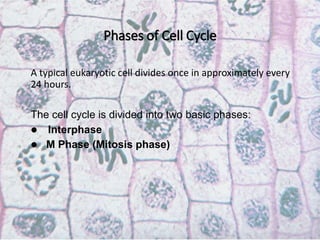
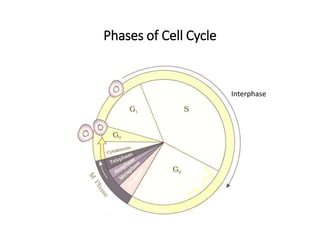
A typical eukaryotic cell divides once in approximately every
24 hours.
The cell cycle is divided into two basic phases:
l Interphase
l M Phase (Mitosis phase)
Phases of Cell Cycle
Interphase
M Phase
• Phase when the actual cell division or mitosis occurs
• Starts with the nuclear division, corresponding to the separation of
daughter chromosomes
• Ends with division of cytoplasm (cytokinesis)
• Cell division proper lasts for only about an hour
Interphase
• Represents the phase between two successive M phases
• Lasts more than 95% of the duration of cell cycle
• It is the time during which the cell is preparing for division by
undergoing both cell growth and DNA replication
Interphase
Interphase is divided into three further phases:
l G1 phase (Gap 1)
l S phase (Synthesis)
l G2 phase (Gap 2)
Interphase: G1 phase
• 1st growth stage
• Interval between mitosis and initiation of DNA replication
• Cell is metabolically active and continuously grows but does not
replicate its DNA
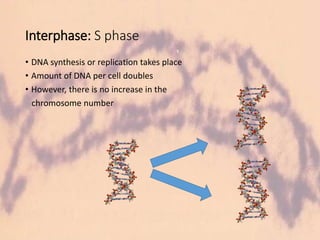
Interphase: S phase
• DNA synthesis or replication takes place
• Amount of DNA per cell doubles
• However, there is no increase in the
chromosome number
Interphase: G2 phase
• 2nd Growth Stage
• Proteins are synthesized in preparation for mitosis
• Cell growth continues
*Some cells in the adult animals do not appear to exhibit division (e.g.,
heart cells) and some divide only occasionally
*These cells exit G1 phase to enter quiescent stage (G0) of the cell
cycle which is an inactive stage of the cell cycle
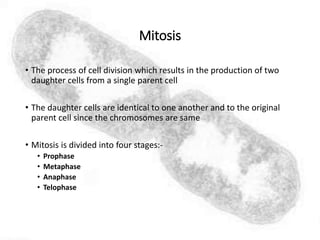
Mitosis
• The process of cell division which results in the production of two
daughter cells from a single parent cell
• The daughter cells are identical to one another and to the original
parent cell since the chromosomes are same
• Mitosis is divided into four stages:-
• Prophase
• Metaphase
• Anaphase
• Telophase
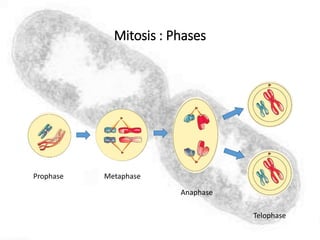
Mitosis : Phases
Prophase Metaphase
Anaphase
Telophase
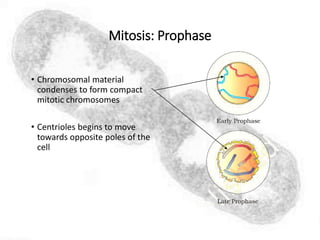
Mitosis: Prophase
• Chromosomal material
condenses to form compact
mitotic chromosomes
• Centrioles begins to move
towards opposite poles of the
cell
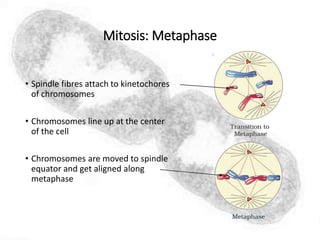
Mitosis: Metaphase
• Spindle fibres attach to kinetochores
of chromosomes
• Chromosomes line up at the center
of the cell
• Chromosomes are moved to spindle
equator and get aligned along
metaphase
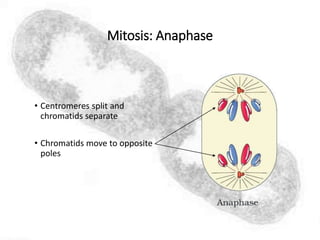
Mitosis: Anaphase
• Centromeres split and
chromatids separate
• Chromatids move to opposite
poles
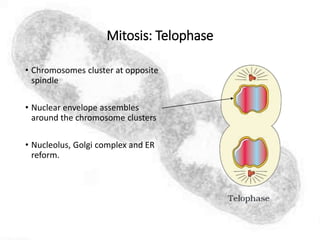
Mitosis: Telophase
• Chromosomes cluster at opposite
spindle
• Nuclear envelope assembles
around the chromosome clusters
• Nucleolus, Golgi complex and ER
reform.
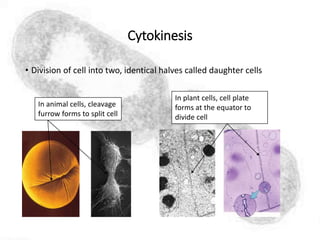
Cytokinesis
• Division of cell into two, identical halves called daughter cells
In plant cells, cell plate
forms at the equator to
divide cell
In animal cells, cleavage
furrow forms to split cell
Significance of Mitosis
• The growth of multicellular organisms is due to mitosis
• Significant role in cell repair
• Mitotic divisions in the meristematic tissues result in a continuous
growth of plants throughout their life
Meiosis
•Specialized kind of cell division that reduces the
chromosome number by half
•Results in production of haploid daughter cells
•It involves
• two cycles of nuclear and cell division(Meiosis I & II )
• single cycle of DNA replication
• pairing of homologous chromosomes and recombination
between them.
Meiosis: Phases
• Meiotic events can be grouped under the following phases:
Meiosis I Meiosis II
Prophase I Prophase II
Metaphase I Metaphase II
Anaphase I Anaphase II
Telophase I Telophase II
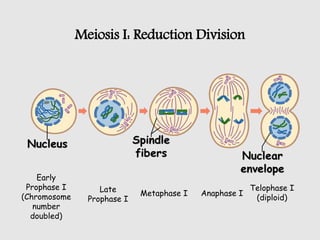
Meiosis I: Reduction Division
Early
Prophase I
(Chromosome
number
doubled)
Late
Prophase I
Metaphase I Anaphase I
Telophase I
(diploid)
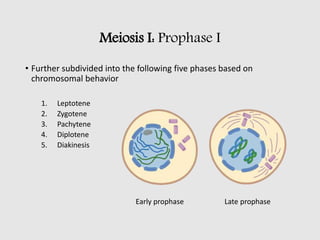
Meiosis I: Prophase I
• Further subdivided into the following five phases based on
chromosomal behavior
1. Leptotene
2. Zygotene
3. Pachytene
4. Diplotene
5. Diakinesis
Early prophase Late prophase
Meiosis I: Prophase I
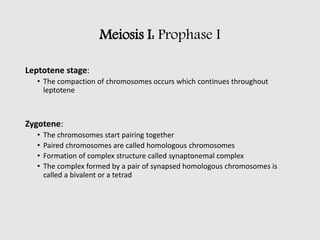
Leptotene stage:
• The compaction of chromosomes occurs which continues throughout
leptotene
Zygotene:
• The chromosomes start pairing together
• Paired chromosomes are called homologous chromosomes
• Formation of complex structure called synaptonemal complex
• The complex formed by a pair of synapsed homologous chromosomes is
called a bivalent or a tetrad
Meiosis I: Prophase I
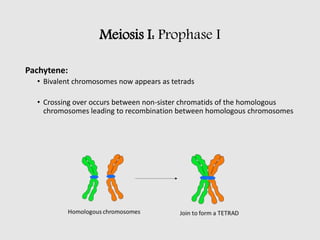
Pachytene:
• Bivalent chromosomes now appears as tetrads
• Crossing over occurs between non-sister chromatids of the homologous
chromosomes leading to recombination between homologous chromosomes
Meiosis I: Prophase I
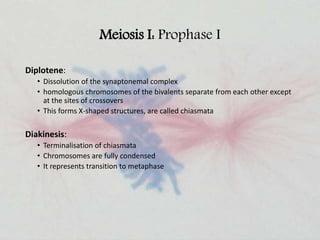
Diplotene:
• Dissolution of the synaptonemal complex
• homologous chromosomes of the bivalents separate from each other except
at the sites of crossovers
• This forms X-shaped structures, are called chiasmata
Diakinesis:
• Terminalisation of chiasmata
• Chromosomes are fully condensed
• It represents transition to metaphase
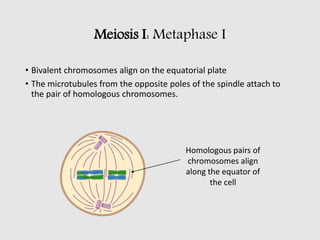
Meiosis I: Metaphase I
• Bivalent chromosomes align on the equatorial plate
• The microtubules from the opposite poles of the spindle attach to
the pair of homologous chromosomes.
Homologous pairs of
chromosomes align
along the equator of
the cell
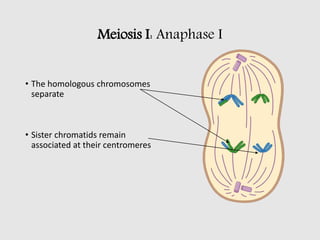
Meiosis I: Anaphase I
• The homologous chromosomes
separate
• Sister chromatids remain
associated at their centromeres
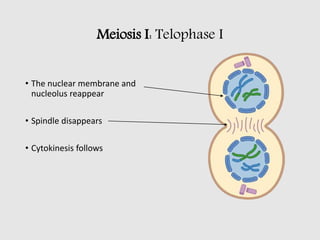
Meiosis I: Telophase I
• The nuclear membrane and
nucleolus reappear
• Spindle disappears
• Cytokinesis follows
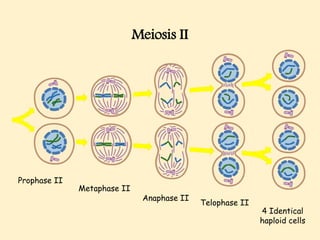
Meiosis II
Prophase II
Metaphase II
Anaphase II
Telophase II
4 Identical
haploid cells
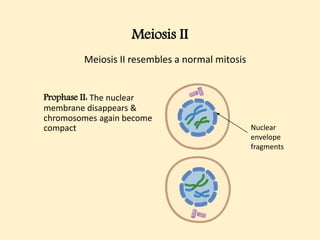
Meiosis II
Prophase II: The nuclear
membrane disappears &
chromosomes again become
compact
Meiosis II resembles a normal mitosis
Nuclear
envelope
fragments
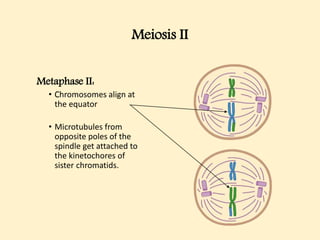
Meiosis II
Metaphase II:
• Chromosomes align at
the equator
• Microtubules from
opposite poles of the
spindle get attached to
the kinetochores of
sister chromatids.
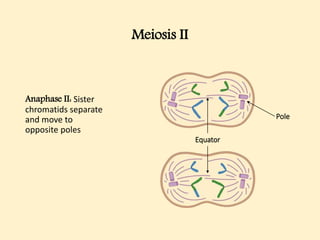
Meiosis II
Anaphase II: Sister
chromatids separate
and move to
opposite poles
Equator
Pole
Meiosis II
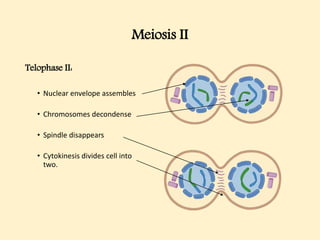
Telophase II:
• Nuclear envelope assembles
• Chromosomes decondense
• Spindle disappears
• Cytokinesis divides cell into
two.
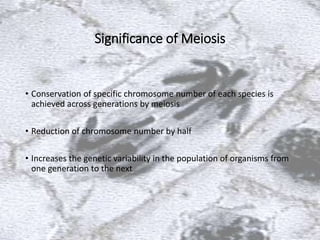
Significance of Meiosis
• Conservation of specific chromosome number of each species is
achieved across generations by meiosis
• Reduction of chromosome number by half
• Increases the genetic variability in the population of organisms from
one generation to the next
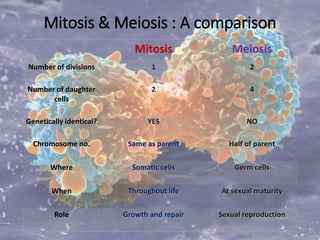
Mitosis & Meiosis : A comparison
Mitosis Meiosis
Number of divisions 1 2
Number of daughter
cells
2 4
Genetically identical? YES NO
Chromosome no. Same as parent Half of parent
Where Somatic cells Germ cells
When Throughout life At sexual maturity
Role Growth and repair Sexual reproduction
Thankyou
Presented by:
Nivedita Dubey
Class 11th (Biology)
Roll no. 32

Cell cycle and Cell Division

  • 2.
    Cell Cycle The sequenceof events by which a cell duplicates its genome, synthesizes the other constituents of the cell and eventually divides into two daughter cells is termed cell cycle.
  • 3.
    Phases of CellCycle A typical eukaryotic cell divides once in approximately every 24 hours. The cell cycle is divided into two basic phases: l Interphase l M Phase (Mitosis phase)
  • 4.
    Phases of CellCycle Interphase
  • 5.
    M Phase • Phasewhen the actual cell division or mitosis occurs • Starts with the nuclear division, corresponding to the separation of daughter chromosomes • Ends with division of cytoplasm (cytokinesis) • Cell division proper lasts for only about an hour
  • 6.
    Interphase • Represents thephase between two successive M phases • Lasts more than 95% of the duration of cell cycle • It is the time during which the cell is preparing for division by undergoing both cell growth and DNA replication
  • 7.
    Interphase Interphase is dividedinto three further phases: l G1 phase (Gap 1) l S phase (Synthesis) l G2 phase (Gap 2)
  • 8.
    Interphase: G1 phase •1st growth stage • Interval between mitosis and initiation of DNA replication • Cell is metabolically active and continuously grows but does not replicate its DNA
  • 9.
    Interphase: S phase •DNA synthesis or replication takes place • Amount of DNA per cell doubles • However, there is no increase in the chromosome number
  • 10.
    Interphase: G2 phase •2nd Growth Stage • Proteins are synthesized in preparation for mitosis • Cell growth continues *Some cells in the adult animals do not appear to exhibit division (e.g., heart cells) and some divide only occasionally *These cells exit G1 phase to enter quiescent stage (G0) of the cell cycle which is an inactive stage of the cell cycle
  • 11.
    Mitosis • The processof cell division which results in the production of two daughter cells from a single parent cell • The daughter cells are identical to one another and to the original parent cell since the chromosomes are same • Mitosis is divided into four stages:- • Prophase • Metaphase • Anaphase • Telophase
  • 12.
    Mitosis : Phases ProphaseMetaphase Anaphase Telophase
  • 13.
    Mitosis: Prophase • Chromosomalmaterial condenses to form compact mitotic chromosomes • Centrioles begins to move towards opposite poles of the cell
  • 14.
    Mitosis: Metaphase • Spindlefibres attach to kinetochores of chromosomes • Chromosomes line up at the center of the cell • Chromosomes are moved to spindle equator and get aligned along metaphase
  • 15.
    Mitosis: Anaphase • Centromeressplit and chromatids separate • Chromatids move to opposite poles
  • 16.
    Mitosis: Telophase • Chromosomescluster at opposite spindle • Nuclear envelope assembles around the chromosome clusters • Nucleolus, Golgi complex and ER reform.
  • 17.
    Cytokinesis • Division ofcell into two, identical halves called daughter cells In plant cells, cell plate forms at the equator to divide cell In animal cells, cleavage furrow forms to split cell
  • 18.
    Significance of Mitosis •The growth of multicellular organisms is due to mitosis • Significant role in cell repair • Mitotic divisions in the meristematic tissues result in a continuous growth of plants throughout their life
  • 19.
    Meiosis •Specialized kind ofcell division that reduces the chromosome number by half •Results in production of haploid daughter cells •It involves • two cycles of nuclear and cell division(Meiosis I & II ) • single cycle of DNA replication • pairing of homologous chromosomes and recombination between them.
  • 20.
    Meiosis: Phases • Meioticevents can be grouped under the following phases: Meiosis I Meiosis II Prophase I Prophase II Metaphase I Metaphase II Anaphase I Anaphase II Telophase I Telophase II
  • 21.
    Meiosis I: ReductionDivision Early Prophase I (Chromosome number doubled) Late Prophase I Metaphase I Anaphase I Telophase I (diploid)
  • 22.
    Meiosis I: ProphaseI • Further subdivided into the following five phases based on chromosomal behavior 1. Leptotene 2. Zygotene 3. Pachytene 4. Diplotene 5. Diakinesis Early prophase Late prophase
  • 23.
    Meiosis I: ProphaseI Leptotene stage: • The compaction of chromosomes occurs which continues throughout leptotene Zygotene: • The chromosomes start pairing together • Paired chromosomes are called homologous chromosomes • Formation of complex structure called synaptonemal complex • The complex formed by a pair of synapsed homologous chromosomes is called a bivalent or a tetrad
  • 24.
    Meiosis I: ProphaseI Pachytene: • Bivalent chromosomes now appears as tetrads • Crossing over occurs between non-sister chromatids of the homologous chromosomes leading to recombination between homologous chromosomes
  • 25.
    Meiosis I: ProphaseI Diplotene: • Dissolution of the synaptonemal complex • homologous chromosomes of the bivalents separate from each other except at the sites of crossovers • This forms X-shaped structures, are called chiasmata Diakinesis: • Terminalisation of chiasmata • Chromosomes are fully condensed • It represents transition to metaphase
  • 26.
    Meiosis I: MetaphaseI • Bivalent chromosomes align on the equatorial plate • The microtubules from the opposite poles of the spindle attach to the pair of homologous chromosomes. Homologous pairs of chromosomes align along the equator of the cell
  • 27.
    Meiosis I: AnaphaseI • The homologous chromosomes separate • Sister chromatids remain associated at their centromeres
  • 28.
    Meiosis I: TelophaseI • The nuclear membrane and nucleolus reappear • Spindle disappears • Cytokinesis follows
  • 29.
    Meiosis II Prophase II MetaphaseII Anaphase II Telophase II 4 Identical haploid cells
  • 30.
    Meiosis II Prophase II:The nuclear membrane disappears & chromosomes again become compact Meiosis II resembles a normal mitosis Nuclear envelope fragments
  • 31.
    Meiosis II Metaphase II: •Chromosomes align at the equator • Microtubules from opposite poles of the spindle get attached to the kinetochores of sister chromatids.
  • 32.
    Meiosis II Anaphase II:Sister chromatids separate and move to opposite poles Equator Pole
  • 33.
    Meiosis II Telophase II: •Nuclear envelope assembles • Chromosomes decondense • Spindle disappears • Cytokinesis divides cell into two.
  • 34.
    Significance of Meiosis •Conservation of specific chromosome number of each species is achieved across generations by meiosis • Reduction of chromosome number by half • Increases the genetic variability in the population of organisms from one generation to the next
  • 35.
    Mitosis & Meiosis: A comparison Mitosis Meiosis Number of divisions 1 2 Number of daughter cells 2 4 Genetically identical? YES NO Chromosome no. Same as parent Half of parent Where Somatic cells Germ cells When Throughout life At sexual maturity Role Growth and repair Sexual reproduction
  • 36.