CELL CYCLE & CELL DIVISION
SHALINI BARA
ASSISTANT PROFESSOR
ST. XAVIER’S COLLEGE, MAHUADANR
LATEHAR
NILAMBER PITAMBER UNIVERSITY
INTRODUCTION
Continuity of life is an important characteristics of living
organisms and is achieved through the process of
reproduction.
The reproduction may be sexual or asexual. Both of these
involve the division and replication of cells. Even the growth
and development of every living organisms depends on the
growth and multiplication of its cells.
The unicellular organisms live their lives as one cell, but in a
multicellular organism the unicellular undergoes countless
division and produce many cells.
•These cells ultimately build the organisms.
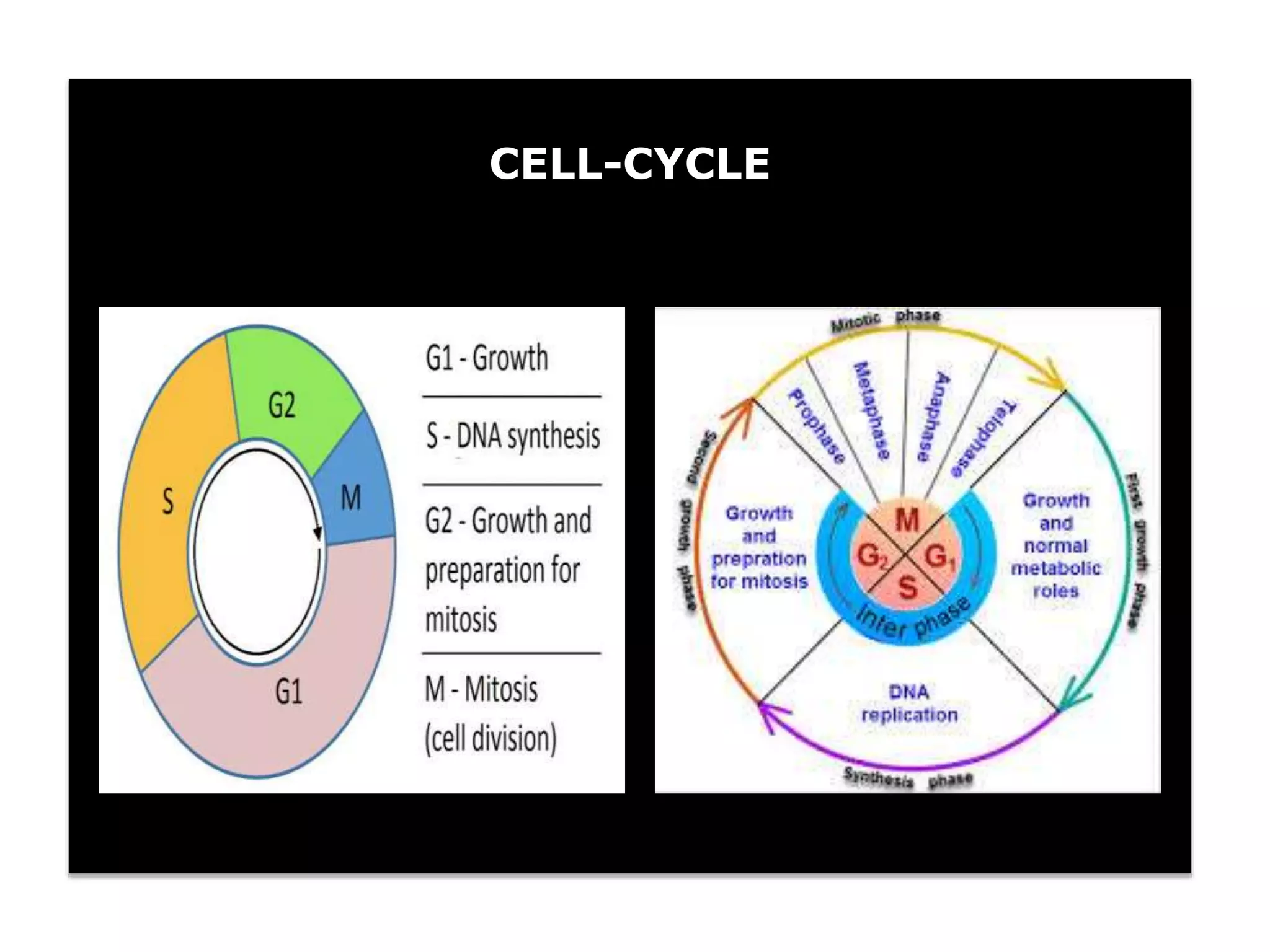
CELL-CYCLE
CELL-CYCLE
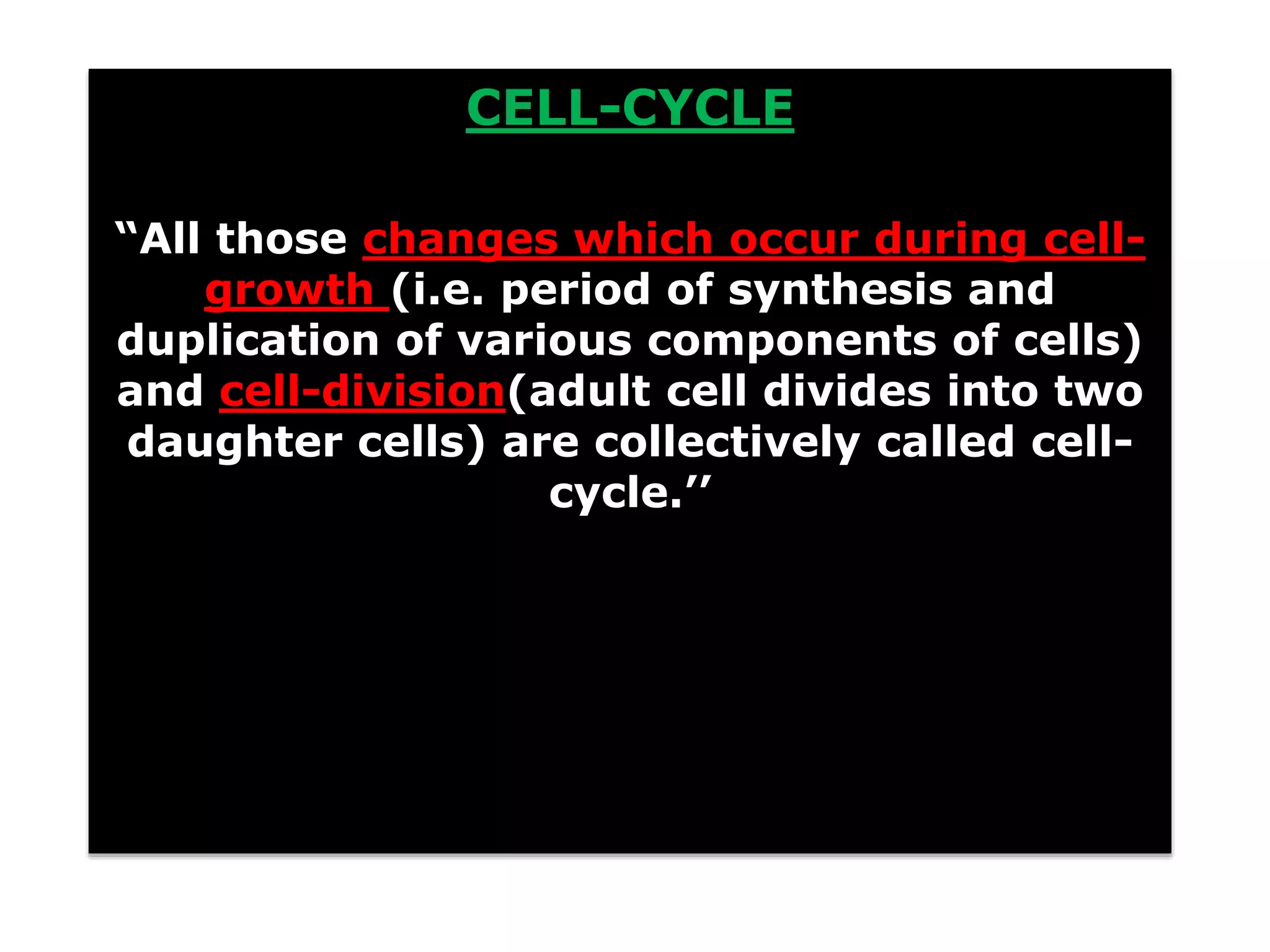
“All those changes which occur during cell-
growth (i.e. period of synthesis and
duplication of various components of cells)
and cell-division(adult cell divides into two
daughter cells) are collectively called cell-
cycle.’’
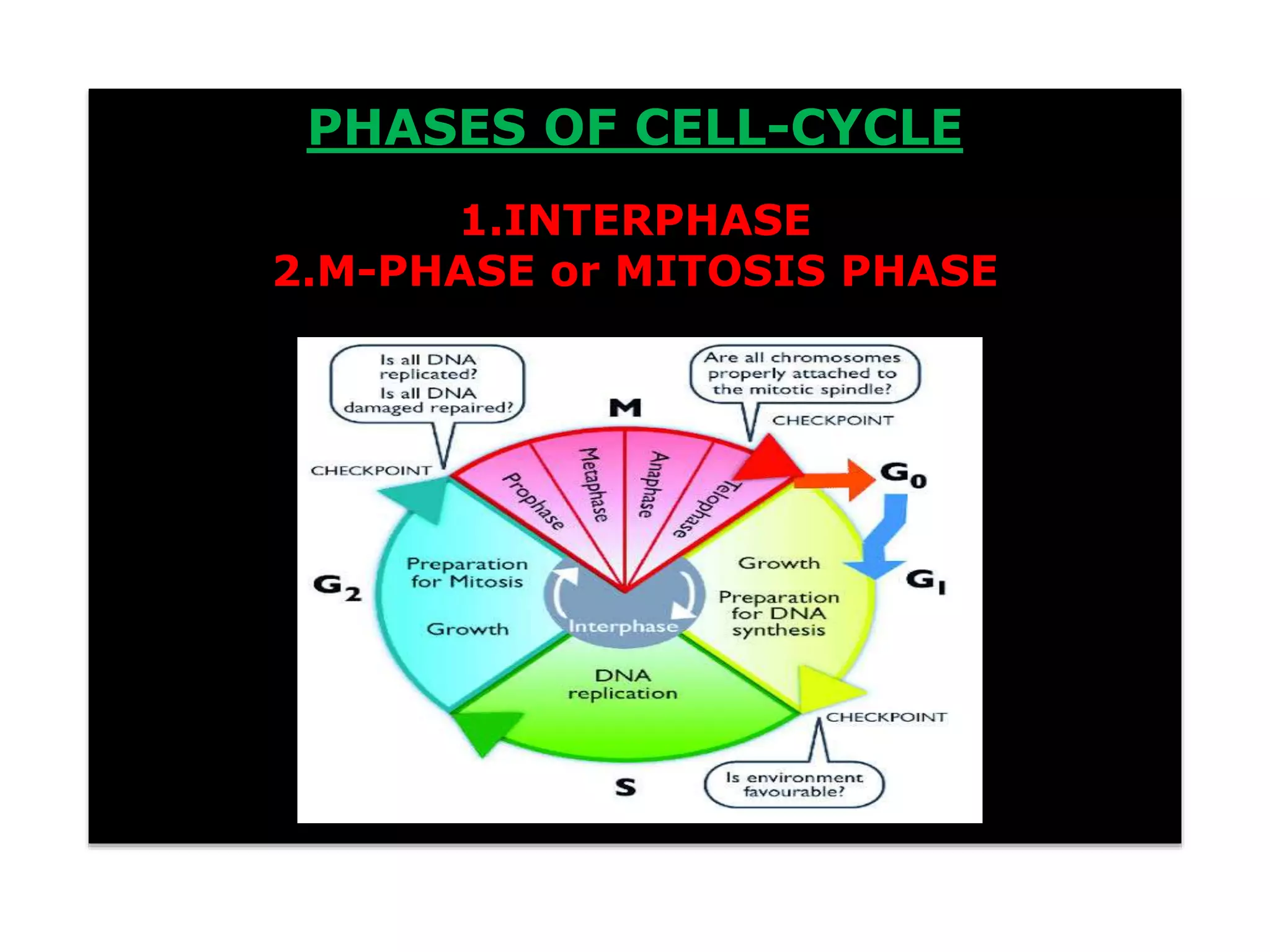
PHASES OF CELL-CYCLE
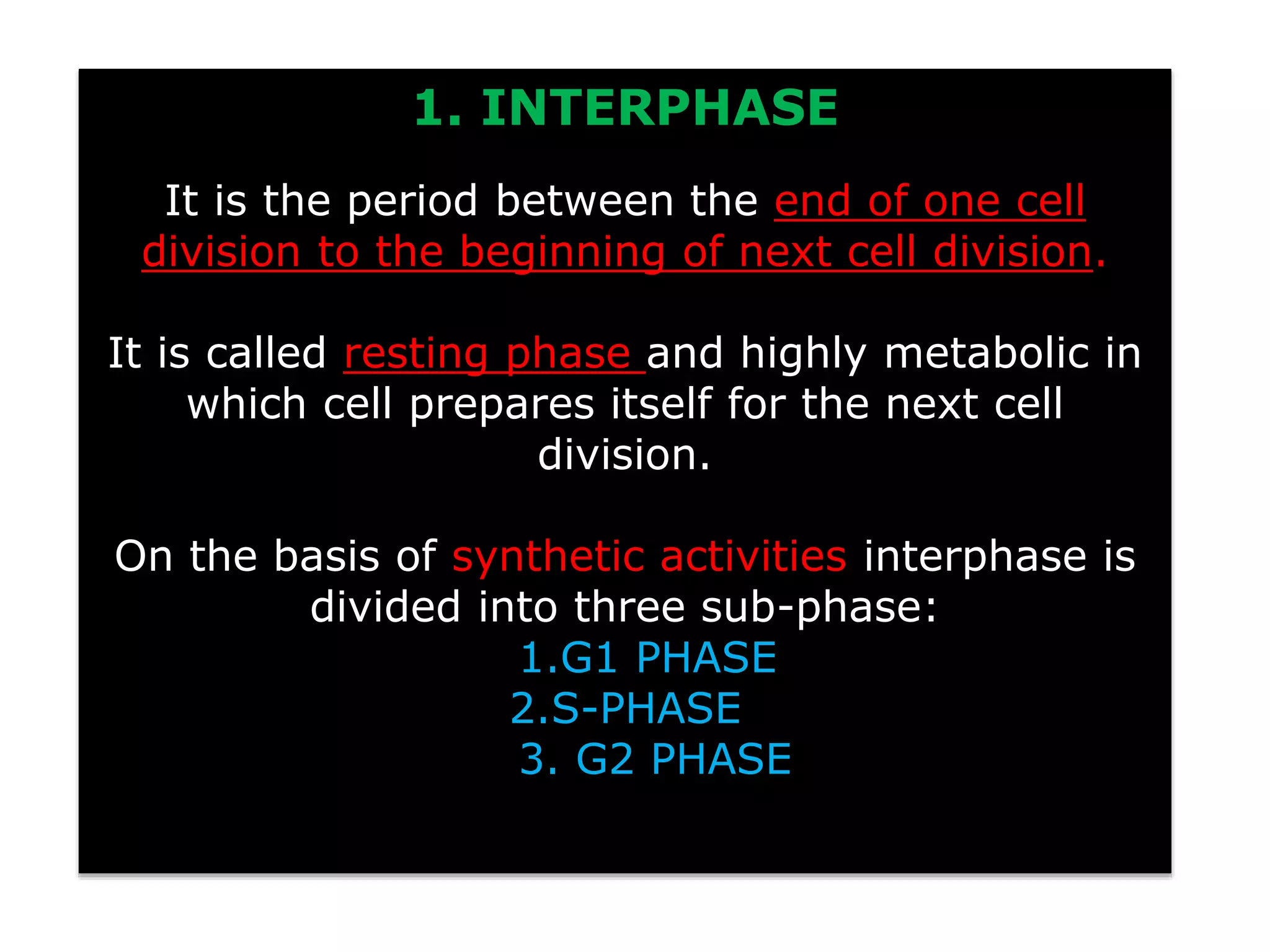
1.INTERPHASE
2.M-PHASE or MITOSIS PHASE
1. INTERPHASE
It is the period between the end of one cell
division to the beginning of next cell division.
It is called resting phase and highly metabolic in
which cell prepares itself for the next cell
division.
On the basis of synthetic activities interphase is
divided into three sub-phase:
1.G1 PHASE
2.S-PHASE
3. G2 PHASE
CELL CYCLE TIME DURATION
Total cell cycle time 24 hrs.
G1 11
S- phase 8
G2 4
Mitosis 1
a) G1 PHASE
Also called gap-I or post-mitotic or pre-synthetic phase or
first growth phase.
“The period between the end of telophase and just
before the entry of S phase is called G-ı phase.’’
Begins immediately after division.
New cell organelles are formed.
End of this phase, doubled its cell size.
b) S- PHASE
Also called synthetic phase.
“It is the intermediate between G-ı and G-ıı phase.’’
It is highly specialized phase of interphase and the actual
DNA synthesis takes place at this phase.
Form duplicate copy of each chromosome.
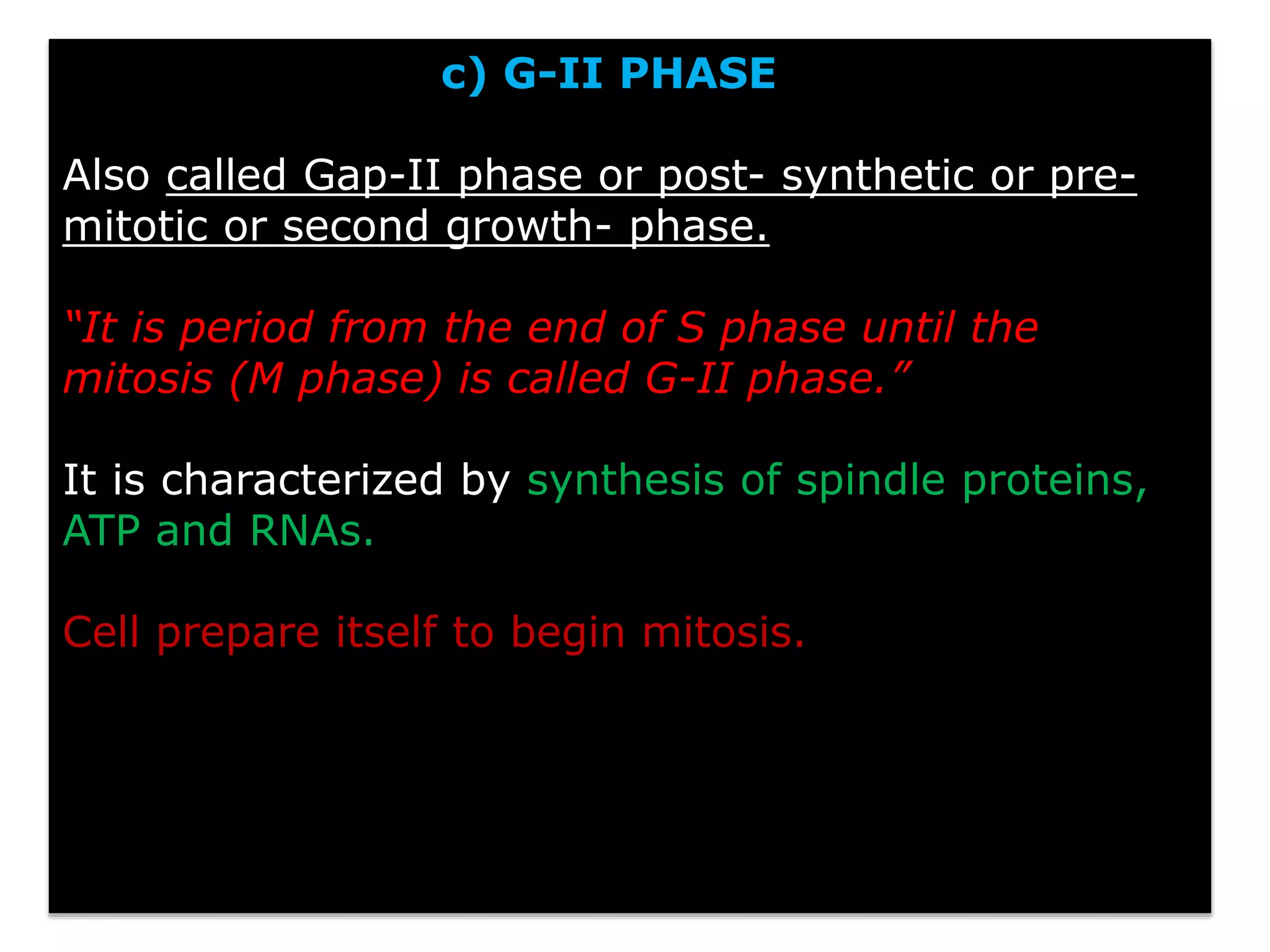
c) G-II PHASE
Also called Gap-II phase or post- synthetic or pre-
mitotic or second growth- phase.
“It is period from the end of S phase until the
mitosis (M phase) is called G-II phase.”
It is characterized by synthesis of spindle proteins,
ATP and RNAs.
Cell prepare itself to begin mitosis.
M- phase or Mitotic phase
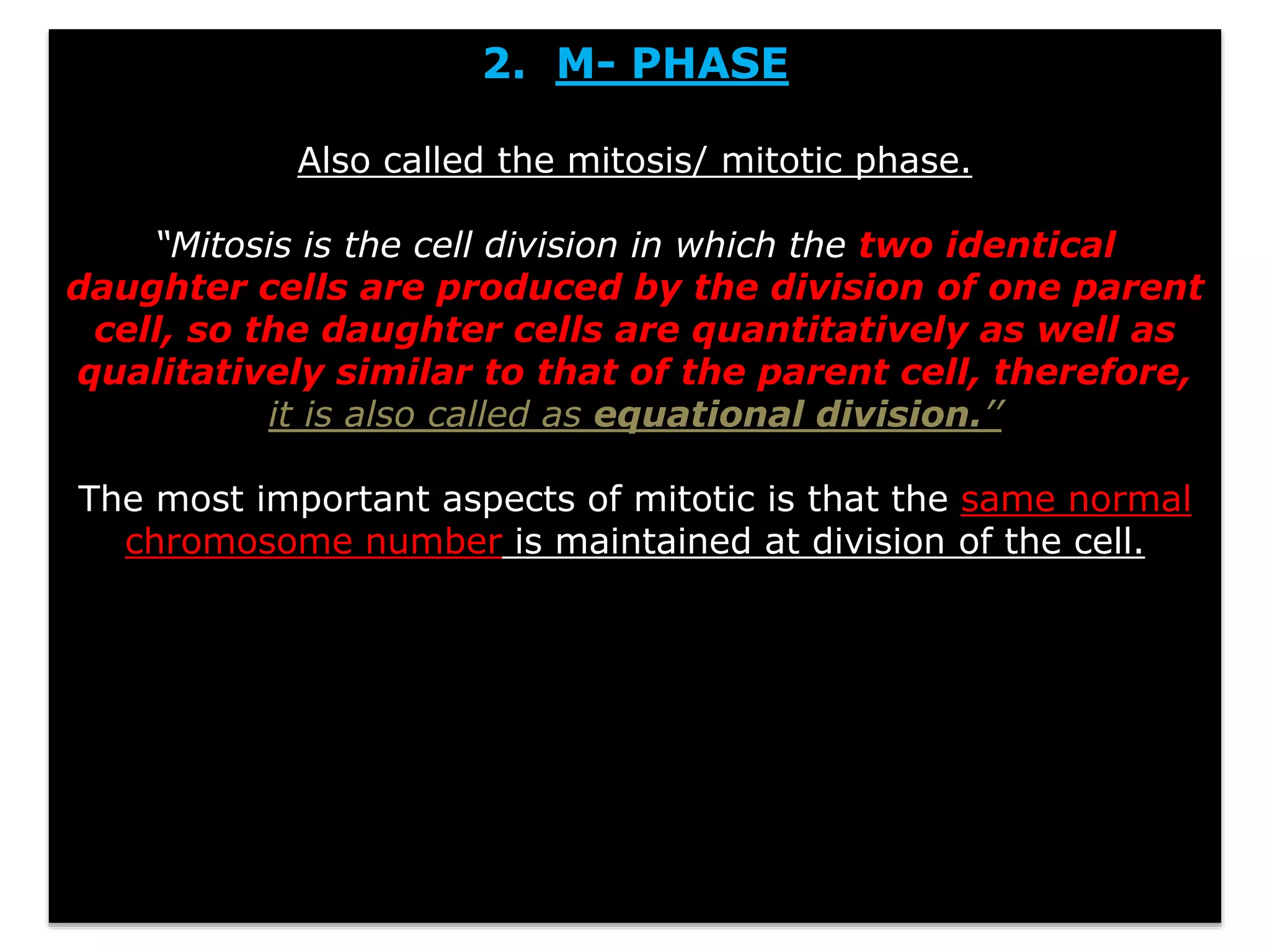
2. M- PHASE
Also called the mitosis/ mitotic phase.
“Mitosis is the cell division in which the two identical
daughter cells are produced by the division of one parent
cell, so the daughter cells are quantitatively as well as
qualitatively similar to that of the parent cell, therefore,
it is also called as equational division.’’
The most important aspects of mitotic is that the same normal
chromosome number is maintained at division of the cell.
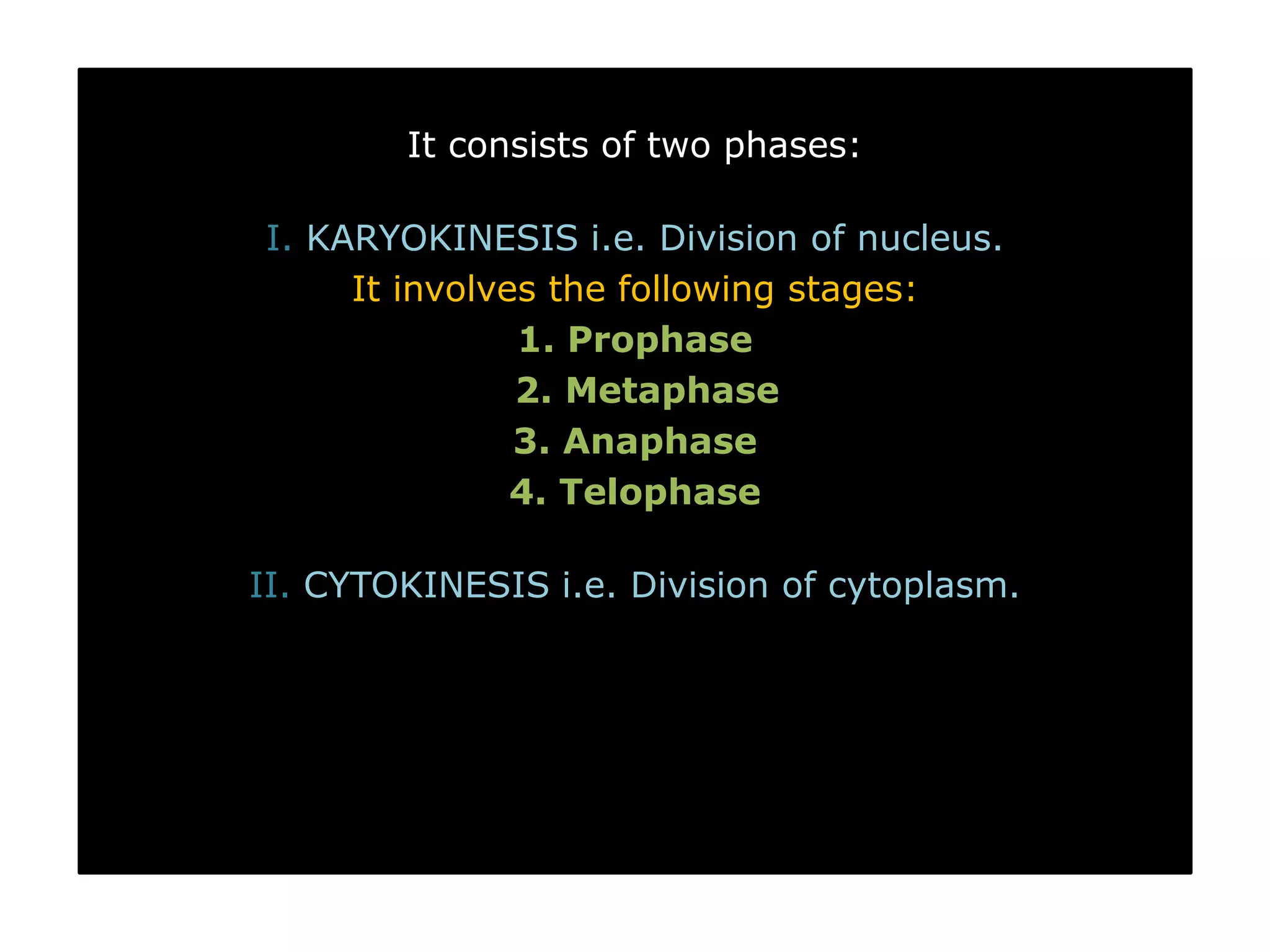
It consists of two phases:
I. KARYOKINESIS i.e. Division of nucleus.
It involves the following stages:
1. Prophase
2. Metaphase
3. Anaphase
4. Telophase
II. CYTOKINESIS i.e. Division of cytoplasm.
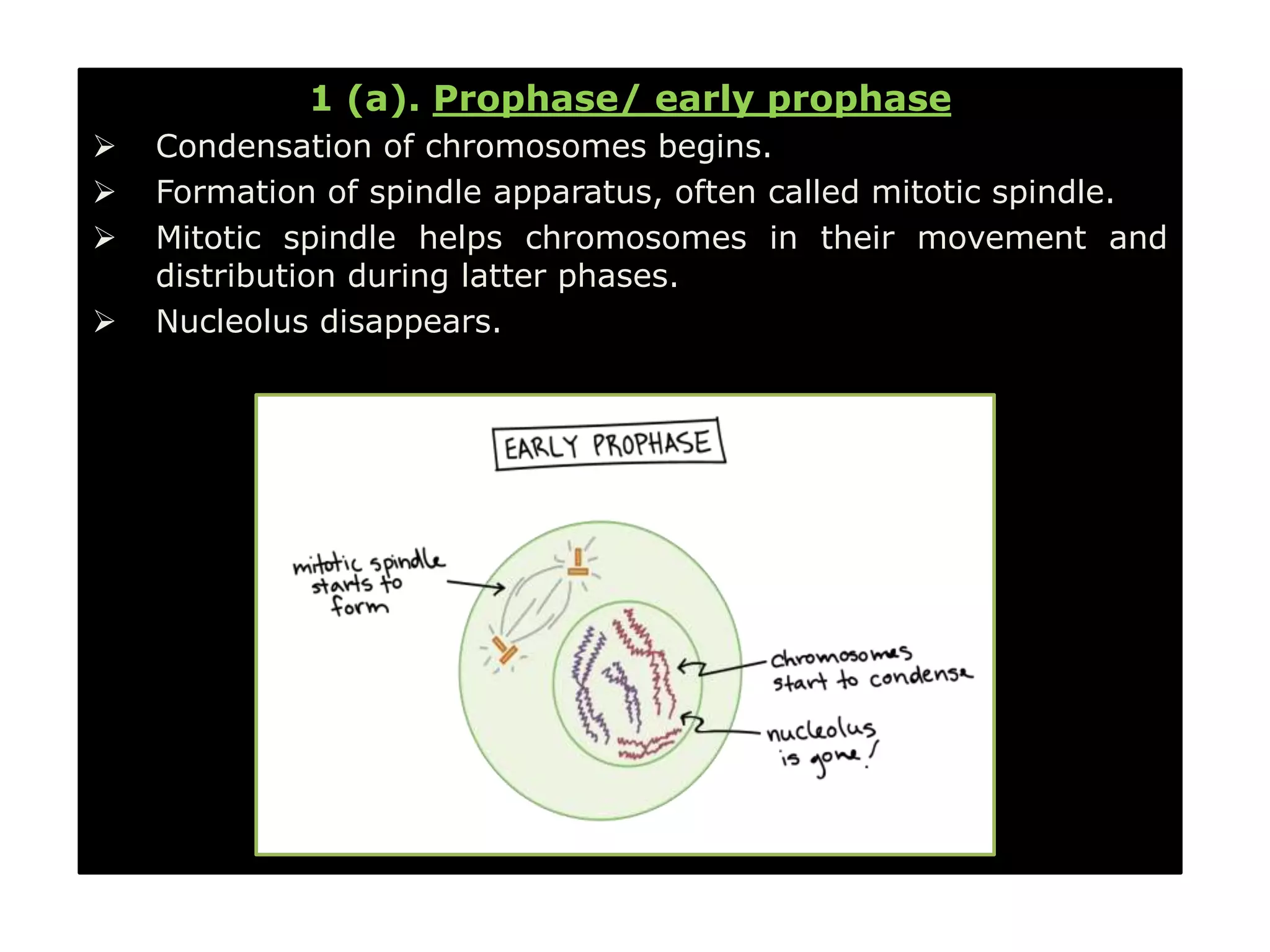
1 (a). Prophase/ early prophase
 Condensation of chromosomes begins.
 Formation of spindle apparatus, often called mitotic spindle.
 Mitotic spindle helps chromosomes in their movement and
distribution during latter phases.
 Nucleolus disappears.
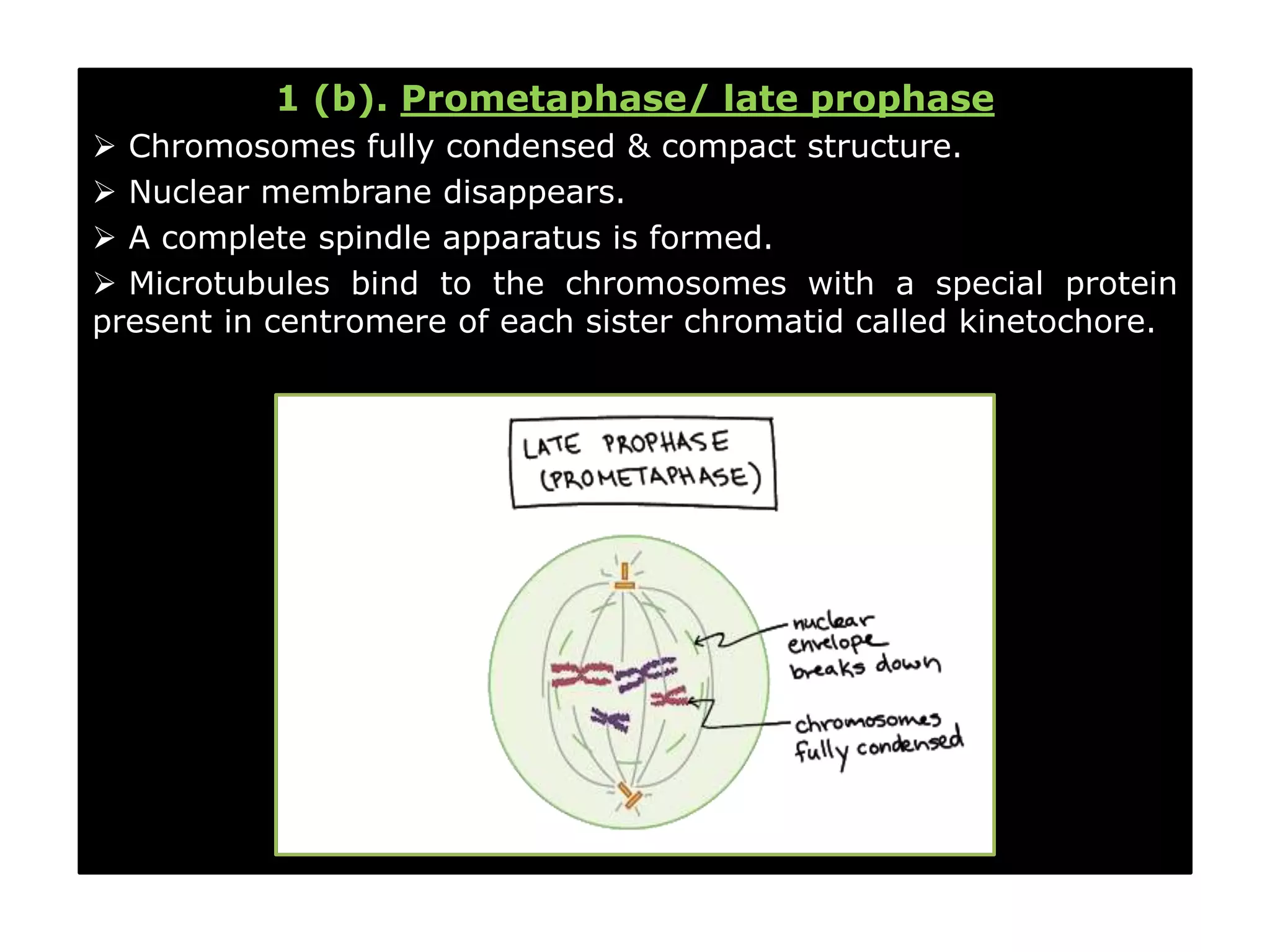
1 (b). Prometaphase/ late prophase
 Chromosomes fully condensed & compact structure.
 Nuclear membrane disappears.
 A complete spindle apparatus is formed.
 Microtubules bind to the chromosomes with a special protein
present in centromere of each sister chromatid called kinetochore.
2. Metaphase
 Chromosomes attached to the microtubules are aligned in the
middle (an equatorial line) of the spindle apparatus.
 Each kinetochore from two sister chromatids are attached
with the microtubules facing towards the opposite poles.
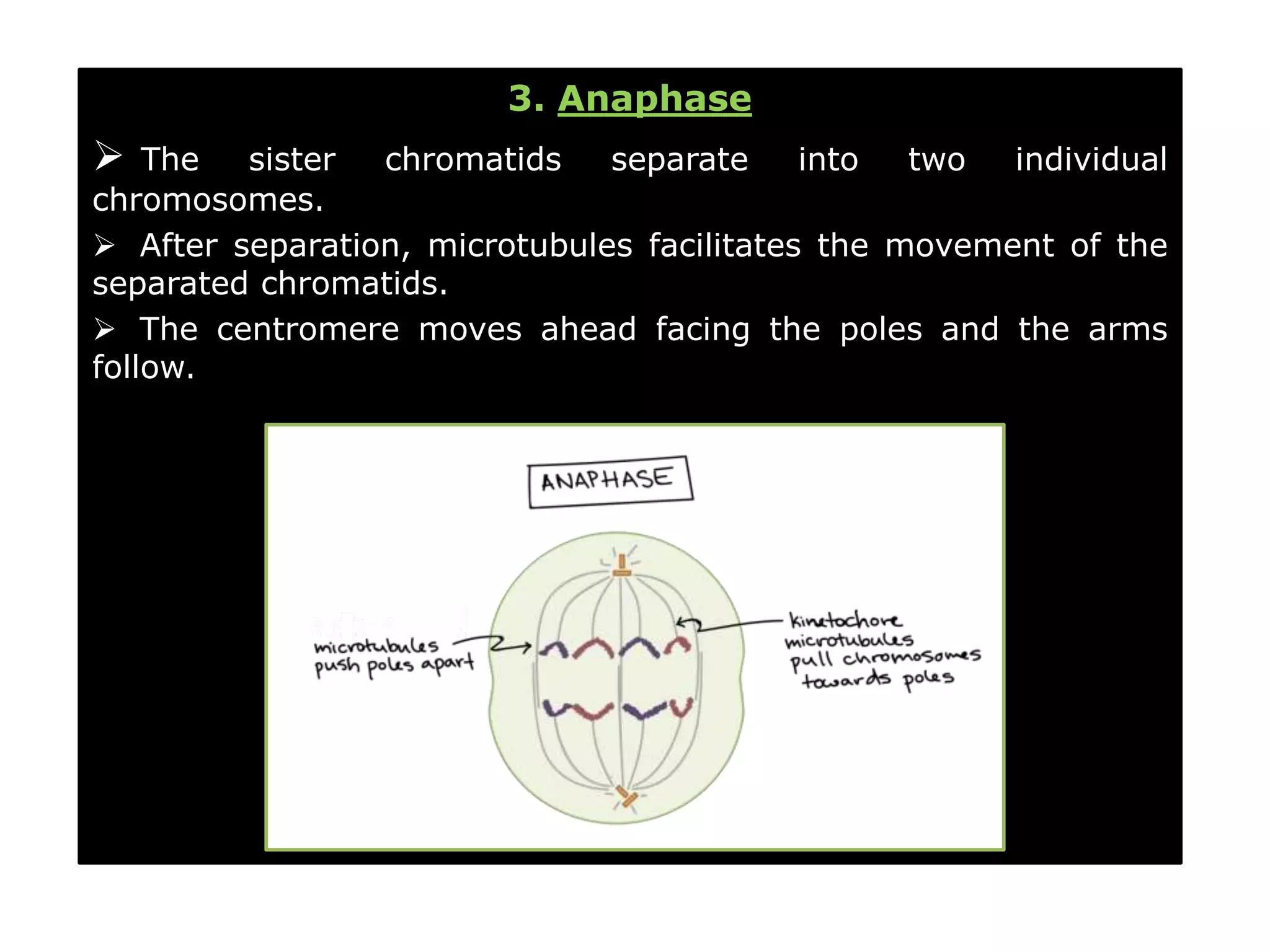
3. Anaphase
 The sister chromatids separate into two individual
chromosomes.
 After separation, microtubules facilitates the movement of the
separated chromatids.
 The centromere moves ahead facing the poles and the arms
follow.
4. Telophase
 Nuclear membrane and nucleolus start regenerating.
 The separated chromosomes and other organelles start
organizing.
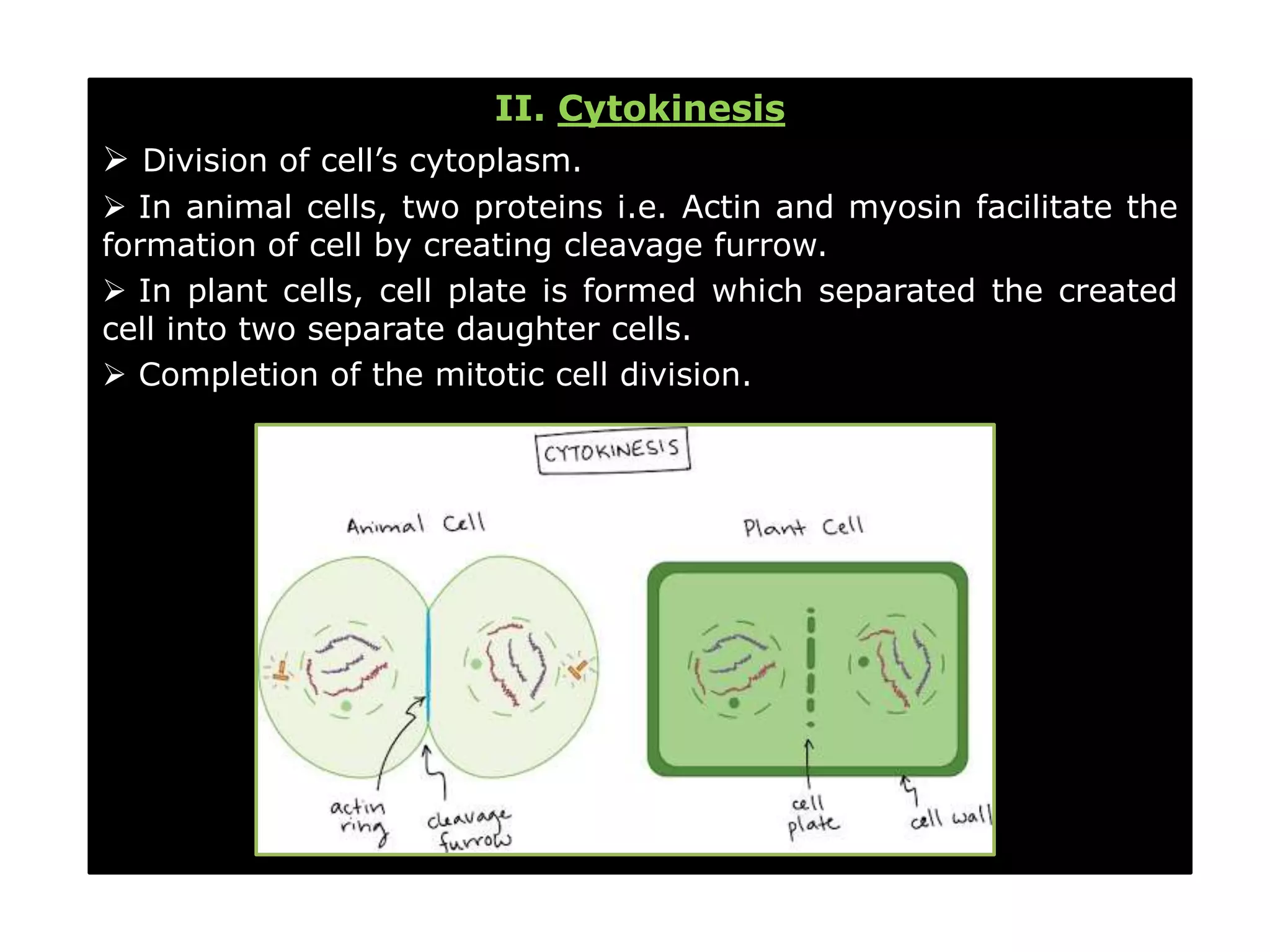
II. Cytokinesis
 Division of cell’s cytoplasm.
 In animal cells, two proteins i.e. Actin and myosin facilitate the
formation of cell by creating cleavage furrow.
 In plant cells, cell plate is formed which separated the created
cell into two separate daughter cells.
 Completion of the mitotic cell division.
Fig (1): Different stages of mitosis .
Fig (2): Different stages of mitosis.
Significance of mitosis
 It helps in maintaining the same number of
chromosomes in daughter cells after division.
 It is responsible for growth and development of
multicellular organisms.
 It helps in repairing of damaged tissues.
 It helps the cell to maintain proper size.
THANK YOU....!

Cell cycle & division

  • 1.
    CELL CYCLE &CELL DIVISION SHALINI BARA ASSISTANT PROFESSOR ST. XAVIER’S COLLEGE, MAHUADANR LATEHAR NILAMBER PITAMBER UNIVERSITY
  • 2.
    INTRODUCTION Continuity of lifeis an important characteristics of living organisms and is achieved through the process of reproduction. The reproduction may be sexual or asexual. Both of these involve the division and replication of cells. Even the growth and development of every living organisms depends on the growth and multiplication of its cells. The unicellular organisms live their lives as one cell, but in a multicellular organism the unicellular undergoes countless division and produce many cells. •These cells ultimately build the organisms.
  • 3.
  • 4.
    CELL-CYCLE “All those changeswhich occur during cell- growth (i.e. period of synthesis and duplication of various components of cells) and cell-division(adult cell divides into two daughter cells) are collectively called cell- cycle.’’
  • 5.
  • 6.
    1. INTERPHASE It isthe period between the end of one cell division to the beginning of next cell division. It is called resting phase and highly metabolic in which cell prepares itself for the next cell division. On the basis of synthetic activities interphase is divided into three sub-phase: 1.G1 PHASE 2.S-PHASE 3. G2 PHASE
  • 7.
    CELL CYCLE TIMEDURATION Total cell cycle time 24 hrs. G1 11 S- phase 8 G2 4 Mitosis 1
  • 8.
    a) G1 PHASE Alsocalled gap-I or post-mitotic or pre-synthetic phase or first growth phase. “The period between the end of telophase and just before the entry of S phase is called G-ı phase.’’ Begins immediately after division. New cell organelles are formed. End of this phase, doubled its cell size.
  • 9.
    b) S- PHASE Alsocalled synthetic phase. “It is the intermediate between G-ı and G-ıı phase.’’ It is highly specialized phase of interphase and the actual DNA synthesis takes place at this phase. Form duplicate copy of each chromosome.
  • 10.
    c) G-II PHASE Alsocalled Gap-II phase or post- synthetic or pre- mitotic or second growth- phase. “It is period from the end of S phase until the mitosis (M phase) is called G-II phase.” It is characterized by synthesis of spindle proteins, ATP and RNAs. Cell prepare itself to begin mitosis.
  • 11.
    M- phase orMitotic phase
  • 12.
    2. M- PHASE Alsocalled the mitosis/ mitotic phase. “Mitosis is the cell division in which the two identical daughter cells are produced by the division of one parent cell, so the daughter cells are quantitatively as well as qualitatively similar to that of the parent cell, therefore, it is also called as equational division.’’ The most important aspects of mitotic is that the same normal chromosome number is maintained at division of the cell.
  • 13.
    It consists oftwo phases: I. KARYOKINESIS i.e. Division of nucleus. It involves the following stages: 1. Prophase 2. Metaphase 3. Anaphase 4. Telophase II. CYTOKINESIS i.e. Division of cytoplasm.
  • 14.
    1 (a). Prophase/early prophase  Condensation of chromosomes begins.  Formation of spindle apparatus, often called mitotic spindle.  Mitotic spindle helps chromosomes in their movement and distribution during latter phases.  Nucleolus disappears.
  • 15.
    1 (b). Prometaphase/late prophase  Chromosomes fully condensed & compact structure.  Nuclear membrane disappears.  A complete spindle apparatus is formed.  Microtubules bind to the chromosomes with a special protein present in centromere of each sister chromatid called kinetochore.
  • 16.
    2. Metaphase  Chromosomesattached to the microtubules are aligned in the middle (an equatorial line) of the spindle apparatus.  Each kinetochore from two sister chromatids are attached with the microtubules facing towards the opposite poles.
  • 17.
    3. Anaphase  Thesister chromatids separate into two individual chromosomes.  After separation, microtubules facilitates the movement of the separated chromatids.  The centromere moves ahead facing the poles and the arms follow.
  • 18.
    4. Telophase  Nuclearmembrane and nucleolus start regenerating.  The separated chromosomes and other organelles start organizing.
  • 19.
    II. Cytokinesis  Divisionof cell’s cytoplasm.  In animal cells, two proteins i.e. Actin and myosin facilitate the formation of cell by creating cleavage furrow.  In plant cells, cell plate is formed which separated the created cell into two separate daughter cells.  Completion of the mitotic cell division.
  • 20.
    Fig (1): Differentstages of mitosis .
  • 21.
    Fig (2): Differentstages of mitosis.
  • 22.
    Significance of mitosis It helps in maintaining the same number of chromosomes in daughter cells after division.  It is responsible for growth and development of multicellular organisms.  It helps in repairing of damaged tissues.  It helps the cell to maintain proper size.
  • 23.