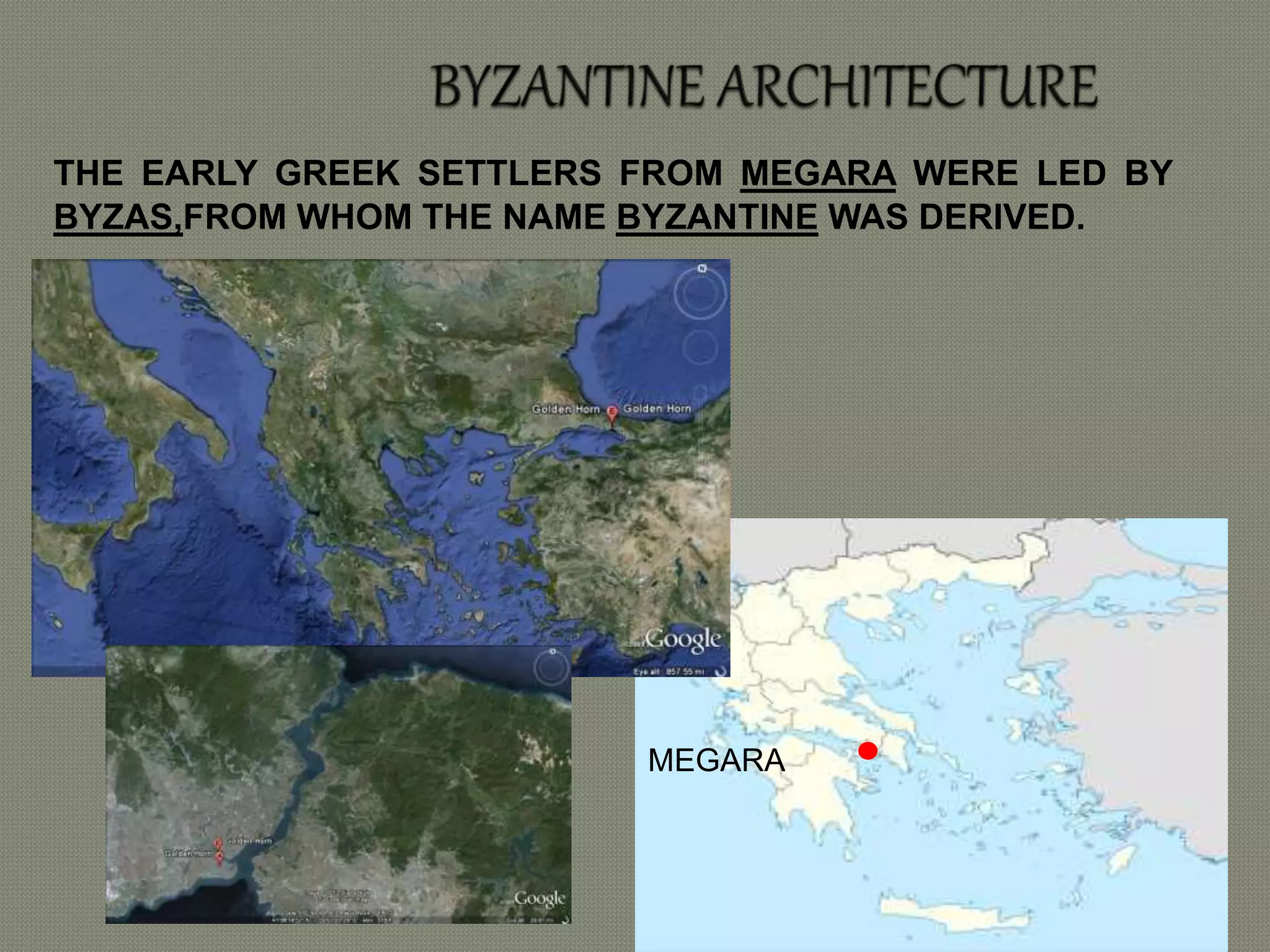
THE EARLY GREEK SETTLERS FROM MEGARA WERE LED BY 
BYZAS,FROM WHOM THE NAME BYZANTINE WAS DERIVED. 
MEGARA
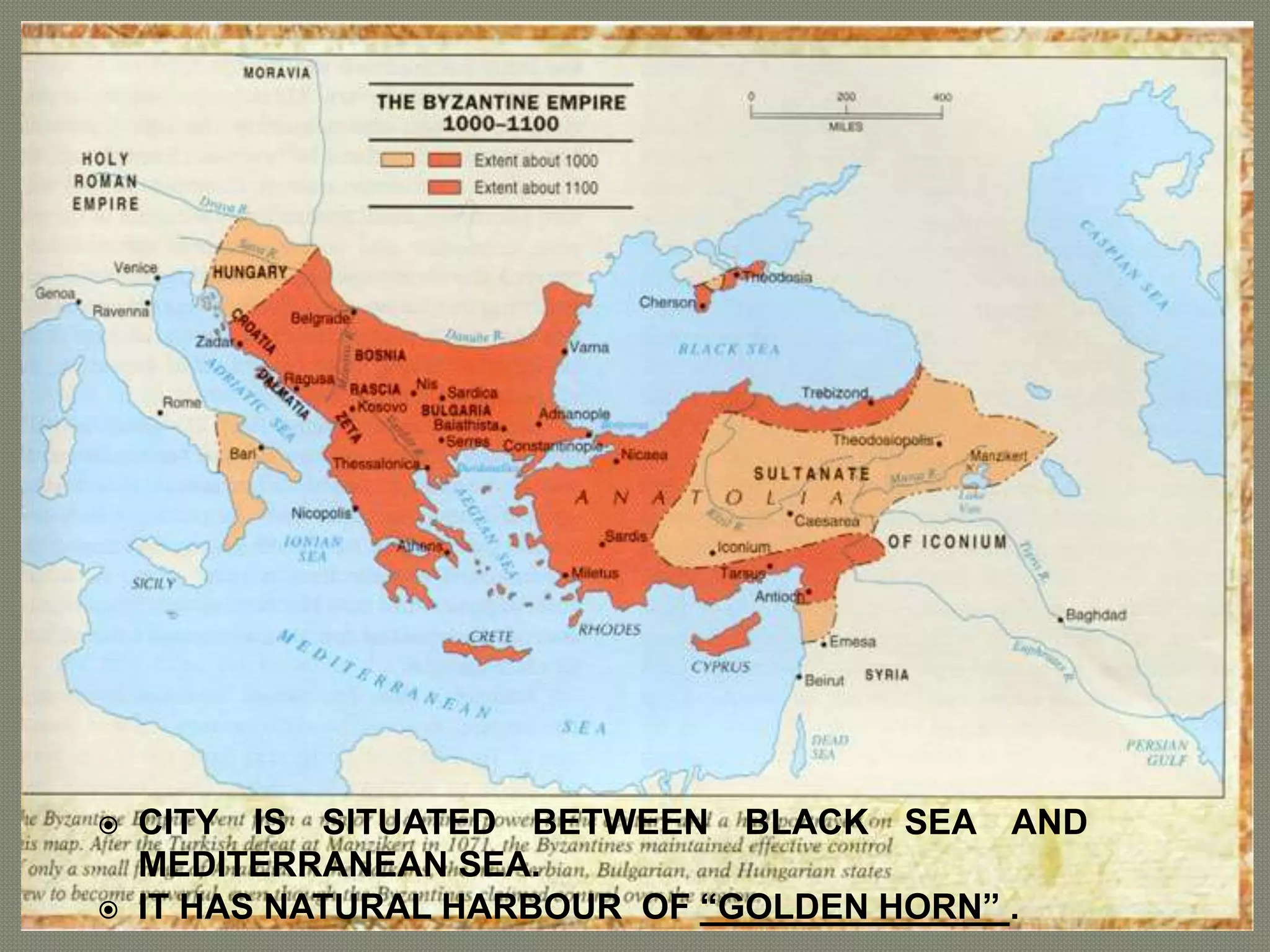
 CITY IS SITUATED BETWEEN BLACK SEA AND 
MEDITERRANEAN SEA. 
 IT HAS NATURAL HARBOUR OF “GOLDEN HORN” .
• Use of lime concrete continued. 
• Use of bricks for dome construction 
• Marble for ornamental work. 
• Flat roofs with small openings in hot weathers and sheltered arcades 
surrounded the open courtyards. Oriental dome is the chief feature of the 
byzantine. 
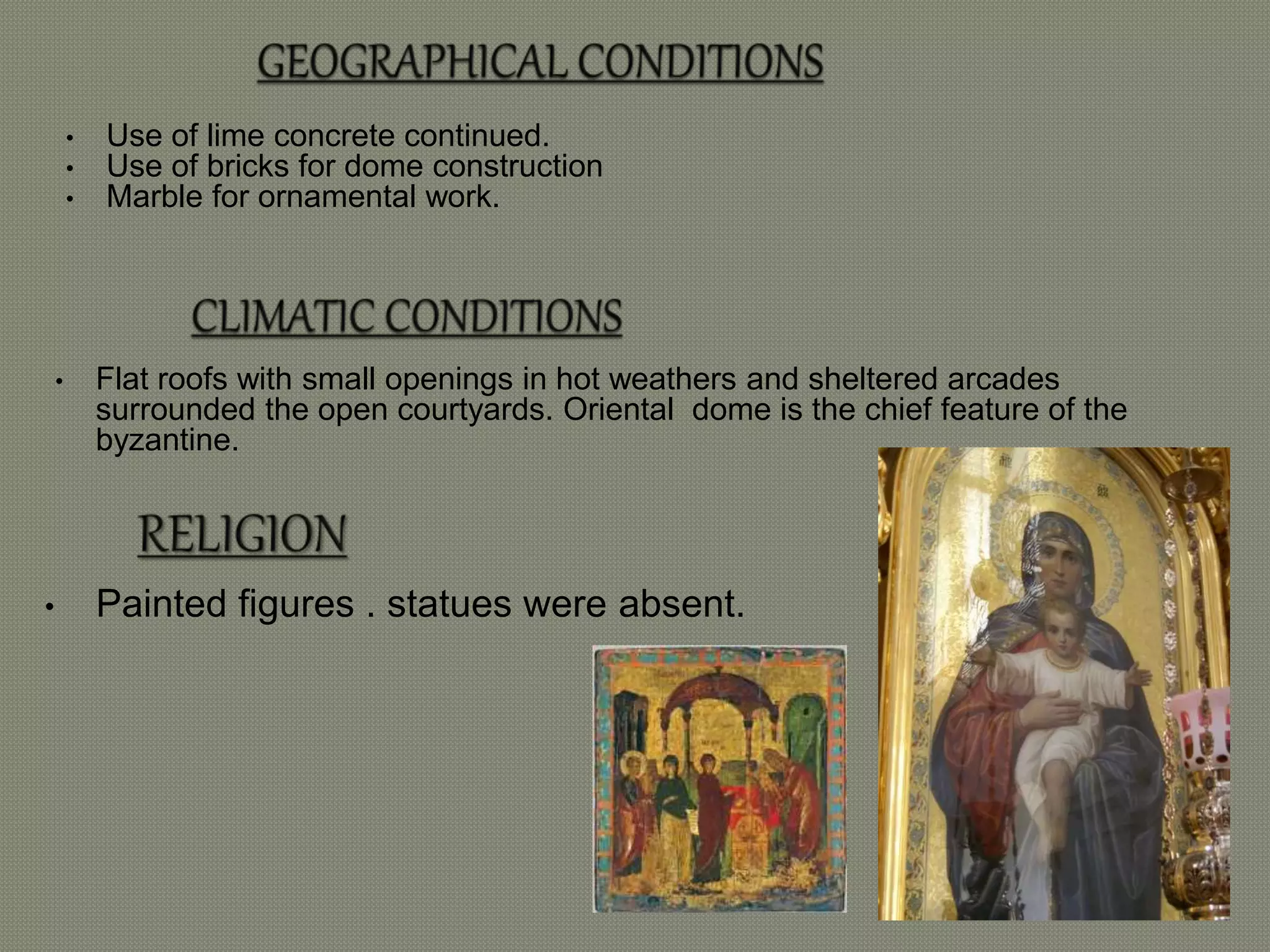
• Painted figures . statues were absent.
DOMES 
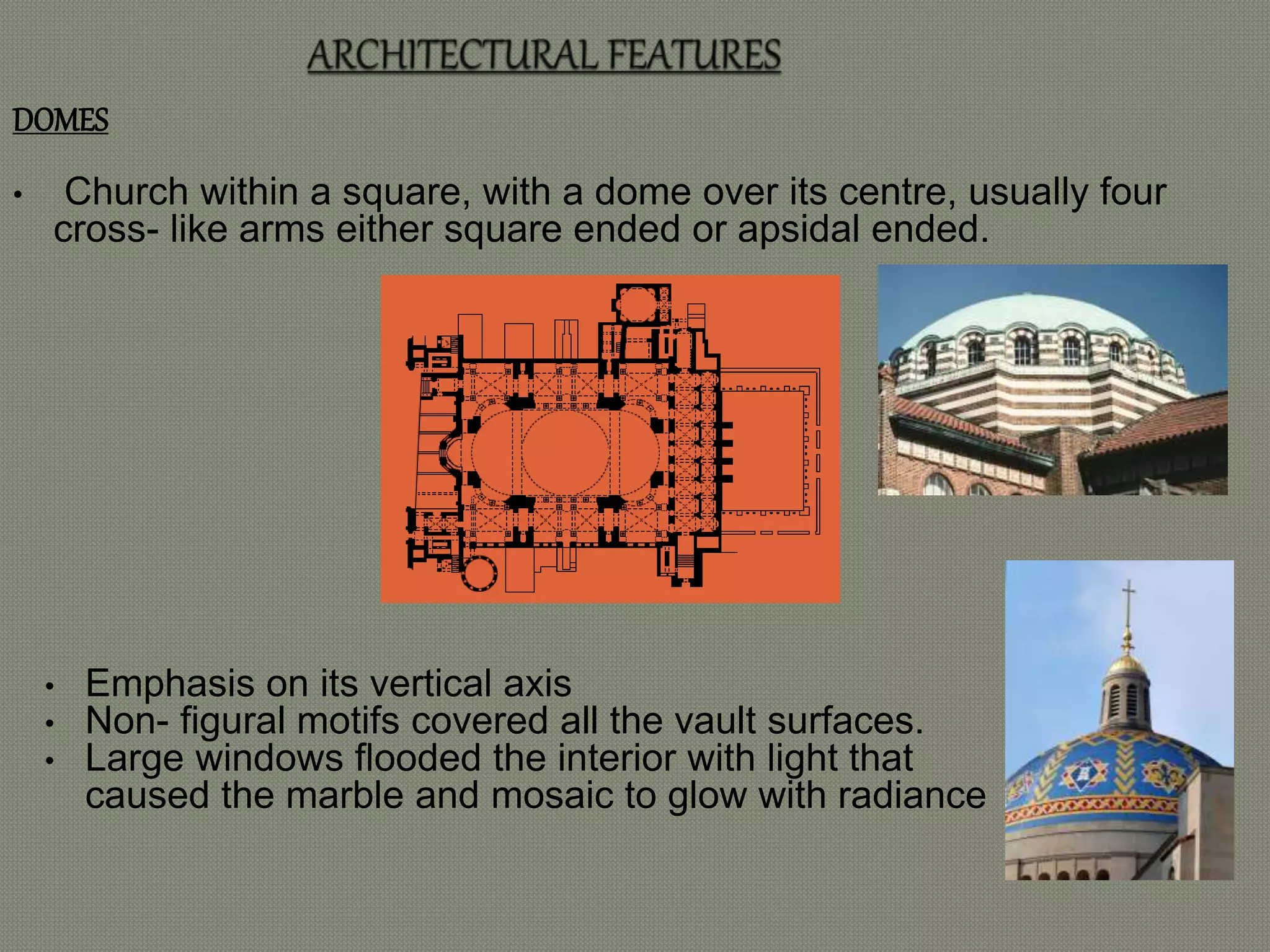
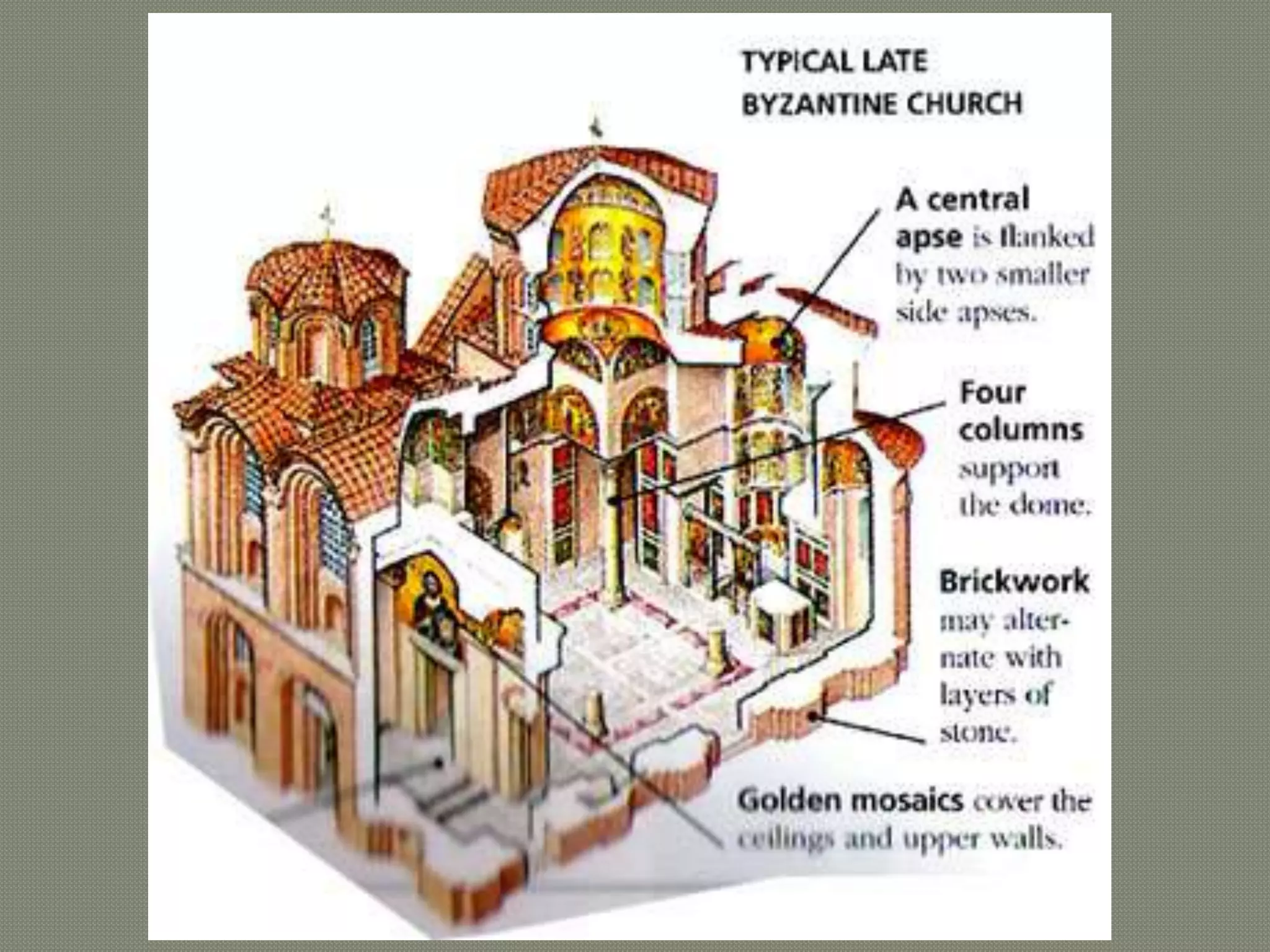
• Church within a square, with a dome over its centre, usually four 
cross- like arms either square ended or apsidal ended. 
• Emphasis on its vertical axis 
• Non- figural motifs covered all the vault surfaces. 
• Large windows flooded the interior with light that 
caused the marble and mosaic to glow with radiance
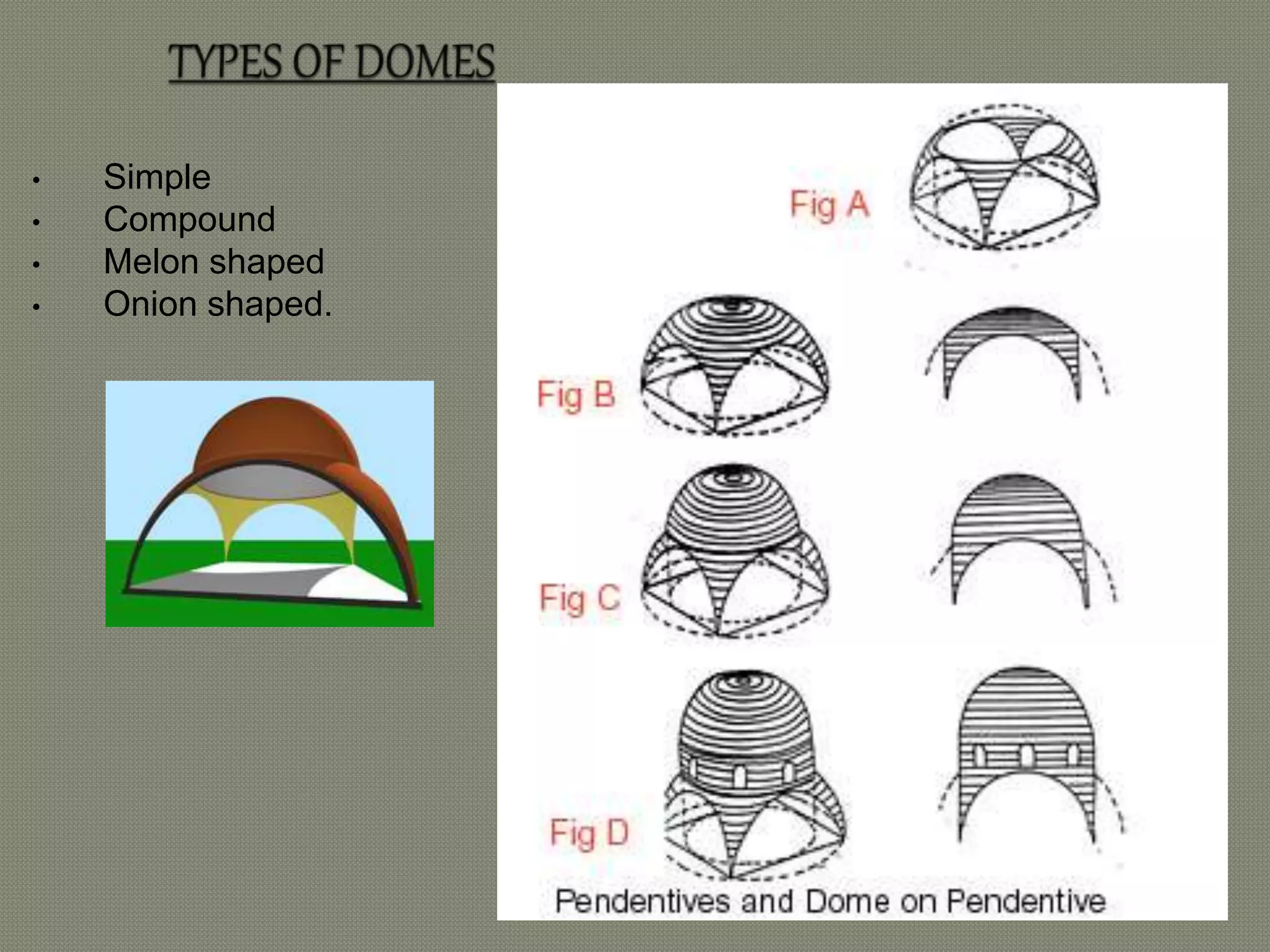
• Simple 
• Compound 
• Melon shaped 
• Onion shaped.
• Centralized type of plan. 
• Independence of component parts. 
• Domes made by means of spherical pendentives. 
• Constructed by bricks or of light porous stone (pumice) 
or pottery. 
• Constructed without temporary supports (centering). 
• Windows in lower portion. 
• Grouping of domes. 
• Great height. 
• Exterior design pattern in brick work.
• Interior covering with marble mosaics and fresco. 
• Concrete made from lime sand with crushed tiles and bricks. 
• Use of columns for decoration and structurally to support the 
galleries and semi- circular arches. 
• Mouldings were rare.
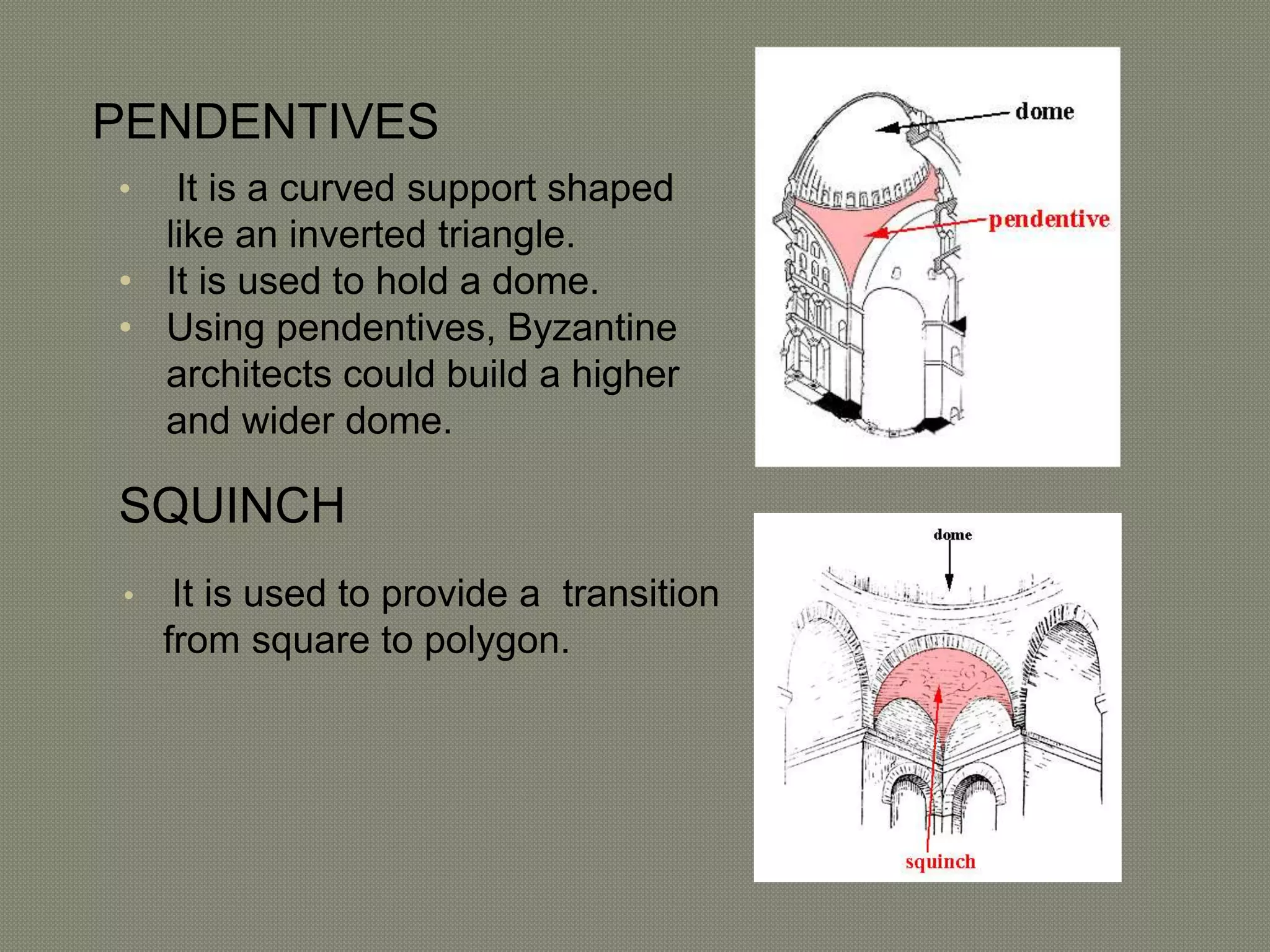
PENDENTIVES 
• It is a curved support shaped 
like an inverted triangle. 
• It is used to hold a dome. 
• Using pendentives, Byzantine 
architects could build a higher 
and wider dome. 
SQUINCH 
• It is used to provide a transition 
from square to polygon.
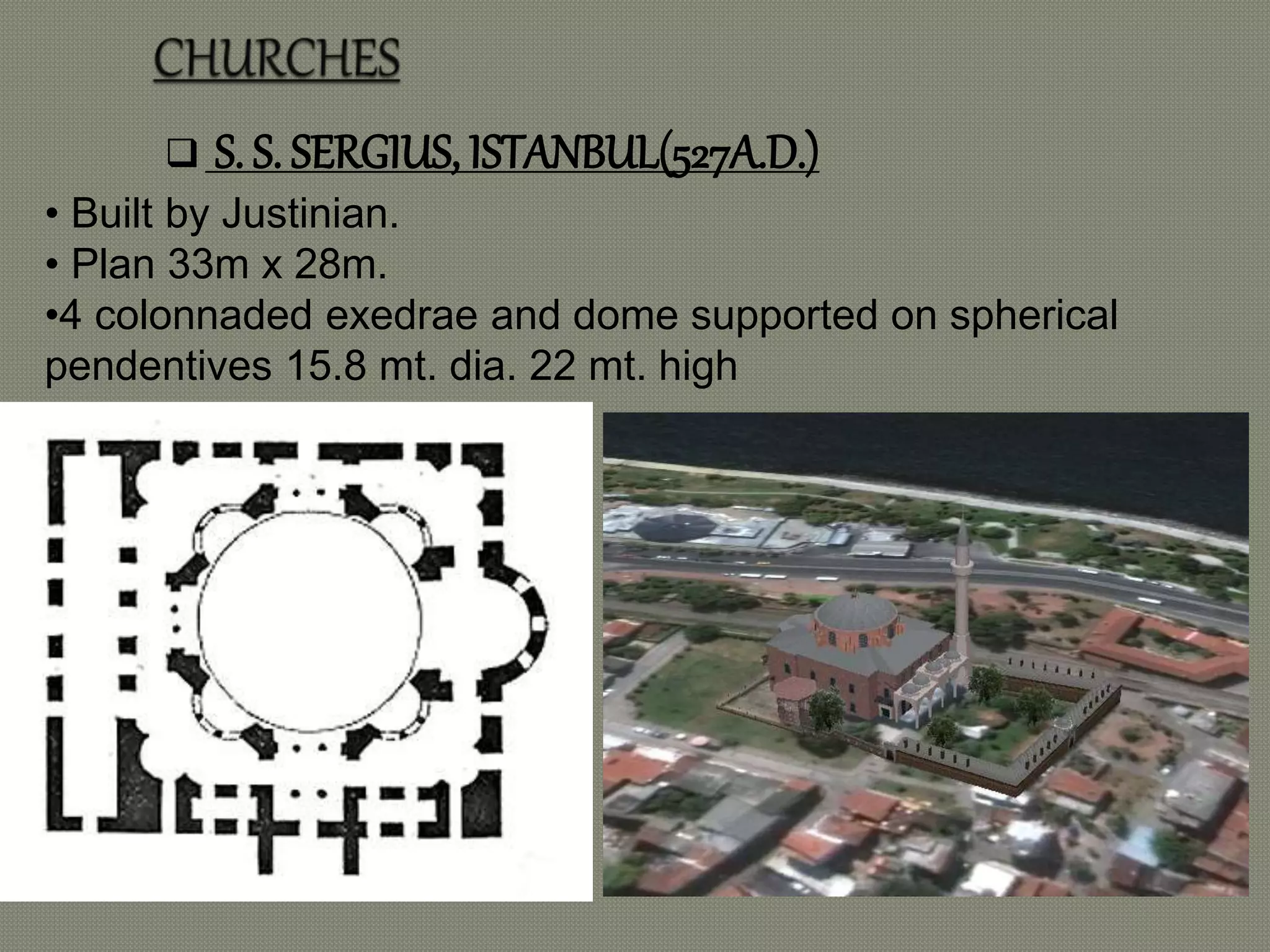
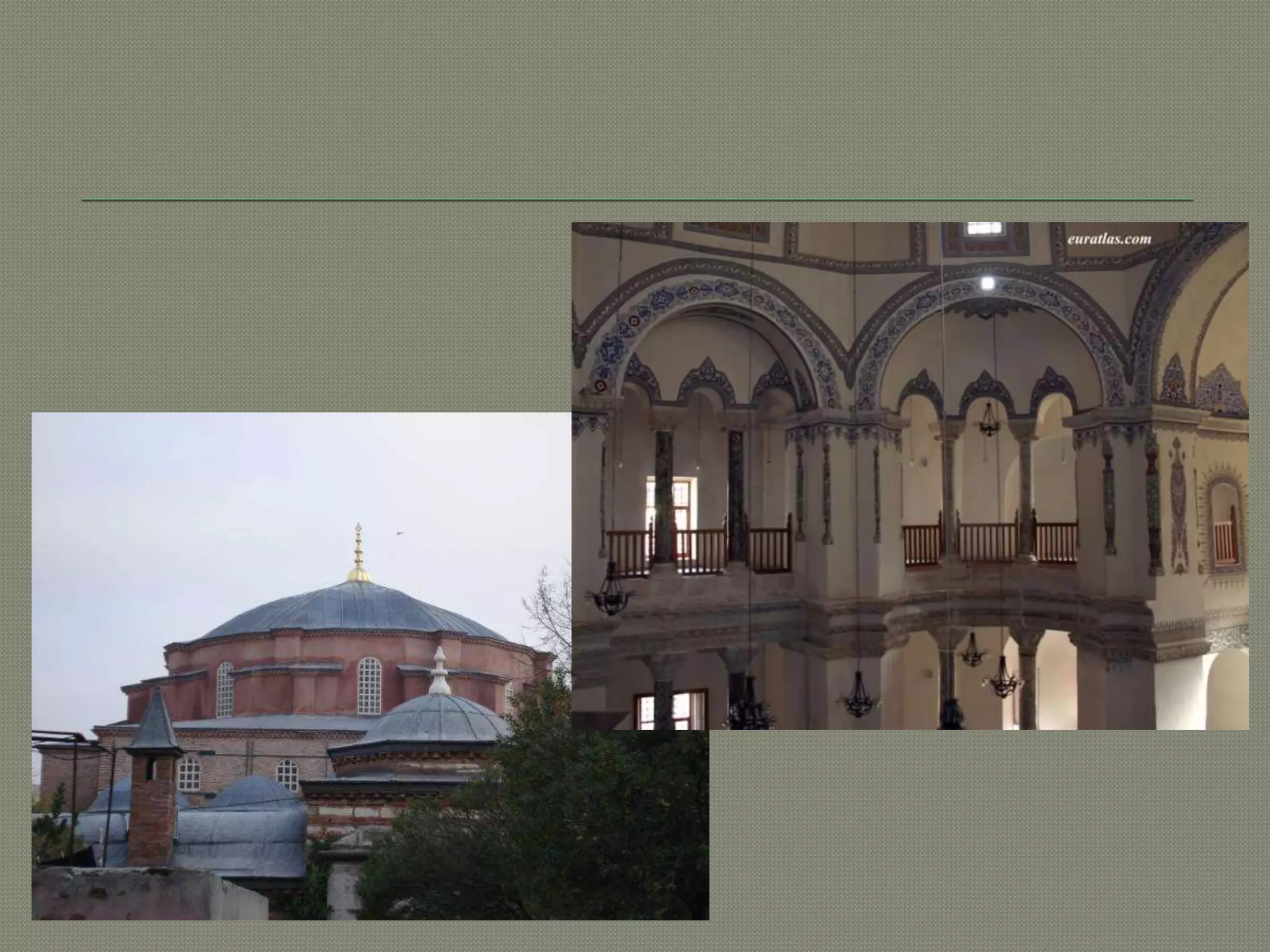
 S. S. SERGIUS, ISTANBUL(527A.D.) 
• Built by Justinian. 
• Plan 33m x 28m. 
•4 colonnaded exedrae and dome supported on spherical 
pendentives 15.8 mt. dia. 22 mt. high
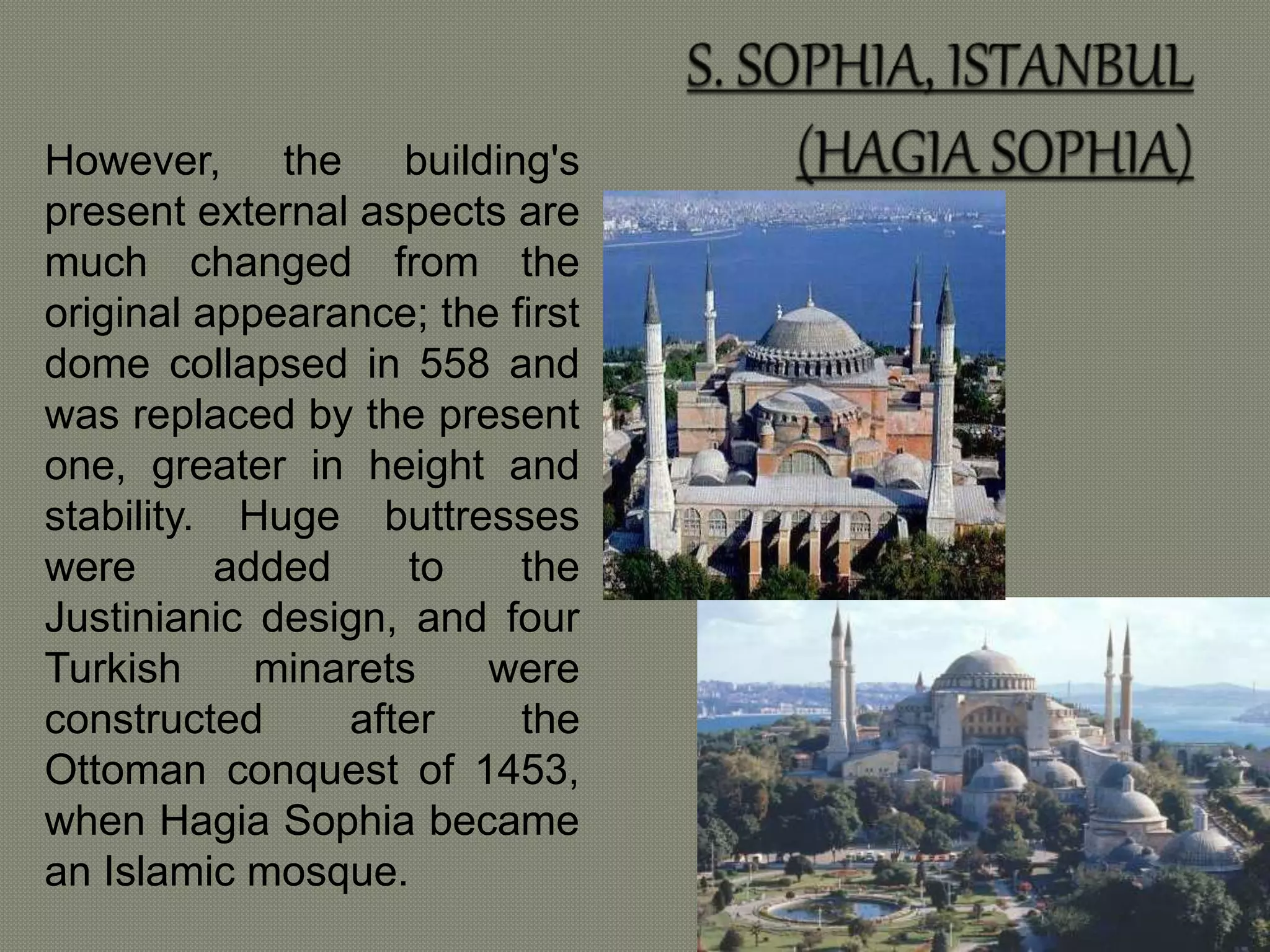
However, the building's 
present external aspects are 
much changed from the 
original appearance; the first 
dome collapsed in 558 and 
was replaced by the present 
one, greater in height and 
stability. Huge buttresses 
were added to the 
Justinianic design, and four 
Turkish minarets were 
constructed after the 
Ottoman conquest of 1453, 
when Hagia Sophia became 
an Islamic mosque.
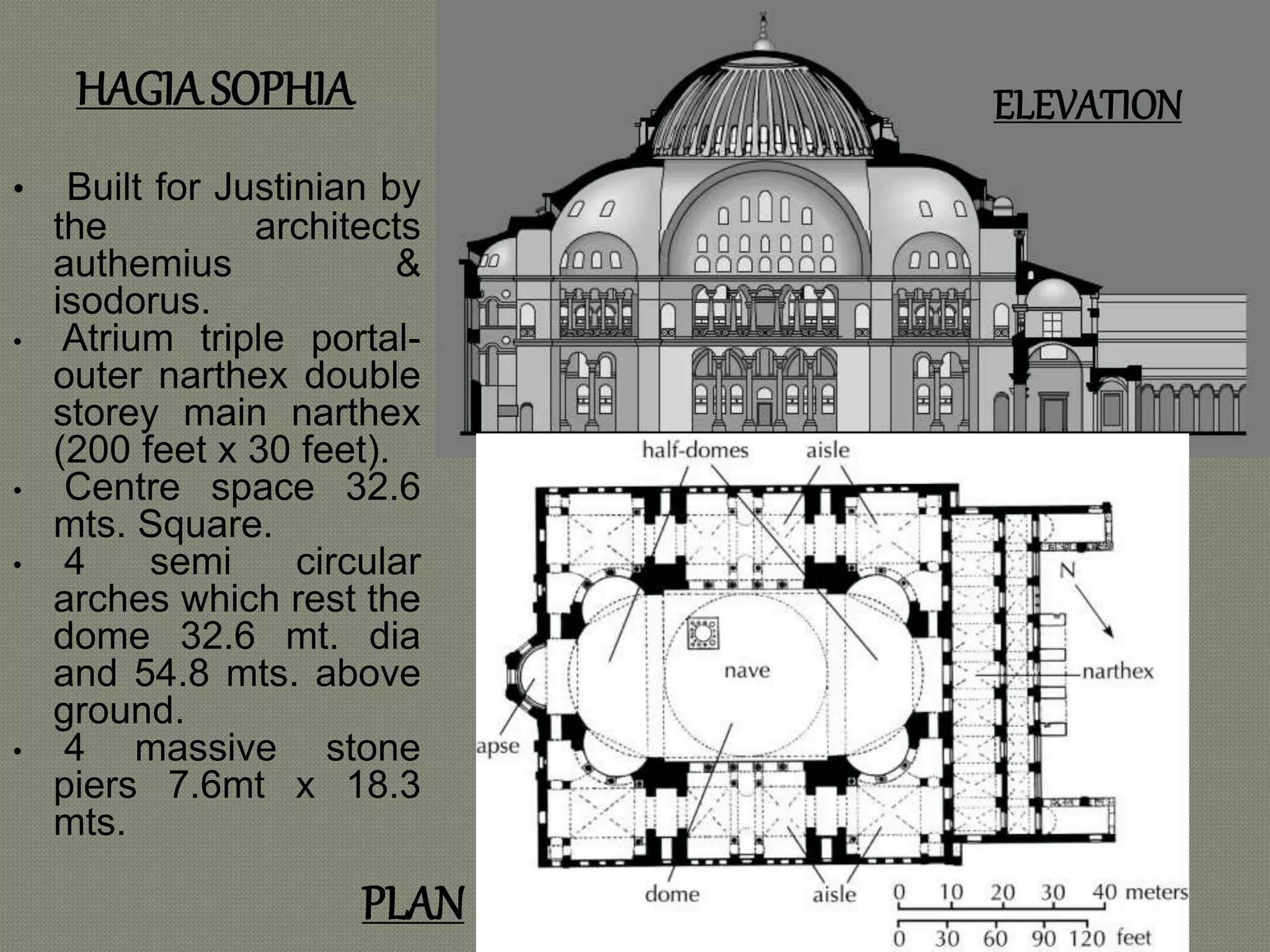
HAGIA SOPHIA ELEVATION 
• Built for Justinian by 
the architects 
authemius & 
isodorus. 
• Atrium triple portal-outer 
narthex double 
storey main narthex 
(200 feet x 30 feet). 
• Centre space 32.6 
mts. Square. 
• 4 semi circular 
arches which rest the 
dome 32.6 mt. dia 
and 54.8 mts. above 
ground. 
• 4 massive stone 
piers 7.6mt x 18.3 
mts. 
PLAN
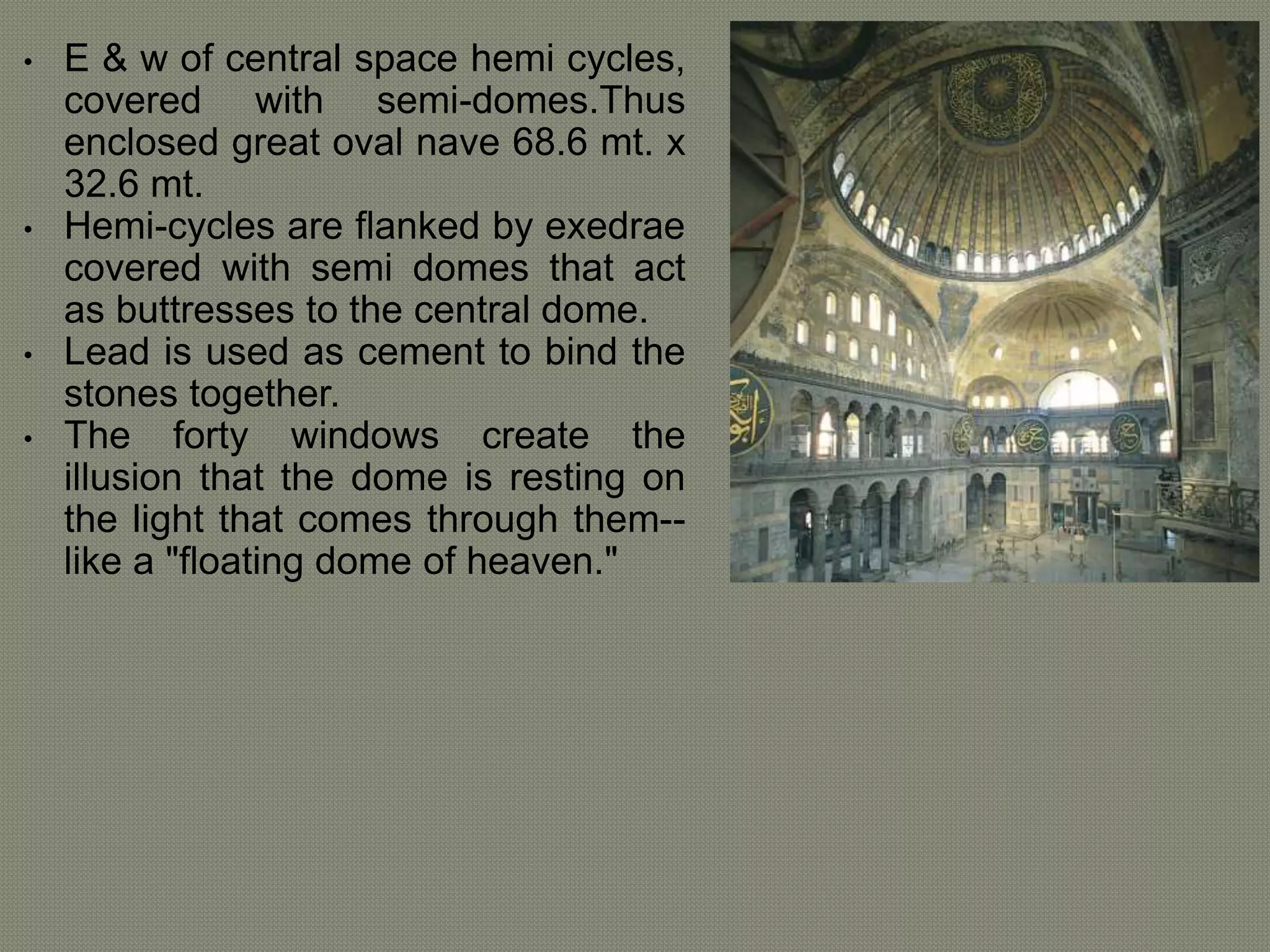
• E & w of central space hemi cycles, 
covered with semi-domes.Thus 
enclosed great oval nave 68.6 mt. x 
32.6 mt. 
• Hemi-cycles are flanked by exedrae 
covered with semi domes that act 
as buttresses to the central dome. 
• Lead is used as cement to bind the 
stones together. 
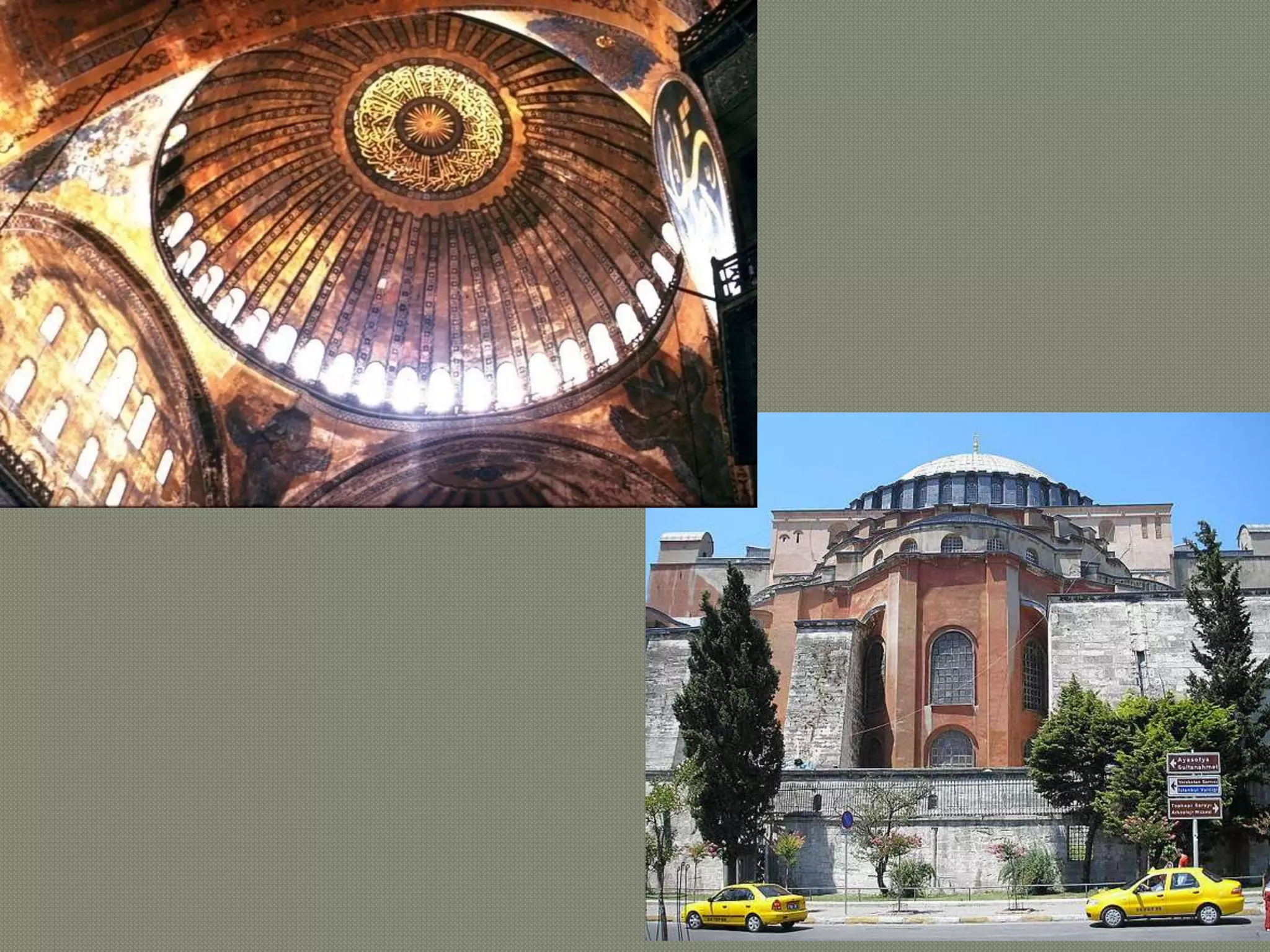
• The forty windows create the 
illusion that the dome is resting on 
the light that comes through them-- 
like a "floating dome of heaven."
Byzantine architecture

Byzantine architecture

  • 1.
    THE EARLY GREEKSETTLERS FROM MEGARA WERE LED BY BYZAS,FROM WHOM THE NAME BYZANTINE WAS DERIVED. MEGARA
  • 2.
     CITY ISSITUATED BETWEEN BLACK SEA AND MEDITERRANEAN SEA.  IT HAS NATURAL HARBOUR OF “GOLDEN HORN” .
  • 3.
    • Use oflime concrete continued. • Use of bricks for dome construction • Marble for ornamental work. • Flat roofs with small openings in hot weathers and sheltered arcades surrounded the open courtyards. Oriental dome is the chief feature of the byzantine. • Painted figures . statues were absent.
  • 4.
    DOMES • Churchwithin a square, with a dome over its centre, usually four cross- like arms either square ended or apsidal ended. • Emphasis on its vertical axis • Non- figural motifs covered all the vault surfaces. • Large windows flooded the interior with light that caused the marble and mosaic to glow with radiance
  • 5.
    • Simple •Compound • Melon shaped • Onion shaped.
  • 6.
    • Centralized typeof plan. • Independence of component parts. • Domes made by means of spherical pendentives. • Constructed by bricks or of light porous stone (pumice) or pottery. • Constructed without temporary supports (centering). • Windows in lower portion. • Grouping of domes. • Great height. • Exterior design pattern in brick work.
  • 7.
    • Interior coveringwith marble mosaics and fresco. • Concrete made from lime sand with crushed tiles and bricks. • Use of columns for decoration and structurally to support the galleries and semi- circular arches. • Mouldings were rare.
  • 8.
    PENDENTIVES • Itis a curved support shaped like an inverted triangle. • It is used to hold a dome. • Using pendentives, Byzantine architects could build a higher and wider dome. SQUINCH • It is used to provide a transition from square to polygon.
  • 10.
     S. S.SERGIUS, ISTANBUL(527A.D.) • Built by Justinian. • Plan 33m x 28m. •4 colonnaded exedrae and dome supported on spherical pendentives 15.8 mt. dia. 22 mt. high
  • 12.
    However, the building's present external aspects are much changed from the original appearance; the first dome collapsed in 558 and was replaced by the present one, greater in height and stability. Huge buttresses were added to the Justinianic design, and four Turkish minarets were constructed after the Ottoman conquest of 1453, when Hagia Sophia became an Islamic mosque.
  • 13.
    HAGIA SOPHIA ELEVATION • Built for Justinian by the architects authemius & isodorus. • Atrium triple portal-outer narthex double storey main narthex (200 feet x 30 feet). • Centre space 32.6 mts. Square. • 4 semi circular arches which rest the dome 32.6 mt. dia and 54.8 mts. above ground. • 4 massive stone piers 7.6mt x 18.3 mts. PLAN
  • 14.
    • E &w of central space hemi cycles, covered with semi-domes.Thus enclosed great oval nave 68.6 mt. x 32.6 mt. • Hemi-cycles are flanked by exedrae covered with semi domes that act as buttresses to the central dome. • Lead is used as cement to bind the stones together. • The forty windows create the illusion that the dome is resting on the light that comes through them-- like a "floating dome of heaven."