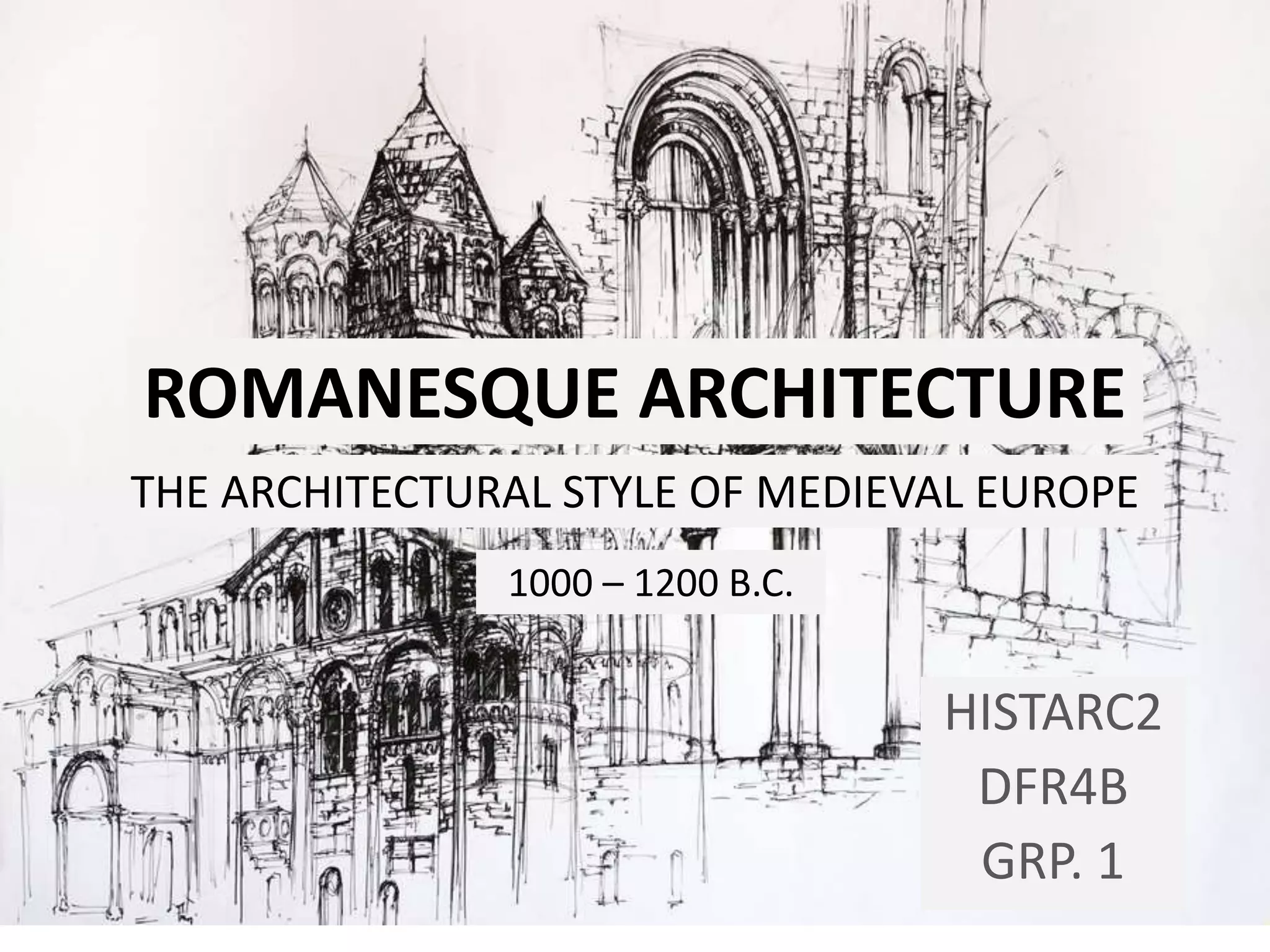
ROMANESQUE ARCHITECTURE
HISTARC2
DFR4B
GRP. 1
THE ARCHITECTURAL STYLE OF MEDIEVAL EUROPE
1000 – 1200 B.C.
OUTLINE
• SETTING (HISTORY OF SOCIETY)
• RELIGION
• “ROMANESQUE”
• MATERIALS
• CHARACTERISTICS
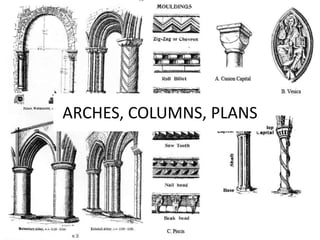
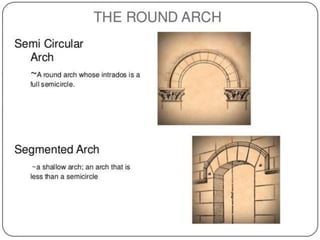
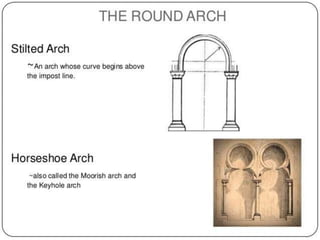
• ARCHES, COLUMNS, PLANS
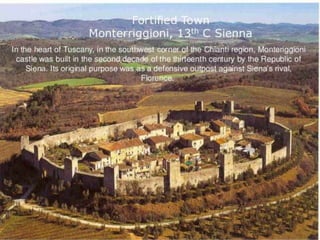
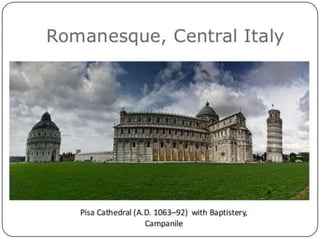
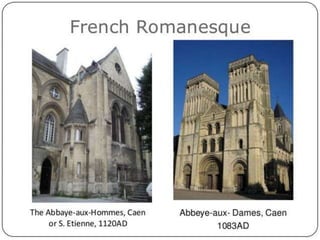
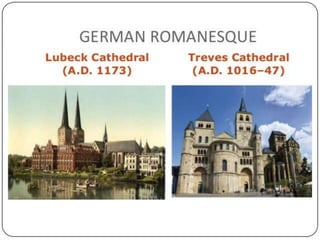
• BUILDING TYPES and EXAMPLES
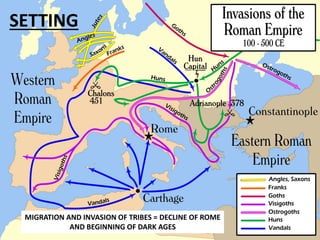
SETTING
MIGRATION AND INVASION OF TRIBES = DECLINE OF ROME
AND BEGINNING OF DARK AGES
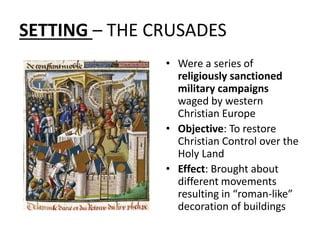
SETTING – THE CRUSADES
• Were a series of
religiously sanctioned
military campaigns
waged by western
Christian Europe
• Objective: To restore
Christian Control over the
Holy Land
• Effect: Brought about
different movements
resulting in “roman-like”
decoration of buildings
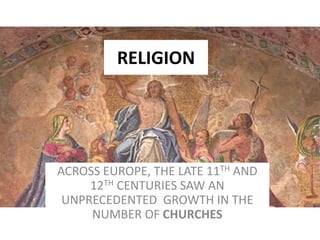
RELIGION
ACROSS EUROPE, THE LATE 11TH AND
12TH CENTURIES SAW AN
UNPRECEDENTED GROWTH IN THE
NUMBER OF CHURCHES
RELIGION IN THE MIDDLE AGES
• Christianity was the chief source of education
and culture.
• THE MONASTIC SYSTEM
– Religious became members of an order with
common ties and a common rule, living in a
mutually dependent community.
– Promoted new methods in agriculture.
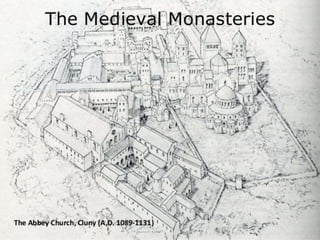
– Exercised influence on architecture
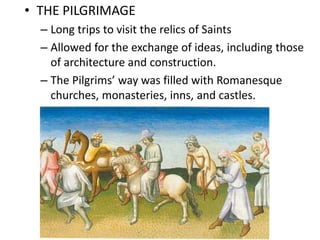
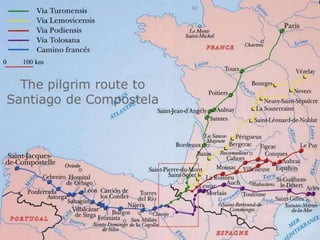
• THE PILGRIMAGE
– Long trips to visit the relics of Saints
– Allowed for the exchange of ideas, including those
of architecture and construction.
– The Pilgrims’ way was filled with Romanesque
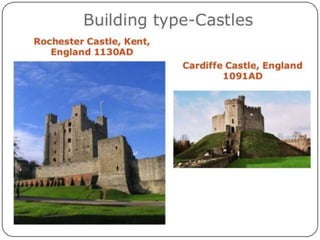
churches, monasteries, inns, and castles.
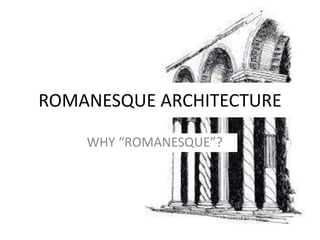
ROMANESQUE ARCHITECTURE
WHY “ROMANESQUE”?
• Romanesque = “Roman- like”
• This style grew in those countries of Western
Europe which had been under the rule of
Rome.
• With the church as the unifying force, this
period was devoted to the glorification of
Christianity and the church was the
predominant building type.
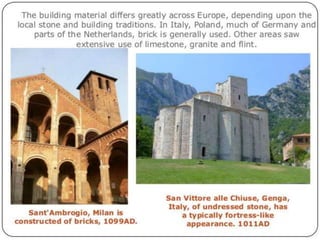
CLIMATE AND MATERIALS
• Use of Local materials:
– Stone
– Brick
– Marble
– Terra-cotta
– Ready- made
columns
• Climactic conditions
contribute to differences of
treatment north and south
of the Alps & Pyrenees.
• North – Window openings
were enlarged
- High pitched roofs
South – small window
openings
- Flat Roofs
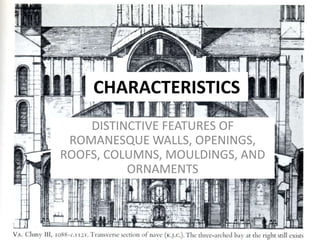
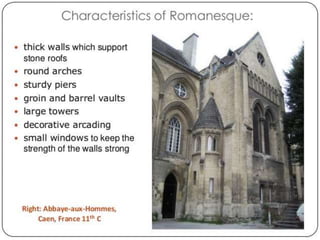
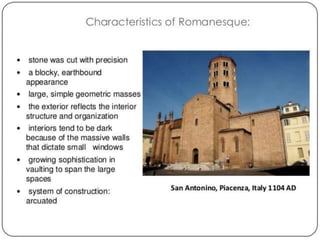
CHARACTERISTICS
DISTINCTIVE FEATURES OF
ROMANESQUE WALLS, OPENINGS,
ROOFS, COLUMNS, MOULDINGS, AND
ORNAMENTS
ARCHES, COLUMNS, PLANS
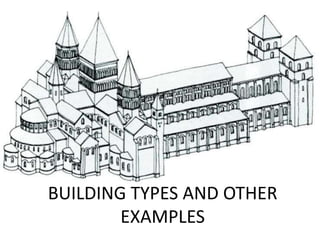
BUILDING TYPES AND OTHER
EXAMPLES
FIN.
Questions
1. These were a series of religiously
sanctioned military campaigns waged by
western Christian Europe.
2. These were long trips to visit the
relics of Saints
3. Give 2 local materials used for
construction.
4. Give 2 characteristics of
Romanesque Architecture.
5. What is the literal meaning of
“Romanesque”?
sources
• Conant, Kenneth J., Carolingian and Romanesque Architecture: 800 to 1200 (4th,
illustrated, reprint ed.). Yale University Press. 1993. ISBN 978-0-300-05298-5
• V.I. Atroshenko and Judith Collins, The Origins of the Romanesque, Lund
Humphries, London, 1985, ISBN 0-85331-487-X
• Rolf Toman, Romanesque: Architecture, Sculpture, Painting, Könemann,
(1997), ISBN 3-89508-447-6
• Banister Fletcher, A History of Architecture on the Comparative method (2001).
Elsevier Science & Technology. ISBN 0-7506-2267-9.
• Alfred Clapham, Romanesque Architecture in England British Council (1950)
• Helen Gardner; Fred S. Kleiner, Christin J. Mamiya, Gardner's Art through the Ages.
Thomson Wadsworth, (2004) ISBN 0-15-505090-7.
• George Holmes, editor, The Oxford Illustrated History of Medieval Europe, Oxford
University Press, (1992) ISBN 0-19-820073-0
• René Huyghe, Larousse Encyclopedia of Byzantine and Medieval Art, Paul Hamlyn,
(1958)
• François Ischer, Building the Great Cathedrals. Harry N. Abrams, (1998). ISBN 0-
8109-4017-5.

HISTORY: Romanesque Architecture

  • 1.
    ROMANESQUE ARCHITECTURE HISTARC2 DFR4B GRP. 1 THEARCHITECTURAL STYLE OF MEDIEVAL EUROPE 1000 – 1200 B.C.
  • 2.
    OUTLINE • SETTING (HISTORYOF SOCIETY) • RELIGION • “ROMANESQUE” • MATERIALS • CHARACTERISTICS • ARCHES, COLUMNS, PLANS • BUILDING TYPES and EXAMPLES
  • 3.
    SETTING MIGRATION AND INVASIONOF TRIBES = DECLINE OF ROME AND BEGINNING OF DARK AGES
  • 4.
    SETTING – THECRUSADES • Were a series of religiously sanctioned military campaigns waged by western Christian Europe • Objective: To restore Christian Control over the Holy Land • Effect: Brought about different movements resulting in “roman-like” decoration of buildings
  • 5.
    RELIGION ACROSS EUROPE, THELATE 11TH AND 12TH CENTURIES SAW AN UNPRECEDENTED GROWTH IN THE NUMBER OF CHURCHES
  • 6.
    RELIGION IN THEMIDDLE AGES • Christianity was the chief source of education and culture. • THE MONASTIC SYSTEM – Religious became members of an order with common ties and a common rule, living in a mutually dependent community. – Promoted new methods in agriculture. – Exercised influence on architecture
  • 7.
    • THE PILGRIMAGE –Long trips to visit the relics of Saints – Allowed for the exchange of ideas, including those of architecture and construction. – The Pilgrims’ way was filled with Romanesque churches, monasteries, inns, and castles.
  • 9.
  • 10.
    • Romanesque =“Roman- like” • This style grew in those countries of Western Europe which had been under the rule of Rome. • With the church as the unifying force, this period was devoted to the glorification of Christianity and the church was the predominant building type.
  • 11.
    CLIMATE AND MATERIALS •Use of Local materials: – Stone – Brick – Marble – Terra-cotta – Ready- made columns • Climactic conditions contribute to differences of treatment north and south of the Alps & Pyrenees. • North – Window openings were enlarged - High pitched roofs South – small window openings - Flat Roofs
  • 13.
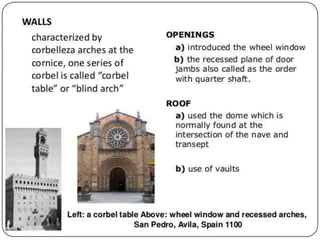
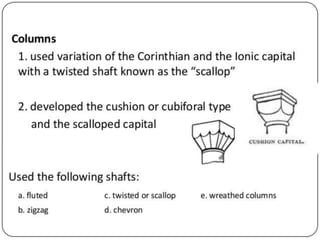
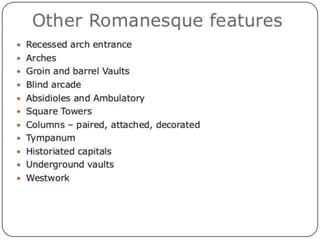
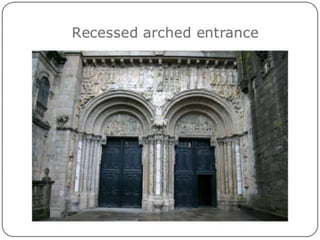
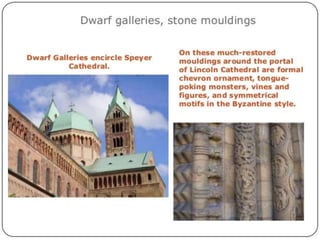
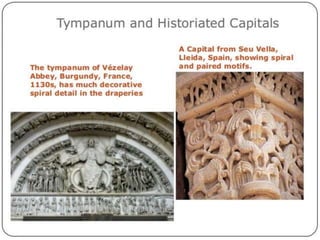
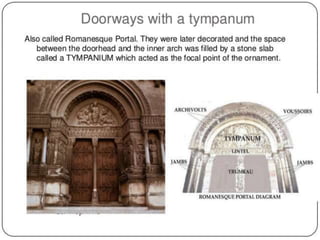
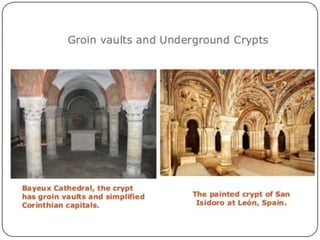
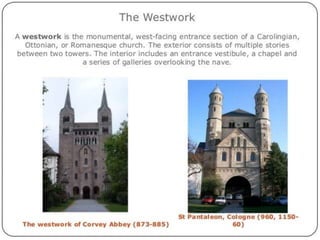
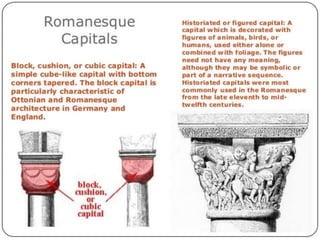
    CHARACTERISTICS DISTINCTIVE FEATURES OF ROMANESQUEWALLS, OPENINGS, ROOFS, COLUMNS, MOULDINGS, AND ORNAMENTS
  • 33.
  • 39.
    BUILDING TYPES ANDOTHER EXAMPLES
  • 46.
  • 47.
    Questions 1. These werea series of religiously sanctioned military campaigns waged by western Christian Europe.
  • 48.
    2. These werelong trips to visit the relics of Saints
  • 49.
    3. Give 2local materials used for construction.
  • 50.
    4. Give 2characteristics of Romanesque Architecture.
  • 51.
    5. What isthe literal meaning of “Romanesque”?
  • 52.
    sources • Conant, KennethJ., Carolingian and Romanesque Architecture: 800 to 1200 (4th, illustrated, reprint ed.). Yale University Press. 1993. ISBN 978-0-300-05298-5 • V.I. Atroshenko and Judith Collins, The Origins of the Romanesque, Lund Humphries, London, 1985, ISBN 0-85331-487-X • Rolf Toman, Romanesque: Architecture, Sculpture, Painting, Könemann, (1997), ISBN 3-89508-447-6 • Banister Fletcher, A History of Architecture on the Comparative method (2001). Elsevier Science & Technology. ISBN 0-7506-2267-9. • Alfred Clapham, Romanesque Architecture in England British Council (1950) • Helen Gardner; Fred S. Kleiner, Christin J. Mamiya, Gardner's Art through the Ages. Thomson Wadsworth, (2004) ISBN 0-15-505090-7. • George Holmes, editor, The Oxford Illustrated History of Medieval Europe, Oxford University Press, (1992) ISBN 0-19-820073-0 • René Huyghe, Larousse Encyclopedia of Byzantine and Medieval Art, Paul Hamlyn, (1958) • François Ischer, Building the Great Cathedrals. Harry N. Abrams, (1998). ISBN 0- 8109-4017-5.