By Zeynep Cancelik
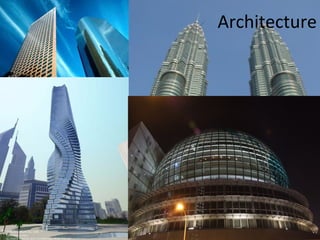
Architecture
The Great Roman Empire
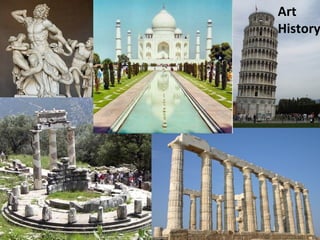
Art History
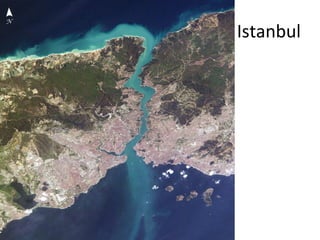
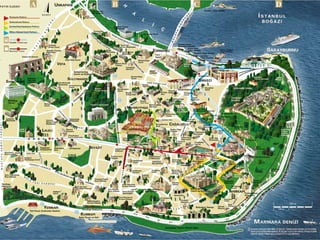
Istanbul
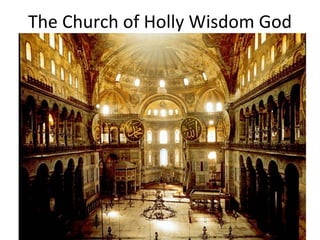
The Church of Holly Wisdom God
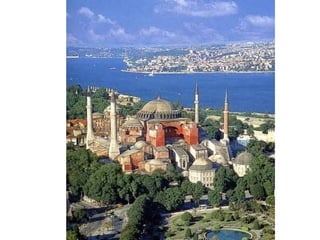
HAGIA SOPHIA  “CHURCH OF THE HOLY WISDOM GOD”
  Former  church, later a  mosque , now a  museum  in Istanbul, Turkey.  THE TOUR IS ABOUT…
 
 
Emperor Justinian Desire to be ever lasting  Year 532 Architects  physicist Isidore of Miletus  mathematician Anthemius of Tralles
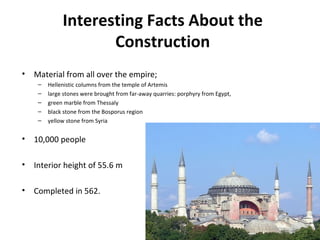
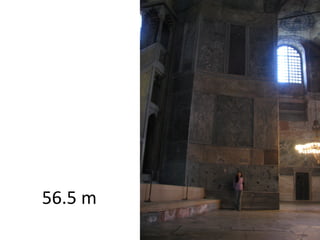
Interesting Facts About the Construction Material from all over the empire; Hellenistic columns from the temple of Artemis  large stones were brought from far-away quarries: porphyry from Egypt,  green marble from Thessaly  black stone from the Bosporus region  yellow stone from Syria 10,000 people Interior height of 55.6 m Completed in 562.
Architecture 1 st  masterpiece of Byzantine architecture Remained  the largest cathedral for 1,000 years Architectural achievement of late antiquity Influenced; the Eastern Orthodox, Roman Catholic, and Muslim
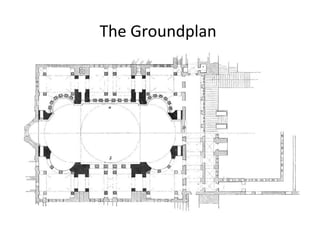
The Groundplan
 
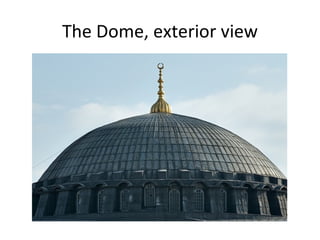
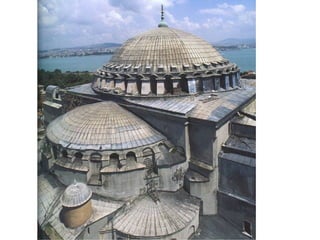
The Dome, exterior view
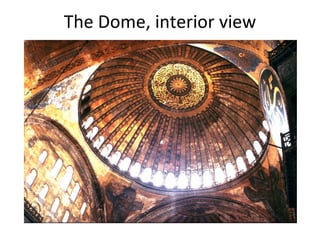
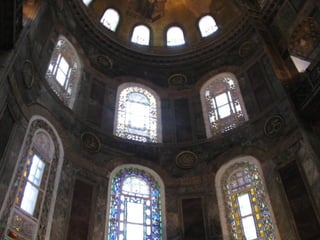
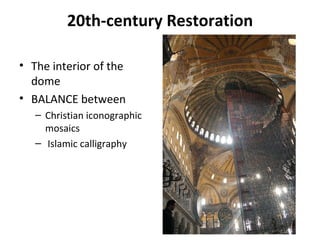
The Dome, interior view
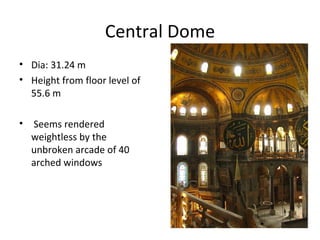
Central Dome Dia: 31.24 m Height from floor level of 55.6 m Seems rendered weightless by the unbroken arcade of 40 arched windows
56.5 m
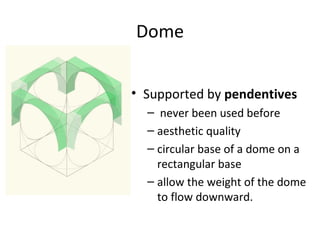
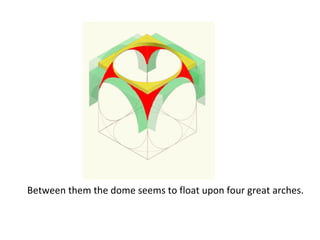
Dome Supported by  pendentives never been used before aesthetic quality  circular base of a dome on a rectangular base allow the weight of the dome to flow downward.
Between them the dome seems to float upon four great arches.
Windows: help flood the colorful interior with light.
 
 
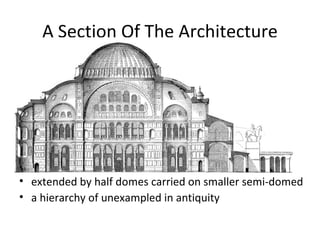
A Section Of The Architecture extended by half domes carried on smaller semi-domed  a hierarchy of unexampled in antiquity
 
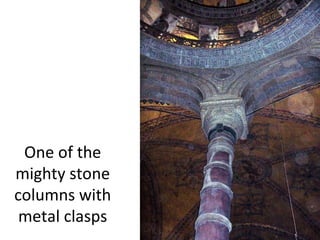
The largest columns 19 or 20 meters tall Dia:1.5 meters diameter Made out of granite Weighing well over 70 tons
One of the mighty stone columns with metal clasps
Imperial Gate
Marble Jar From Pergamon  The Reign Of Sultan Murad 3 rd  Originally from the Hellenistic period carved from a single block of marble.
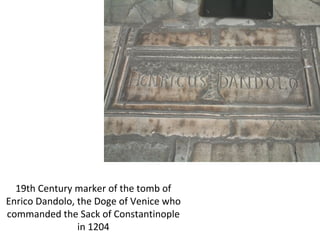
19th Century marker of the tomb of Enrico Dandolo, the Doge of Venice who commanded the Sack of Constantinople in 1204
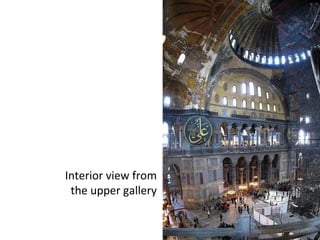
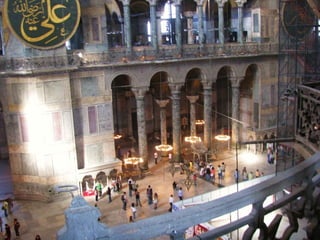
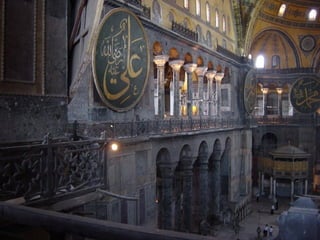
Upper Gallery an area for the empress and her court.  laid out in a horseshoe shape encloses the nave until the apse.  Several mosaics are preserved
Interior view from the upper gallery
 
 
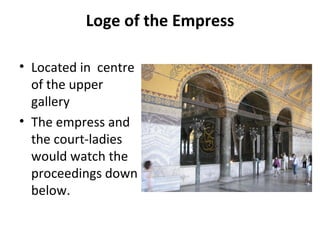
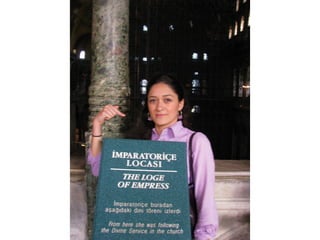
Loge of the Empress Located in  centre of the upper gallery  The empress and the court-ladies would watch the proceedings down below.
 
Decorations the interior decorations consisted of  abstract designs of the marble slabs on the walls  mosaics on the curving vaults. Crosses,angels, saints, patriarchs
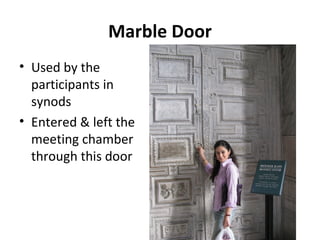
Marble Door Used by the participants in synods Entered & left the meeting chamber through this door
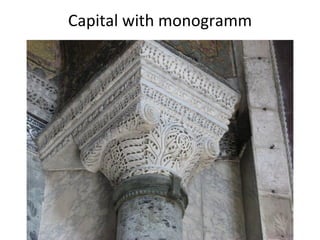
Capital with monogramm
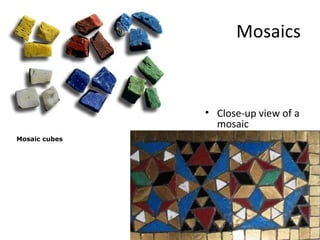
Mosaics Close-up view of a mosaic Mosaic cubes
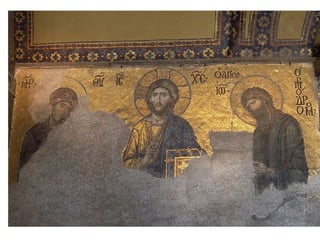
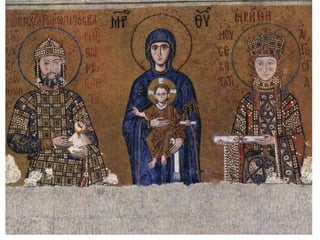
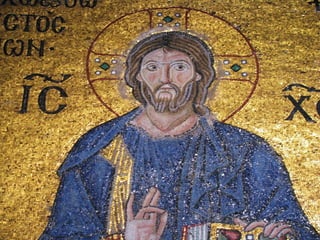
Mosaics Depicted : Virgin Mother, Jesus, Saints, or emperors and empresses.  Sack of Constantinople 1204 Latin Crusaders vandalization
 
 
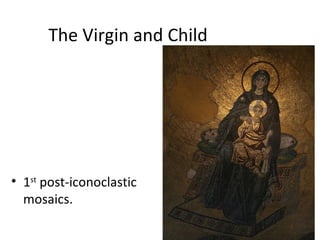
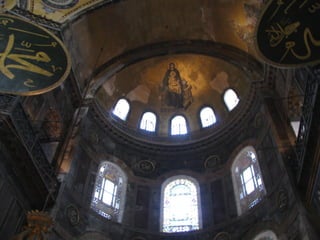
The Virgin and Child 1 st  post-iconoclastic mosaics.
 
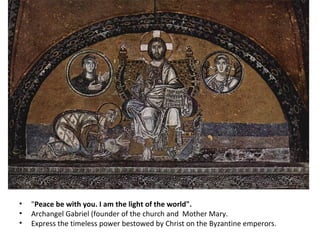
" Peace be with you. I am the light of the world".  Archangel Gabriel (founder of the church and  Mother Mary.  Express the timeless power bestowed by Christ on the Byzantine emperors.
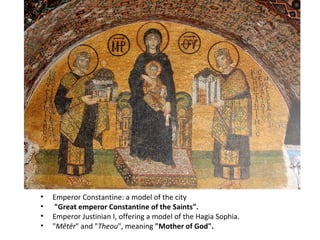
Emperor Constantine: a model of the city "Great emperor Constantine of the Saints".  Emperor Justinian I, offering a model of the Hagia Sophia. " Mētēr " and " Theou ", meaning  "Mother of God".
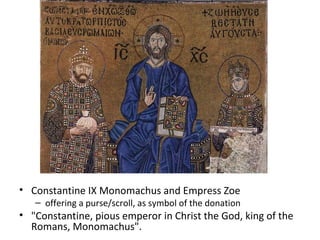
Constantine IX Monomachus and Empress Zoe offering a purse/scroll, as symbol of the donation  "Constantine, pious emperor in Christ the God, king of the Romans, Monomachus".
 
Conversion to the a Mosque Conquered in 1453 Strengthened with structural supports by the great Ottoman architect Sinan one of the world's first earthquake engineer
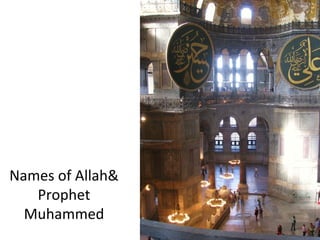
Names of Allah& Prophet Muhammed
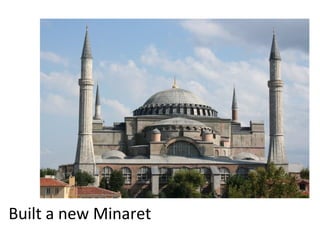
Built a new Minaret
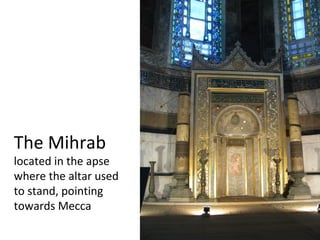
The Mihrab located in the apse where the altar used to stand, pointing towards Mecca
 
Loggia for a muezzin
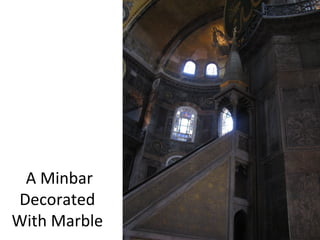
A Minbar Decorated With Marble
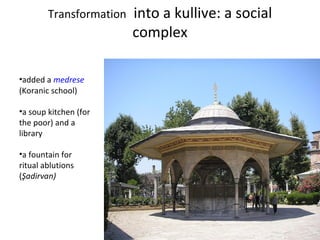
Transformation   into a kullive: a social complex added a  medrese  (Koranic school) a soup kitchen (for the poor) and a library a fountain for ritual ablutions ( Şadirvan)
Museum (1935) Mustafa Kemal Ataturk  transformation The carpets were removed; The marble floor decorations reappeared The white plaster covering the mosaics  removed by expert restorers.
20th-century Restoration The interior of the dome BALANCE between Christian iconographic mosaics  Islamic calligraphy
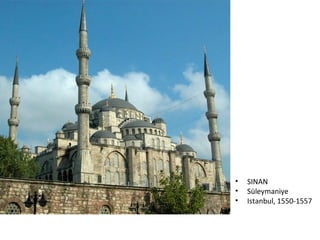
SINAN Süleymaniye Istanbul, 1550-1557
Resources Wikipedia http://en.wikipedia.org/wiki/Hagia_Sophia
Suggestions http://mosaicartsource.wordpress.com/category/mosaic/mosaic-resources/mosaic-travel/hagia-sophia http://www.youtube.com/watch?v=GILOelsqghg&feature=related http://www.youtube.com/watch?v=F_Mp6cxkCwo&feature=related

Aya Sofya Hagia Sophia