Blood coagulation
Anup Muni Bajracharya
Blood clotting
• Blood clotting, or coagulation, is an important process that prevents
excessive bleeding when a blood vessel is injured.
• Platelets (a type of blood cell) and proteins in our plasma (the liquid
part of blood) work together to stop the bleeding by forming a clot
over the injury.
• Hemostasis or haemostasis is a process which causes bleeding to
stop, meaning to keep blood within a damaged blood vessel (the
opposite of hemostasis is hemorrhage).
• It is the first stage of wound healing. This involves coagulation, blood
changing from a liquid to a gel.
Steps in Hemostasis
• Hemostasis has three major steps:
• 1) vasoconstriction/ Vascular spasm
• 2) temporary blockage of a break by a platelet plug, and
• 3) blood coagulation, or formation of a fibrin clot. These processes seal the
hole until tissues are repaired.
Basic events in blood clotting:
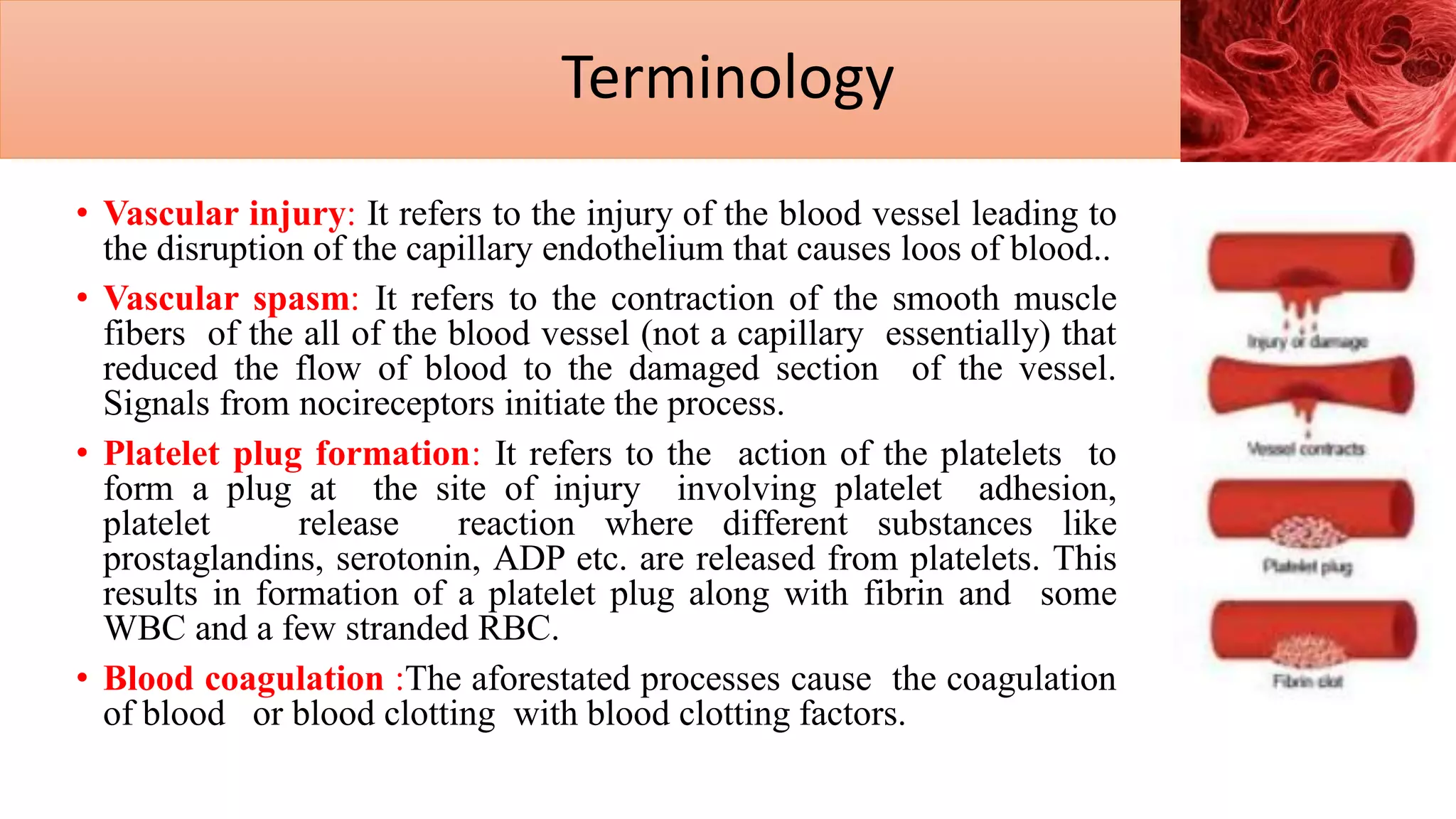
The basic events of the process of blood clotting or coagulation can be stated as follows
Vascular injury -------> vascular spasm------>Platelet plug formation ------>blood coagulation.
Terminology
• Vascular injury: It refers to the injury of the blood vessel leading to
the disruption of the capillary endothelium that causes loos of blood..
• Vascular spasm: It refers to the contraction of the smooth muscle
fibers of the all of the blood vessel (not a capillary essentially) that
reduced the flow of blood to the damaged section of the vessel.
Signals from nocireceptors initiate the process.
• Platelet plug formation: It refers to the action of the platelets to
form a plug at the site of injury involving platelet adhesion,
platelet release reaction where different substances like
prostaglandins, serotonin, ADP etc. are released from platelets. This
results in formation of a platelet plug along with fibrin and some
WBC and a few stranded RBC.
• Blood coagulation :The aforestated processes cause the coagulation
of blood or blood clotting with blood clotting factors.
Vascular spasm (Vasoconstriction)
• When a blood vessel is
damaged, there is an immediate
reflex, initiated by local
sympathetic pain receptors,
which helps promote
vasoconstriction.
• The damaged vessels will
constrict (vasoconstriction)
which reduces the amount of
blood flow through the area and
limits the amount of blood loss.
Contd…
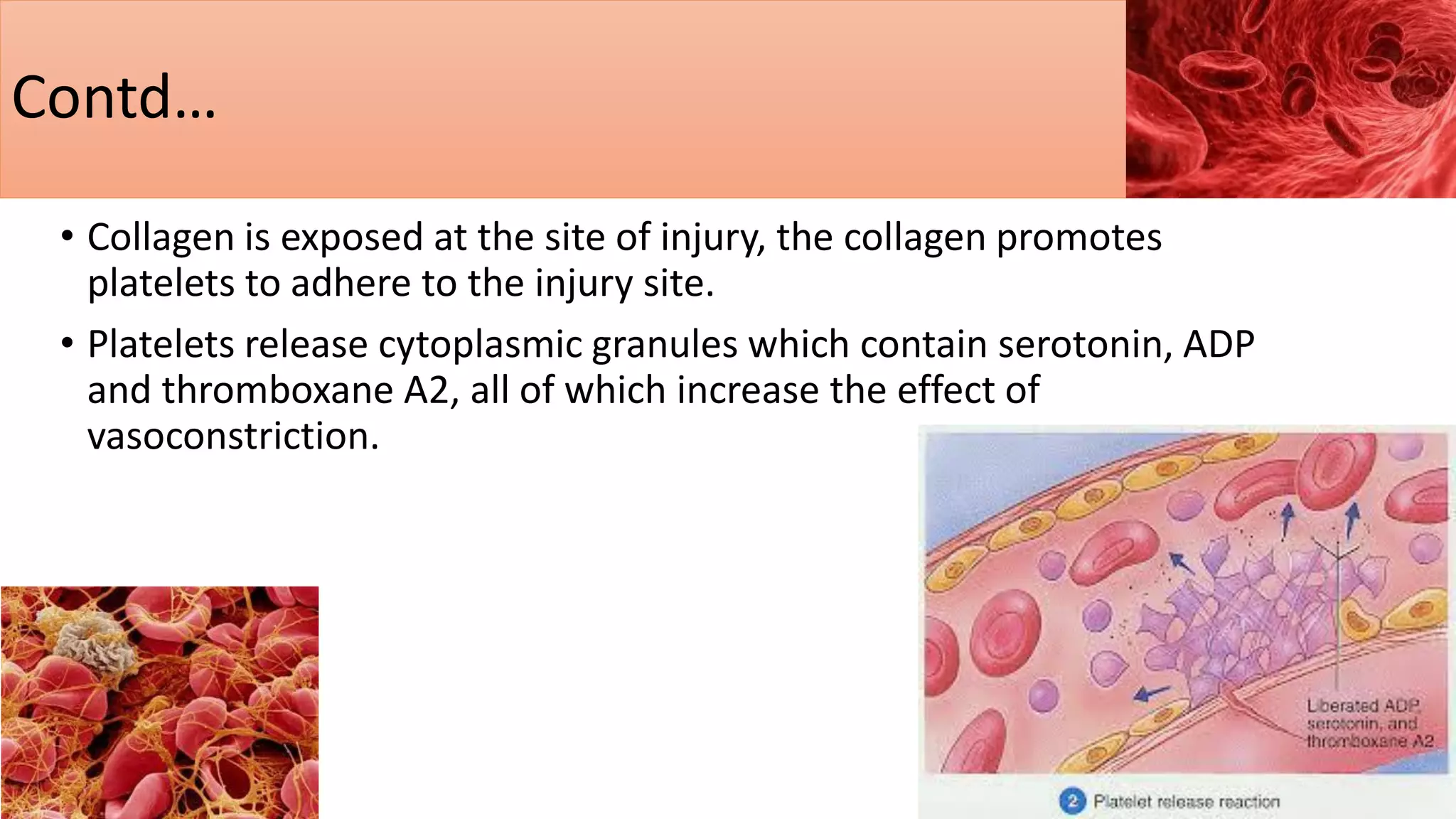
• Collagen is exposed at the site of injury, the collagen promotes
platelets to adhere to the injury site.
• Platelets release cytoplasmic granules which contain serotonin, ADP
and thromboxane A2, all of which increase the effect of
vasoconstriction.
Platelet plug formation
• Platelets adhere to damaged endothelium to
form a platelet plug (primary hemostasis)
and then degranulate.
• Plug formation is activated by
a glycoprotein called Von Willibrand
factor (vWF), which is found in plasma.
• When platelets come across the injured
endothelium cells, they change shape,
release granules and ultimately become
‘sticky’.
• Platelets express certain receptors, some of
which are used for the adhesion of platelets
to collagen.
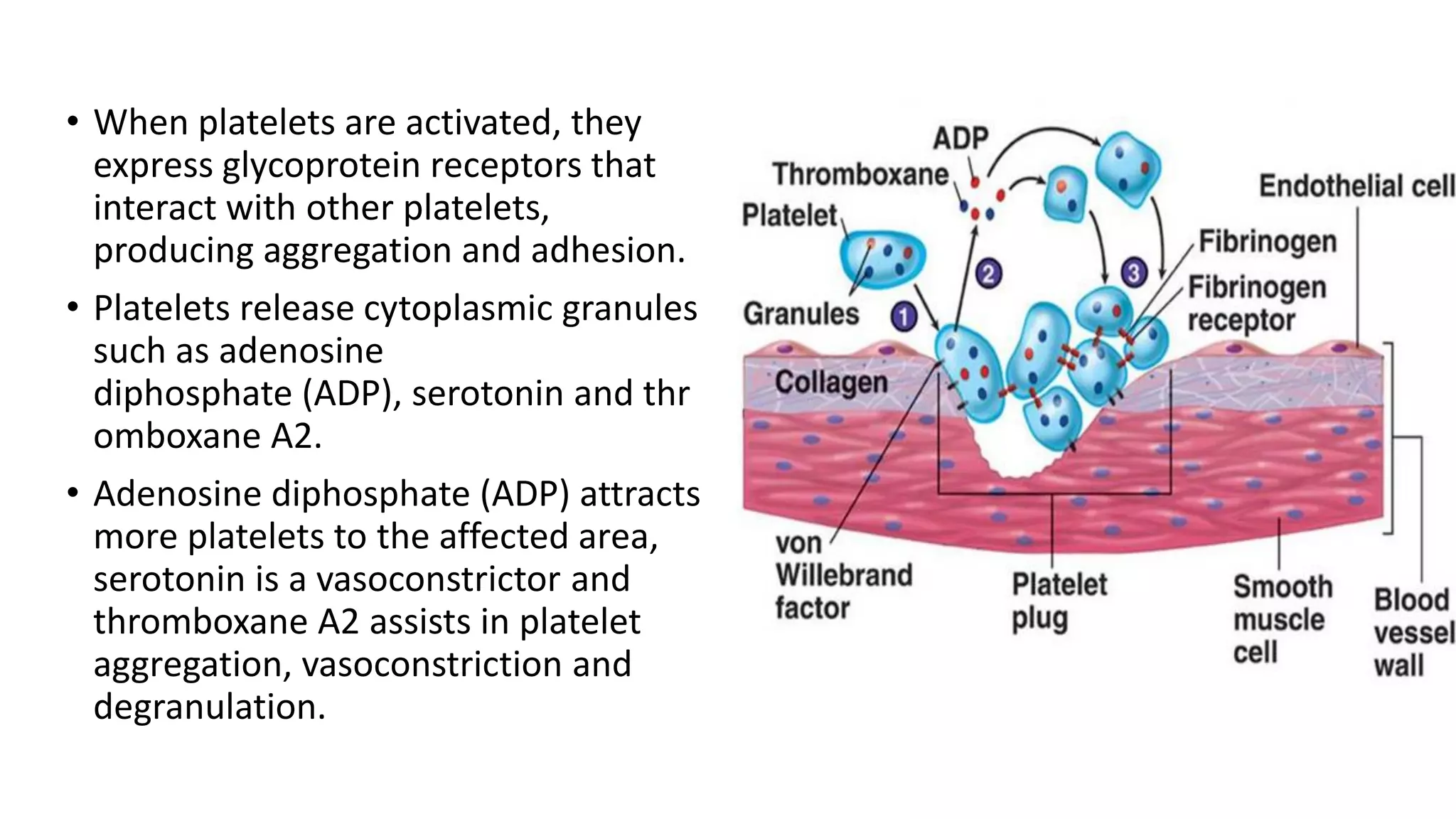
• When platelets are activated, they
express glycoprotein receptors that
interact with other platelets,
producing aggregation and adhesion.
• Platelets release cytoplasmic granules
such as adenosine
diphosphate (ADP), serotonin and thr
omboxane A2.
• Adenosine diphosphate (ADP) attracts
more platelets to the affected area,
serotonin is a vasoconstrictor and
thromboxane A2 assists in platelet
aggregation, vasoconstriction and
degranulation.
Clot formation
• Once the platelet plug has been formed by the platelets, the clotting
factors (a dozen proteins that travel along the blood plasma in an
inactive state) are activated in a sequence of events known as
'coagulation cascade' which leads to the formation of fibrin from
inactive fibrinogen plasma protein.
• Thus, a fibrin mesh is produced all around the platelet plug to hold it
in place; this step is called "Secondary Hemostasis".
• During this process some red and white blood cells are trapped in the
mesh which causes the primary hemostasis plug to become harder:
the resultant plug is called as 'thrombus' or 'Clot'.
Blood clotting factors
Clotting involves several chemicals
known as as blood clotting factors.
A few platelet coagulation factors
are released by platelets.
Thromboplastin or tissue factor is
found on surface of various body
cells.
Blood clotting factors
Coagulation factor synonym
I Fibrinogen
II prothrombin
III Tissue factor (Thromboplastin)
IV Calcium ions
V proaccelerin / labile factor / accelerator globulin
VII Serum prothrombin conversion accelerator(SPCA) /
stable factor / proconvertin
VIII Antihaemophilic factor(AHF)
IX Christmas factor / plasma thromboplastin component ( PTC)/ AHF B
X Stuart factor / Power factor / thrombokinase
XI Plasma thromboplastin antecedent(PTA) / AHFC
XII Hageman factor ? Glass factor/ contact factor
XIII Fibrib stabilizing factor (FSF) / Fibrinase
Stages of biochemical pathway of blood clotting
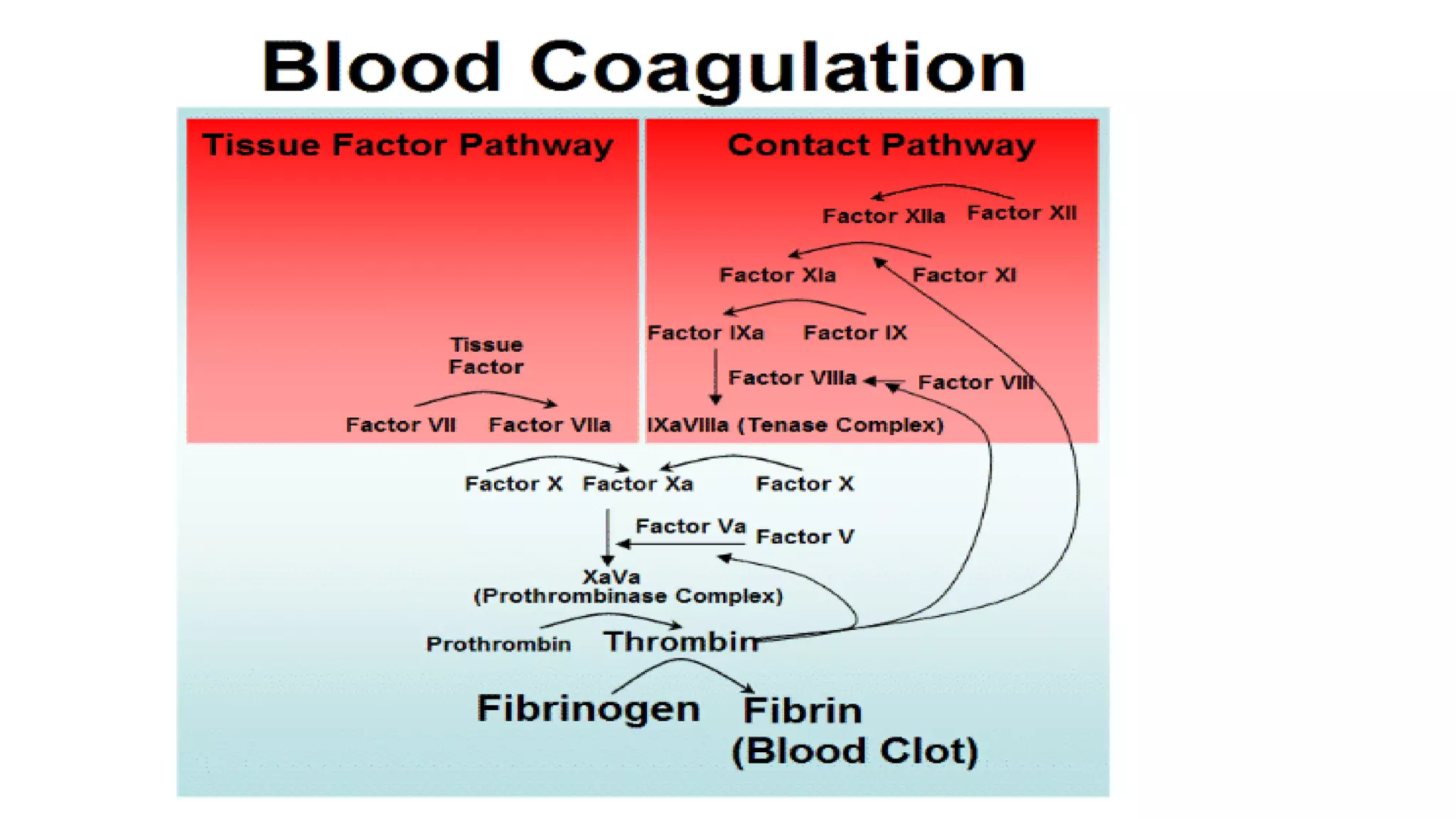
• Stage 1. Formation of prothrombin activator
• Stage 2. Conversion of protthrombin into thrombin by prothrombin
activator
• Stage 3. Conversion of soluble fibrinogen into insoluble fibrin by
thrombin.
• The formation of prothrombin activator is initiated by the interplay of
of two mechanisms - the Extrinsic(tissue factor) pathway that is
extravascular and the Intrinsic (Contact) pathway, which is
intravascular.
• In both the process of initiation of prothrombin activator is different
but the basic role of blood clotting factors is unchanged.
Blood coagulation
Blood coagulation
Blood coagulation

Blood coagulation

  • 1.
  • 2.
    Blood clotting • Bloodclotting, or coagulation, is an important process that prevents excessive bleeding when a blood vessel is injured. • Platelets (a type of blood cell) and proteins in our plasma (the liquid part of blood) work together to stop the bleeding by forming a clot over the injury. • Hemostasis or haemostasis is a process which causes bleeding to stop, meaning to keep blood within a damaged blood vessel (the opposite of hemostasis is hemorrhage). • It is the first stage of wound healing. This involves coagulation, blood changing from a liquid to a gel.
  • 3.
    Steps in Hemostasis •Hemostasis has three major steps: • 1) vasoconstriction/ Vascular spasm • 2) temporary blockage of a break by a platelet plug, and • 3) blood coagulation, or formation of a fibrin clot. These processes seal the hole until tissues are repaired. Basic events in blood clotting: The basic events of the process of blood clotting or coagulation can be stated as follows Vascular injury -------> vascular spasm------>Platelet plug formation ------>blood coagulation.
  • 4.
    Terminology • Vascular injury:It refers to the injury of the blood vessel leading to the disruption of the capillary endothelium that causes loos of blood.. • Vascular spasm: It refers to the contraction of the smooth muscle fibers of the all of the blood vessel (not a capillary essentially) that reduced the flow of blood to the damaged section of the vessel. Signals from nocireceptors initiate the process. • Platelet plug formation: It refers to the action of the platelets to form a plug at the site of injury involving platelet adhesion, platelet release reaction where different substances like prostaglandins, serotonin, ADP etc. are released from platelets. This results in formation of a platelet plug along with fibrin and some WBC and a few stranded RBC. • Blood coagulation :The aforestated processes cause the coagulation of blood or blood clotting with blood clotting factors.
  • 5.
    Vascular spasm (Vasoconstriction) •When a blood vessel is damaged, there is an immediate reflex, initiated by local sympathetic pain receptors, which helps promote vasoconstriction. • The damaged vessels will constrict (vasoconstriction) which reduces the amount of blood flow through the area and limits the amount of blood loss.
  • 6.
    Contd… • Collagen isexposed at the site of injury, the collagen promotes platelets to adhere to the injury site. • Platelets release cytoplasmic granules which contain serotonin, ADP and thromboxane A2, all of which increase the effect of vasoconstriction.
  • 7.
    Platelet plug formation •Platelets adhere to damaged endothelium to form a platelet plug (primary hemostasis) and then degranulate. • Plug formation is activated by a glycoprotein called Von Willibrand factor (vWF), which is found in plasma. • When platelets come across the injured endothelium cells, they change shape, release granules and ultimately become ‘sticky’. • Platelets express certain receptors, some of which are used for the adhesion of platelets to collagen.
  • 8.
    • When plateletsare activated, they express glycoprotein receptors that interact with other platelets, producing aggregation and adhesion. • Platelets release cytoplasmic granules such as adenosine diphosphate (ADP), serotonin and thr omboxane A2. • Adenosine diphosphate (ADP) attracts more platelets to the affected area, serotonin is a vasoconstrictor and thromboxane A2 assists in platelet aggregation, vasoconstriction and degranulation.
  • 9.
    Clot formation • Oncethe platelet plug has been formed by the platelets, the clotting factors (a dozen proteins that travel along the blood plasma in an inactive state) are activated in a sequence of events known as 'coagulation cascade' which leads to the formation of fibrin from inactive fibrinogen plasma protein. • Thus, a fibrin mesh is produced all around the platelet plug to hold it in place; this step is called "Secondary Hemostasis". • During this process some red and white blood cells are trapped in the mesh which causes the primary hemostasis plug to become harder: the resultant plug is called as 'thrombus' or 'Clot'.
  • 10.
    Blood clotting factors Clottinginvolves several chemicals known as as blood clotting factors. A few platelet coagulation factors are released by platelets. Thromboplastin or tissue factor is found on surface of various body cells.
  • 11.
    Blood clotting factors Coagulationfactor synonym I Fibrinogen II prothrombin III Tissue factor (Thromboplastin) IV Calcium ions V proaccelerin / labile factor / accelerator globulin VII Serum prothrombin conversion accelerator(SPCA) / stable factor / proconvertin VIII Antihaemophilic factor(AHF) IX Christmas factor / plasma thromboplastin component ( PTC)/ AHF B X Stuart factor / Power factor / thrombokinase XI Plasma thromboplastin antecedent(PTA) / AHFC XII Hageman factor ? Glass factor/ contact factor XIII Fibrib stabilizing factor (FSF) / Fibrinase
  • 12.
    Stages of biochemicalpathway of blood clotting • Stage 1. Formation of prothrombin activator • Stage 2. Conversion of protthrombin into thrombin by prothrombin activator • Stage 3. Conversion of soluble fibrinogen into insoluble fibrin by thrombin. • The formation of prothrombin activator is initiated by the interplay of of two mechanisms - the Extrinsic(tissue factor) pathway that is extravascular and the Intrinsic (Contact) pathway, which is intravascular. • In both the process of initiation of prothrombin activator is different but the basic role of blood clotting factors is unchanged.