Food and its functions
Anup Muni Bajracharya
Whether a man eats for living or lives for eating, food is his prime concern.
It is usually of plant or animal origin, and
contains essential nutrients, such as
carbohydrates, fats, proteins, vitamins, or
mineral and is ingested and assimilated by the
organisms to produce energy, maintain life, or
stimulate growth.
It is the fuel source of the body.
Simply food is any substance consumed to
provide nutritional support for the body.
Even though the chief function of the food is to supply energy to meet physiological
needs and to maintain body in good health, but it serves other functions also.
The functions of food can be viewed from different aspects
 Physiological Functions
 Social Functions
 Psychological Functions
Physiological Functions
• Energy giving nutrients
are carbohydrates, fats
and proteins.
• The human body is
never at rest. Even
while sleeping, the
heart beats, digestion
and respiration
continue and the body
temperature remains
constant.
• For all these voluntary
and involuntary
activities, energy is
required constantly.
Our control No any control
1. Provide energy
• Nutrients necessary for building and maintaining body are
proteins, minerals and water.
• Muscles, bone and organs are built upon and maintained by
the proteins.
• Minerals  irons, calcium and phosphorus regulate
formation of blood and skeletal tissues.
2. Building the body
Baby
Adult
• Water regulate digestion,
excretion, maintenance of the
body temperature and
electrolyte balance.
• Roughage normal bowel
movements.
• Nutrients Muscle
contraction, clotting of blood,
beating of heart.
3. Regulating body processes
Blood clotting
Heart Beat
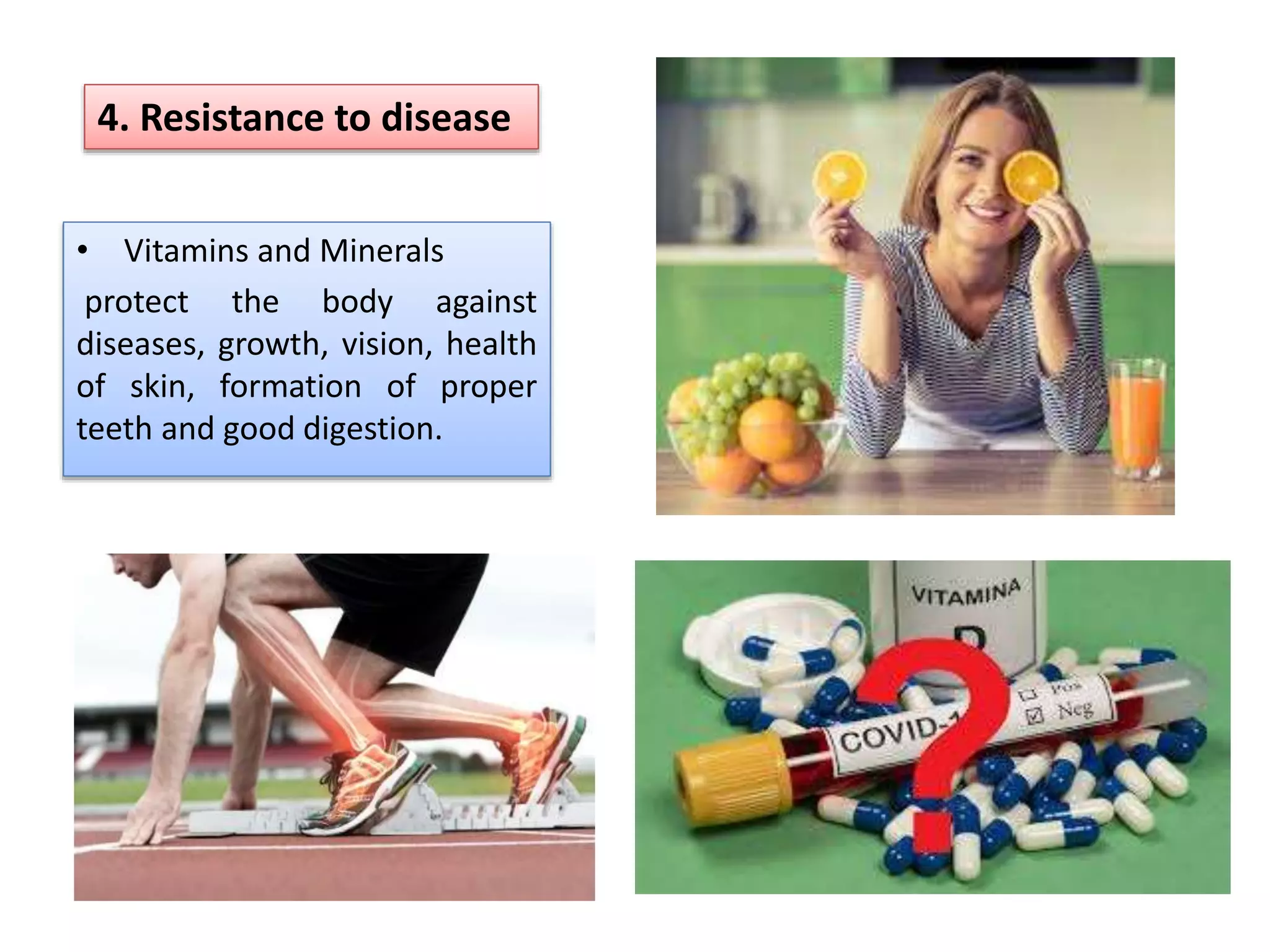
• Vitamins and Minerals
protect the body against
diseases, growth, vision, health
of skin, formation of proper
teeth and good digestion.
4. Resistance to disease
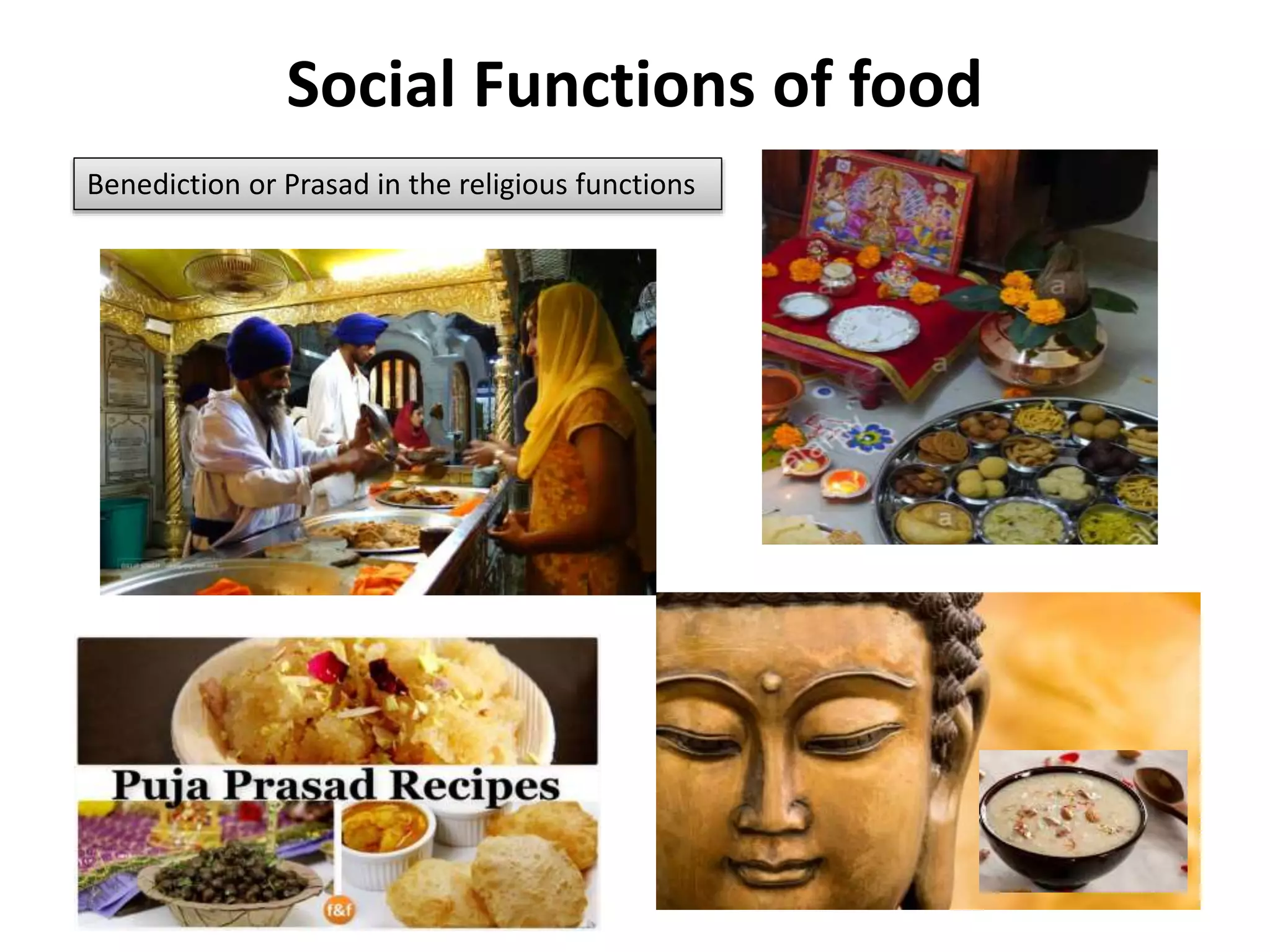
Social Functions of food
Benediction or Prasad in the religious functions
Feast are given at specific stages of life such as birth, naming ceremony, birthdays,
marriages etc
Most of the festivals also call for feasts and feeding of specific segments of the
population.
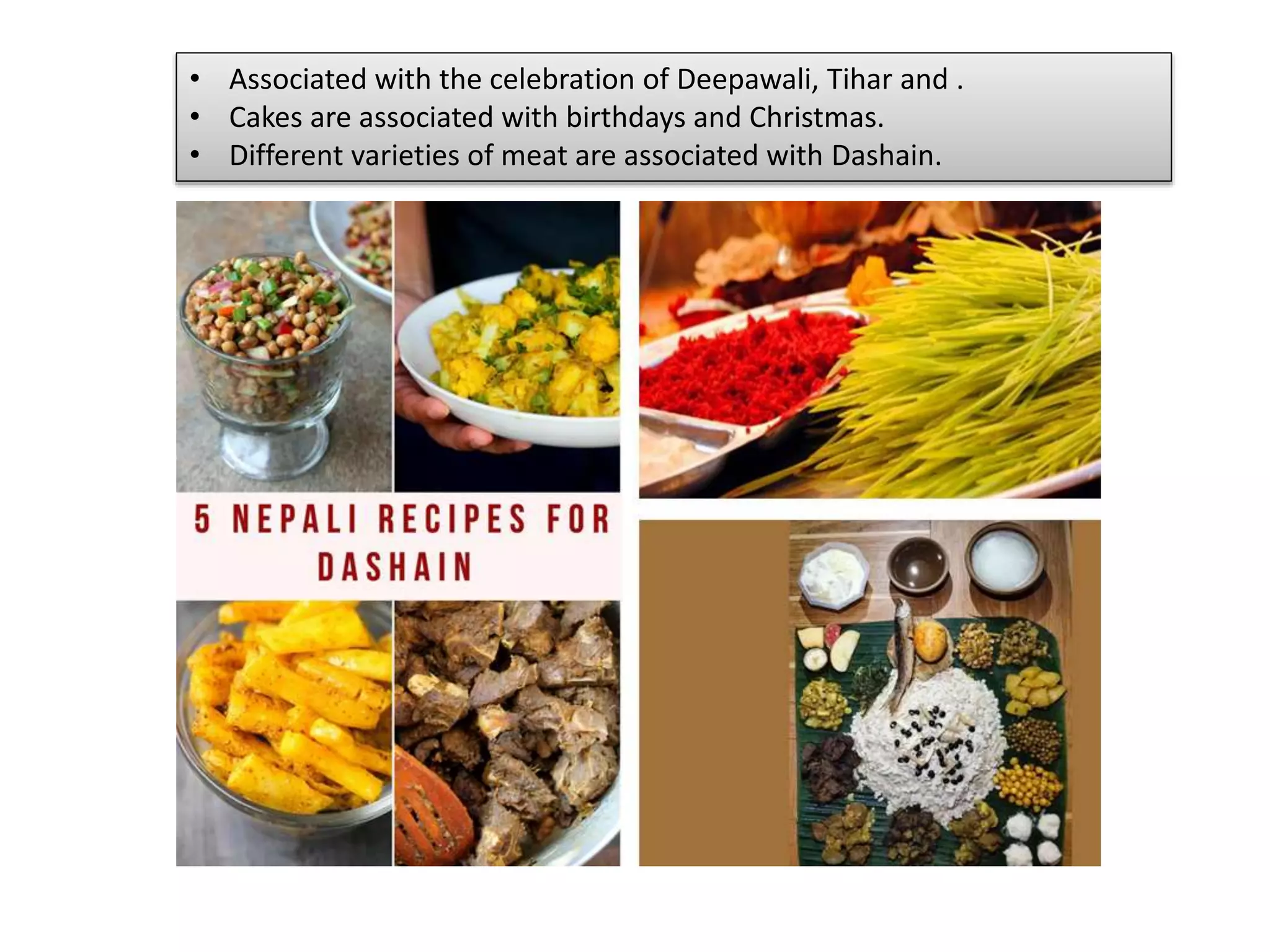
• Associated with the celebration of Deepawali, Tihar and .
• Cakes are associated with birthdays and Christmas.
• Different varieties of meat are associated with Dashain.
Refreshments served at get togethers
or meetings create relaxed
atmosphere.
The menu for such get together
should bring the people together,
rather than divide them.
Meeting set up
Seminar
Psychological functions of food
• Besides other functions, food satisfies certain emotional needs also.
• Traditional habits are characterized by certain foods, which are
pleasing to persons of one culture and same are served invariably to
fulfill social and emotional needs of that culture or society.
• Sharing of food is a token of friendship and acceptance.
• In a friendly gathering we try unfamiliar foods and thus enlarge our food
experiences.
Sharing of food
Psychological functions includes a sense of security, love and attention. Thus
familiar foods make us feel secure.
Anticipating needs and fulfilling are expressions of love and attention. These
sentiments are the basis of the normal attachment to the mother’s cooking.
Food and its function

Food and its function

  • 1.
    Food and itsfunctions Anup Muni Bajracharya
  • 2.
    Whether a maneats for living or lives for eating, food is his prime concern. It is usually of plant or animal origin, and contains essential nutrients, such as carbohydrates, fats, proteins, vitamins, or mineral and is ingested and assimilated by the organisms to produce energy, maintain life, or stimulate growth. It is the fuel source of the body. Simply food is any substance consumed to provide nutritional support for the body.
  • 3.
    Even though thechief function of the food is to supply energy to meet physiological needs and to maintain body in good health, but it serves other functions also. The functions of food can be viewed from different aspects  Physiological Functions  Social Functions  Psychological Functions
  • 4.
    Physiological Functions • Energygiving nutrients are carbohydrates, fats and proteins. • The human body is never at rest. Even while sleeping, the heart beats, digestion and respiration continue and the body temperature remains constant. • For all these voluntary and involuntary activities, energy is required constantly. Our control No any control 1. Provide energy
  • 5.
    • Nutrients necessaryfor building and maintaining body are proteins, minerals and water. • Muscles, bone and organs are built upon and maintained by the proteins. • Minerals  irons, calcium and phosphorus regulate formation of blood and skeletal tissues. 2. Building the body Baby Adult
  • 6.
    • Water regulatedigestion, excretion, maintenance of the body temperature and electrolyte balance. • Roughage normal bowel movements. • Nutrients Muscle contraction, clotting of blood, beating of heart. 3. Regulating body processes Blood clotting Heart Beat
  • 7.
    • Vitamins andMinerals protect the body against diseases, growth, vision, health of skin, formation of proper teeth and good digestion. 4. Resistance to disease
  • 8.
    Social Functions offood Benediction or Prasad in the religious functions
  • 9.
    Feast are givenat specific stages of life such as birth, naming ceremony, birthdays, marriages etc
  • 10.
    Most of thefestivals also call for feasts and feeding of specific segments of the population.
  • 11.
    • Associated withthe celebration of Deepawali, Tihar and . • Cakes are associated with birthdays and Christmas. • Different varieties of meat are associated with Dashain.
  • 12.
    Refreshments served atget togethers or meetings create relaxed atmosphere. The menu for such get together should bring the people together, rather than divide them. Meeting set up Seminar
  • 13.
    Psychological functions offood • Besides other functions, food satisfies certain emotional needs also. • Traditional habits are characterized by certain foods, which are pleasing to persons of one culture and same are served invariably to fulfill social and emotional needs of that culture or society.
  • 14.
    • Sharing offood is a token of friendship and acceptance. • In a friendly gathering we try unfamiliar foods and thus enlarge our food experiences. Sharing of food
  • 15.
    Psychological functions includesa sense of security, love and attention. Thus familiar foods make us feel secure. Anticipating needs and fulfilling are expressions of love and attention. These sentiments are the basis of the normal attachment to the mother’s cooking.