BIOTECHNOLOGY
AND GENETIC
ENGINEERING
What is biotechnology?
 Examples?
 What are their uses?
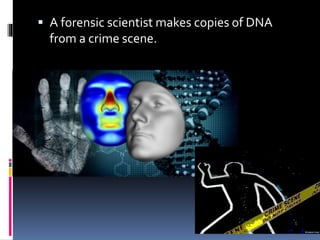
 A forensic scientist makes copies of DNA
from a crime scene.
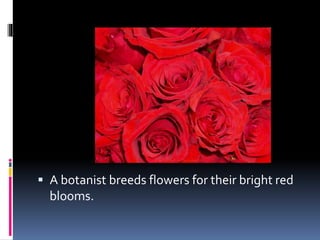
 A botanist breeds flowers for their bright red
blooms.
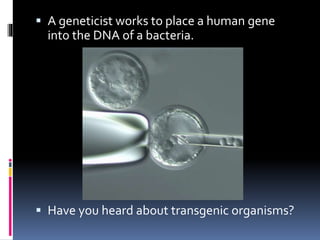
 A geneticist works to place a human gene
into the DNA of a bacteria.
 Have you heard about transgenic organisms?
Biotechnology is...
 The use and application of living things and
biological processes.
 New technologies have allowed scientists to
directly change DNA.
 Is it something new?
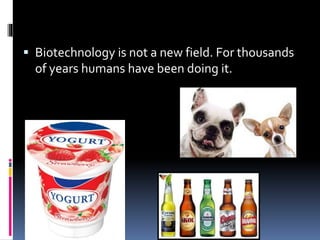
 Biotechnology is not a new field. For thousands
of years humans have been doing it.
Research
 What is fermentation?
 Are different types of fermentations?
 What are their uses?
 Link: http://www.argenbio.org/index.php
Some applications
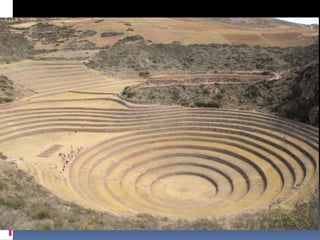
 What techniques are used to improve crops
and livestock?
 Humans are interfering with the natural flow
of genetic material from one generation to
the next one
ARTIFICIAL SELECTION
Making organisms useful to
humans..
 Variation occurs naturlly and randomly in all
living organisms
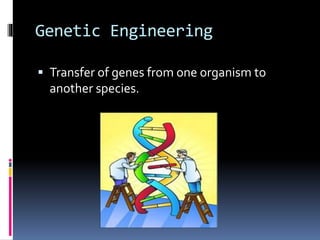
Genetic Engineering
 Transfer of genes from one organism to
another species.
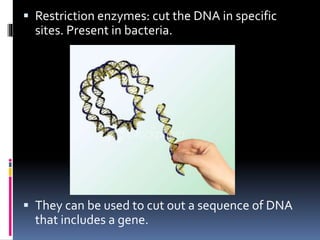
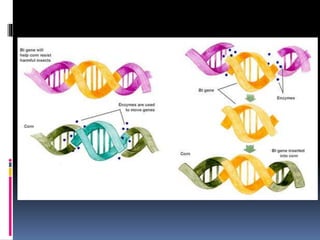
 Restriction enzymes: cut the DNA in specific
sites. Present in bacteria.
 They can be used to cut out a sequence of DNA
that includes a gene.
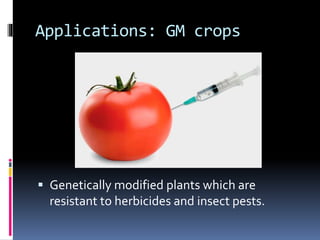
Applications: GM crops
 Genetically modified plants which are
resistant to herbicides and insect pests.
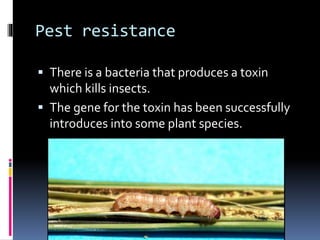
Pest resistance
 There is a bacteria that produces a toxin
which kills insects.
 The gene for the toxin has been successfully
introduces into some plant species.
 Disadvantages?
 Insects are developing immunity to the toxin.
Herbicide resistance
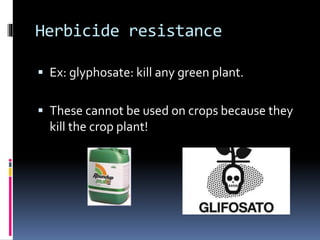
 Ex: glyphosate: kill any green plant.
 These cannot be used on crops because they
kill the crop plant!
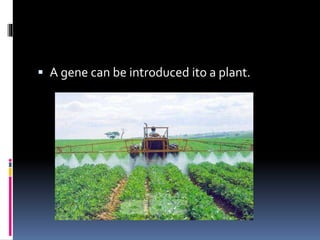
 A gene can be introduced ito a plant.
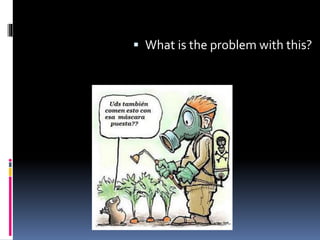
 What is the problem with this?
Other applications
Examples:
 A gene for an enzyme that enables the plant to
extract more iron from the soil can be
transferred to rice.
 A gene that increases vitamin A in plants.
 It is possible to improve the protein, mineral or
vitamin content of the food.
Gene Therapy
 The purpose is to effect a cure by using
recombinant DNA.
 It is directed towards hereditary diseases.
 Hereditary diseases result from the
inheritance of a defective gene.
 If a normal gene could be introduced
permanently into the affected cells, the
disease would be cured.

Biotechnology

  • 1.
  • 2.
    What is biotechnology? Examples?  What are their uses?
  • 3.
     A forensicscientist makes copies of DNA from a crime scene.
  • 4.
     A botanistbreeds flowers for their bright red blooms.
  • 5.
     A geneticistworks to place a human gene into the DNA of a bacteria.  Have you heard about transgenic organisms?
  • 6.
    Biotechnology is...  Theuse and application of living things and biological processes.  New technologies have allowed scientists to directly change DNA.
  • 7.
     Is itsomething new?
  • 8.
     Biotechnology isnot a new field. For thousands of years humans have been doing it.
  • 9.
    Research  What isfermentation?  Are different types of fermentations?  What are their uses?  Link: http://www.argenbio.org/index.php
  • 10.
    Some applications  Whattechniques are used to improve crops and livestock?
  • 12.
     Humans areinterfering with the natural flow of genetic material from one generation to the next one ARTIFICIAL SELECTION
  • 13.
    Making organisms usefulto humans..  Variation occurs naturlly and randomly in all living organisms
  • 14.
    Genetic Engineering  Transferof genes from one organism to another species.
  • 15.
     Restriction enzymes:cut the DNA in specific sites. Present in bacteria.  They can be used to cut out a sequence of DNA that includes a gene.
  • 16.
    Applications: GM crops Genetically modified plants which are resistant to herbicides and insect pests.
  • 17.
    Pest resistance  Thereis a bacteria that produces a toxin which kills insects.  The gene for the toxin has been successfully introduces into some plant species.
  • 19.
  • 20.
     Insects aredeveloping immunity to the toxin.
  • 21.
    Herbicide resistance  Ex:glyphosate: kill any green plant.  These cannot be used on crops because they kill the crop plant!
  • 22.
     A genecan be introduced ito a plant.
  • 23.
     What isthe problem with this?
  • 24.
    Other applications Examples:  Agene for an enzyme that enables the plant to extract more iron from the soil can be transferred to rice.  A gene that increases vitamin A in plants.  It is possible to improve the protein, mineral or vitamin content of the food.
  • 25.
    Gene Therapy  Thepurpose is to effect a cure by using recombinant DNA.  It is directed towards hereditary diseases.  Hereditary diseases result from the inheritance of a defective gene.  If a normal gene could be introduced permanently into the affected cells, the disease would be cured.