CLONING
AMIRA ZULAIKHA 065
NUR AMALINA 067
OBJECTIVES
โ€ข What is cloning?
โ€ข Purposes
โ€ข Types of cloning
โ€ข Risks
Cloning
โ€ข The term clone is derived from the ancient
Greek word ฮบฮปฯŽฮฝ (klลn, โ€œtwigโ€), referring to
the process whereby a new plant can be
created from a twig
โ€ข Production of many identical copies of a
molecule
โ€ข Exact genetic copy of another, every single bit
of DNA is the same between the two
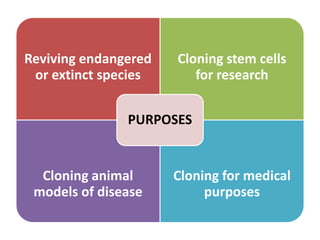
Reviving endangered
or extinct species
Cloning stem cells
for research
Cloning animal
models of disease
Cloning for medical
purposes
PURPOSES
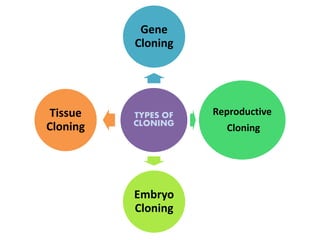
TYPES OF
CLONING
Gene
Cloning
Reproductive
Cloning
Embryo
Cloning
Tissue
Cloning
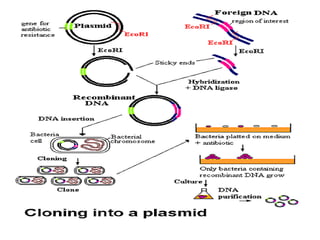
โ€ข DNA cloning or recombinant DNA technology
โ€ข Process of transferring of a specific DNA
fragment on one organism to a self-
replicating genetic component of the cloning
vector such as bacterial plasmid
โ€ข Following transfer of DNA fragment, the
molecule is propagated in the host organism
โ€ข Used widely in genetic engineering for
sequencing genomes and gene therapy
Gene Cloning
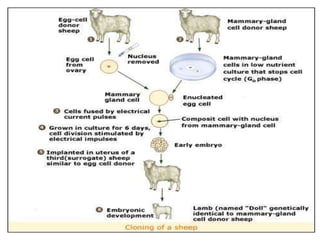
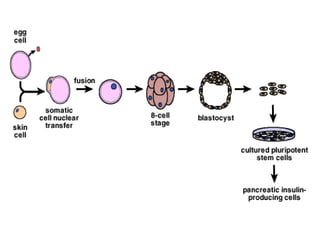
โ€ข To produce an animal having the same nuclear DNA from
the existing animal
โ€ข Uses the principle of somatic cell nuclear transfer (in
which genetic material from the donor cell is transferred
to an egg from which the genetic material has been
removed)
โ€ข Allowed to divide by chemicals or electric current
โ€ข The cloned embryo is then transferred to the uterus of
the host female where it grows into a complete fetus
โ€ข Dolly sheep is the first cloned animal (Roslin Institute,
Edinburgh, Scotland, 1997)
Reproductive Cloning
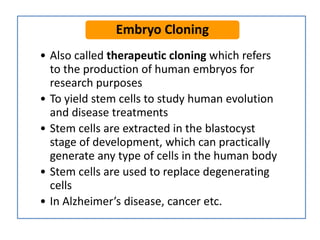
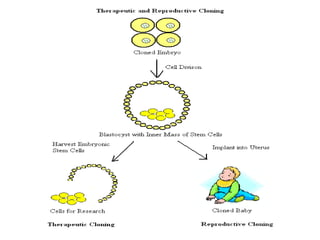
โ€ข Also called therapeutic cloning which refers
to the production of human embryos for
research purposes
โ€ข To yield stem cells to study human evolution
and disease treatments
โ€ข Stem cells are extracted in the blastocyst
stage of development, which can practically
generate any type of cells in the human body
โ€ข Stem cells are used to replace degenerating
cells
โ€ข In Alzheimerโ€™s disease, cancer etc.
Embryo Cloning
โ€ข Called tissue culture
โ€ข Cells are allowed to grow in a suitable
medium
โ€ข The cloned cells are used to study the action
of hormones, antibiotics and pharmaceutical
products
Tissue Cloning
Risks of Cloning
โ€ข High failure rate
i) The enucleated egg and the transferred nucleus may not be compatible
ii) An egg with a newly transferred nucleus may not begin to divide or develop
properly
iii) Implantation of the embryo into the surrogate mother might fail
iv) The pregnancy itself might fail
โ€ข Problems during later development (LOS)
โ€ข Abnormal gene expression patterns
References
โ€ข GK Pal, Textbook of Medical Physiology, 2nd
Edition, Ahuja Publishing House
MELLSS yr1 cloning

MELLSS yr1 cloning

  • 1.
  • 2.
    OBJECTIVES โ€ข What iscloning? โ€ข Purposes โ€ข Types of cloning โ€ข Risks
  • 3.
    Cloning โ€ข The termclone is derived from the ancient Greek word ฮบฮปฯŽฮฝ (klลn, โ€œtwigโ€), referring to the process whereby a new plant can be created from a twig โ€ข Production of many identical copies of a molecule โ€ข Exact genetic copy of another, every single bit of DNA is the same between the two
  • 4.
    Reviving endangered or extinctspecies Cloning stem cells for research Cloning animal models of disease Cloning for medical purposes PURPOSES
  • 5.
  • 6.
    โ€ข DNA cloningor recombinant DNA technology โ€ข Process of transferring of a specific DNA fragment on one organism to a self- replicating genetic component of the cloning vector such as bacterial plasmid โ€ข Following transfer of DNA fragment, the molecule is propagated in the host organism โ€ข Used widely in genetic engineering for sequencing genomes and gene therapy Gene Cloning
  • 7.
    โ€ข To producean animal having the same nuclear DNA from the existing animal โ€ข Uses the principle of somatic cell nuclear transfer (in which genetic material from the donor cell is transferred to an egg from which the genetic material has been removed) โ€ข Allowed to divide by chemicals or electric current โ€ข The cloned embryo is then transferred to the uterus of the host female where it grows into a complete fetus โ€ข Dolly sheep is the first cloned animal (Roslin Institute, Edinburgh, Scotland, 1997) Reproductive Cloning
  • 8.
    โ€ข Also calledtherapeutic cloning which refers to the production of human embryos for research purposes โ€ข To yield stem cells to study human evolution and disease treatments โ€ข Stem cells are extracted in the blastocyst stage of development, which can practically generate any type of cells in the human body โ€ข Stem cells are used to replace degenerating cells โ€ข In Alzheimerโ€™s disease, cancer etc. Embryo Cloning
  • 10.
    โ€ข Called tissueculture โ€ข Cells are allowed to grow in a suitable medium โ€ข The cloned cells are used to study the action of hormones, antibiotics and pharmaceutical products Tissue Cloning
  • 11.
    Risks of Cloning โ€ขHigh failure rate i) The enucleated egg and the transferred nucleus may not be compatible ii) An egg with a newly transferred nucleus may not begin to divide or develop properly iii) Implantation of the embryo into the surrogate mother might fail iv) The pregnancy itself might fail โ€ข Problems during later development (LOS) โ€ข Abnormal gene expression patterns
  • 12.
    References โ€ข GK Pal,Textbook of Medical Physiology, 2nd Edition, Ahuja Publishing House