Genetic engineering
Genetic engineering is the process of taking
 genes and segments of DNA from one
 species and putting them into another
 species, thus breaking the species barrier
 and artificially modifying the DNA of
 various species.
O These changes     in DNA result in an
 alteration of reproductive and hereditary
 processes of the organisms since the
 process is irreversible and the organism's
 offspring will also possess this unique
 DNA (Levine).
O Genetic engineering can be done on any
  living organism because all living
  organisms contain DNA within each cell
  nucleus.
O Genetic      engineering       involves the
  manipulation of DNA and the transfer of
  gene components in order to encourage
  replication of desired traits.
Process
1. Determination of the gene
O it is important first to understand the
  structure of deoxyribonucleic acid, or
  DNA. DNA stores the information that
  determines an organism's hereditary or
  genetic properties. Genetic engineering is
  based on this genetic information.
recombinant-DNA formation,
     or gene splicing.
• Genetic manipulation
• This procedure whereby segments of genetic
  material from one organism are transferred to
  another.
• The basis of the technique lies in the use of
  restriction enzymes that split DNA strands
  wherever     certain     desired   sequences    of
  nucleotides, or specific genes, occur.
• This desired segment of DNA is referred to as
  donor DNA. The process of gene splicing results in
  a series of fragments of DNA, each of which
  express the same desired gene that can then
  combine with plasmids (Rubenstein).
3. Insertion of plasmid
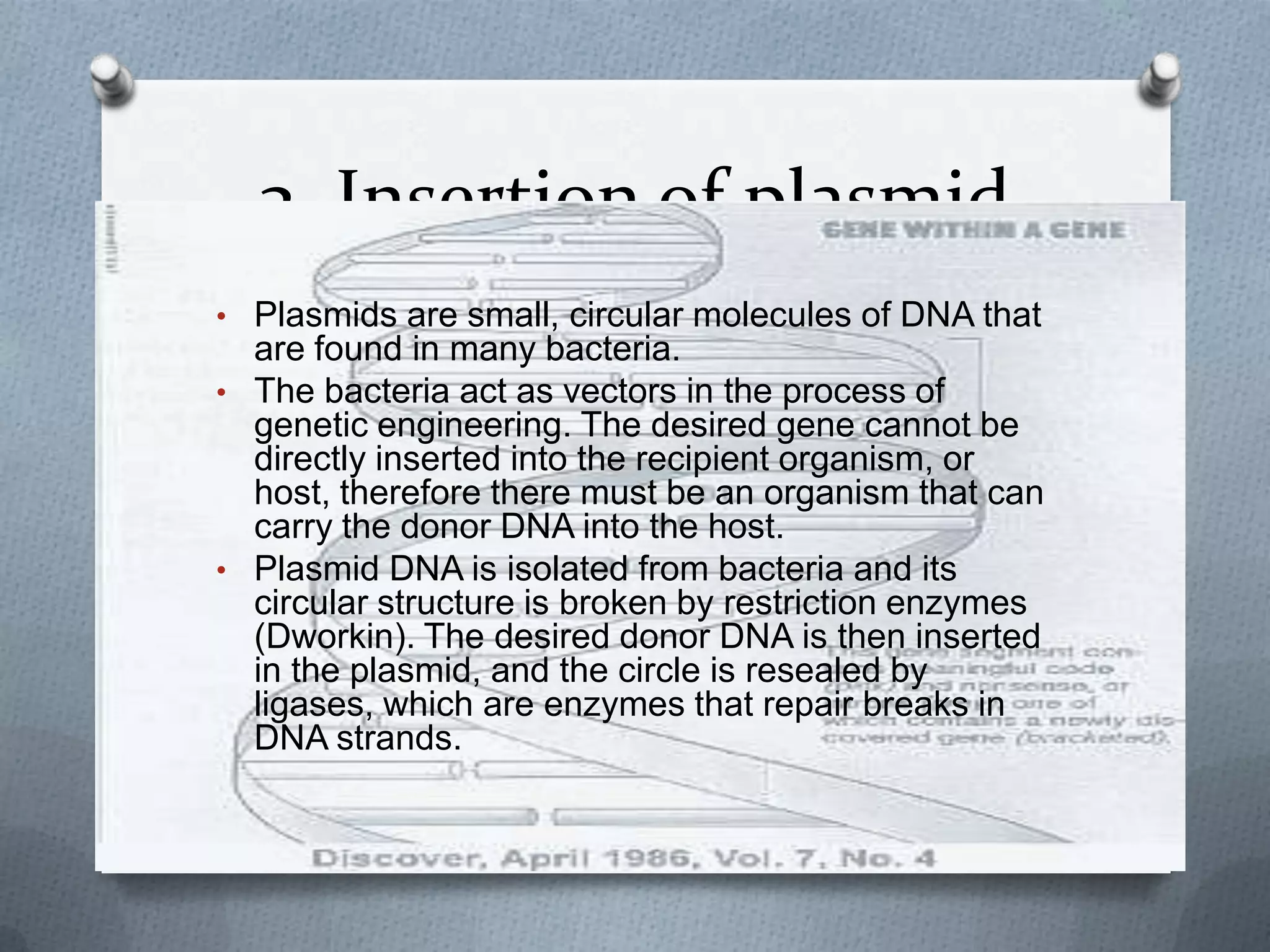
• Plasmids are small, circular molecules of DNA that
  are found in many bacteria.
• The bacteria act as vectors in the process of
  genetic engineering. The desired gene cannot be
  directly inserted into the recipient organism, or
  host, therefore there must be an organism that can
  carry the donor DNA into the host.
• Plasmid DNA is isolated from bacteria and its
  circular structure is broken by restriction enzymes
  (Dworkin). The desired donor DNA is then inserted
  in the plasmid, and the circle is resealed by
  ligases, which are enzymes that repair breaks in
  DNA strands.
4. Cell replication (division)
 • This    reconstructed     plasmid,   which
   contains an extra gene, can be replaced
   in the bacteria, where it is cloned, or
   duplicated, in large numbers.
 • The combined vector and donor DNA
   fragment constitute the recombinant-DNA
   molecule. Once inside a host cell, this
   molecule is replicated along with the
   host's DNA during cell division.
 • These divisions produce a clone of
   identical cells, each having a copy of the
   recombinant-DNA molecule and thus
   permanently       changing    the   genetic
   makeup       of     the   host    organism
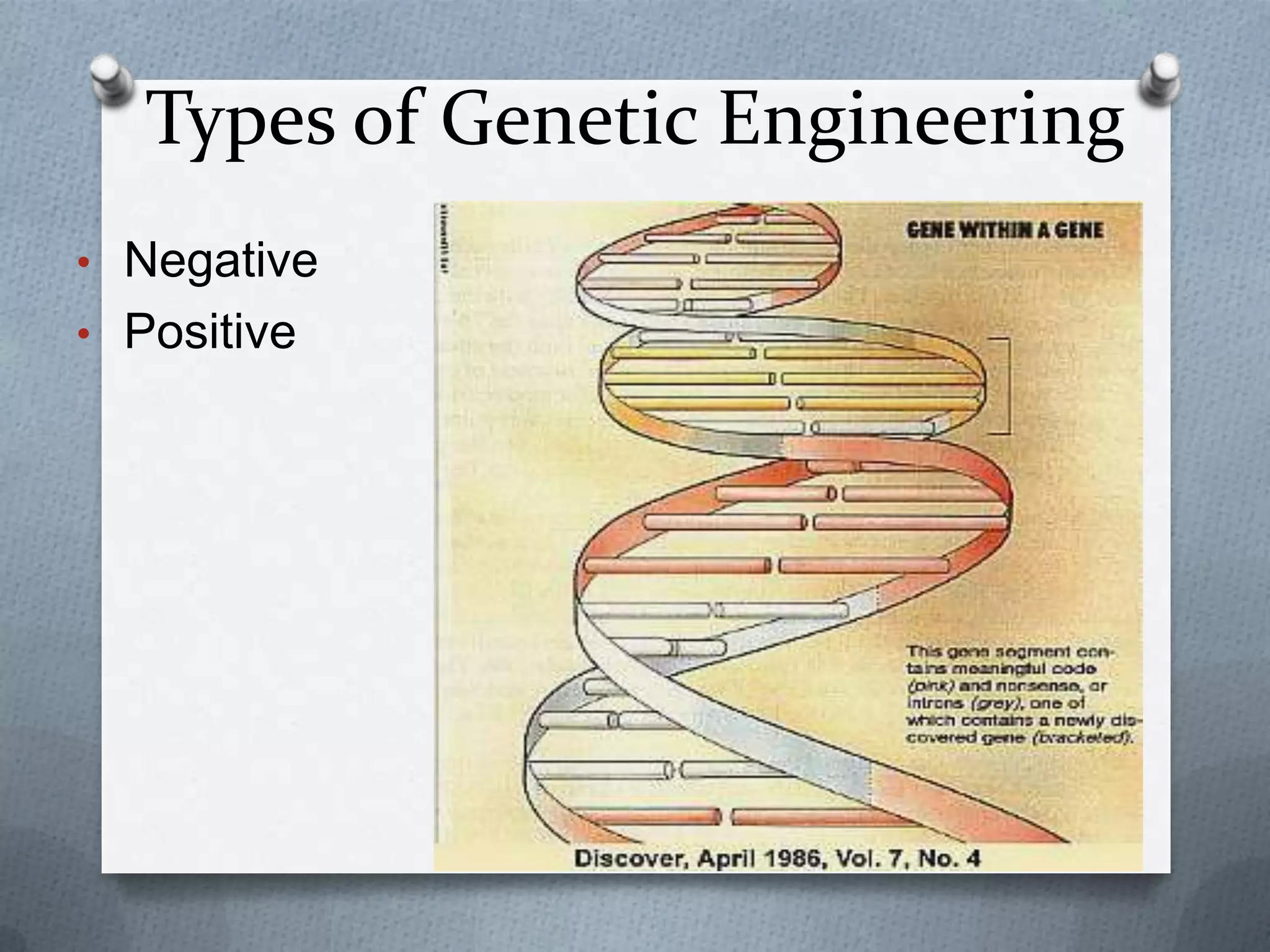
Types of Genetic Engineering
• Negative
• Positive
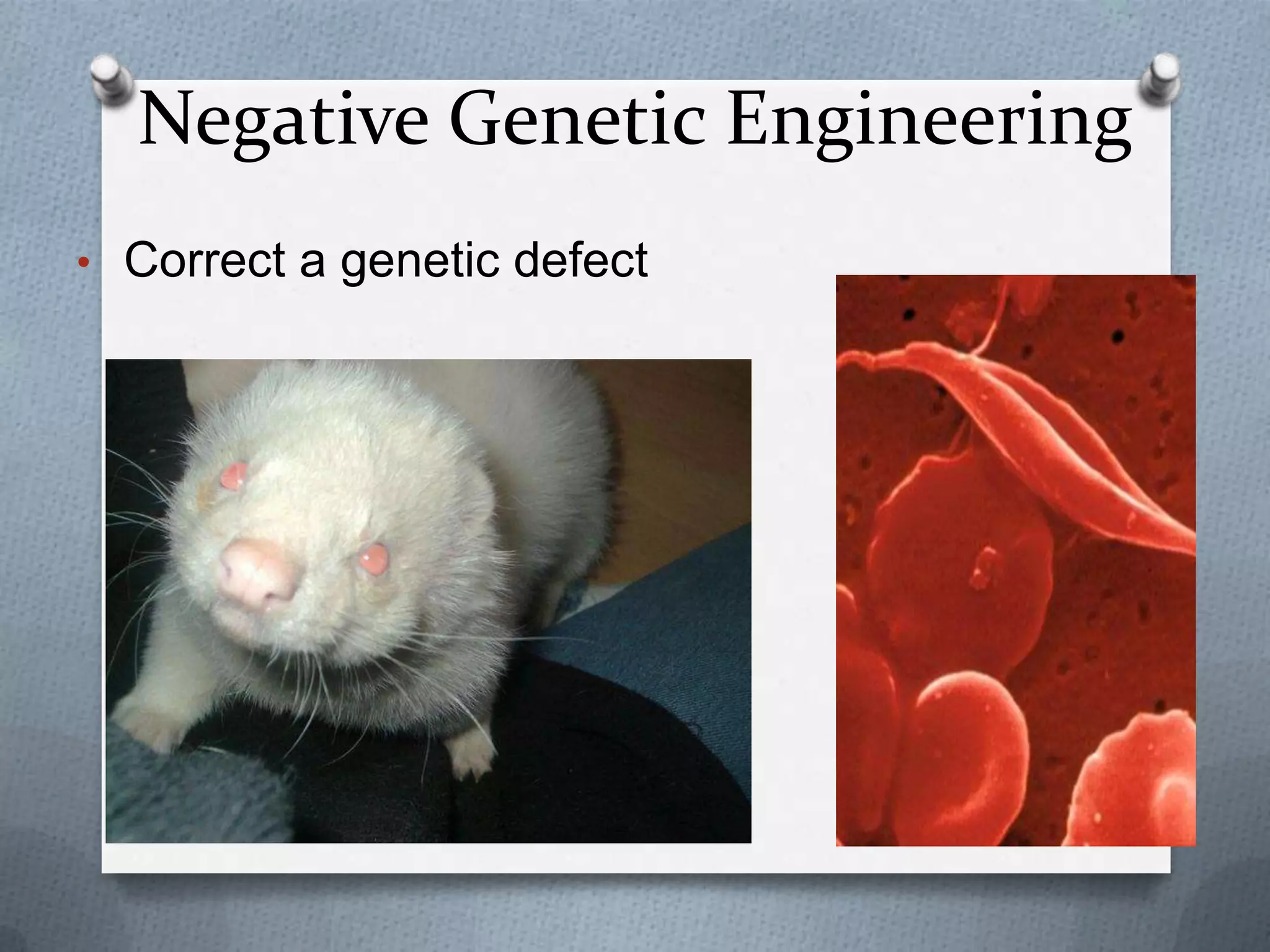
Negative Genetic Engineering
• Correct a genetic defect
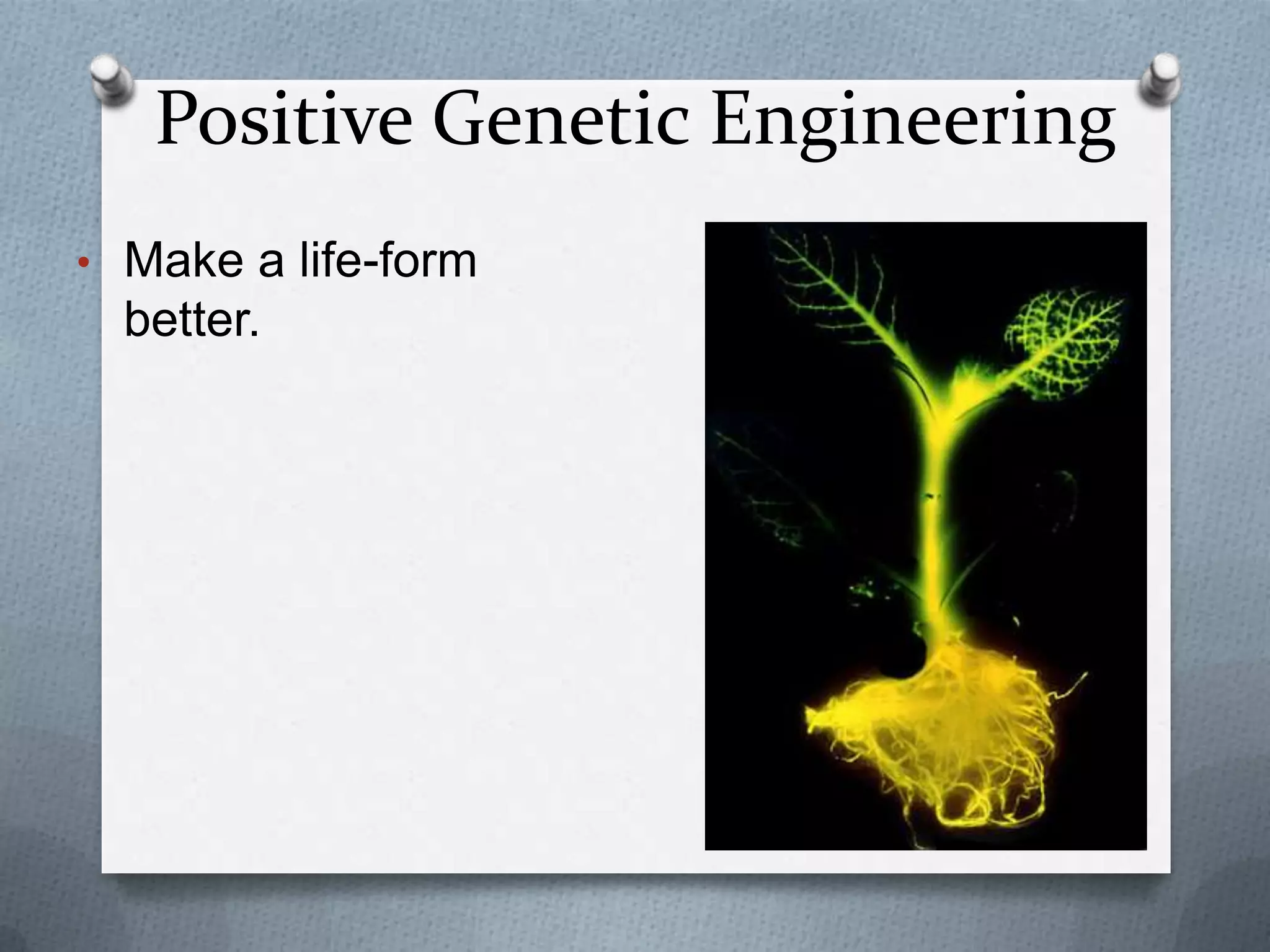
Positive Genetic Engineering
• Make a life-form
  better.
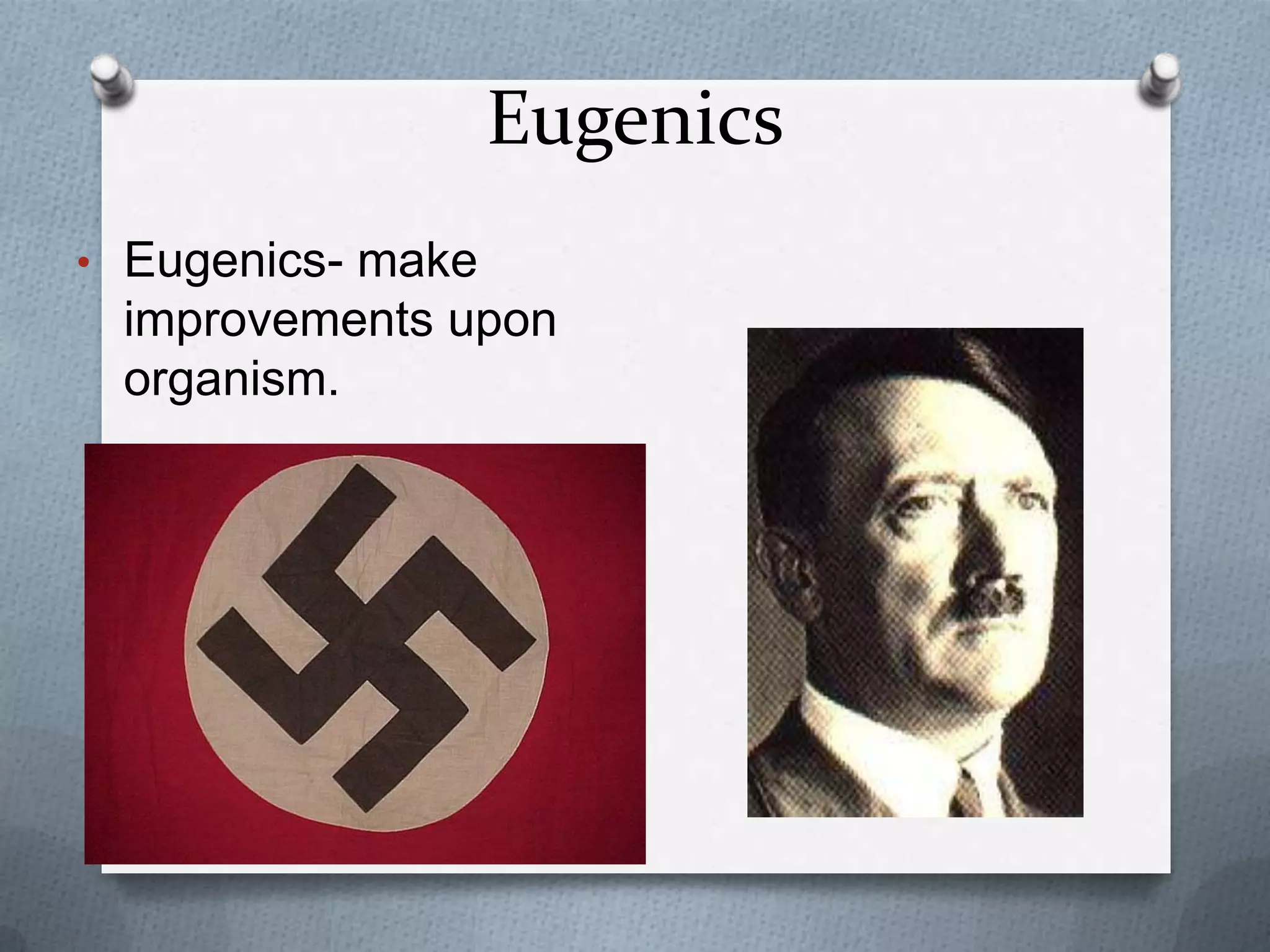
Eugenics
• Eugenics- make
 improvements upon
 organism.
Genetic Therapy
Types of Genetic Therapy
• Somatic Therapy


• Germ line Therapy
Somatic Therapy

• Somatic therapy is a type of genetic therapy that only
  affects the individual.
• Changes are not passed on to any subsequent
  generations or off spring.
Germ line Therapy
• Germ line therapy is a type of genetic therapy that not
  only affects the individual but also the off spring.
•  Changes are passed on to subsequent generations.
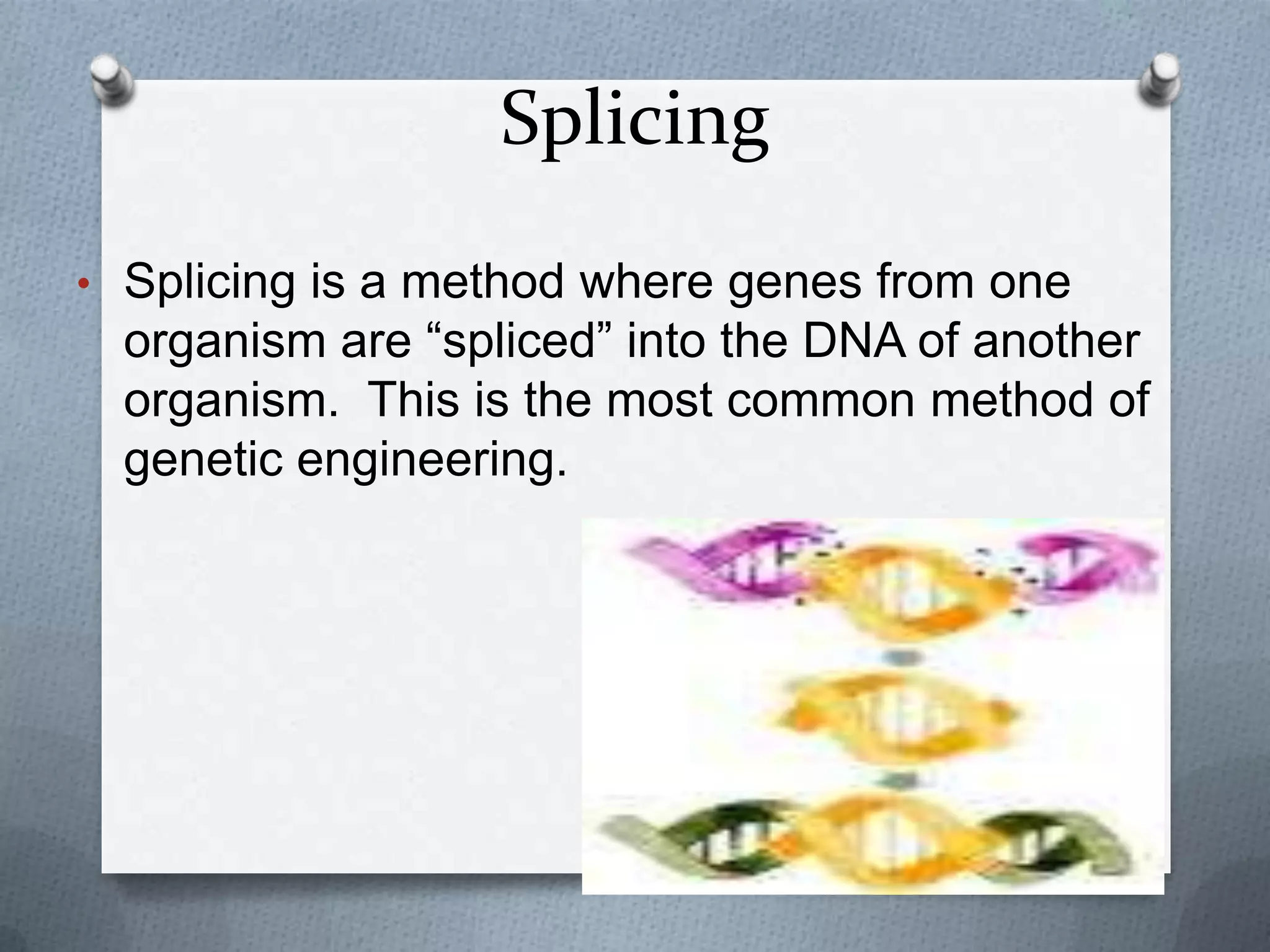
Splicing
• Splicing is a method where genes from one
  organism are “spliced” into the DNA of another
  organism. This is the most common method of
  genetic engineering.

Genetic engineering definition and limitation

  • 1.
  • 2.
    Genetic engineering isthe process of taking genes and segments of DNA from one species and putting them into another species, thus breaking the species barrier and artificially modifying the DNA of various species.
  • 3.
    O These changes in DNA result in an alteration of reproductive and hereditary processes of the organisms since the process is irreversible and the organism's offspring will also possess this unique DNA (Levine).
  • 4.
    O Genetic engineeringcan be done on any living organism because all living organisms contain DNA within each cell nucleus. O Genetic engineering involves the manipulation of DNA and the transfer of gene components in order to encourage replication of desired traits.
  • 5.
  • 6.
    1. Determination ofthe gene O it is important first to understand the structure of deoxyribonucleic acid, or DNA. DNA stores the information that determines an organism's hereditary or genetic properties. Genetic engineering is based on this genetic information.
  • 7.
    recombinant-DNA formation, or gene splicing. • Genetic manipulation • This procedure whereby segments of genetic material from one organism are transferred to another. • The basis of the technique lies in the use of restriction enzymes that split DNA strands wherever certain desired sequences of nucleotides, or specific genes, occur. • This desired segment of DNA is referred to as donor DNA. The process of gene splicing results in a series of fragments of DNA, each of which express the same desired gene that can then combine with plasmids (Rubenstein).
  • 8.
    3. Insertion ofplasmid • Plasmids are small, circular molecules of DNA that are found in many bacteria. • The bacteria act as vectors in the process of genetic engineering. The desired gene cannot be directly inserted into the recipient organism, or host, therefore there must be an organism that can carry the donor DNA into the host. • Plasmid DNA is isolated from bacteria and its circular structure is broken by restriction enzymes (Dworkin). The desired donor DNA is then inserted in the plasmid, and the circle is resealed by ligases, which are enzymes that repair breaks in DNA strands.
  • 9.
    4. Cell replication(division) • This reconstructed plasmid, which contains an extra gene, can be replaced in the bacteria, where it is cloned, or duplicated, in large numbers. • The combined vector and donor DNA fragment constitute the recombinant-DNA molecule. Once inside a host cell, this molecule is replicated along with the host's DNA during cell division. • These divisions produce a clone of identical cells, each having a copy of the recombinant-DNA molecule and thus permanently changing the genetic makeup of the host organism
  • 10.
    Types of GeneticEngineering • Negative • Positive
  • 11.
    Negative Genetic Engineering •Correct a genetic defect
  • 12.
    Positive Genetic Engineering •Make a life-form better.
  • 13.
    Eugenics • Eugenics- make improvements upon organism.
  • 14.
    Genetic Therapy Types ofGenetic Therapy • Somatic Therapy • Germ line Therapy
  • 15.
    Somatic Therapy • Somatictherapy is a type of genetic therapy that only affects the individual. • Changes are not passed on to any subsequent generations or off spring.
  • 16.
    Germ line Therapy •Germ line therapy is a type of genetic therapy that not only affects the individual but also the off spring. • Changes are passed on to subsequent generations.
  • 17.
    Splicing • Splicing isa method where genes from one organism are “spliced” into the DNA of another organism. This is the most common method of genetic engineering.