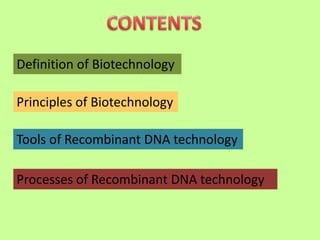
Definition of Biotechnology
Principles of Biotechnology
Tools of Recombinant DNA technology
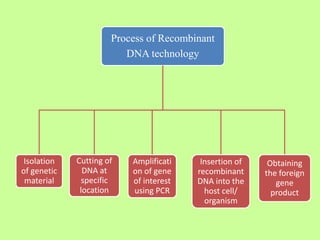
Processes of Recombinant DNA technology
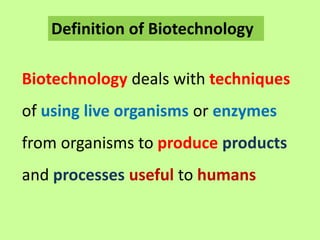
Definition of Biotechnology
Biotechnology deals with techniques
of using live organisms or enzymes
from organisms to produce products
and processes useful to humans
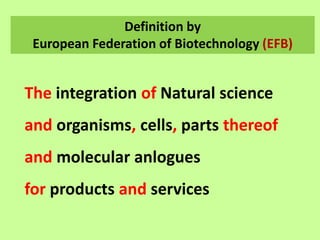
Definition by
European Federation of Biotechnology (EFB)
The integration of Natural science
and organisms, cells, parts thereof
and molecular anlogues
for products and services
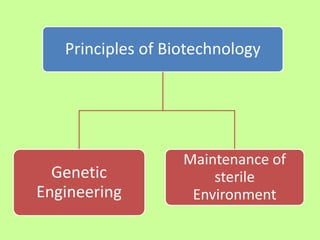
Principles of Biotechnology
Genetic
Engineering
Maintenance of
sterile
Environment
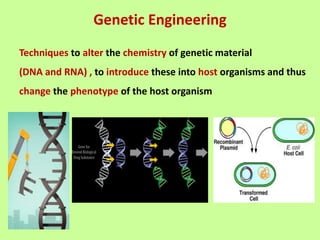
Genetic Engineering
Techniques to alter the chemistry of genetic material
(DNA and RNA) , to introduce these into host organisms and thus
change the phenotype of the host organism
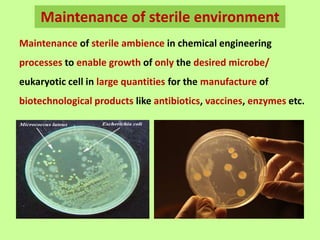
Maintenance of sterile environment
Maintenance of sterile ambience in chemical engineering
processes to enable growth of only the desired microbe/
eukaryotic cell in large quantities for the manufacture of
biotechnological products like antibiotics, vaccines, enzymes etc.
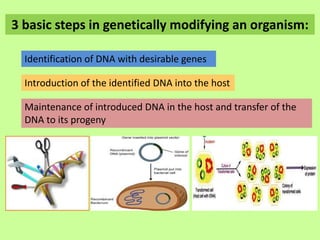
3 basic steps in genetically modifying an organism:
Identification of DNA with desirable genes
Introduction of the identified DNA into the host
Maintenance of introduced DNA in the host and transfer of the
DNA to its progeny
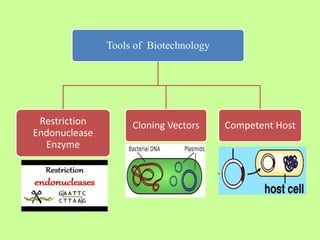
Tools of Biotechnology
Restriction
Endonuclease
Enzyme
Cloning Vectors Competent Host
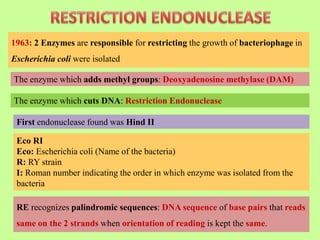
1963: 2 Enzymes are responsible for restricting the growth of bacteriophage in
Escherichia coli were isolated
The enzyme which adds methyl groups: Deoxyadenosine methylase (DAM)
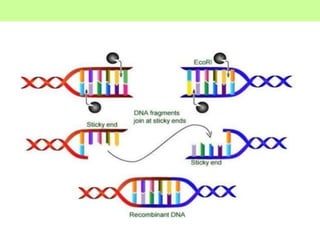
The enzyme which cuts DNA: Restriction Endonuclease
First endonuclease found was Hind II
Eco RI
Eco: Escherichia coli (Name of the bacteria)
R: RY strain
I: Roman number indicating the order in which enzyme was isolated from the
bacteria
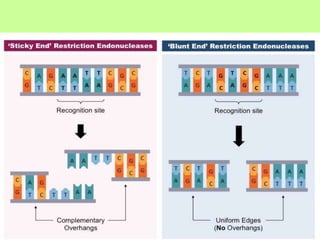
RE recognizes palindromic sequences: DNA sequence of base pairs that reads
same on the 2 strands when orientation of reading is kept the same.
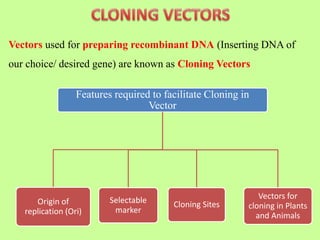
Features required to facilitate Cloning in
Vector
Origin of
replication (Ori)
Selectable
marker
Cloning Sites
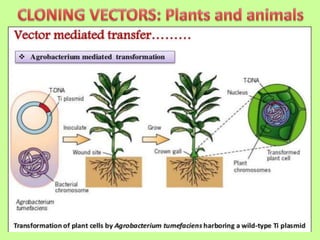
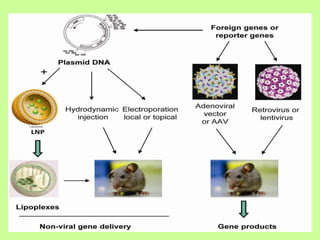
Vectors for
cloning in Plants
and Animals
Vectors used for preparing recombinant DNA (Inserting DNA of
our choice/ desired gene) are known as Cloning Vectors
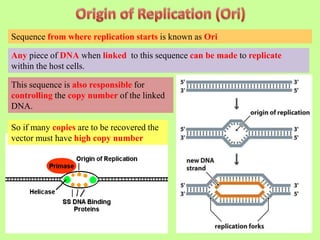
Sequence from where replication starts is known as Ori
This sequence is also responsible for
controlling the copy number of the linked
DNA.
So if many copies are to be recovered the
vector must have high copy number
Any piece of DNA when linked to this sequence can be made to replicate
within the host cells.
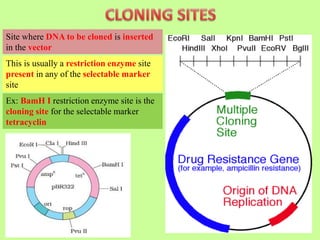
Site where DNA to be cloned is inserted
in the vector
This is usually a restriction enzyme site
present in any of the selectable marker
site
Ex: BamH I restriction enzyme site is the
cloning site for the selectable marker
tetracyclin
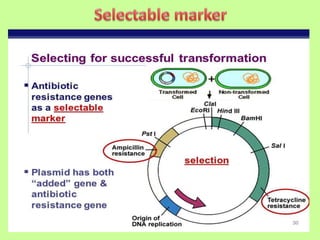
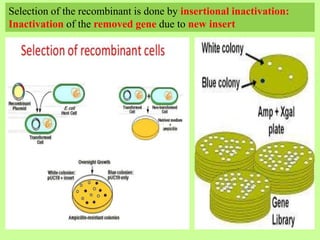
Selection of the recombinant is done by insertional inactivation:
Inactivation of the removed gene due to new insert
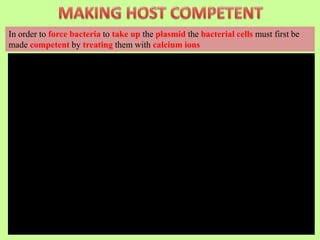
In order to force bacteria to take up the plasmid the bacterial cells must first be
made competent by treating them with calcium ions
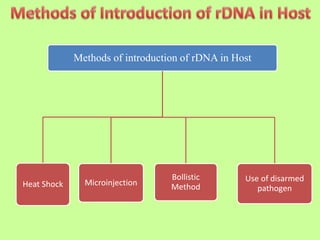
Methods of introduction of rDNA in Host
Heat Shock Microinjection
Bollistic
Method
Use of disarmed
pathogen
Process of Recombinant
DNA technology
Isolation
of genetic
material
Cutting of
DNA at
specific
location
Amplificati
on of gene
of interest
using PCR
Insertion of
recombinant
DNA into the
host cell/
organism
Obtaining
the foreign
gene
product
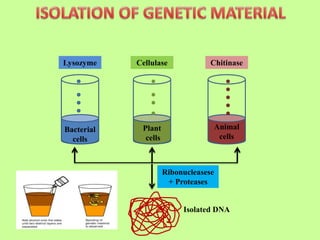
Lysozyme Cellulase Chitinase
Bacterial
cells
Plant
cells
Animal
cells
Ribonucleasese
+ Proteases
Isolated DNA
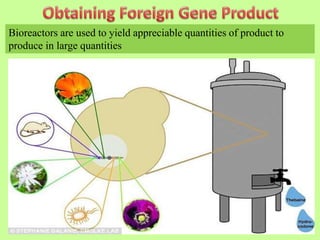
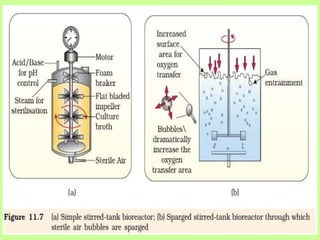
Bioreactors are used to yield appreciable quantities of product to
produce in large quantities
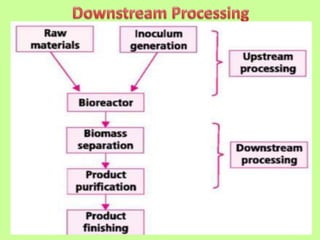
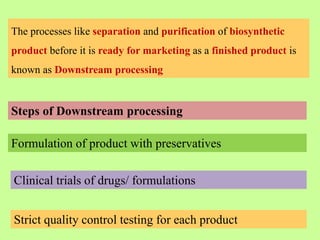
The processes like separation and purification of biosynthetic
product before it is ready for marketing as a finished product is
known as Downstream processing
Steps of Downstream processing
Formulation of product with preservatives
Clinical trials of drugs/ formulations
Strict quality control testing for each product

Biotechnoloy principles and processes

  • 2.
    Definition of Biotechnology Principlesof Biotechnology Tools of Recombinant DNA technology Processes of Recombinant DNA technology
  • 3.
    Definition of Biotechnology Biotechnologydeals with techniques of using live organisms or enzymes from organisms to produce products and processes useful to humans
  • 4.
    Definition by European Federationof Biotechnology (EFB) The integration of Natural science and organisms, cells, parts thereof and molecular anlogues for products and services
  • 5.
  • 6.
    Genetic Engineering Techniques toalter the chemistry of genetic material (DNA and RNA) , to introduce these into host organisms and thus change the phenotype of the host organism
  • 7.
    Maintenance of sterileenvironment Maintenance of sterile ambience in chemical engineering processes to enable growth of only the desired microbe/ eukaryotic cell in large quantities for the manufacture of biotechnological products like antibiotics, vaccines, enzymes etc.
  • 8.
    3 basic stepsin genetically modifying an organism: Identification of DNA with desirable genes Introduction of the identified DNA into the host Maintenance of introduced DNA in the host and transfer of the DNA to its progeny
  • 9.
  • 10.
    1963: 2 Enzymesare responsible for restricting the growth of bacteriophage in Escherichia coli were isolated The enzyme which adds methyl groups: Deoxyadenosine methylase (DAM) The enzyme which cuts DNA: Restriction Endonuclease First endonuclease found was Hind II Eco RI Eco: Escherichia coli (Name of the bacteria) R: RY strain I: Roman number indicating the order in which enzyme was isolated from the bacteria RE recognizes palindromic sequences: DNA sequence of base pairs that reads same on the 2 strands when orientation of reading is kept the same.
  • 14.
    Features required tofacilitate Cloning in Vector Origin of replication (Ori) Selectable marker Cloning Sites Vectors for cloning in Plants and Animals Vectors used for preparing recombinant DNA (Inserting DNA of our choice/ desired gene) are known as Cloning Vectors
  • 15.
    Sequence from wherereplication starts is known as Ori This sequence is also responsible for controlling the copy number of the linked DNA. So if many copies are to be recovered the vector must have high copy number Any piece of DNA when linked to this sequence can be made to replicate within the host cells.
  • 17.
    Site where DNAto be cloned is inserted in the vector This is usually a restriction enzyme site present in any of the selectable marker site Ex: BamH I restriction enzyme site is the cloning site for the selectable marker tetracyclin
  • 18.
    Selection of therecombinant is done by insertional inactivation: Inactivation of the removed gene due to new insert
  • 21.
    In order toforce bacteria to take up the plasmid the bacterial cells must first be made competent by treating them with calcium ions
  • 22.
    Methods of introductionof rDNA in Host Heat Shock Microinjection Bollistic Method Use of disarmed pathogen
  • 26.
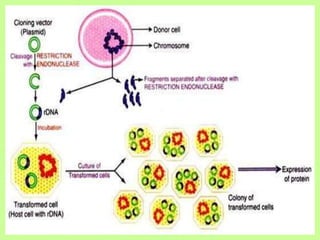
    Process of Recombinant DNAtechnology Isolation of genetic material Cutting of DNA at specific location Amplificati on of gene of interest using PCR Insertion of recombinant DNA into the host cell/ organism Obtaining the foreign gene product
  • 27.
  • 31.
    Bioreactors are usedto yield appreciable quantities of product to produce in large quantities
  • 35.
    The processes likeseparation and purification of biosynthetic product before it is ready for marketing as a finished product is known as Downstream processing Steps of Downstream processing Formulation of product with preservatives Clinical trials of drugs/ formulations Strict quality control testing for each product