1. Mutation & Natural Selection
2. Natural DNA recombination – genetic modification.
 Recombinant DNA Technology:
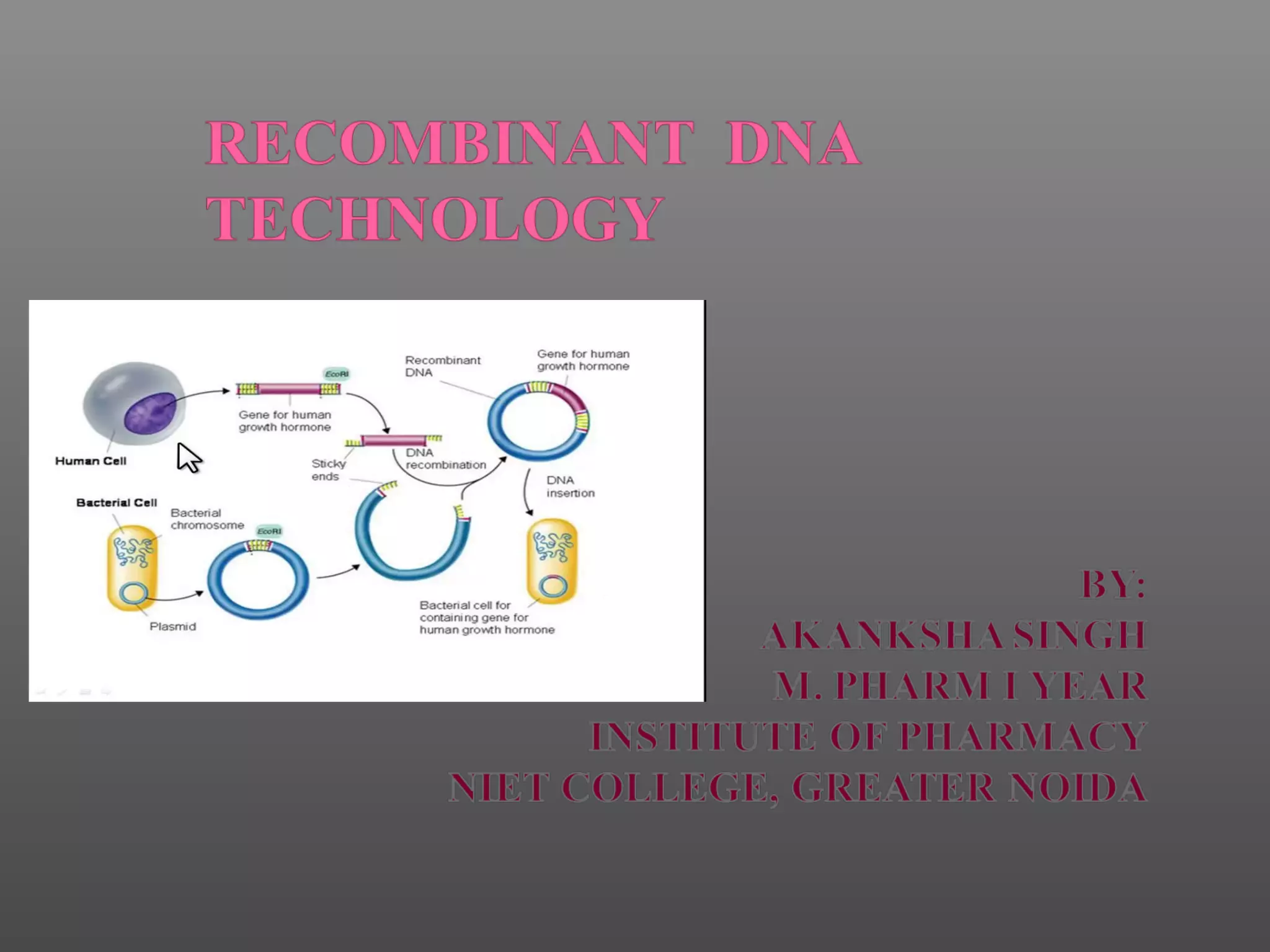
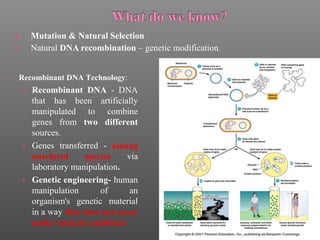
› Recombinant DNA - DNA
that has been artificially
manipulated to combine
genes from two different
sources.
› Genes transferred - among
unrelated species via
laboratory manipulation.
› Genetic engineering- human
manipulation of an
organism's genetic material
in a way that does not occur
under natural conditions
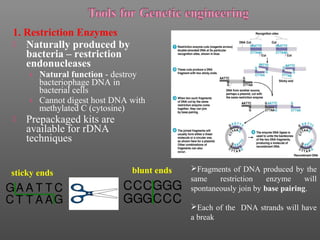
1. Restriction Enzymes
 Naturally produced by
bacteria – restriction
endonucleases
› Natural function - destroy
bacteriophage DNA in
bacterial cells
› Cannot digest host DNA with
methylated C (cytosine)
 Prepackaged kits are
available for rDNA
techniques
sticky ends blunt ends Fragments of DNA produced by the
same restriction enzyme will
spontaneously join by base pairing.
Each of the DNA strands will have
a break
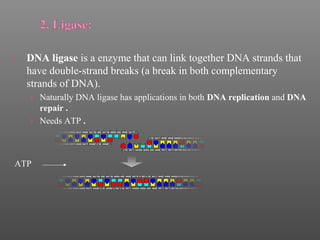
 DNA ligase is a enzyme that can link together DNA strands that
have double-strand breaks (a break in both complementary
strands of DNA).
› Naturally DNA ligase has applications in both DNA replication and DNA
repair .
› Needs ATP .
ATP
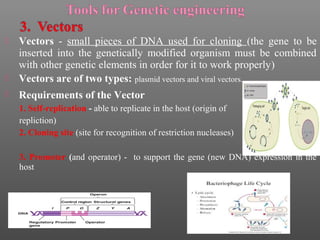
 Vectors - small pieces of DNA used for cloning (the gene to be
inserted into the genetically modified organism must be combined
with other genetic elements in order for it to work properly)
 Vectors are of two types: plasmid vectors and viral vectors.
 Requirements of the Vector
1. Self-replication - able to replicate in the host (origin of
repliction)
2. Cloning site (site for recognition of restriction nucleases)
3. Promoter (and operator) - to support the gene (new DNA) expression in the
host
1. Bacteria
- E. coli - used because is easily grown and its
genomics are well understood.
› Gene product is purified from host cells
2. Yeasts - Saccharomyces cerevisiae
› Used because it is easily grown and its genomics are known
› May express eukaryotic genes easily
› Continuously secrete the gene product.
› Easily collected and purified
3. Plant cells and whole plants
› May express eukaryotic genes easily
› Plants are easily grown - produce plants with new properties.
4. Mammalian cells
› May express eukaryotic genes easily
› Harder to grow
› Medical use.
Hosts for DNA recombinant technology
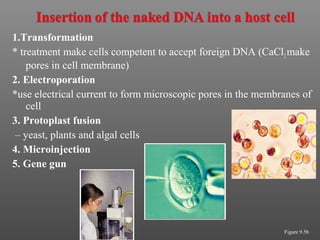
1.Transformation
* treatment make cells competent to accept foreign DNA (CaCl2 make
pores in cell membrane)
2. Electroporation
*use electrical current to form microscopic pores in the membranes of
cell
3. Protoplast fusion
– yeast, plants and algal cells
4. Microinjection
5. Gene gun
Figure 9.5b
1. Scientific applications
› Many copies of DNA can be
produced
› Increase understanding of DNA
› Identify mutations in DNA
› Alter the phenotype of an
organism
› Bioinformatics is the use of
computer applications to study
genetic data;
› Proteomics – proteomics is the
study of a cell’s proteins.
 determination of all the
proteins expressing in the cell
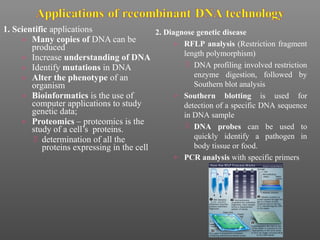
2. Diagnose genetic disease
› RFLP analysis (Restriction fragment
length polymorphism)
 DNA profiling involved restriction
enzyme digestion, followed by
Southern blot analysis
› Southern blotting is used for
detection of a specific DNA sequence
in DNA sample
 DNA probes can be used to
quickly identify a pathogen in
body tissue or food.
› PCR analysis with specific primers
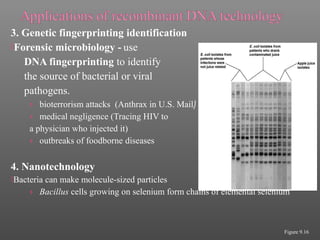
3. Genetic fingerprinting identification
Forensic microbiology - use
DNA fingerprinting to identify
the source of bacterial or viral
pathogens.
› bioterrorism attacks (Anthrax in U.S. Mail)
› medical negligence (Tracing HIV to
a physician who injected it)
› outbreaks of foodborne diseases
4. Nanotechnology
Bacteria can make molecule-sized particles
› Bacillus cells growing on selenium form chains of elemental selenium
Figure 9.16
5. Agricultural Applications
› Cells from plants with desirable
characteristics can be cloned to
produce many identical cells, then
can be used to produce whole
plants from which seeds can be
harvested.
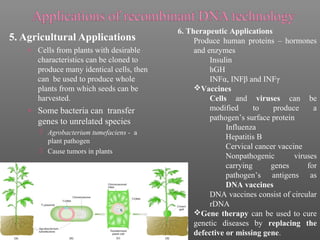
› Some bacteria can transfer
genes to unrelated species
 Agrobacterium tumefaciens - a
plant pathogen
 Cause tumors in plants
6. Therapeutic Applications
Produce human proteins – hormones
and enzymes
Insulin
hGH
INFα, INFβ and INFγ
Vaccines
Cells and viruses can be
modified to produce a
pathogen’s surface protein
Influenza
Hepatitis B
Cervical cancer vaccine
Nonpathogenic viruses
carrying genes for
pathogen’s antigens as
DNA vaccines
DNA vaccines consist of circular
rDNA
Gene therapy can be used to cure
genetic diseases by replacing the
defective or missing gene.
 Accidental release - strict safety standards are used to avoid it
› Some microbes used in recombinant DNA cloning have been altered so
that they cannot survive outside the laboratory.
› Microorganisms intended for use in the environment may be modified to
contain suicide genes so that the organisms do not persist in the
environment.
 Ethical questions
› Should employers and insurance companies have access to a person’s
genetic records?
› Will some people be targeted for either breeding or sterilization?
› Will genetic counseling be available to everyone?
 GMO - Genetically modified crops must be safe for consumption and for
release in the environment.
THANK YOU

Rdna ppt presntation

  • 2.
    1. Mutation &Natural Selection 2. Natural DNA recombination – genetic modification.  Recombinant DNA Technology: › Recombinant DNA - DNA that has been artificially manipulated to combine genes from two different sources. › Genes transferred - among unrelated species via laboratory manipulation. › Genetic engineering- human manipulation of an organism's genetic material in a way that does not occur under natural conditions
  • 3.
    1. Restriction Enzymes Naturally produced by bacteria – restriction endonucleases › Natural function - destroy bacteriophage DNA in bacterial cells › Cannot digest host DNA with methylated C (cytosine)  Prepackaged kits are available for rDNA techniques sticky ends blunt ends Fragments of DNA produced by the same restriction enzyme will spontaneously join by base pairing. Each of the DNA strands will have a break
  • 4.
     DNA ligaseis a enzyme that can link together DNA strands that have double-strand breaks (a break in both complementary strands of DNA). › Naturally DNA ligase has applications in both DNA replication and DNA repair . › Needs ATP . ATP
  • 5.
     Vectors -small pieces of DNA used for cloning (the gene to be inserted into the genetically modified organism must be combined with other genetic elements in order for it to work properly)  Vectors are of two types: plasmid vectors and viral vectors.  Requirements of the Vector 1. Self-replication - able to replicate in the host (origin of repliction) 2. Cloning site (site for recognition of restriction nucleases) 3. Promoter (and operator) - to support the gene (new DNA) expression in the host
  • 6.
    1. Bacteria - E.coli - used because is easily grown and its genomics are well understood. › Gene product is purified from host cells 2. Yeasts - Saccharomyces cerevisiae › Used because it is easily grown and its genomics are known › May express eukaryotic genes easily › Continuously secrete the gene product. › Easily collected and purified 3. Plant cells and whole plants › May express eukaryotic genes easily › Plants are easily grown - produce plants with new properties. 4. Mammalian cells › May express eukaryotic genes easily › Harder to grow › Medical use. Hosts for DNA recombinant technology
  • 7.
    1.Transformation * treatment makecells competent to accept foreign DNA (CaCl2 make pores in cell membrane) 2. Electroporation *use electrical current to form microscopic pores in the membranes of cell 3. Protoplast fusion – yeast, plants and algal cells 4. Microinjection 5. Gene gun Figure 9.5b
  • 8.
    1. Scientific applications ›Many copies of DNA can be produced › Increase understanding of DNA › Identify mutations in DNA › Alter the phenotype of an organism › Bioinformatics is the use of computer applications to study genetic data; › Proteomics – proteomics is the study of a cell’s proteins.  determination of all the proteins expressing in the cell 2. Diagnose genetic disease › RFLP analysis (Restriction fragment length polymorphism)  DNA profiling involved restriction enzyme digestion, followed by Southern blot analysis › Southern blotting is used for detection of a specific DNA sequence in DNA sample  DNA probes can be used to quickly identify a pathogen in body tissue or food. › PCR analysis with specific primers
  • 9.
    3. Genetic fingerprintingidentification Forensic microbiology - use DNA fingerprinting to identify the source of bacterial or viral pathogens. › bioterrorism attacks (Anthrax in U.S. Mail) › medical negligence (Tracing HIV to a physician who injected it) › outbreaks of foodborne diseases 4. Nanotechnology Bacteria can make molecule-sized particles › Bacillus cells growing on selenium form chains of elemental selenium Figure 9.16
  • 10.
    5. Agricultural Applications ›Cells from plants with desirable characteristics can be cloned to produce many identical cells, then can be used to produce whole plants from which seeds can be harvested. › Some bacteria can transfer genes to unrelated species  Agrobacterium tumefaciens - a plant pathogen  Cause tumors in plants 6. Therapeutic Applications Produce human proteins – hormones and enzymes Insulin hGH INFα, INFβ and INFγ Vaccines Cells and viruses can be modified to produce a pathogen’s surface protein Influenza Hepatitis B Cervical cancer vaccine Nonpathogenic viruses carrying genes for pathogen’s antigens as DNA vaccines DNA vaccines consist of circular rDNA Gene therapy can be used to cure genetic diseases by replacing the defective or missing gene.
  • 11.
     Accidental release- strict safety standards are used to avoid it › Some microbes used in recombinant DNA cloning have been altered so that they cannot survive outside the laboratory. › Microorganisms intended for use in the environment may be modified to contain suicide genes so that the organisms do not persist in the environment.  Ethical questions › Should employers and insurance companies have access to a person’s genetic records? › Will some people be targeted for either breeding or sterilization? › Will genetic counseling be available to everyone?  GMO - Genetically modified crops must be safe for consumption and for release in the environment.
  • 12.