Microbial genetics
Bio 433
By
Dr. Mona Othman Albureikan
Genetic engineering and microorganisms
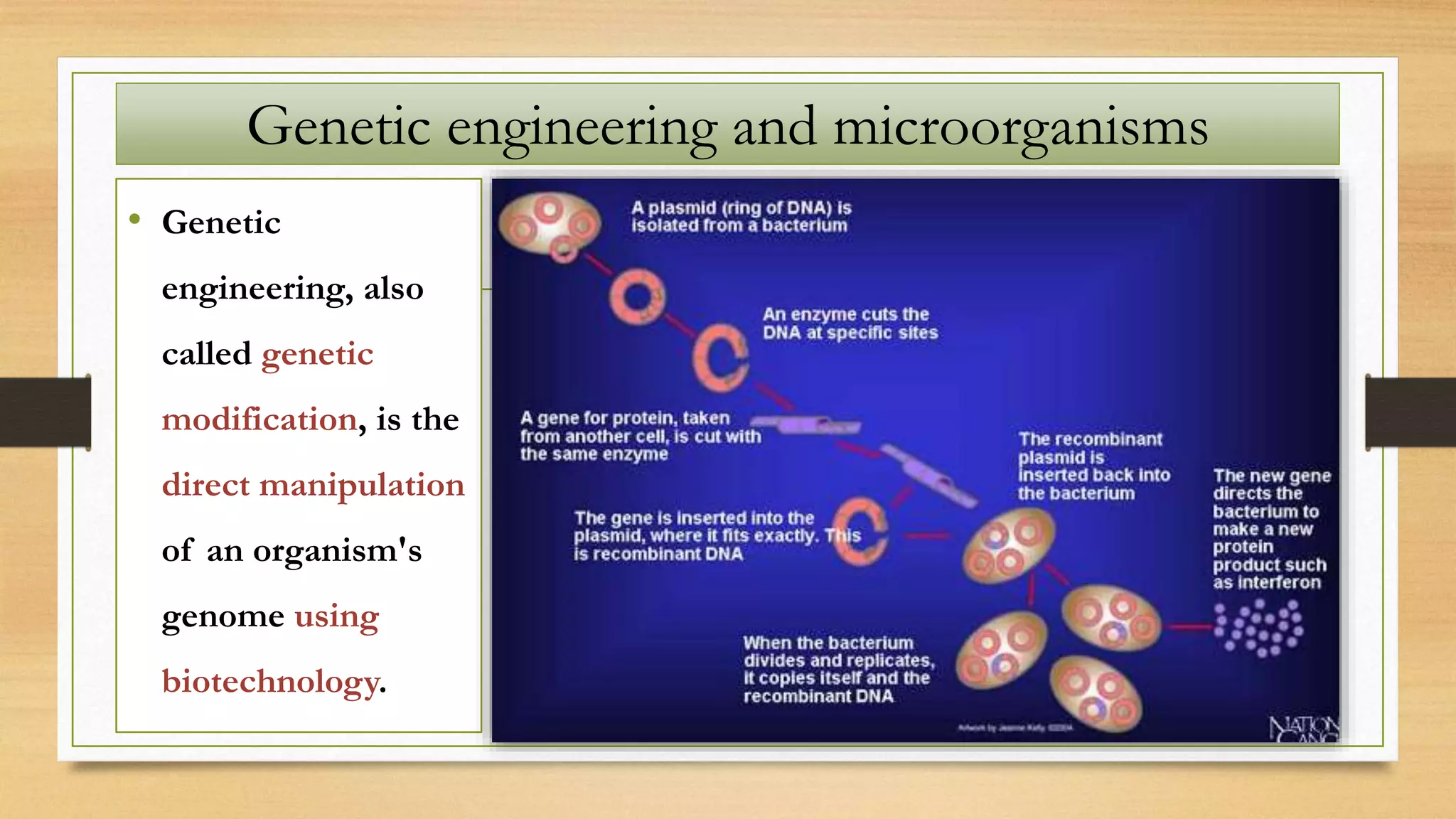
• Genetic
engineering, also
called genetic
modification, is the
direct manipulation
of an organism's
genome using
biotechnology.
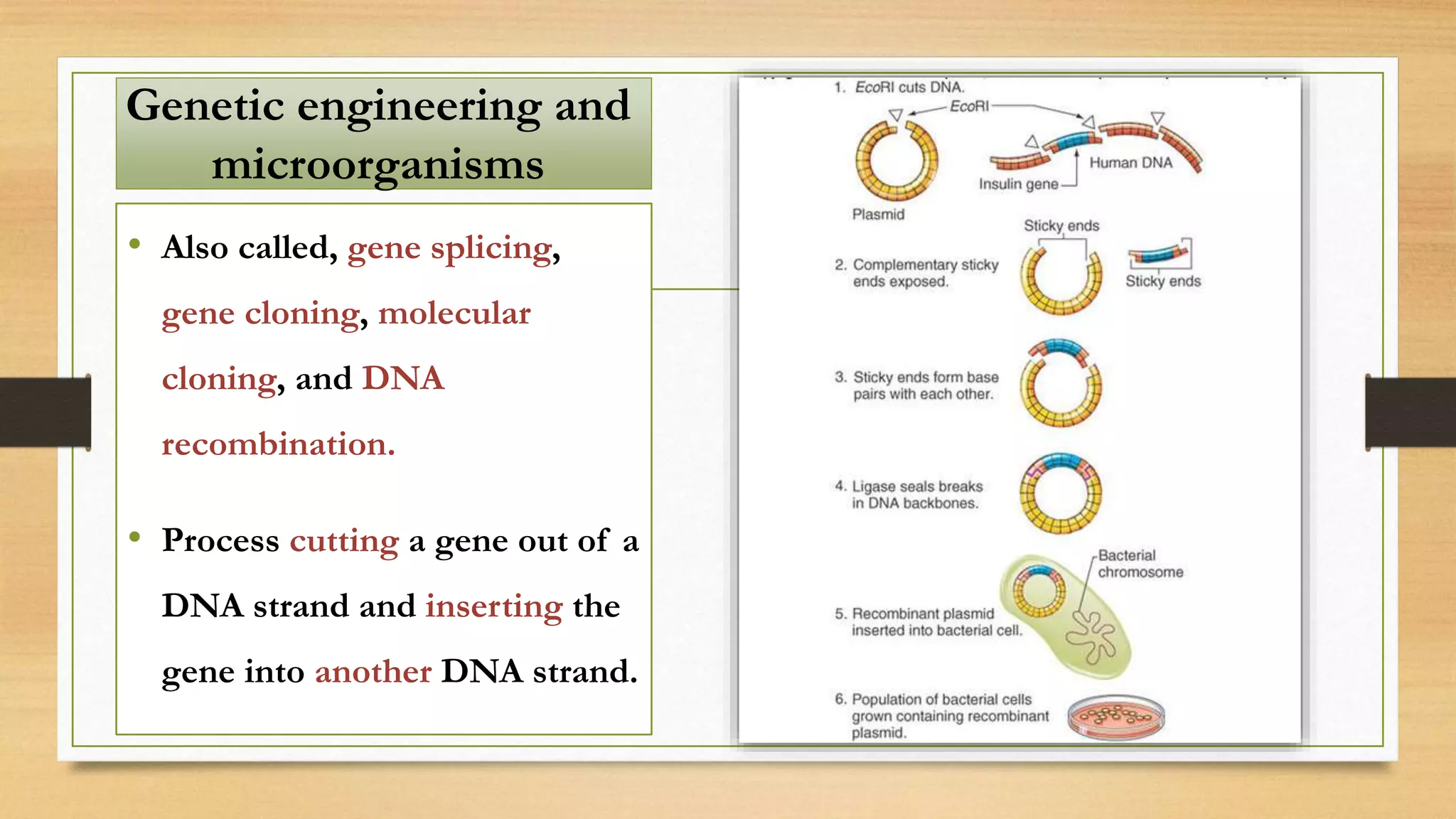
• Also called, gene splicing,
gene cloning, molecular
cloning, and DNA
recombination.
• Process cutting a gene out of a
DNA strand and inserting the
gene into another DNA strand.
Genetic engineering and
microorganisms
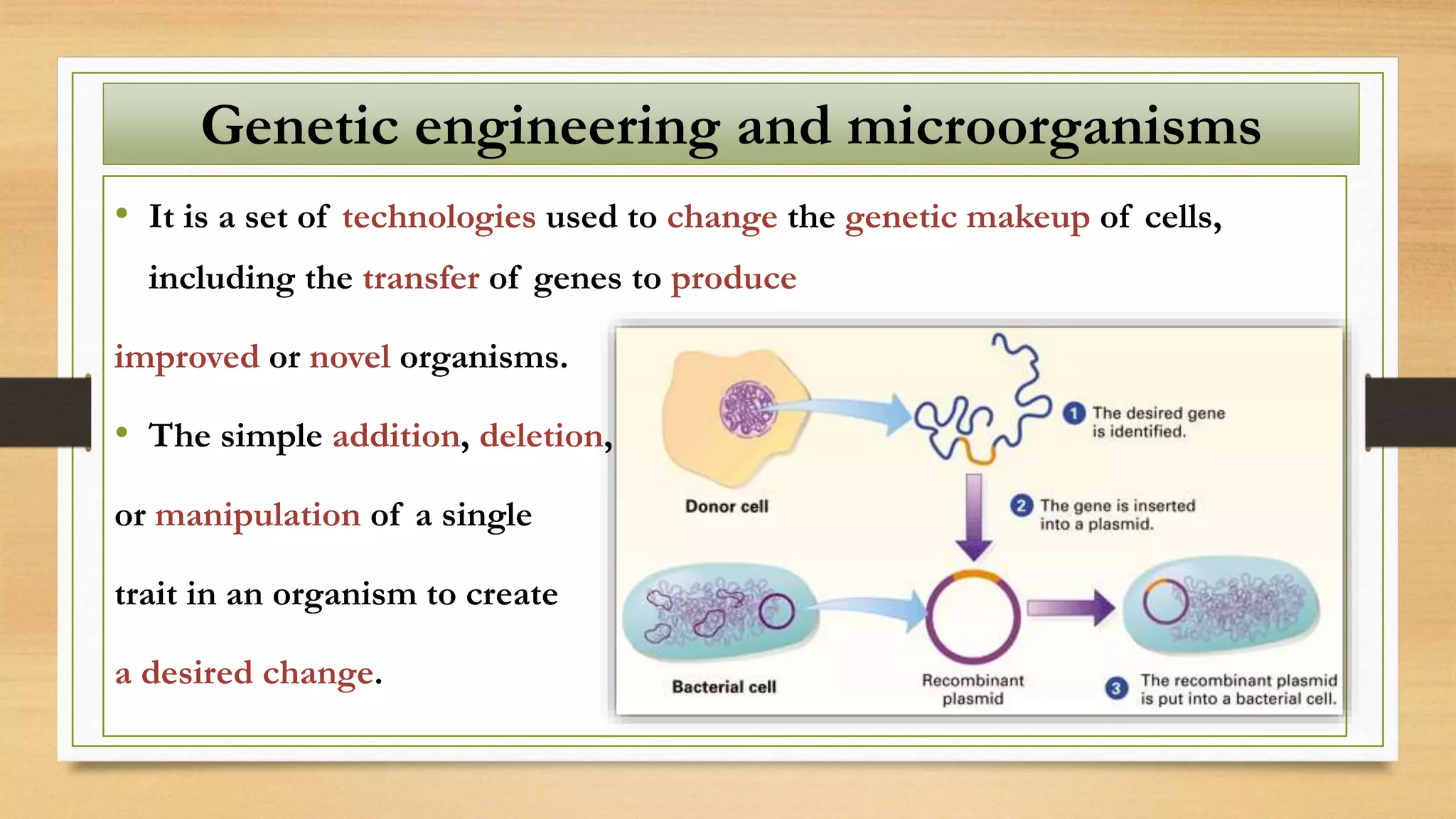
• It is a set of technologies used to change the genetic makeup of cells,
including the transfer of genes to produce
improved or novel organisms.
• The simple addition, deletion,
or manipulation of a single
trait in an organism to create
a desired change.
Genetic engineering and microorganisms
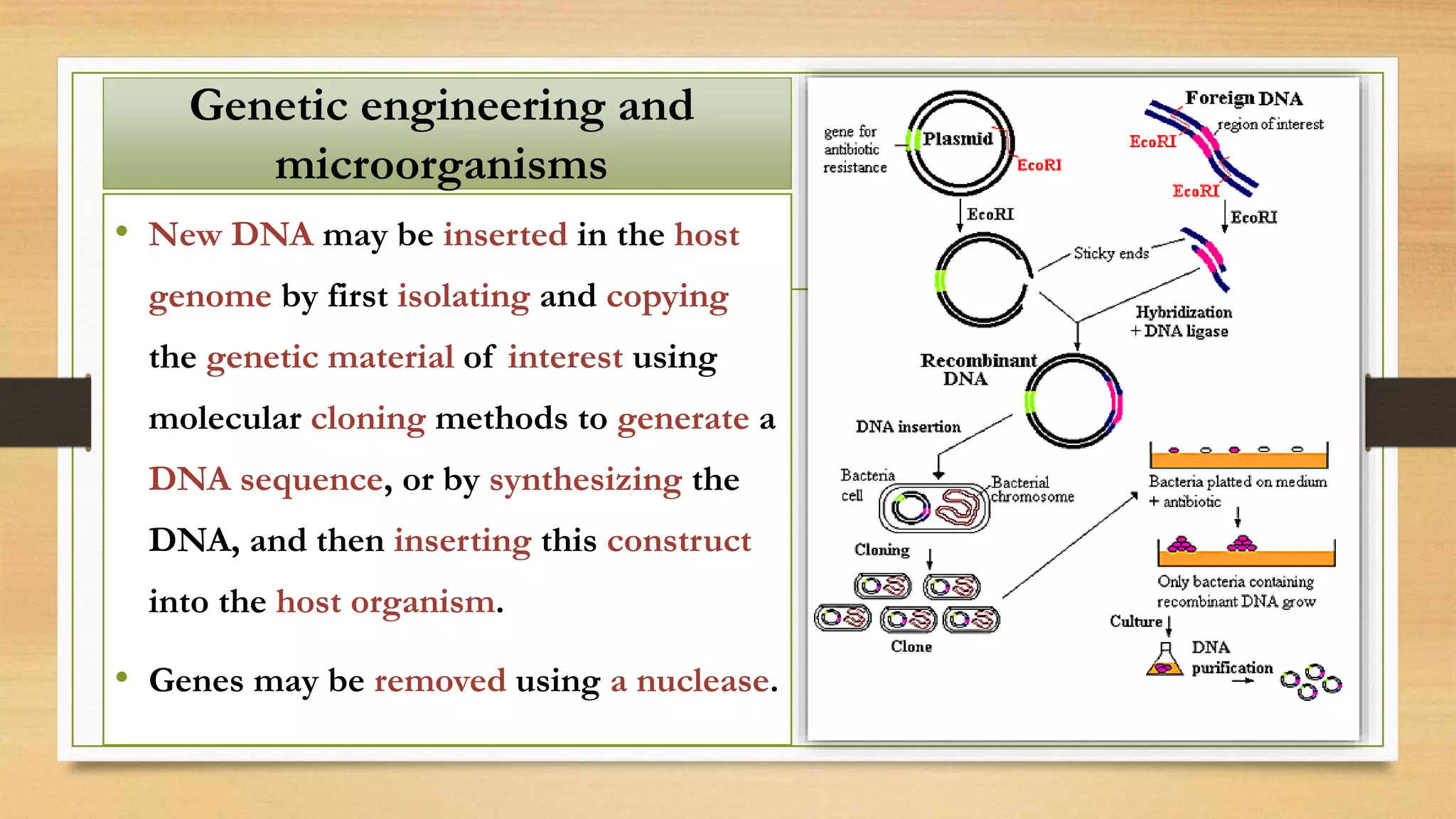
• New DNA may be inserted in the host
genome by first isolating and copying
the genetic material of interest using
molecular cloning methods to generate a
DNA sequence, or by synthesizing the
DNA, and then inserting this construct
into the host organism.
• Genes may be removed using a nuclease.
Genetic engineering and
microorganisms
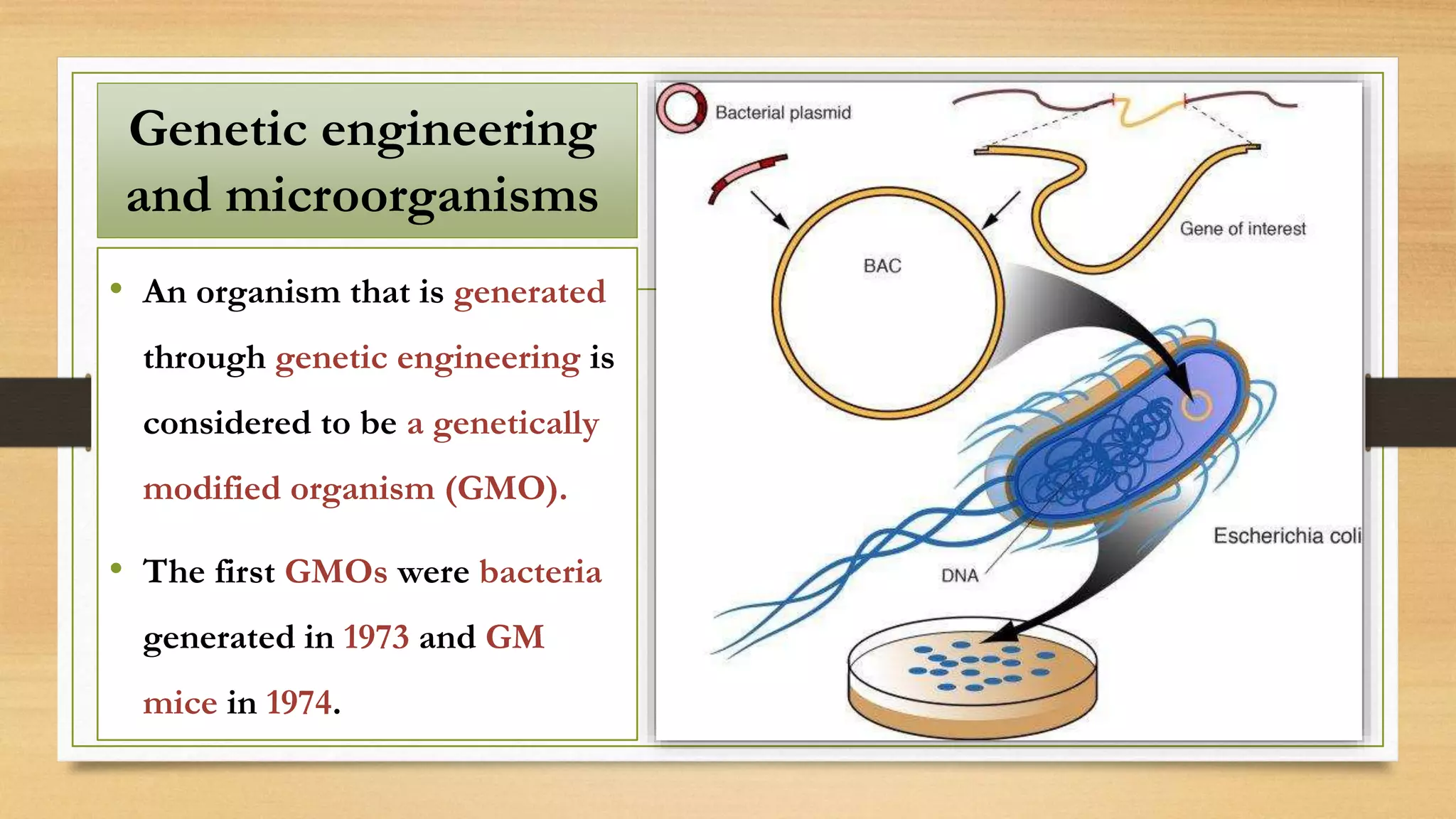
• An organism that is generated
through genetic engineering is
considered to be a genetically
modified organism (GMO).
• The first GMOs were bacteria
generated in 1973 and GM
mice in 1974.
Genetic engineering
and microorganisms
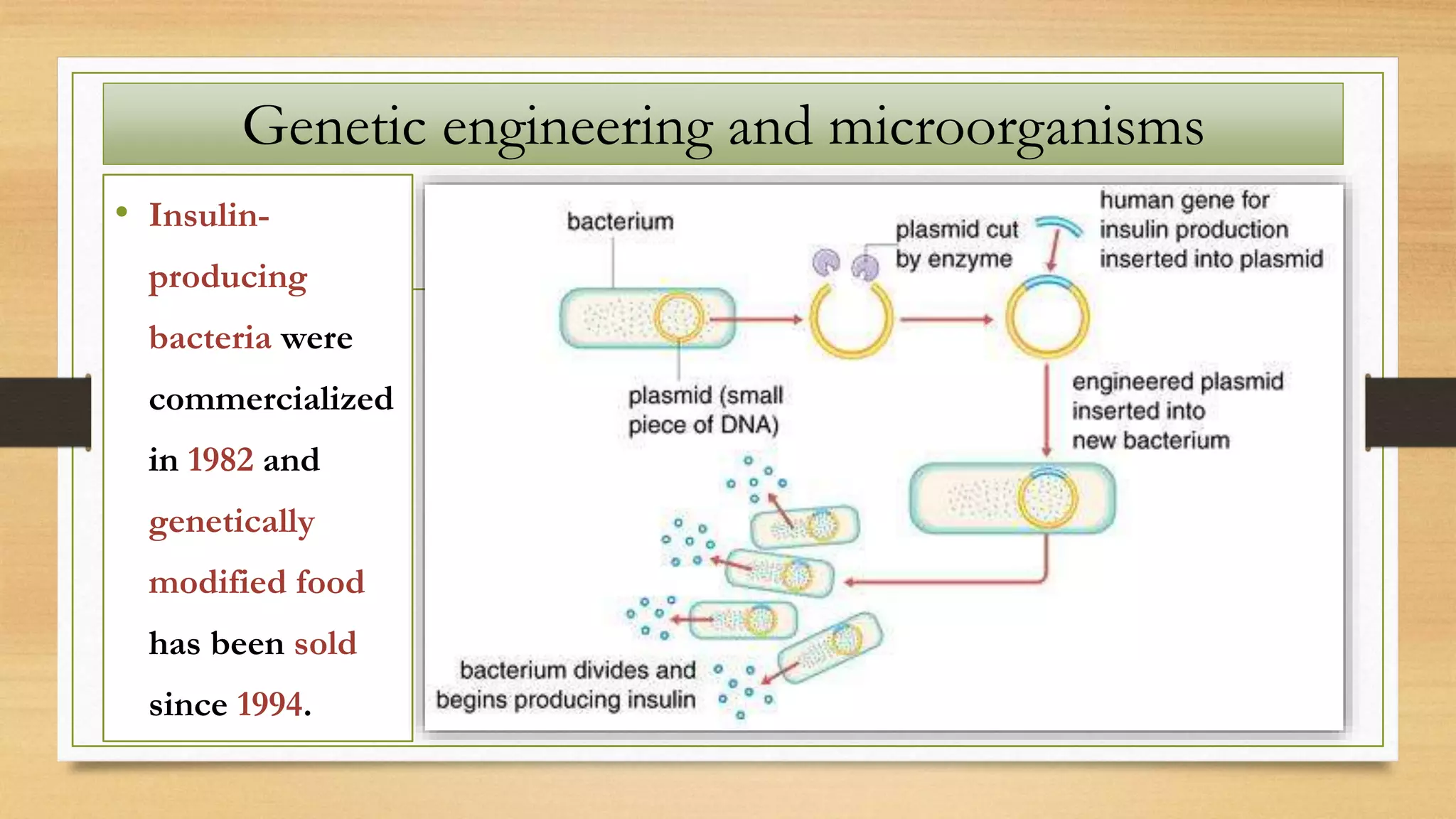
• Insulin-
producing
bacteria were
commercialized
in 1982 and
genetically
modified food
has been sold
since 1994.
Genetic engineering and microorganisms
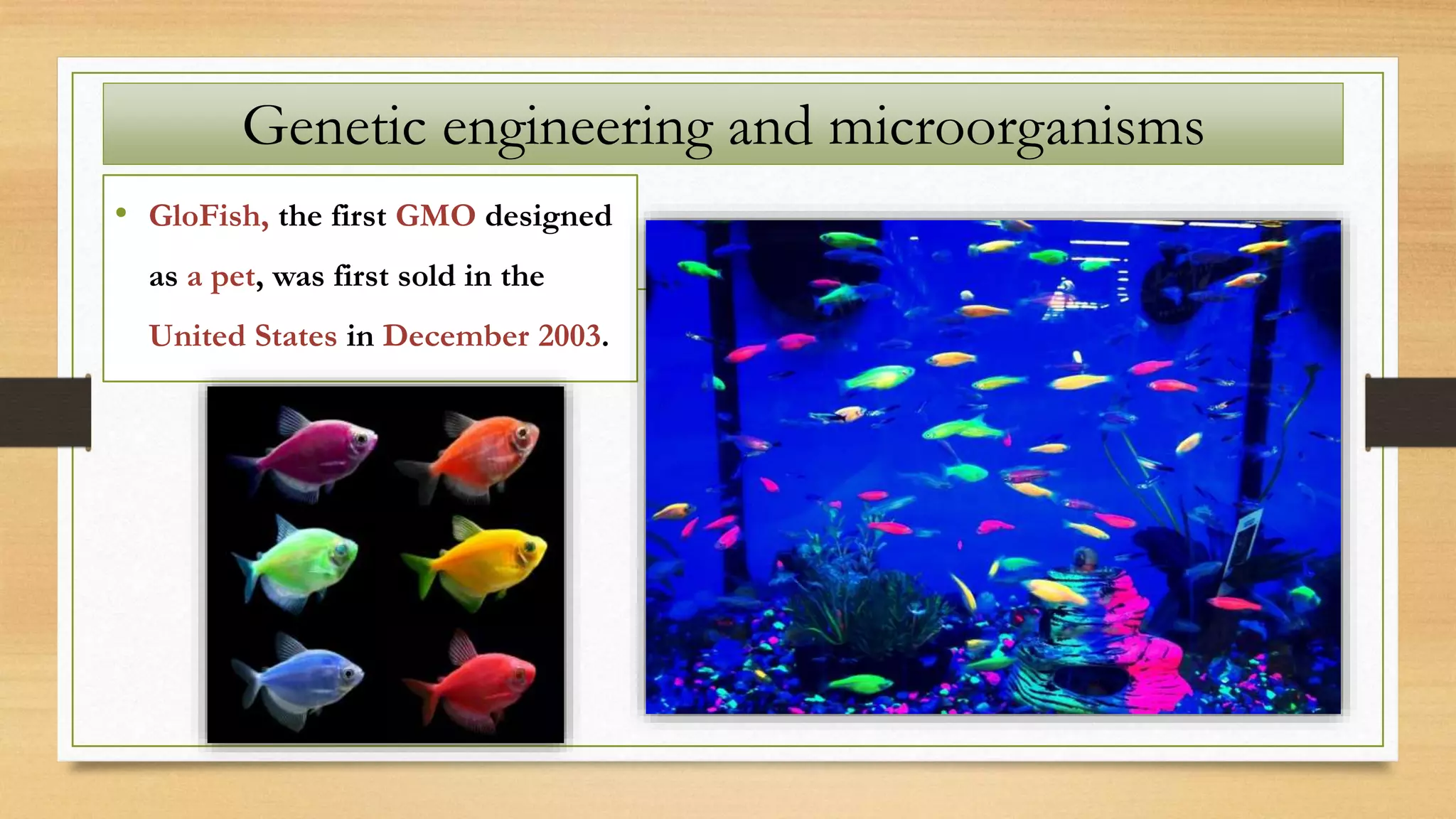
• GloFish, the first GMO designed
as a pet, was first sold in the
United States in December 2003.
Genetic engineering and microorganisms
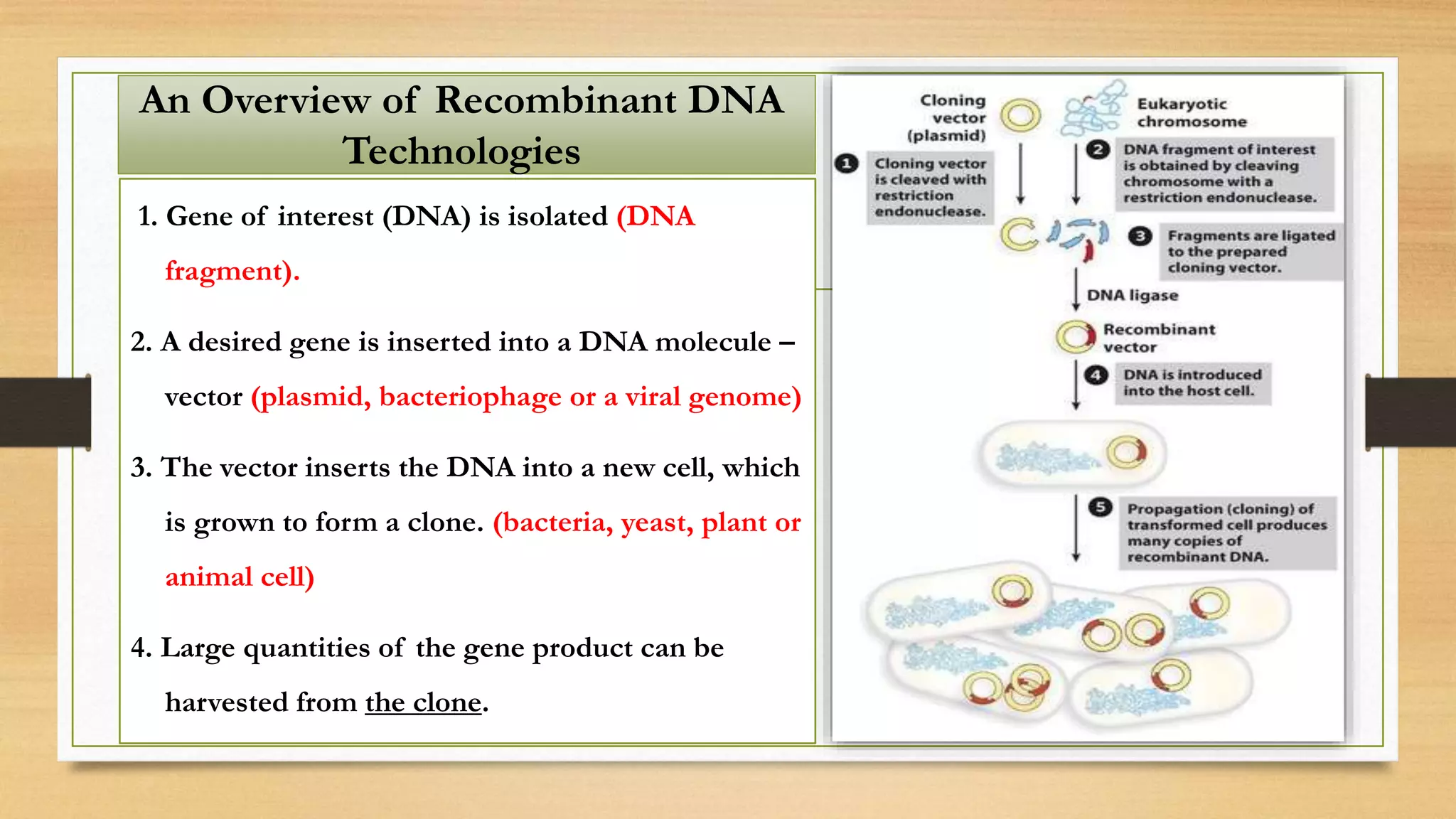
1. Gene of interest (DNA) is isolated (DNA
fragment).
2. A desired gene is inserted into a DNA molecule –
vector (plasmid, bacteriophage or a viral genome)
3. The vector inserts the DNA into a new cell, which
is grown to form a clone. (bacteria, yeast, plant or
animal cell)
4. Large quantities of the gene product can be
harvested from the clone.
An Overview of Recombinant DNA
Technologies
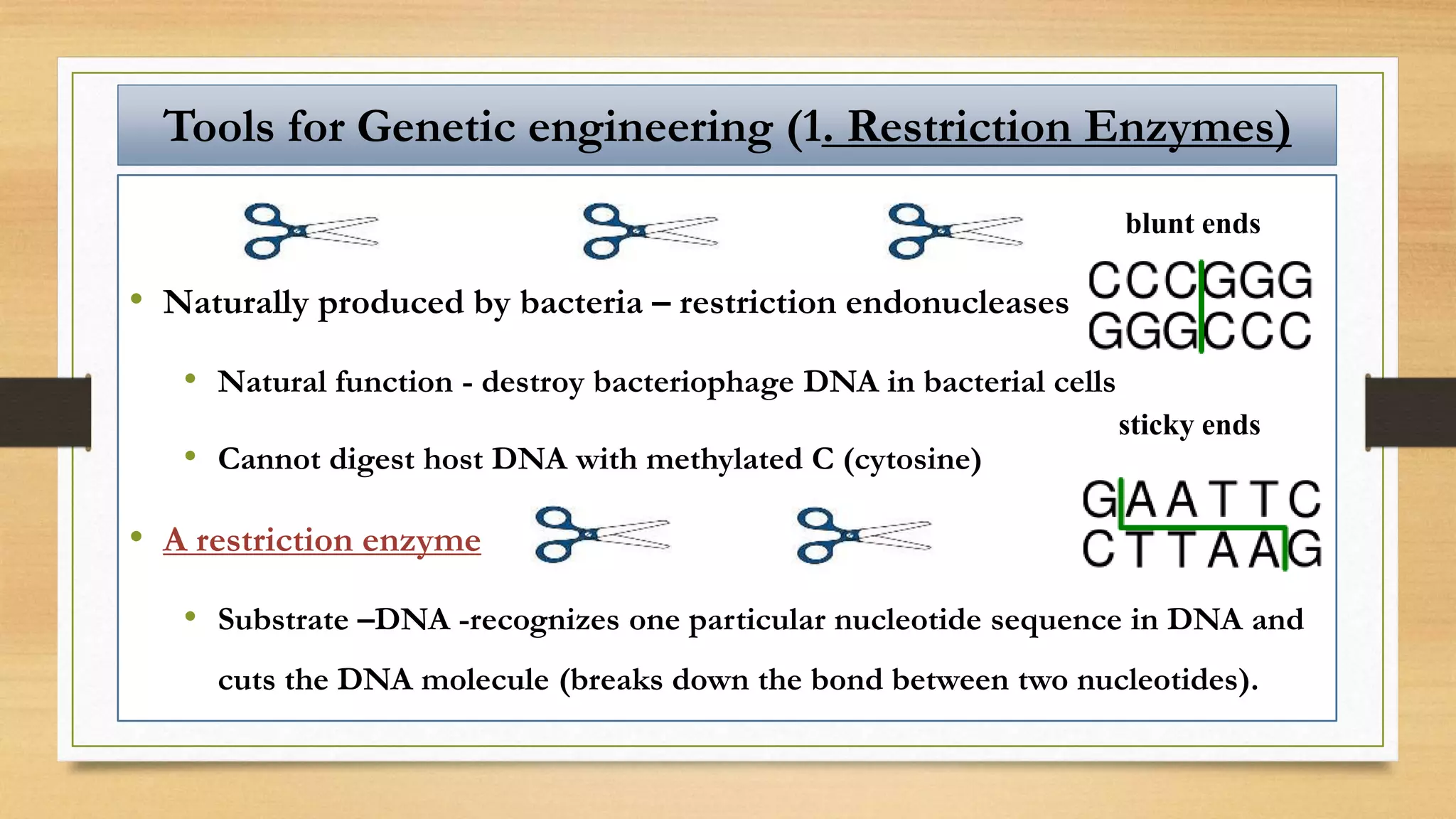
Tools for Genetic engineering (1. Restriction Enzymes)
• Naturally produced by bacteria – restriction endonucleases
• Natural function - destroy bacteriophage DNA in bacterial cells
• Cannot digest host DNA with methylated C (cytosine)
• A restriction enzyme
• Substrate –DNA -recognizes one particular nucleotide sequence in DNA and
cuts the DNA molecule (breaks down the bond between two nucleotides).
sticky ends
blunt ends
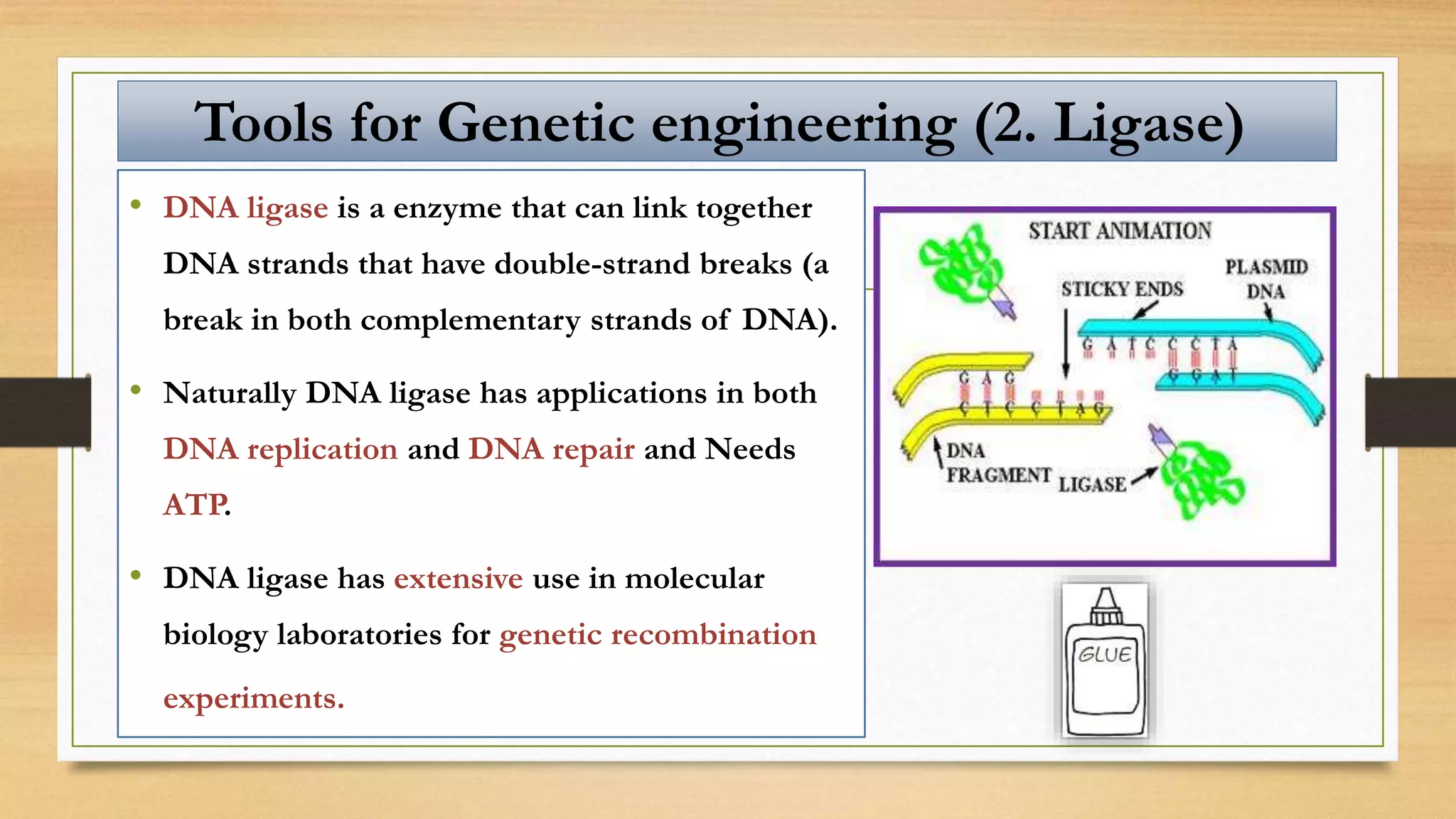
• DNA ligase is a enzyme that can link together
DNA strands that have double-strand breaks (a
break in both complementary strands of DNA).
• Naturally DNA ligase has applications in both
DNA replication and DNA repair and Needs
ATP.
• DNA ligase has extensive use in molecular
biology laboratories for genetic recombination
experiments.
Tools for Genetic engineering (2. Ligase)
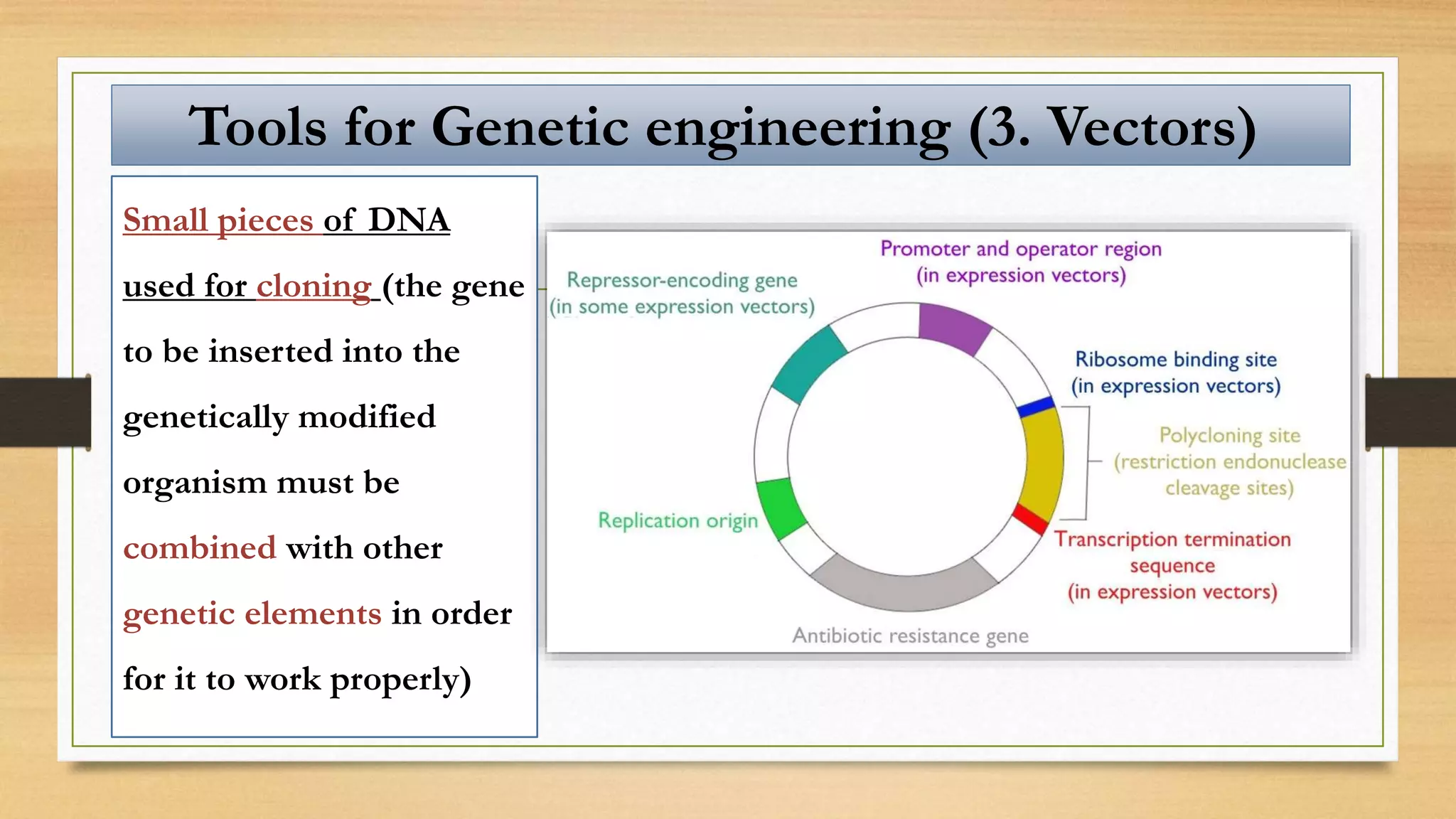
Small pieces of DNA
used for cloning (the gene
to be inserted into the
genetically modified
organism must be
combined with other
genetic elements in order
for it to work properly)
Tools for Genetic engineering (3. Vectors)
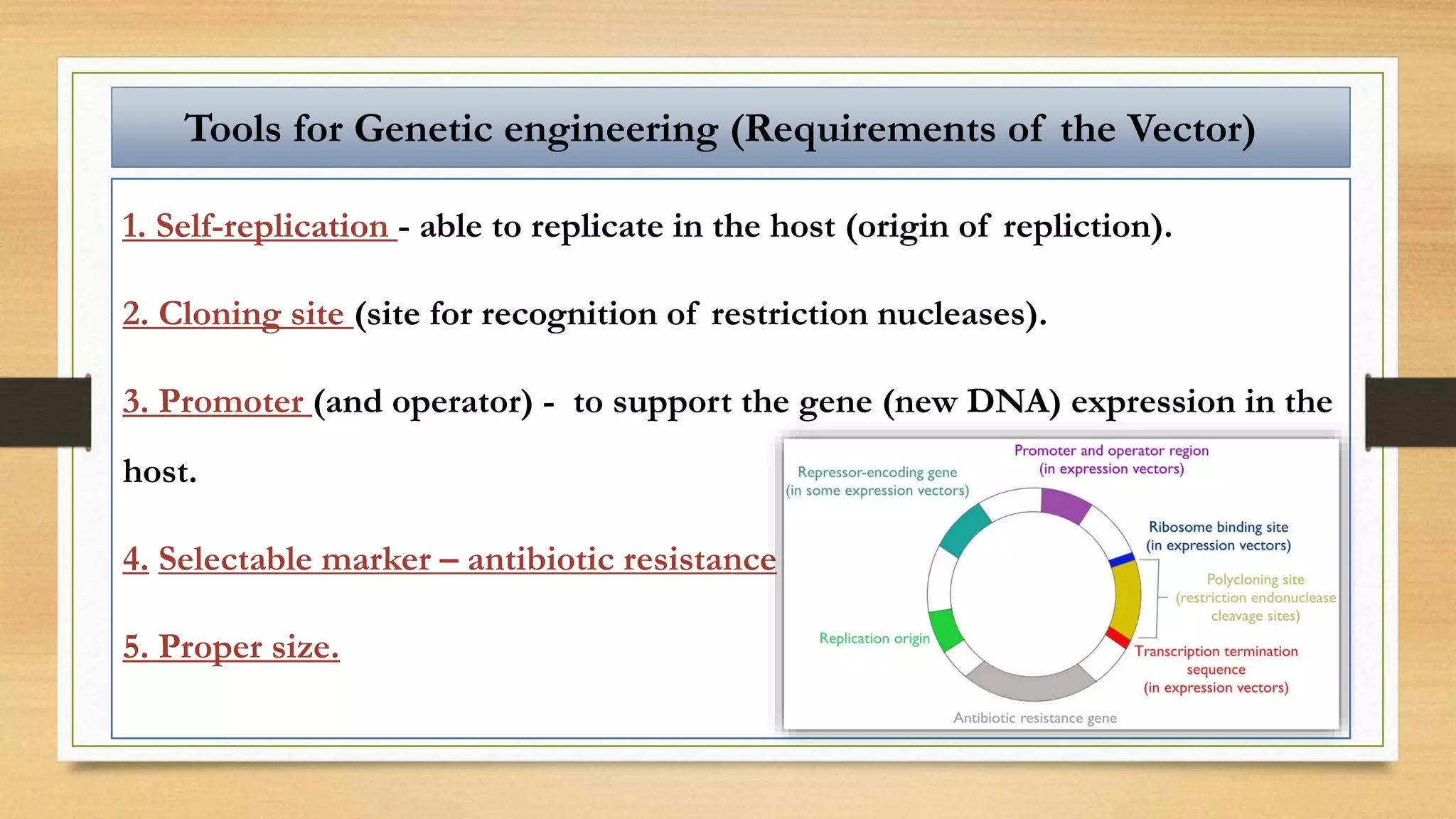
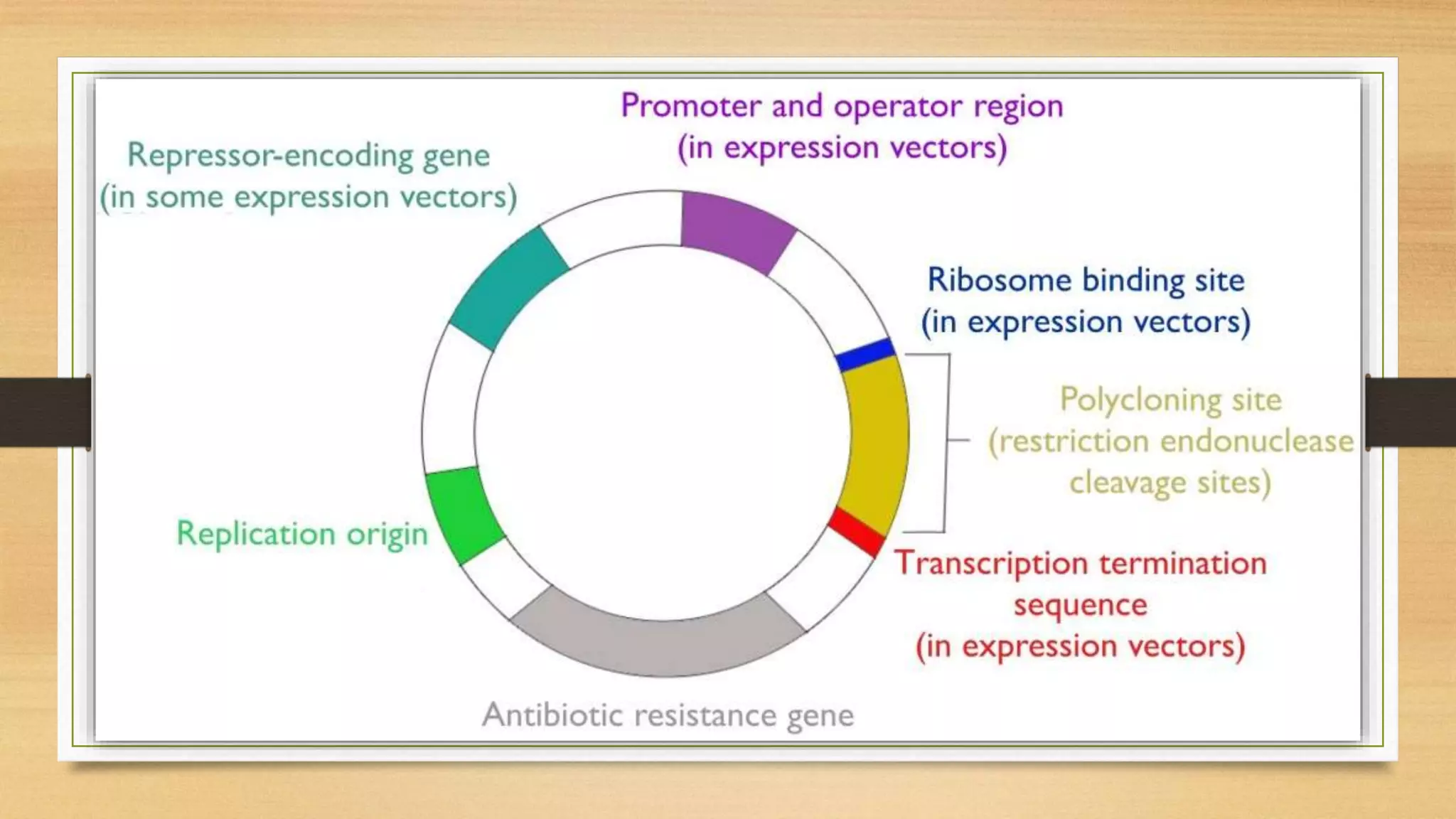
1. Self-replication - able to replicate in the host (origin of repliction).
2. Cloning site (site for recognition of restriction nucleases).
3. Promoter (and operator) - to support the gene (new DNA) expression in the
host.
4. Selectable marker – antibiotic resistance
5. Proper size.
Tools for Genetic engineering (Requirements of the Vector)
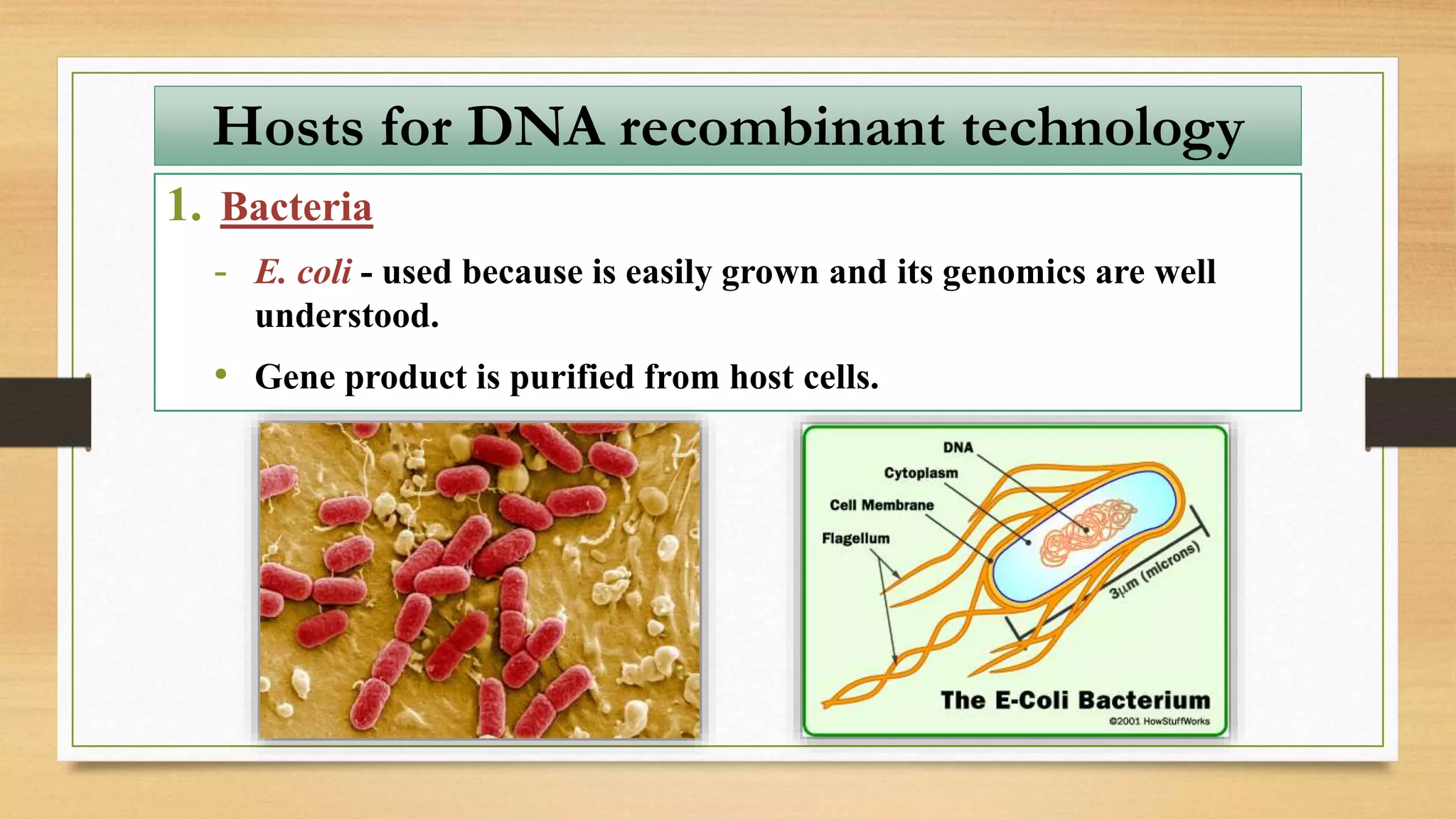
Hosts for DNA recombinant technology
1. Bacteria
- E. coli - used because is easily grown and its genomics are well
understood.
• Gene product is purified from host cells.
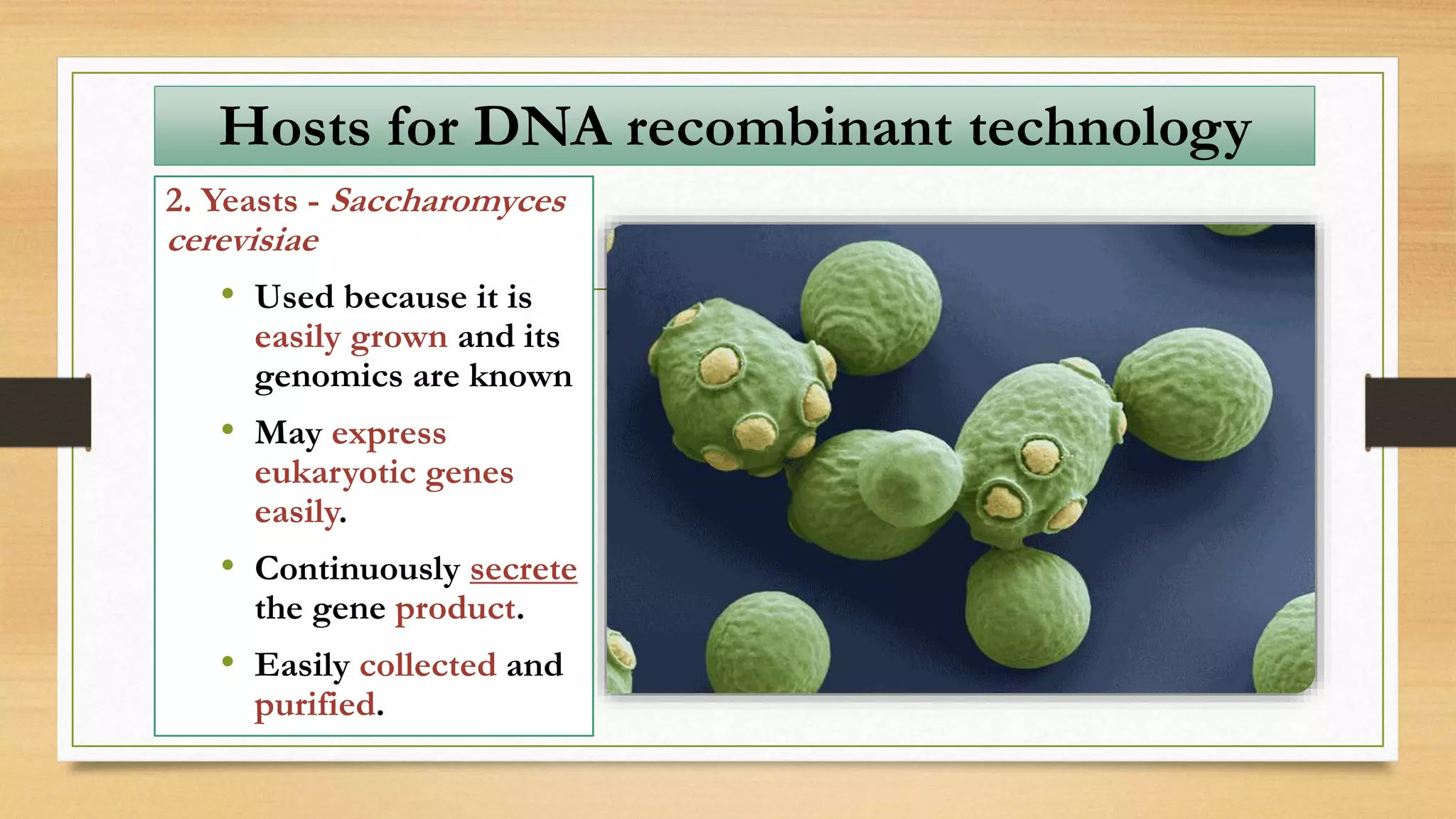
2. Yeasts - Saccharomyces
cerevisiae
• Used because it is
easily grown and its
genomics are known
• May express
eukaryotic genes
easily.
• Continuously secrete
the gene product.
• Easily collected and
purified.
Hosts for DNA recombinant technology
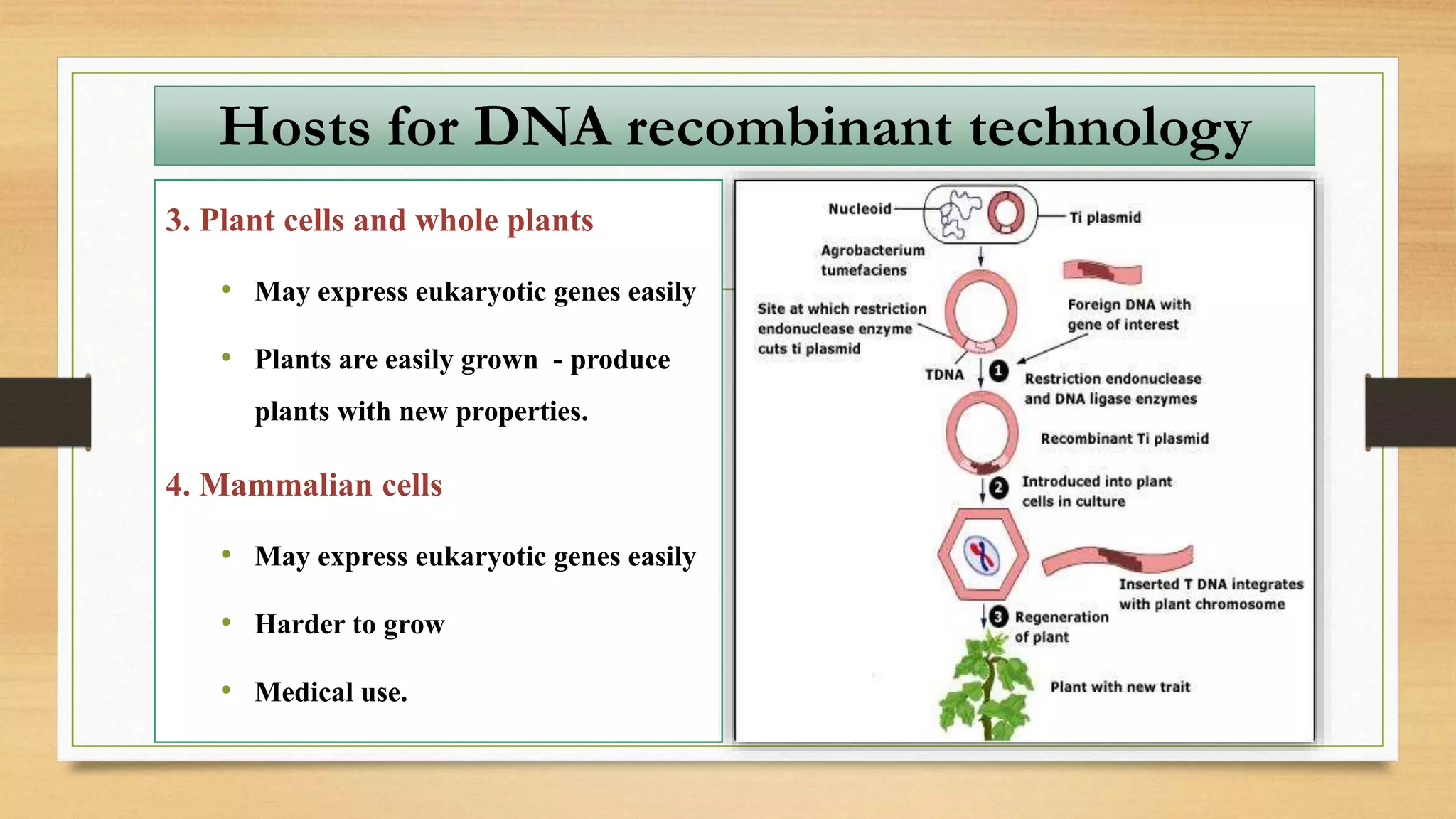
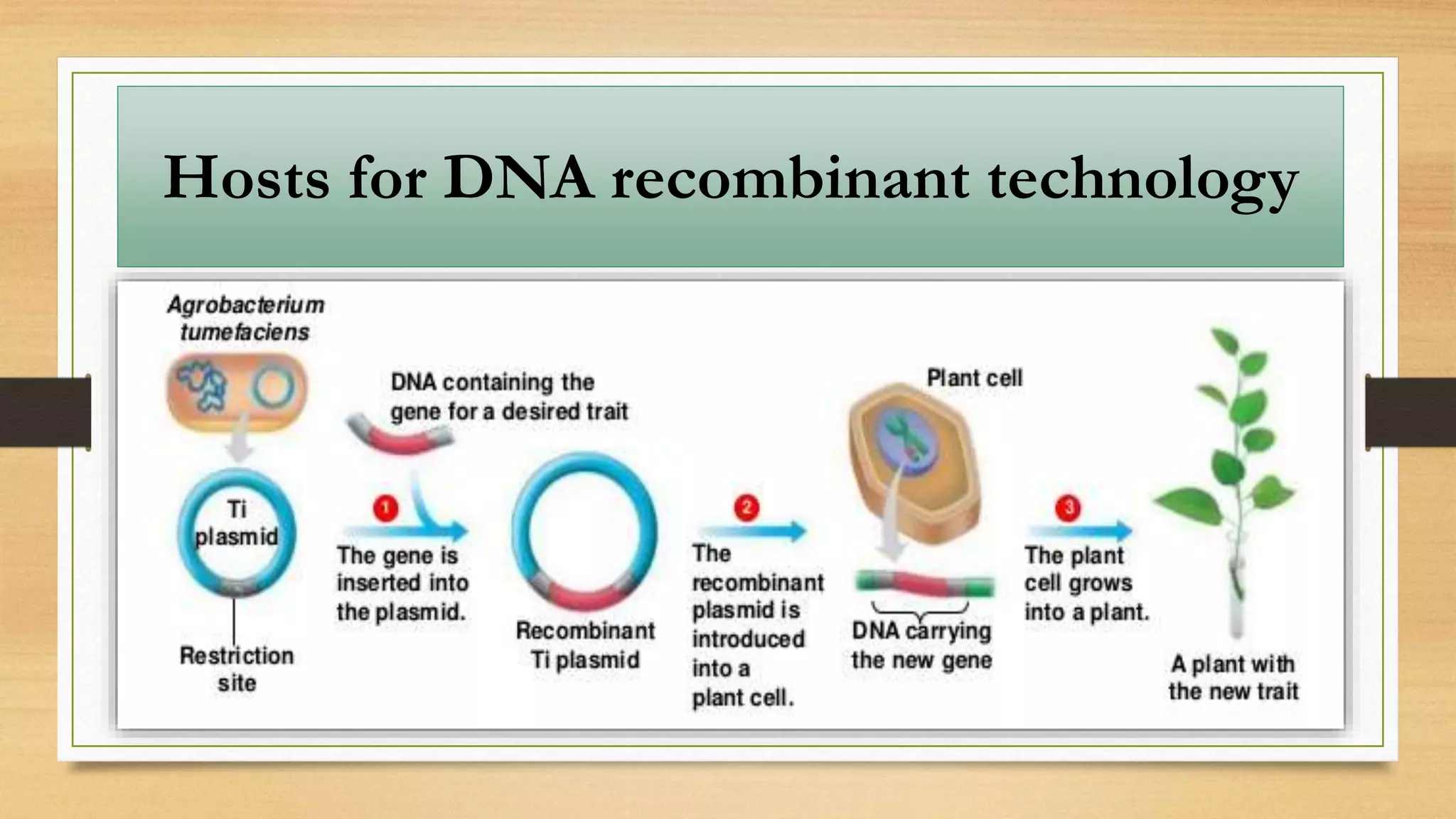
3. Plant cells and whole plants
• May express eukaryotic genes easily
• Plants are easily grown - produce
plants with new properties.
4. Mammalian cells
• May express eukaryotic genes easily
• Harder to grow
• Medical use.
Hosts for DNA recombinant technology
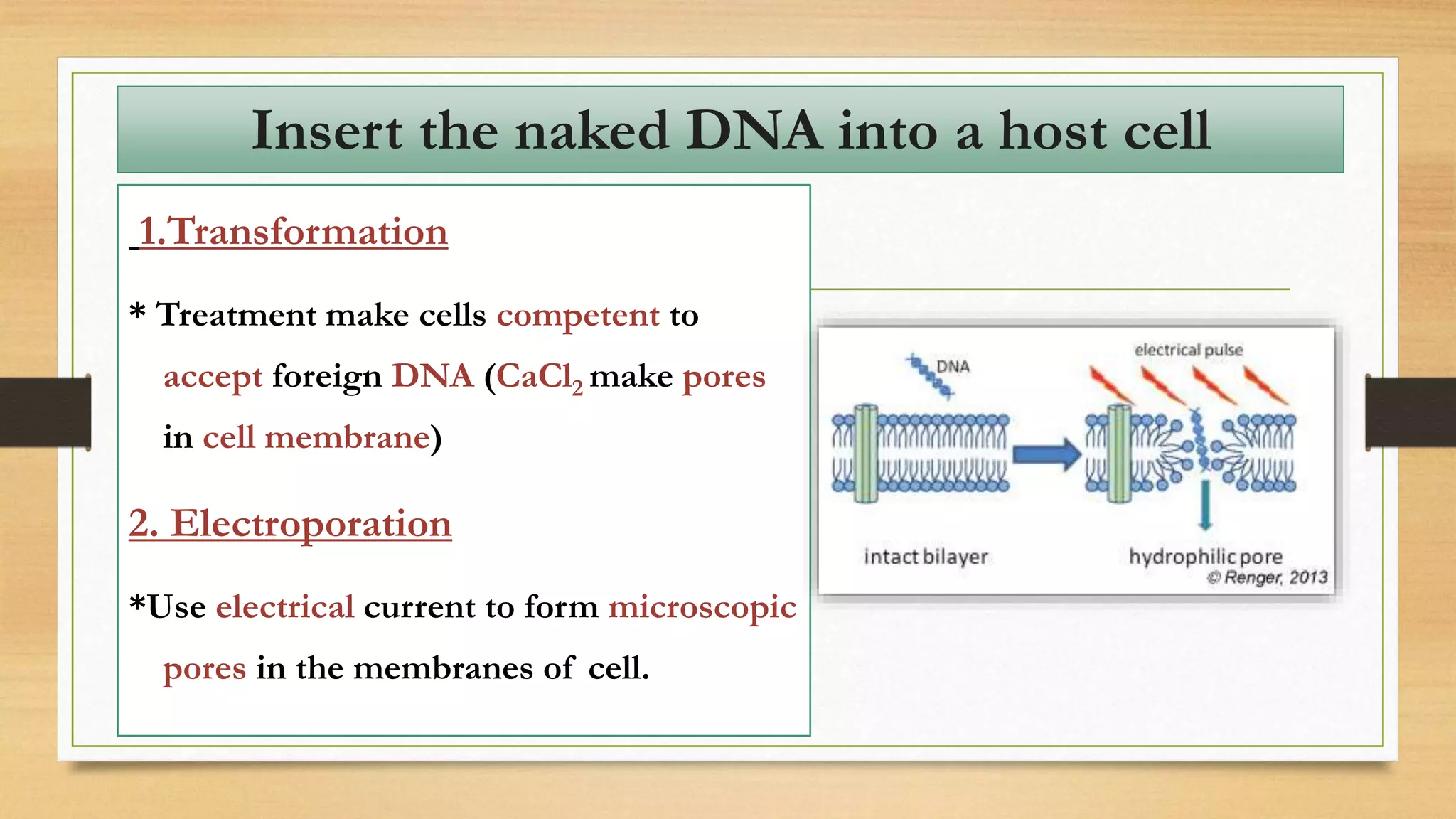
1.Transformation
* Treatment make cells competent to
accept foreign DNA (CaCl2 make pores
in cell membrane)
2. Electroporation
*Use electrical current to form microscopic
pores in the membranes of cell.
Insert the naked DNA into a host cell
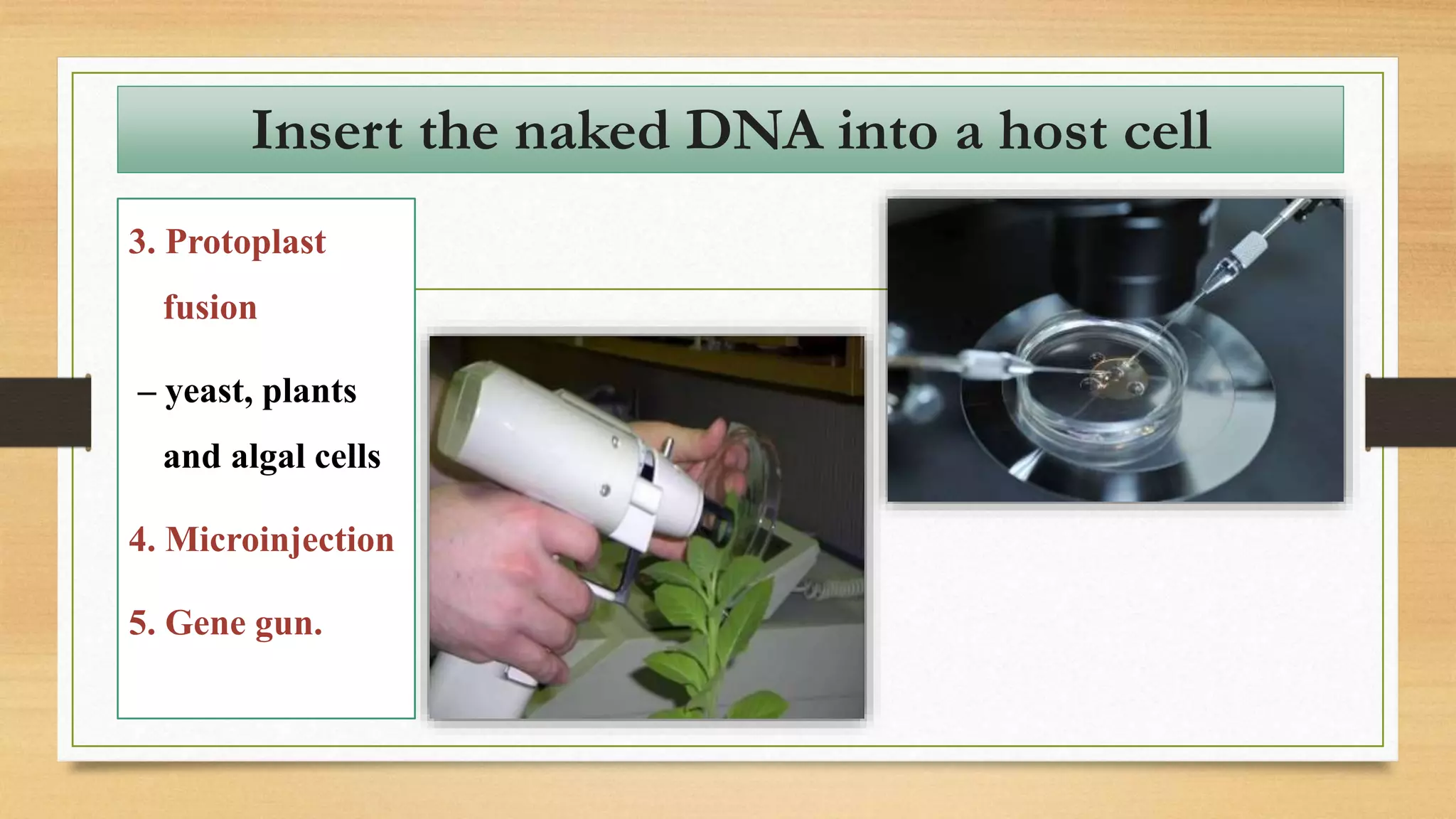
3. Protoplast
fusion
– yeast, plants
and algal cells
4. Microinjection
5. Gene gun.
Insert the naked DNA into a host cell
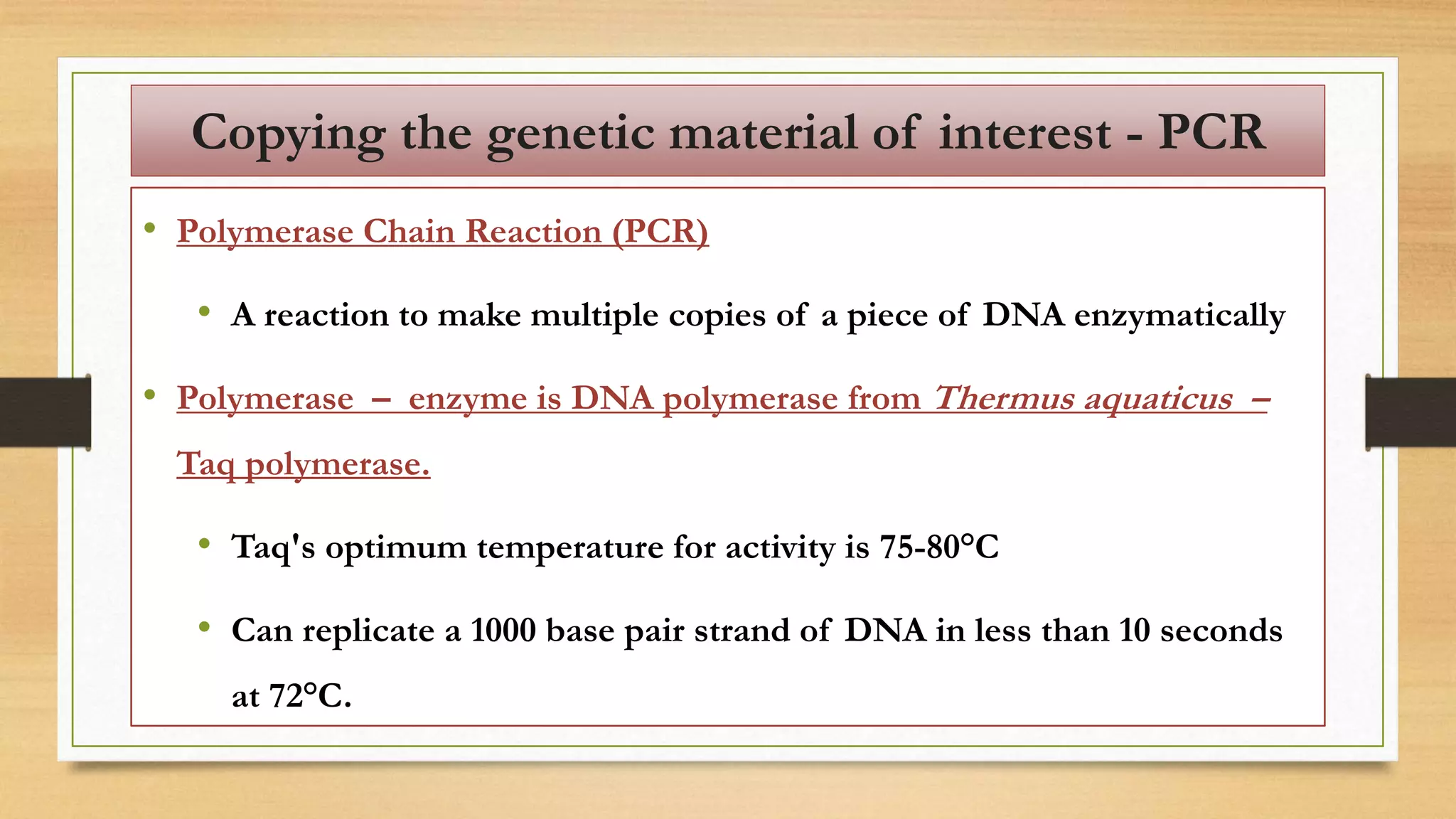
Copying the genetic material of interest - PCR
• Polymerase Chain Reaction (PCR)
• A reaction to make multiple copies of a piece of DNA enzymatically
• Polymerase – enzyme is DNA polymerase from Thermus aquaticus –
Taq polymerase.
• Taq's optimum temperature for activity is 75-80°C
• Can replicate a 1000 base pair strand of DNA in less than 10 seconds
at 72°C.
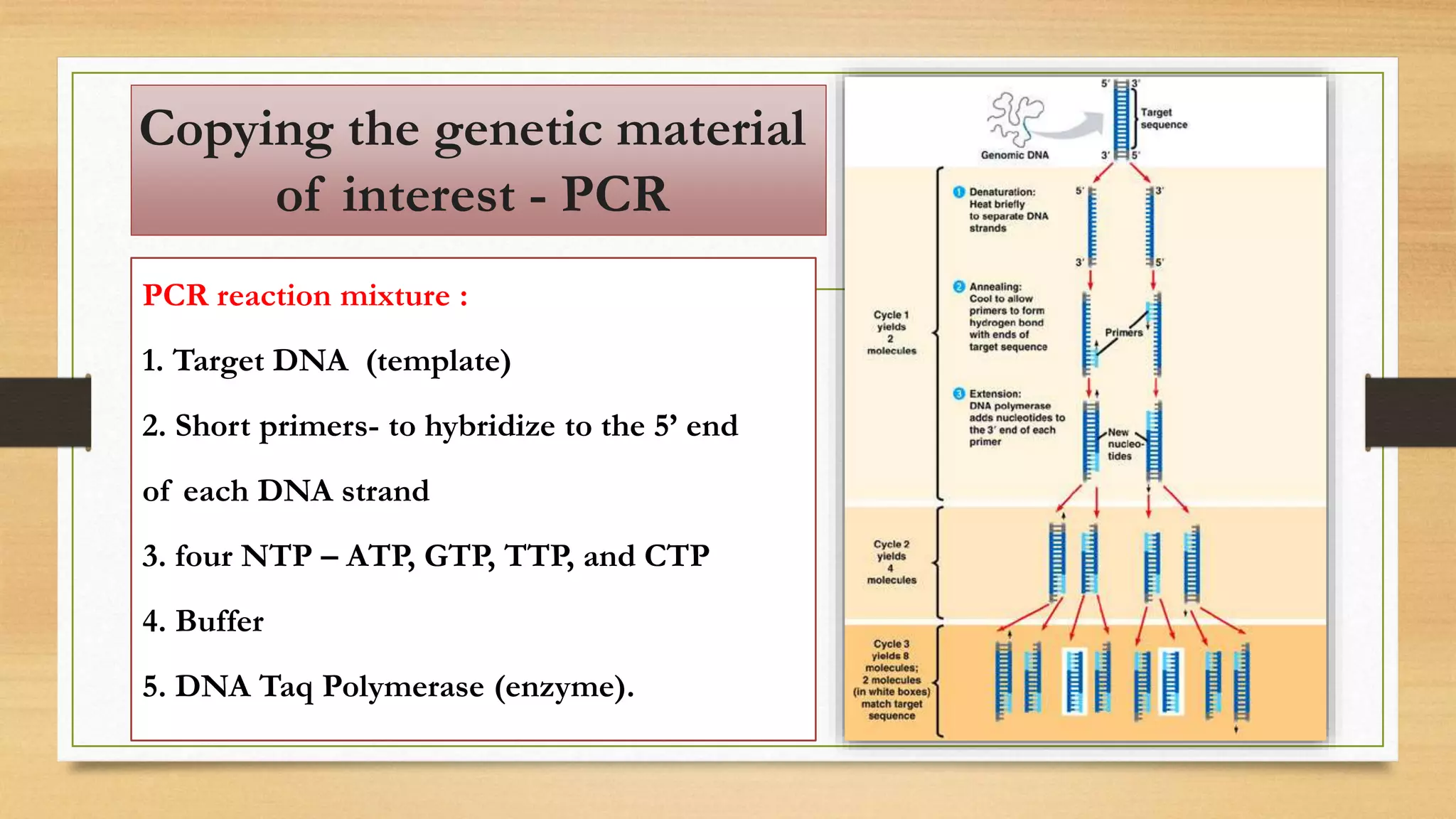
PCR reaction mixture :
1. Target DNA (template)
2. Short primers- to hybridize to the 5’ end
of each DNA strand
3. four NTP – ATP, GTP, TTP, and CTP
4. Buffer
5. DNA Taq Polymerase (enzyme).
Copying the genetic material
of interest - PCR
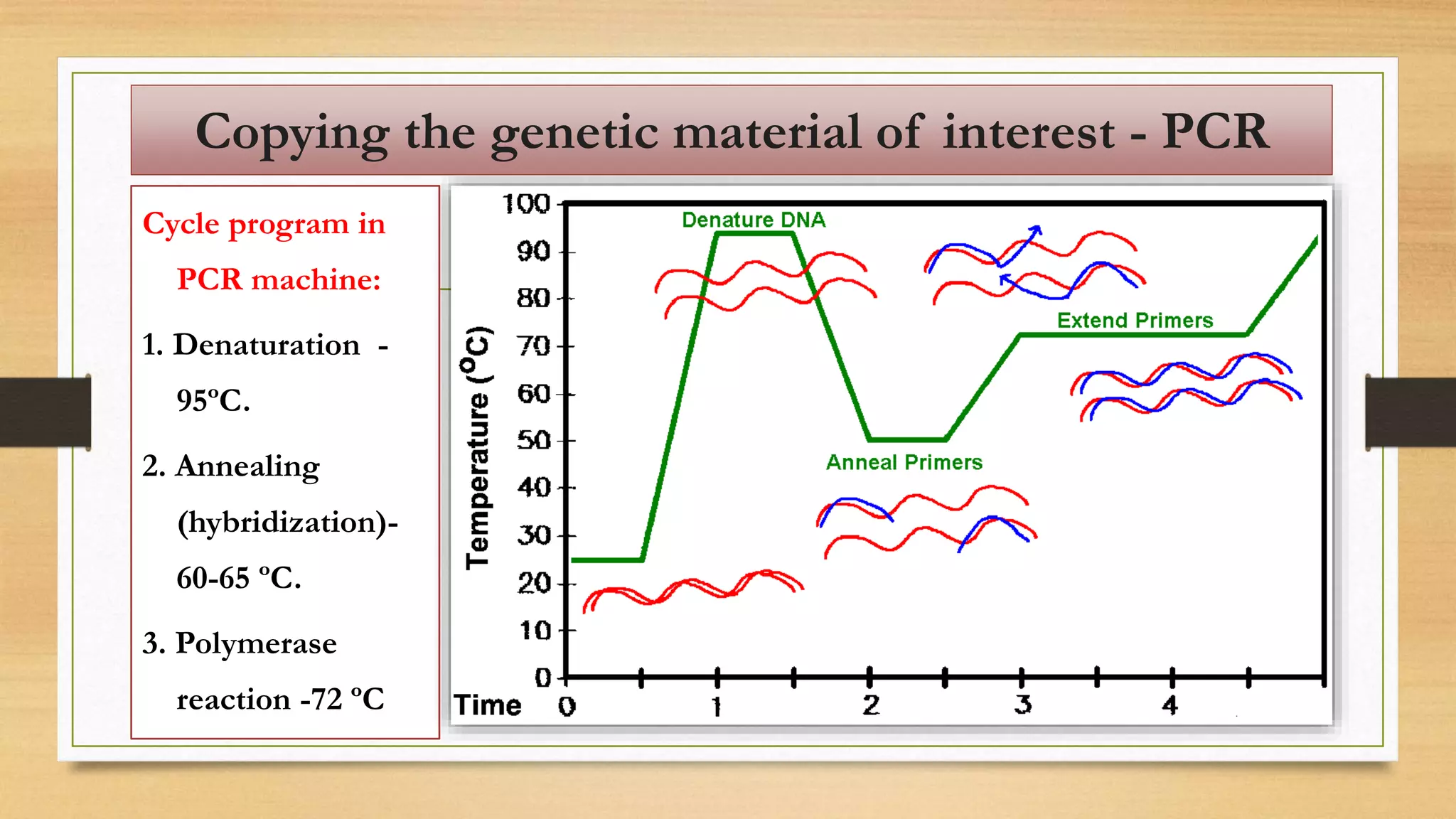
Cycle program in
PCR machine:
1. Denaturation -
95ºC.
2. Annealing
(hybridization)-
60-65 ºC.
3. Polymerase
reaction -72 ºC
Copying the genetic material of interest - PCR
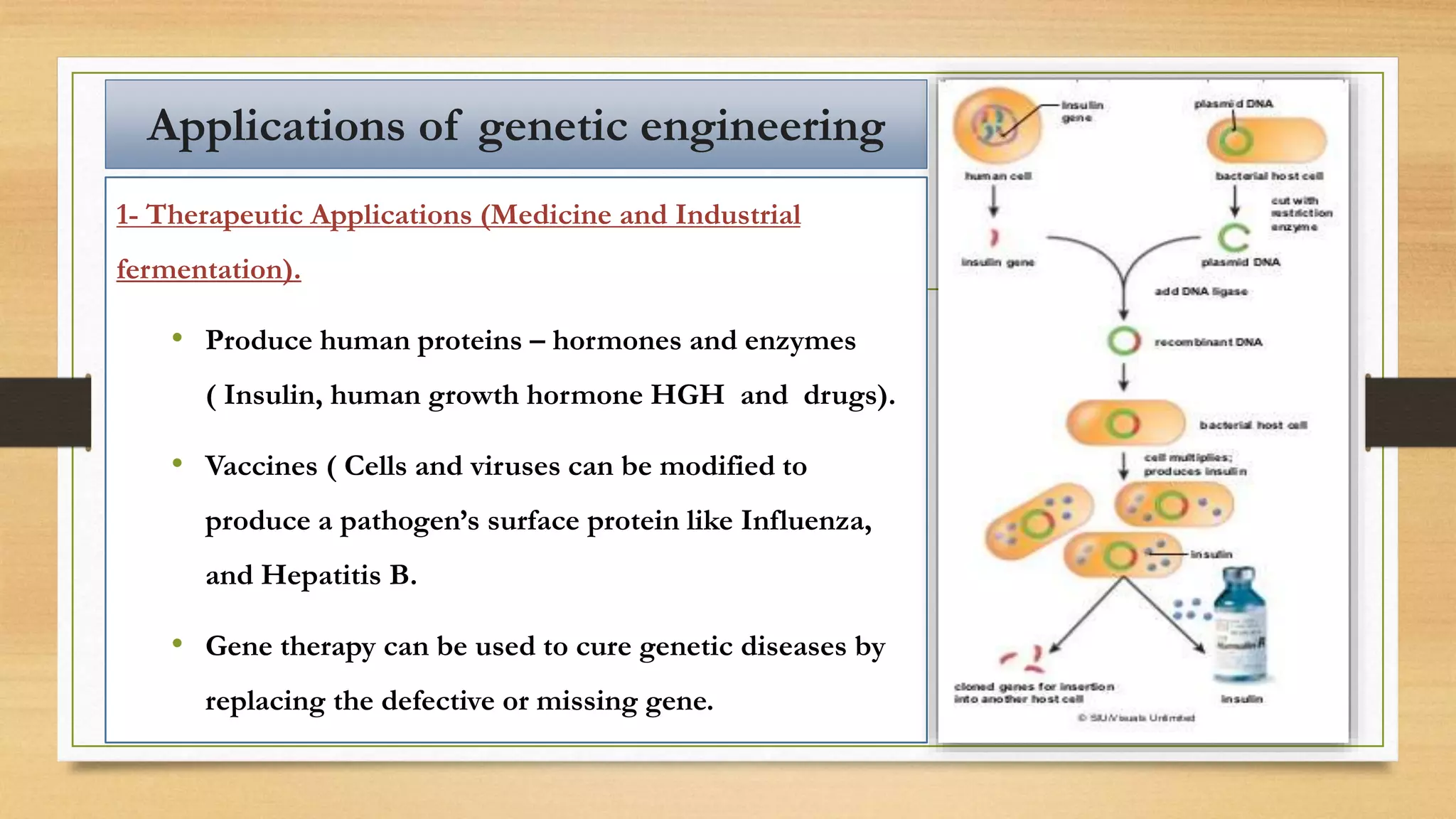
Applications of genetic engineering
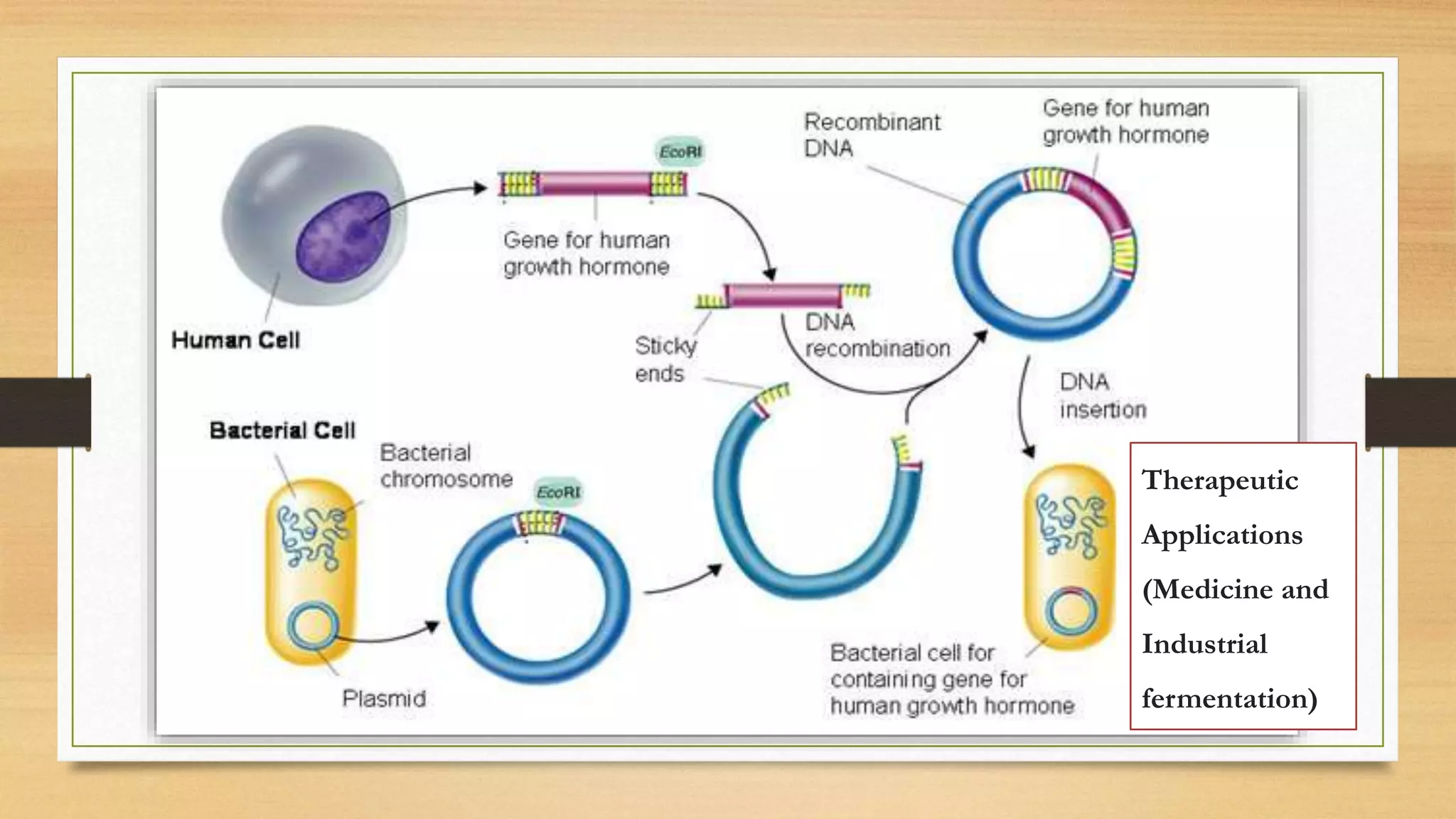
1- Therapeutic Applications (Medicine and Industrial
fermentation).
• Produce human proteins – hormones and enzymes
( Insulin, human growth hormone HGH and drugs).
• Vaccines ( Cells and viruses can be modified to
produce a pathogen’s surface protein like Influenza,
and Hepatitis B.
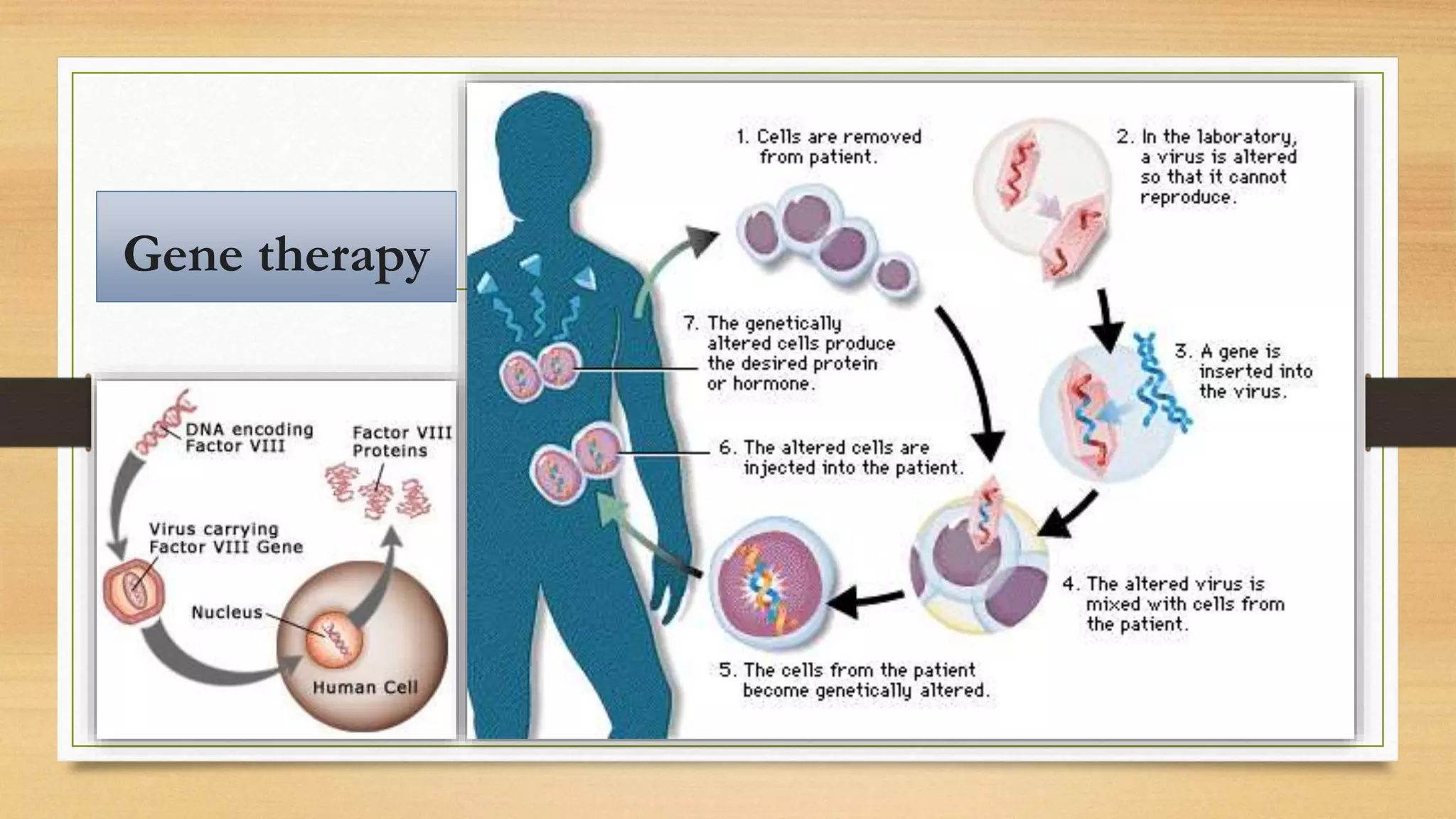
• Gene therapy can be used to cure genetic diseases by
replacing the defective or missing gene.
Therapeutic
Applications
(Medicine and
Industrial
fermentation)
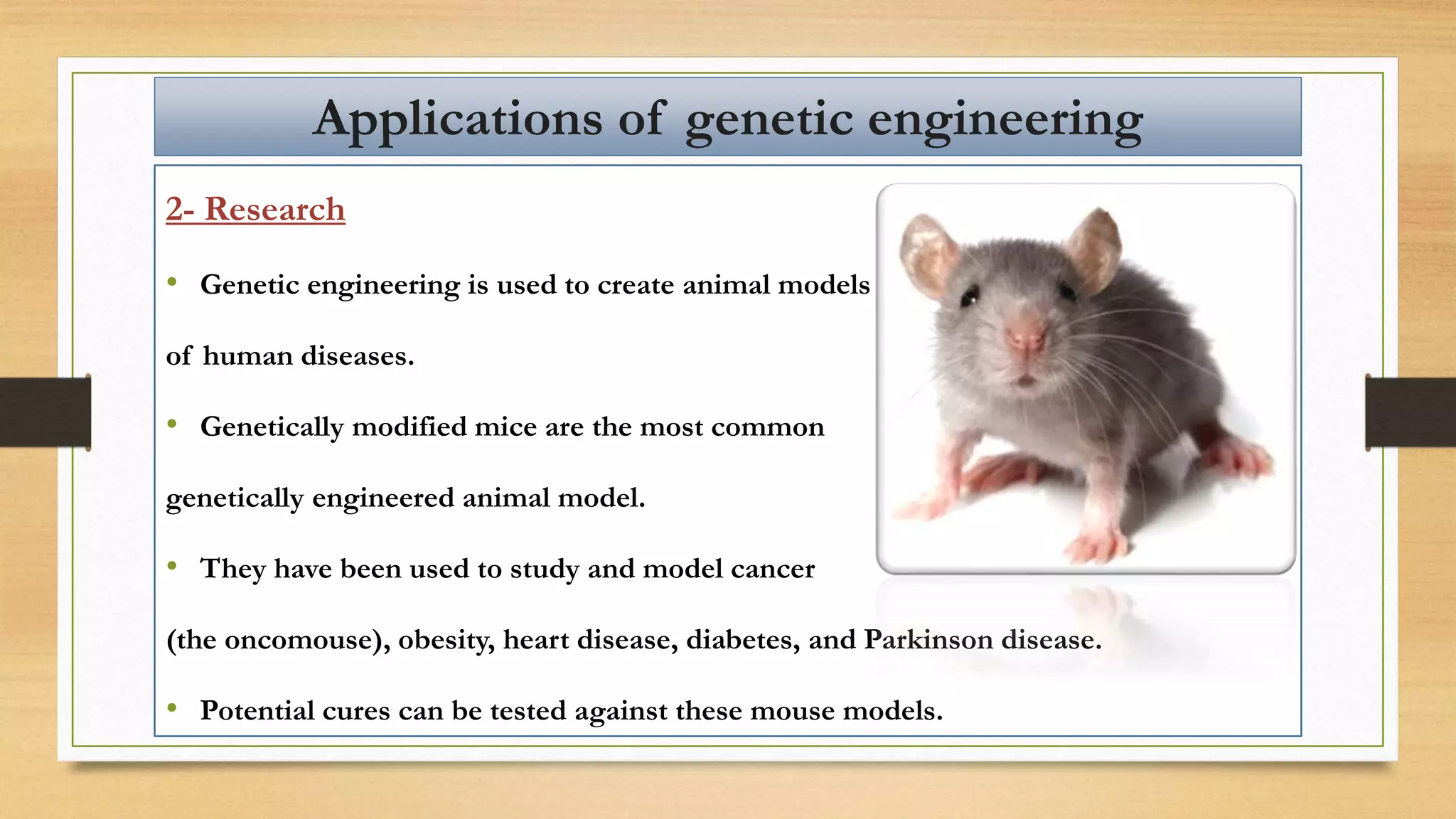
2- Research
• Genetic engineering is used to create animal models
of human diseases.
• Genetically modified mice are the most common
genetically engineered animal model.
• They have been used to study and model cancer
(the oncomouse), obesity, heart disease, diabetes, and Parkinson disease.
• Potential cures can be tested against these mouse models.
Applications of genetic engineering
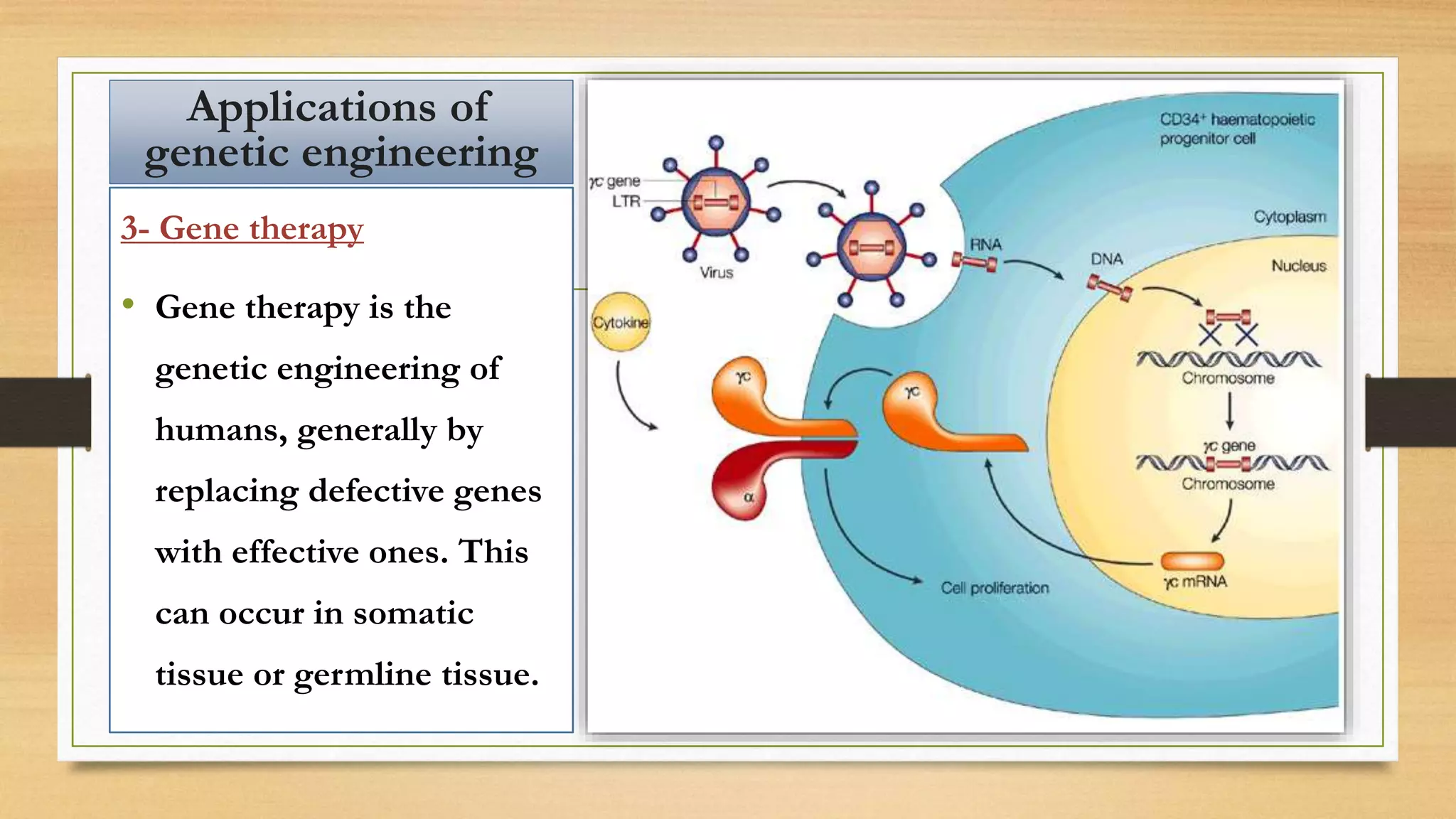
3- Gene therapy
• Gene therapy is the
genetic engineering of
humans, generally by
replacing defective genes
with effective ones. This
can occur in somatic
tissue or germline tissue.
Applications of
genetic engineering
Gene therapy
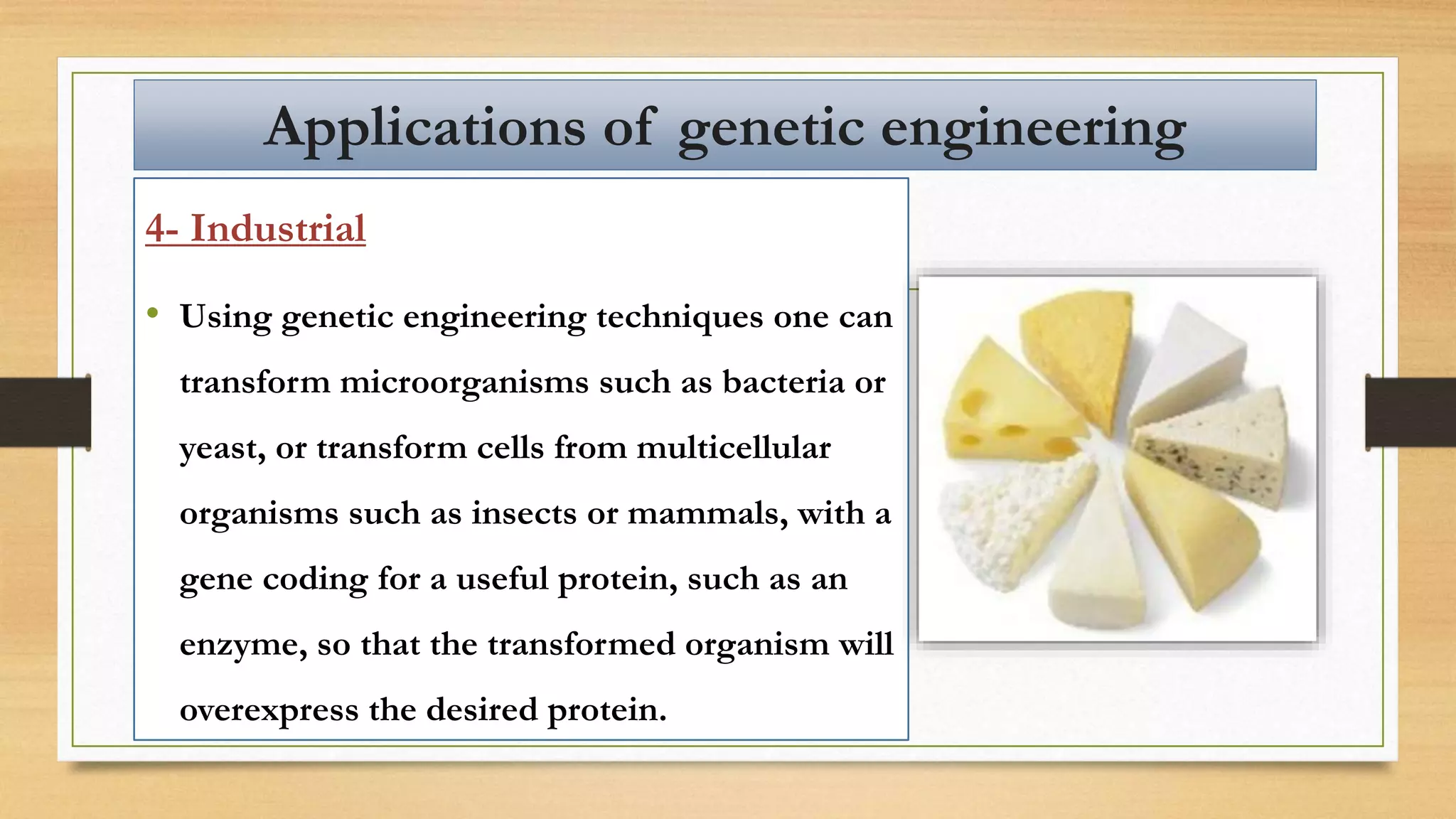
4- Industrial
• Using genetic engineering techniques one can
transform microorganisms such as bacteria or
yeast, or transform cells from multicellular
organisms such as insects or mammals, with a
gene coding for a useful protein, such as an
enzyme, so that the transformed organism will
overexpress the desired protein.
Applications of genetic engineering
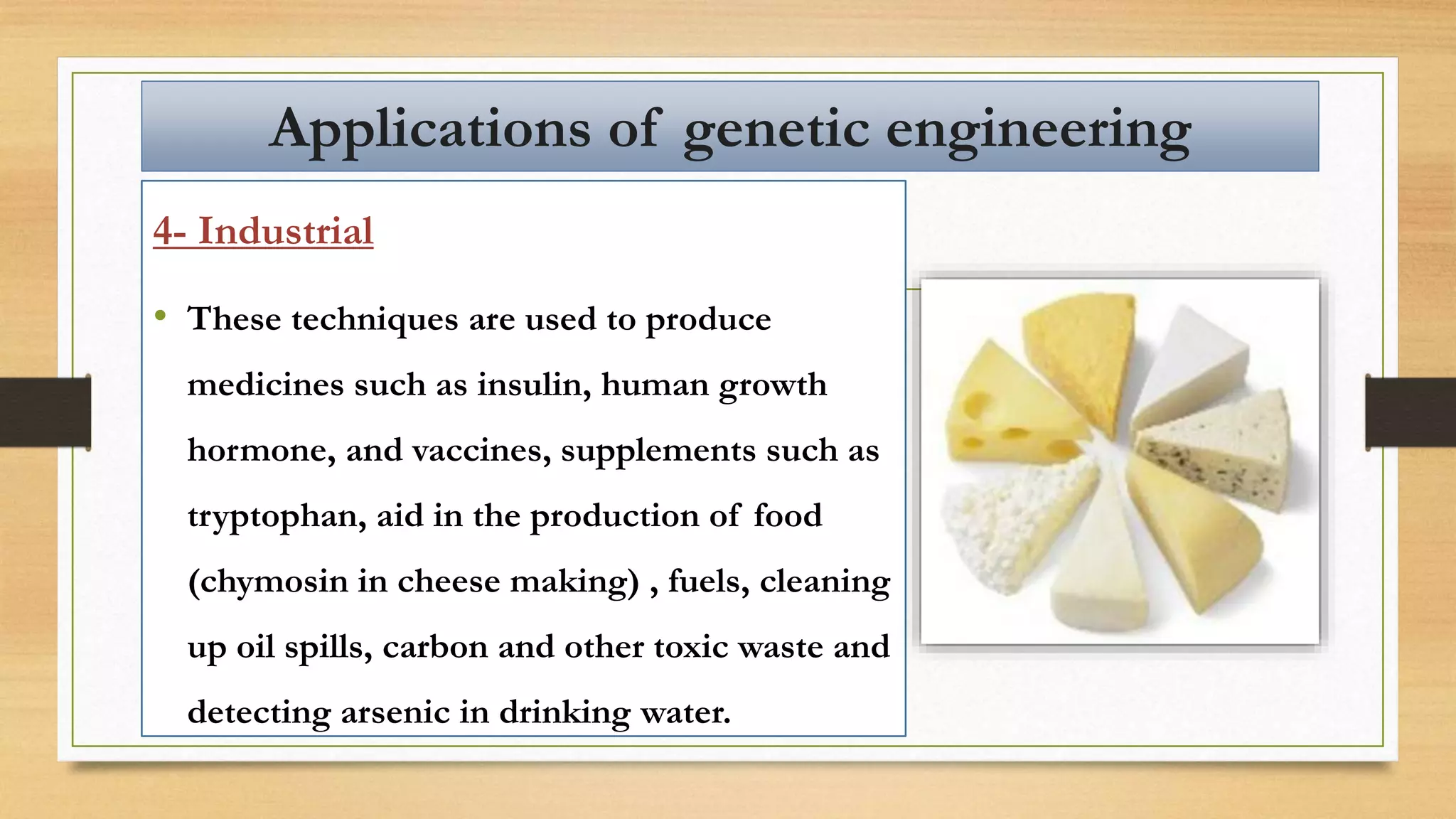
4- Industrial
• These techniques are used to produce
medicines such as insulin, human growth
hormone, and vaccines, supplements such as
tryptophan, aid in the production of food
(chymosin in cheese making) , fuels, cleaning
up oil spills, carbon and other toxic waste and
detecting arsenic in drinking water.
Applications of genetic engineering
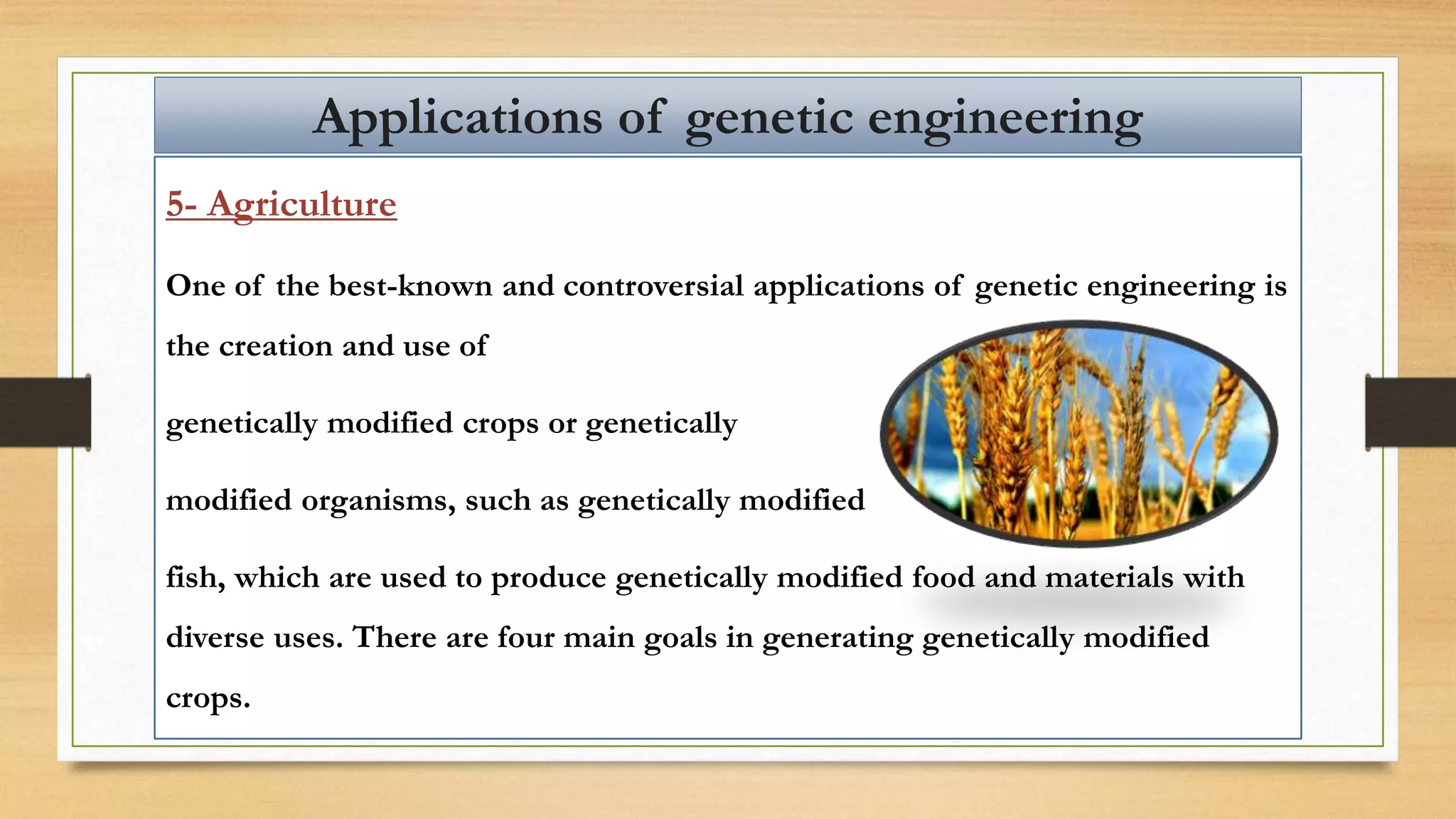
5- Agriculture
One of the best-known and controversial applications of genetic engineering is
the creation and use of
genetically modified crops or genetically
modified organisms, such as genetically modified
fish, which are used to produce genetically modified food and materials with
diverse uses. There are four main goals in generating genetically modified
crops.
Applications of genetic engineering
5- Agriculture
• To be realized commercially, is to provide protection from environmental
threats, such as cold (in the case of Ice-minus bacteria), or pathogens,
such as insects or viruses, and/or resistance to herbicides.
• To modify the quality of produce by, for instance, increasing the
nutritional value or providing more industrially useful qualities or
quantities. The Amflora potato, for example.
Applications of genetic engineering
• Driving the GMO to produce materials that it does not normally make.
One example is "pharming", which uses crops as bioreactors to
produce vaccines, drug intermediates, or drug themselves.
• Another goal in generating GMOs, is to directly improve yield by
accelerating growth, or making the organism more hardy (for plants, by
improving salt, cold or drought tolerance). Some agriculturally important
animals have been genetically modified with growth hormones to
increase their size.
Applications of genetic engineering
Ethical and safety
• Ethical and safety concerns have
been raised around the use of
genetically modified food.
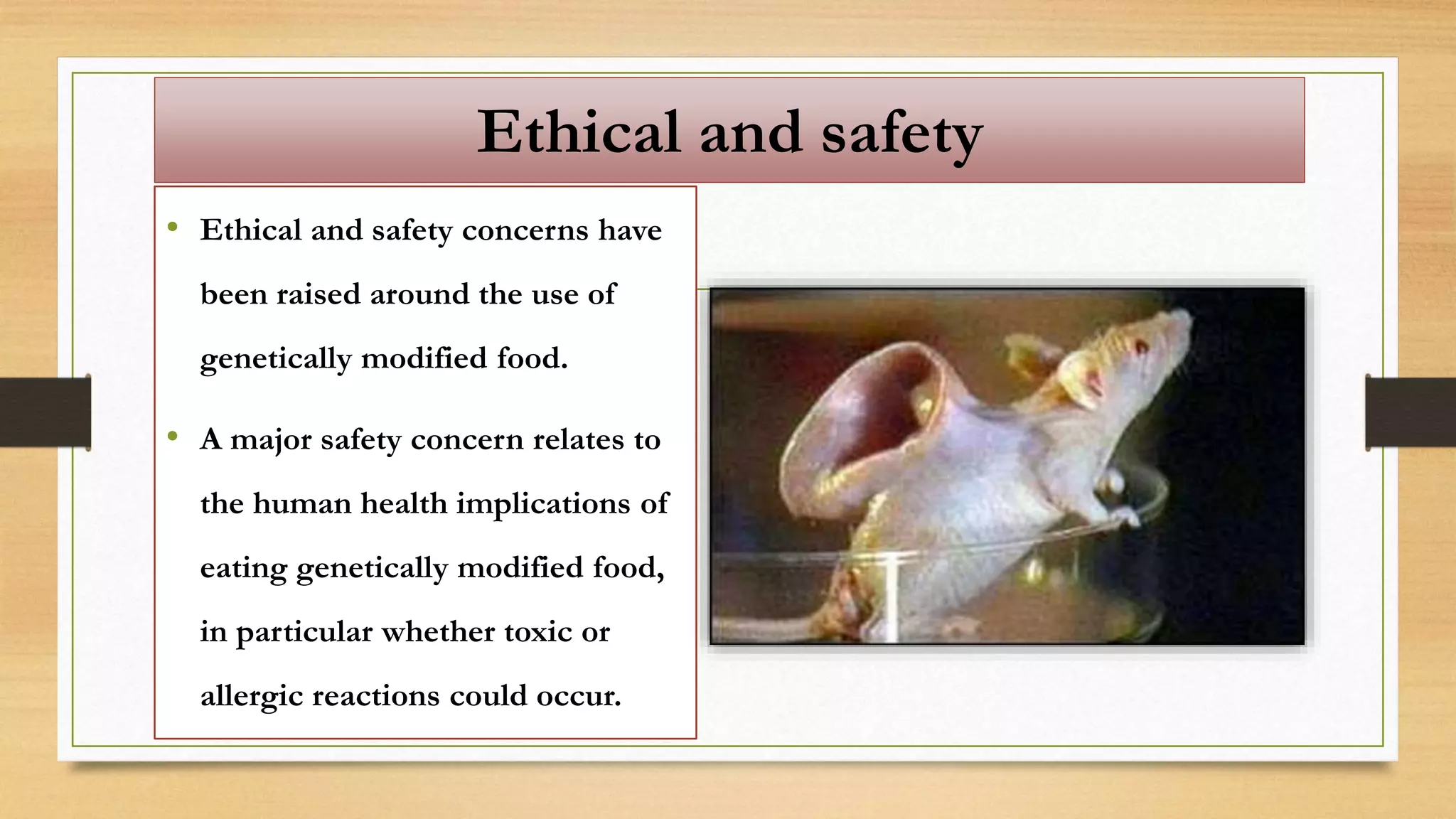
• A major safety concern relates to
the human health implications of
eating genetically modified food,
in particular whether toxic or
allergic reactions could occur.
Ethical and safety
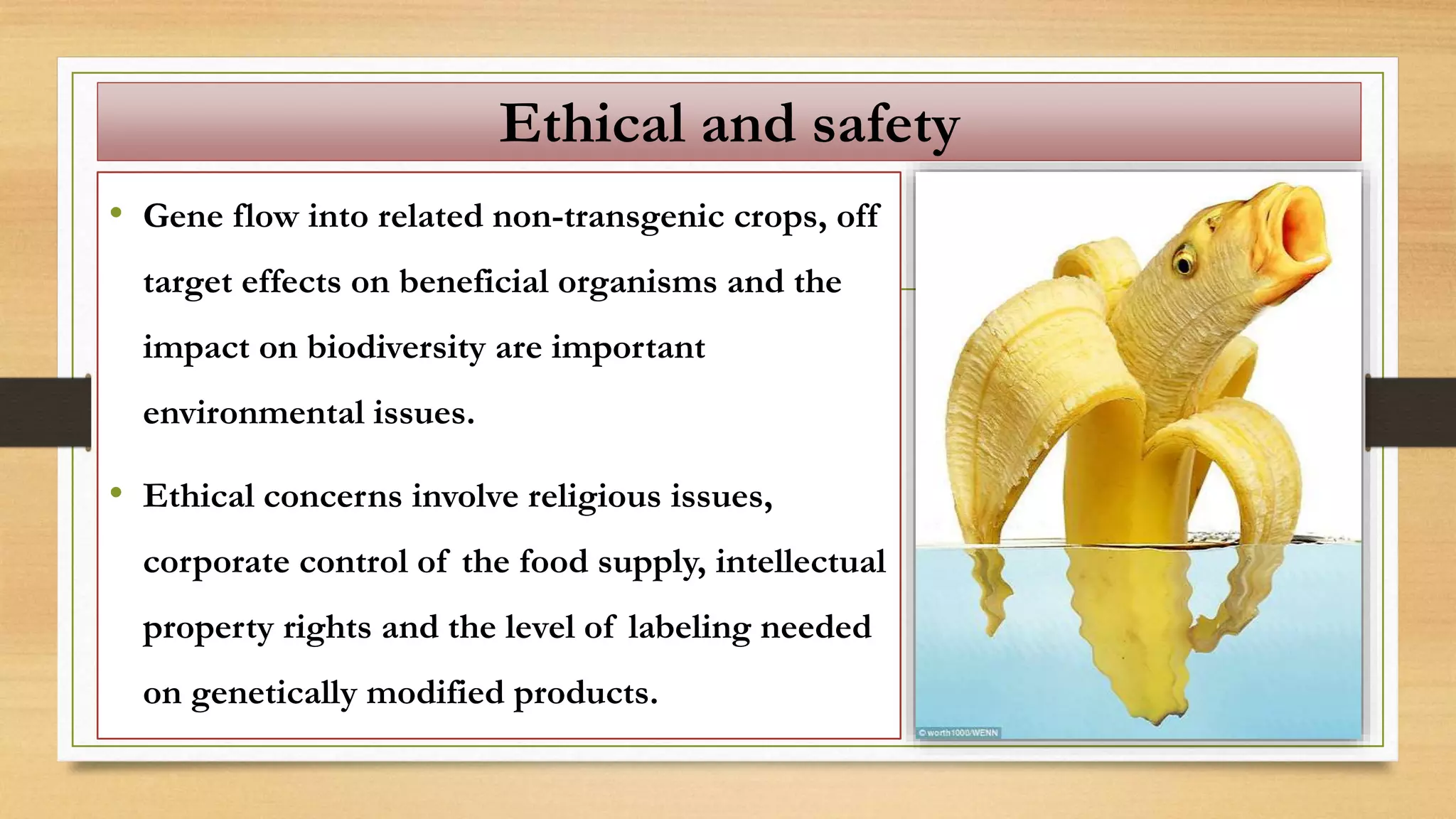
• Gene flow into related non-transgenic crops, off
target effects on beneficial organisms and the
impact on biodiversity are important
environmental issues.
• Ethical concerns involve religious issues,
corporate control of the food supply, intellectual
property rights and the level of labeling needed
on genetically modified products.
References
 Molecular Genetics of Bacteria ( 4th Edition ) (2013), Larry Snyder , Joseph E. Peters , Tina M. Henkin , Wendy
Champness ISBN 10: 1555816274 ISBN 13: 9781555816278.
 Molecular Genetics of Bacteria, 5th Edition, by Jeremy W. Dale, Simon F. Park ,April 2010, ©2010.
 Genetics of Bacteria, Sheela Srivastava,(2013) ISBN: 978-81-322-1089-4
 Microbial Genetics. (1994). Jones and Bartlett Series in Biology. Jones and Bartlett Publishers, Inc.; 2nd
edition, ISBN-10: 0867202483, ISBN-13: 978-0867202489, 484 pages.
 Microbial genetics. (2008). Jones and Bartlett series in biology
Series of books in biology. David Freifelder, publisher, Jones and Bartlett, 1987. 601 pages.
 Molecular Biology: Genes to Proteins Hardcover . (2007). Burton E. Tropp, Publisher: Jones & Bartlett Publishers; 3
edition, ISBN-10: 0763709166, ISBN-13: 978-0763709167, 1000 pages .

Microbial genetics lectures 22,23, and 24

  • 1.
    Microbial genetics Bio 433 By Dr.Mona Othman Albureikan
  • 2.
    Genetic engineering andmicroorganisms • Genetic engineering, also called genetic modification, is the direct manipulation of an organism's genome using biotechnology.
  • 3.
    • Also called,gene splicing, gene cloning, molecular cloning, and DNA recombination. • Process cutting a gene out of a DNA strand and inserting the gene into another DNA strand. Genetic engineering and microorganisms
  • 4.
    • It isa set of technologies used to change the genetic makeup of cells, including the transfer of genes to produce improved or novel organisms. • The simple addition, deletion, or manipulation of a single trait in an organism to create a desired change. Genetic engineering and microorganisms
  • 5.
    • New DNAmay be inserted in the host genome by first isolating and copying the genetic material of interest using molecular cloning methods to generate a DNA sequence, or by synthesizing the DNA, and then inserting this construct into the host organism. • Genes may be removed using a nuclease. Genetic engineering and microorganisms
  • 6.
    • An organismthat is generated through genetic engineering is considered to be a genetically modified organism (GMO). • The first GMOs were bacteria generated in 1973 and GM mice in 1974. Genetic engineering and microorganisms
  • 7.
    • Insulin- producing bacteria were commercialized in1982 and genetically modified food has been sold since 1994. Genetic engineering and microorganisms
  • 8.
    • GloFish, thefirst GMO designed as a pet, was first sold in the United States in December 2003. Genetic engineering and microorganisms
  • 9.
    1. Gene ofinterest (DNA) is isolated (DNA fragment). 2. A desired gene is inserted into a DNA molecule – vector (plasmid, bacteriophage or a viral genome) 3. The vector inserts the DNA into a new cell, which is grown to form a clone. (bacteria, yeast, plant or animal cell) 4. Large quantities of the gene product can be harvested from the clone. An Overview of Recombinant DNA Technologies
  • 10.
    Tools for Geneticengineering (1. Restriction Enzymes) • Naturally produced by bacteria – restriction endonucleases • Natural function - destroy bacteriophage DNA in bacterial cells • Cannot digest host DNA with methylated C (cytosine) • A restriction enzyme • Substrate –DNA -recognizes one particular nucleotide sequence in DNA and cuts the DNA molecule (breaks down the bond between two nucleotides). sticky ends blunt ends
  • 11.
    • DNA ligaseis a enzyme that can link together DNA strands that have double-strand breaks (a break in both complementary strands of DNA). • Naturally DNA ligase has applications in both DNA replication and DNA repair and Needs ATP. • DNA ligase has extensive use in molecular biology laboratories for genetic recombination experiments. Tools for Genetic engineering (2. Ligase)
  • 12.
    Small pieces ofDNA used for cloning (the gene to be inserted into the genetically modified organism must be combined with other genetic elements in order for it to work properly) Tools for Genetic engineering (3. Vectors)
  • 13.
    1. Self-replication -able to replicate in the host (origin of repliction). 2. Cloning site (site for recognition of restriction nucleases). 3. Promoter (and operator) - to support the gene (new DNA) expression in the host. 4. Selectable marker – antibiotic resistance 5. Proper size. Tools for Genetic engineering (Requirements of the Vector)
  • 15.
    Hosts for DNArecombinant technology 1. Bacteria - E. coli - used because is easily grown and its genomics are well understood. • Gene product is purified from host cells.
  • 16.
    2. Yeasts -Saccharomyces cerevisiae • Used because it is easily grown and its genomics are known • May express eukaryotic genes easily. • Continuously secrete the gene product. • Easily collected and purified. Hosts for DNA recombinant technology
  • 17.
    3. Plant cellsand whole plants • May express eukaryotic genes easily • Plants are easily grown - produce plants with new properties. 4. Mammalian cells • May express eukaryotic genes easily • Harder to grow • Medical use. Hosts for DNA recombinant technology
  • 18.
    Hosts for DNArecombinant technology
  • 19.
    1.Transformation * Treatment makecells competent to accept foreign DNA (CaCl2 make pores in cell membrane) 2. Electroporation *Use electrical current to form microscopic pores in the membranes of cell. Insert the naked DNA into a host cell
  • 20.
    3. Protoplast fusion – yeast,plants and algal cells 4. Microinjection 5. Gene gun. Insert the naked DNA into a host cell
  • 21.
    Copying the geneticmaterial of interest - PCR • Polymerase Chain Reaction (PCR) • A reaction to make multiple copies of a piece of DNA enzymatically • Polymerase – enzyme is DNA polymerase from Thermus aquaticus – Taq polymerase. • Taq's optimum temperature for activity is 75-80°C • Can replicate a 1000 base pair strand of DNA in less than 10 seconds at 72°C.
  • 22.
    PCR reaction mixture: 1. Target DNA (template) 2. Short primers- to hybridize to the 5’ end of each DNA strand 3. four NTP – ATP, GTP, TTP, and CTP 4. Buffer 5. DNA Taq Polymerase (enzyme). Copying the genetic material of interest - PCR
  • 23.
    Cycle program in PCRmachine: 1. Denaturation - 95ºC. 2. Annealing (hybridization)- 60-65 ºC. 3. Polymerase reaction -72 ºC Copying the genetic material of interest - PCR
  • 24.
    Applications of geneticengineering 1- Therapeutic Applications (Medicine and Industrial fermentation). • Produce human proteins – hormones and enzymes ( Insulin, human growth hormone HGH and drugs). • Vaccines ( Cells and viruses can be modified to produce a pathogen’s surface protein like Influenza, and Hepatitis B. • Gene therapy can be used to cure genetic diseases by replacing the defective or missing gene.
  • 25.
  • 26.
    2- Research • Geneticengineering is used to create animal models of human diseases. • Genetically modified mice are the most common genetically engineered animal model. • They have been used to study and model cancer (the oncomouse), obesity, heart disease, diabetes, and Parkinson disease. • Potential cures can be tested against these mouse models. Applications of genetic engineering
  • 27.
    3- Gene therapy •Gene therapy is the genetic engineering of humans, generally by replacing defective genes with effective ones. This can occur in somatic tissue or germline tissue. Applications of genetic engineering
  • 28.
  • 29.
    4- Industrial • Usinggenetic engineering techniques one can transform microorganisms such as bacteria or yeast, or transform cells from multicellular organisms such as insects or mammals, with a gene coding for a useful protein, such as an enzyme, so that the transformed organism will overexpress the desired protein. Applications of genetic engineering
  • 30.
    4- Industrial • Thesetechniques are used to produce medicines such as insulin, human growth hormone, and vaccines, supplements such as tryptophan, aid in the production of food (chymosin in cheese making) , fuels, cleaning up oil spills, carbon and other toxic waste and detecting arsenic in drinking water. Applications of genetic engineering
  • 31.
    5- Agriculture One ofthe best-known and controversial applications of genetic engineering is the creation and use of genetically modified crops or genetically modified organisms, such as genetically modified fish, which are used to produce genetically modified food and materials with diverse uses. There are four main goals in generating genetically modified crops. Applications of genetic engineering
  • 32.
    5- Agriculture • Tobe realized commercially, is to provide protection from environmental threats, such as cold (in the case of Ice-minus bacteria), or pathogens, such as insects or viruses, and/or resistance to herbicides. • To modify the quality of produce by, for instance, increasing the nutritional value or providing more industrially useful qualities or quantities. The Amflora potato, for example. Applications of genetic engineering
  • 33.
    • Driving theGMO to produce materials that it does not normally make. One example is "pharming", which uses crops as bioreactors to produce vaccines, drug intermediates, or drug themselves. • Another goal in generating GMOs, is to directly improve yield by accelerating growth, or making the organism more hardy (for plants, by improving salt, cold or drought tolerance). Some agriculturally important animals have been genetically modified with growth hormones to increase their size. Applications of genetic engineering
  • 34.
    Ethical and safety •Ethical and safety concerns have been raised around the use of genetically modified food. • A major safety concern relates to the human health implications of eating genetically modified food, in particular whether toxic or allergic reactions could occur.
  • 35.
    Ethical and safety •Gene flow into related non-transgenic crops, off target effects on beneficial organisms and the impact on biodiversity are important environmental issues. • Ethical concerns involve religious issues, corporate control of the food supply, intellectual property rights and the level of labeling needed on genetically modified products.
  • 36.
    References  Molecular Geneticsof Bacteria ( 4th Edition ) (2013), Larry Snyder , Joseph E. Peters , Tina M. Henkin , Wendy Champness ISBN 10: 1555816274 ISBN 13: 9781555816278.  Molecular Genetics of Bacteria, 5th Edition, by Jeremy W. Dale, Simon F. Park ,April 2010, ©2010.  Genetics of Bacteria, Sheela Srivastava,(2013) ISBN: 978-81-322-1089-4  Microbial Genetics. (1994). Jones and Bartlett Series in Biology. Jones and Bartlett Publishers, Inc.; 2nd edition, ISBN-10: 0867202483, ISBN-13: 978-0867202489, 484 pages.  Microbial genetics. (2008). Jones and Bartlett series in biology Series of books in biology. David Freifelder, publisher, Jones and Bartlett, 1987. 601 pages.  Molecular Biology: Genes to Proteins Hardcover . (2007). Burton E. Tropp, Publisher: Jones & Bartlett Publishers; 3 edition, ISBN-10: 0763709166, ISBN-13: 978-0763709167, 1000 pages .