BIOFERTILIZERS
AND BIOPESTICIDES
PRESENTED BY:-
HARGOVIND LAXKAR
INTRODUCTION
In the last century, chemical fertilizers were used in
agriculture.
But slowly chemical fertilizers started displaying
their ill-effects such as
• polluting water basins
• destroying micro-organisms and friendly
insects
• making the crop more susceptible to the
attack of diseases
• reducing the soil fertility and thus causing
irreparable damage to the overall system.
SOLUTION
• Found that biofertilizers can help in increasing the
yield without causing the damage associated with
chemical fertilizers.
BIOFERTILIZER
• It is a large population of a specific or a group of
beneficial microorganisms for enhancing the
productivity of soil
• Either by fixing atmospheric nitrogen or by
solubilizing soil phosphorus.
TYPES OF BIOFERTILIZER
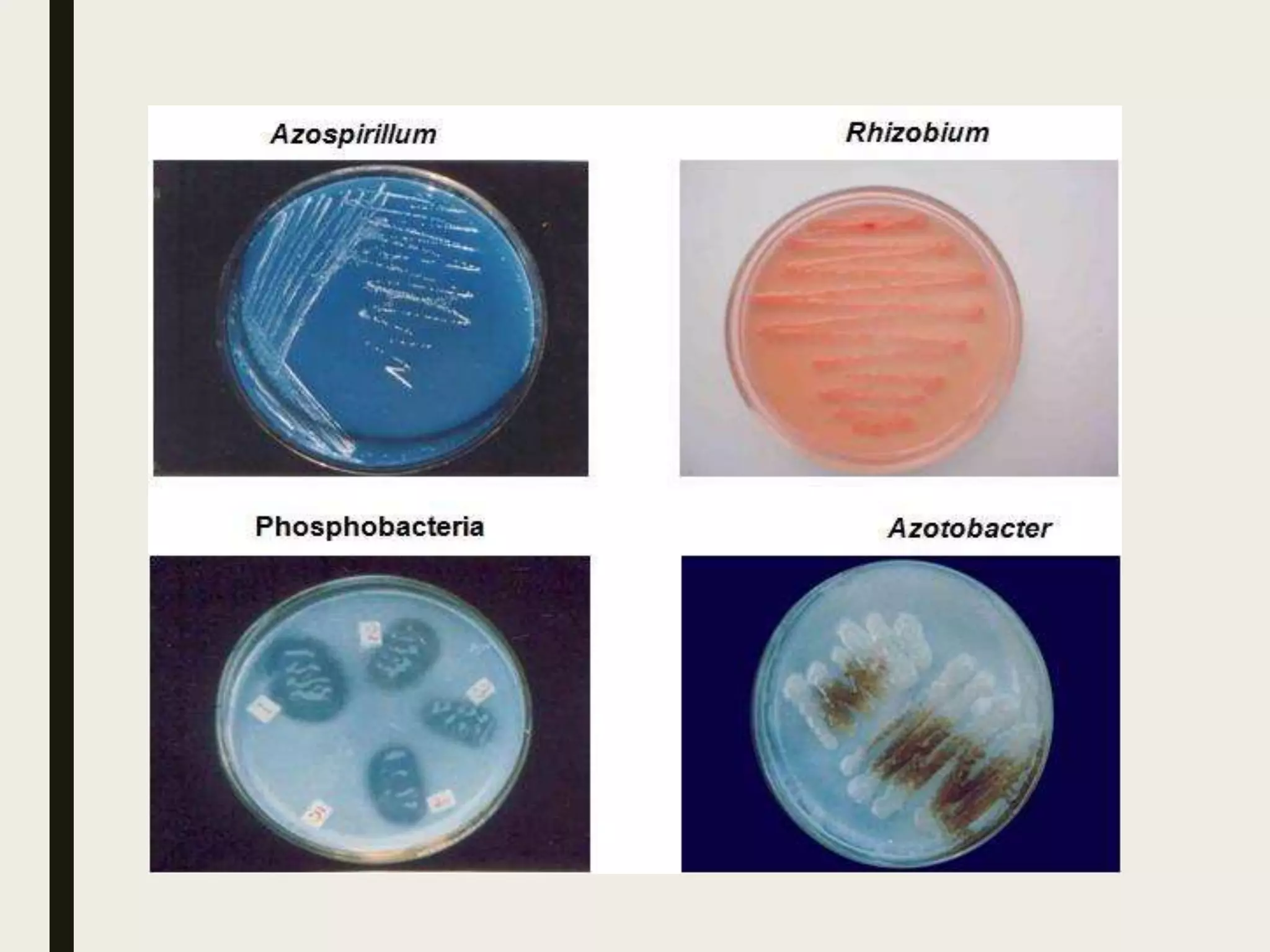
1. For Nitrogen
Rhizobium for legumes crops
Azotobacter/Azospirillum for non legume crops
2. For Phosphorous
Rhizobium, Azotobacter, Azospirillum and Acetobacter
Biocompost
• Eco-friendly organic fertilizer
• Prepared from the sugar industry waste material.
• Consists of nitrogen, phosphate solubilizing bacteria and
various useful fungi like decomposing fungi, trichoderma
viridea which protects the plants from various soil borne
disease
• Increase soil fertility which results to a good quality
product to the farmers.
Advantage of biofertilizers
Renewable source of nutrients
Sustain soil health
Supplement chemical fertilizers.
Replace 25-30% chemical fertilizers
Increase the grain yields by 10-40%.
Decompose plant residues, and stabilize C:N ratio of soil
Improve texture, structure and water holding capacity of soil
No adverse effect on plant growth and soil fertility.
BIOPESTICIDES
BIOPESTICIDE
• Bio pesticides are biochemical pesticides that are naturally
occurring substances that control pests by nontoxic
mechanisms.
• Biopesticides are certain types of pesticides derived from
such natural materials as animals, plants, bacteria, and
certain minerals.
• All the living organism which are cultivated in the laboratory
on large scale and are used and exploited experimentally for
the control of harmful organism.
■ Consist of a microorganism (e.g., a bacterium,
fungus, virus, or protozoan) as the active
ingredient. Microbial pesticides can control many
different kinds of pests, although each separate
active ingredient is relatively specific for its target
pest. For example, there are fungi that control
certain weeds, and other fungi that kill specific
insects.
■ Are pesticidal substances that plants produce from
genetic material that has been added to the plant. For
example, scientists can take the gene for the Bt pesticidal
protein and introduce the gene into the plant's own
genetic material.
2. Plant pesticides
■ Are naturally occurring substances that control pests by
non-toxic mechanisms. Conventional pesticides, by
contrast, are generally synthetic materials that directly
kill or inactivate the pest. Biochemical pesticides include
substances, such as insect sex pheromones, that interfere
with mating, as well as various scented plant extracts that
attract insect pests to traps.
• Biopesticides are usually inherently less toxic than conventional
pesticides.
• Cheap, renewable can be handled safely.
• Difficult for insects to develop resistance to these pesticides.
THANK YOU

Biofertilizer and biopesticides

  • 1.
  • 2.
    INTRODUCTION In the lastcentury, chemical fertilizers were used in agriculture. But slowly chemical fertilizers started displaying their ill-effects such as • polluting water basins • destroying micro-organisms and friendly insects • making the crop more susceptible to the attack of diseases • reducing the soil fertility and thus causing irreparable damage to the overall system.
  • 3.
    SOLUTION • Found thatbiofertilizers can help in increasing the yield without causing the damage associated with chemical fertilizers.
  • 4.
    BIOFERTILIZER • It isa large population of a specific or a group of beneficial microorganisms for enhancing the productivity of soil • Either by fixing atmospheric nitrogen or by solubilizing soil phosphorus.
  • 5.
    TYPES OF BIOFERTILIZER 1.For Nitrogen Rhizobium for legumes crops Azotobacter/Azospirillum for non legume crops 2. For Phosphorous Rhizobium, Azotobacter, Azospirillum and Acetobacter
  • 7.
    Biocompost • Eco-friendly organicfertilizer • Prepared from the sugar industry waste material. • Consists of nitrogen, phosphate solubilizing bacteria and various useful fungi like decomposing fungi, trichoderma viridea which protects the plants from various soil borne disease • Increase soil fertility which results to a good quality product to the farmers.
  • 8.
    Advantage of biofertilizers Renewablesource of nutrients Sustain soil health Supplement chemical fertilizers. Replace 25-30% chemical fertilizers Increase the grain yields by 10-40%. Decompose plant residues, and stabilize C:N ratio of soil Improve texture, structure and water holding capacity of soil No adverse effect on plant growth and soil fertility.
  • 9.
  • 10.
    BIOPESTICIDE • Bio pesticidesare biochemical pesticides that are naturally occurring substances that control pests by nontoxic mechanisms. • Biopesticides are certain types of pesticides derived from such natural materials as animals, plants, bacteria, and certain minerals. • All the living organism which are cultivated in the laboratory on large scale and are used and exploited experimentally for the control of harmful organism.
  • 12.
    ■ Consist ofa microorganism (e.g., a bacterium, fungus, virus, or protozoan) as the active ingredient. Microbial pesticides can control many different kinds of pests, although each separate active ingredient is relatively specific for its target pest. For example, there are fungi that control certain weeds, and other fungi that kill specific insects.
  • 13.
    ■ Are pesticidalsubstances that plants produce from genetic material that has been added to the plant. For example, scientists can take the gene for the Bt pesticidal protein and introduce the gene into the plant's own genetic material. 2. Plant pesticides
  • 14.
    ■ Are naturallyoccurring substances that control pests by non-toxic mechanisms. Conventional pesticides, by contrast, are generally synthetic materials that directly kill or inactivate the pest. Biochemical pesticides include substances, such as insect sex pheromones, that interfere with mating, as well as various scented plant extracts that attract insect pests to traps.
  • 15.
    • Biopesticides areusually inherently less toxic than conventional pesticides. • Cheap, renewable can be handled safely. • Difficult for insects to develop resistance to these pesticides.
  • 16.