Antigen antibody interaction
Kalu ram sharma
M.Sc(biotechnology)
Manipal university jaipur
Antigen
• In immunology, an antigen is a molecule
capable of inducing an immune response on
the part of the host organism.
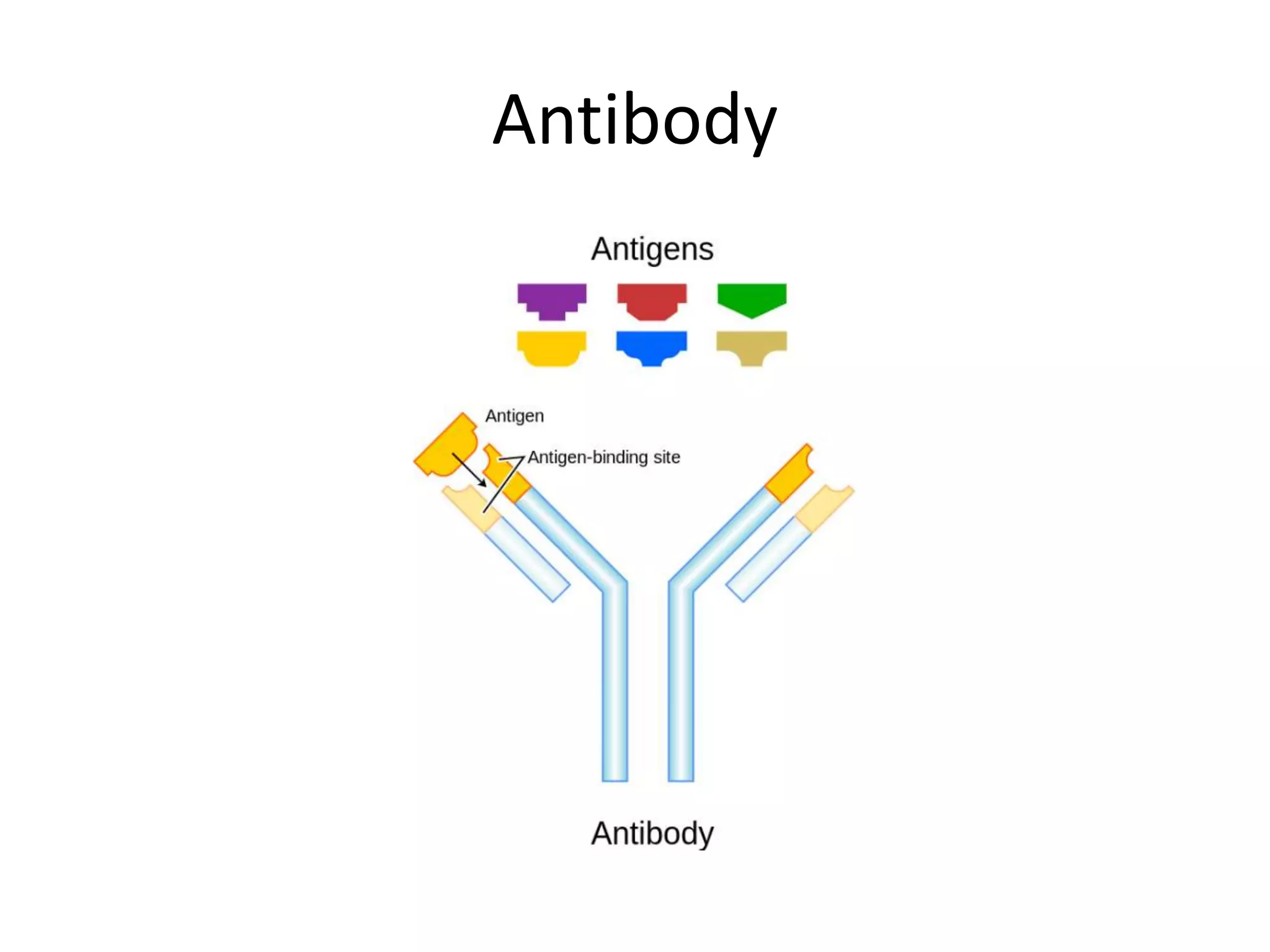
Antibody
• An antibody (Ab), also known as an
immunoglobulin (lg), is a large, Y-shaped
protein produced mainly by plasma cells that
is used by the immune system to neutralize
pathogens such as bacteria and viruses.
Antibody
Antigen-antibody interaction
• The antigen-antibody interaction is a
bimolecular association similar to an enzyme-
substrate interaction, with an important
distinction.
Antigen-antibody interaction
• Ag-Ab interaction is a specific chemical
interaction between antibodies produced by B
cells of the white blood cells and antigens
during immune reaction.
• In the fundamental reaction in the body by
which the body is protected from complex
foreign molecules, such as pathogens and
their chemical toxin.
Strength of Ag-Ab interaction
• The non-covalent interactions that form the
basis of Ag-Ab binding include hydrogen
bonds, hydrophobic interactions, and van der
Walls interaction.
• Because these interactions are individually
weak (compared with a covalent bond), a
large number of such interactions are required
to form a strong Ag-Ab interaction.
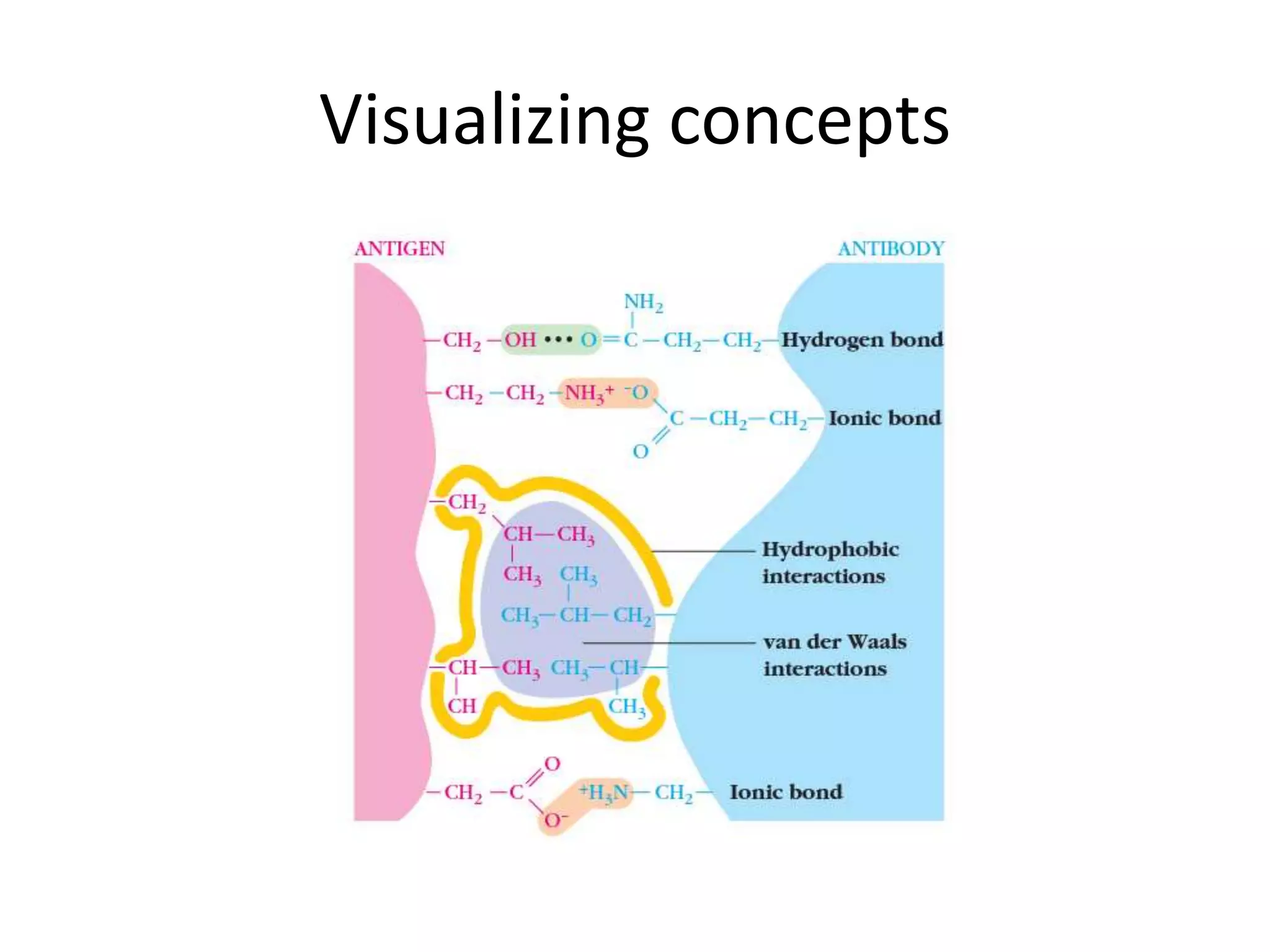
Visualizing concepts
• The interaction between an Ab and an Ag
depends on four types of noncovalent forces:
• (1) hydrogen bond:- in which a hydrogen atom
is shared between two electronegative atoms.
• (2) ionic bonds:- Between oppositely charged
residues.
• (3) Hydrophobic interaction:- in which water
forces hydrophobic groups together.
• (4) van der Walls interaction:- Between the
outer electron clouds of two or more atoms.
Immunologic tests
• (1)Radioimmunoassay (RIA)
• (2)ELISA
• (3)Western Blot
• (4)Immunoprecipitation
• (5)Immunoflurescence
(1)Radioimmunoassay (RIA)
• It is very sensitive in vitro assay technique
used to measure concentration of antigen (for
example , hormone levels in blood) by use of
antibodies.
(2)ELISA(Enzyme-Linked
Immunosorbent Assay)
ELISA is test that uses antibodies and color change to identify
a substance.
The ELISA has been used as a diagnostic tool in medicine and
plant pathology , as well as a quality-control check in
various industries.
• The following steps of ELISA:-
• (a)indirect ELISA
• (b)sandwich ELISA
• (c)competitive ELISA
ELISHA
(3)Western Blot
• The western blot sometimes called the protein
immunoblot.
• Used to identification of specific proteins in
mixtures.
• Proteins are separated on SDS-PAGE.
• Proteins then transferred to membrane.
(4)Immunoprecipitation
• Provides a quick and sensitive test for finding
proteins.
• Binds Ab to synthetic bead support
centrifuged.
(5)Immunoflurescence
• Provides a quick method for the identification
of pathogens and lymphocytes.
• There are currently 2 methods employed:-
(a)Direct staining
(b)Indirect staining
Application
• Antigen-antibody interaction is used in
laboratory techniques for serological test
blood compatibility and various pathogenic
infection.
• The most basic is ABO blood group
determination , which is useful for blood
transfusion.
References
• Kuby book
• www.google.wikipedia.com
•Thank you

Antigen antibody interaction

  • 1.
    Antigen antibody interaction Kaluram sharma M.Sc(biotechnology) Manipal university jaipur
  • 2.
    Antigen • In immunology,an antigen is a molecule capable of inducing an immune response on the part of the host organism.
  • 3.
    Antibody • An antibody(Ab), also known as an immunoglobulin (lg), is a large, Y-shaped protein produced mainly by plasma cells that is used by the immune system to neutralize pathogens such as bacteria and viruses.
  • 4.
  • 5.
    Antigen-antibody interaction • Theantigen-antibody interaction is a bimolecular association similar to an enzyme- substrate interaction, with an important distinction.
  • 6.
    Antigen-antibody interaction • Ag-Abinteraction is a specific chemical interaction between antibodies produced by B cells of the white blood cells and antigens during immune reaction. • In the fundamental reaction in the body by which the body is protected from complex foreign molecules, such as pathogens and their chemical toxin.
  • 7.
    Strength of Ag-Abinteraction • The non-covalent interactions that form the basis of Ag-Ab binding include hydrogen bonds, hydrophobic interactions, and van der Walls interaction. • Because these interactions are individually weak (compared with a covalent bond), a large number of such interactions are required to form a strong Ag-Ab interaction.
  • 9.
  • 10.
    • The interactionbetween an Ab and an Ag depends on four types of noncovalent forces: • (1) hydrogen bond:- in which a hydrogen atom is shared between two electronegative atoms. • (2) ionic bonds:- Between oppositely charged residues.
  • 11.
    • (3) Hydrophobicinteraction:- in which water forces hydrophobic groups together. • (4) van der Walls interaction:- Between the outer electron clouds of two or more atoms.
  • 12.
    Immunologic tests • (1)Radioimmunoassay(RIA) • (2)ELISA • (3)Western Blot • (4)Immunoprecipitation • (5)Immunoflurescence
  • 13.
    (1)Radioimmunoassay (RIA) • Itis very sensitive in vitro assay technique used to measure concentration of antigen (for example , hormone levels in blood) by use of antibodies.
  • 14.
    (2)ELISA(Enzyme-Linked Immunosorbent Assay) ELISA istest that uses antibodies and color change to identify a substance. The ELISA has been used as a diagnostic tool in medicine and plant pathology , as well as a quality-control check in various industries. • The following steps of ELISA:- • (a)indirect ELISA • (b)sandwich ELISA • (c)competitive ELISA
  • 15.
  • 16.
    (3)Western Blot • Thewestern blot sometimes called the protein immunoblot. • Used to identification of specific proteins in mixtures. • Proteins are separated on SDS-PAGE. • Proteins then transferred to membrane.
  • 17.
    (4)Immunoprecipitation • Provides aquick and sensitive test for finding proteins. • Binds Ab to synthetic bead support centrifuged.
  • 18.
    (5)Immunoflurescence • Provides aquick method for the identification of pathogens and lymphocytes. • There are currently 2 methods employed:- (a)Direct staining (b)Indirect staining
  • 19.
    Application • Antigen-antibody interactionis used in laboratory techniques for serological test blood compatibility and various pathogenic infection. • The most basic is ABO blood group determination , which is useful for blood transfusion.
  • 20.
    References • Kuby book •www.google.wikipedia.com
  • 21.