Solubilize inorganic phosphorus from
insoluble compounds
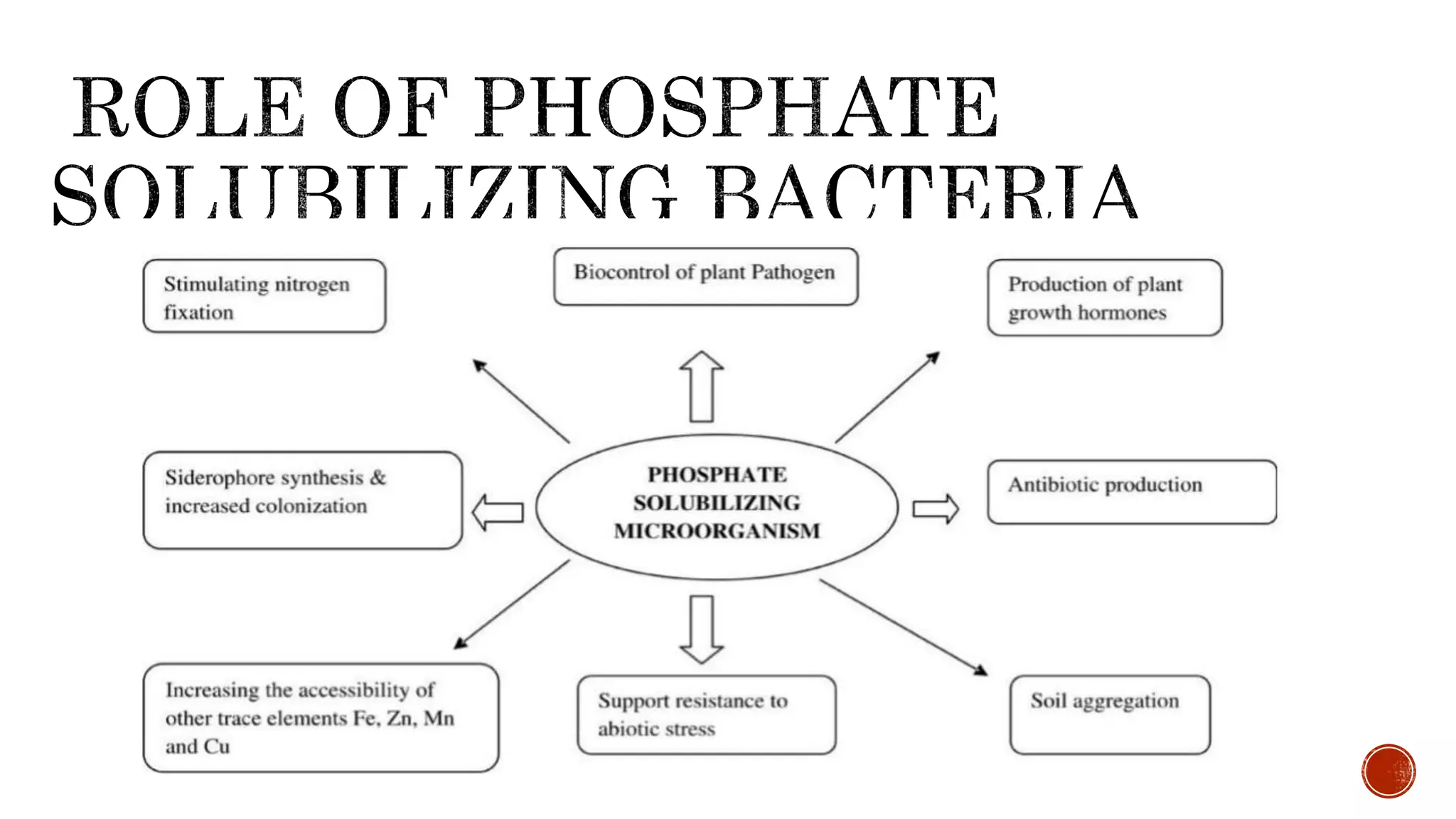
 A number of bacterial species provide beneficial effects to a plant and these
are mostly present in rhizosphere and hence called rhizobacteria.
 This group of bacteria has been termed plant growth promoting
rhizobacteria.
 Phosphorus is an essential element for plant development and growth
making up about 0.2 % of plant dry weight.
 Plants acquire P from soil solution as phosphate anions.
 However, phosphate anions are extremely reactive and may be
immobilized through precipitation with cations such as Ca 2+ , Mg 2+ , Fe
3+ and Al 3+.
 In these forms, P is highly insoluble and unavailable to plants.
 Different bacterial species has ability to solubilize insoluble inorganic
phosphate compounds, such as tricalcium phosphate, dicalcium phosphate,
hydroxyapatite, and rock phosphate
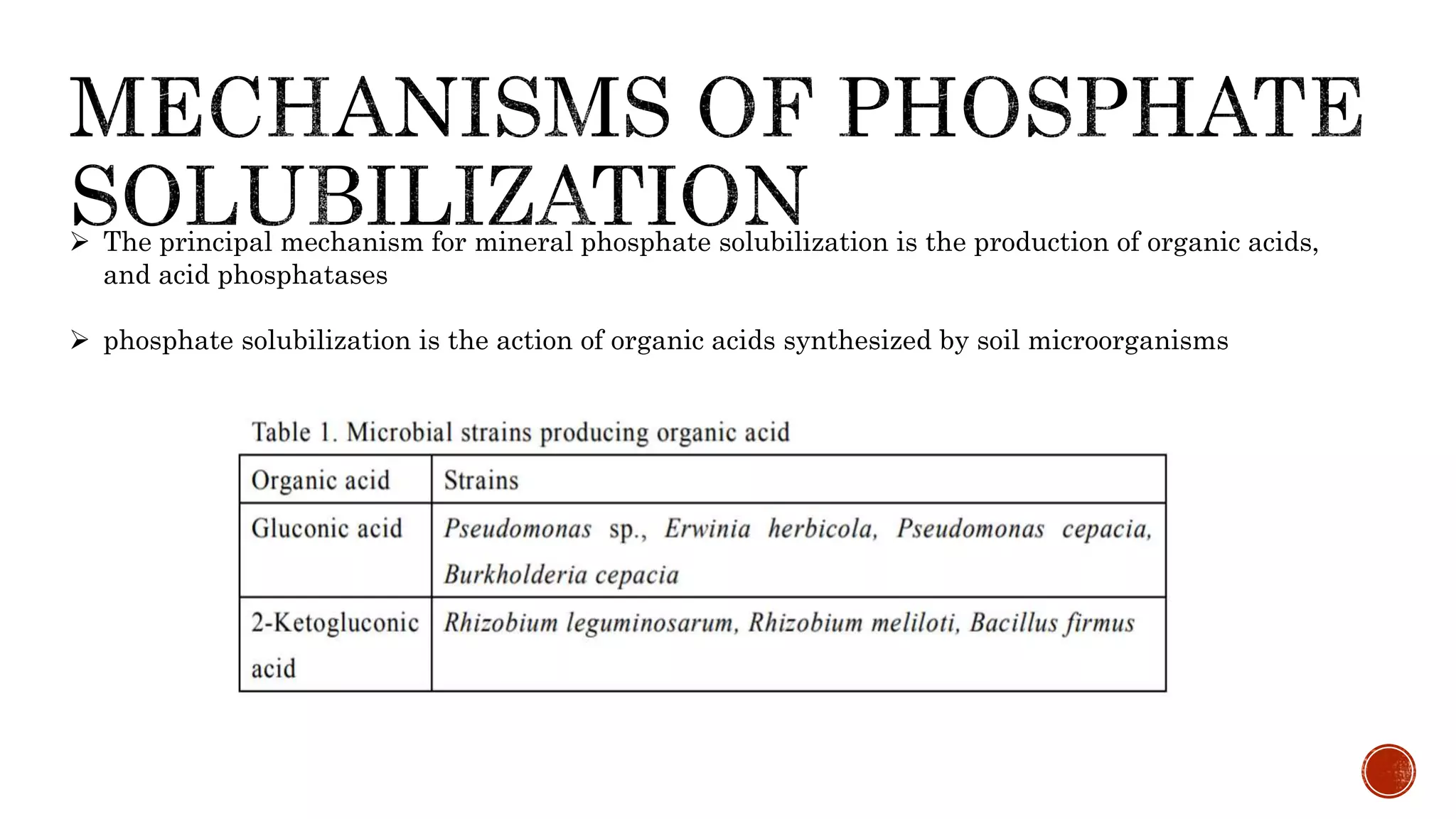
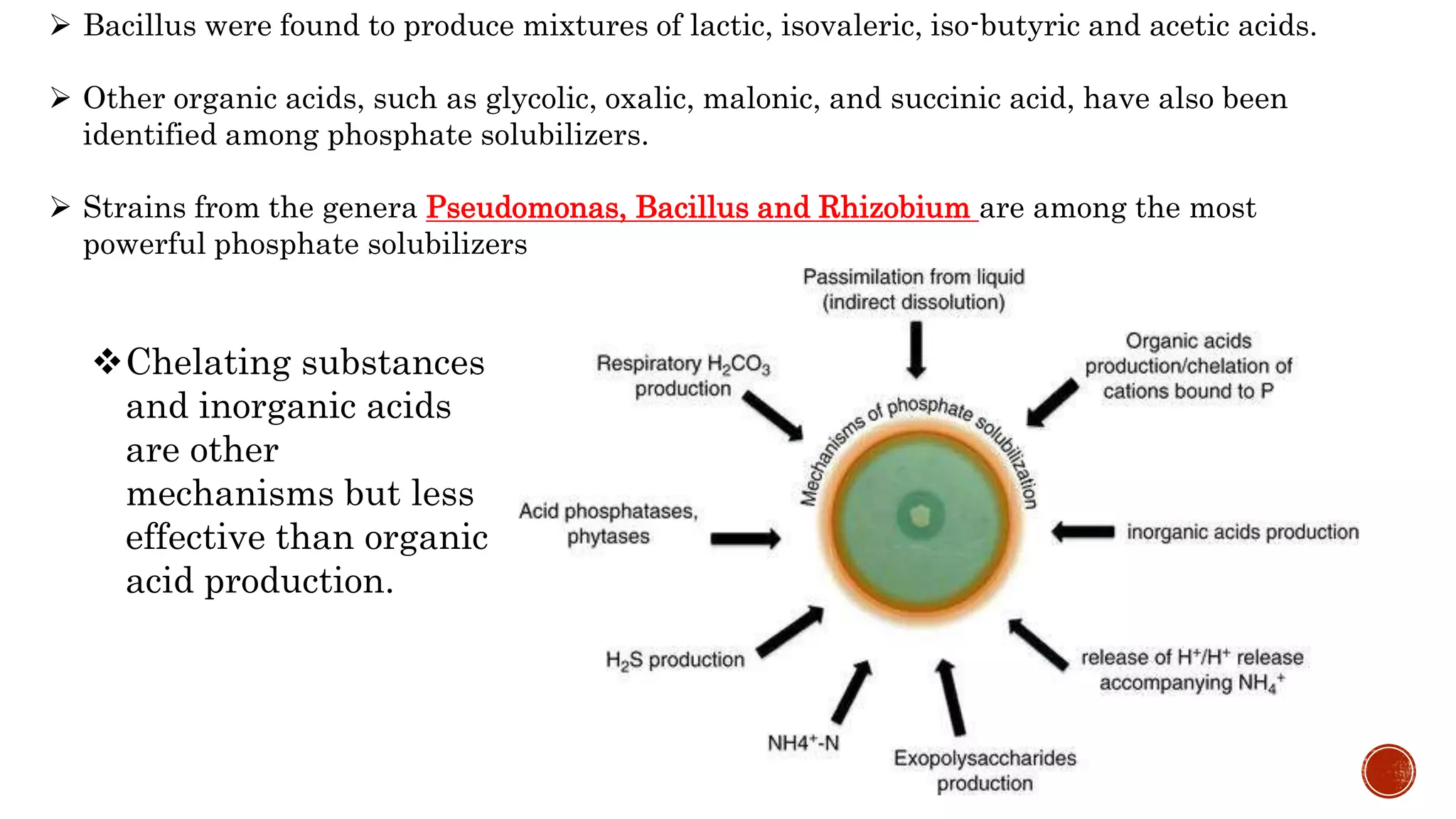
 The principal mechanism for mineral phosphate solubilization is the production of organic acids,
and acid phosphatases
 phosphate solubilization is the action of organic acids synthesized by soil microorganisms
 Bacillus were found to produce mixtures of lactic, isovaleric, iso-butyric and acetic acids.
 Other organic acids, such as glycolic, oxalic, malonic, and succinic acid, have also been
identified among phosphate solubilizers.
 Strains from the genera Pseudomonas, Bacillus and Rhizobium are among the most
powerful phosphate solubilizers
Chelating substances
and inorganic acids
are other
mechanisms but less
effective than organic
acid production.
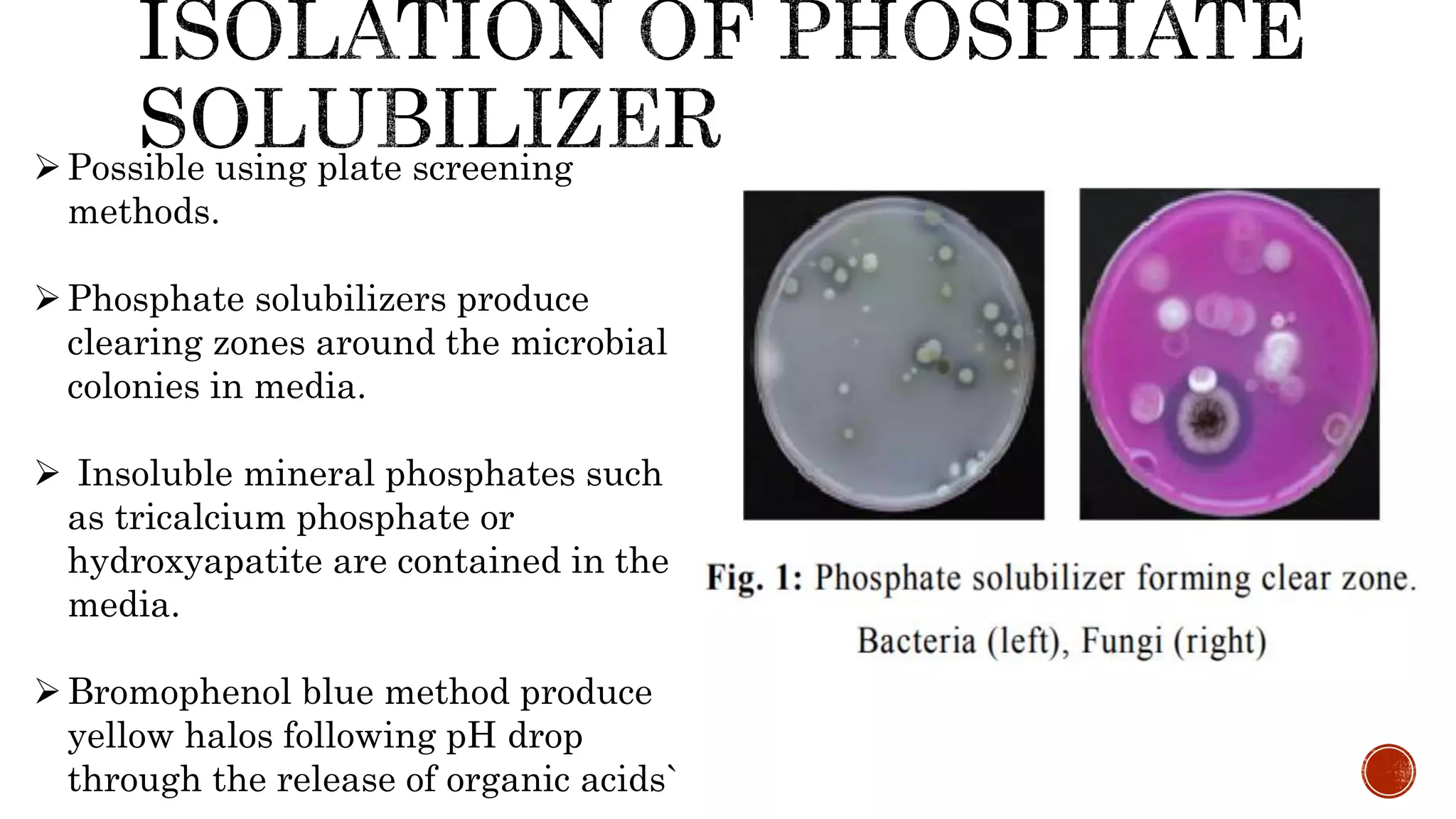
Possible using plate screening
methods.
Phosphate solubilizers produce
clearing zones around the microbial
colonies in media.
 Insoluble mineral phosphates such
as tricalcium phosphate or
hydroxyapatite are contained in the
media.
Bromophenol blue method produce
yellow halos following pH drop
through the release of organic acids`
 Potential materials that are able to support good growth and survival of bacteria are needed in
inoculant production such as - coals, bentonite, corn oil, mineral soils, peat, peat moss,
vermiculite, and perlite
 STEP -1 (CULTIVATION)
Bacteria are cultivated on suitable medium in suitable conditions.
 STEP-2 (COLLECTION)
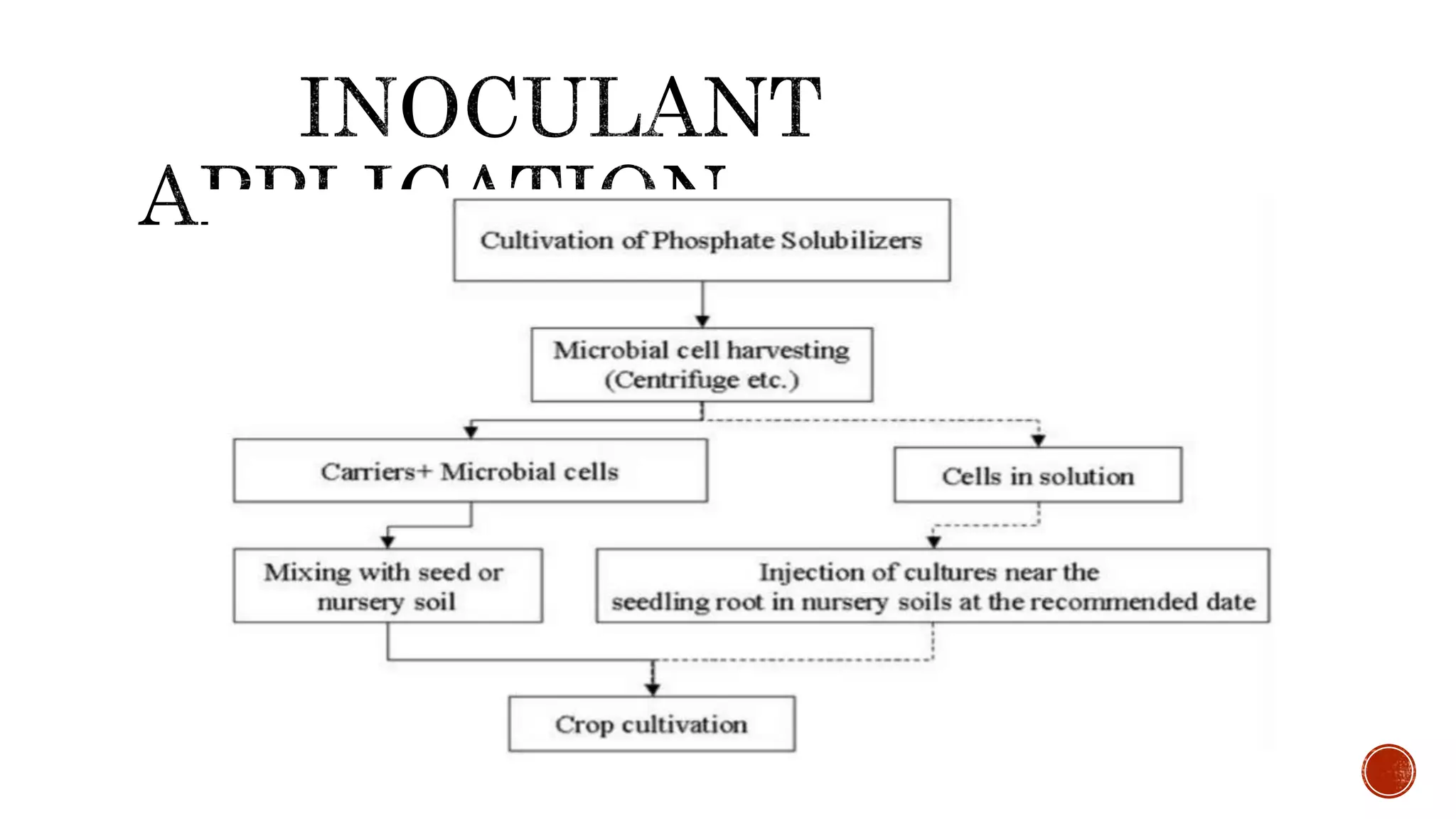
After incubation period collect microbial cells by centrifuge.
Wash cells with distilled water or diluted saline solution.
 STEP-3(FORMULATION OF INOCULANTS USING CARRIE MATERIAL)
Mix cells using carrier materials such as peat, vermiculite, perlite etc.
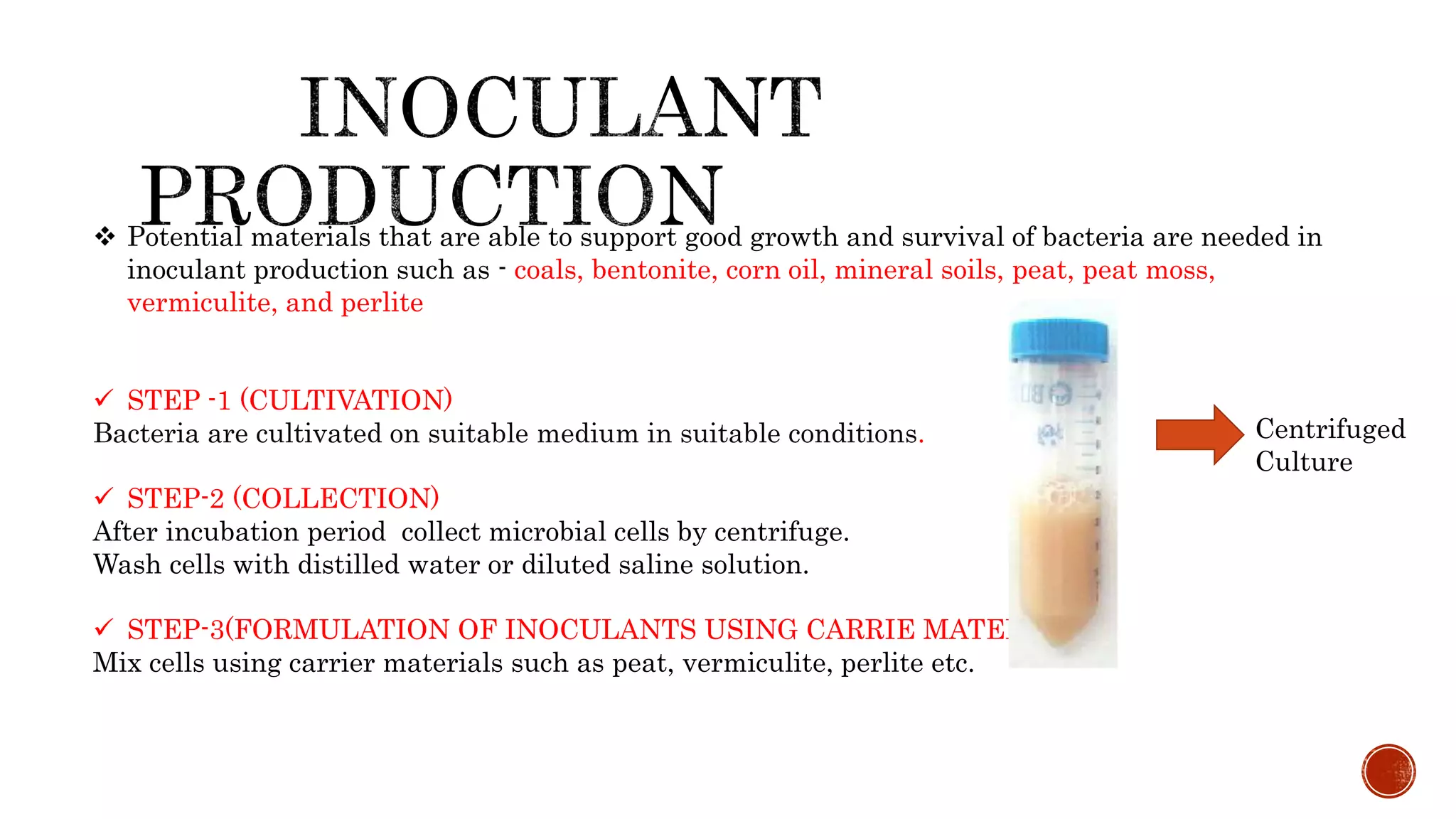
Centrifuged
Culture
Phosphate solubilizers

Phosphate solubilizers

  • 1.
    Solubilize inorganic phosphorusfrom insoluble compounds
  • 2.
     A numberof bacterial species provide beneficial effects to a plant and these are mostly present in rhizosphere and hence called rhizobacteria.  This group of bacteria has been termed plant growth promoting rhizobacteria.  Phosphorus is an essential element for plant development and growth making up about 0.2 % of plant dry weight.  Plants acquire P from soil solution as phosphate anions.  However, phosphate anions are extremely reactive and may be immobilized through precipitation with cations such as Ca 2+ , Mg 2+ , Fe 3+ and Al 3+.  In these forms, P is highly insoluble and unavailable to plants.  Different bacterial species has ability to solubilize insoluble inorganic phosphate compounds, such as tricalcium phosphate, dicalcium phosphate, hydroxyapatite, and rock phosphate
  • 3.
     The principalmechanism for mineral phosphate solubilization is the production of organic acids, and acid phosphatases  phosphate solubilization is the action of organic acids synthesized by soil microorganisms
  • 4.
     Bacillus werefound to produce mixtures of lactic, isovaleric, iso-butyric and acetic acids.  Other organic acids, such as glycolic, oxalic, malonic, and succinic acid, have also been identified among phosphate solubilizers.  Strains from the genera Pseudomonas, Bacillus and Rhizobium are among the most powerful phosphate solubilizers Chelating substances and inorganic acids are other mechanisms but less effective than organic acid production.
  • 5.
    Possible using platescreening methods. Phosphate solubilizers produce clearing zones around the microbial colonies in media.  Insoluble mineral phosphates such as tricalcium phosphate or hydroxyapatite are contained in the media. Bromophenol blue method produce yellow halos following pH drop through the release of organic acids`
  • 6.
     Potential materialsthat are able to support good growth and survival of bacteria are needed in inoculant production such as - coals, bentonite, corn oil, mineral soils, peat, peat moss, vermiculite, and perlite  STEP -1 (CULTIVATION) Bacteria are cultivated on suitable medium in suitable conditions.  STEP-2 (COLLECTION) After incubation period collect microbial cells by centrifuge. Wash cells with distilled water or diluted saline solution.  STEP-3(FORMULATION OF INOCULANTS USING CARRIE MATERIAL) Mix cells using carrier materials such as peat, vermiculite, perlite etc. Centrifuged Culture