Antigen Processing
and Presentation
Kalu ram sharma
M.Sc. 1ST YEAR
BIOTECHNOLOGY
MANIPAL UNIVERSITY JAIPUR
Antigen Presenting Cells
 Antigen-presenting cells (APCs) are specialized cells,
which include macrophages, B lymphocytes, and
dendritic cells, are distinguished by two properties:
 (1)they express class II MHC molecules on their
membranes, and
 (2)they are able to deliver a co-stimulatory signal that is
necessary for TH-cell activation.
 Antigen-presenting cells first internalize antigen,
either by phagocytosis or by endocytosis, and
then display a part of that antigen on their
membrane bound to a class II MHC molecule.
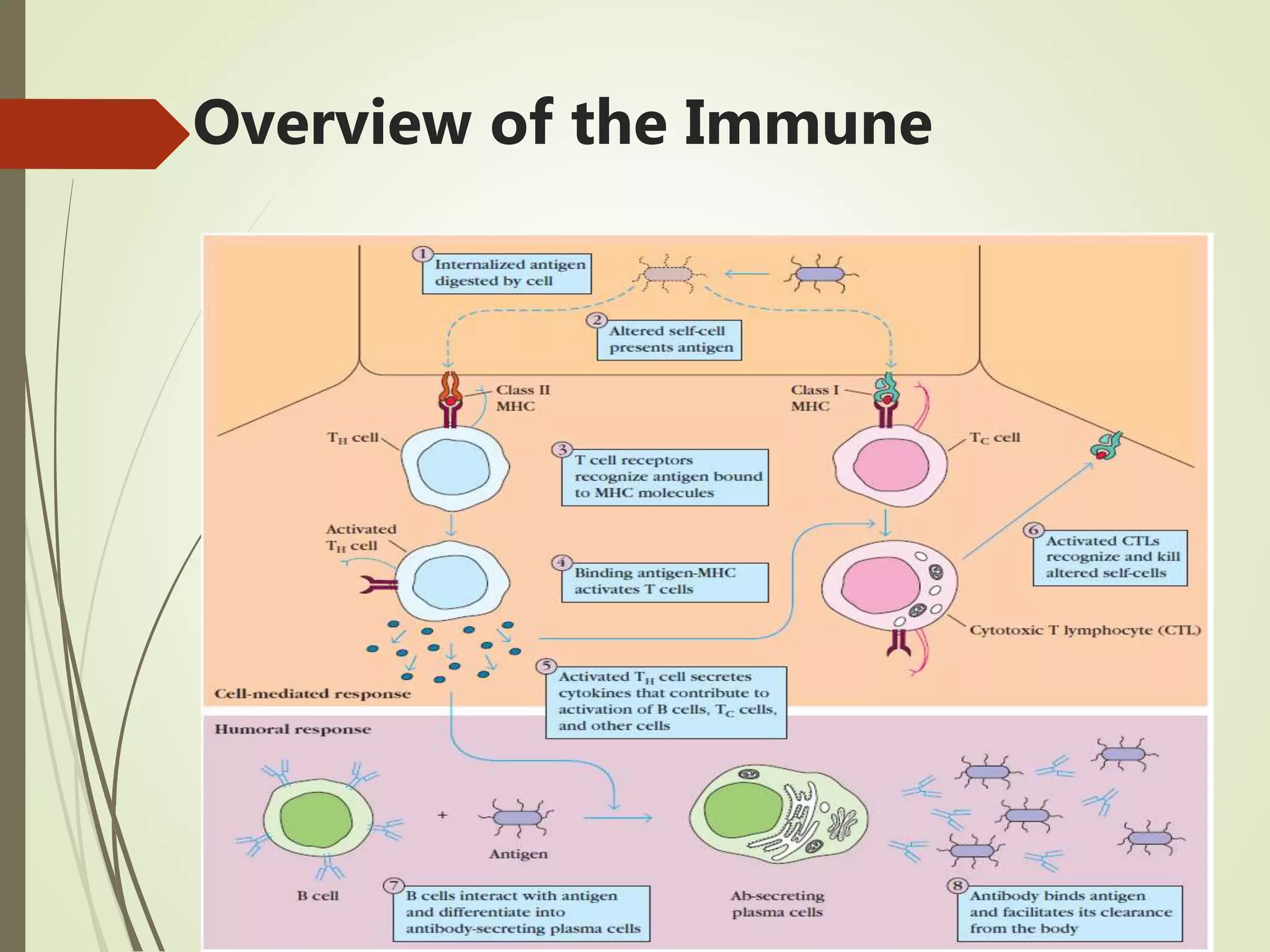
 The TH cell recognizes and interacts with the
antigen–class II MHC molecule complex on the
membrane of the antigen-presenting cell leading
to the initiation of a costimulatory signal by the
antigen-presenting cell, leading to activation of
the TH cell.
Major Histocompatibility
Complex (MHC)
 The MHC loci encode two major classes of
membrane-bound glycoproteins: class I and
class II MHC molecules.
 They function as antigen-recognition
molecules.
 TH cells recognize antigen combined with
class II molecules, whereas TC cells
generally recognize antigen combined with
class I molecules.
 MHC molecule can bind to a spectrum of
antigenic peptides derived from the
intracellular degradation of antigen
molecules.
 These variable regions form a cleft within
which the antigenic peptide sits and is
presented to T lymphocytes.
Antigen Processing &
Presentation
Foreign protein antigen are degraded into small
antigenic peptides that form complexes with class I
or class II MHC molecules.
This conversion of proteins into MHC-associated
peptide fragments is called antigen processing and
presentation.
Whether a particular antigen will be processed and
presented together with class I MHC or class II
MHC molecules appears to be determined by the
route that the antigen takes to enter a cell.
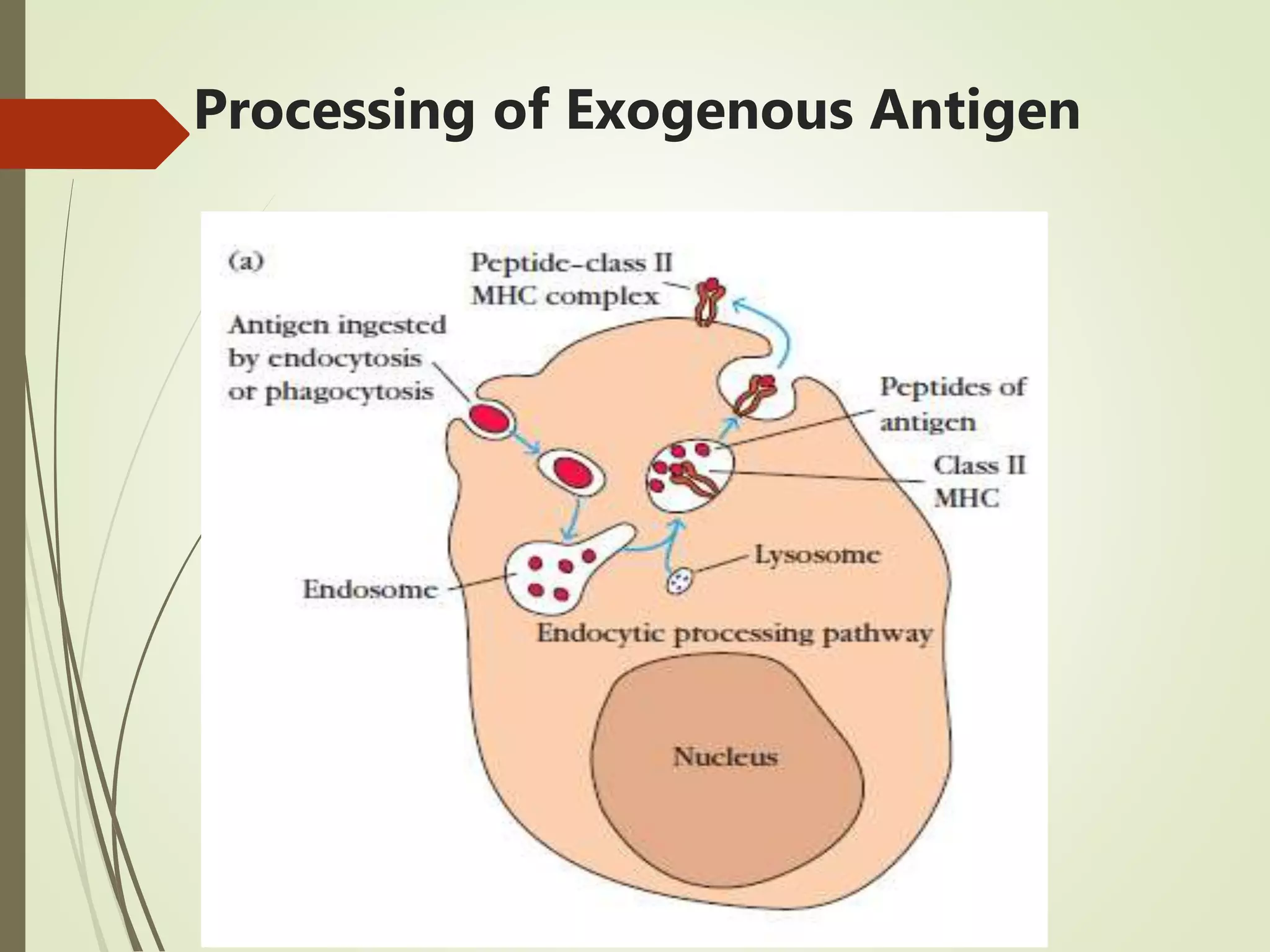
Exogenous pathway
Exogenous antigen is produced outside of the
host cell and enters the cell by endocytosis or
phagocytosis.
Antigen presenting cells (macrophages,
dendritic cells, and B cells) degrade ingested
exogenous antigen into peptide fragments
within the endocytic processing pathway.
Class II MHC molecules are expressed
within the endocytic processing pathway
and that peptides produced by
degradation of antigen in this pathway
bind to the cleft within the class II MHC
molecules.
The MHC molecules bearing the peptide
are then exported to the cell surface to
be recognized by TH cells.
Processing of Exogenous Antigen
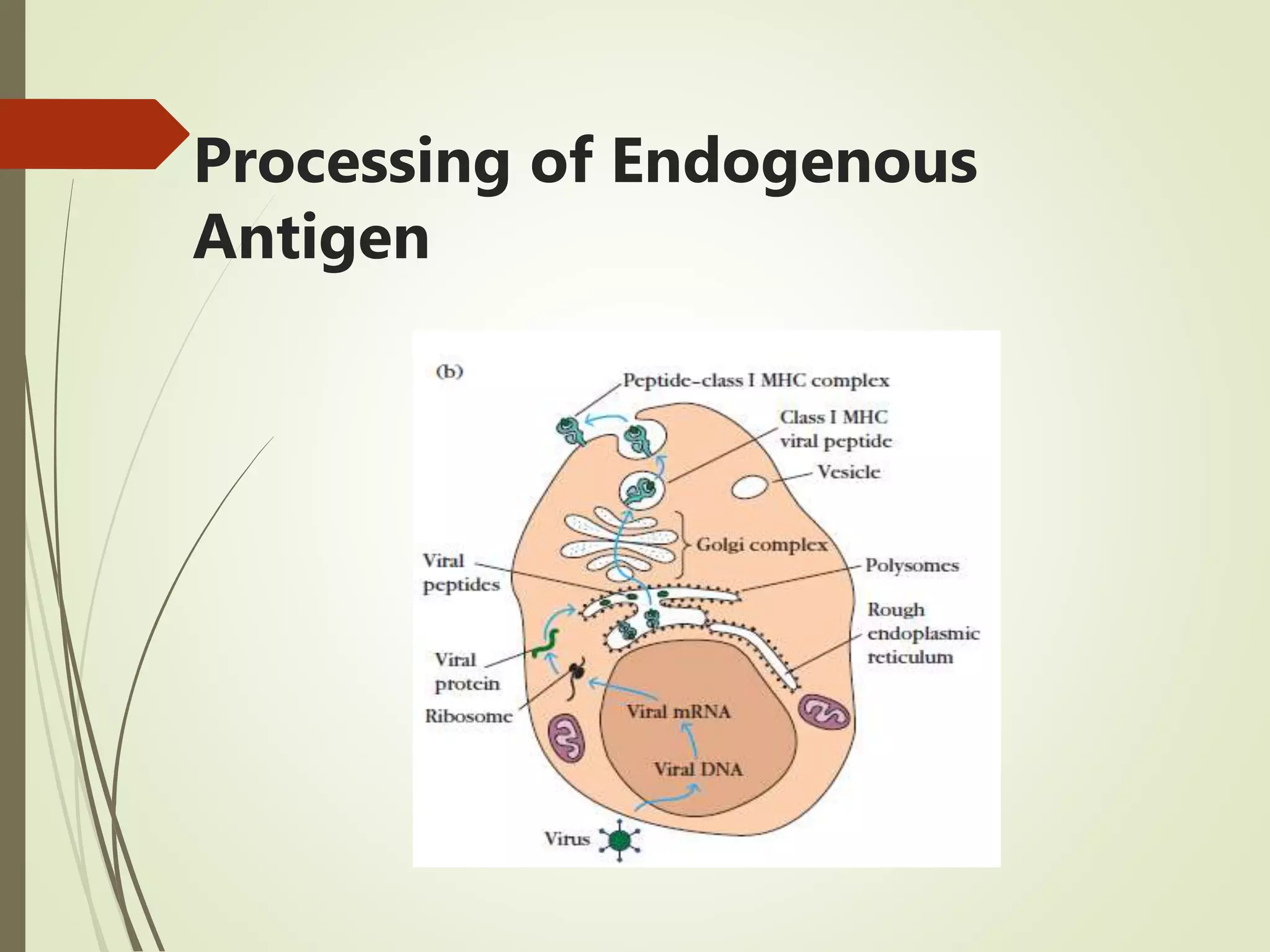
Endogenous pathway
 Endogenous antigen is produced within the
host cells. Viral proteins synthesized within
virus-infected host cells. Unique proteins
synthesized by cancerous cells.
 Endogenous antigens are degraded into
peptide fragments that bind to class I MHC
molecules within the endoplasmic
reticulum.
 The peptide–class I MHC complex is then
transported to the cell membrane.
 Since all nucleated cells express class I MHC molecules, all
cells producing endogenous antigen use this route to
process the antigen.
 These cytotoxic T cells attack and kill cells displaying the
antigen–MHC class I complexes for which their receptors
are specific.
Processing of Endogenous
Antigen
Overview of the Immune
Thank you

Antigen processing and presentation

  • 1.
    Antigen Processing and Presentation Kaluram sharma M.Sc. 1ST YEAR BIOTECHNOLOGY MANIPAL UNIVERSITY JAIPUR
  • 2.
    Antigen Presenting Cells Antigen-presenting cells (APCs) are specialized cells, which include macrophages, B lymphocytes, and dendritic cells, are distinguished by two properties:  (1)they express class II MHC molecules on their membranes, and  (2)they are able to deliver a co-stimulatory signal that is necessary for TH-cell activation.
  • 3.
     Antigen-presenting cellsfirst internalize antigen, either by phagocytosis or by endocytosis, and then display a part of that antigen on their membrane bound to a class II MHC molecule.  The TH cell recognizes and interacts with the antigen–class II MHC molecule complex on the membrane of the antigen-presenting cell leading to the initiation of a costimulatory signal by the antigen-presenting cell, leading to activation of the TH cell.
  • 4.
    Major Histocompatibility Complex (MHC) The MHC loci encode two major classes of membrane-bound glycoproteins: class I and class II MHC molecules.  They function as antigen-recognition molecules.  TH cells recognize antigen combined with class II molecules, whereas TC cells generally recognize antigen combined with class I molecules.
  • 5.
     MHC moleculecan bind to a spectrum of antigenic peptides derived from the intracellular degradation of antigen molecules.  These variable regions form a cleft within which the antigenic peptide sits and is presented to T lymphocytes.
  • 6.
    Antigen Processing & Presentation Foreignprotein antigen are degraded into small antigenic peptides that form complexes with class I or class II MHC molecules. This conversion of proteins into MHC-associated peptide fragments is called antigen processing and presentation. Whether a particular antigen will be processed and presented together with class I MHC or class II MHC molecules appears to be determined by the route that the antigen takes to enter a cell.
  • 7.
    Exogenous pathway Exogenous antigenis produced outside of the host cell and enters the cell by endocytosis or phagocytosis. Antigen presenting cells (macrophages, dendritic cells, and B cells) degrade ingested exogenous antigen into peptide fragments within the endocytic processing pathway.
  • 8.
    Class II MHCmolecules are expressed within the endocytic processing pathway and that peptides produced by degradation of antigen in this pathway bind to the cleft within the class II MHC molecules. The MHC molecules bearing the peptide are then exported to the cell surface to be recognized by TH cells.
  • 9.
  • 10.
    Endogenous pathway  Endogenousantigen is produced within the host cells. Viral proteins synthesized within virus-infected host cells. Unique proteins synthesized by cancerous cells.  Endogenous antigens are degraded into peptide fragments that bind to class I MHC molecules within the endoplasmic reticulum.  The peptide–class I MHC complex is then transported to the cell membrane.
  • 11.
     Since allnucleated cells express class I MHC molecules, all cells producing endogenous antigen use this route to process the antigen.  These cytotoxic T cells attack and kill cells displaying the antigen–MHC class I complexes for which their receptors are specific.
  • 12.
  • 13.
  • 14.