Epistasis
Kalu Ram Sharma
M.Sc. 2nd YEAR
BIOTECHNOLOGY
MANIPAL UNIVERSITY JAIPUR
Introduction
• Epistasis is the phenomenon where the effect
of one gene is dependent on the presence of
one or more genes.
• Originally the term meant that the
phenotypic effect of one gene is masked by a
different gene.
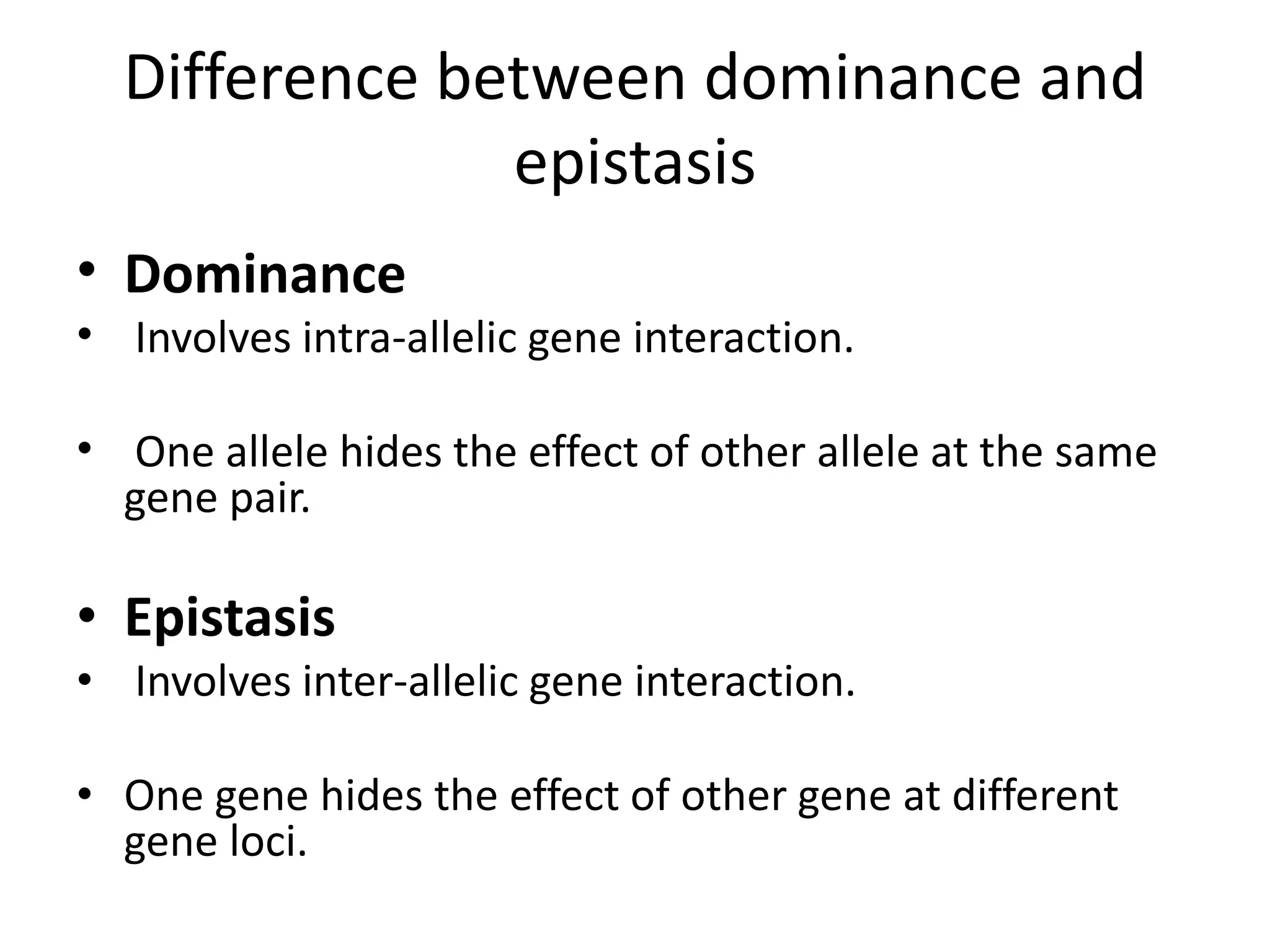
• In epistasis, the gene that does the masking is
called an epistatic gene; the gene whose
effect is masked is a hypostatic gene. Epistatic
genes may be recessive or dominant in their
effects.
Difference between dominance and
epistasis
• Dominance
• Involves intra-allelic gene interaction.
• One allele hides the effect of other allele at the same
gene pair.
• Epistasis
• Involves inter-allelic gene interaction.
• One gene hides the effect of other gene at different
gene loci.
Dominant Epistasis
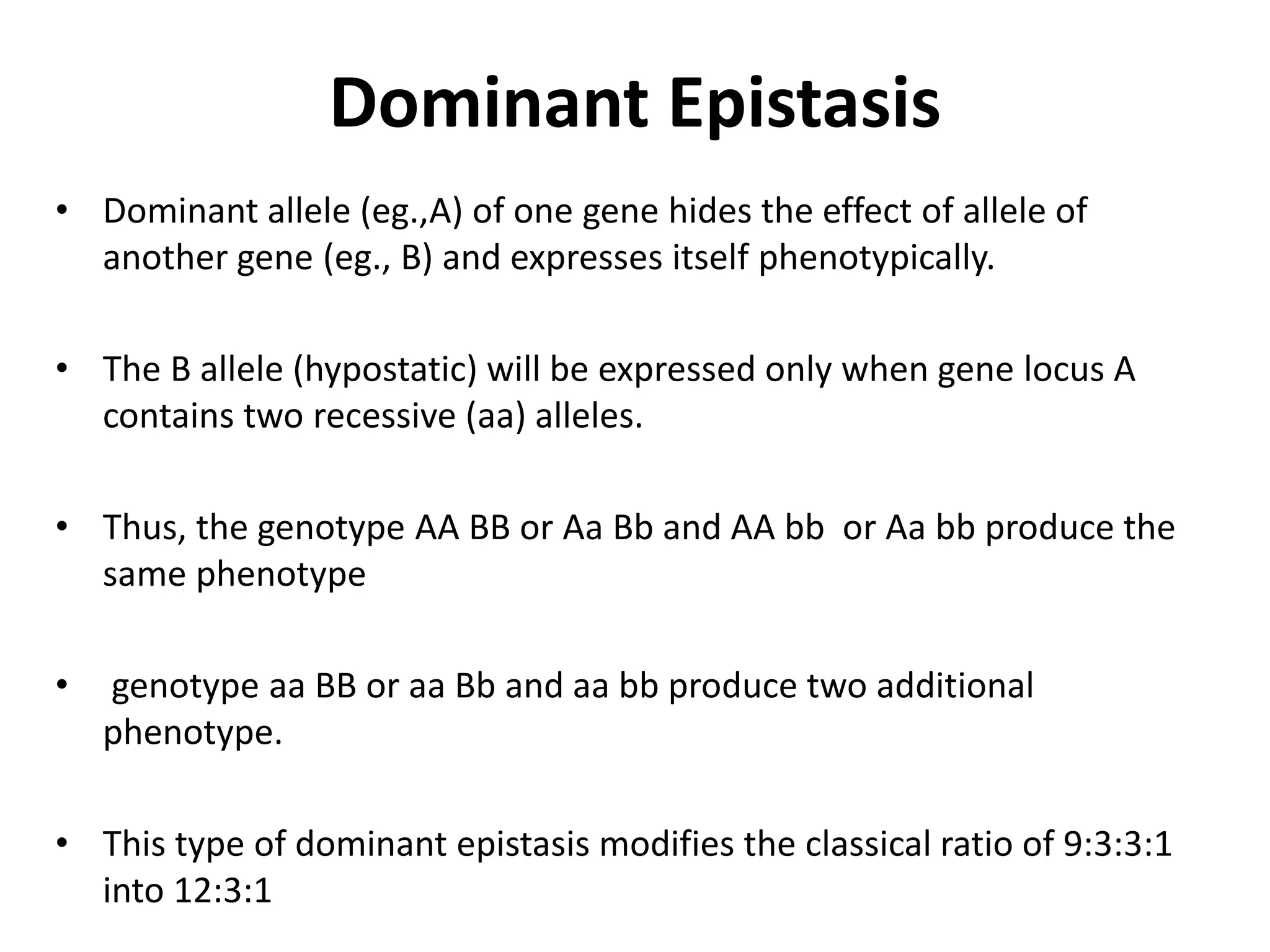
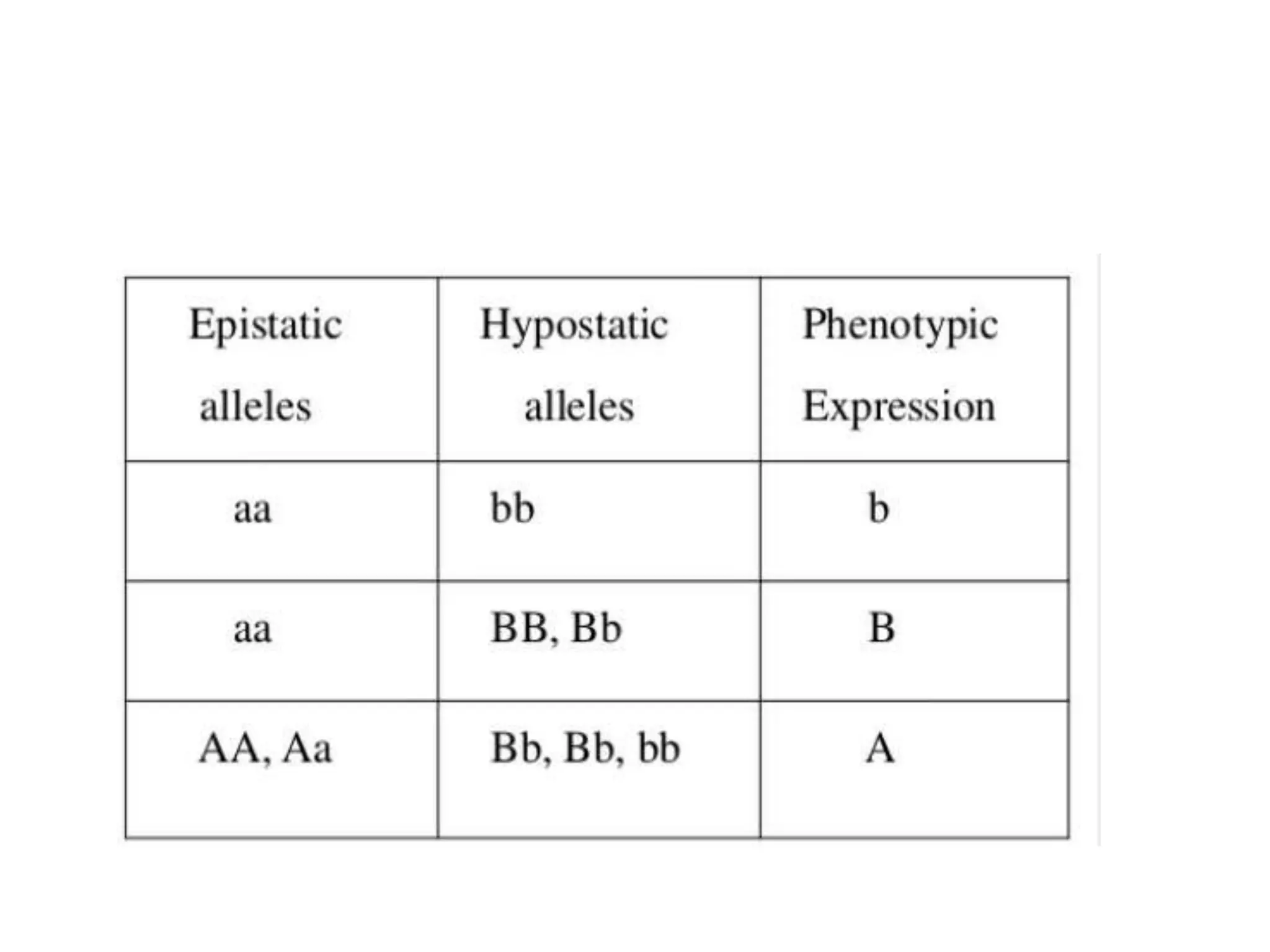
• Dominant allele (eg.,A) of one gene hides the effect of allele of
another gene (eg., B) and expresses itself phenotypically.
• The B allele (hypostatic) will be expressed only when gene locus A
contains two recessive (aa) alleles.
• Thus, the genotype AA BB or Aa Bb and AA bb or Aa bb produce the
same phenotype
• genotype aa BB or aa Bb and aa bb produce two additional
phenotype.
• This type of dominant epistasis modifies the classical ratio of 9:3:3:1
into 12:3:1
Example:
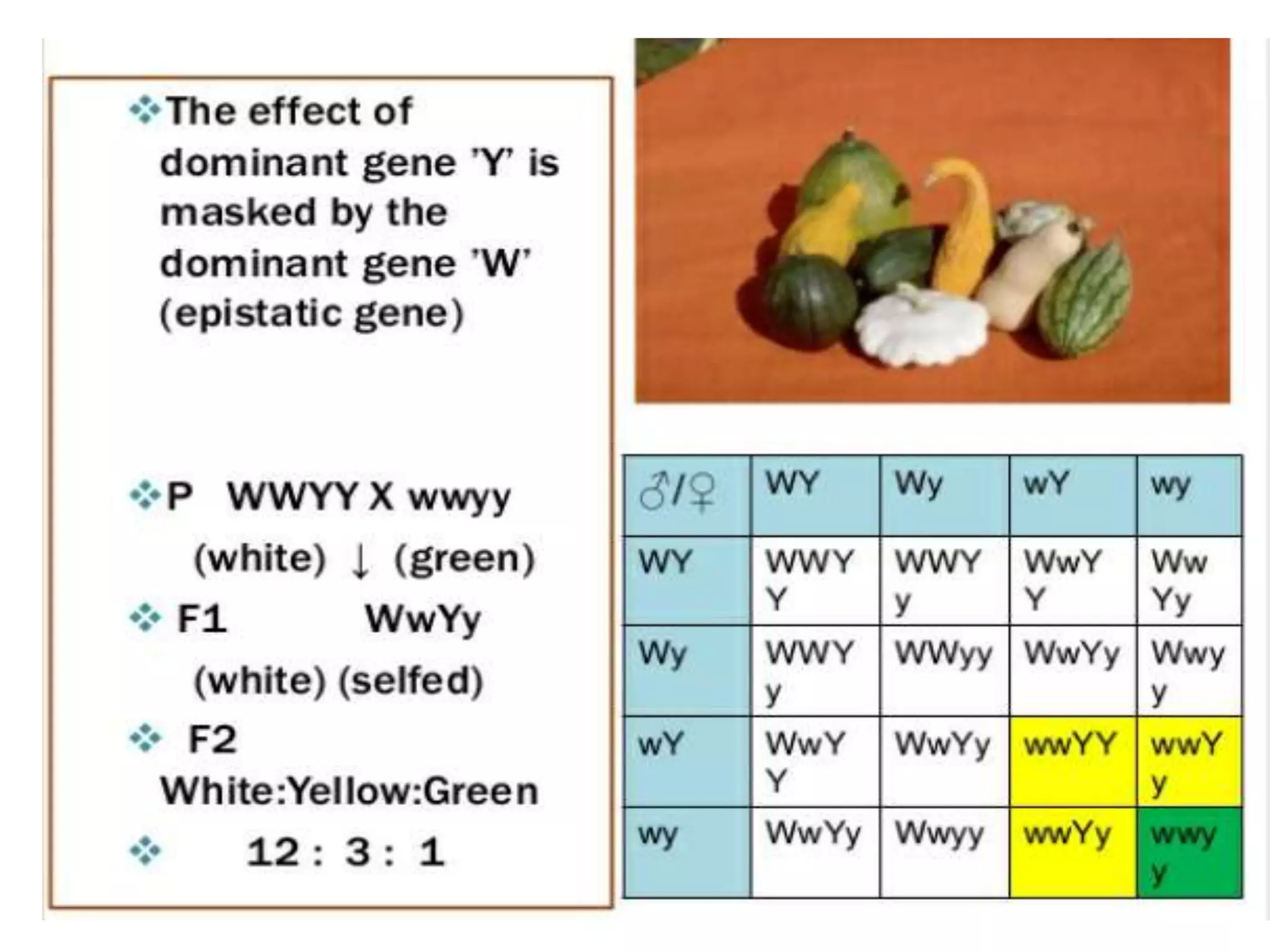
• Studied in summer squash (Cucurbita pepo)
– Common fruit colors-white,yellow &green
– White (W) is dominant over colored squash
– Yellow (Y) is dominant over green squash
– Pure breeding white fruited variety is crossed with the
double recessive green variety,F1 hybrids are all white
– When the hybrids are selfed-white, yellow &green fruited
plants arise in the ratio of 12:3:1
Recessive epistasis
(Supplementary interaction)
• Recessive allele (aa) of one gene locus hides
the effect of another gene locus (BB, Bb or bb)
and expresses itself phenotypically.
• The alleles of B locus express themselves only
when epistatic locus has dominant alleles (eg.,
AA or Aa).
• This will modify the ratio 9:3:3:1 to ratio 9:3:4
Example:
• In horses, brown coat color (B) is dominant over
tan (b).
• However, how that gene is expressed in the
phenotype is dependent on a second gene that
controls the deposition of pigment in hair.
• The dominant gene (C) codes for the presence of
pigment in hair, whereas the recessive gene (c)
codes for the absence of pigment.
Duplicate Recessive Genes
(Complementary Genes)
• Both the genes loci have homozygous recessive alleles and
both of them produce identical phenotype.
• Both dominant alleles are necessary to produce a different
phenotype. e.g.: AABB, AaBB, AaBb, in all these
combinations.
• Both the dominant alleles (A and B) are present and they
will produce a different phenotype.
• Whereas aaBB or bbAA, in which the other dominant allele
is absent, produces the normal phenotype.
• Bateson and Punnett observed that when two white
flowered varieties of sweet pea, Lathyrus odoratus
were crossed, F1 progeny had coloured flowers. When
F1 was selfed, the F2 ratio showed the presence of both
coloured and white flowered varieties in the ratio 9:7.
• In man, deaf mutism is complementary gene
dependent, depending upon two dominant genes A
and B, the presence of both of them is responsible for
normal hearing and speech
Thank you

Epistasis and its different types

  • 1.
    Epistasis Kalu Ram Sharma M.Sc.2nd YEAR BIOTECHNOLOGY MANIPAL UNIVERSITY JAIPUR
  • 2.
    Introduction • Epistasis isthe phenomenon where the effect of one gene is dependent on the presence of one or more genes. • Originally the term meant that the phenotypic effect of one gene is masked by a different gene.
  • 3.
    • In epistasis,the gene that does the masking is called an epistatic gene; the gene whose effect is masked is a hypostatic gene. Epistatic genes may be recessive or dominant in their effects.
  • 4.
    Difference between dominanceand epistasis • Dominance • Involves intra-allelic gene interaction. • One allele hides the effect of other allele at the same gene pair. • Epistasis • Involves inter-allelic gene interaction. • One gene hides the effect of other gene at different gene loci.
  • 5.
    Dominant Epistasis • Dominantallele (eg.,A) of one gene hides the effect of allele of another gene (eg., B) and expresses itself phenotypically. • The B allele (hypostatic) will be expressed only when gene locus A contains two recessive (aa) alleles. • Thus, the genotype AA BB or Aa Bb and AA bb or Aa bb produce the same phenotype • genotype aa BB or aa Bb and aa bb produce two additional phenotype. • This type of dominant epistasis modifies the classical ratio of 9:3:3:1 into 12:3:1
  • 7.
    Example: • Studied insummer squash (Cucurbita pepo) – Common fruit colors-white,yellow &green – White (W) is dominant over colored squash – Yellow (Y) is dominant over green squash – Pure breeding white fruited variety is crossed with the double recessive green variety,F1 hybrids are all white – When the hybrids are selfed-white, yellow &green fruited plants arise in the ratio of 12:3:1
  • 9.
    Recessive epistasis (Supplementary interaction) •Recessive allele (aa) of one gene locus hides the effect of another gene locus (BB, Bb or bb) and expresses itself phenotypically. • The alleles of B locus express themselves only when epistatic locus has dominant alleles (eg., AA or Aa). • This will modify the ratio 9:3:3:1 to ratio 9:3:4
  • 11.
    Example: • In horses,brown coat color (B) is dominant over tan (b). • However, how that gene is expressed in the phenotype is dependent on a second gene that controls the deposition of pigment in hair. • The dominant gene (C) codes for the presence of pigment in hair, whereas the recessive gene (c) codes for the absence of pigment.
  • 13.
    Duplicate Recessive Genes (ComplementaryGenes) • Both the genes loci have homozygous recessive alleles and both of them produce identical phenotype. • Both dominant alleles are necessary to produce a different phenotype. e.g.: AABB, AaBB, AaBb, in all these combinations. • Both the dominant alleles (A and B) are present and they will produce a different phenotype. • Whereas aaBB or bbAA, in which the other dominant allele is absent, produces the normal phenotype.
  • 15.
    • Bateson andPunnett observed that when two white flowered varieties of sweet pea, Lathyrus odoratus were crossed, F1 progeny had coloured flowers. When F1 was selfed, the F2 ratio showed the presence of both coloured and white flowered varieties in the ratio 9:7. • In man, deaf mutism is complementary gene dependent, depending upon two dominant genes A and B, the presence of both of them is responsible for normal hearing and speech
  • 17.