Around the World in
80 Disasters
Global Trends
Local Challenges
David
Alexander
When and where did I start?
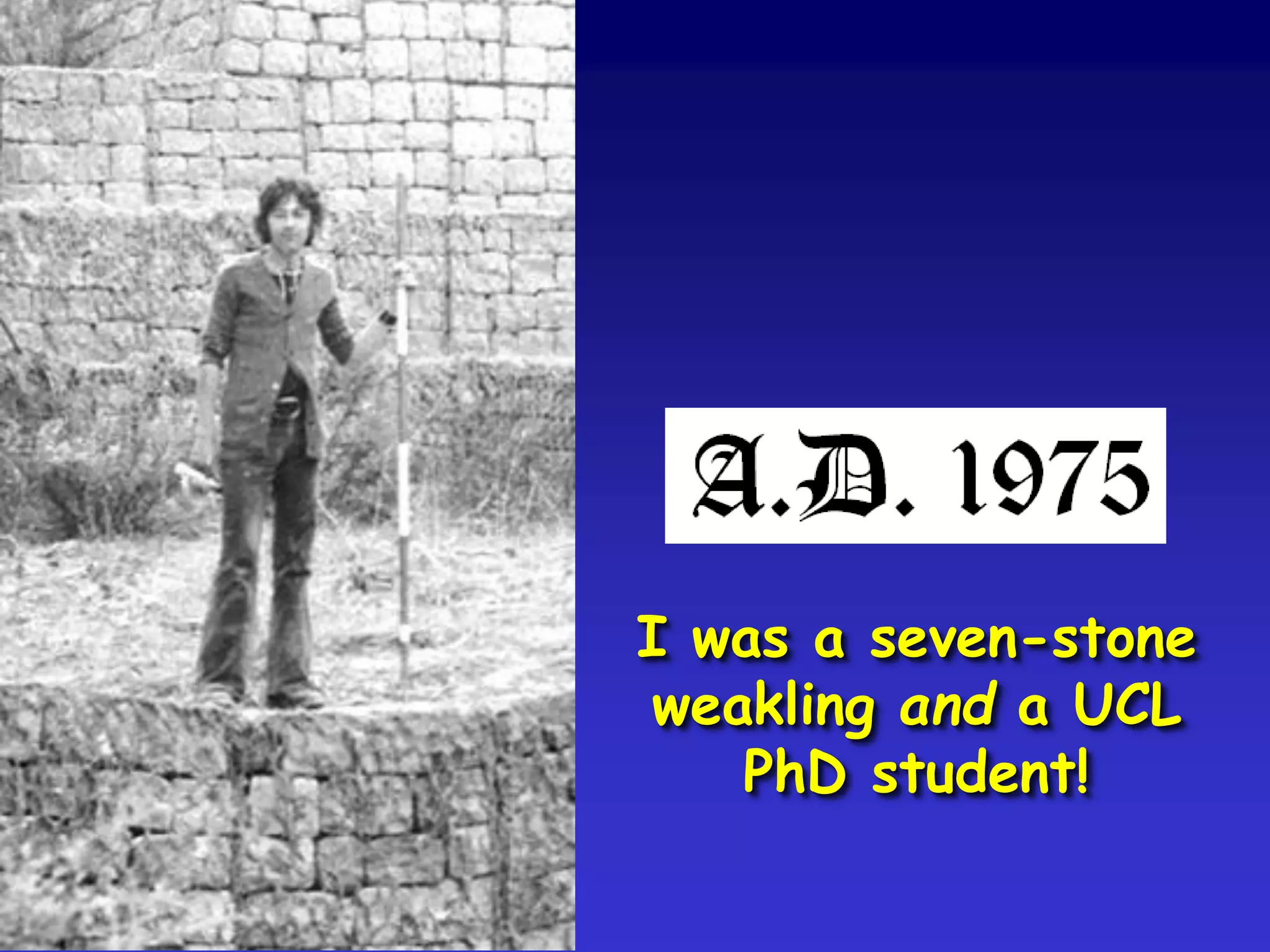
I was a seven-stone
weakling and a UCL
PhD student!
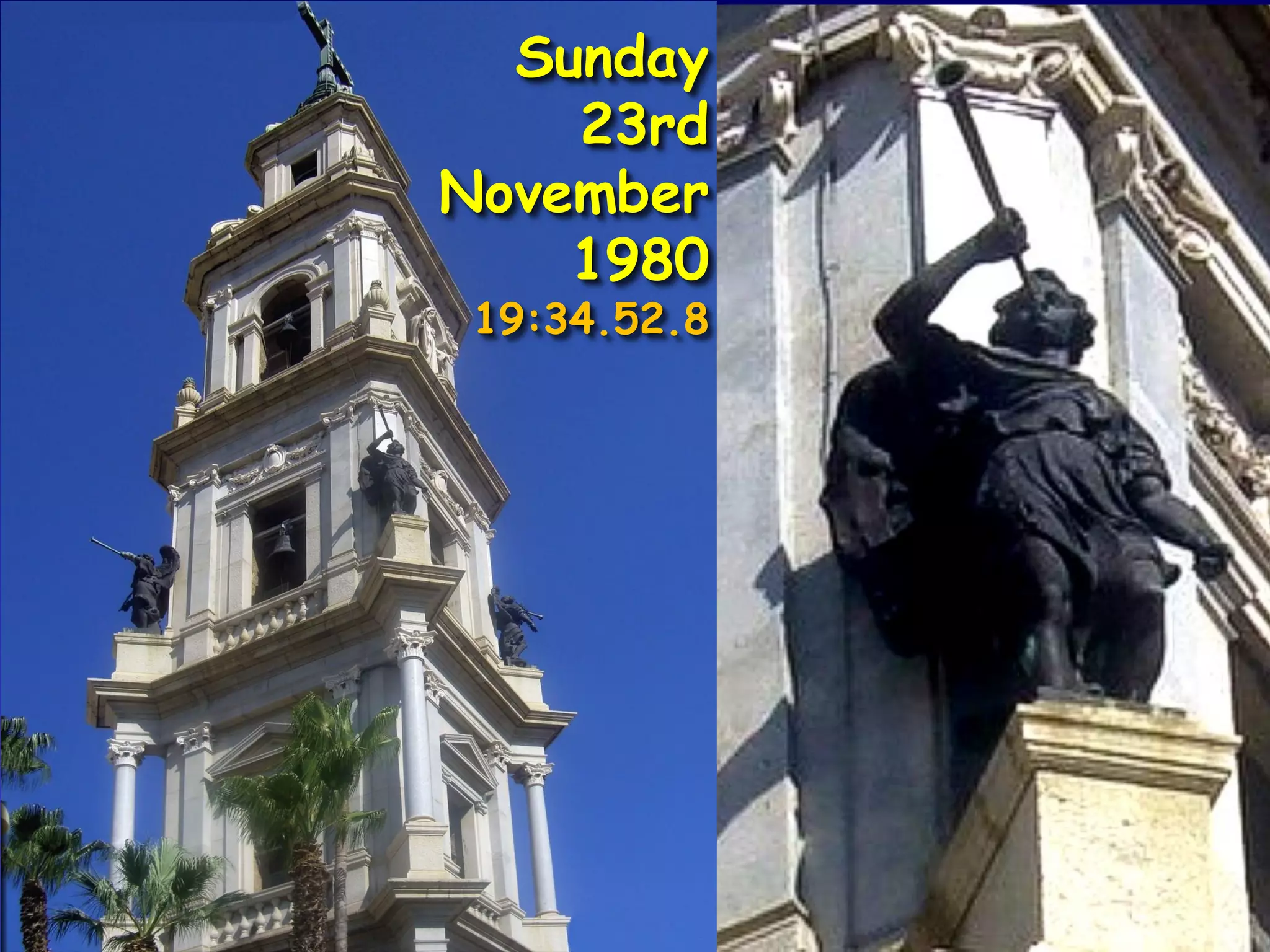
Sunday
23rd
November
1980
19:34.52.8
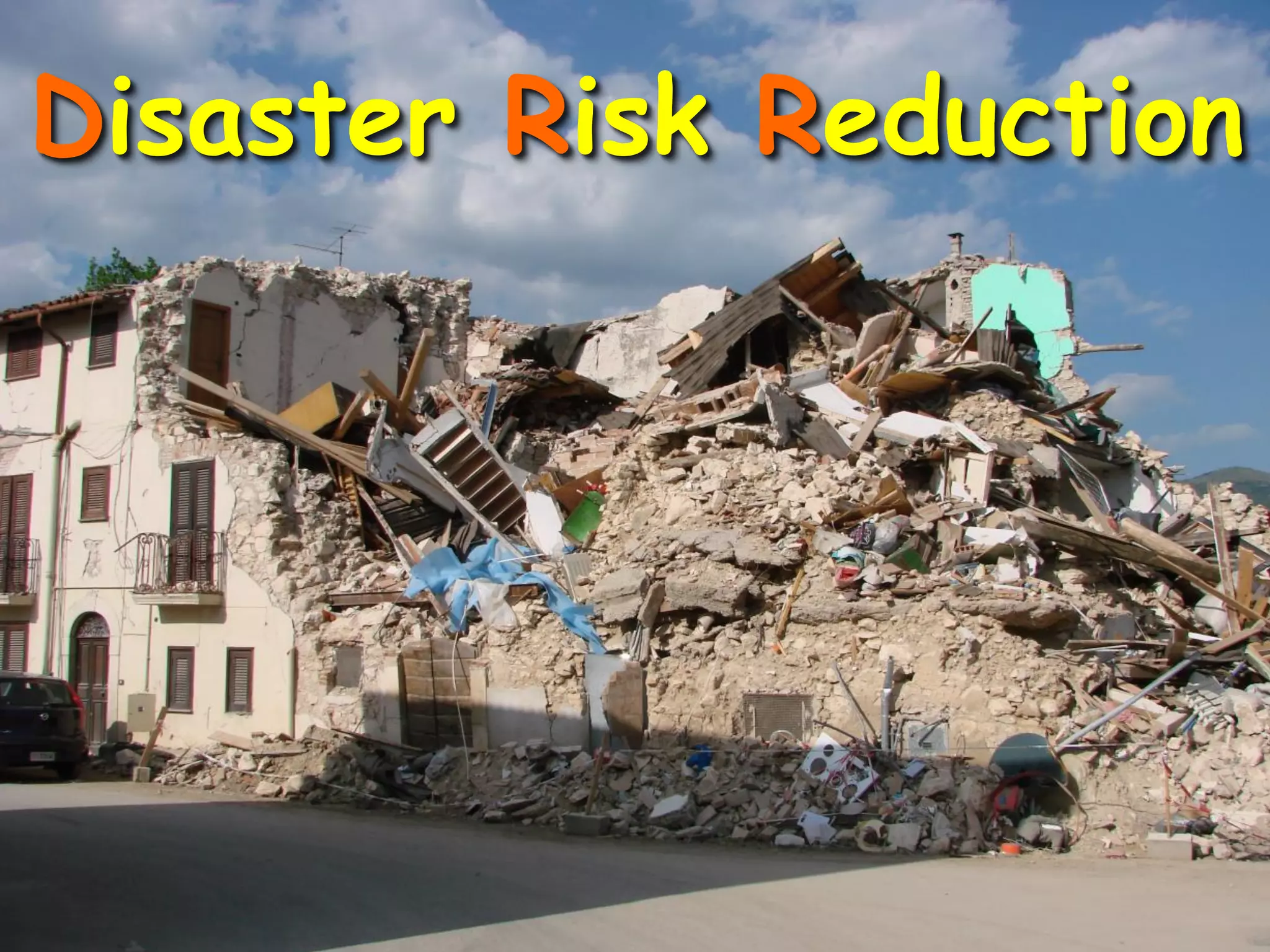
Disaster Risk Reduction
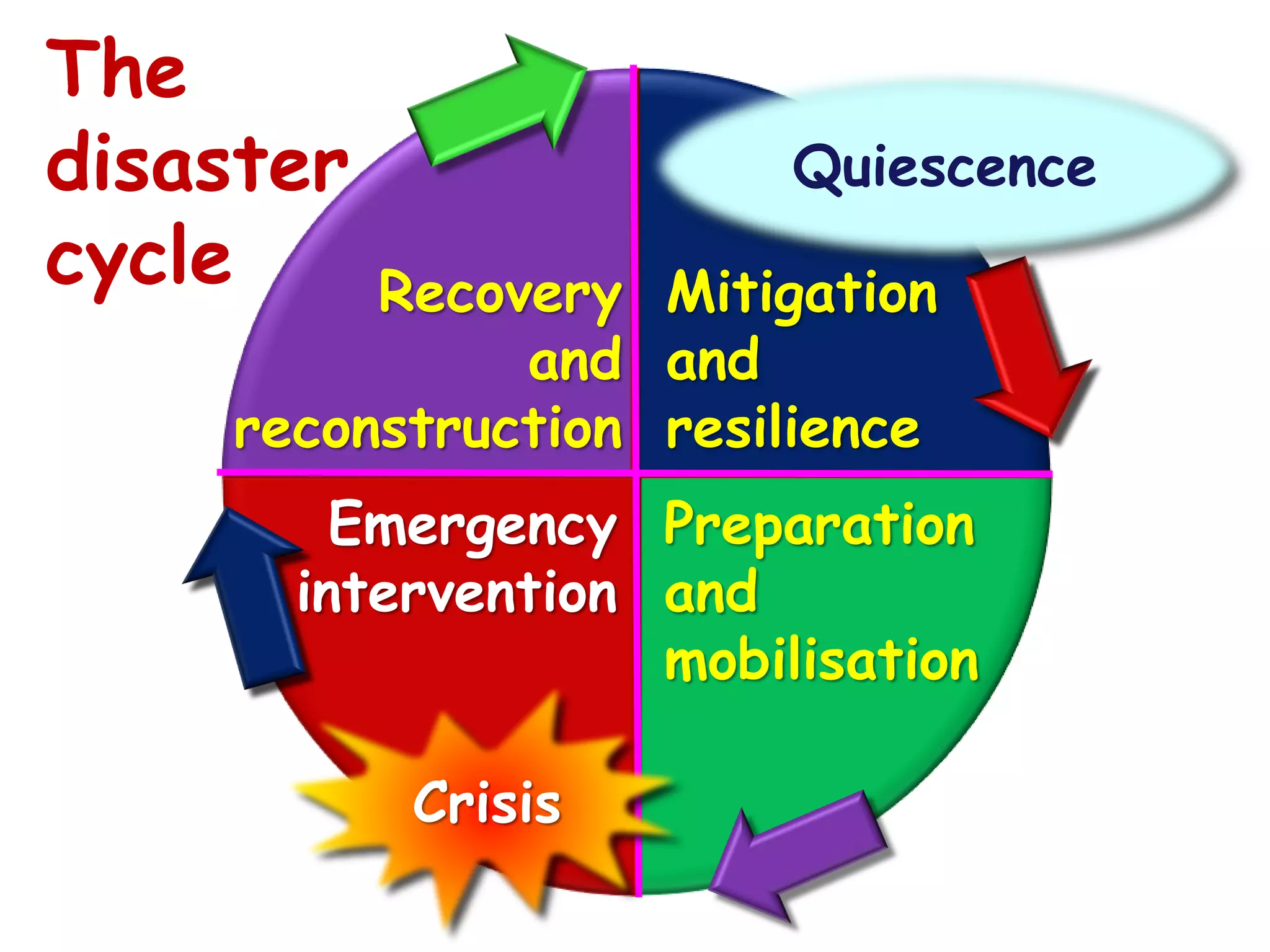
Recovery
and
reconstruction
Mitigation
and
resilience
Preparation
and
mobilisation
Emergency
intervention
Quiescence
Crisis
The
disaster
cycle
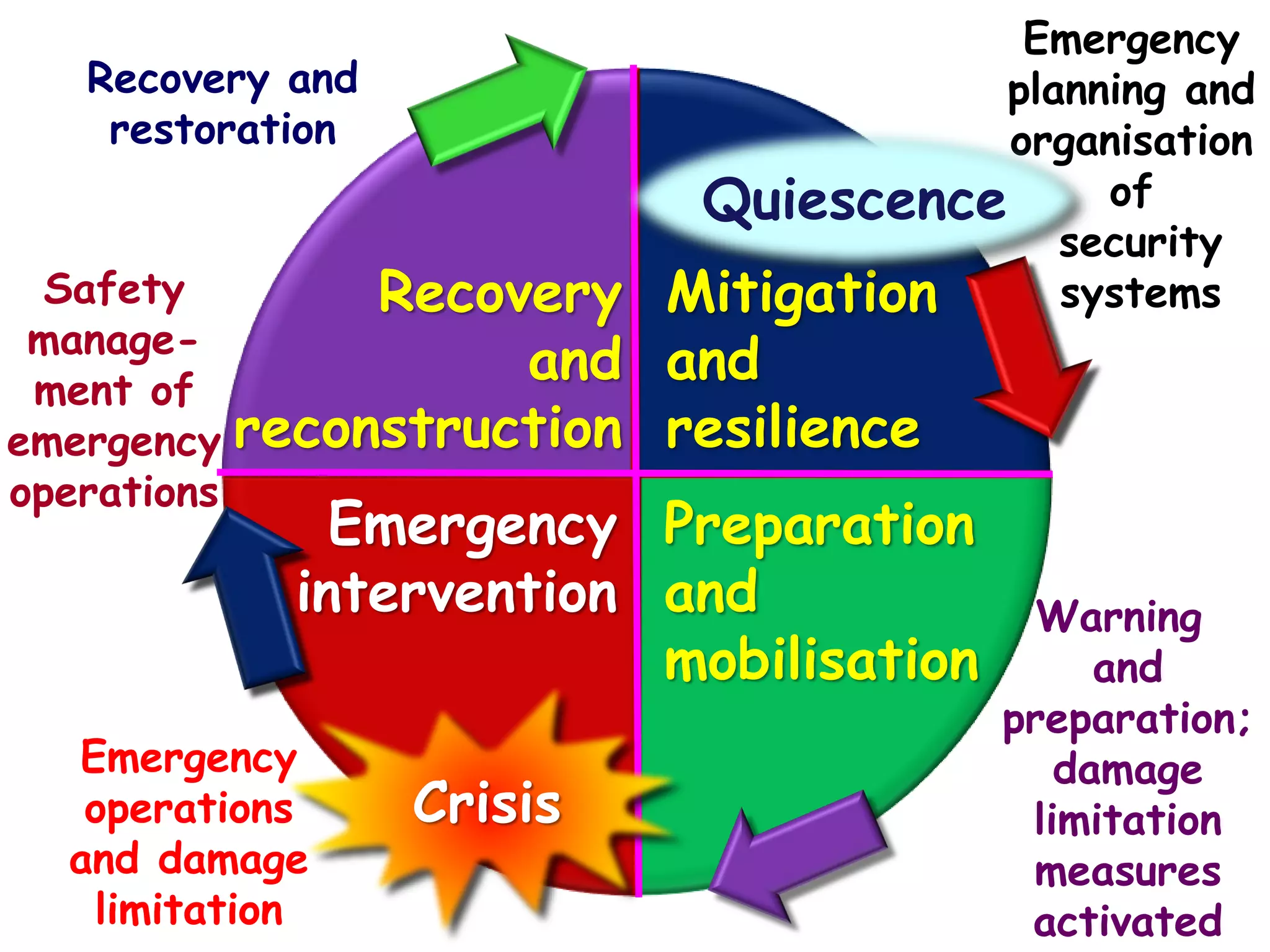
Recovery
and
reconstruction
Mitigation
and
resilience
Preparation
and
mobilisation
Emergency
intervention
Crisis
Emergency
planning and
organisation
of
security
systems
Warning
and
preparation;
damage
limitation
measures
activated
Emergency
operations
and damage
limitation
Recovery and
restoration
Safety
manage-
ment of
emergency
operations
Quiescence
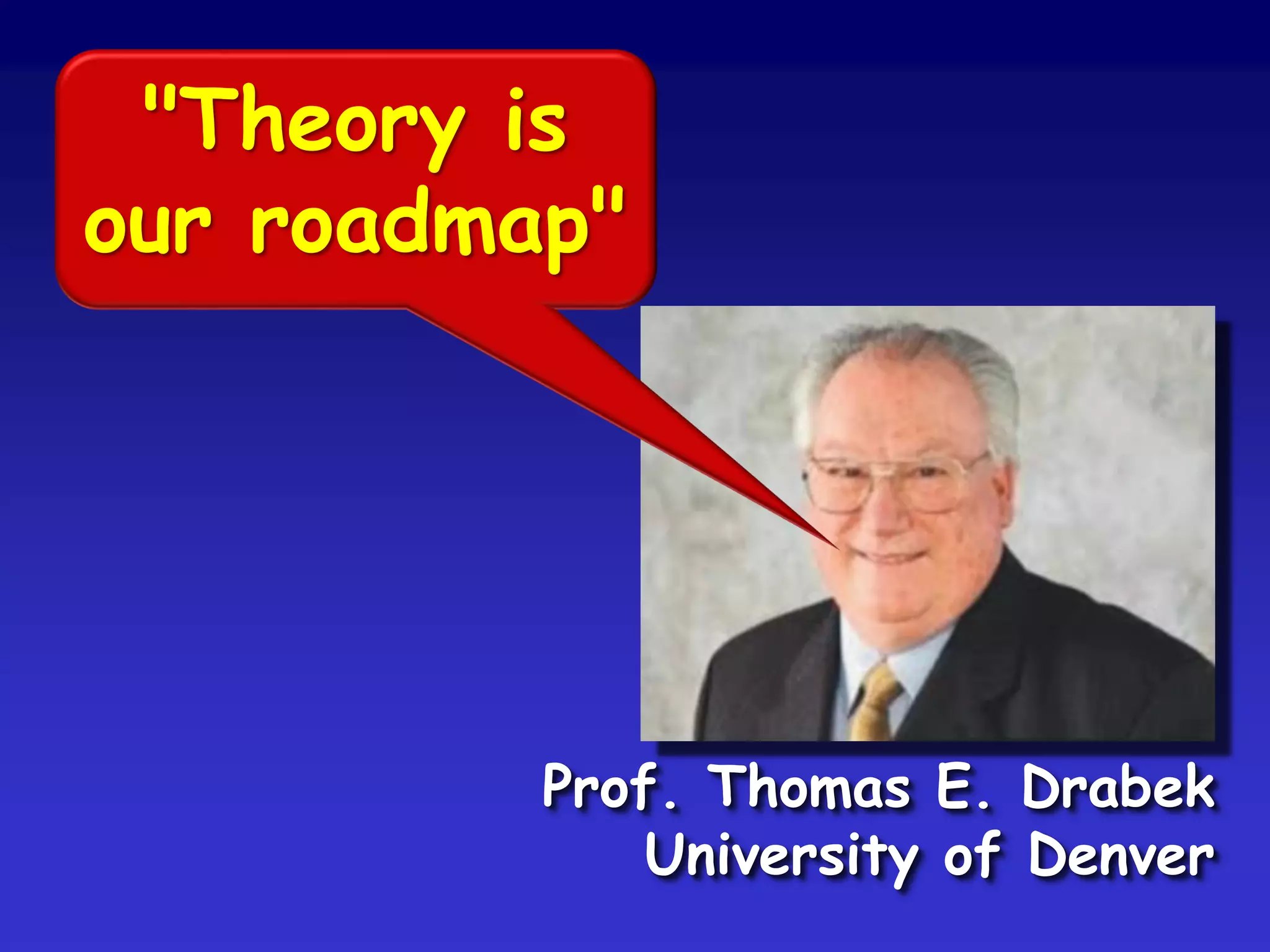
"Theory is
our roadmap"
Prof. Thomas E. Drabek
University of Denver
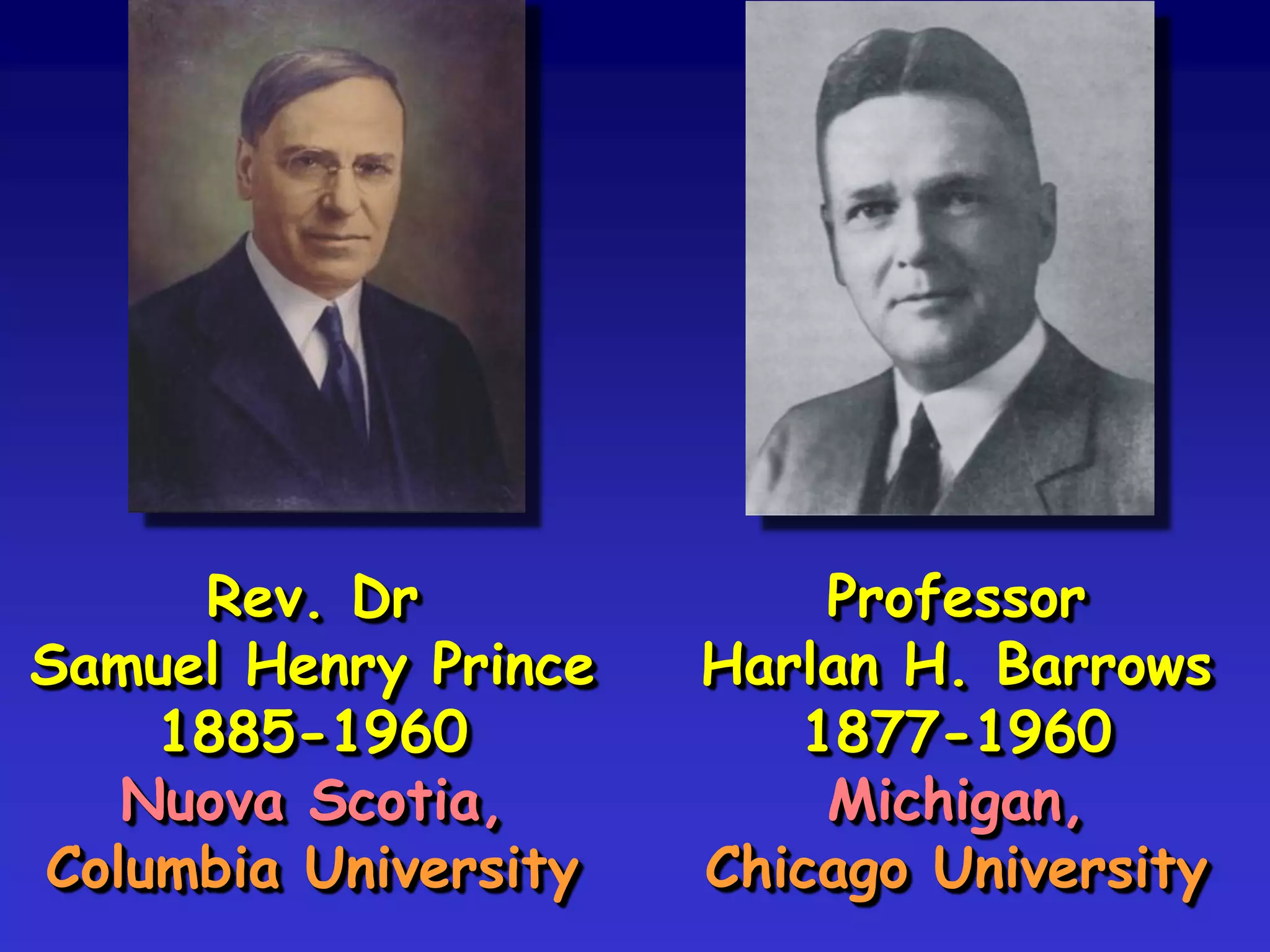
Rev. Dr
Samuel Henry Prince
1885-1960
Nuova Scotia,
Columbia University
Professor
Harlan H. Barrows
1877-1960
Michigan,
Chicago University
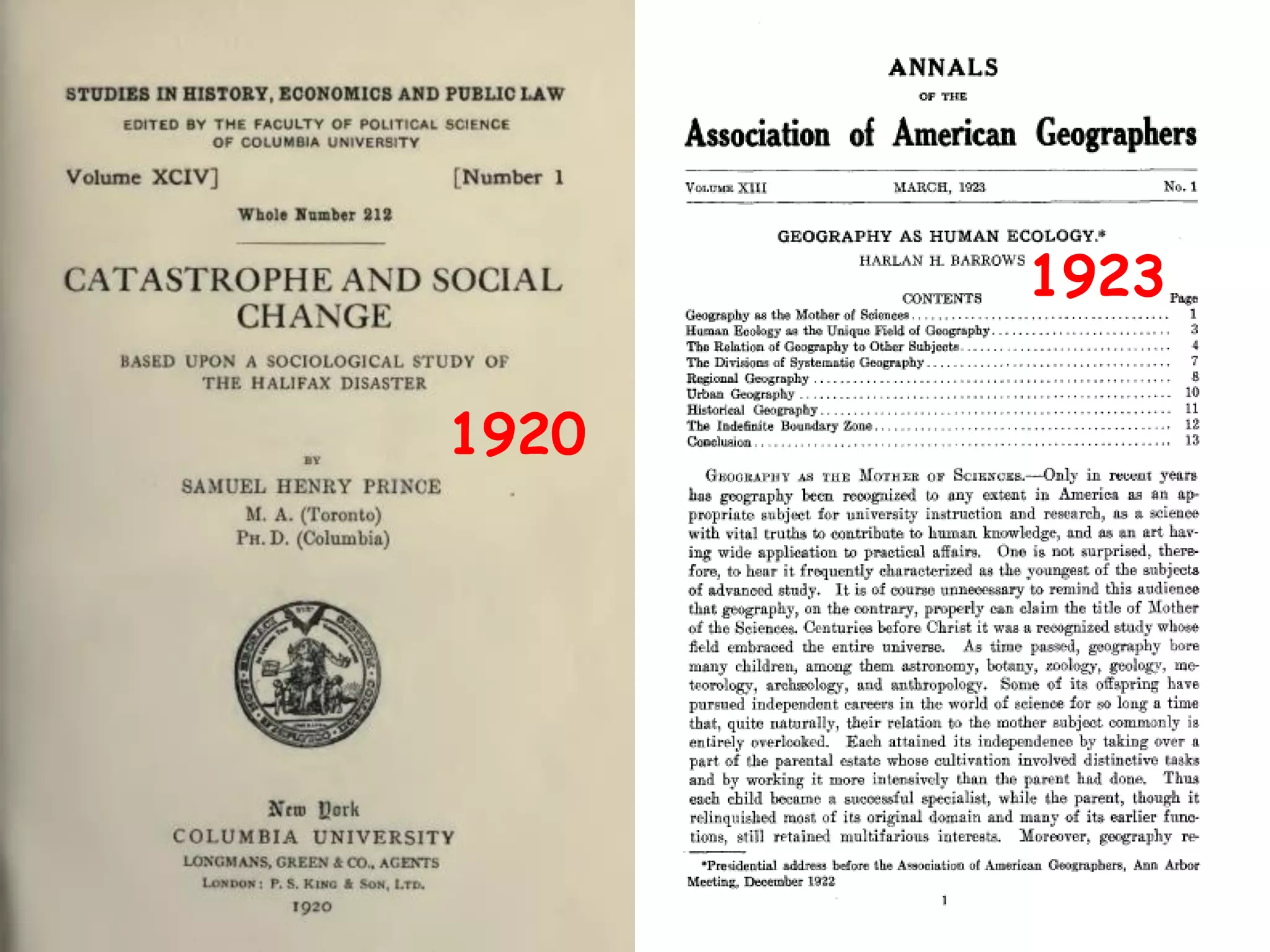
1920
1923
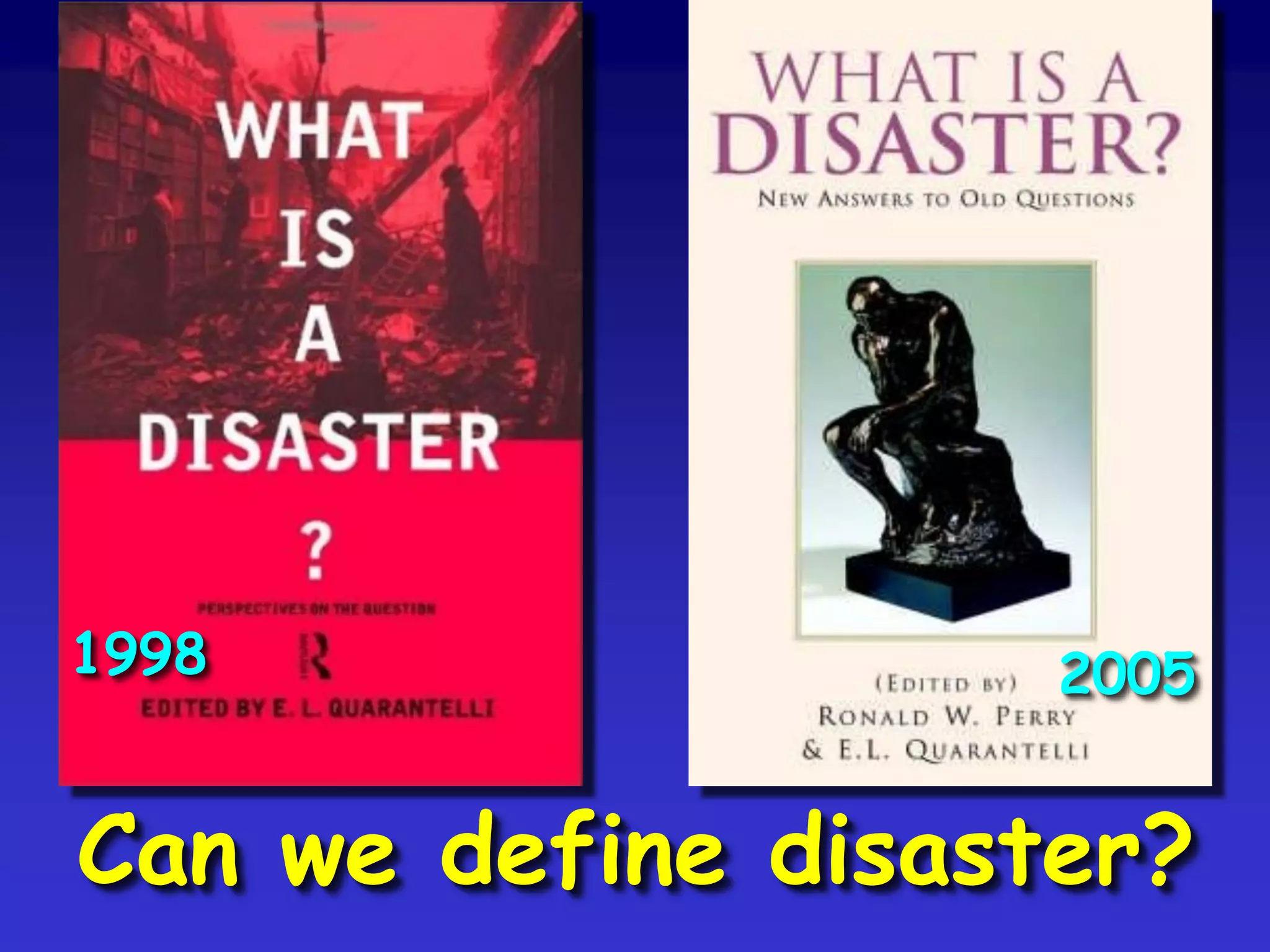
Can we define disaster?
1998 2005
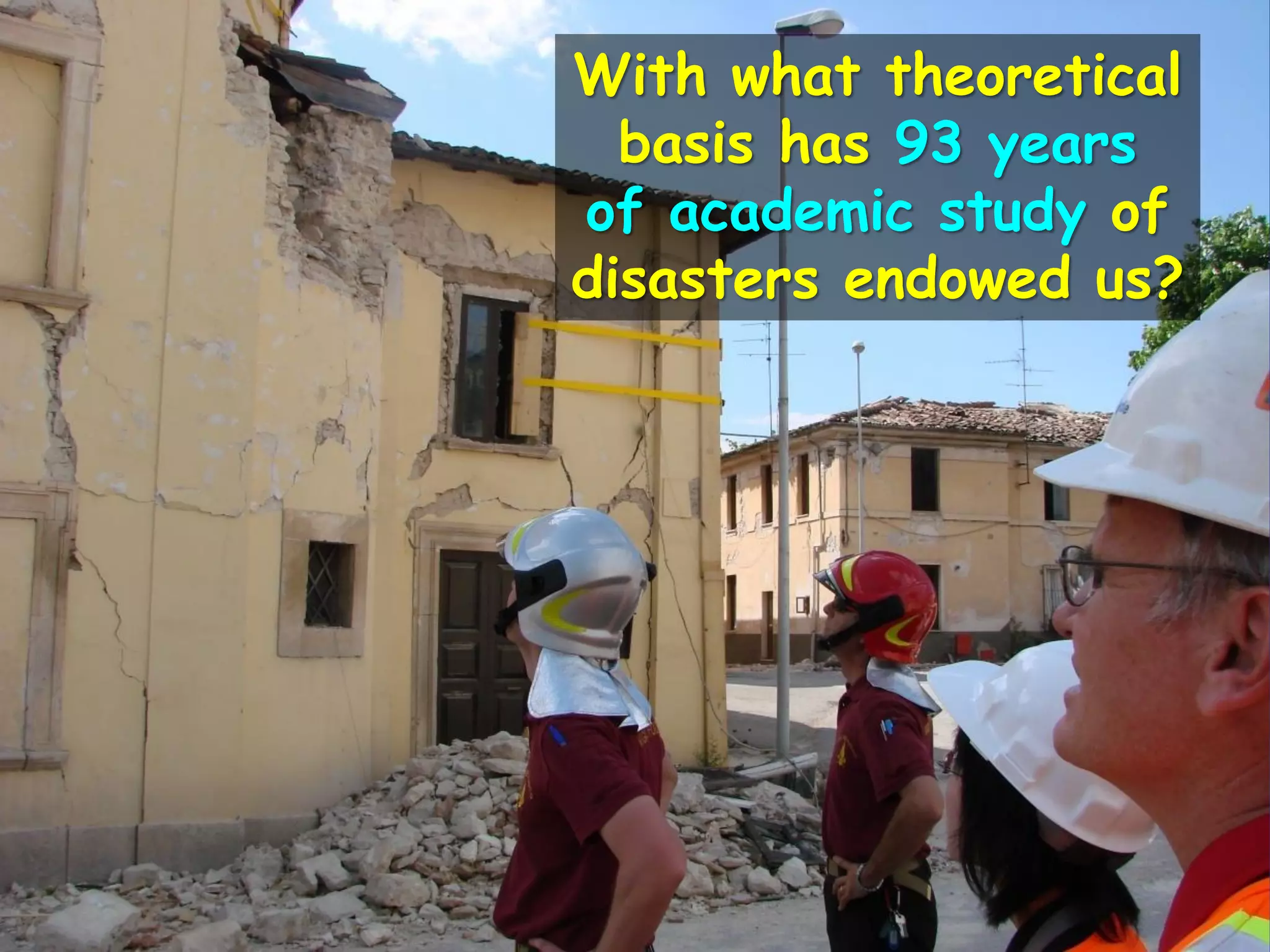
With what theoretical
basis has 93 years
of academic study of
disasters endowed us?
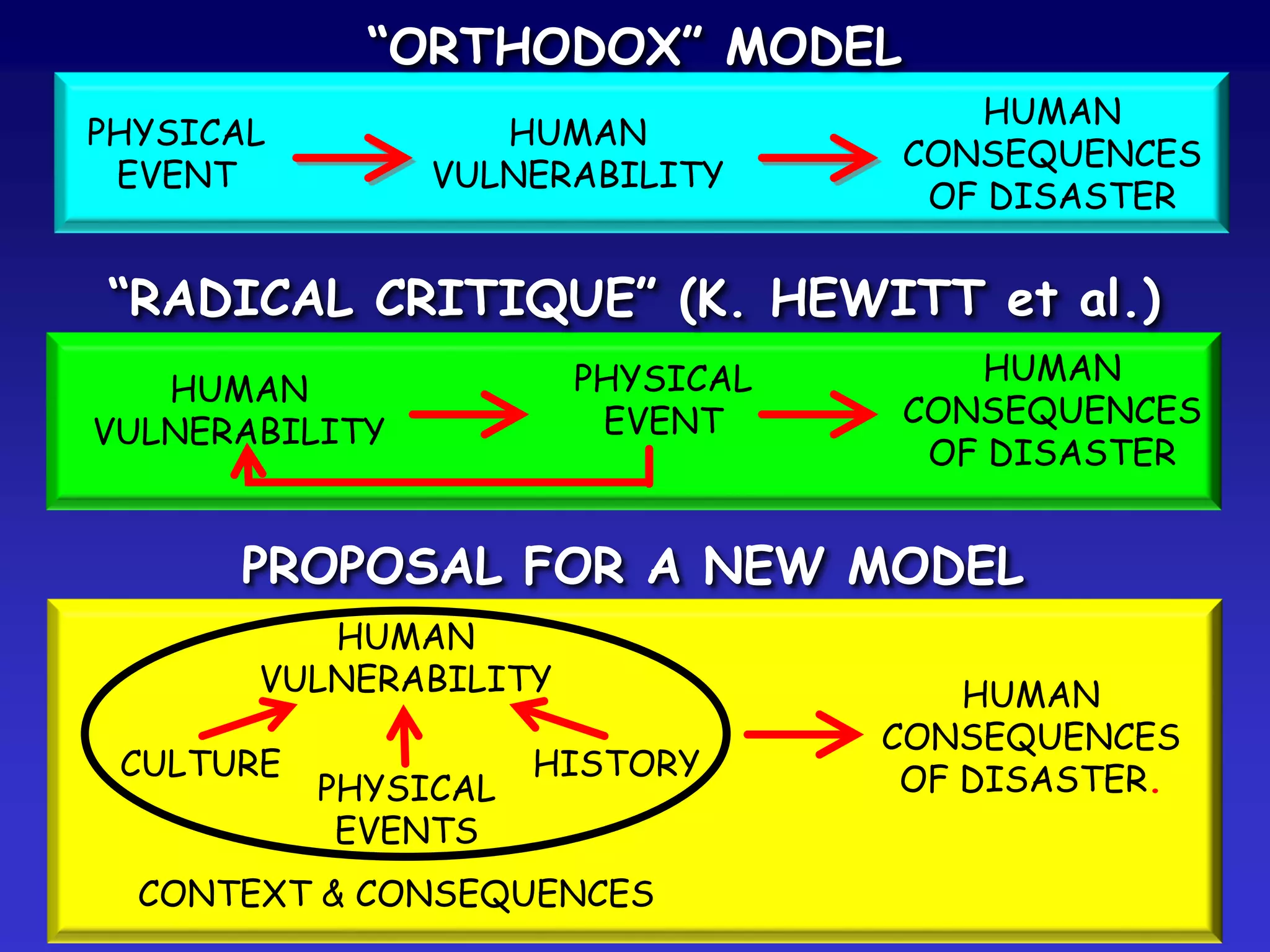
HUMAN
CONSEQUENCES
OF DISASTER
“ORTHODOX” MODEL
PHYSICAL
EVENT
HUMAN
VULNERABILITY
“RADICAL CRITIQUE” (K. HEWITT et al.)
HUMAN
CONSEQUENCES
OF DISASTER
HUMAN
VULNERABILITY
PHYSICAL
EVENT
PROPOSAL FOR A NEW MODEL
HUMAN
CONSEQUENCES
OF DISASTER.
HUMAN
VULNERABILITY
CULTURE HISTORY
PHYSICAL
EVENTS
CONTEXT & CONSEQUENCES
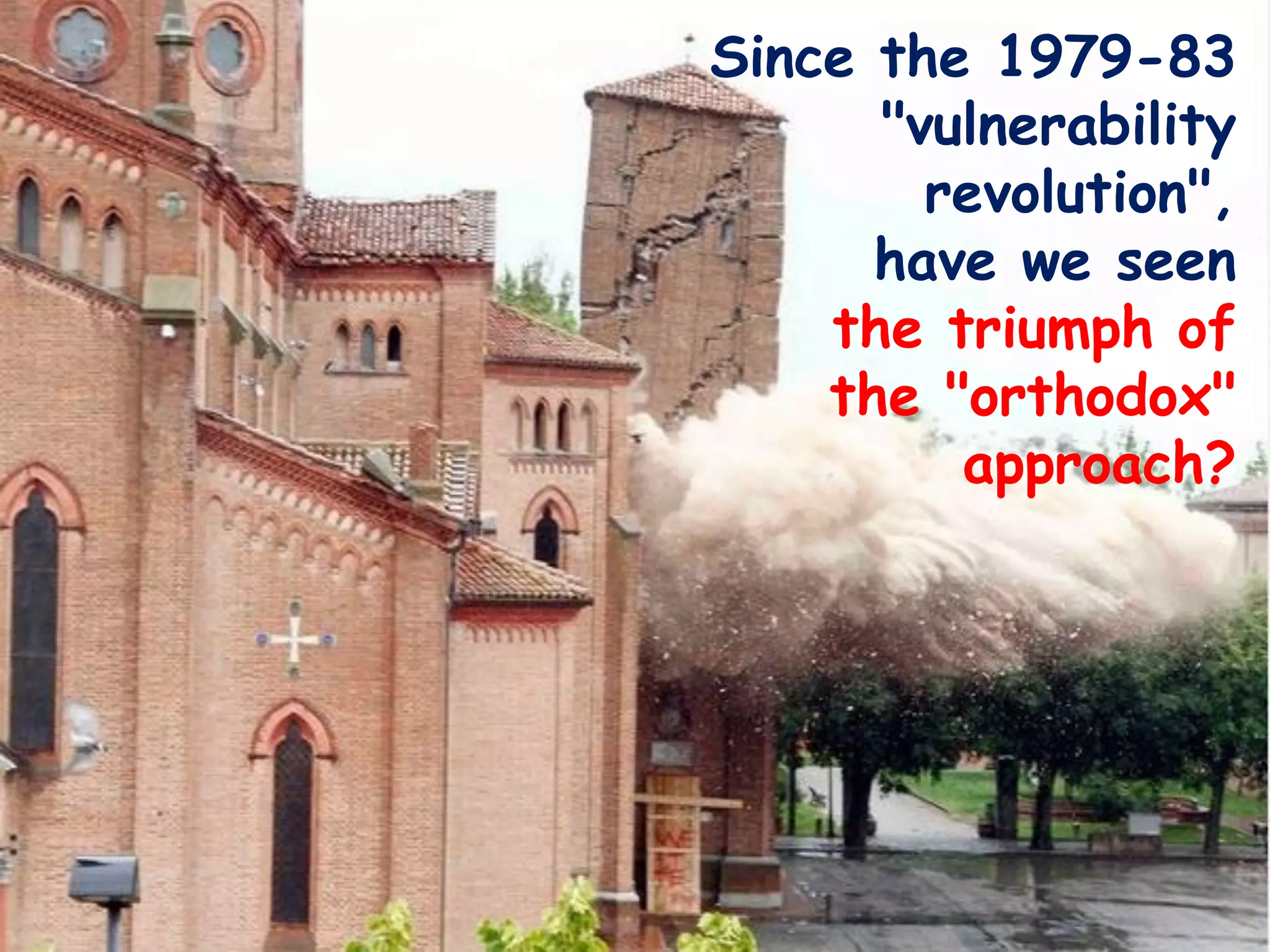
Since the 1979-83
"vulnerability
revolution",
have we seen
the triumph of
the "orthodox"
approach?
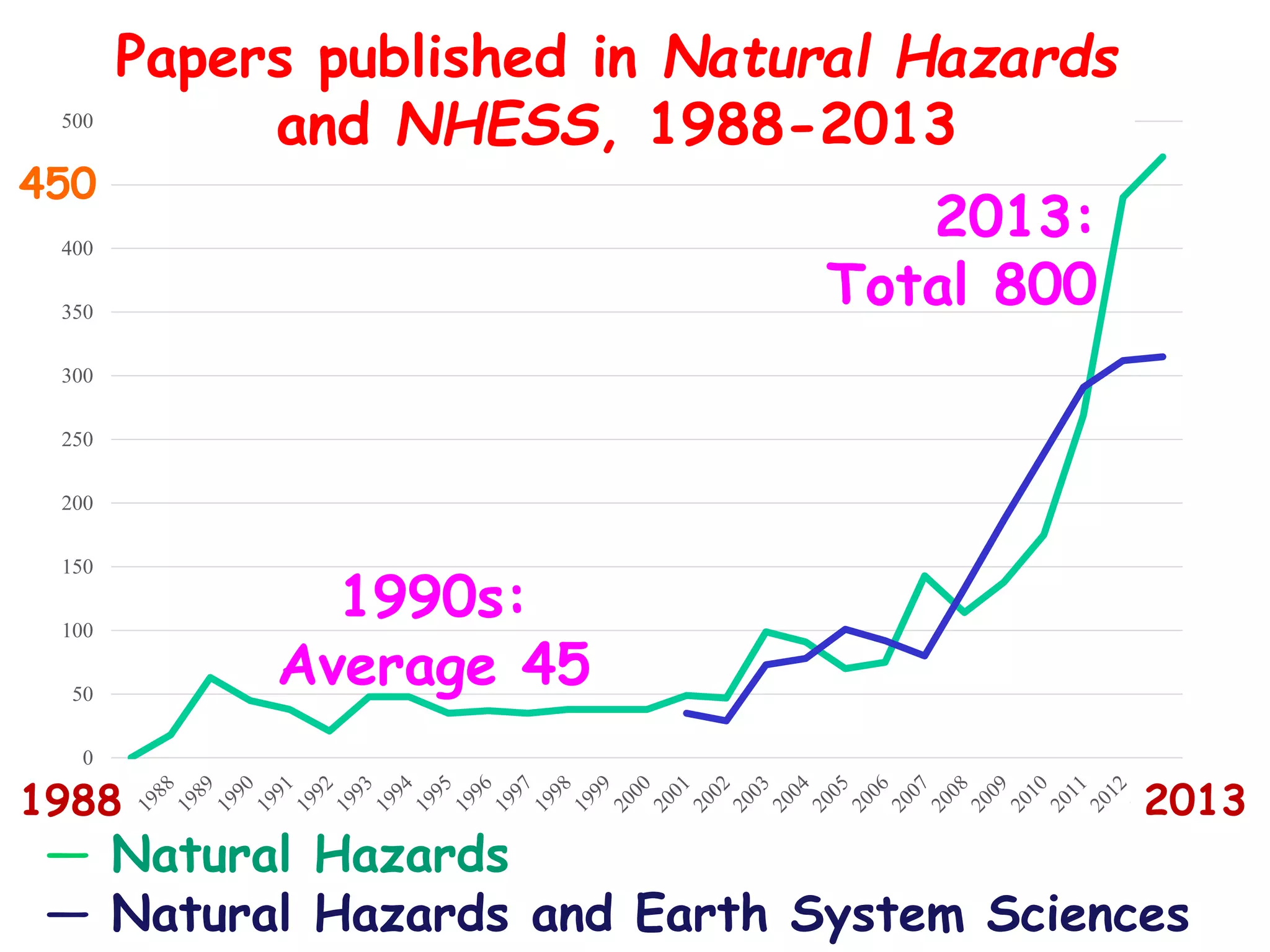
0
50
100
150
200
250
300
350
400
450
500
Papers published in Natural Hazards and NHESS
Natural Hazards Natural Hazard and Earth System Sciences
Papers published in Natural Hazards
and NHESS, 1988-2013
1990s:
Average 45
2013:
Total 800
― Natural Hazards
― Natural Hazards and Earth System Sciences
1988 2013
450
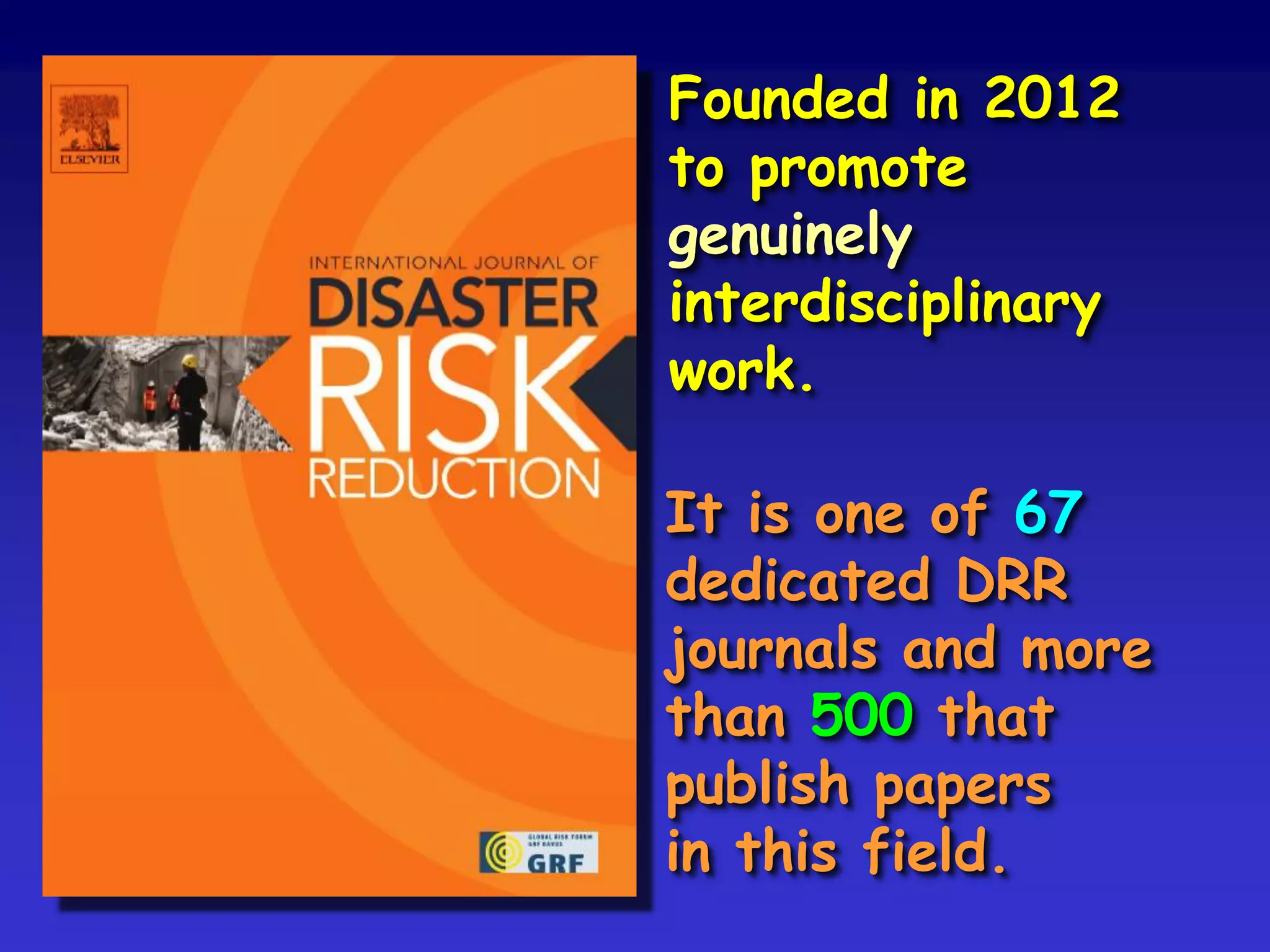
Founded in 2012
to promote
genuinely
interdisciplinary
work.
It is one of 67
dedicated DRR
journals and more
than 500 that
publish papers
in this field.
• from two or three journals in 1970s
to 70 dedicated journals in 2013,
+ c. 500 that publish DRR papers
• the disaster "gold rush" mentality
• the rediscovery of the [well-]
known by inexperienced researchers
• failure to produce new theory.
On the productivity of disaster science
• the rise of misleading bibliometry
[1993] [1990]
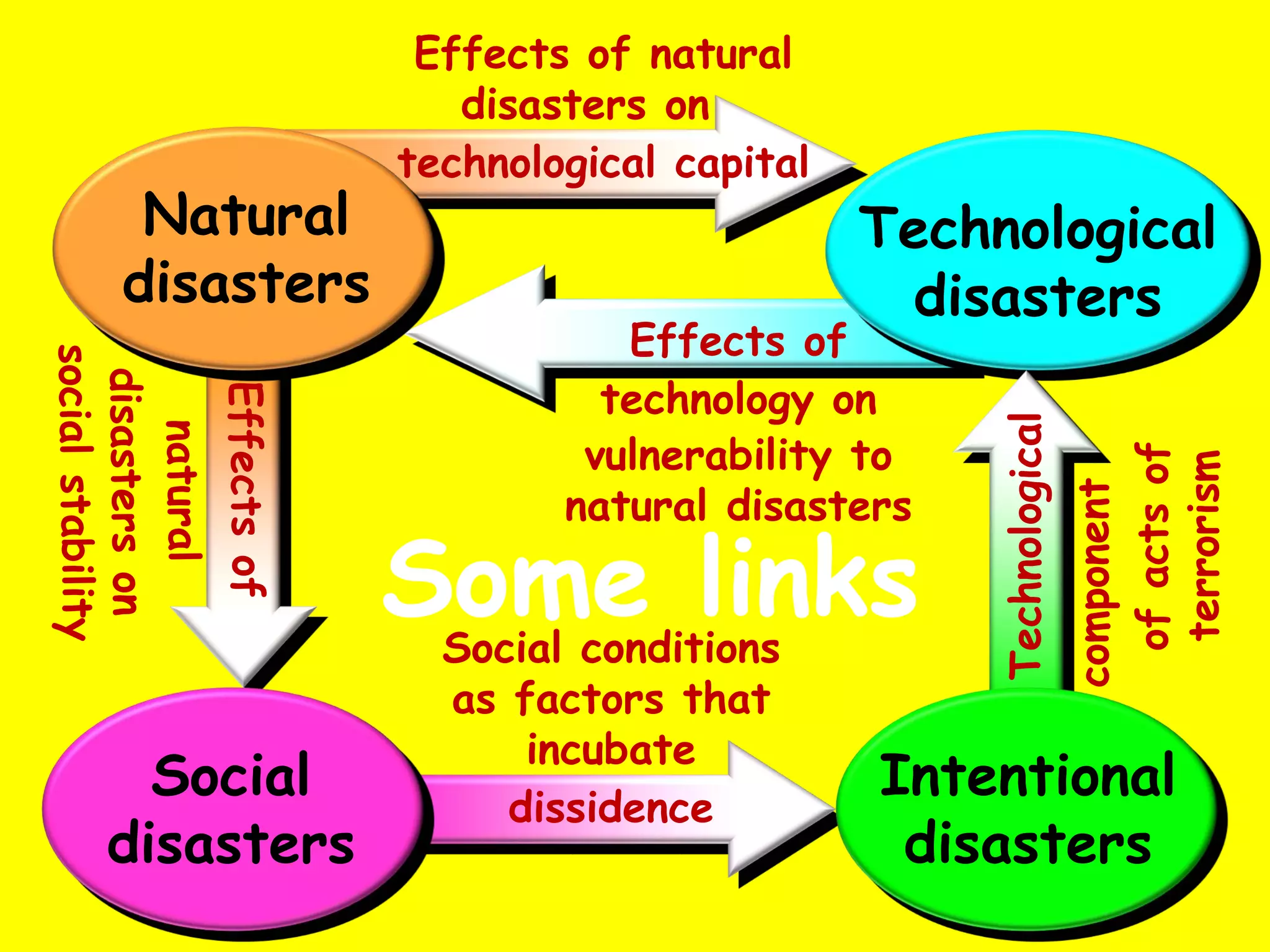
Some links
Effects of
technology on
vulnerability to
natural disasters
Effects of natural
disasters on
technological capital
Social conditions
as factors that
incubate
dissidence
Technological
component
ofactsof
terrorism
Intentional
disasters
Technological
disasters
Social
disasters
Natural
disasters
Gertrude Stein,
1913 [adapted]
A disaster is
a disaster is
a disaster...
Its "disastrousness" is not
defined by its causal agent.
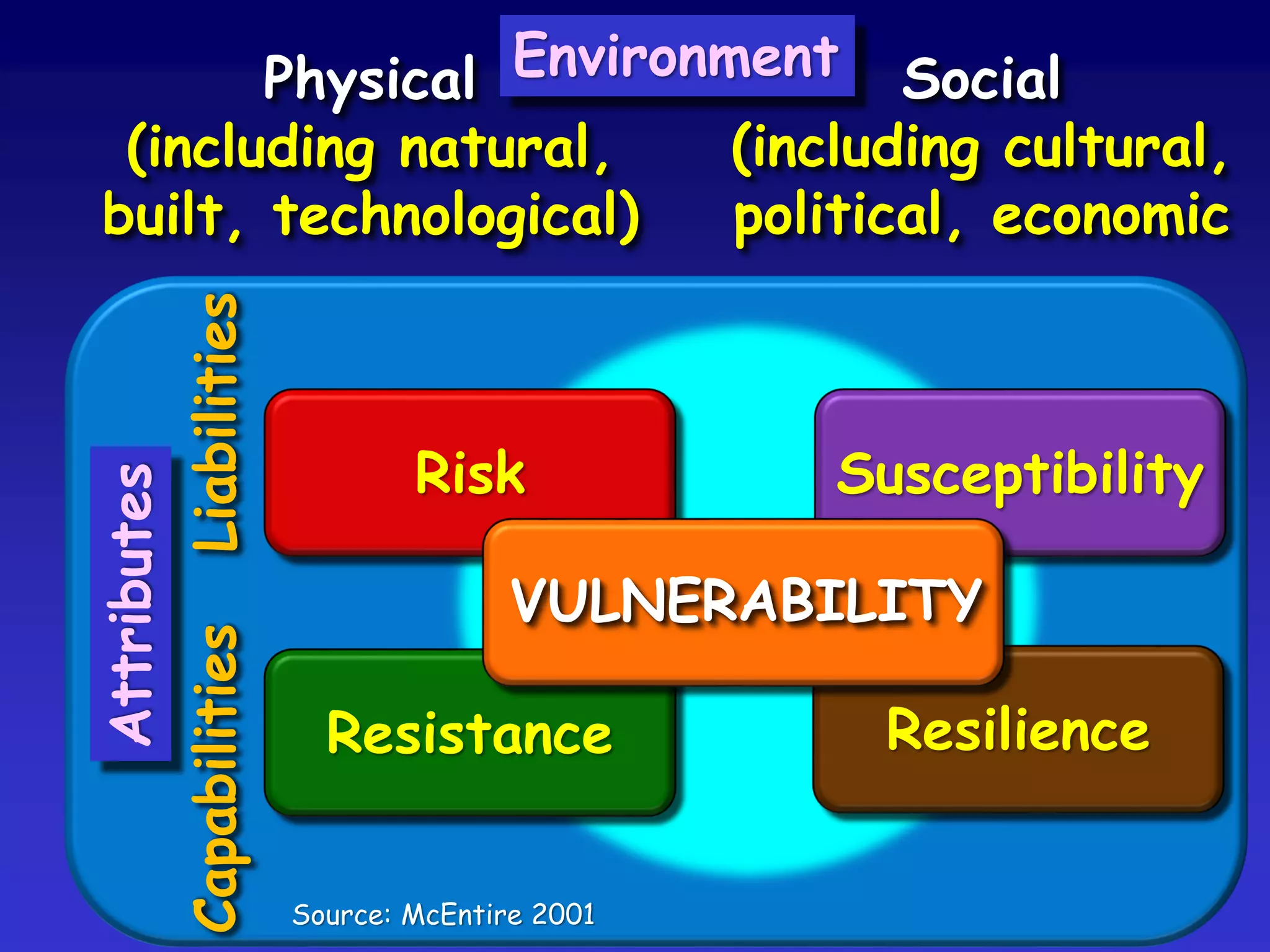
ResilienceResistance
Risk Susceptibility
Physical
(including natural,
built, technological)
Social
(including cultural,
political, economic
Environment
Attributes
Source: McEntire 2001
LiabilitiesCapabilities
VULNERABILITY
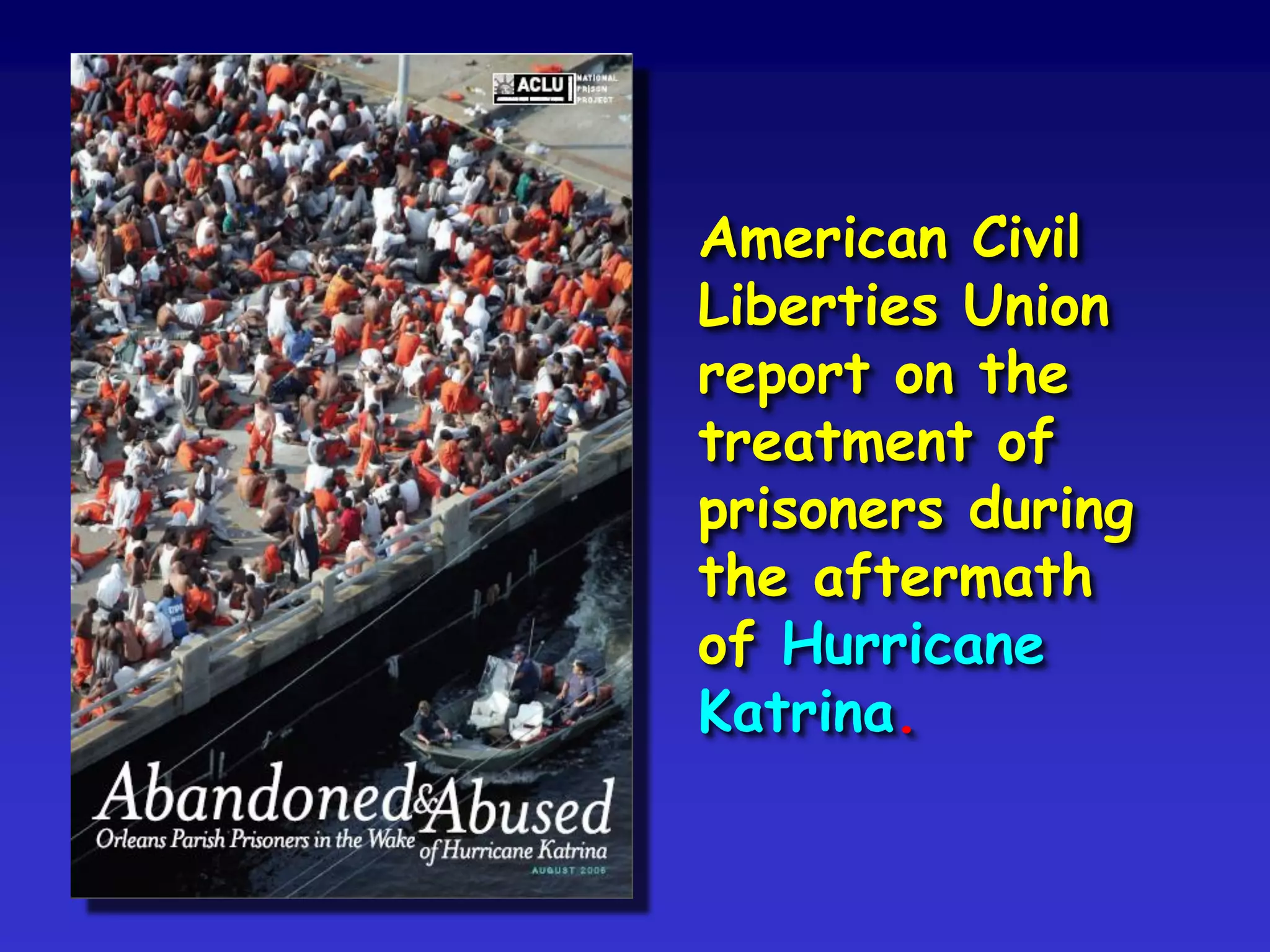
American Civil
Liberties Union
report on the
treatment of
prisoners during
the aftermath
of Hurricane
Katrina.
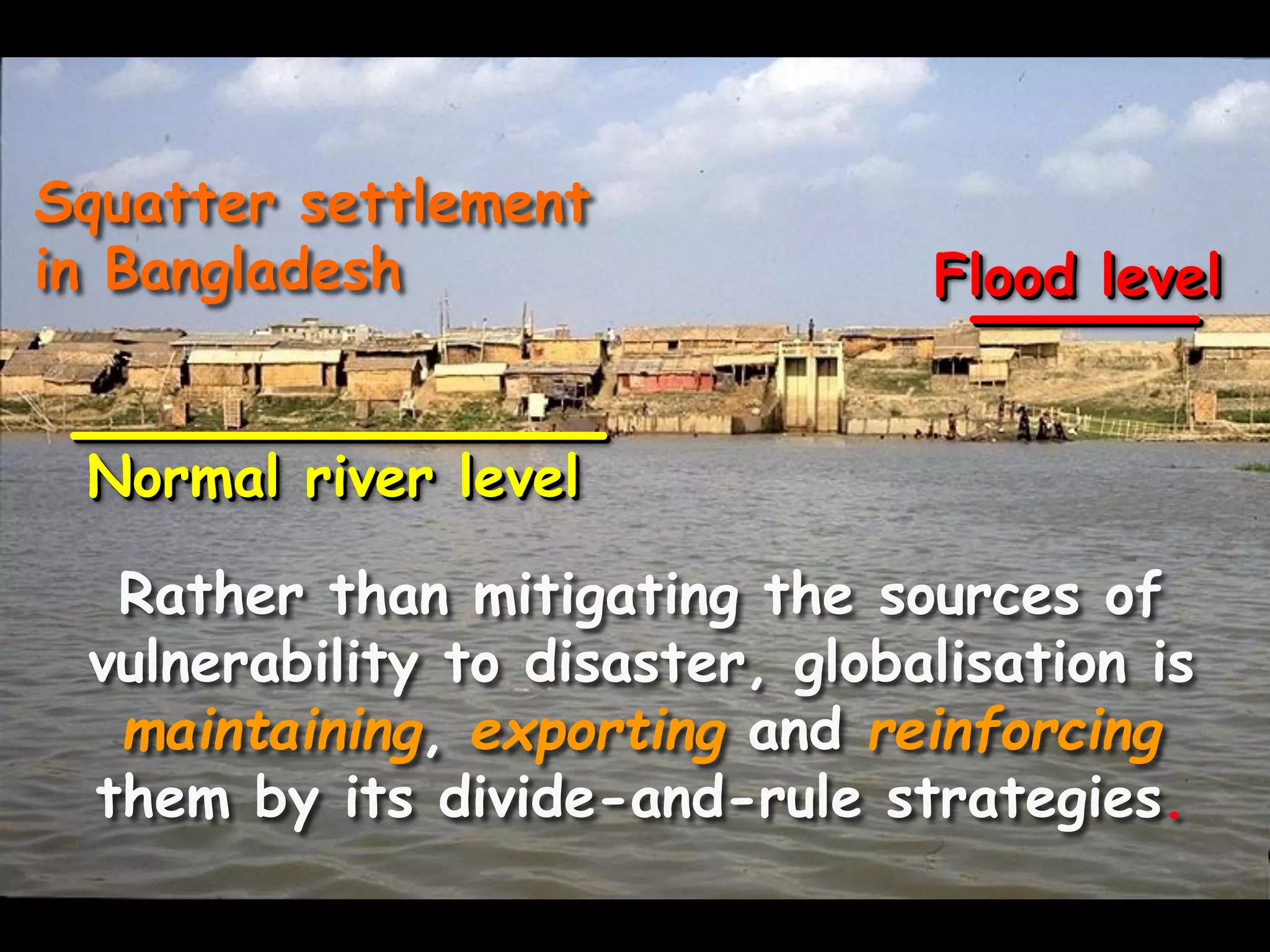
Squatter settlement
in Bangladesh Flood level
Normal river level
Rather than mitigating the sources of
vulnerability to disaster, globalisation is
maintaining, exporting and reinforcing
them by its divide-and-rule strategies.
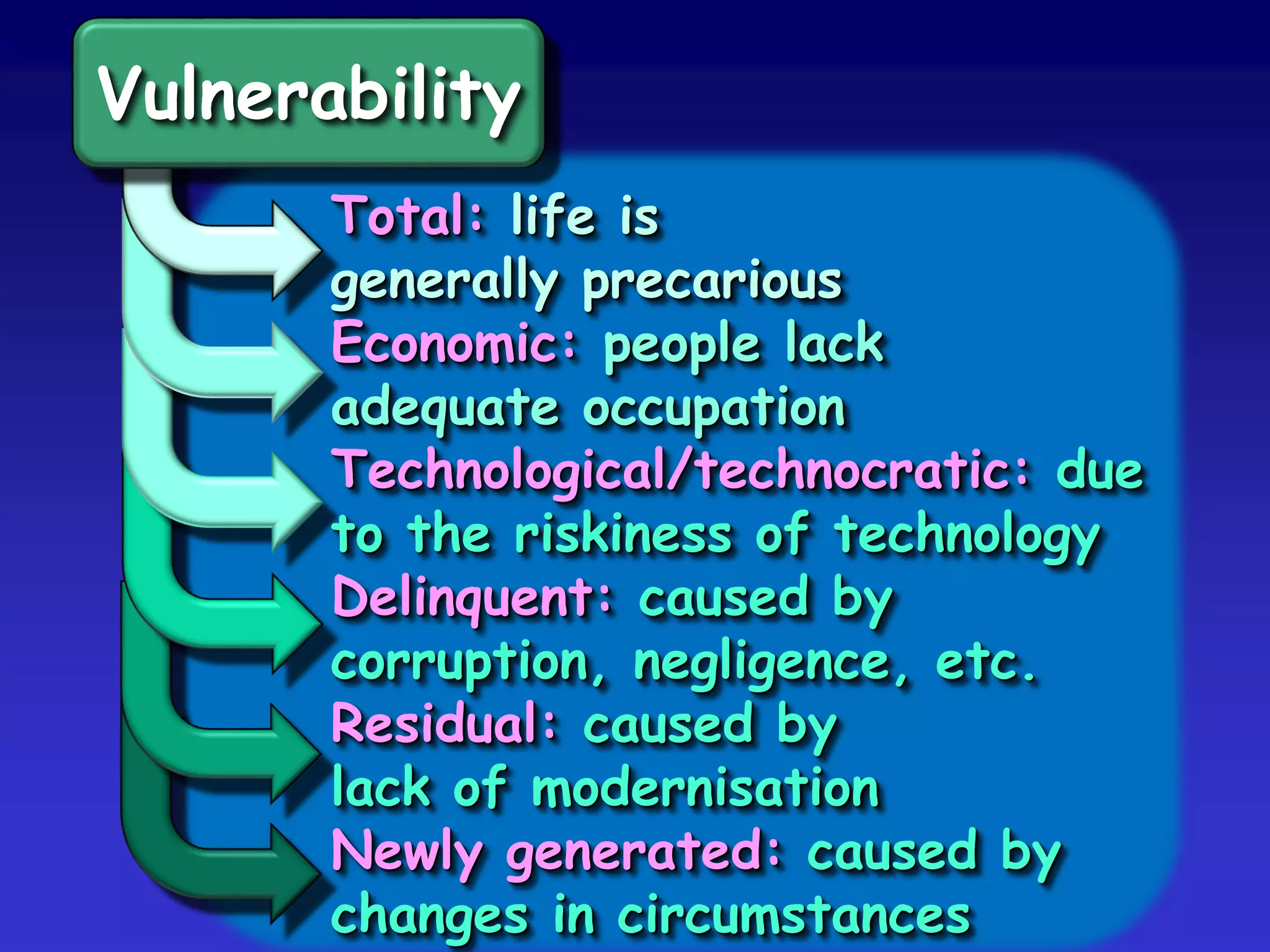
Vulnerability
Total: life is
generally precarious
Economic: people lack
adequate occupation
Technological/technocratic: due
to the riskiness of technology
Delinquent: caused by
corruption, negligence, etc.
Residual: caused by
lack of modernisation
Newly generated: caused by
changes in circumstances
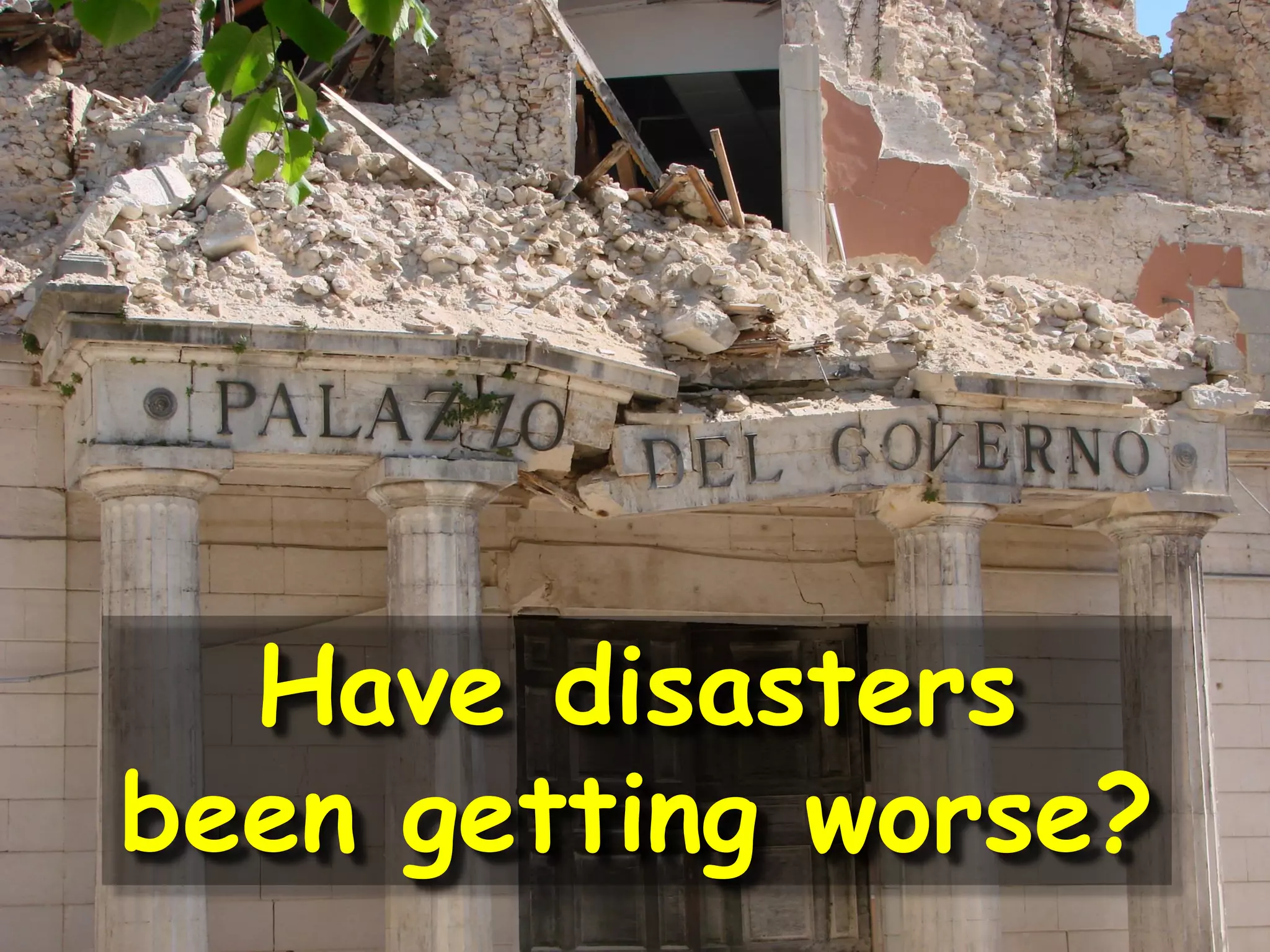
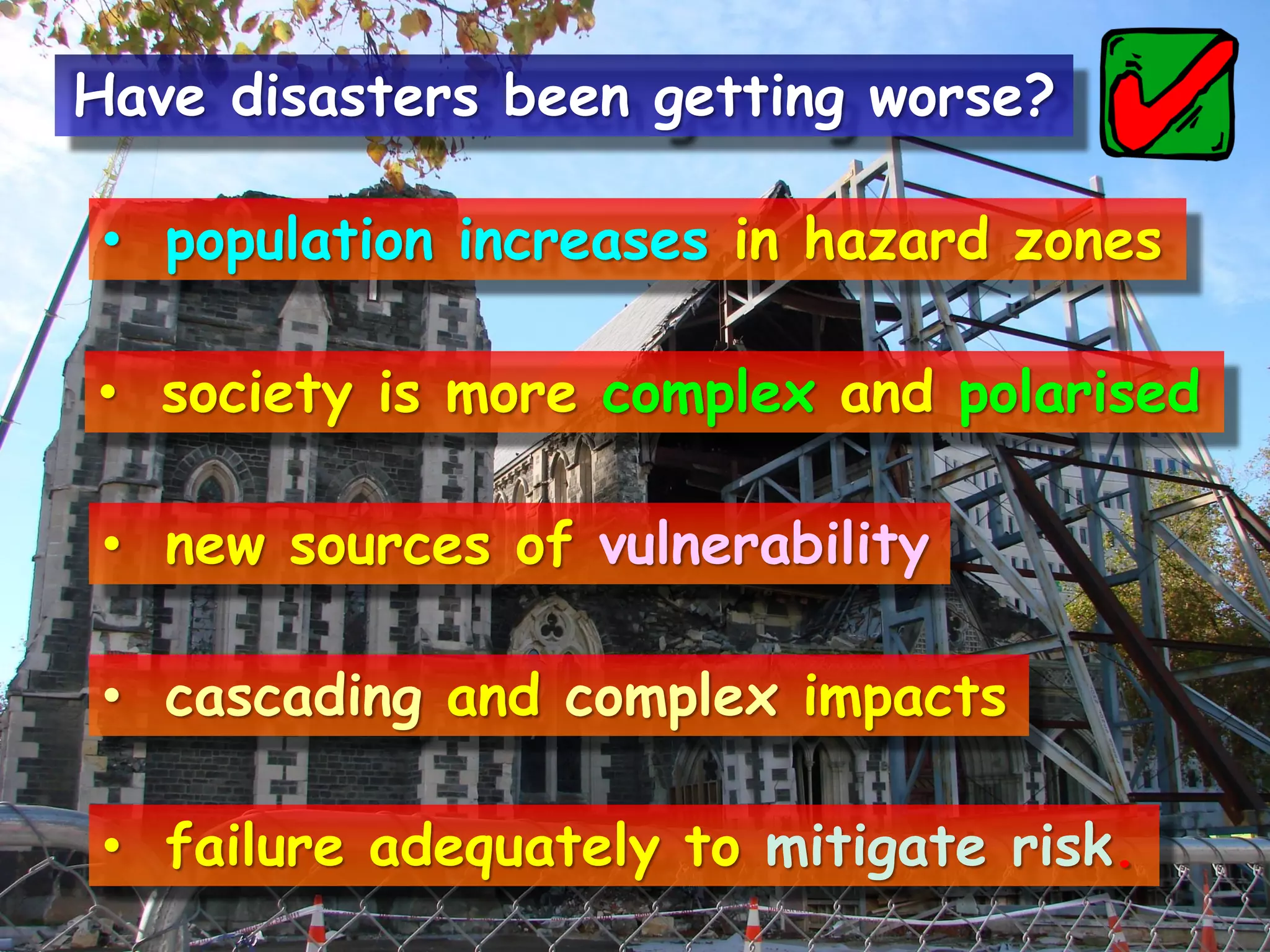
Have disasters
been getting worse?
• population increases in hazard zones
• society is more complex and polarised
• new sources of vulnerability
• cascading and complex impacts
• failure adequately to mitigate risk.
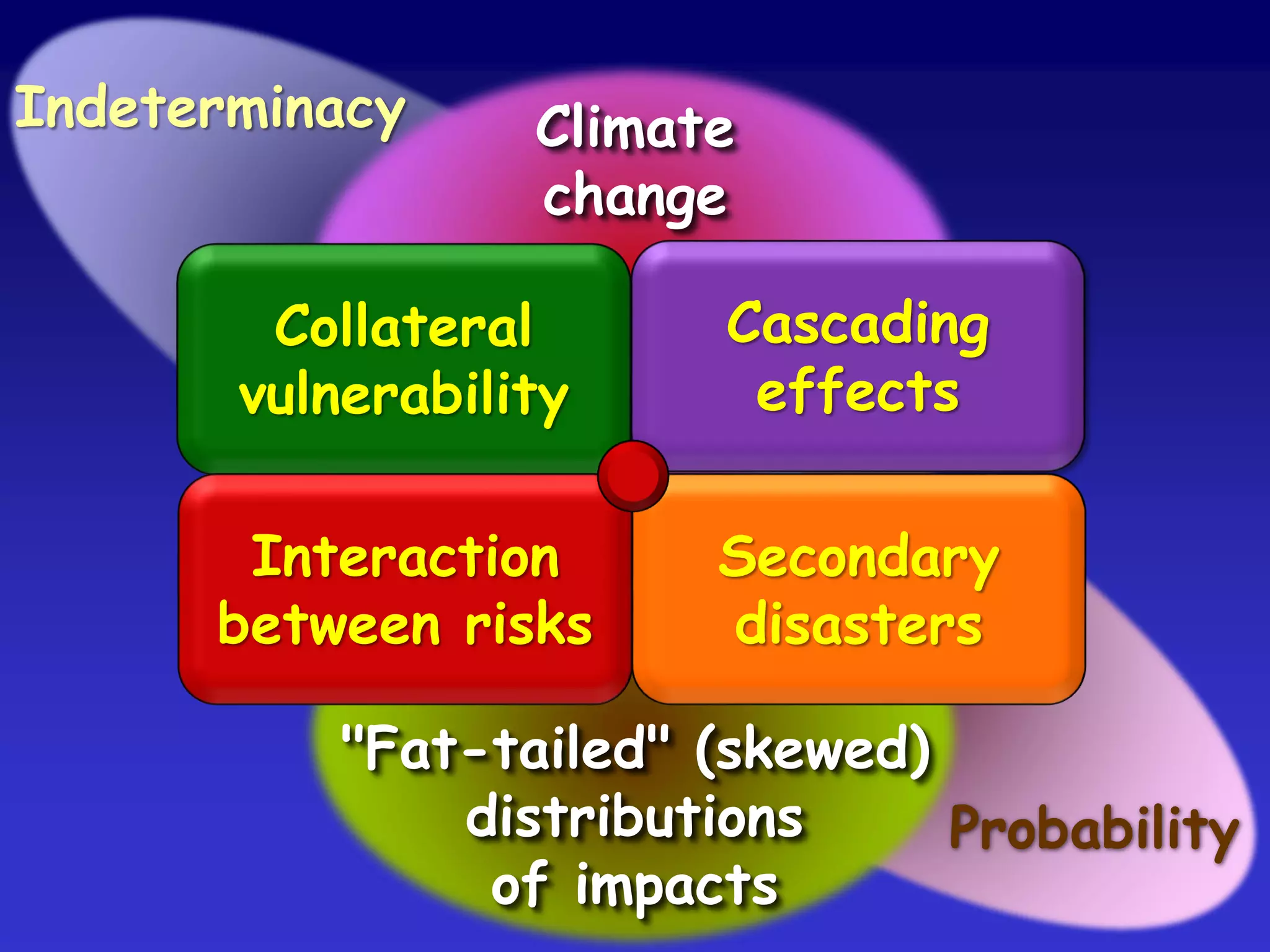
Have disasters been getting worse?
Cascading
effects
Collateral
vulnerability
Secondary
disasters
Interaction
between risks
Climate
change
Probability
Indeterminacy
"Fat-tailed" (skewed)
distributions
of impacts
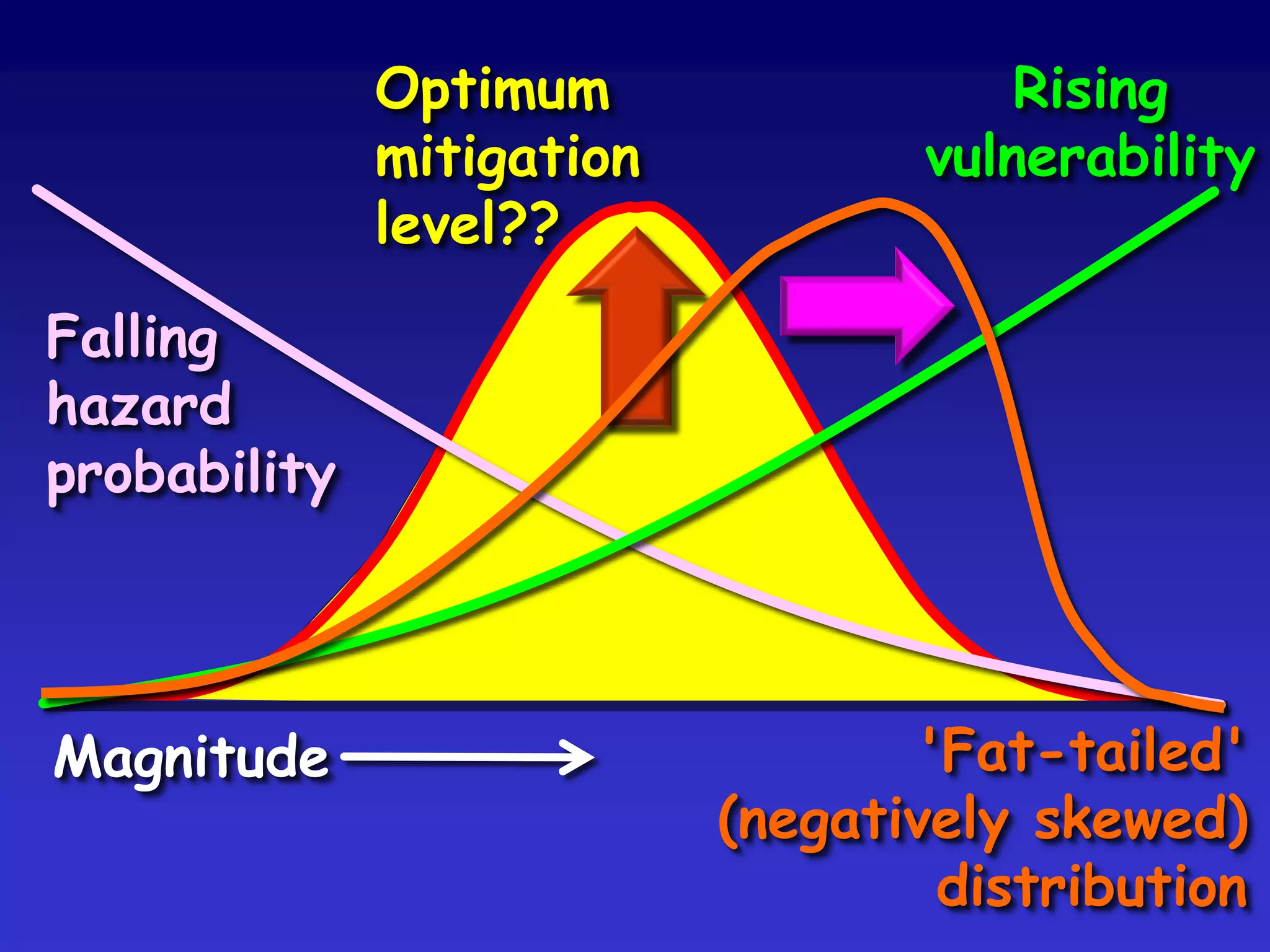
Falling
hazard
probability
Rising
vulnerability
Optimum
mitigation
level??
'Fat-tailed'
(negatively skewed)
distribution
Magnitude
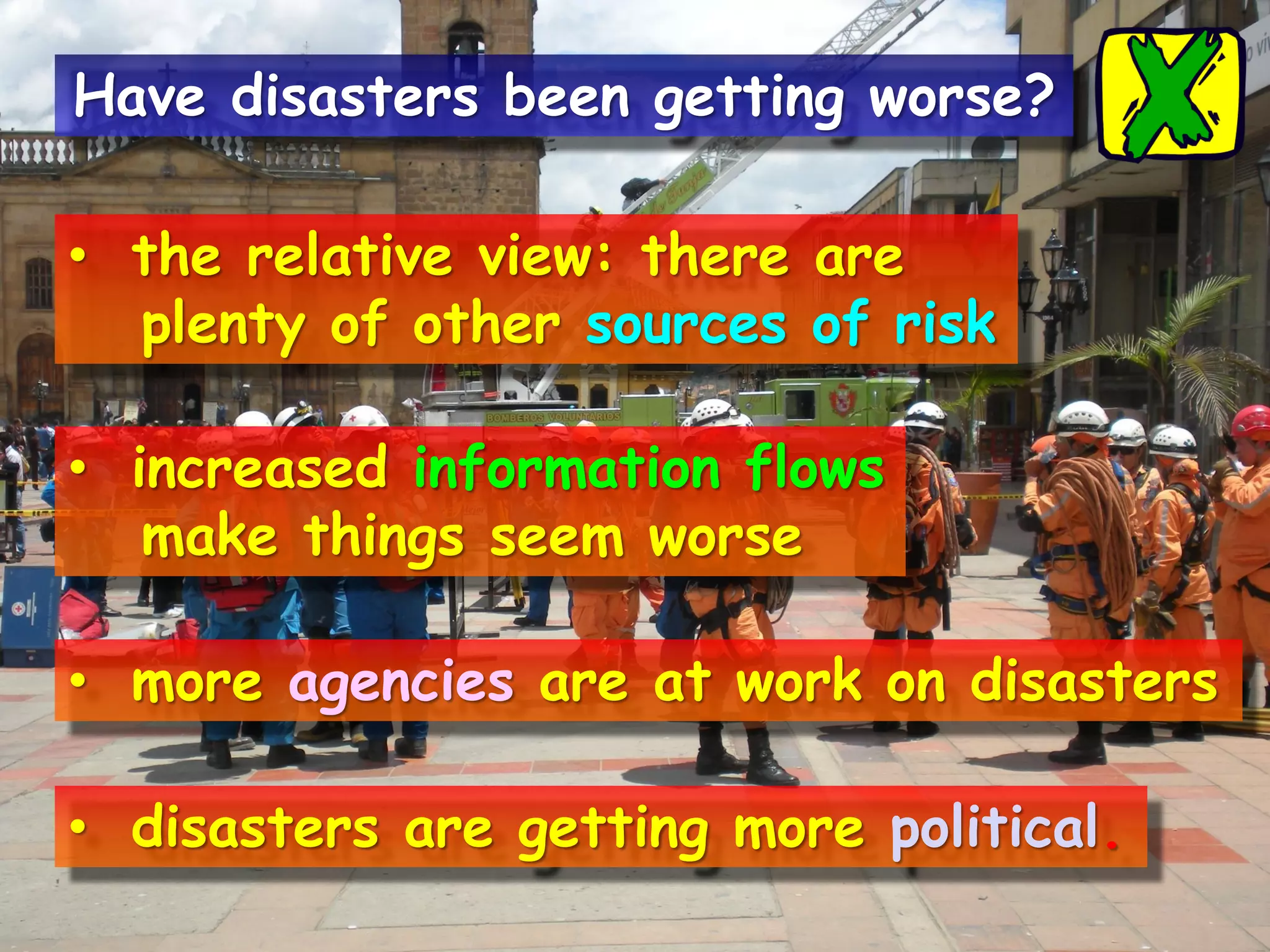
• the relative view: there are
plenty of other sources of risk
• increased information flows
make things seem worse
• more agencies are at work on disasters
• disasters are getting more political.
Have disasters been getting worse?
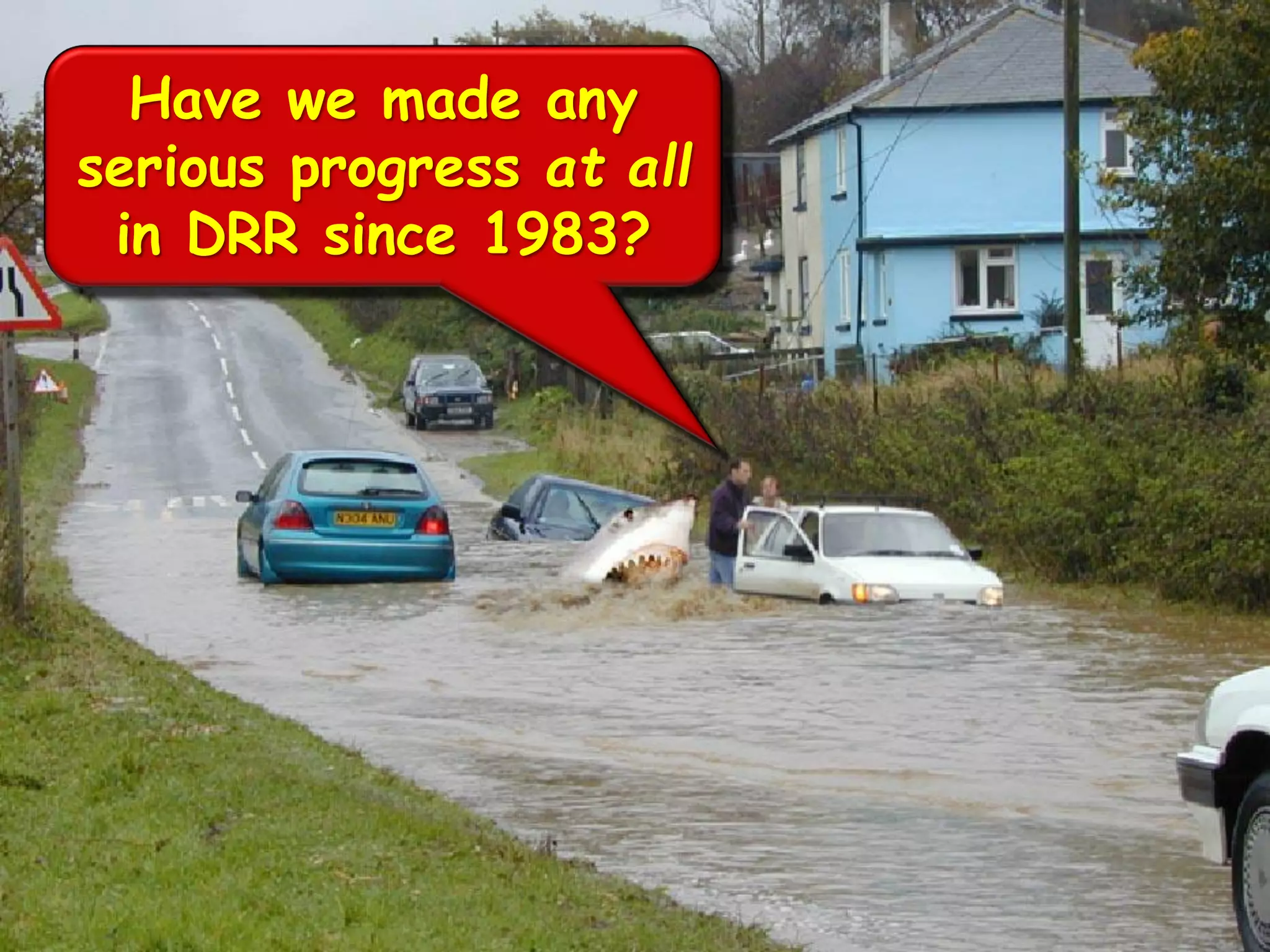
Have we made any
serious progress at all
in DRR since 1983?
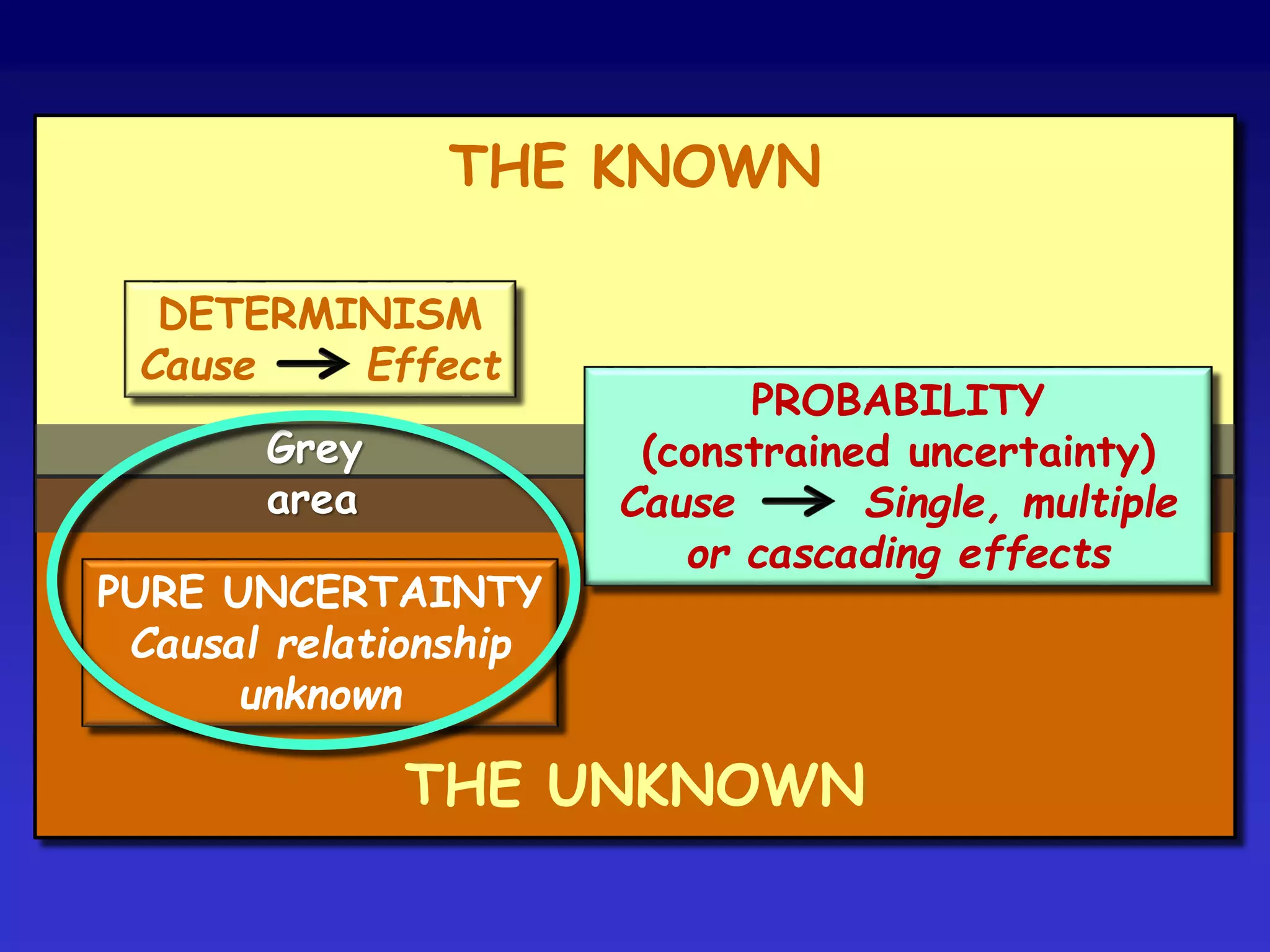
DETERMINISM
Cause Effect
PROBABILITY
(constrained uncertainty)
Cause Single, multiple
or cascading effects
THE KNOWN
THE UNKNOWN
PURE UNCERTAINTY
Causal relationship
unknown
Grey
area
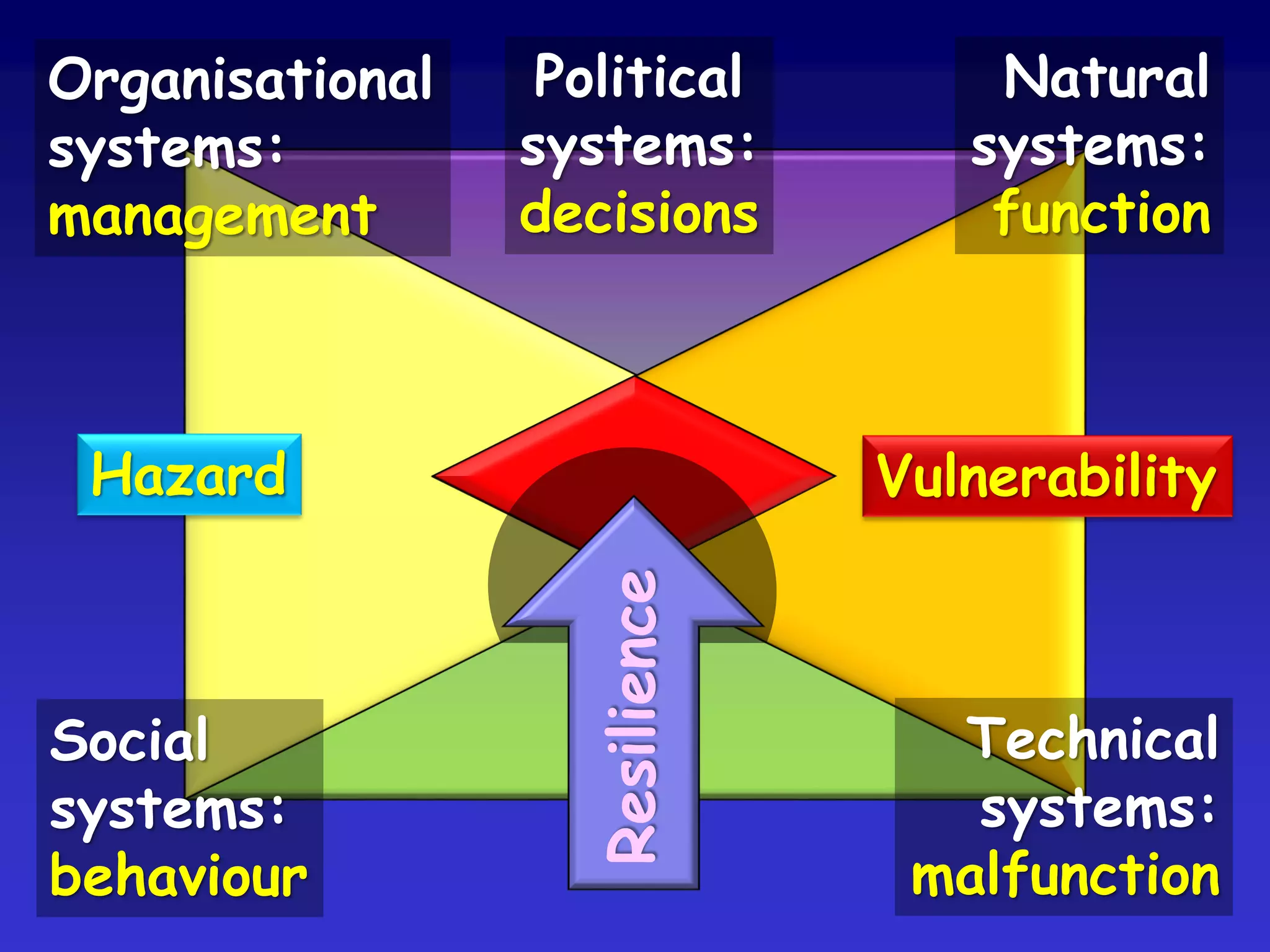
Organisational
systems:
management
Social
systems:
behaviour
Natural
systems:
function
Technical
systems:
malfunction
VulnerabilityHazard
Resilience
Political
systems:
decisions
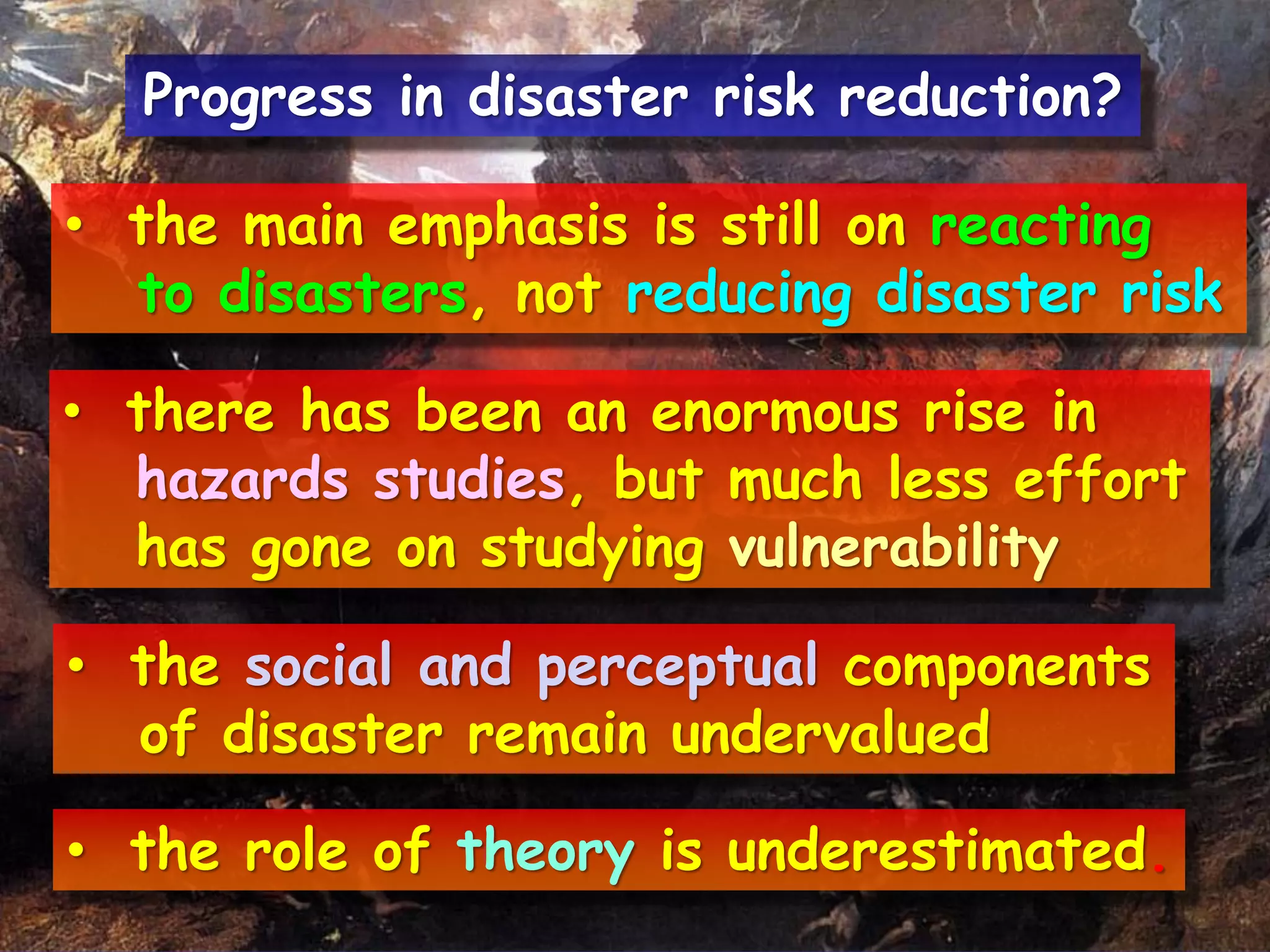
• the main emphasis is still on reacting
to disasters, not reducing disaster risk
• there has been an enormous rise in
hazards studies, but much less effort
has gone on studying vulnerability
• the social and perceptual components
of disaster remain undervalued
• the role of theory is underestimated.
Progress in disaster risk reduction?
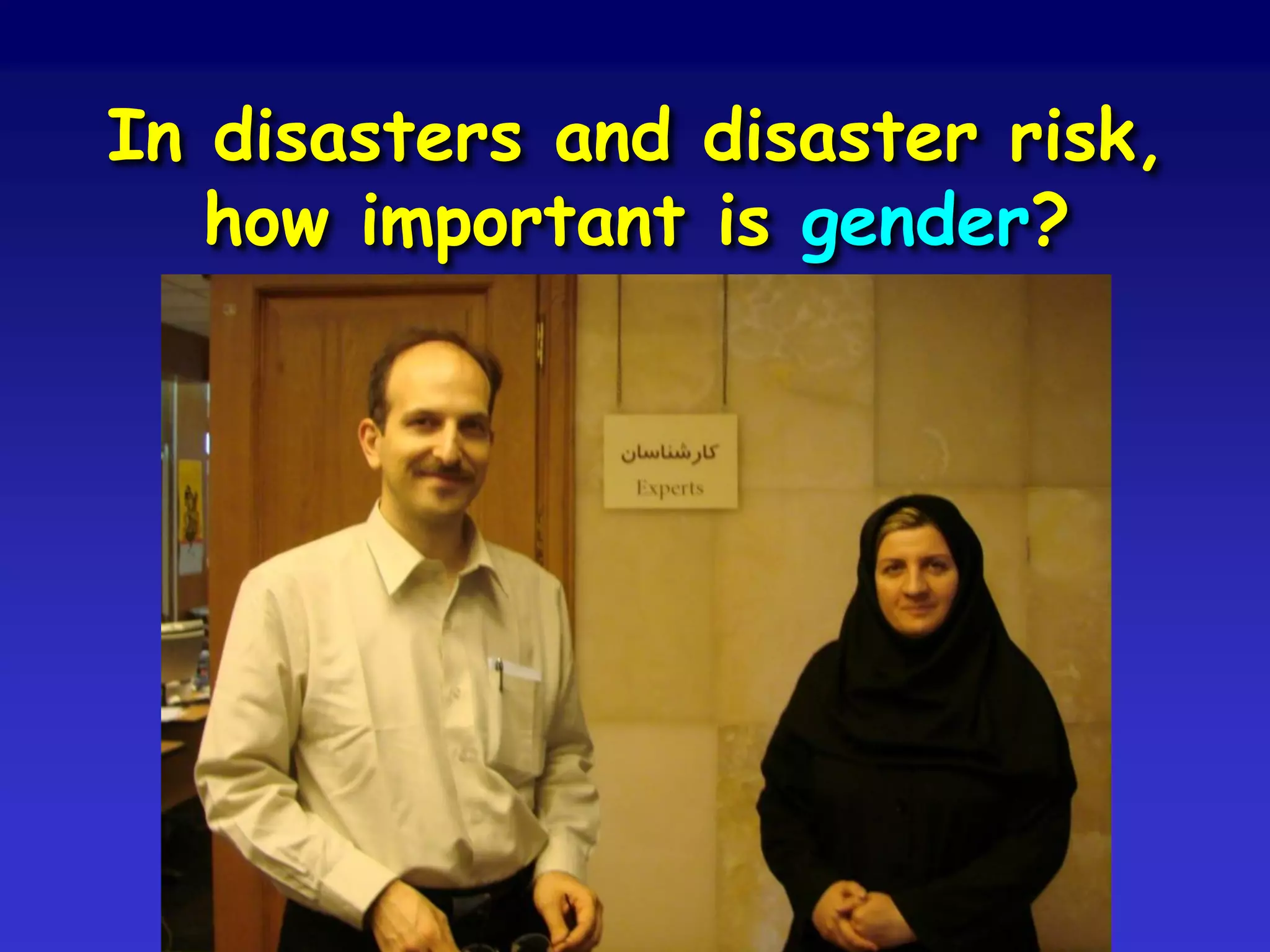
In disasters and disaster risk,
how important is gender?
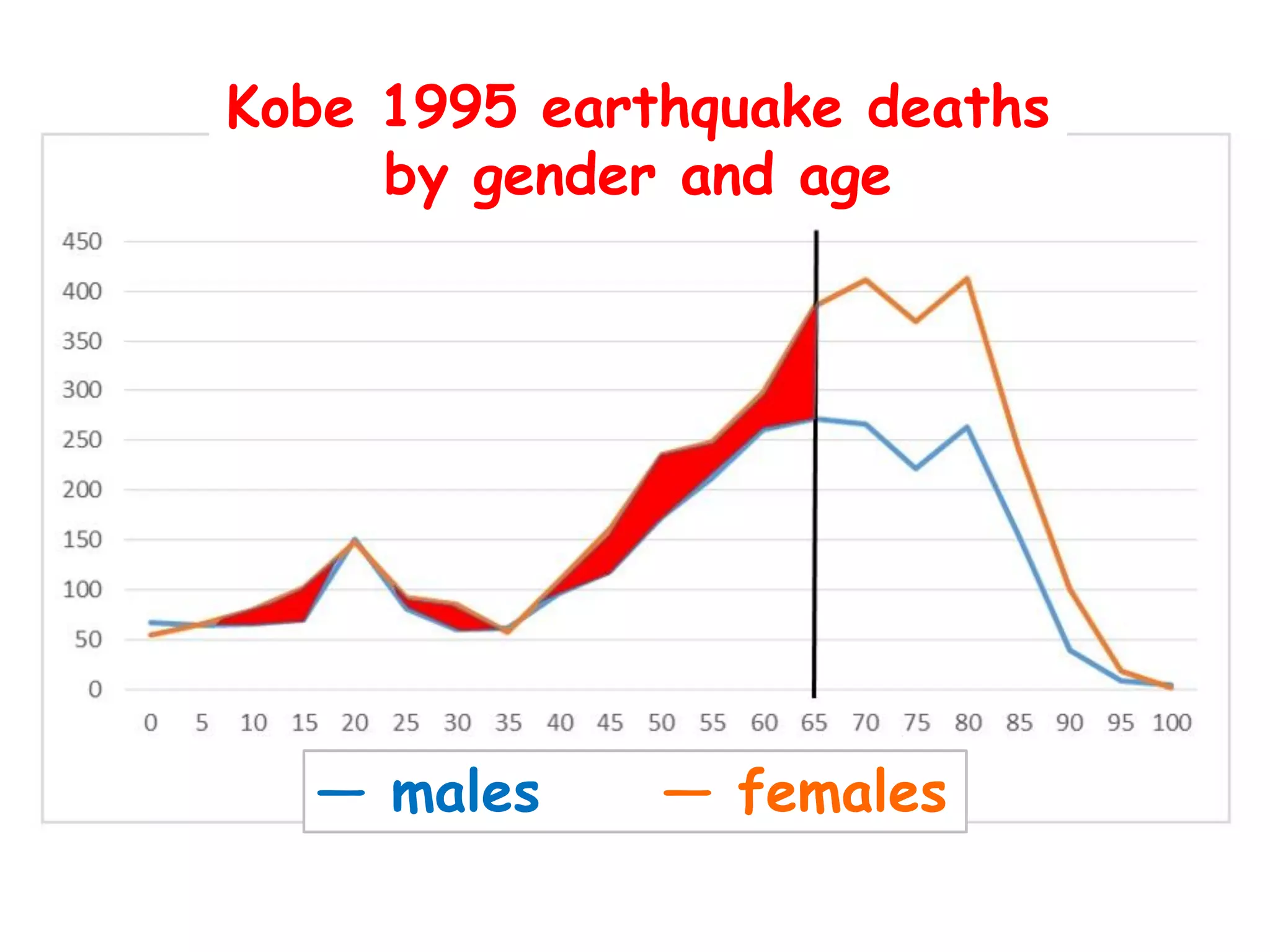
Kobe 1995 earthquake deaths
by gender and age
― males ― females
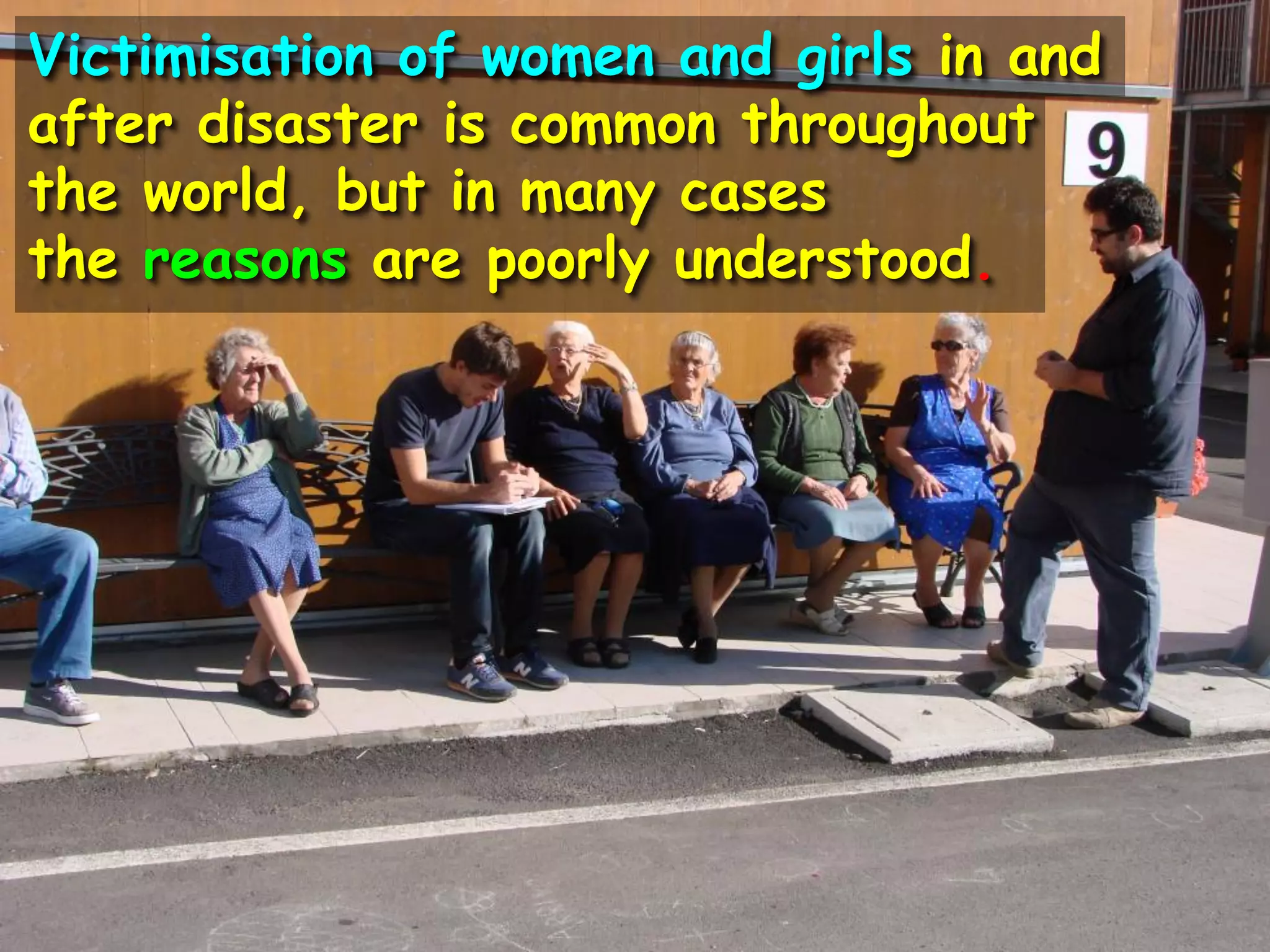
Victimisation of women and girls in and
after disaster is common throughout
the world, but in many cases
the reasons are poorly understood.
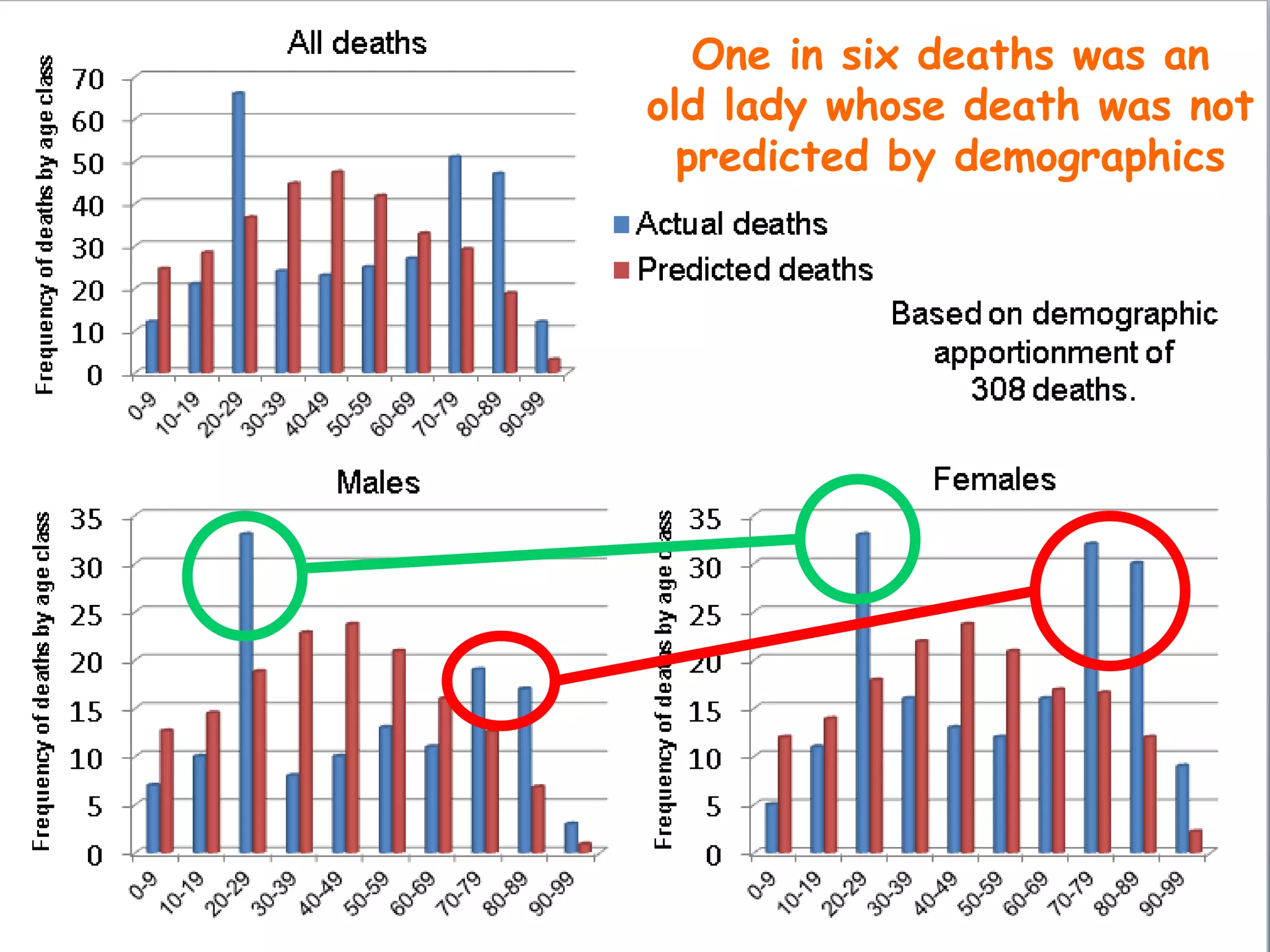
One in six deaths was an
old lady whose death was not
predicted by demographics
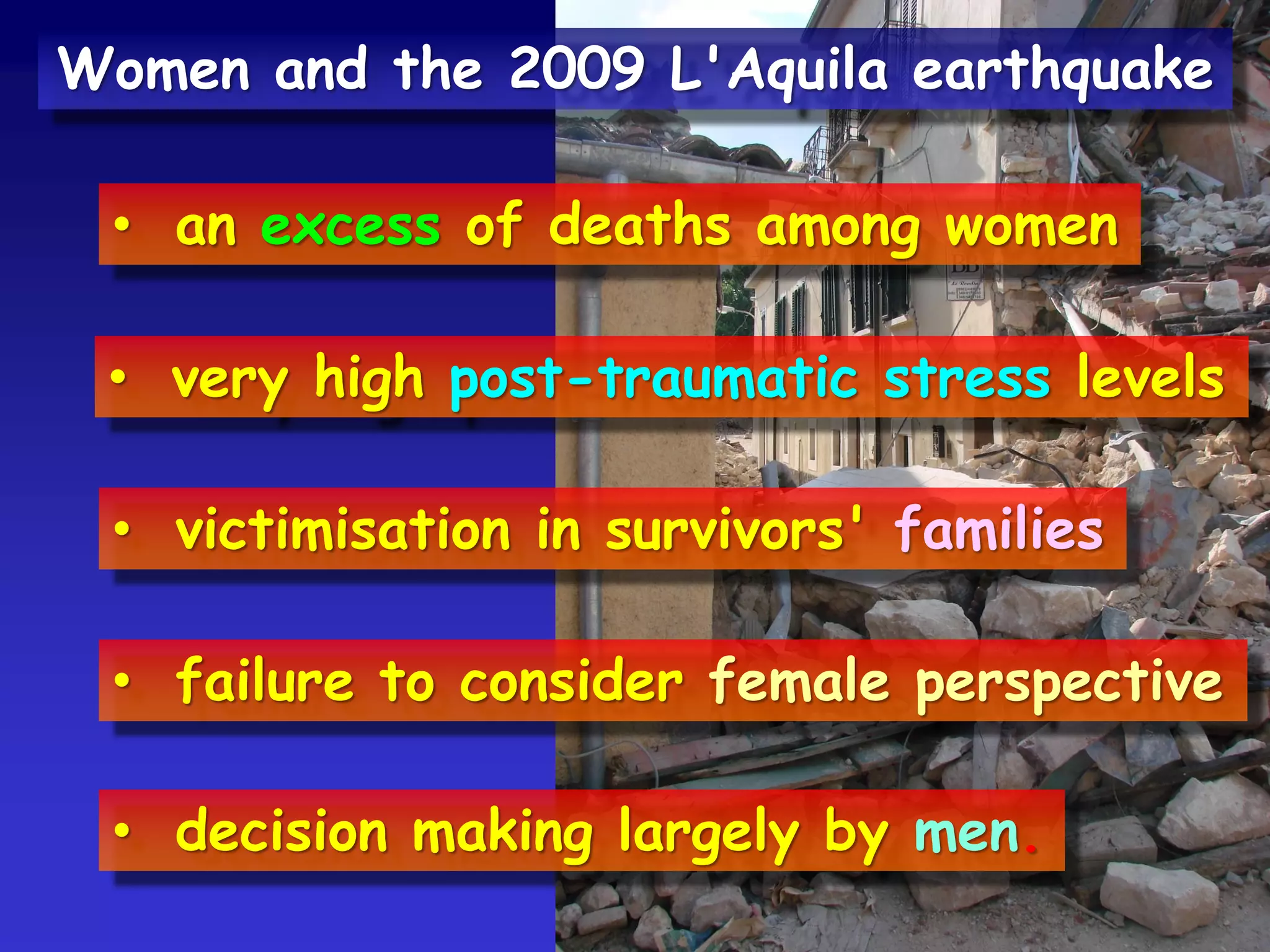
• an excess of deaths among women
• very high post-traumatic stress levels
• victimisation in survivors' families
• failure to consider female perspective
• decision making largely by men.
Women and the 2009 L'Aquila earthquake
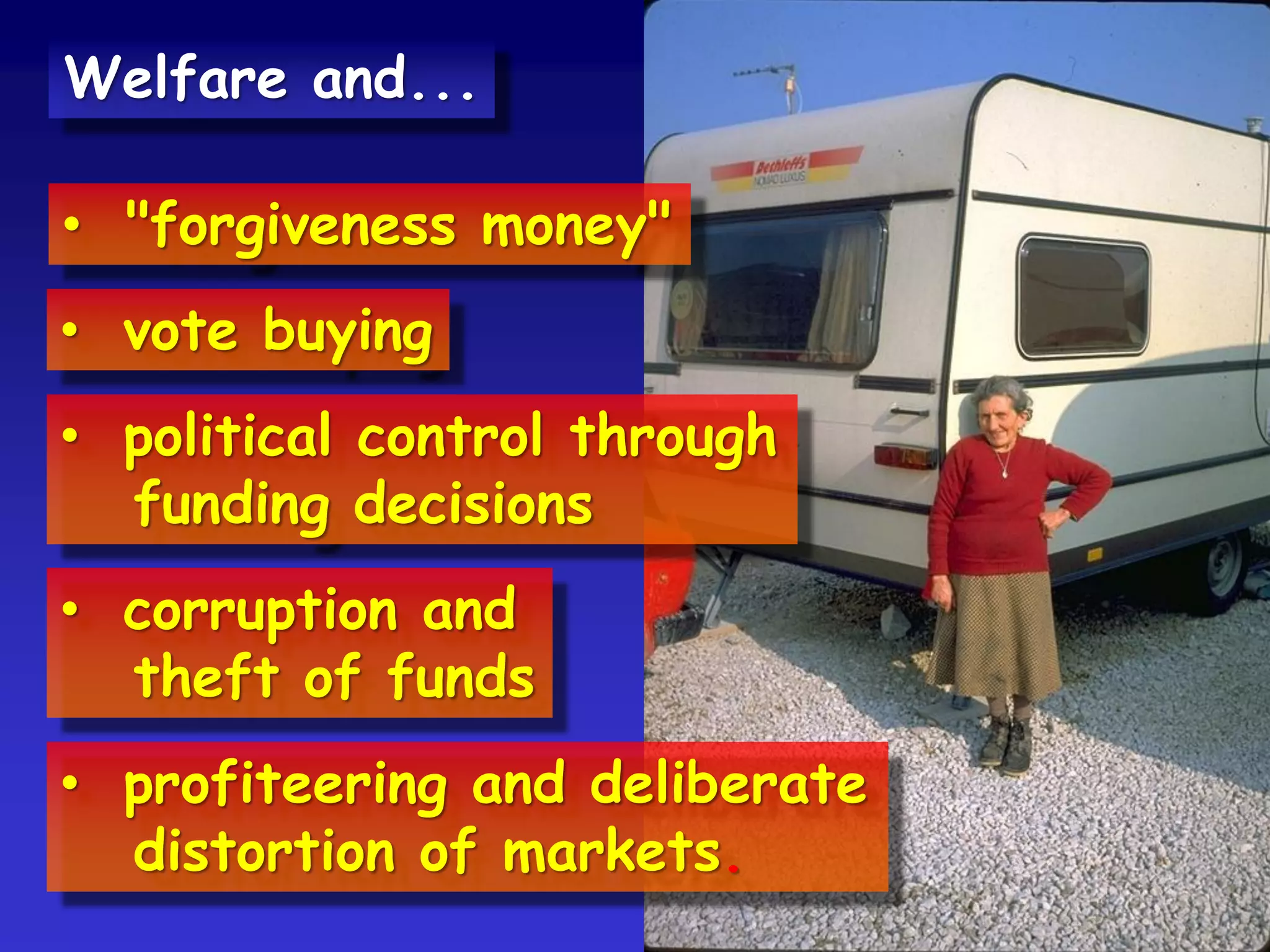
• "forgiveness money"
• vote buying
• political control through
funding decisions
• corruption and
theft of funds
• profiteering and deliberate
distortion of markets.
Welfare and...
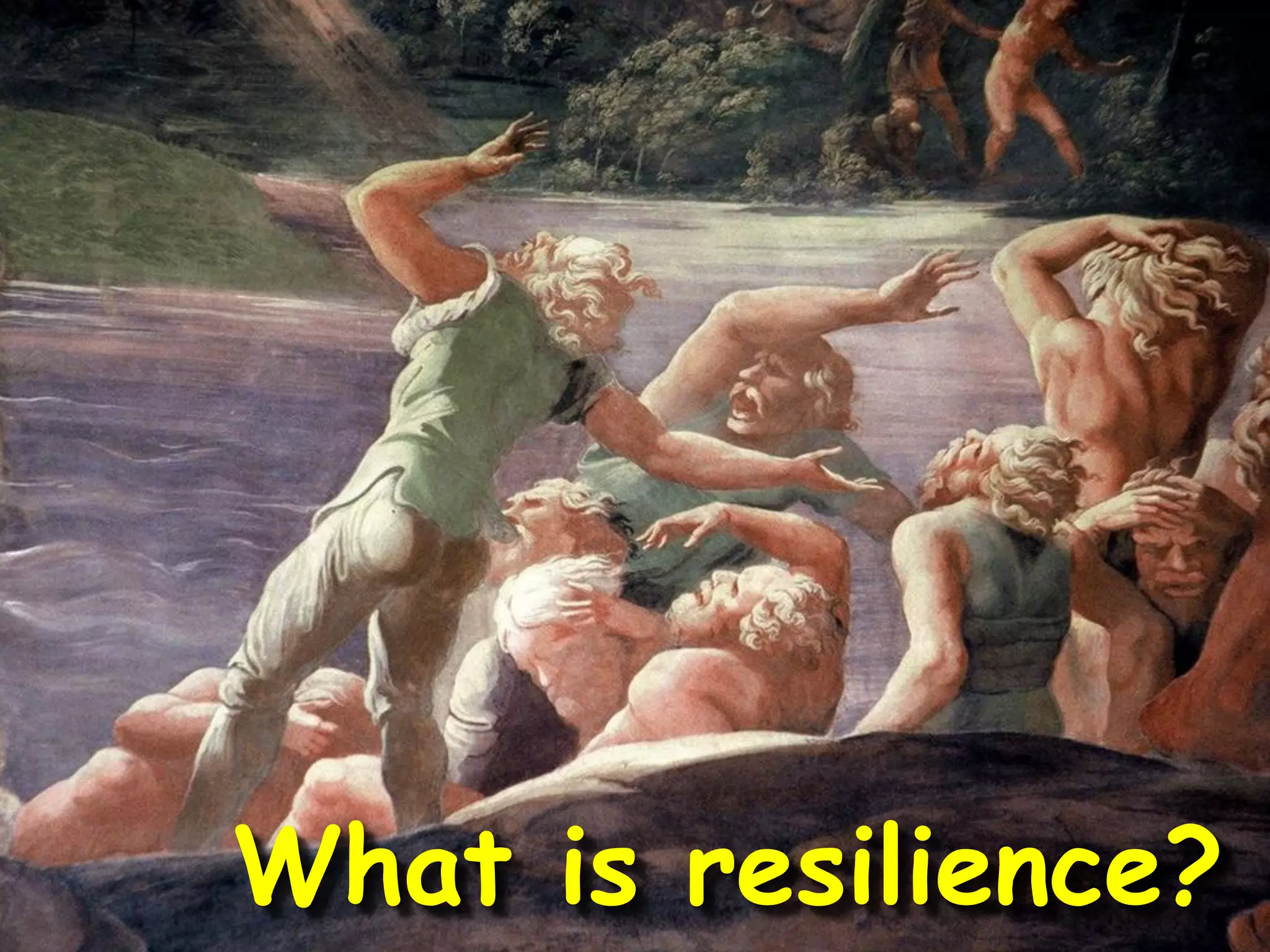
What is resilience?
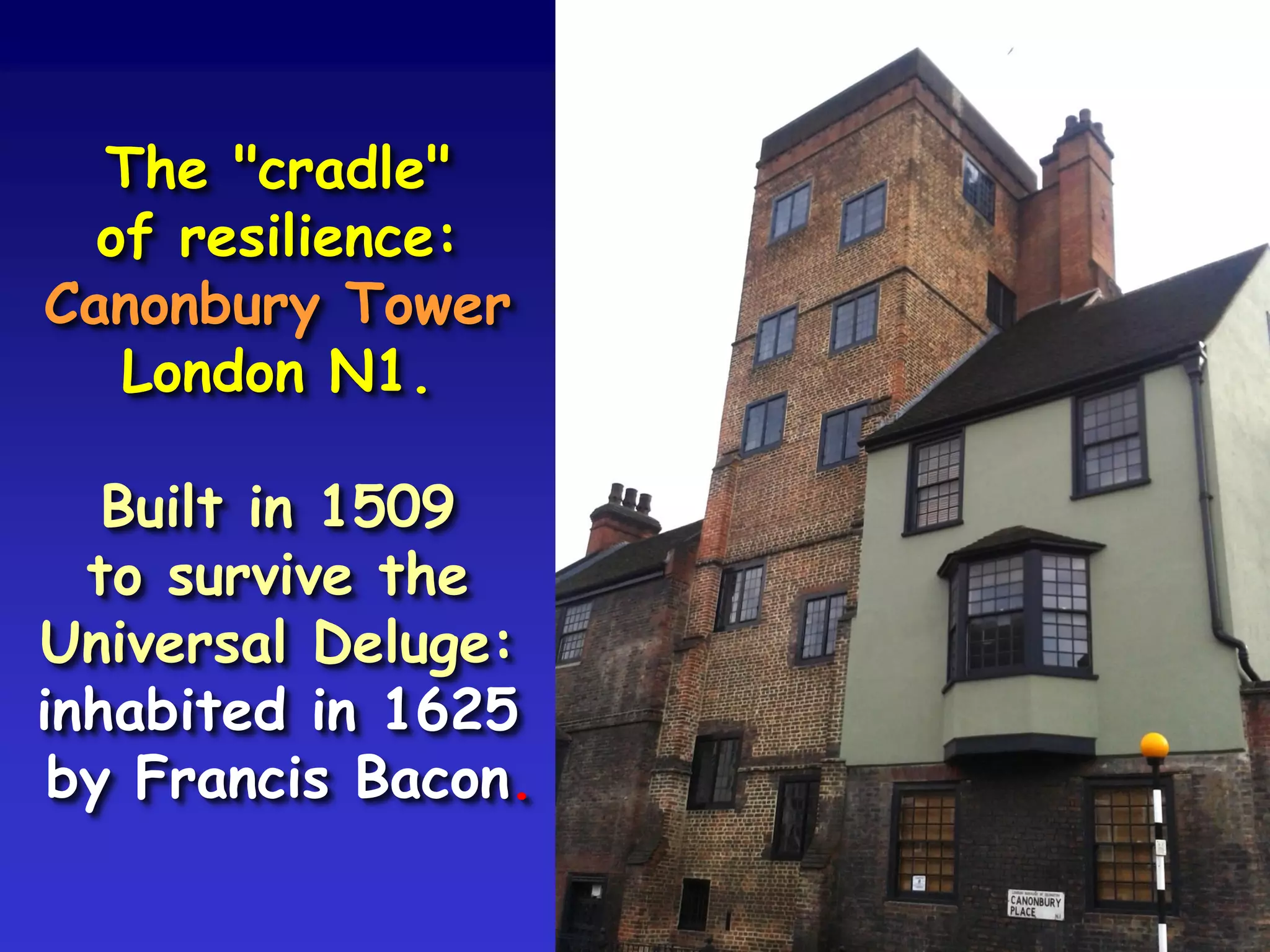
The "cradle"
of resilience:
Canonbury Tower
London N1.
Built in 1509
to survive the
Universal Deluge:
inhabited in 1625
by Francis Bacon.
Francis Bacon
Sylva Sylvarum, 1625
[Are we to criticise him for using
the "greengrocer's apostrophe"?]
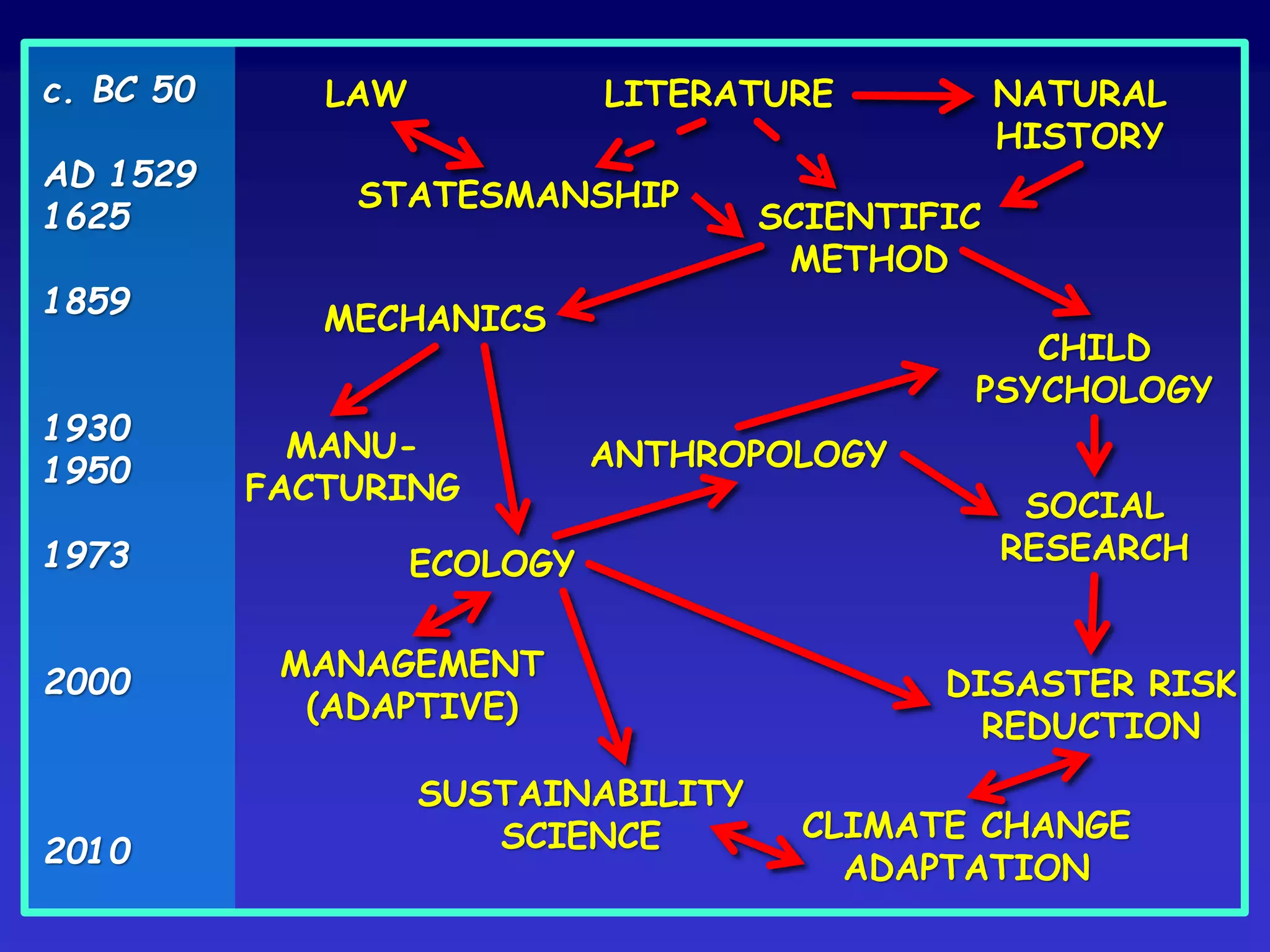
LAW
STATESMANSHIP
LITERATURE
SCIENTIFIC
METHOD
MECHANICS
MANU-
FACTURING
ECOLOGY
MANAGEMENT
(ADAPTIVE)
CHILD
PSYCHOLOGY
ANTHROPOLOGY
SOCIAL
RESEARCH
DISASTER RISK
REDUCTION
SUSTAINABILITY
SCIENCE CLIMATE CHANGE
ADAPTATION
c. BC 50
AD 1529
1625
1859
1930
1950
1973
2000
2010
NATURAL
HISTORY
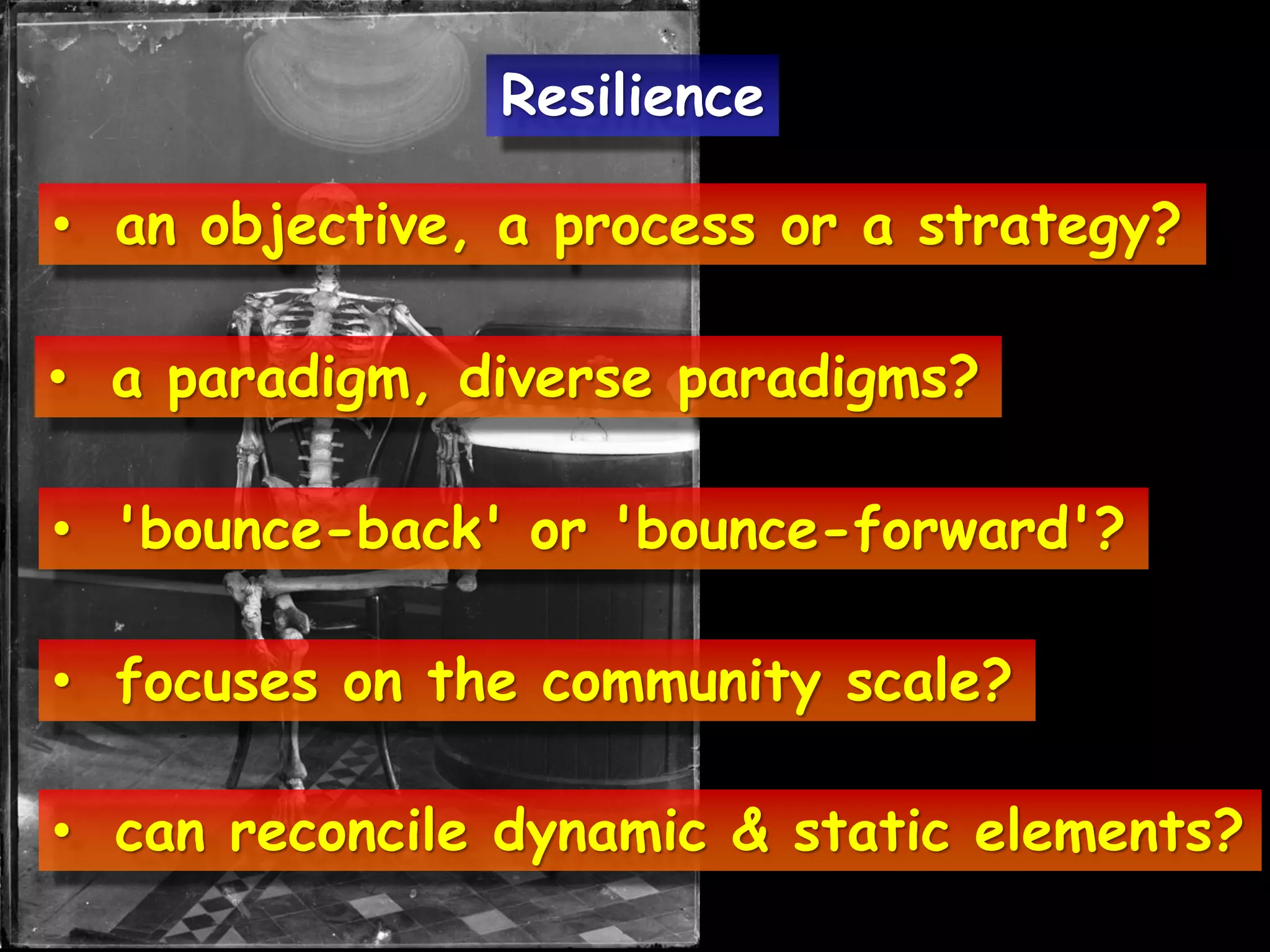
• an objective, a process or a strategy?
• a paradigm, diverse paradigms?
• 'bounce-back' or 'bounce-forward'?
• focuses on the community scale?
• can reconcile dynamic & static elements?
Resilience
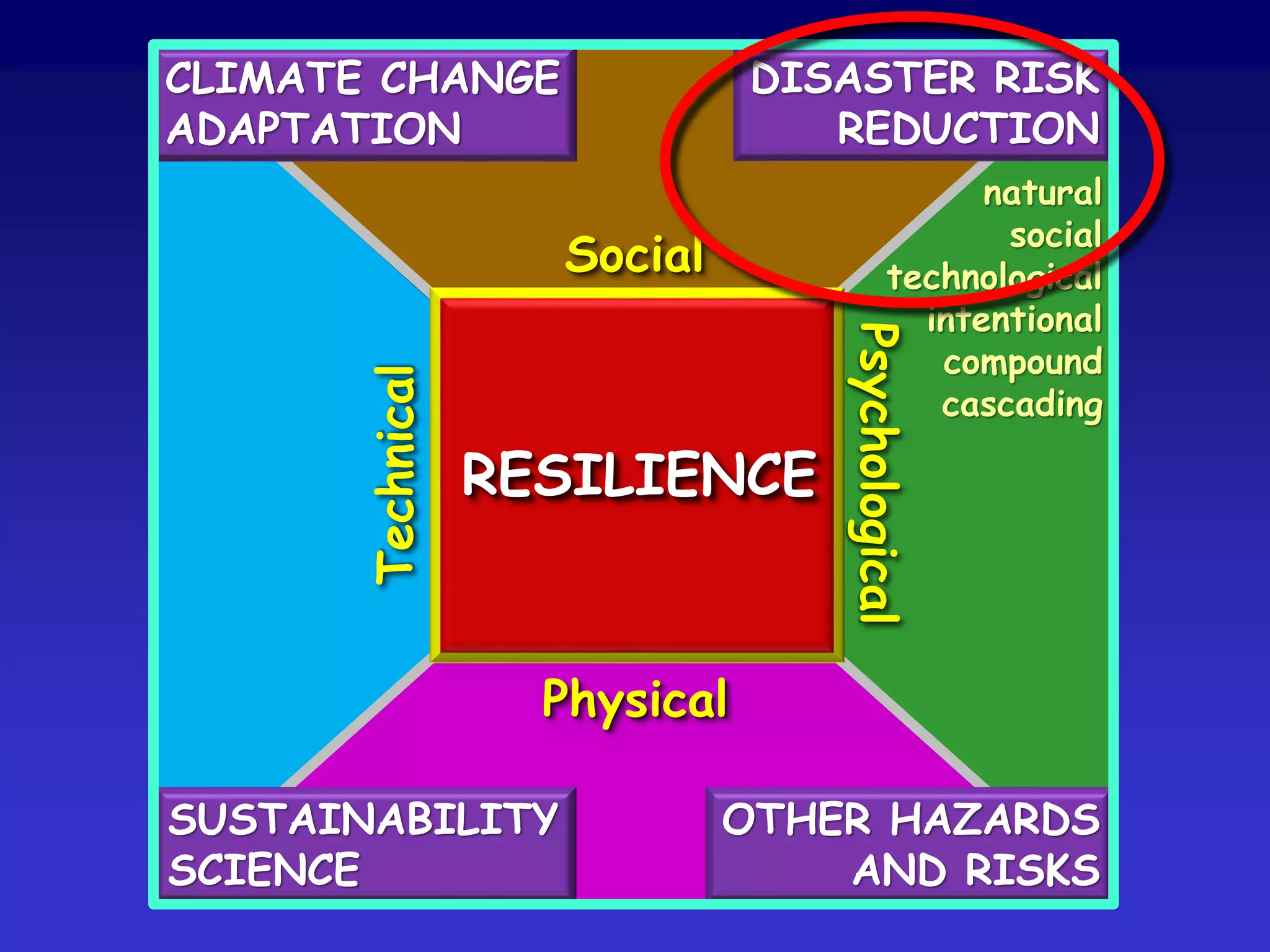
RESILIENCE
Social
Technical
Physical
Psychological
CLIMATE CHANGE
ADAPTATION
DISASTER RISK
REDUCTION
OTHER HAZARDS
AND RISKS
natural
social
technological
intentional
compound
cascading
SUSTAINABILITY
SCIENCE
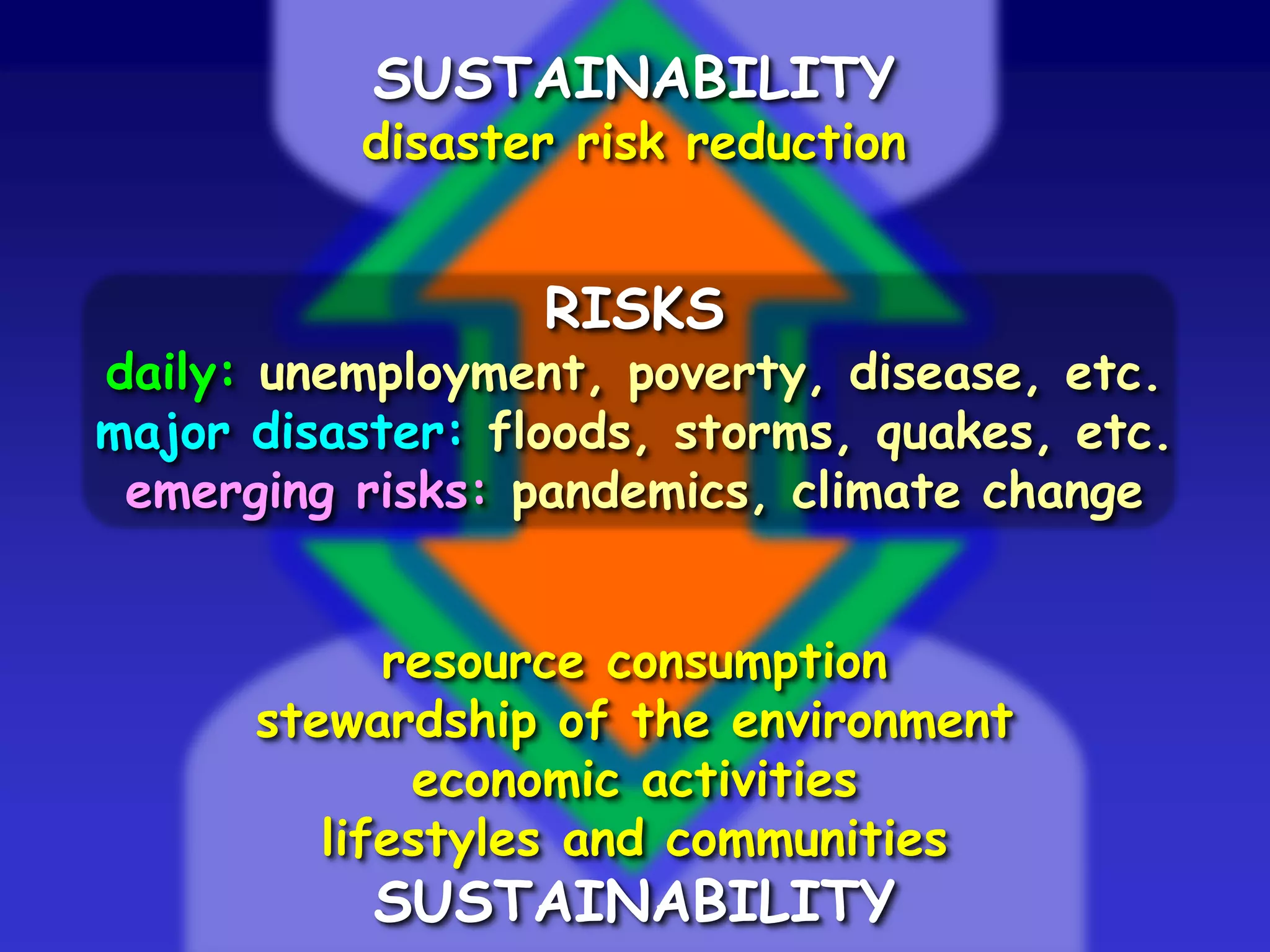
RISKS
daily: unemployment, poverty, disease, etc.
major disaster: floods, storms, quakes, etc.
emerging risks: pandemics, climate change
SUSTAINABILITY
disaster risk reduction
resource consumption
stewardship of the environment
economic activities
lifestyles and communities
SUSTAINABILITY
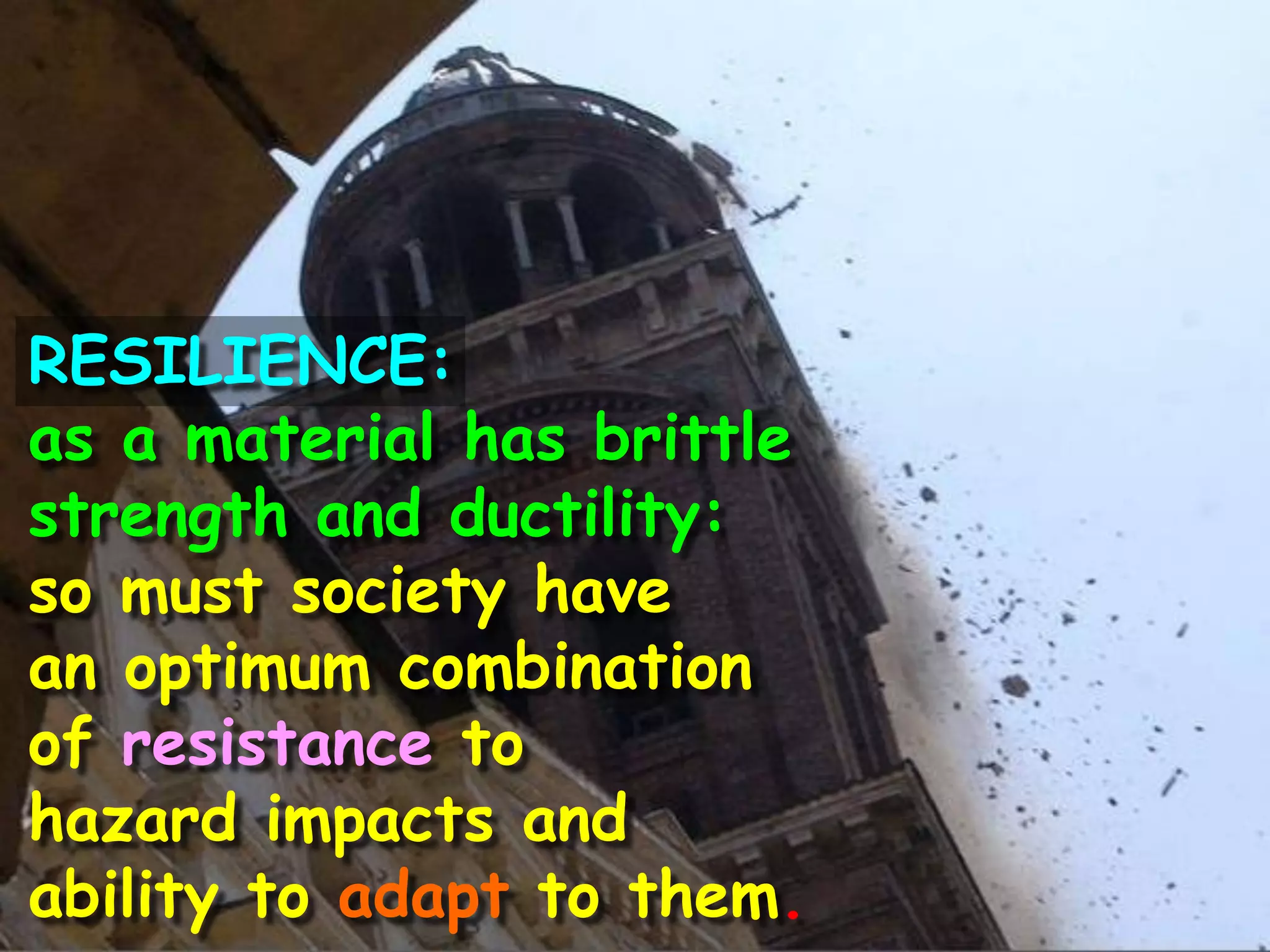
RESILIENCE:
as a material has brittle
strength and ductility:
so must society have
an optimum combination
of resistance to
hazard impacts and
ability to adapt to them.
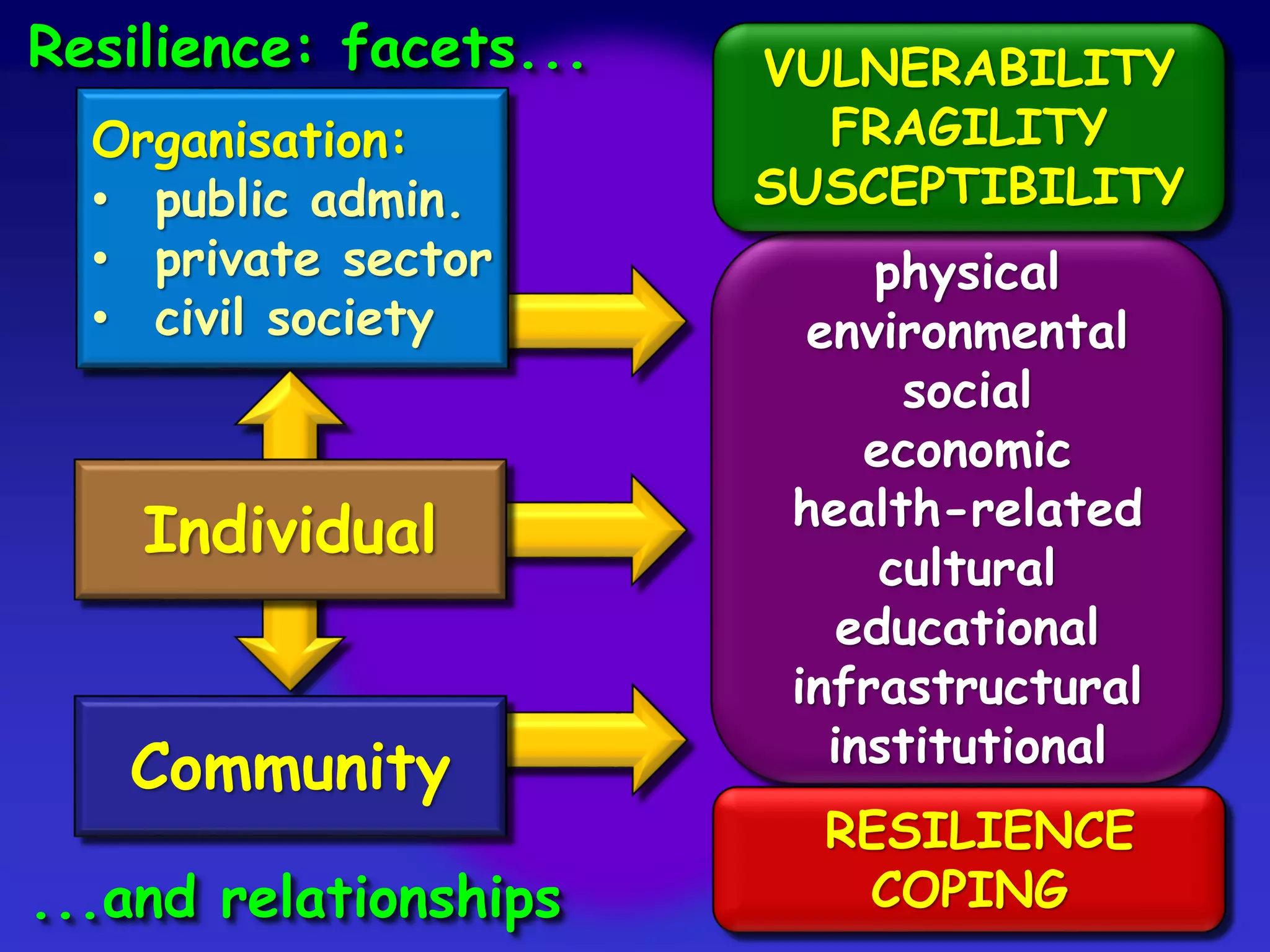
physical
environmental
social
economic
health-related
cultural
educational
infrastructural
institutional
RESILIENCE
COPING
VULNERABILITY
FRAGILITY
SUSCEPTIBILITY
Organisation:
• public admin.
• private sector
• civil society
Community
Individual
Resilience: facets...
...and relationships
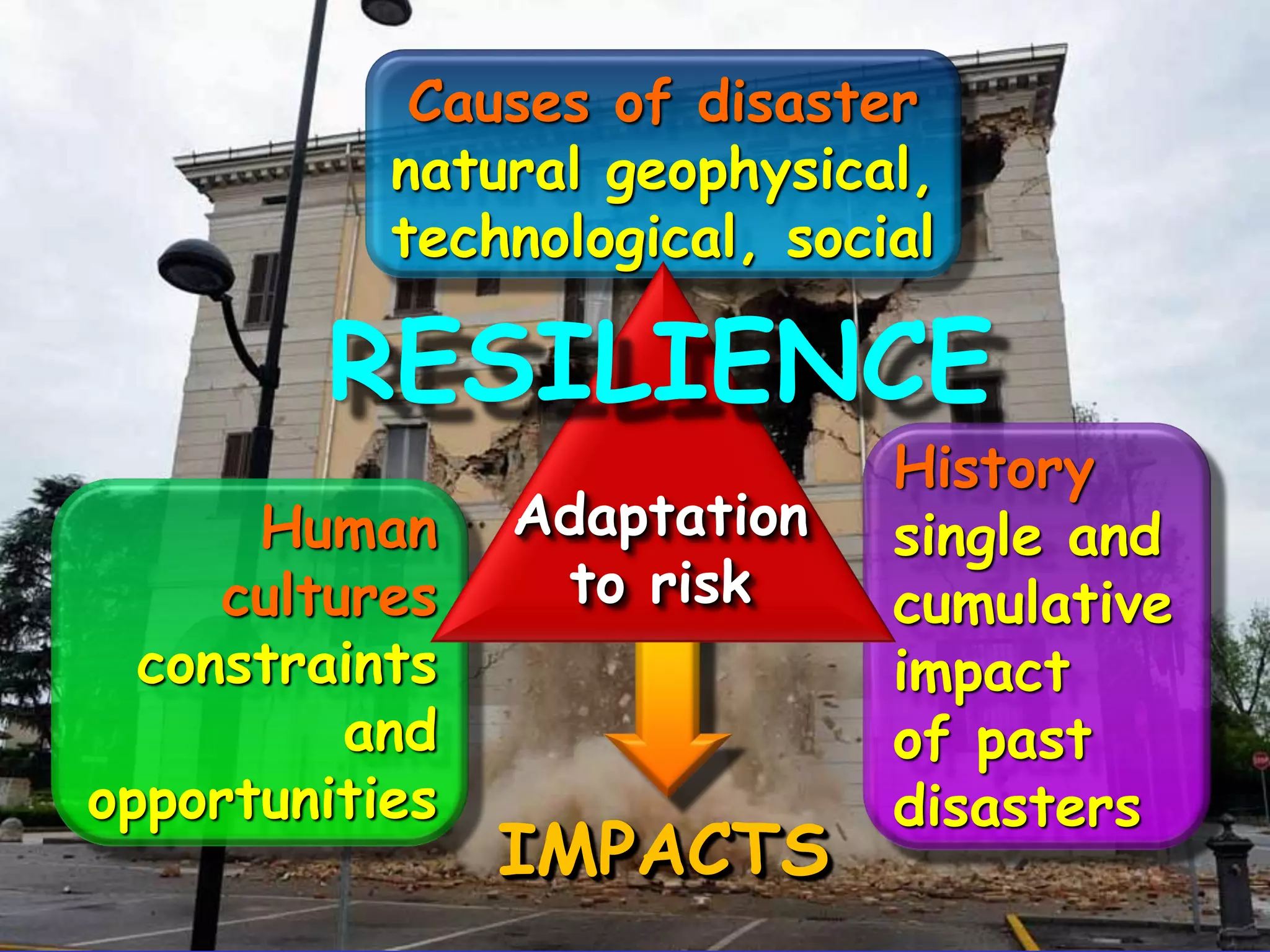
Causes of disaster
natural geophysical,
technological, social
History
single and
cumulative
impact
of past
disasters
Human
cultures
constraints
and
opportunities
IMPACTS
Adaptation
to risk
RESILIENCE
Long term
Short term
Emic components
Etic components
METAMORPHOSIS
OF CULTURE
Experiences of culture
[mass-media and consumer culture]
Accumulated cultural traits and beliefs
Inherited cultural background
Ideological
(non-scientific)
interpretations
of disaster
Learned
(scientific)
interpretations
of disaster
Conclusion: on
the shoulders
of giants
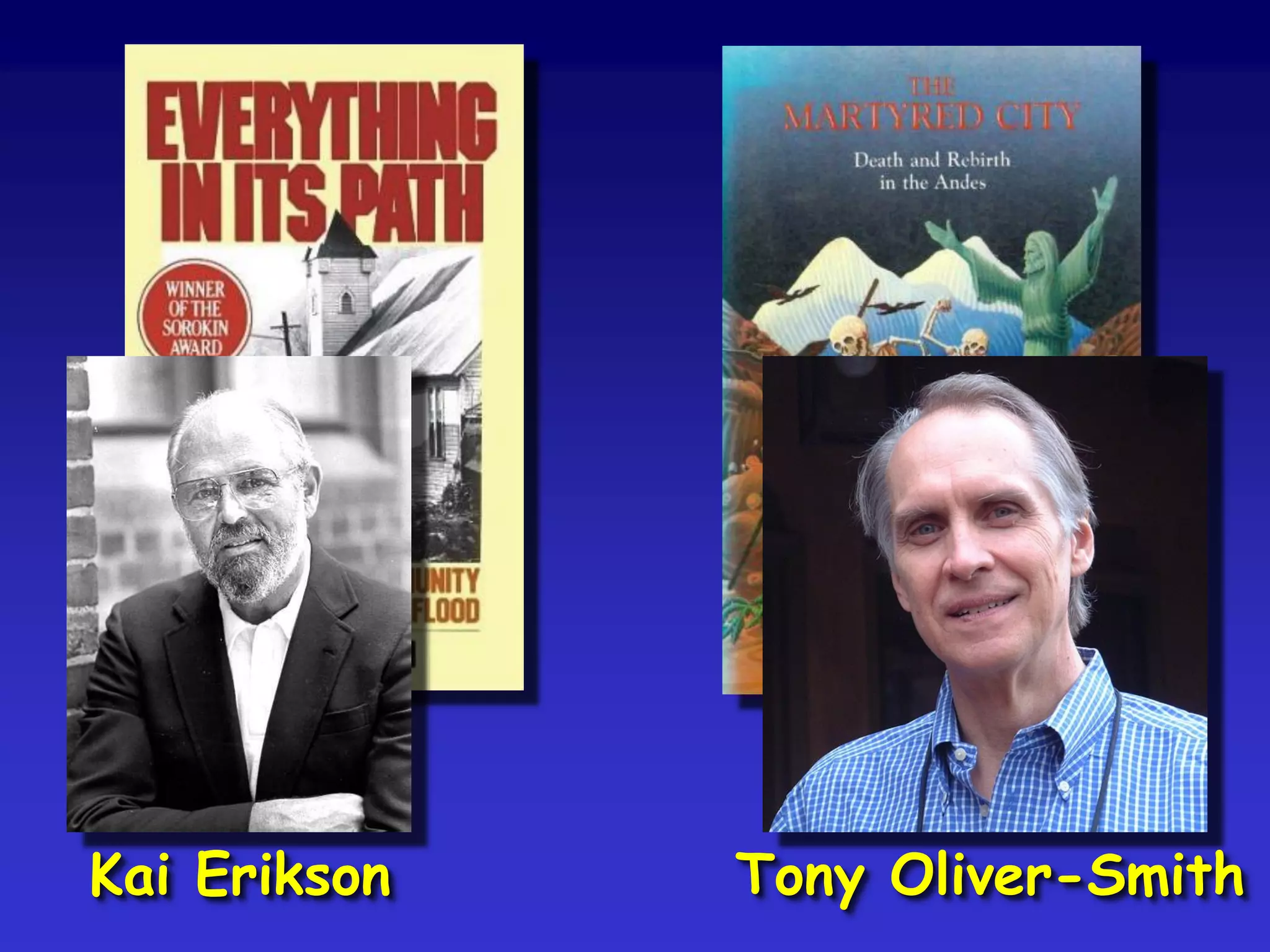
Tony Oliver-SmithKai Erikson
• as Kai Erikson noted, disaster shifts
our position on fundamental dimensions
• we live in the New Baroque Age
• characterised by tension of opposites
• massive cultural dynamism is
redefining the symbolism of disaster
• to understand disaster, we
need to be interdisciplinary
with boldness and ingenuity.
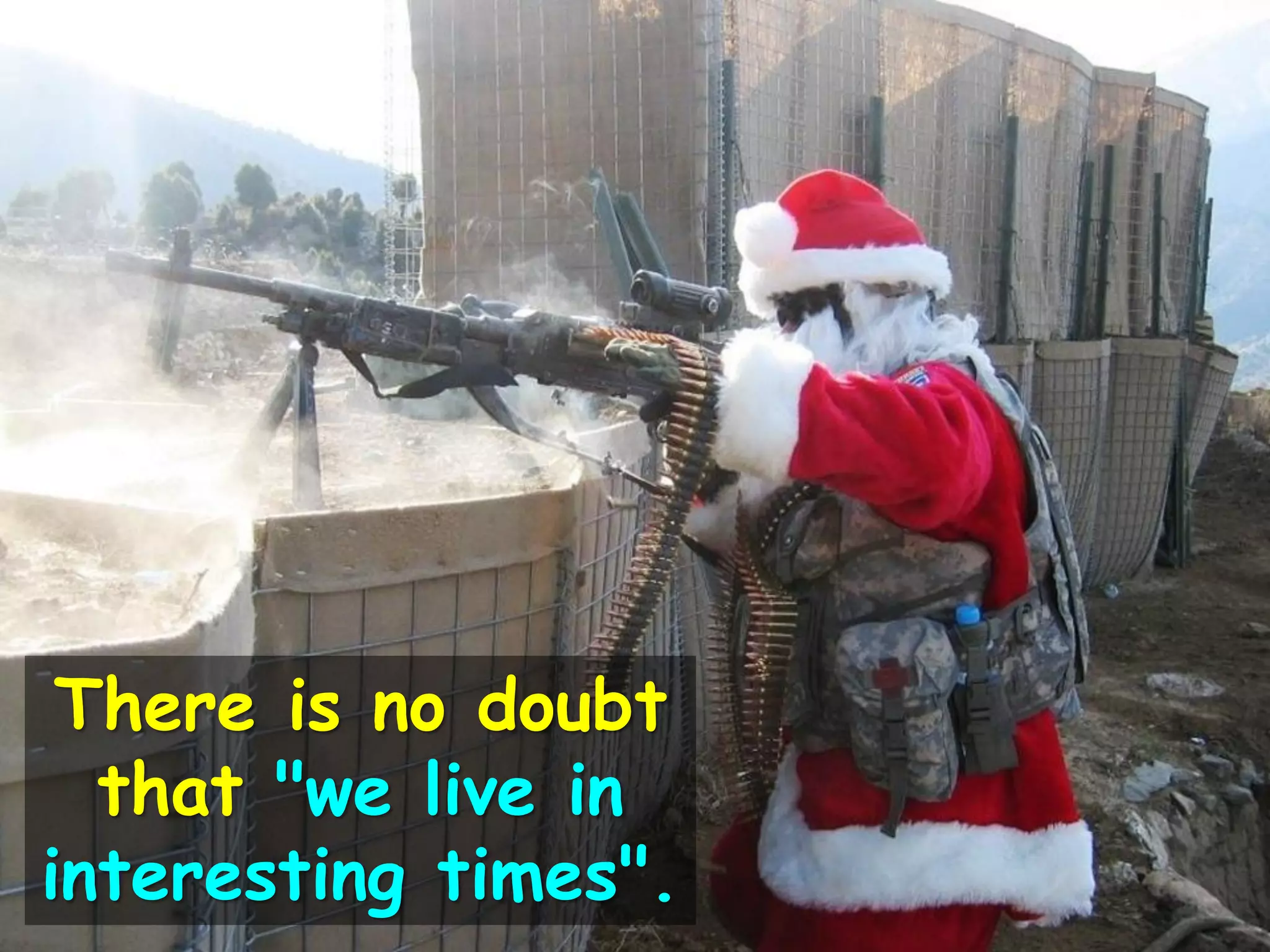
There is no doubt
that "we live in
interesting times".
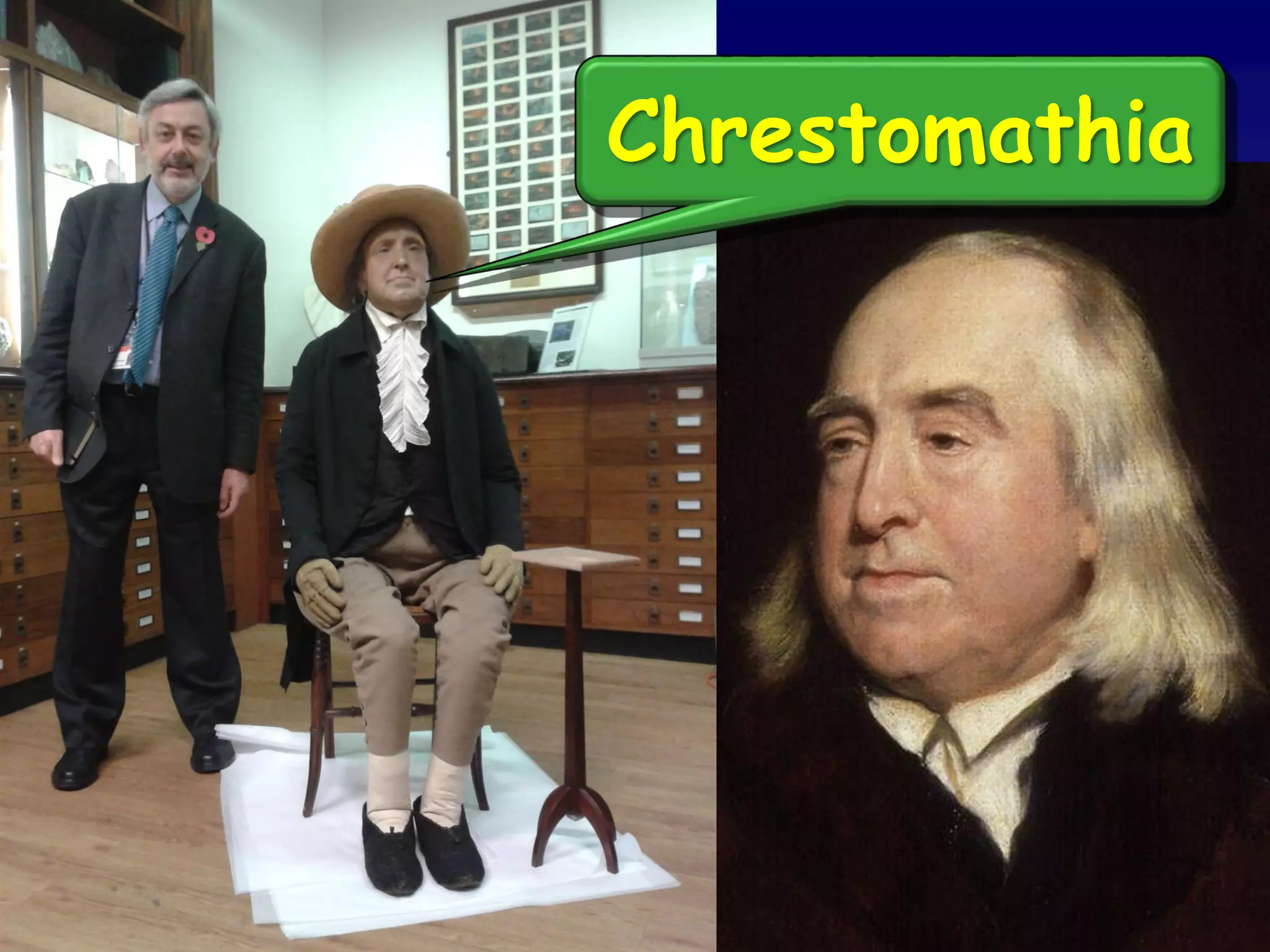
Chrestomathia
david.alexander@ucl.ac.uk
www.slideshare.net/dealexander
emergency-planning.blogspot.com
Ishinomaki, Japan

Around the world in eighty disasters - inaugural lecture