David Alexander
University College London
Perspectives on Higher Education
in Risk and Disaster Reduction
The long, arduous search
for a core curriculum
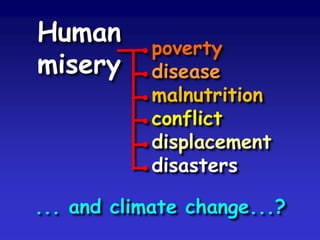
Human
misery
●poverty
●disease
●malnutrition
●conflict
●displacement
●disasters
... and climate change...?
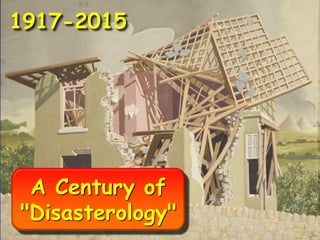
A Century of
"Disasterology"
1917-2015
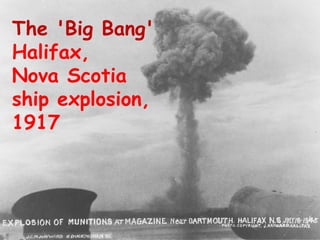
The 'Big Bang'
Halifax,
Nova Scotia
ship explosion,
1917
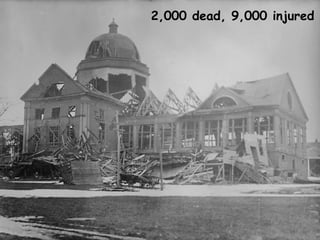
2,000 dead, 9,000 injured
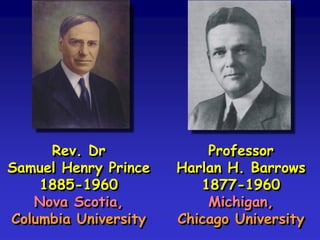
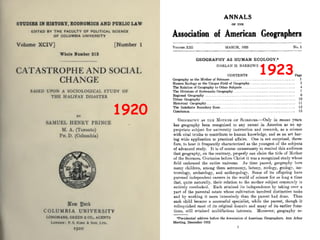
Rev. Dr
Samuel Henry Prince
1885-1960
Nova Scotia,
Columbia University
Professor
Harlan H. Barrows
1877-1960
Michigan,
Chicago University
1920
1923
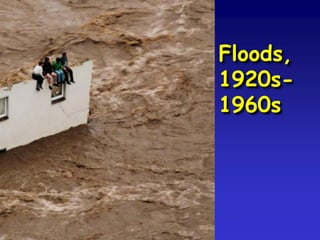
Floods,
1920s-
1960s
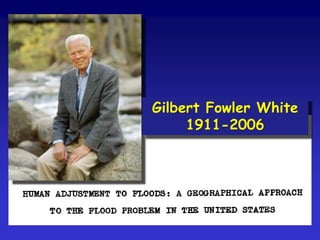
Gilbert Fowler White
1911-2006
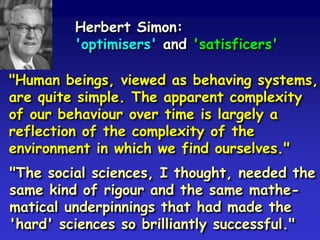
Herbert Simon:
'optimisers' and 'satisficers'
"Human beings, viewed as behaving systems,
are quite simple. The apparent complexity
of our behaviour over time is largely a
reflection of the complexity of the
environment in which we find ourselves."
"The social sciences, I thought, needed the
same kind of rigour and the same mathe-
matical underpinnings that had made the
'hard' sciences so brilliantly successful."
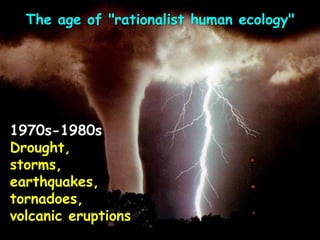
1970s-1980s
Drought,
storms,
earthquakes,
tornadoes,
volcanic eruptions
The age of "rationalist human ecology"
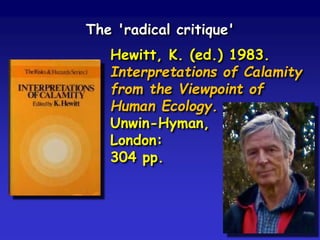
Hewitt, K. (ed.) 1983.
Interpretations of Calamity
from the Viewpoint of
Human Ecology.
Unwin-Hyman,
London:
304 pp.
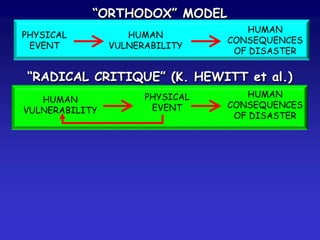
The 'radical critique'
HUMAN
CONSEQUENCES
OF DISASTER
“ORTHODOX” MODEL
PHYSICAL
EVENT
HUMAN
VULNERABILITY
“RADICAL CRITIQUE” (K. HEWITT et al.)
HUMAN
CONSEQUENCES
OF DISASTER
HUMAN
VULNERABILITY
PHYSICAL
EVENT
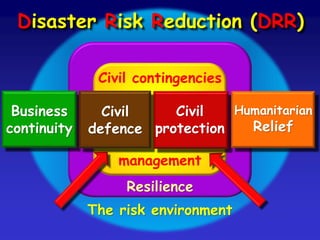
Civil contingencies
Resilience
management
The risk environment
Business
continuity
Civil
defence
Disaster Risk Reduction (DRR)
Civil
protection
Humanitarian
Relief
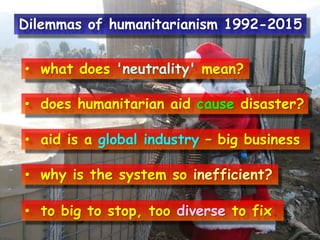
• what does 'neutrality' mean?
• does humanitarian aid cause disaster?
• aid is a global industry – big business
• why is the system so inefficient?
• to big to stop, too diverse to fix.
Dilemmas of humanitarianism 1992-2015
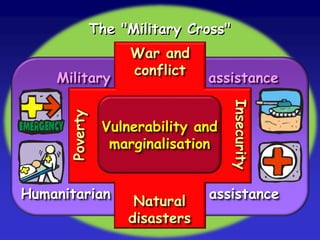
War and
conflict
Poverty
Natural
disasters
Insecurity
Vulnerability and
marginalisation
Military
Humanitarian assistance
assistance
The "Military Cross"
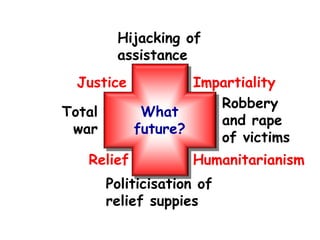
Justice Impartiality
Humanitarianism
Hijacking of
assistance
Relief
Robbery
and rape
of victims
Total
war
Politicisation of
relief suppies
What
future?
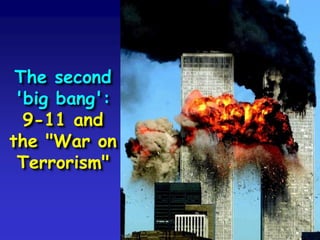
The second
'big bang':
9-11 and
the "War on
Terrorism"
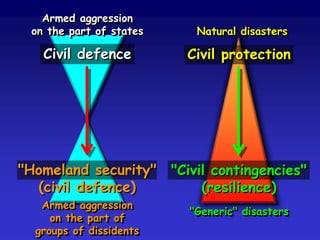
Armed aggression
on the part of states
Civil defence
Natural disasters
Civil protection
Armed aggression
on the part of
groups of dissidents
"Homeland security"
(civil defence)
"Generic" disasters
"Civil contingencies"
(resilience)
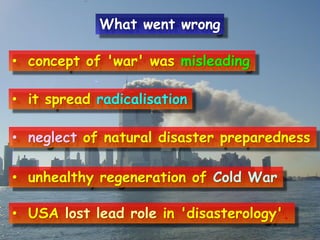
• concept of 'war' was misleading
• it spread radicalisation
• neglect of natural disaster preparedness
• unhealthy regeneration of Cold War
• USA lost lead role in 'disasterology'.
What went wrong
The entry onto the stage of resilience
1981-2015
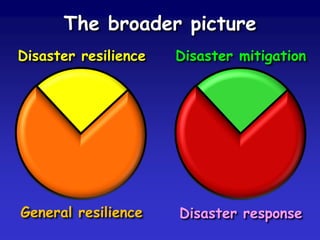
General resilience
Disaster resilience Disaster mitigation
Disaster response
The broader picture
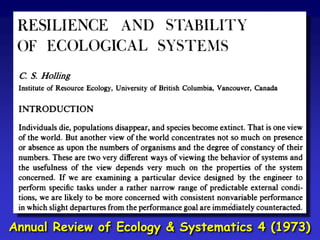
Prof. Crawford
Stanley ('Buzz')
Holling
[b. 1930],
Canadian
systems
ecologist,
University
of Florida
Annual Review of Ecology & Systematics 4 (1973)
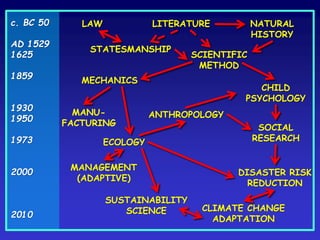
LAW
STATESMANSHIP
LITERATURE
SCIENTIFIC
METHOD
MECHANICS
MANU-
FACTURING
ECOLOGY
MANAGEMENT
(ADAPTIVE)
CHILD
PSYCHOLOGY
ANTHROPOLOGY
SOCIAL
RESEARCH
DISASTER RISK
REDUCTION
SUSTAINABILITY
SCIENCE CLIMATE CHANGE
ADAPTATION
c. BC 50
AD 1529
1625
1859
1930
1950
1973
2000
2010
NATURAL
HISTORY
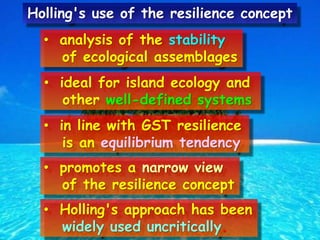
• analysis of the stability
of ecological assemblages
• ideal for island ecology and
other well-defined systems
• in line with GST resilience
is an equilibrium tendency
• promotes a narrow view
of the resilience concept
• Holling's approach has been
widely used uncritically.
Holling's use of the resilience concept
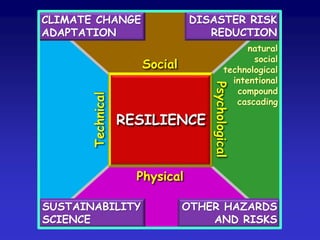
RESILIENCE
Social
Technical
Physical
Psychological
CLIMATE CHANGE
ADAPTATION
DISASTER RISK
REDUCTION
OTHER HAZARDS
AND RISKS
natural
social
technological
intentional
compound
cascading
SUSTAINABILITY
SCIENCE
• an objective, a process or a strategy?
• a paradigm, diverse paradigms?
• 'bounce-back' or 'bounce-forward'?
• focuses on the community scale
• can reconcile dynamic & static elements.
Resilience
RESILIENCE:
as a material has brittle
strength and ductility:
society must have an optimum
combination of resistance to
hazard impacts and ability
to adapt to them.
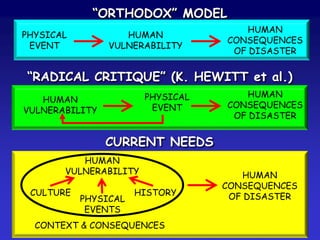
HUMAN
CONSEQUENCES
OF DISASTER
“ORTHODOX” MODEL
PHYSICAL
EVENT
HUMAN
VULNERABILITY
“RADICAL CRITIQUE” (K. HEWITT et al.)
HUMAN
CONSEQUENCES
OF DISASTER
HUMAN
VULNERABILITY
PHYSICAL
EVENT
CURRENT NEEDS
HUMAN
CONSEQUENCES
OF DISASTER
HUMAN
VULNERABILITY
CULTURE HISTORY
PHYSICAL
EVENTS
CONTEXT & CONSEQUENCES
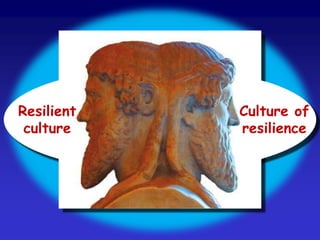
Resilient
culture
Culture of
resilience
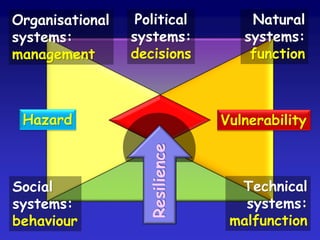
A model of culture
Organisational
systems:
management
Social
systems:
behaviour
Natural
systems:
function
Technical
systems:
malfunction
VulnerabilityHazard
Resilience
Political
systems:
decisions
Long term
Short term
Emic components
Etic components
METAMORPHOSIS
OF CULTURE
Experiences of culture
[mass-media and consumer culture]
Accumulated cultural traits and beliefs
Inherited cultural background
Ideological
(non-scientific)
interpretations
of disaster
Learned
(scientific)
interpretations
of disaster
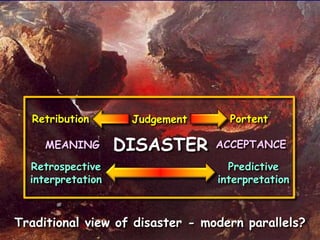
Retribution Judgement Portent
DISASTERMEANING ACCEPTANCE
Retrospective
interpretation
Predictive
interpretation
Traditional view of disaster - modern parallels?
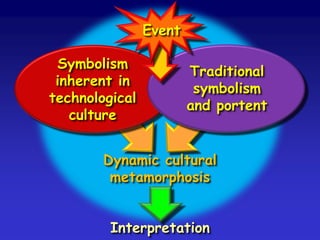
Symbolism
inherent in
technological
culture
Traditional
symbolism
and portent
Event
Interpretation
Dynamic cultural
metamorphosis
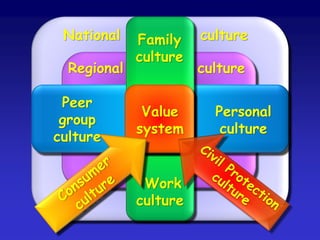
Value
system
Family
culture
Work
culture
Peer
group
culture
Personal
culture
National culture
Regional culture
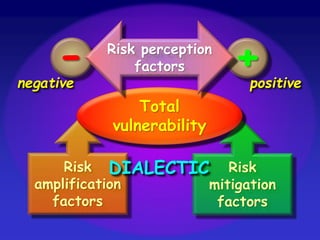
Risk
amplification
factors
Risk
mitigation
factors
Total
vulnerability
Risk perception
factors- +positivenegative
DIALECTIC
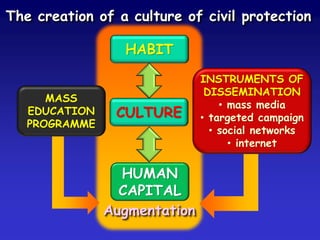
INSTRUMENTS OF
DISSEMINATION
• mass media
• targeted campaign
• social networks
• internet
Augmentation
MASS
EDUCATION
PROGRAMME
HUMAN
CAPITAL
HABIT
CULTURE
The creation of a culture of civil protection
What next?
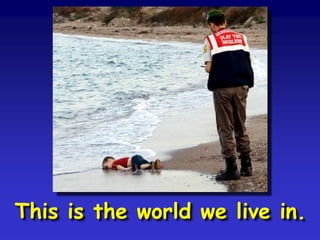
This is the world we live in.
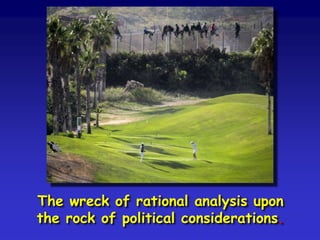
The wreck of rational analysis upon
the rock of political considerations.
Evidence can be:-
• precise
• decisive
• equivocal
• ambiguous
• puzzling
• uninterpretable
(evidence of what?)
• ignored
• distorted
• used selectively.
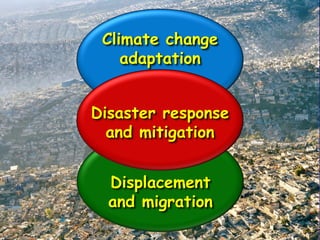
Displacement
and migration
Climate change
adaptation
Disaster response
and mitigation
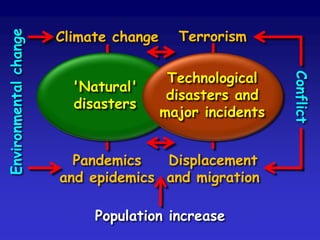
Climate change Terrorism
Displacement
and migration
Pandemics
and epidemics
Population increase
Environmentalchange
Conflict
Technological
disasters and
major incidents
'Natural'
disasters
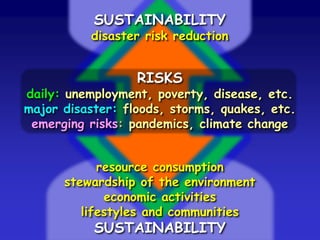
RISKS
daily: unemployment, poverty, disease, etc.
major disaster: floods, storms, quakes, etc.
emerging risks: pandemics, climate change
SUSTAINABILITY
disaster risk reduction
resource consumption
stewardship of the environment
economic activities
lifestyles and communities
SUSTAINABILITY
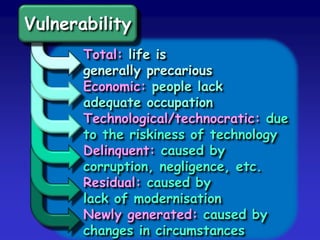
Vulnerability
Total: life is
generally precarious
Economic: people lack
adequate occupation
Technological/technocratic: due
to the riskiness of technology
Delinquent: caused by
corruption, negligence, etc.
Residual: caused by
lack of modernisation
Newly generated: caused by
changes in circumstances
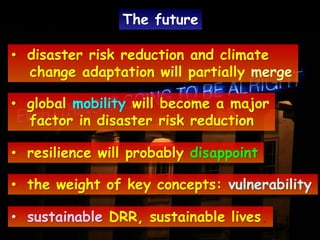
• disaster risk reduction and climate
change adaptation will partially merge
• global mobility will become a major
factor in disaster risk reduction
• resilience will probably disappoint
• the weight of key concepts: vulnerability
• sustainable DRR, sustainable lives.
The future
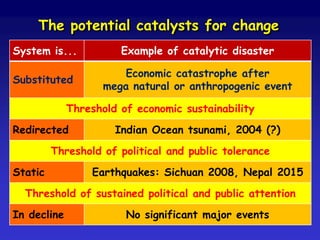
System is... Example of catalytic disaster
Substituted
Economic catastrophe after
mega natural or anthropogenic event
Threshold of economic sustainability
Redirected Indian Ocean tsunami, 2004 (?)
Threshold of political and public tolerance
Static Earthquakes: Sichuan 2008, Nepal 2015
Threshold of sustained political and public attention
In decline No significant major events
The potential catalysts for change
Conclusions
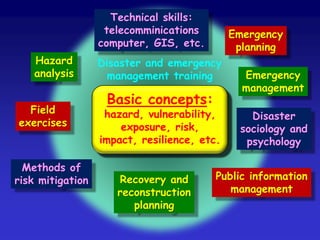
Basic concepts:
hazard, vulnerability,
exposure, risk,
impact, resilience, etc.
Hazard
analysis
Technical skills:
telecomminications
computer, GIS, etc.
Emergency
planning
Emergency
management
Disaster
sociology and
psychology
Public information
management
Recovery and
reconstruction
planning
Methods of
risk mitigation
Field
exercises
Disaster and emergency
management training
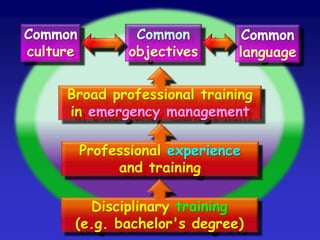
Broad professional training
in emergency management
Professional experience
and training
Disciplinary training
(e.g. bachelor's degree)
Common
culture
Common
language
Common
objectives
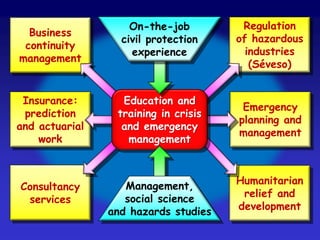
Regulation
of hazardous
industries
(Séveso)
Consultancy
services
Business
continuity
management
Insurance:
prediction
and actuarial
work
Emergency
planning and
management
Humanitarian
relief and
development
Education and
training in crisis
and emergency
management
On-the-job
civil protection
experience
Management,
social science
and hazards studies
Recognition and
an institutional
role for the
professional figure
Certification
of competence
Training
programmes
Emerging
professional
figure
Policies and
legislation
Research Experience
Organi-
sation
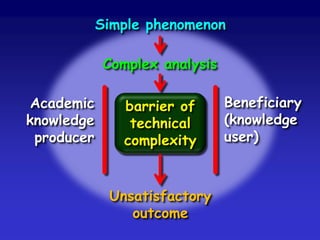
Academic
knowledge
producer
Simple phenomenon
Complex analysis
Beneficiary
(knowledge
user)
barrier of
technical
complexity
Unsatisfactory
outcome
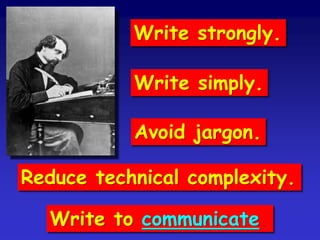
Write strongly.
Write simply.
Avoid jargon.
Reduce technical complexity.
Write to communicate.
david.alexander@ucl.ac.uk
www.slideshare.net/dealexander
emergency-planning.blogspot.com

Perspectives on Higher Education in DRR