Enhancing Resilience
David Alexander
University College London
The Philippines, Japan and Mexico:
the Odyssey of a disasterologist...
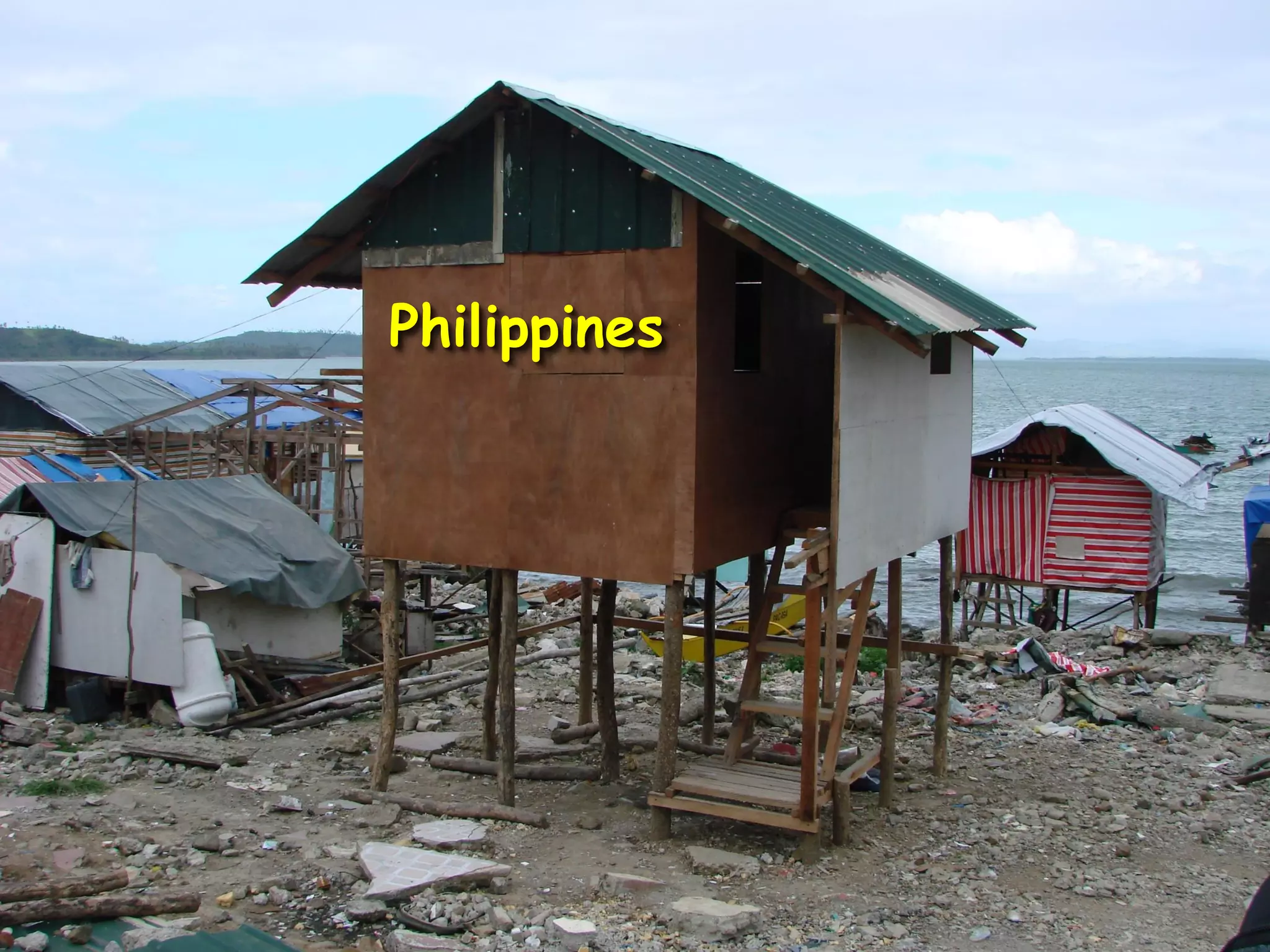
Philippines
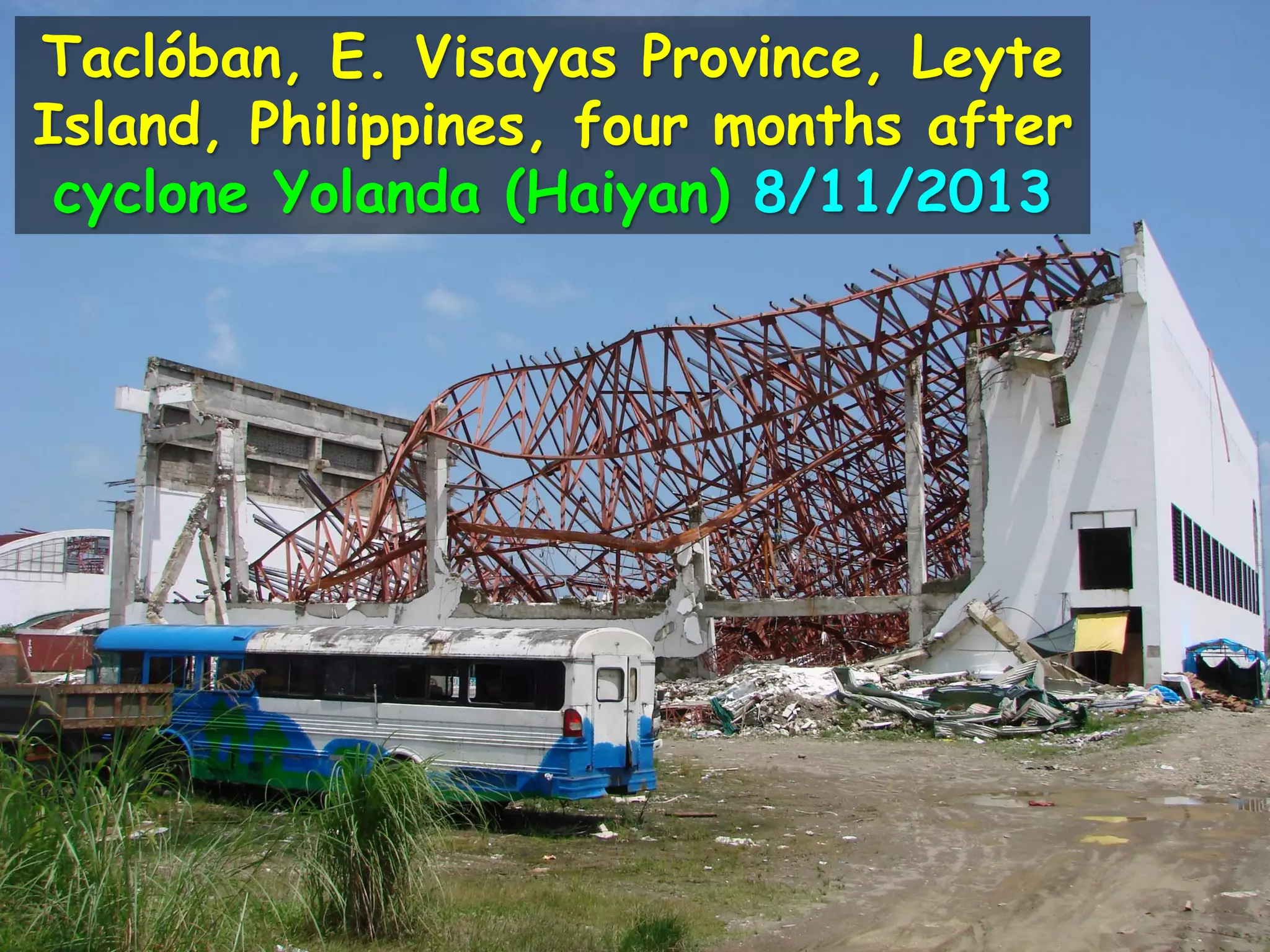
Taclóban, E. Visayas Province, Leyte
Island, Philippines, four months after
cyclone Yolanda (Haiyan) 8/11/2013
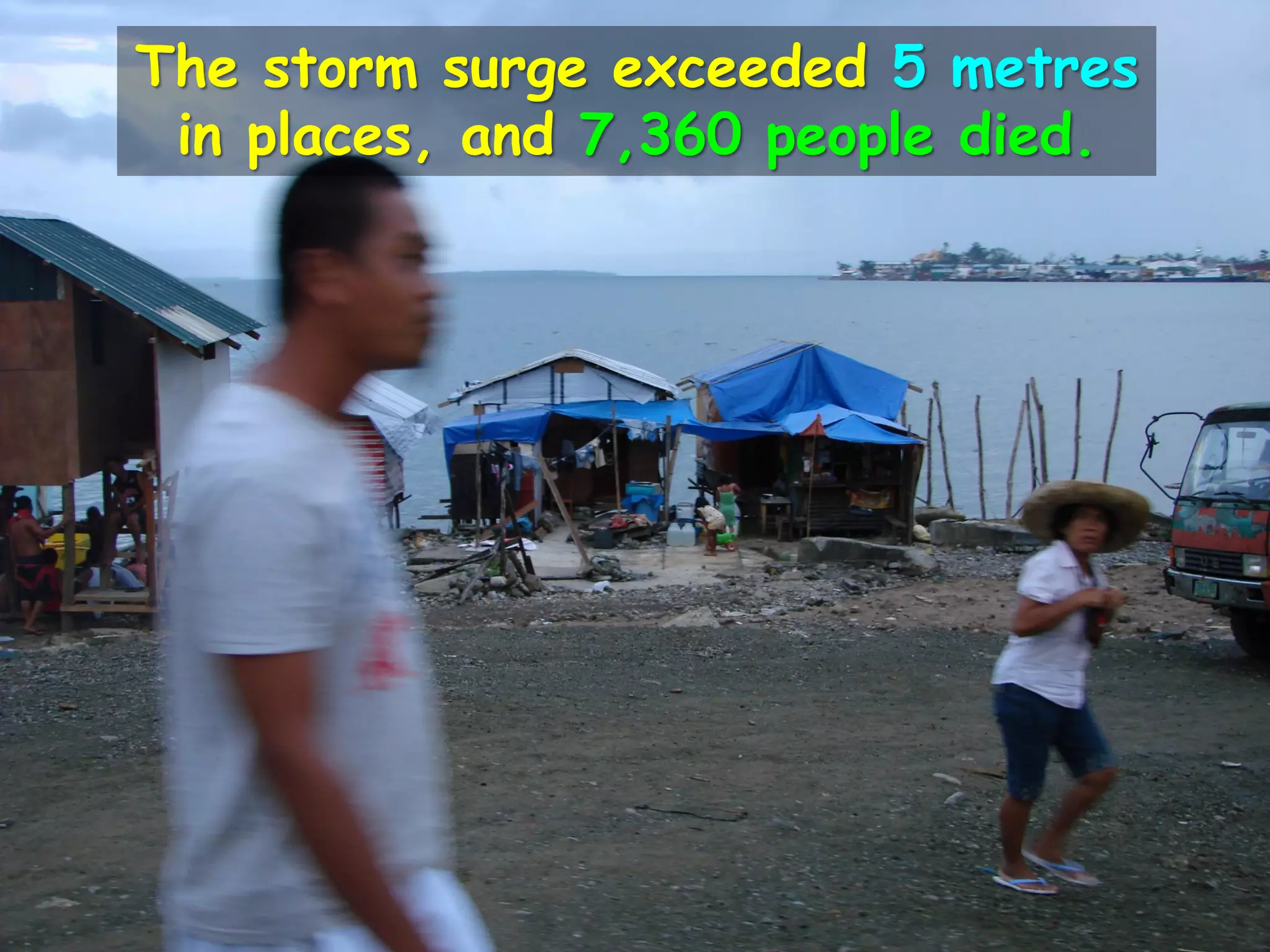
The storm surge exceeded 5 metres
in places, and 7,360 people died.
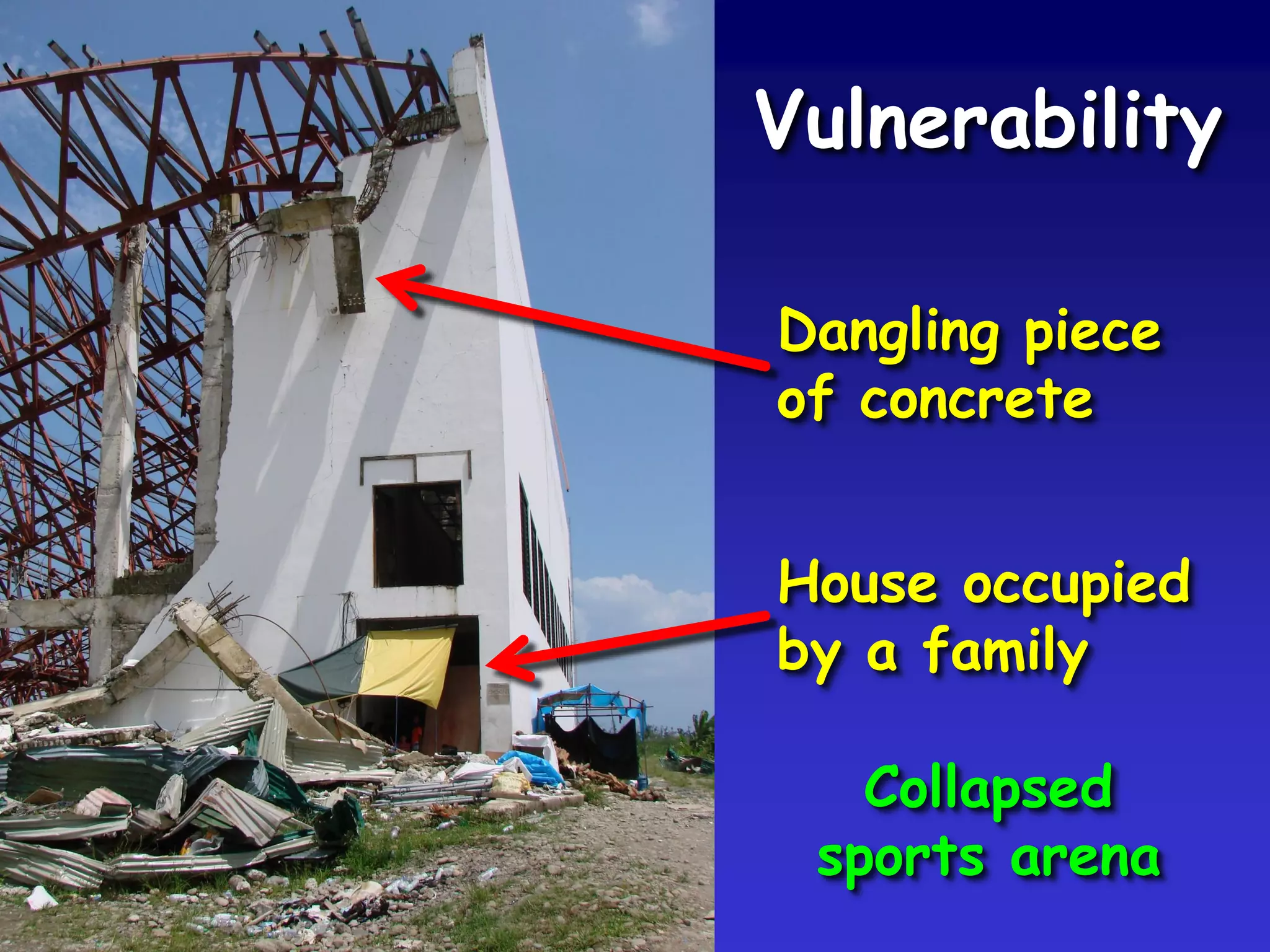
House occupied
by a family
Dangling piece
of concrete
Vulnerability
Collapsed
sports arena
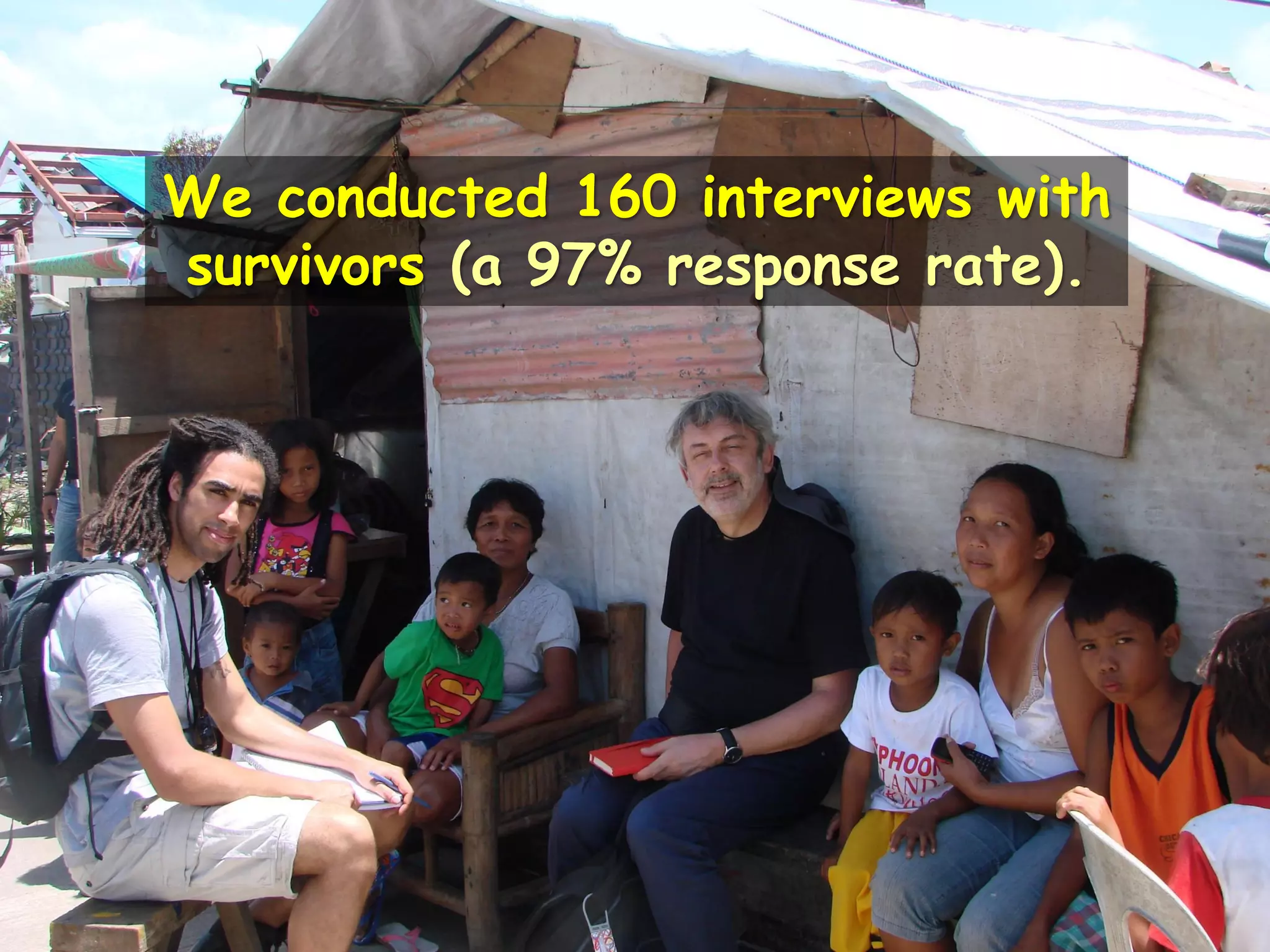
We conducted 160 interviews with
survivors (a 97% response rate).
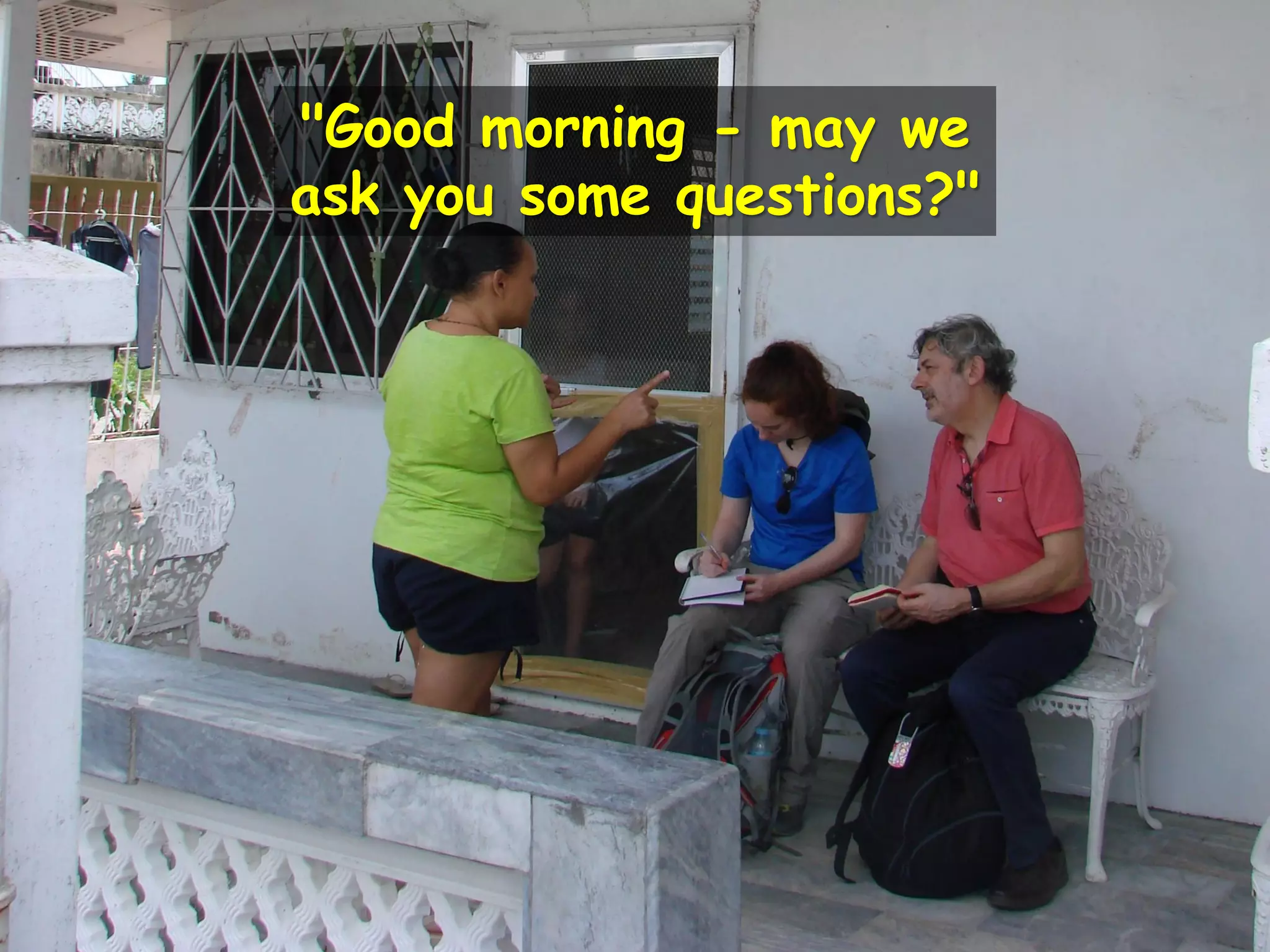
"Good morning - may we
ask you some questions?"
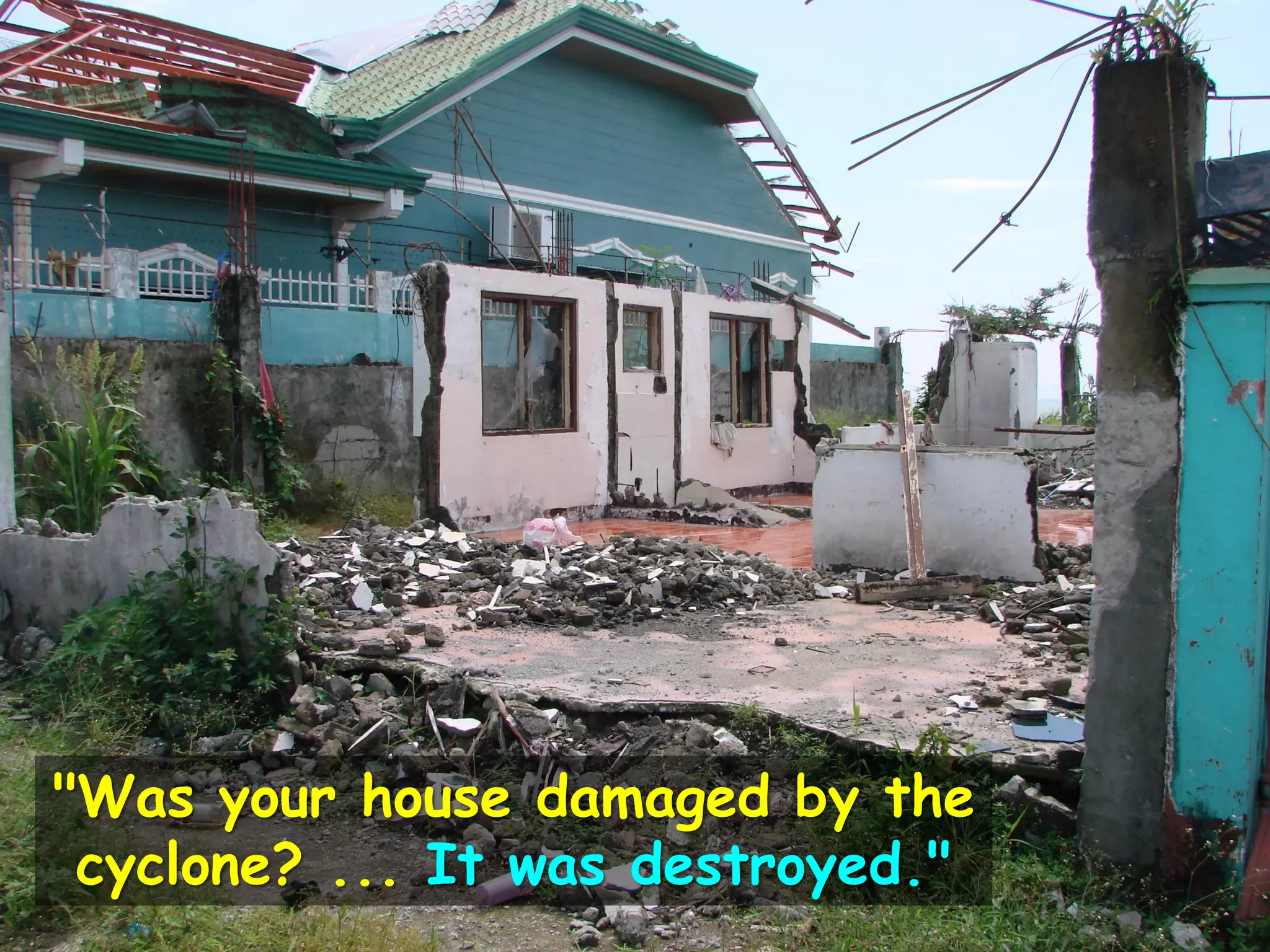
"Was your house damaged by the
cyclone? ... It was destroyed."
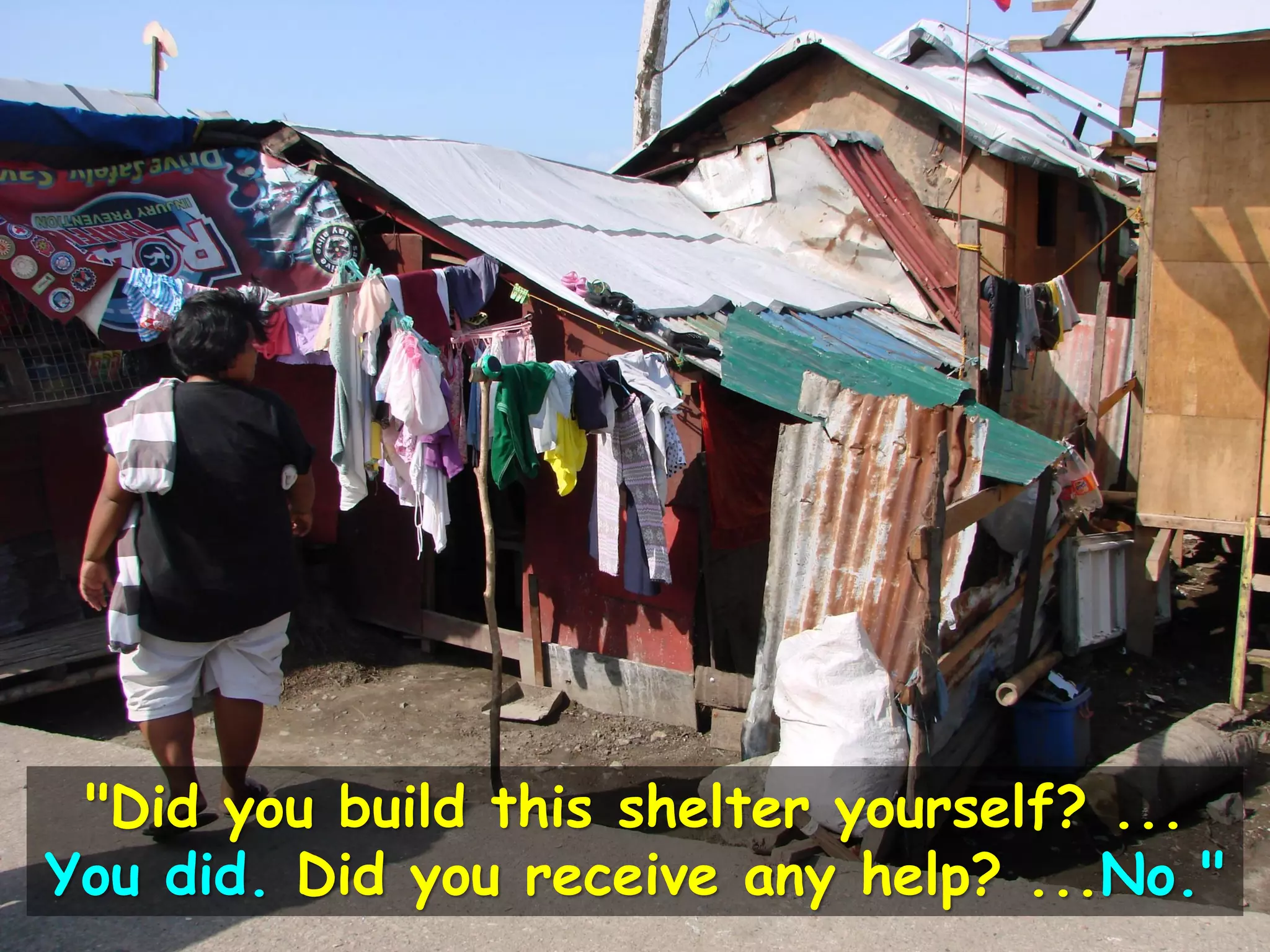
"Did you build this shelter yourself? ...
You did. Did you receive any help? ...No."
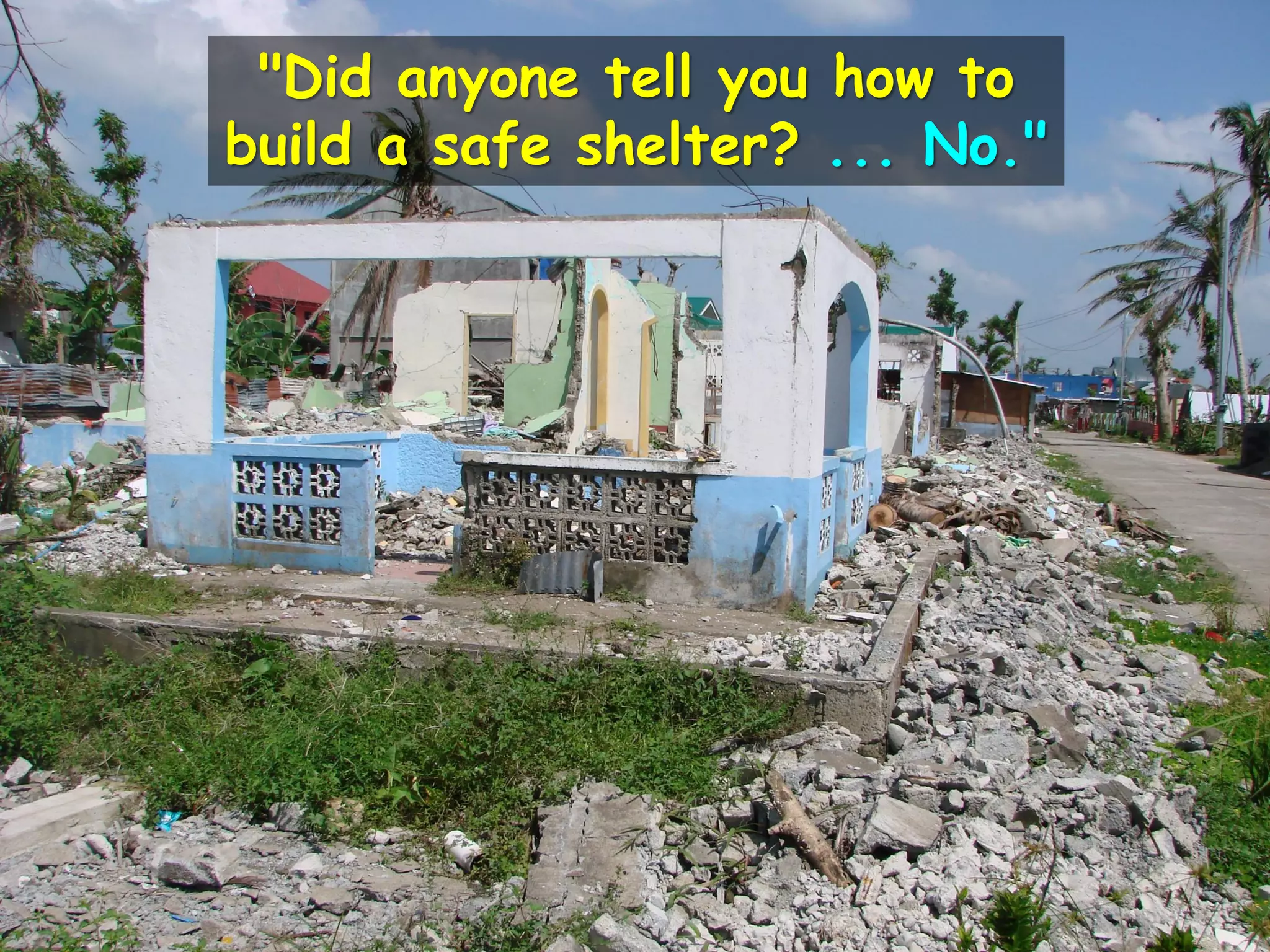
"Did anyone tell you how to
build a safe shelter? ... No."
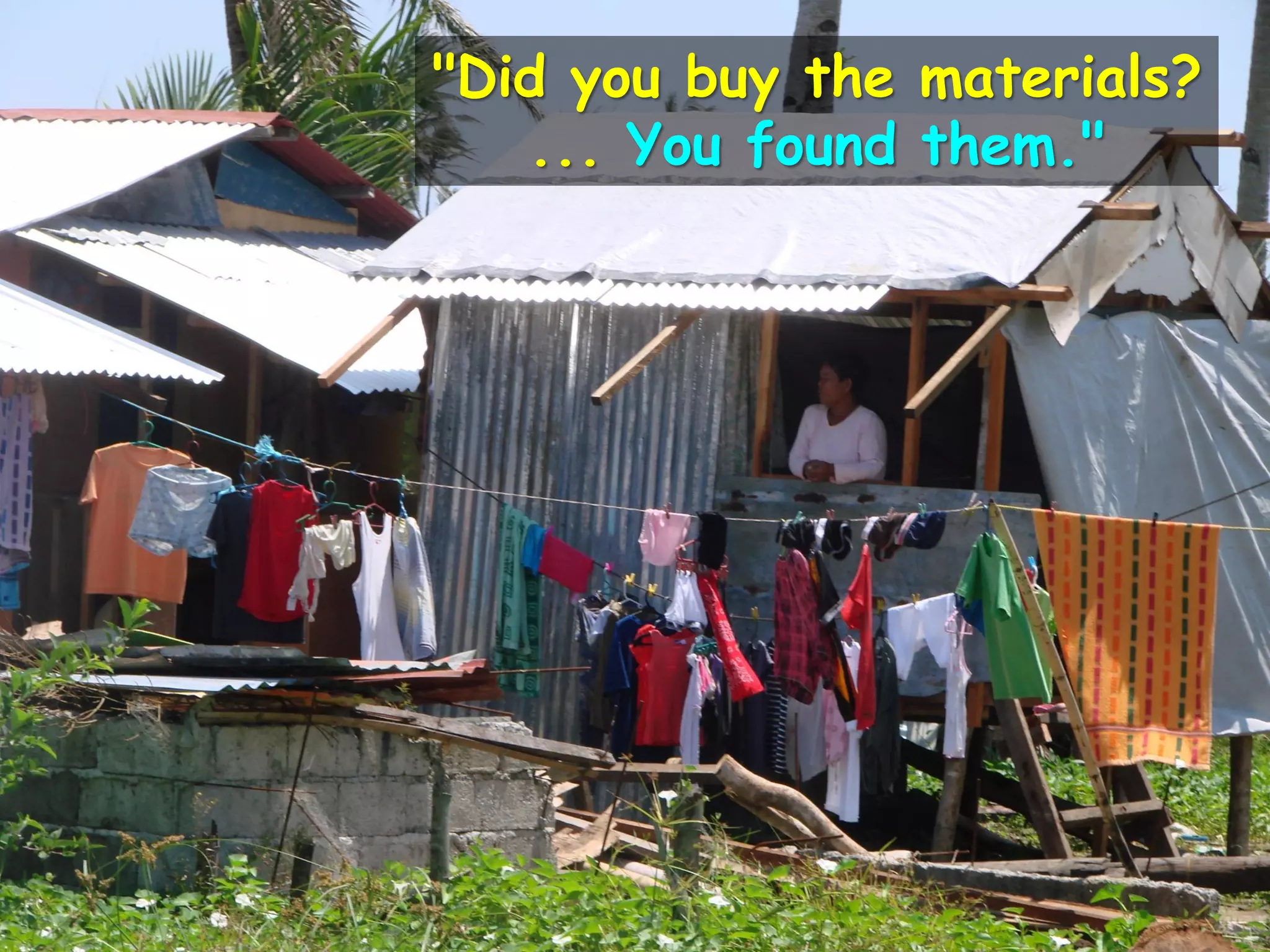
"Did you buy the materials?
... You found them."
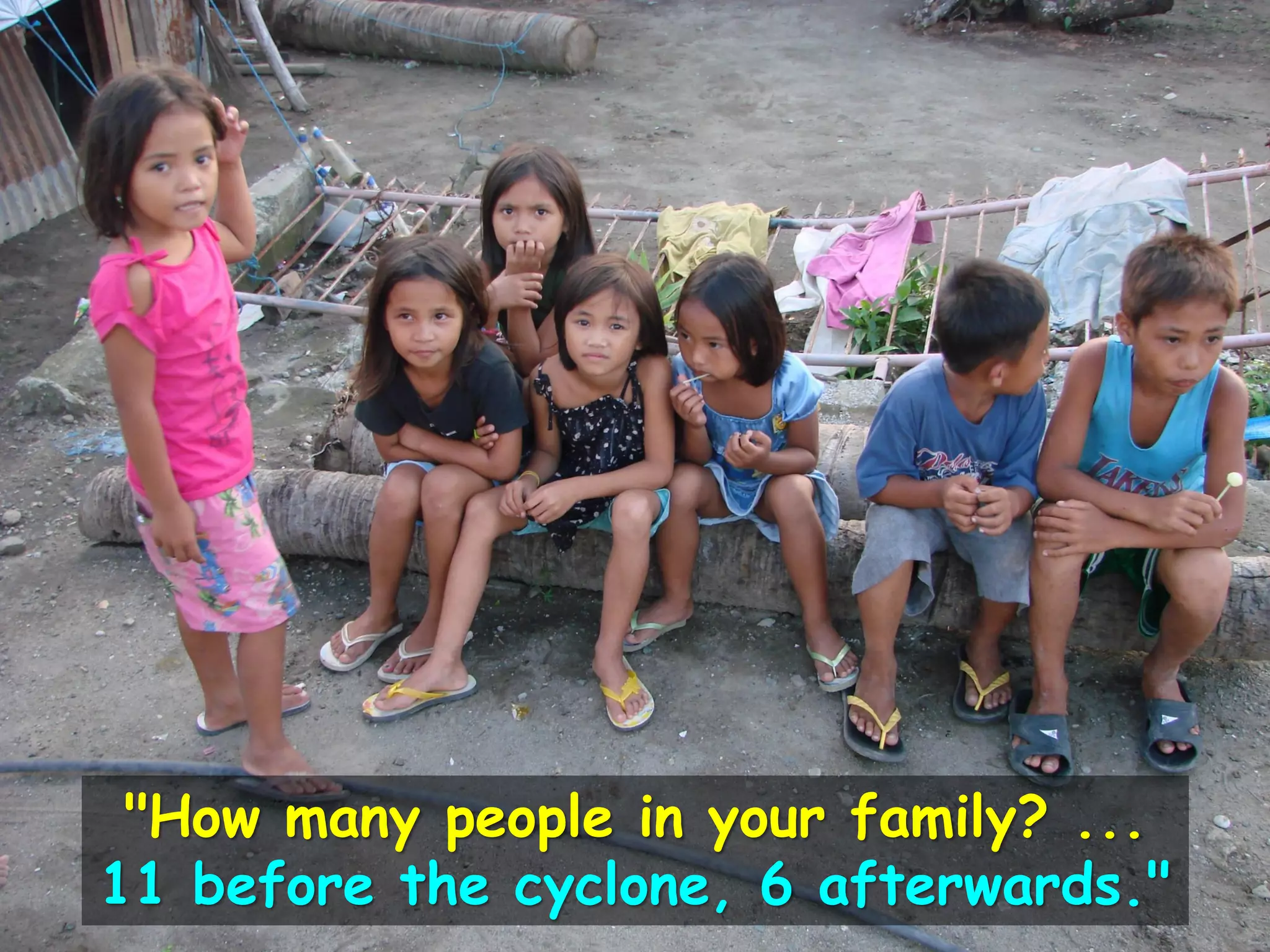
"How many people in your family? ...
11 before the cyclone, 6 afterwards."
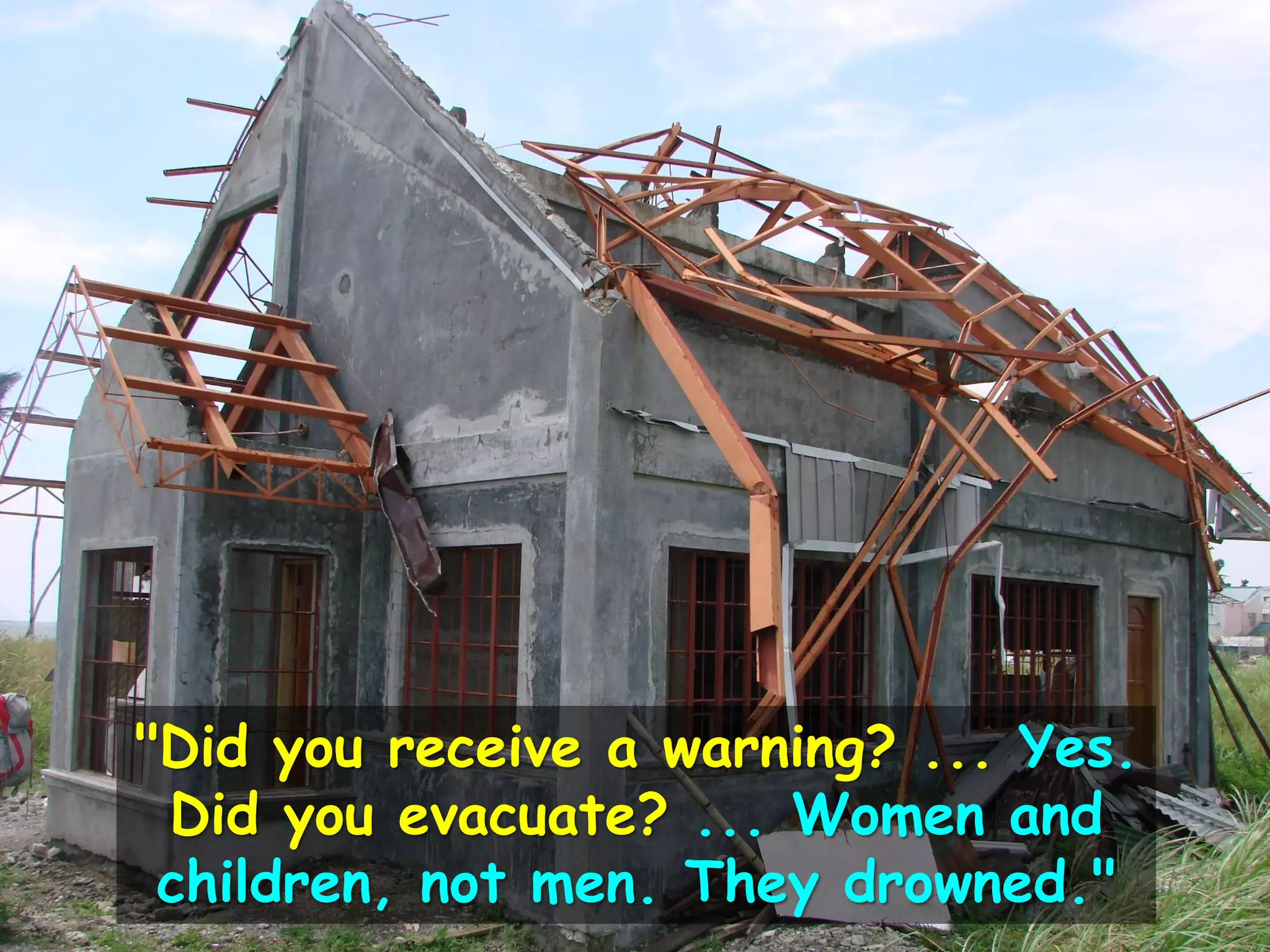
"Did you receive a warning? ... Yes.
Did you evacuate? ... Women and
children, not men. They drowned."
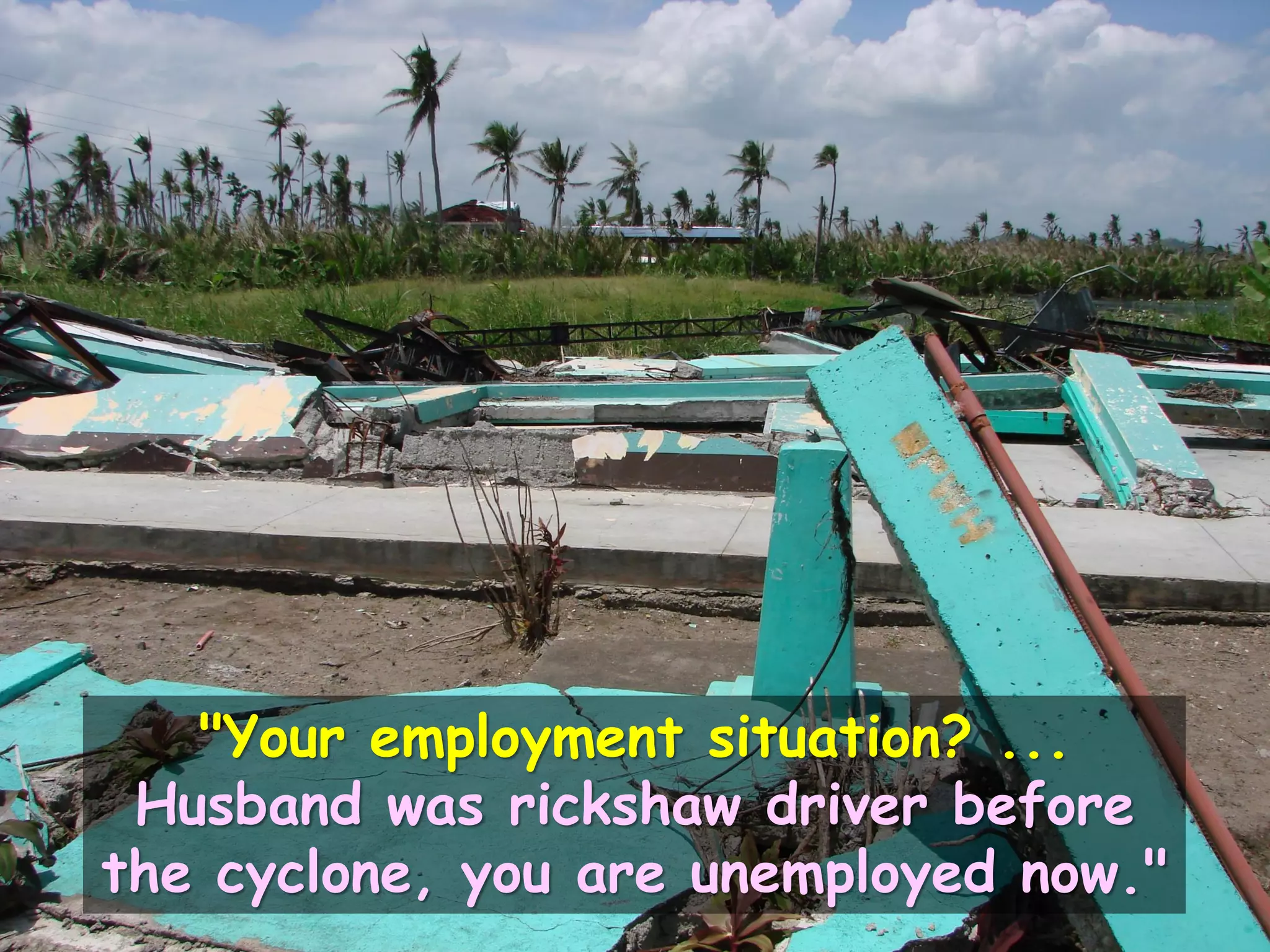
"Your employment situation? ...
Husband was rickshaw driver before
the cyclone, you are unemployed now."
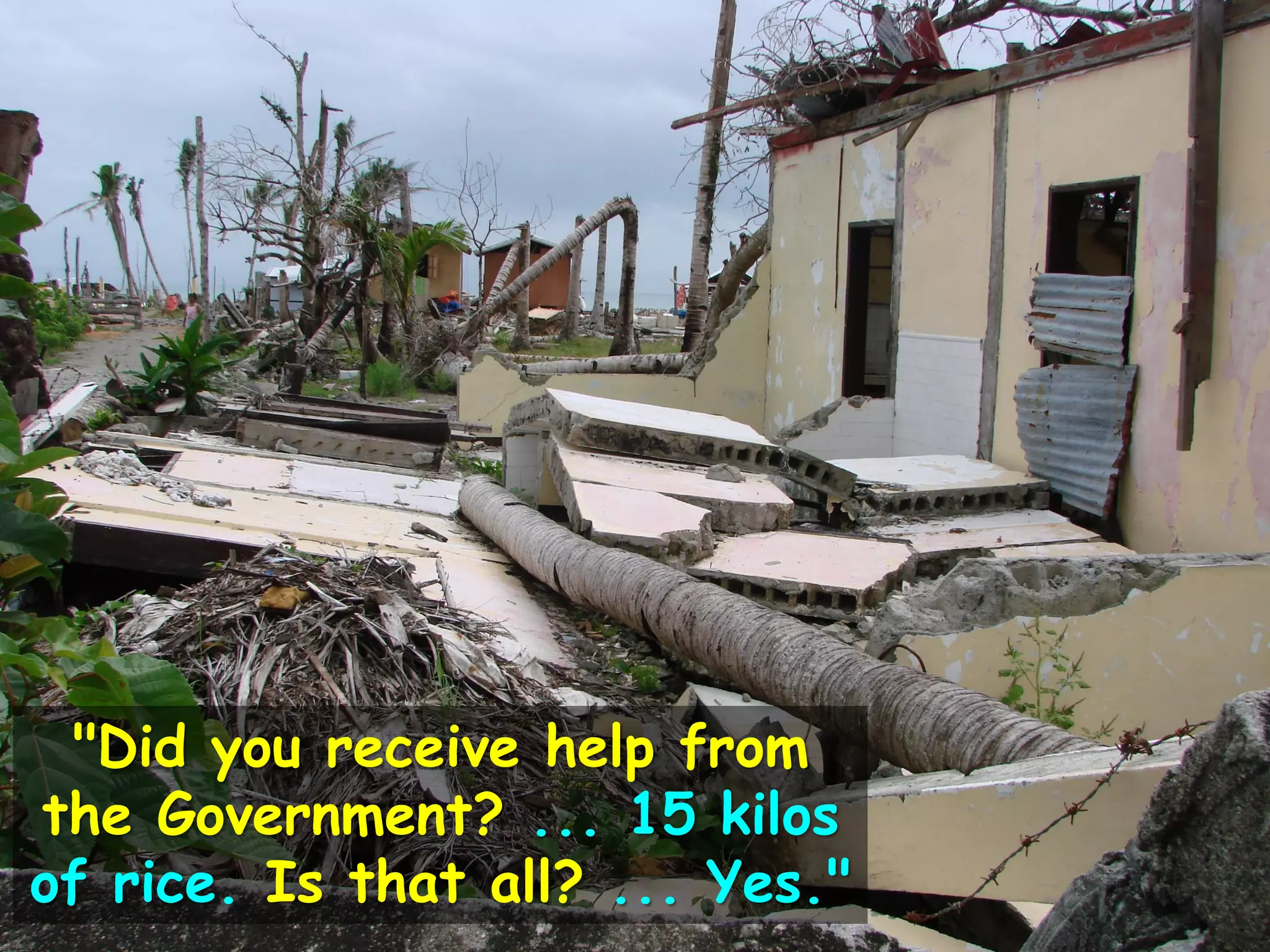
"Did you receive help from
the Government? ... 15 kilos
of rice. Is that all? ... Yes."
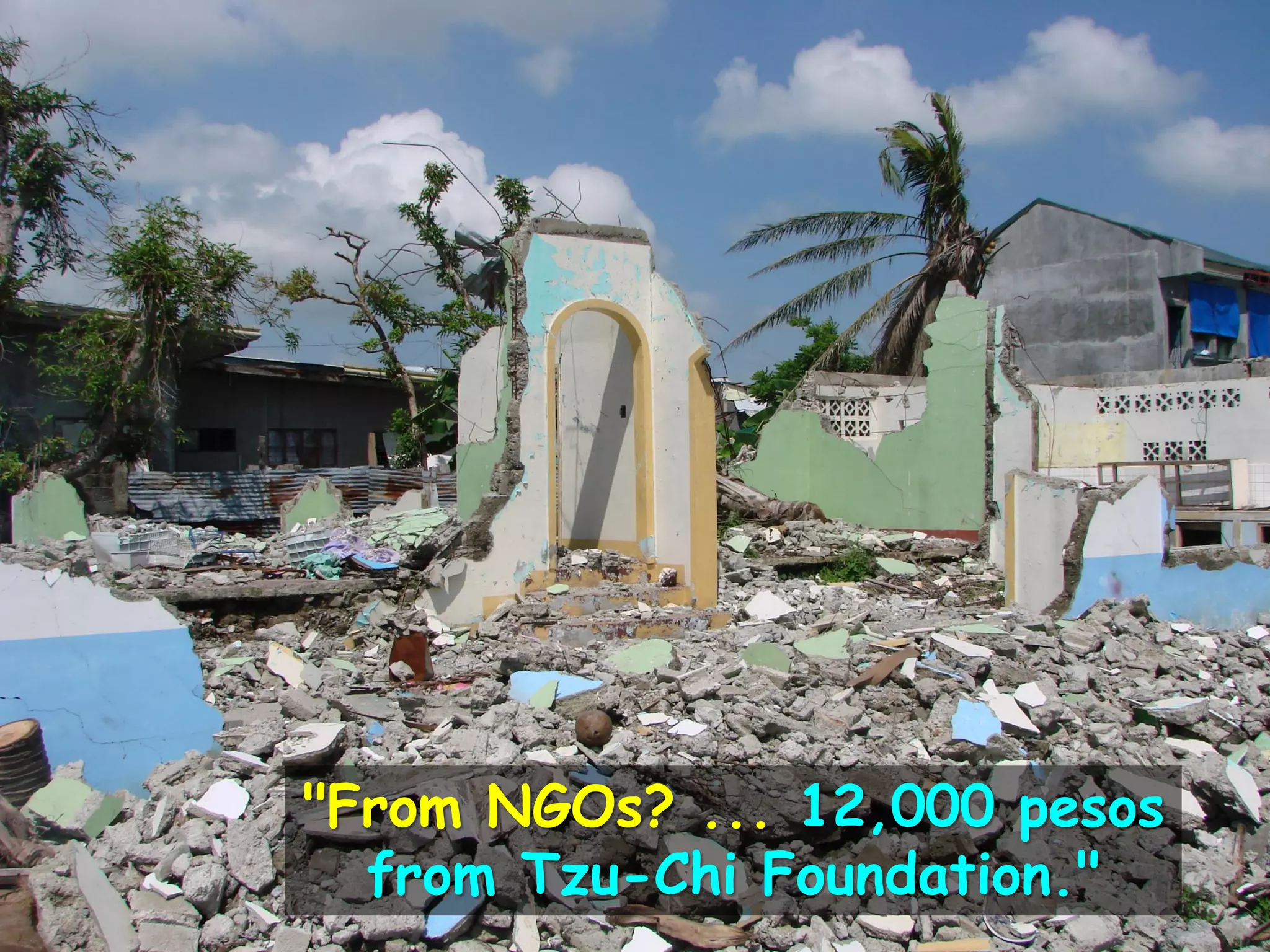
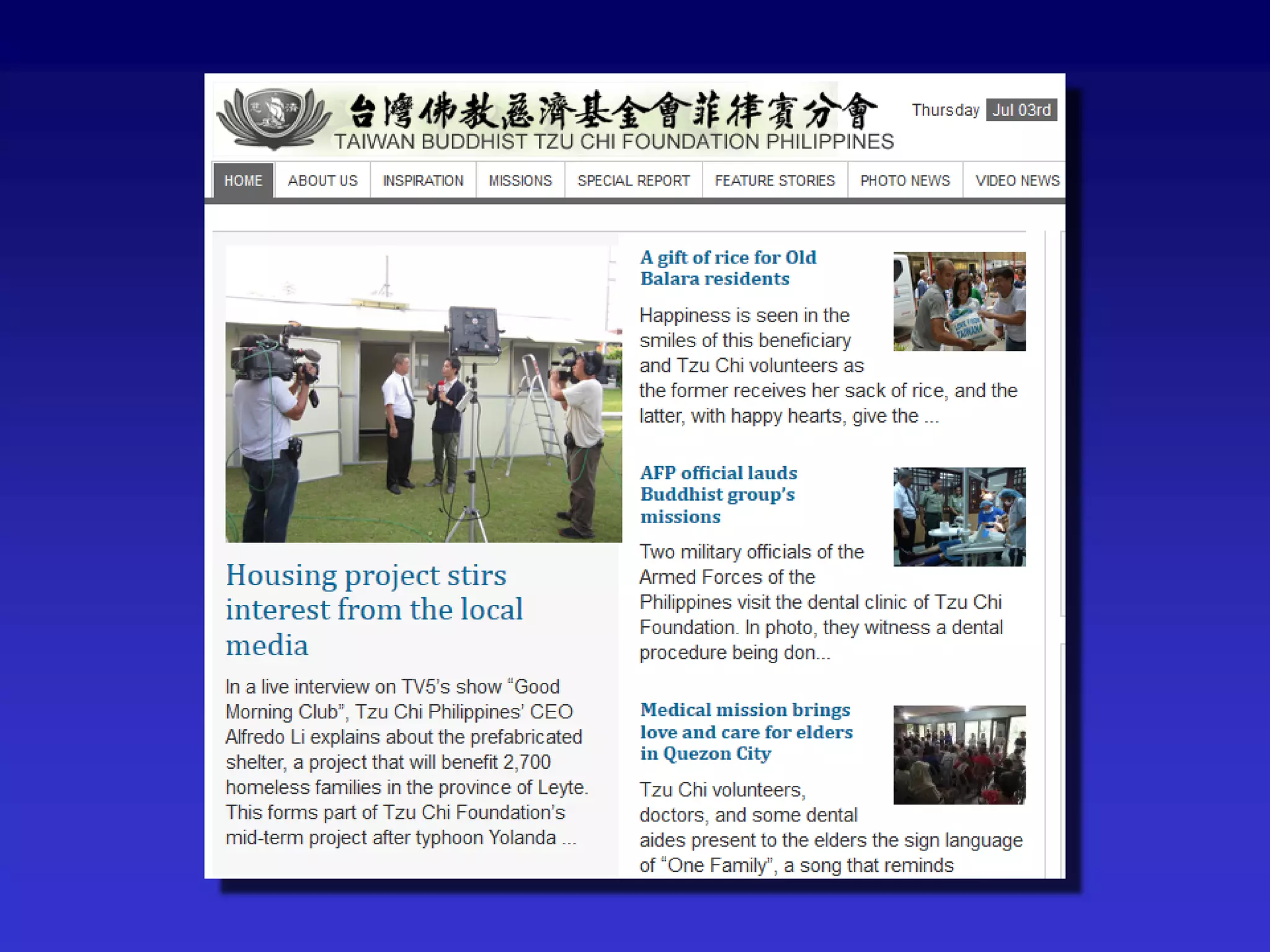
"From NGOs? ... 12,000 pesos
from Tzu-Chi Foundation."
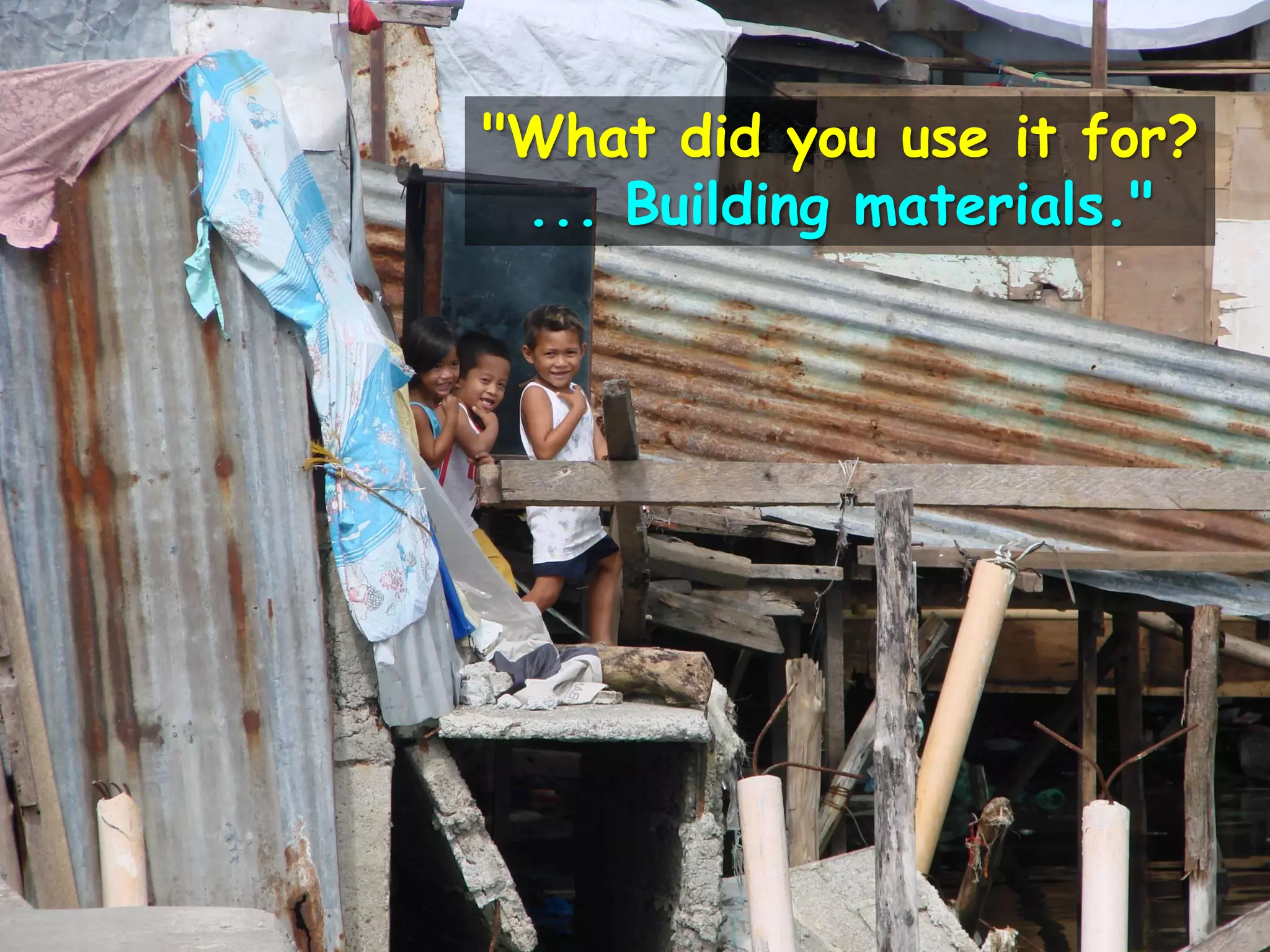
"What did you use it for?
... Building materials."
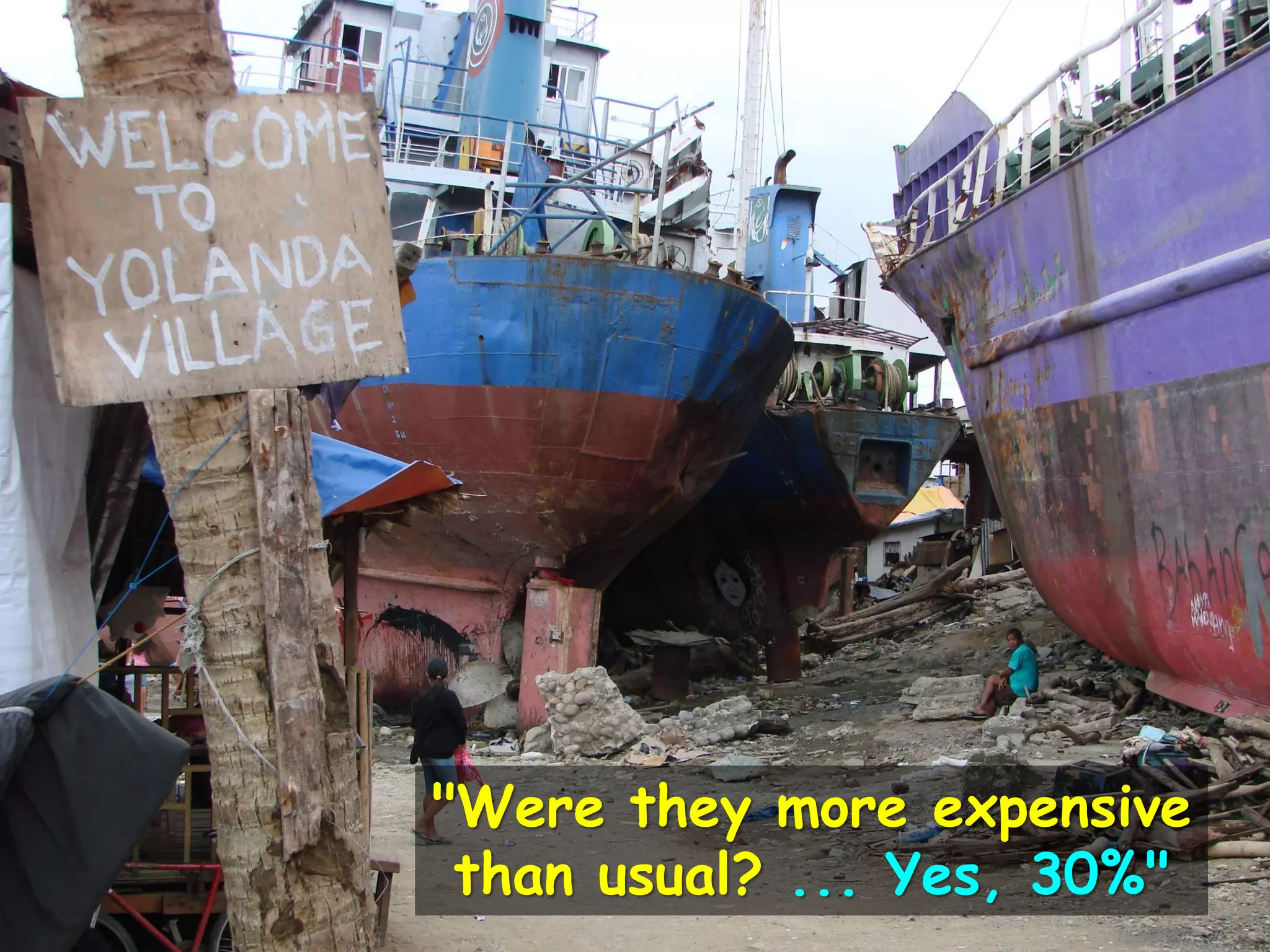
"Were they more expensive
than usual? ... Yes, 30%"
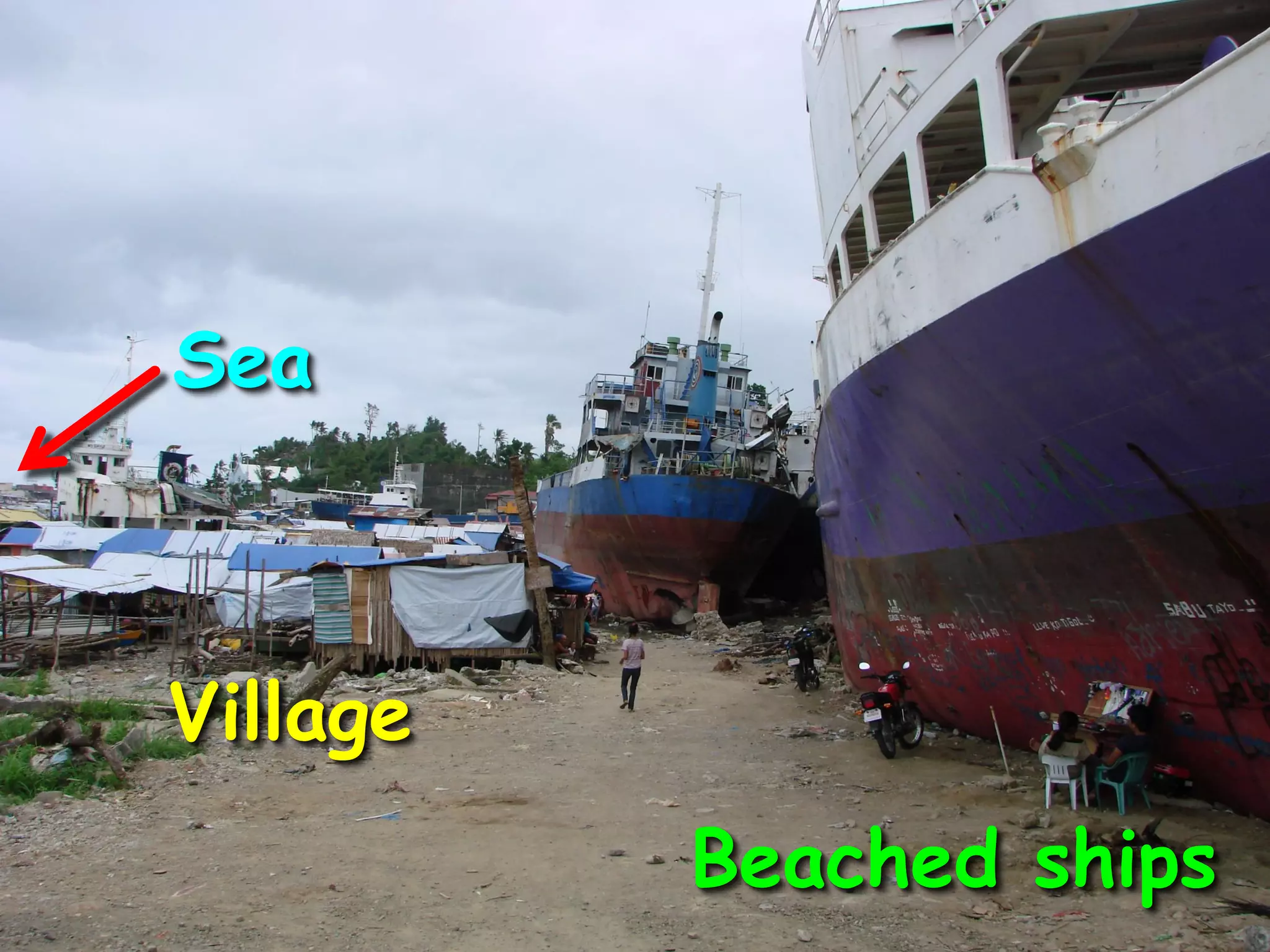
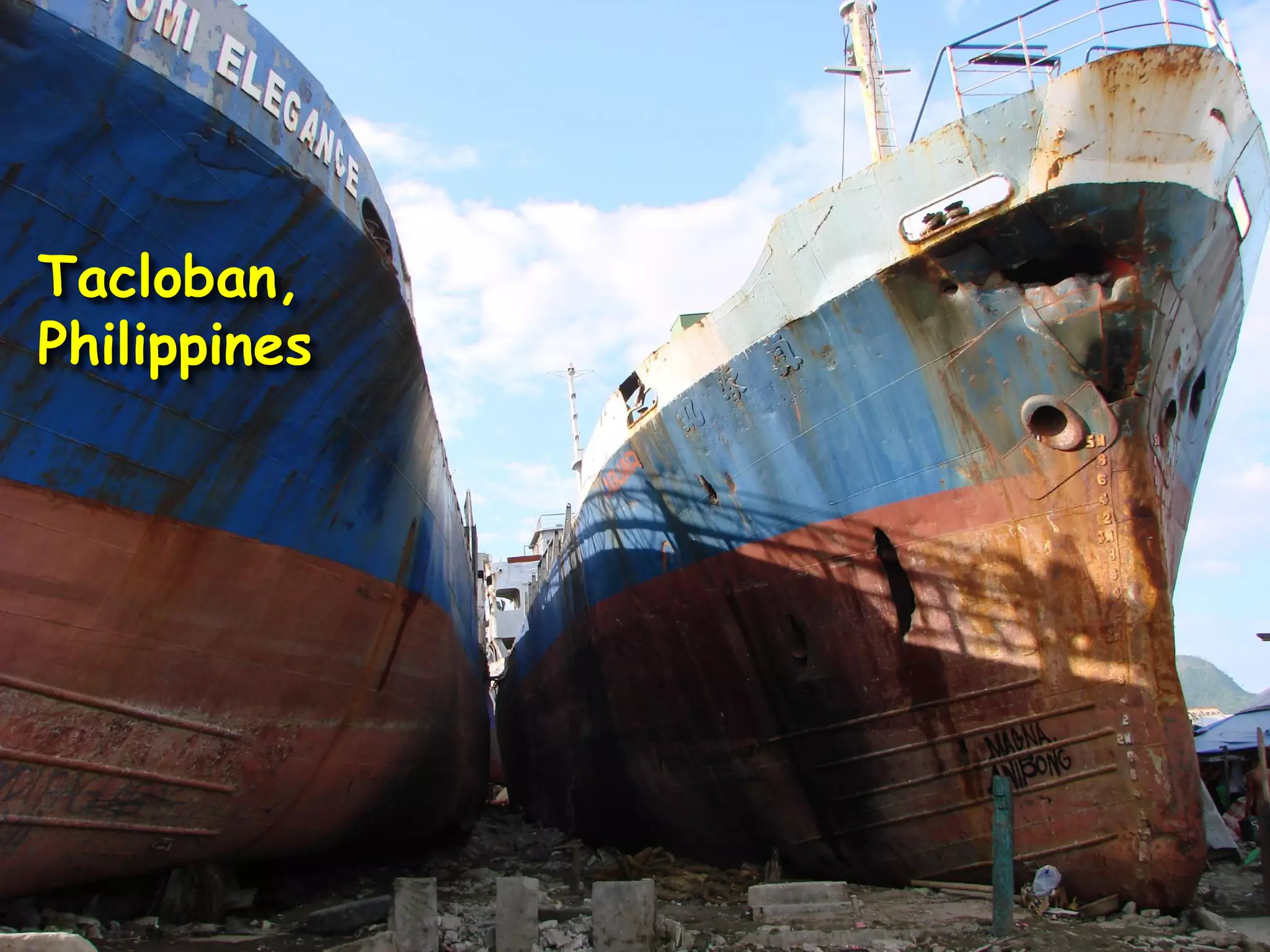
Beached ships
Sea
Village
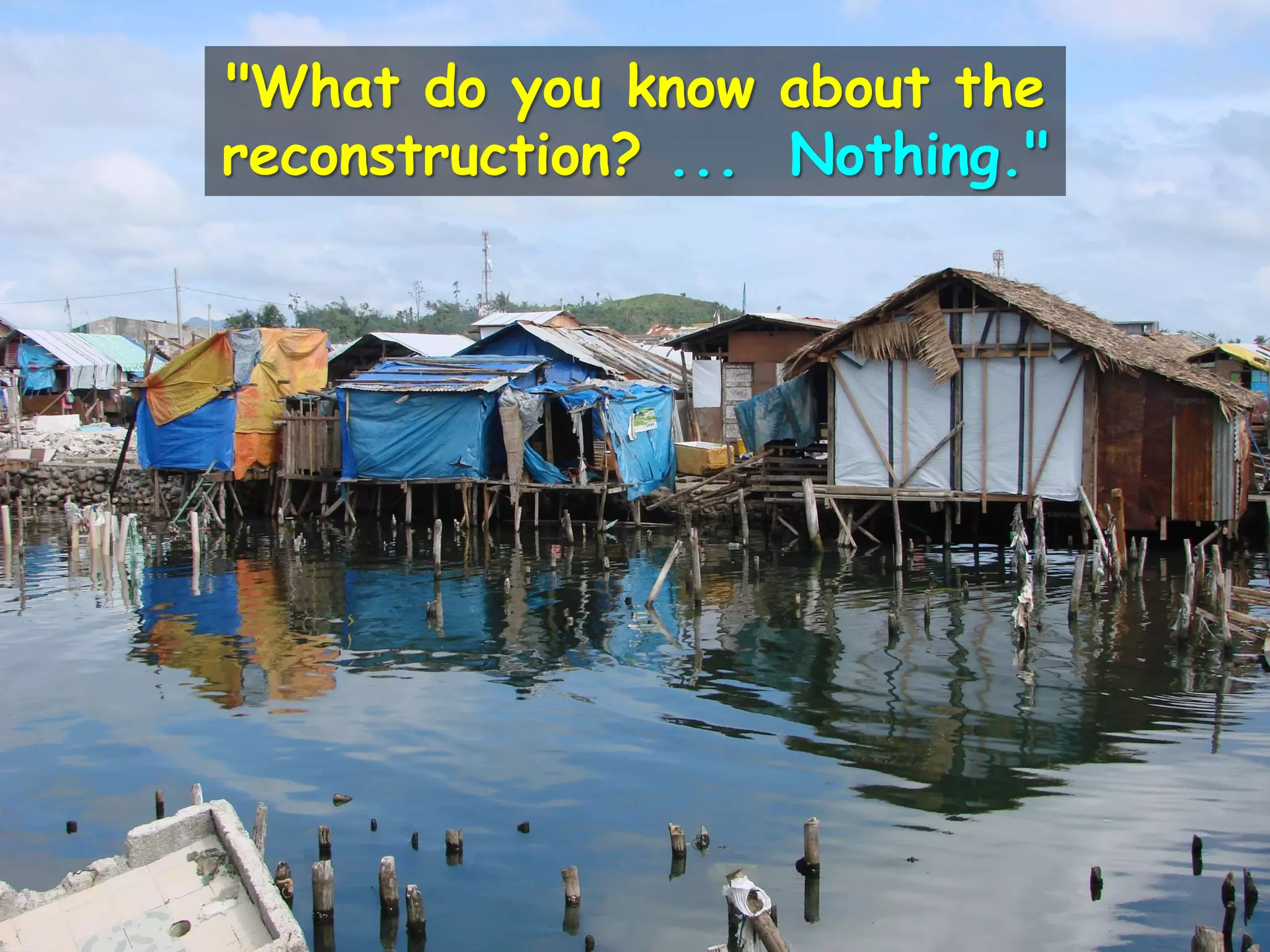
"What do you know about the
reconstruction? ... Nothing."
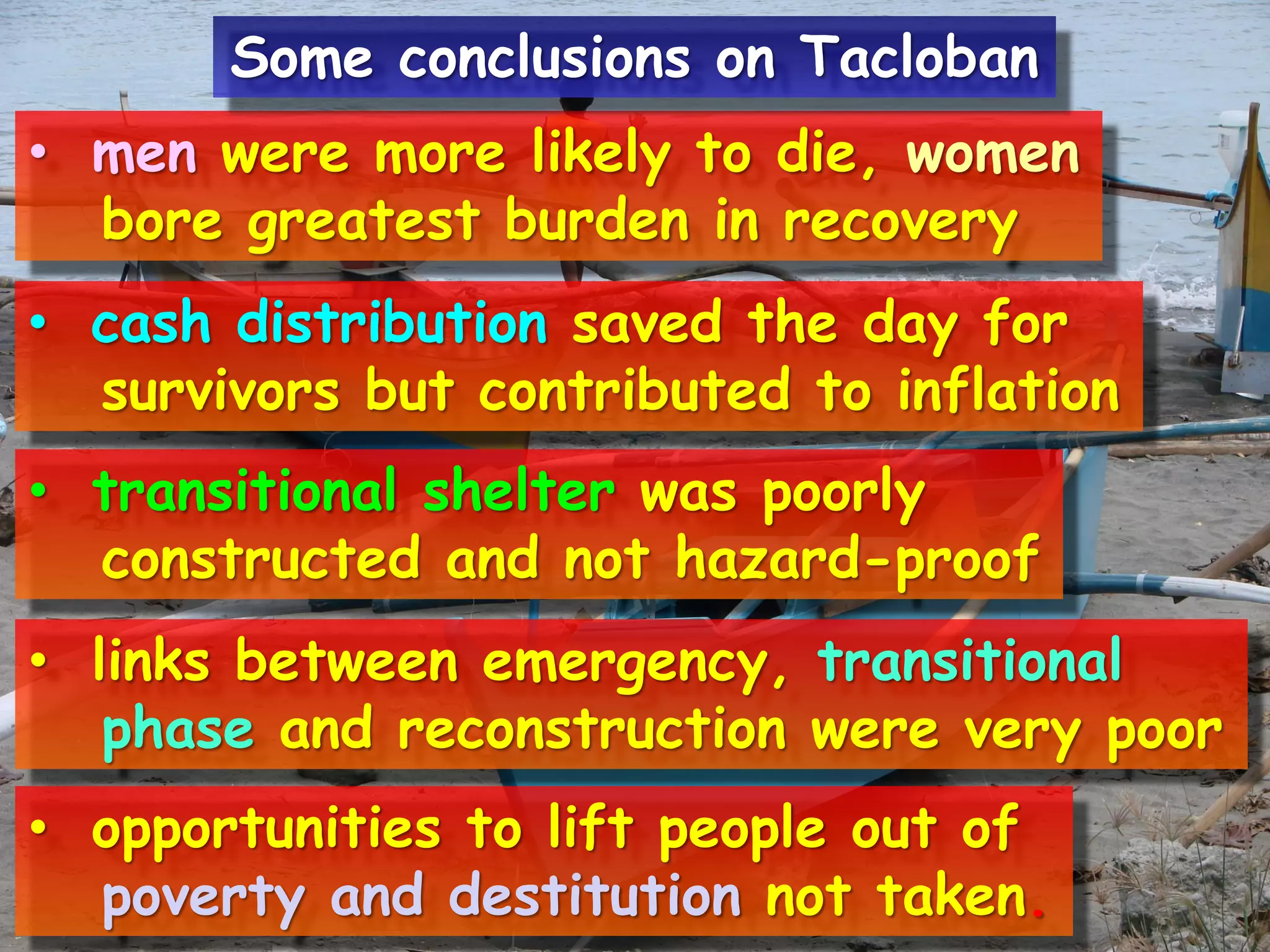
• men were more likely to die, women
bore greatest burden in recovery
• cash distribution saved the day for
survivors but contributed to inflation
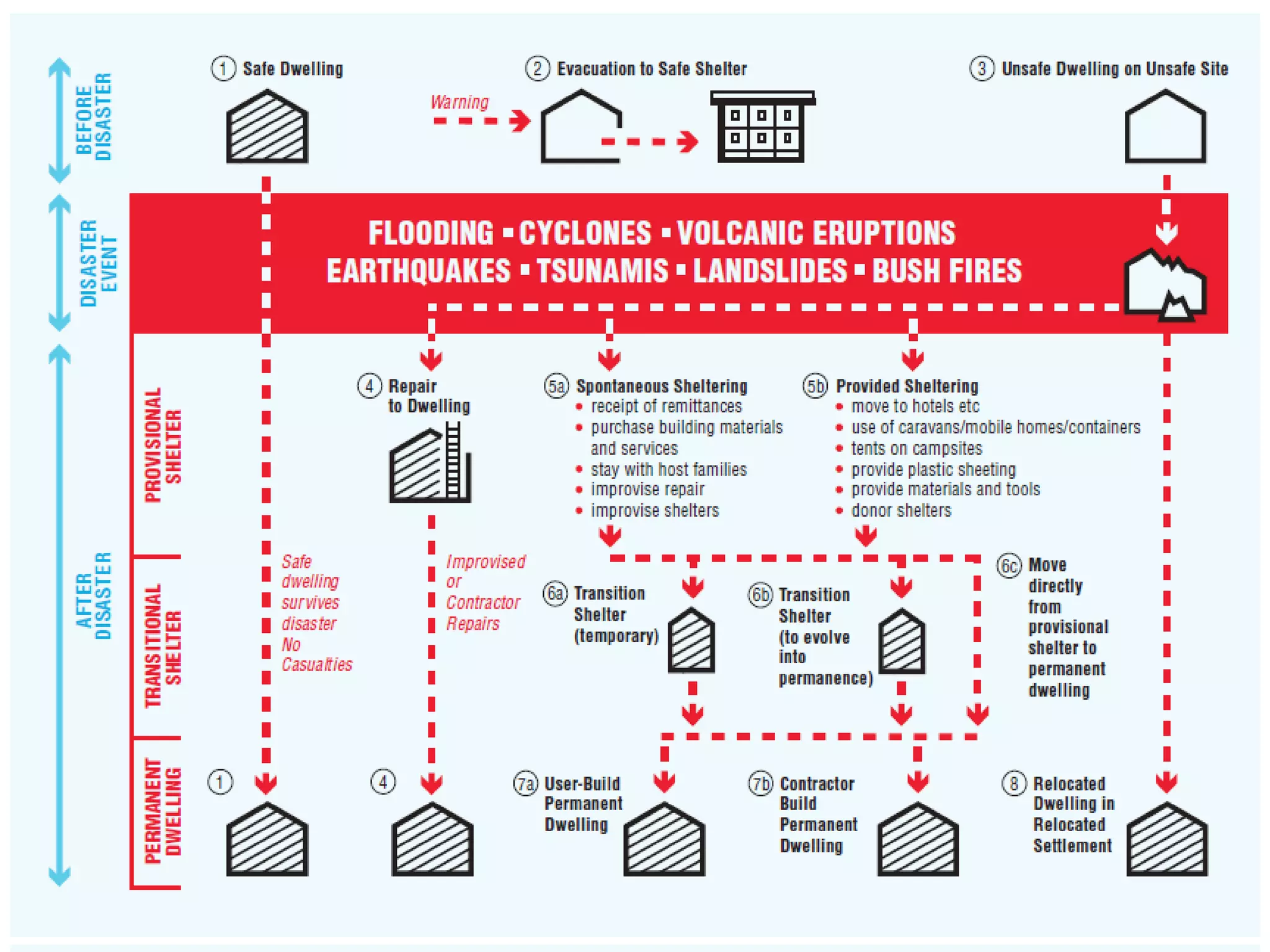
• transitional shelter was poorly
constructed and not hazard-proof
• links between emergency, transitional
phase and reconstruction were very poor
• opportunities to lift people out of
poverty and destitution not taken.
Some conclusions on Tacloban
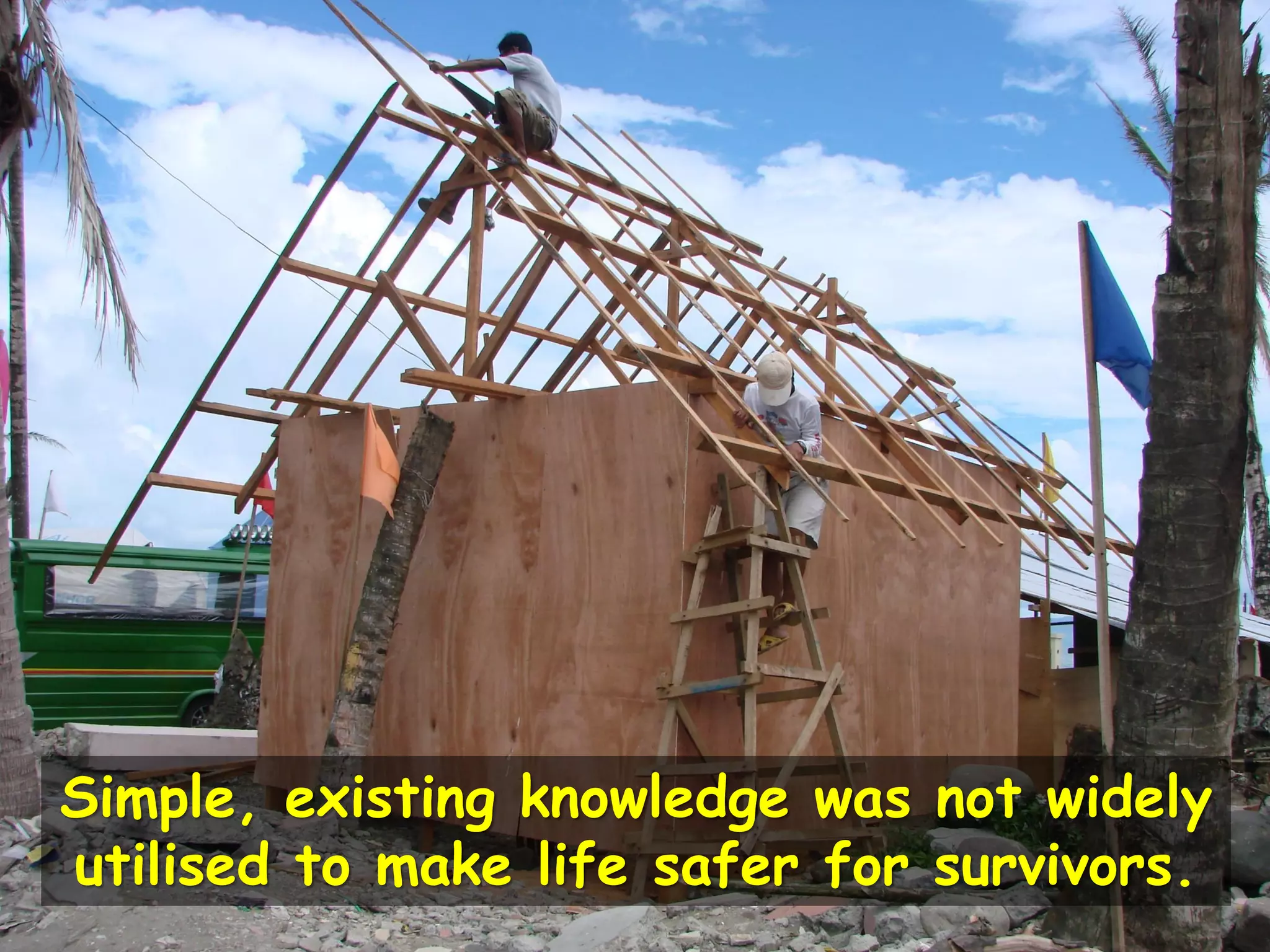
Simple, existing knowledge was not widely
utilised to make life safer for survivors.
The transitional phase between emergency
and reconstruction remains controversial.
Tacloban,
Philippines
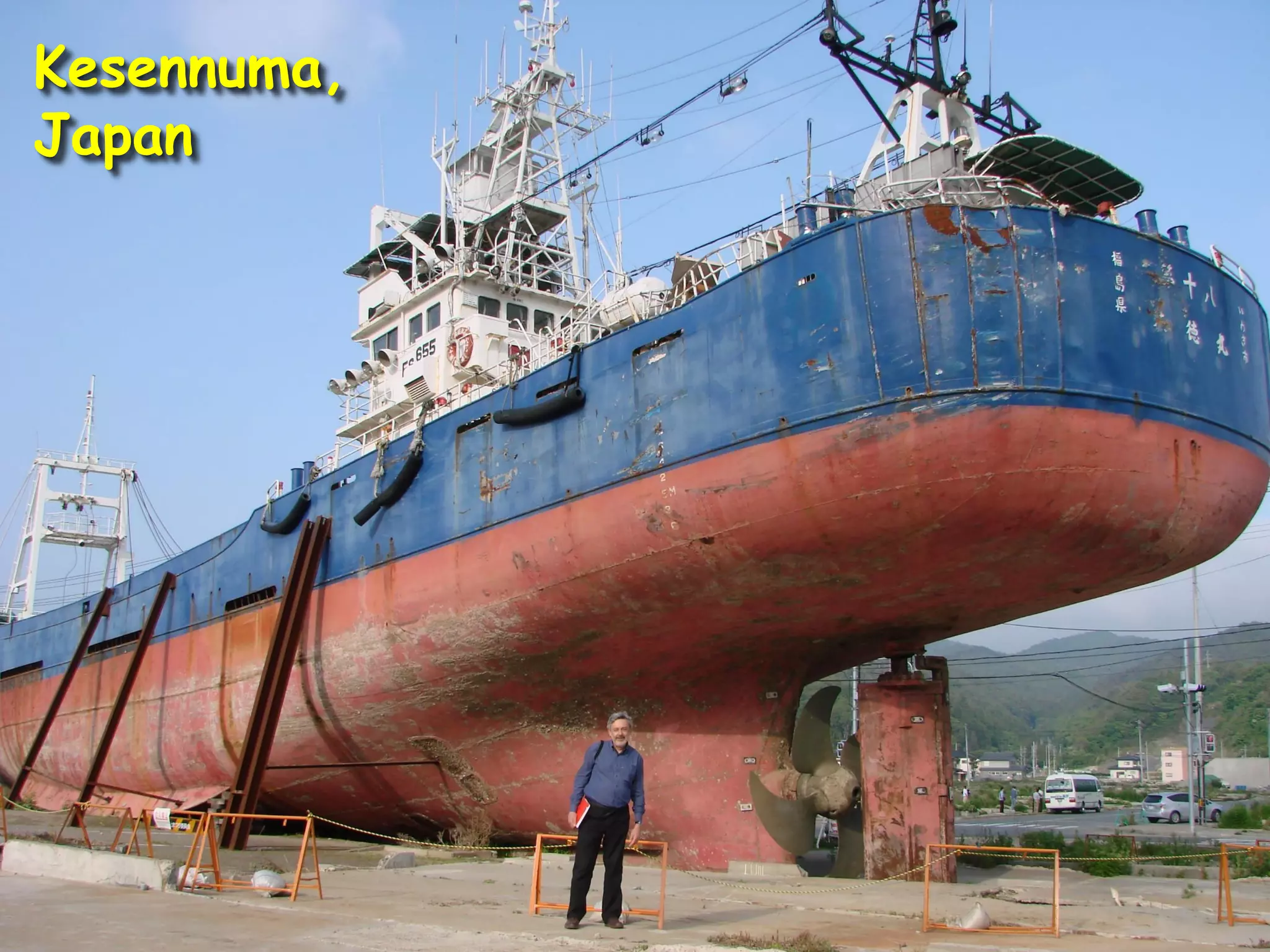
Kesennuma,
Japan
Tōhoku earthquake
and tsunami
11 March 2011
18,500 dead,
6,150 injured
max. wave height
40.5 metres
500 sq. km
devastated in
three prefectures.
Shizugawa,
Miyagi Prefecture
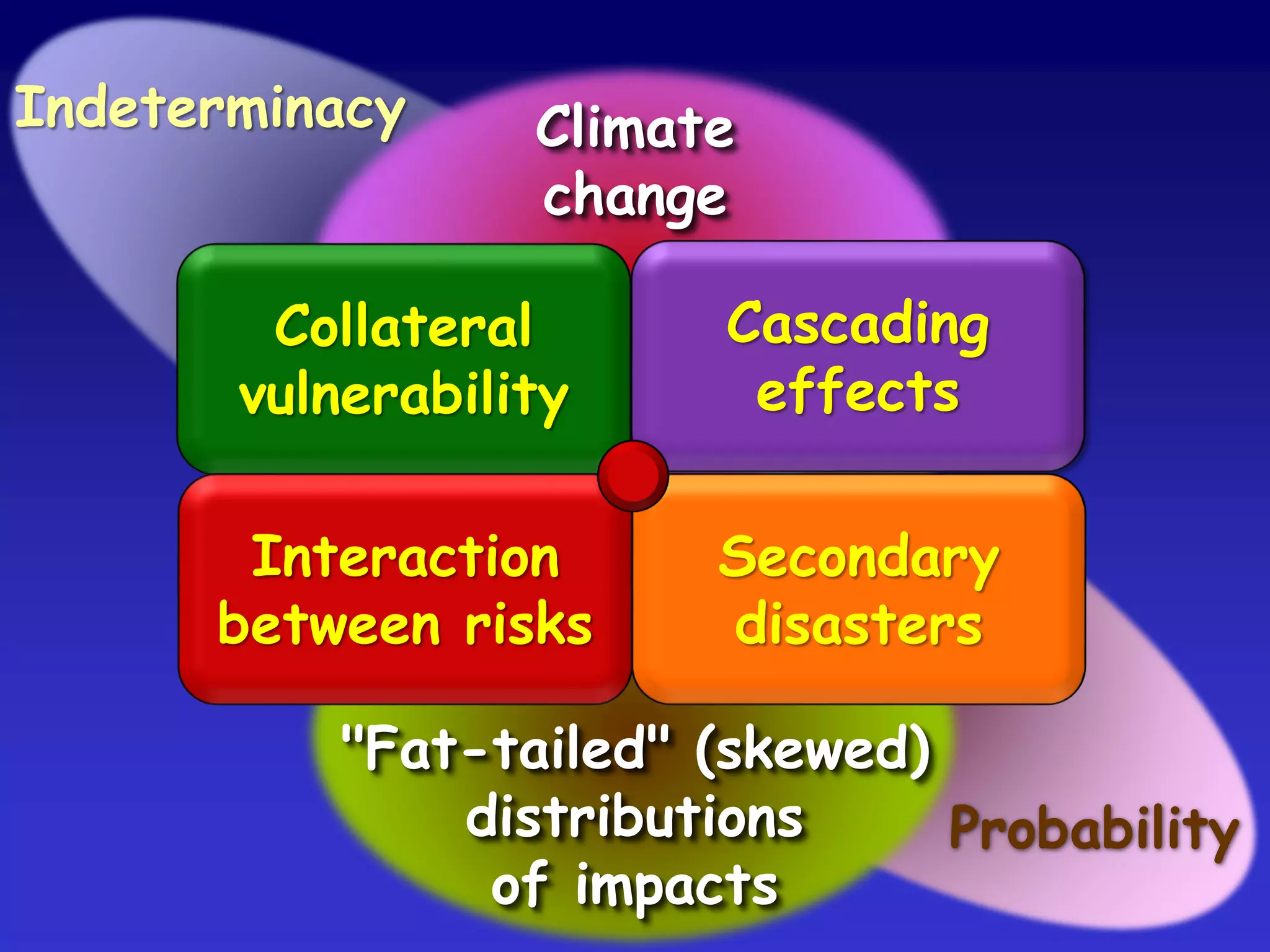
Cascading
effects
Collateral
vulnerability
Secondary
disasters
Interaction
between risks
Climate
change
Probability
Indeterminacy
"Fat-tailed" (skewed)
distributions
of impacts
For what magnitude and frequency of
event should structural defences be built?
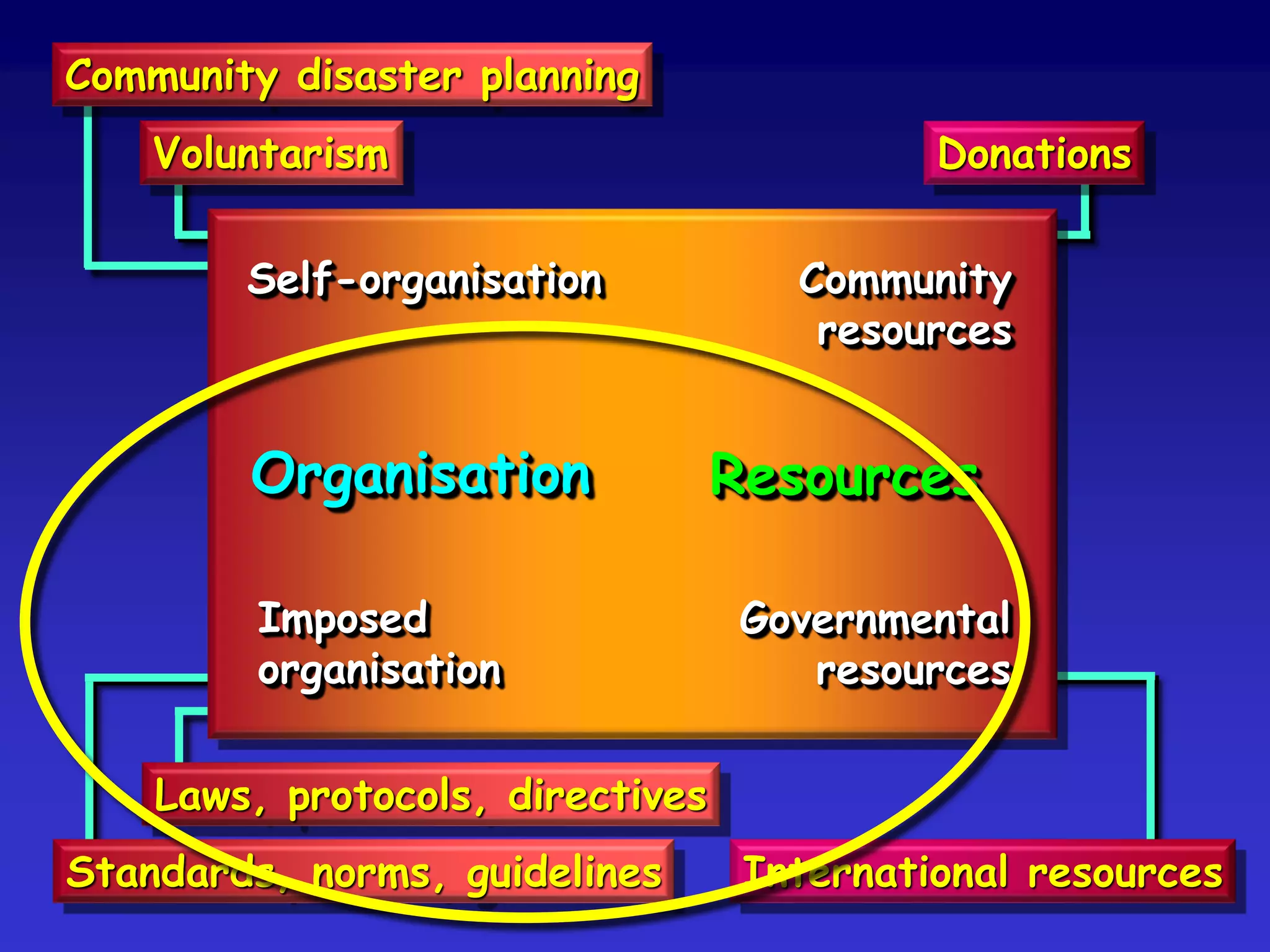
Organisation Resources
Self-organisation
Imposed
organisation
Voluntarism
Community disaster planning
Laws, protocols, directives
Standards, norms, guidelines
Community
resources
Governmental
resources
Donations
International resources
"...we had long been alarmed by the
lack of gender sensitivity in plans for
disaster risk reduction and reconstruction."
Domoto, A. et al. 2013. Disaster Risk Reduction: A
Japanese Women's Perspective on 3/11. Japan Women's
Network for Disaster Risk Reduction, Tokyo, 31 pp.
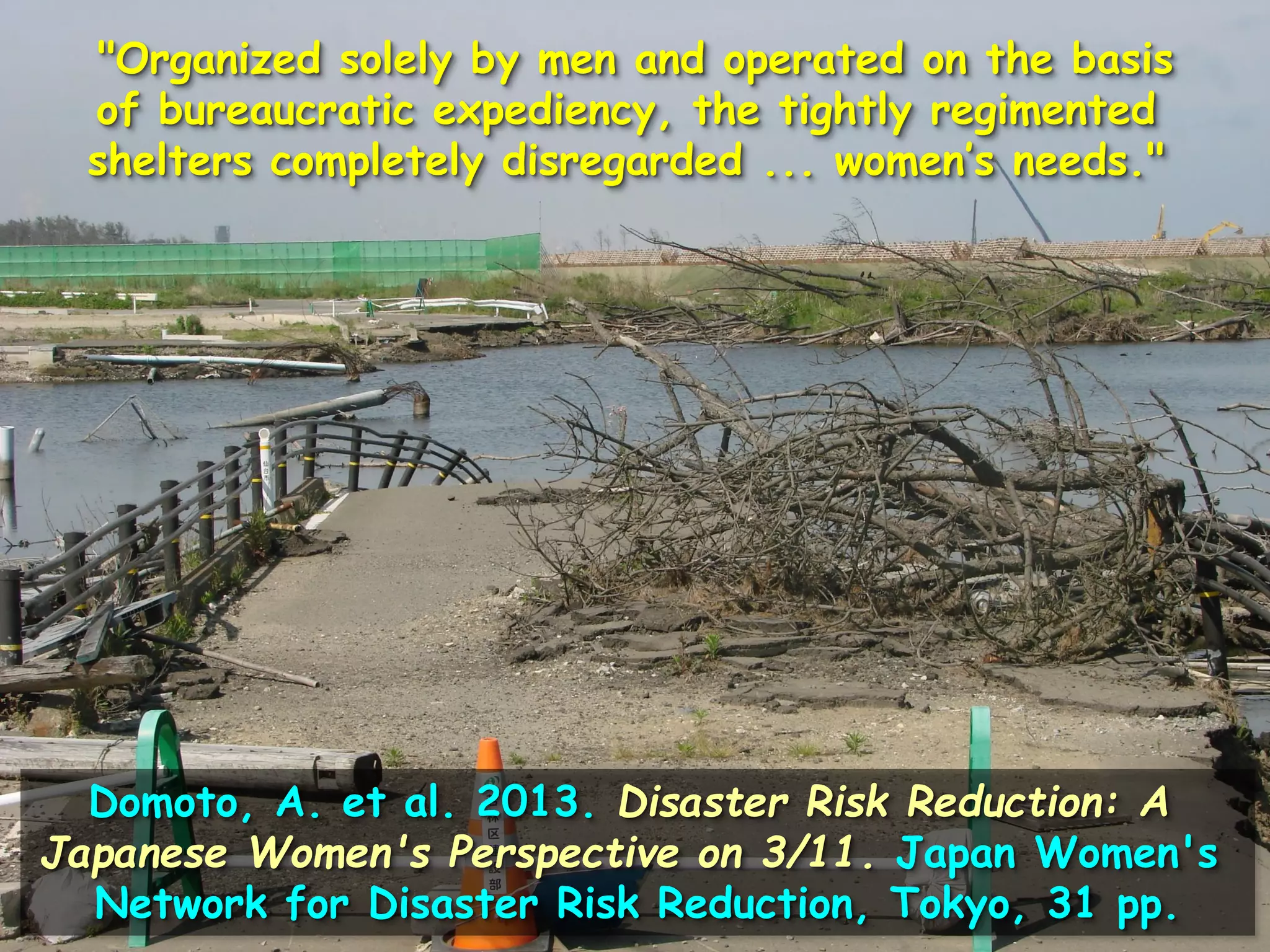
"Organized solely by men and operated on the basis
of bureaucratic expediency, the tightly regimented
shelters completely disregarded ... women’s needs."
Domoto, A. et al. 2013. Disaster Risk Reduction: A
Japanese Women's Perspective on 3/11. Japan Women's
Network for Disaster Risk Reduction, Tokyo, 31 pp.
"...local community leaders, most of whom were
elderly men with outdated values, took charge."
Domoto, A. et al. 2013. Disaster Risk Reduction: A
Japanese Women's Perspective on 3/11. Japan Women's
Network for Disaster Risk Reduction, Tokyo, 31 pp.
"Like most older Japanese, the women were
unaccustomed to challenging authority."
Domoto, A. et al. 2013. Disaster Risk Reduction: A
Japanese Women's Perspective on 3/11. Japan Women's
Network for Disaster Risk Reduction, Tokyo, 31 pp.
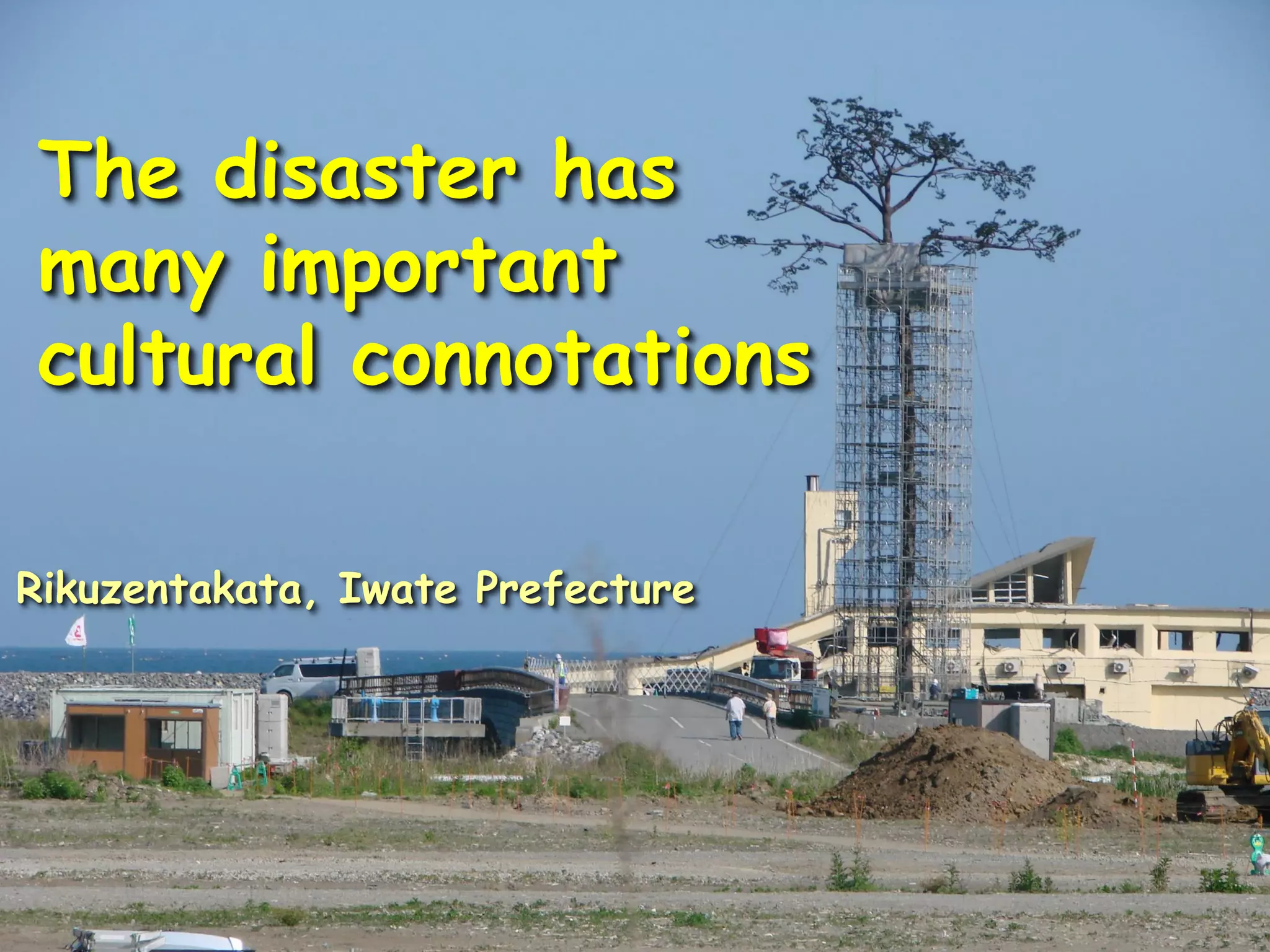
The disaster has
many important
cultural connotations
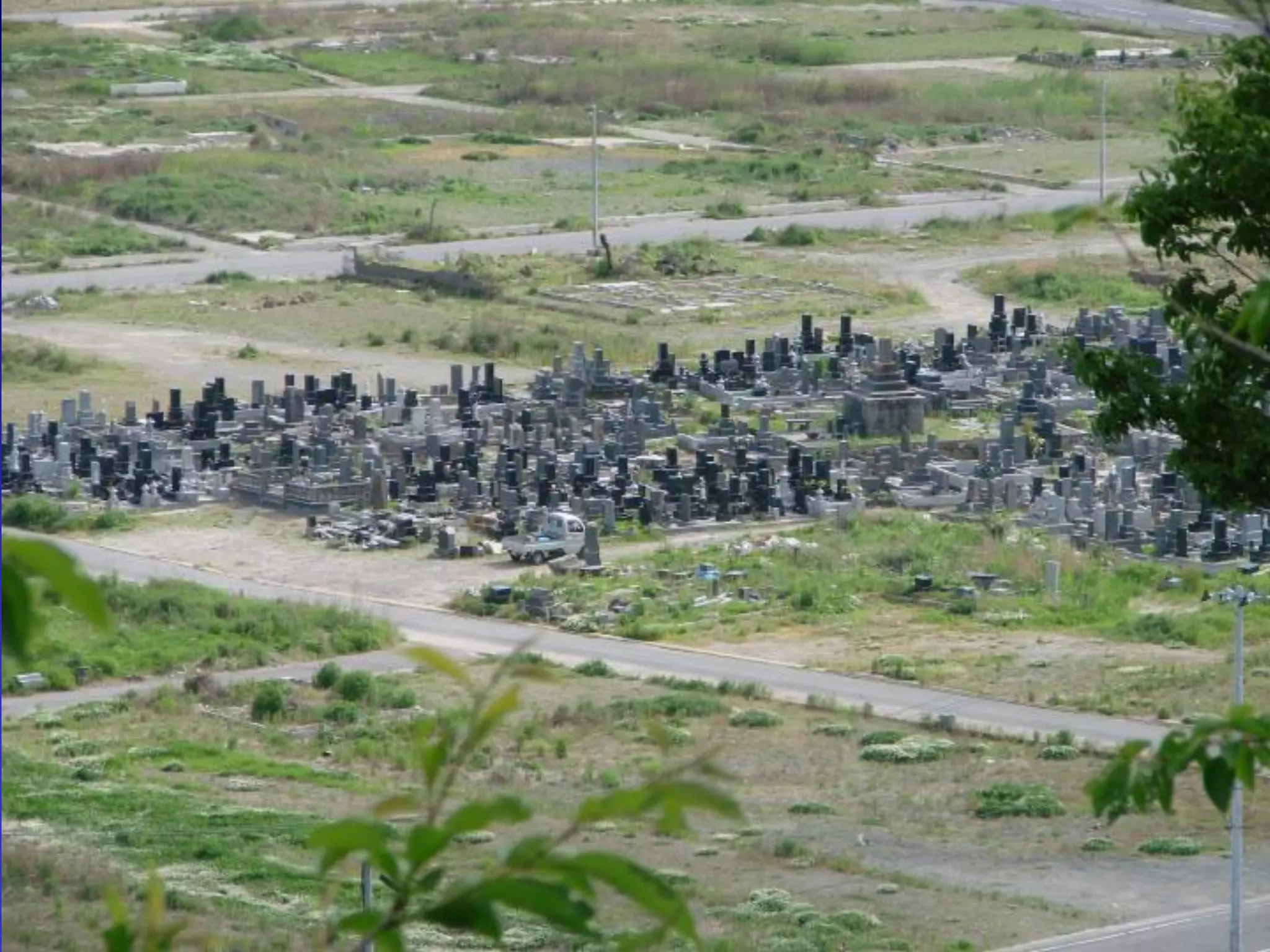
Rikuzentakata, Iwate Prefecture
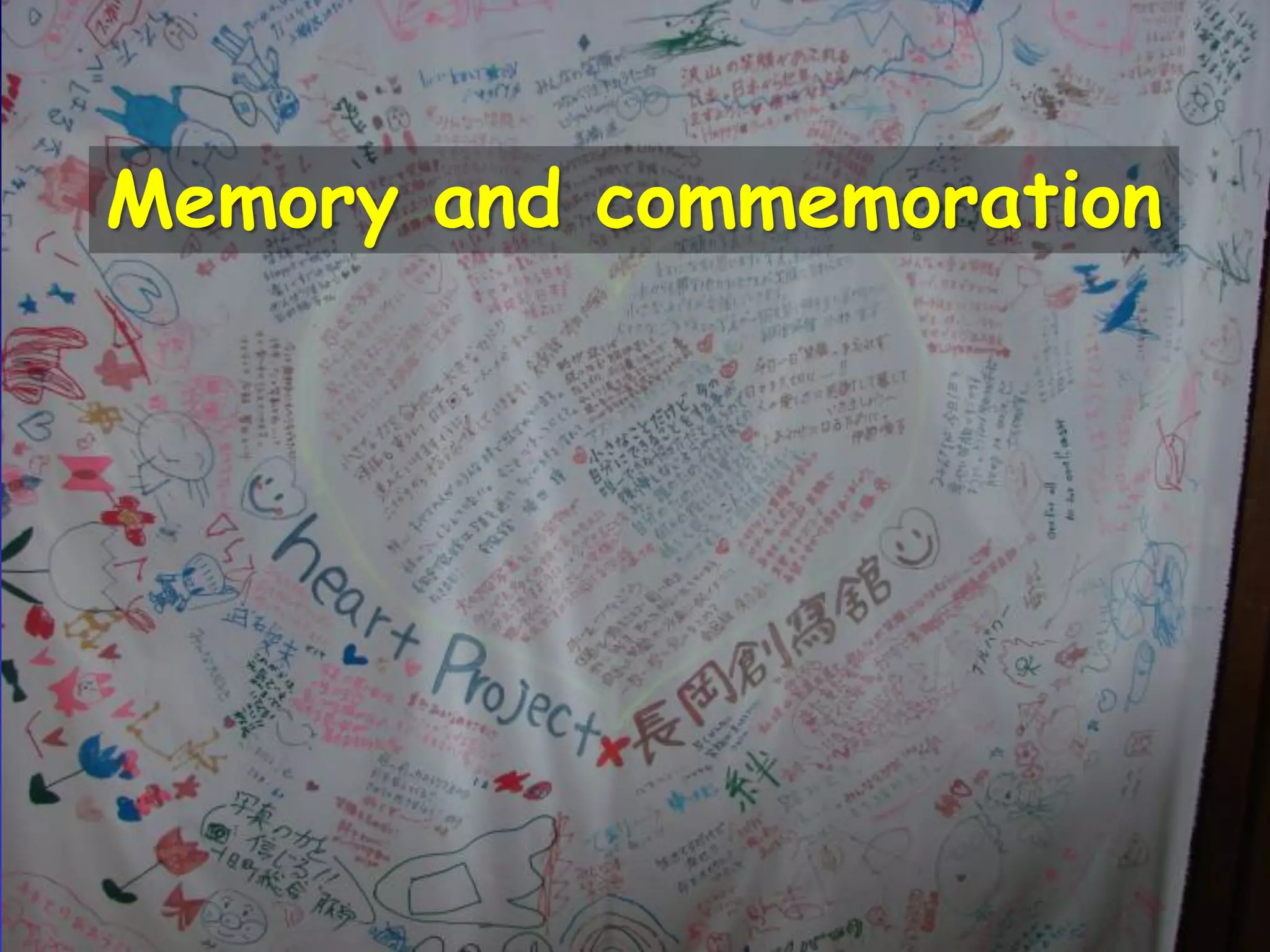
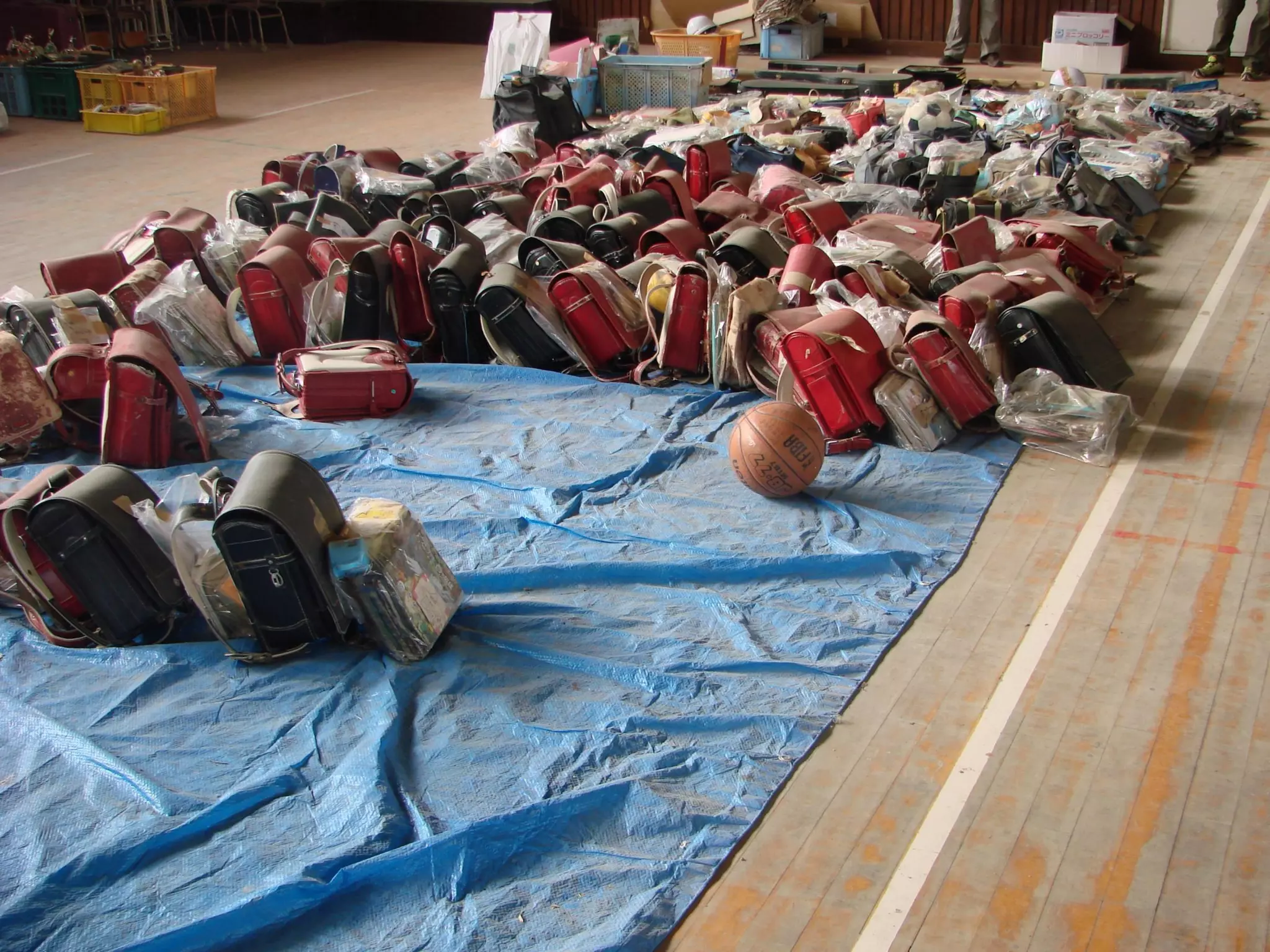
Memory and commemoration
Long term
Short term
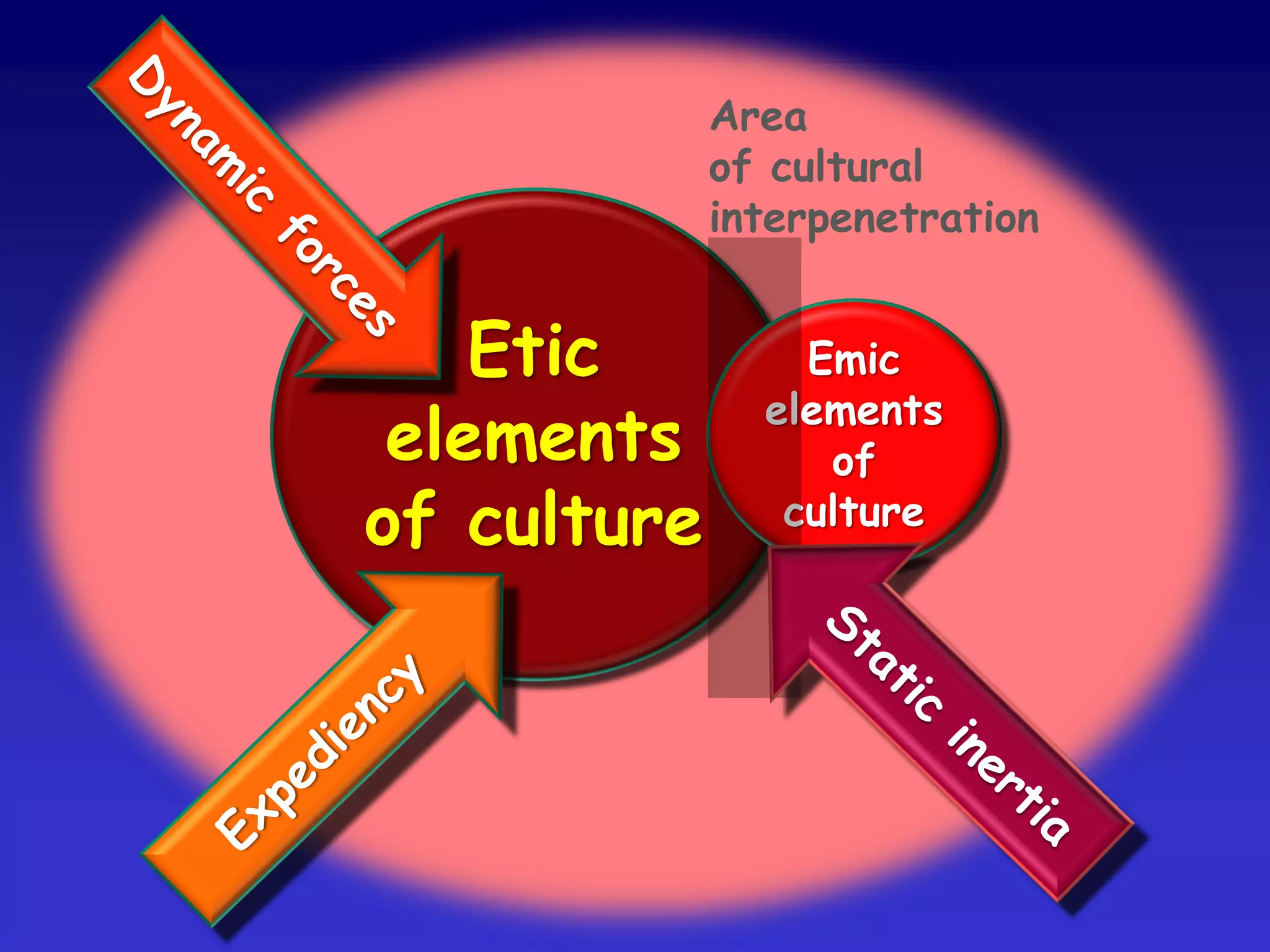
Emic components
Etic components
METAMORPHOSIS
OF CULTURE
Experiences of culture
[mass-media and consumer culture]
Accumulated cultural traits and beliefs
Inherited cultural background
Ideological
(non-scientific)
interpretations
of disaster
Learned
(scientific)
interpretations
of disaster
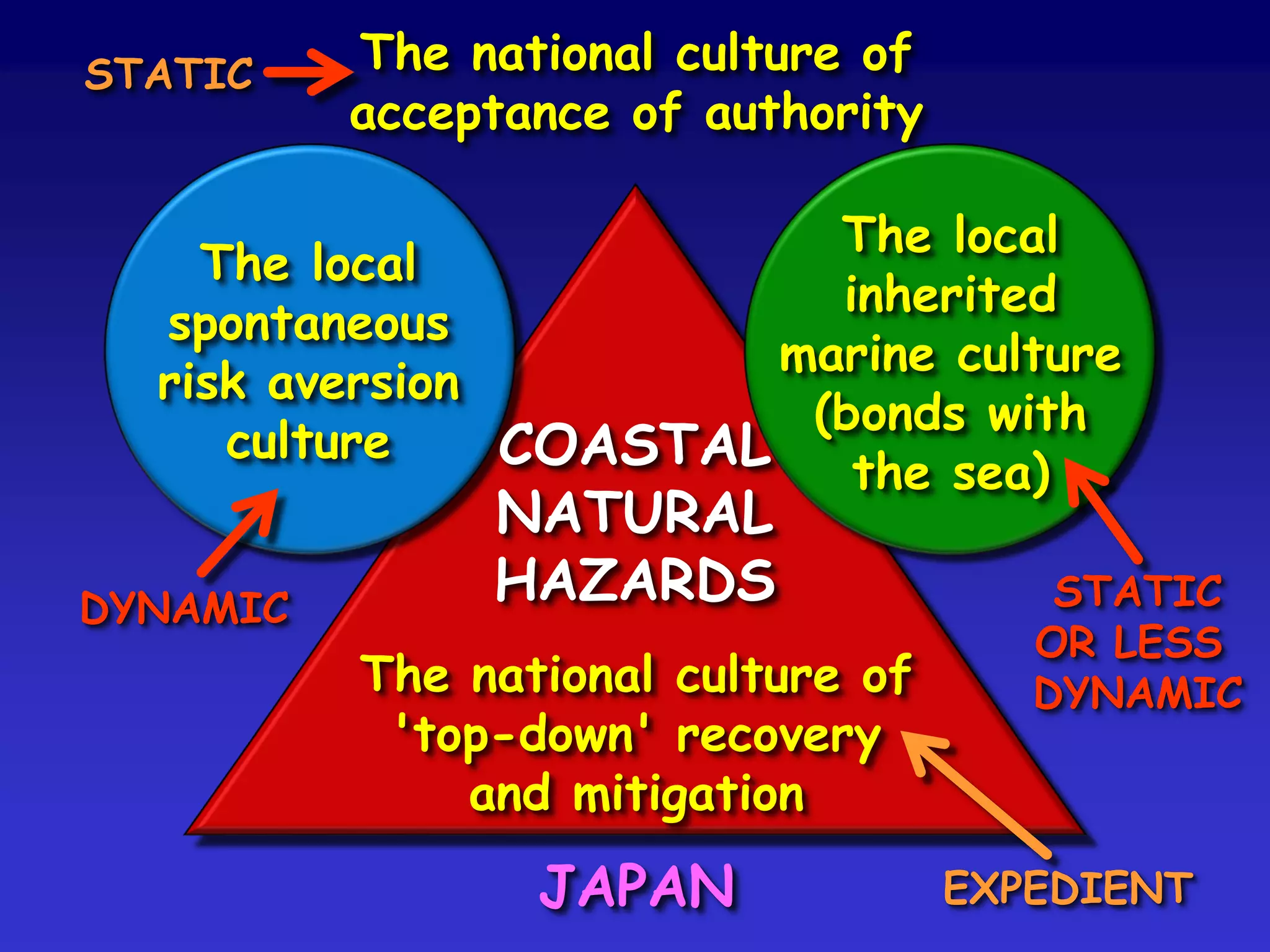
COASTAL
NATURAL
HAZARDS
The national culture of
'top-down' recovery
and mitigation
JAPAN
The local
spontaneous
risk aversion
culture
The local
inherited
marine culture
(bonds with
the sea)
The national culture of
acceptance of authority
DYNAMIC STATIC
OR LESS
DYNAMIC
STATIC
EXPEDIENT
Etic
elements
of culture
Emic
elements
of
culture
Area
of cultural
interpenetration
Post-Earthquake Report card
Institutional learning: professional/bureaucratic
model (partially successful)
Governance: still very top-down
Volunteer organisation: progress, but starting
from a low level
Community organisation: weak
Gender issues: progress, but starting
from a low level
Environmentalism: poor
DRR: narrow, dominated by structural solutions
Developments beyond Kobe 1995:
strong in certain sectors
Developments beyond Tōhoku 2011: limited
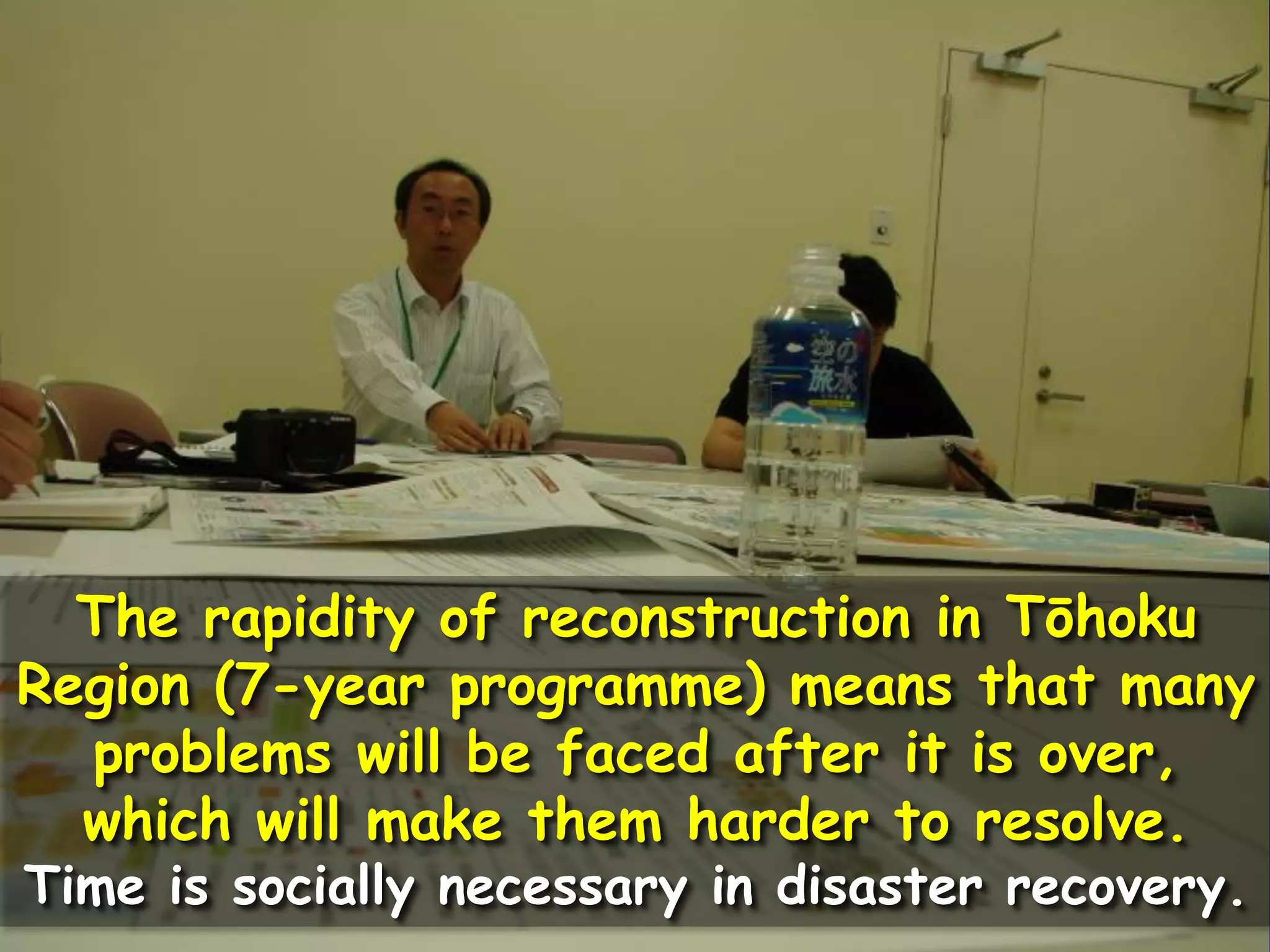
The rapidity of reconstruction in Tōhoku
Region (7-year programme) means that many
problems will be faced after it is over,
which will make them harder to resolve.
Time is socially necessary in disaster recovery.
Vending machines: the most
resilient things in Japan?
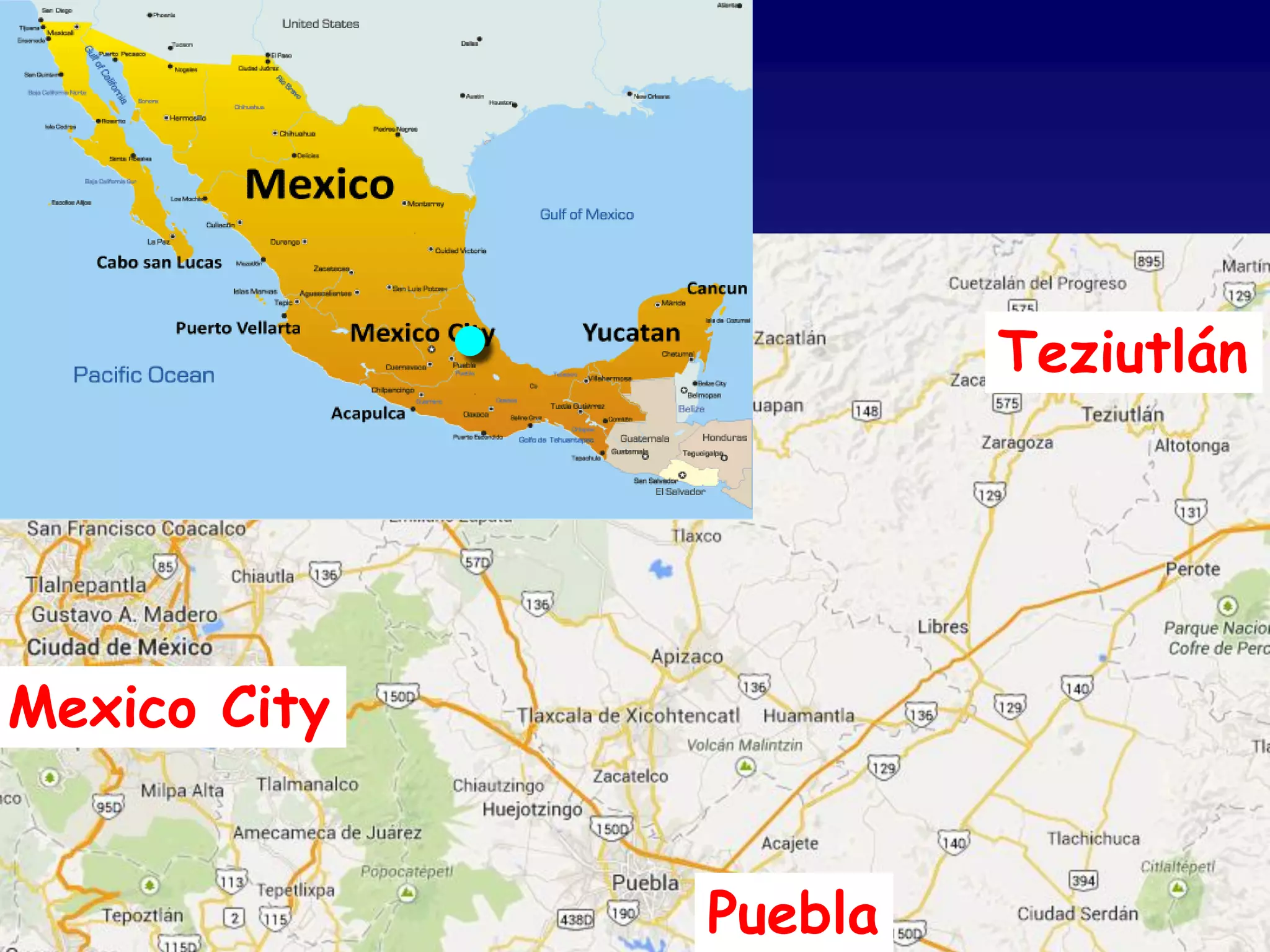
Mexico
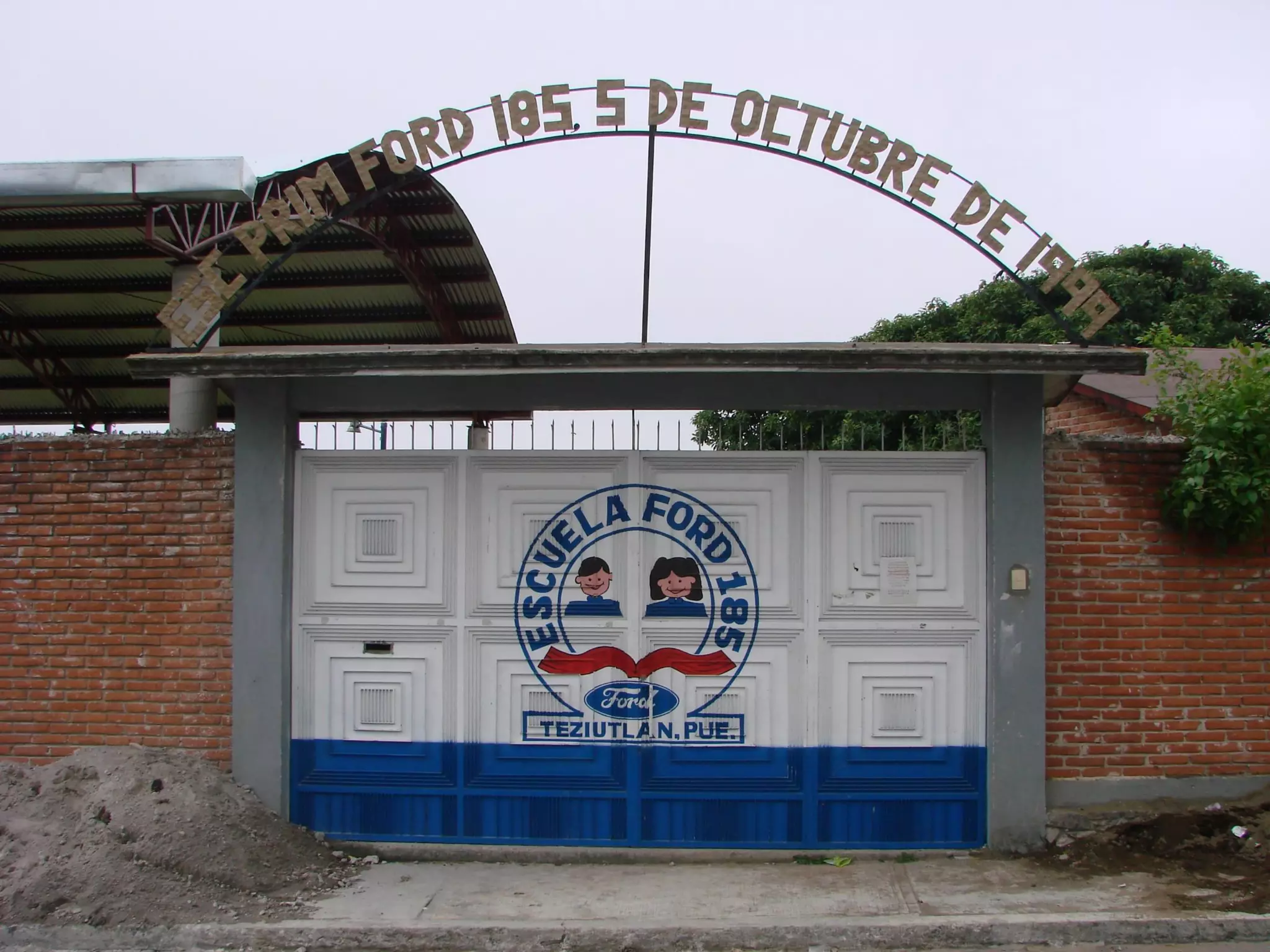
Teziutlán
Puebla
Mexico City
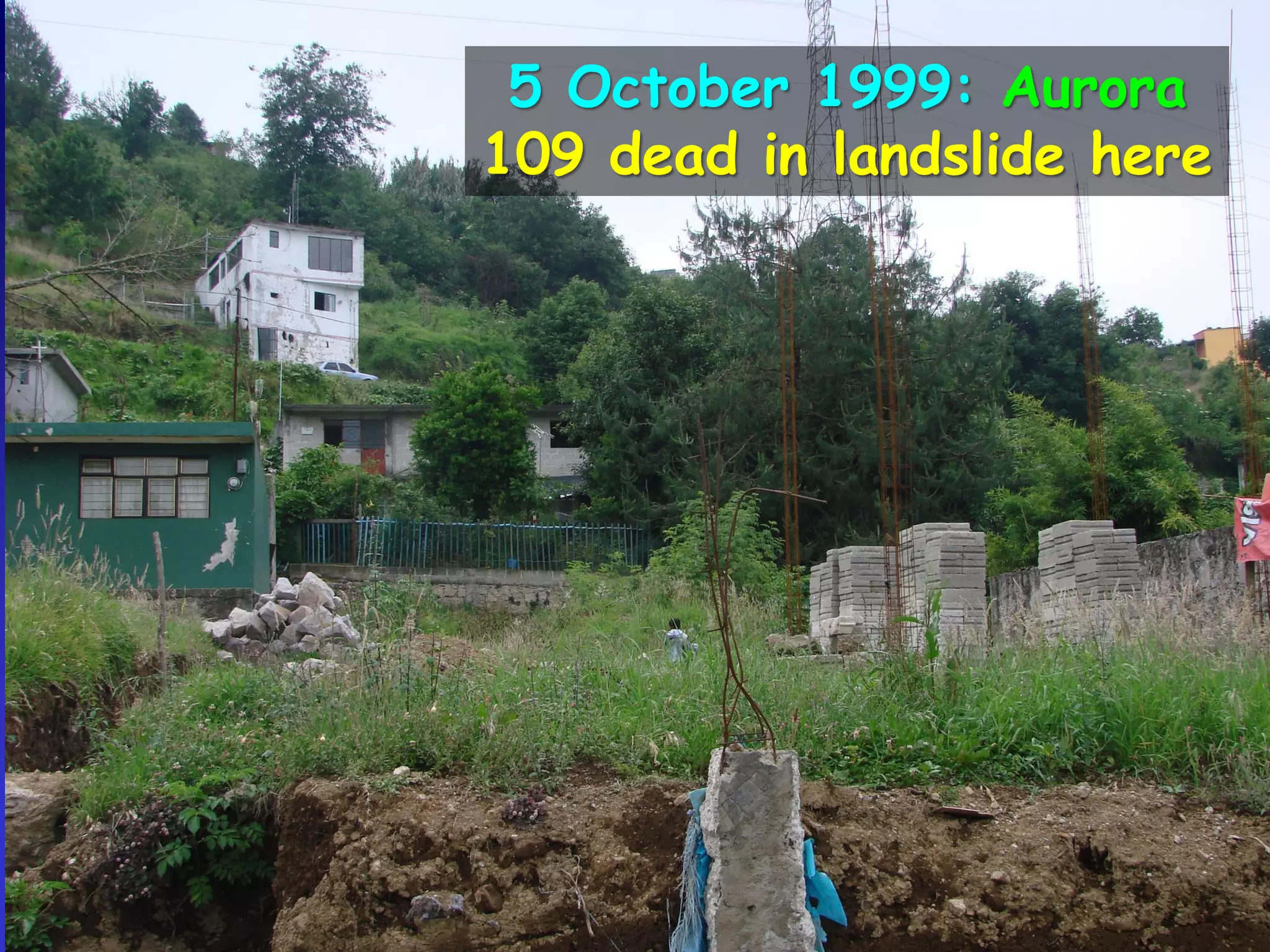
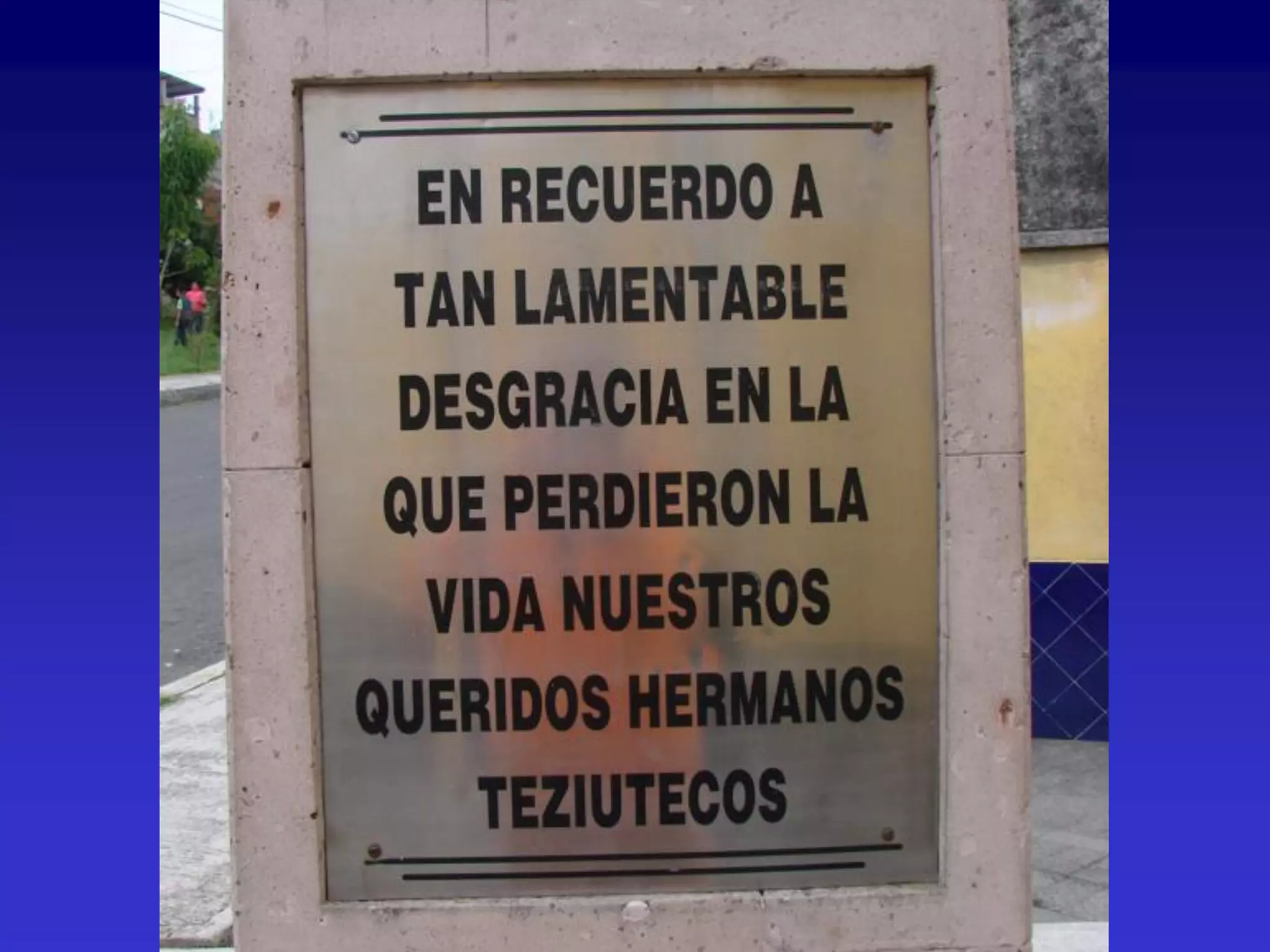
5 October 1999: Aurora
109 dead in landslide here
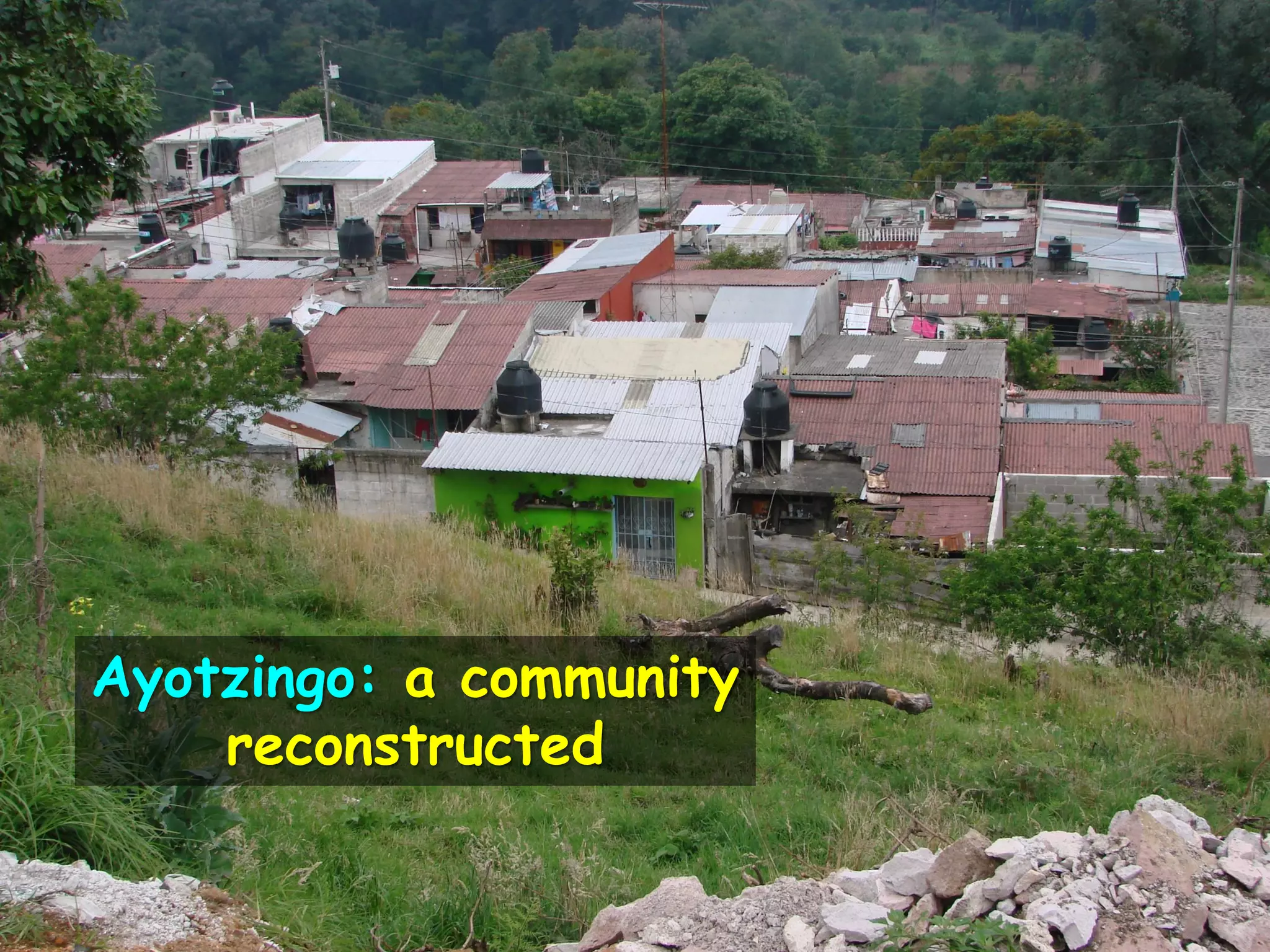
Ayotzingo: a community
reconstructed
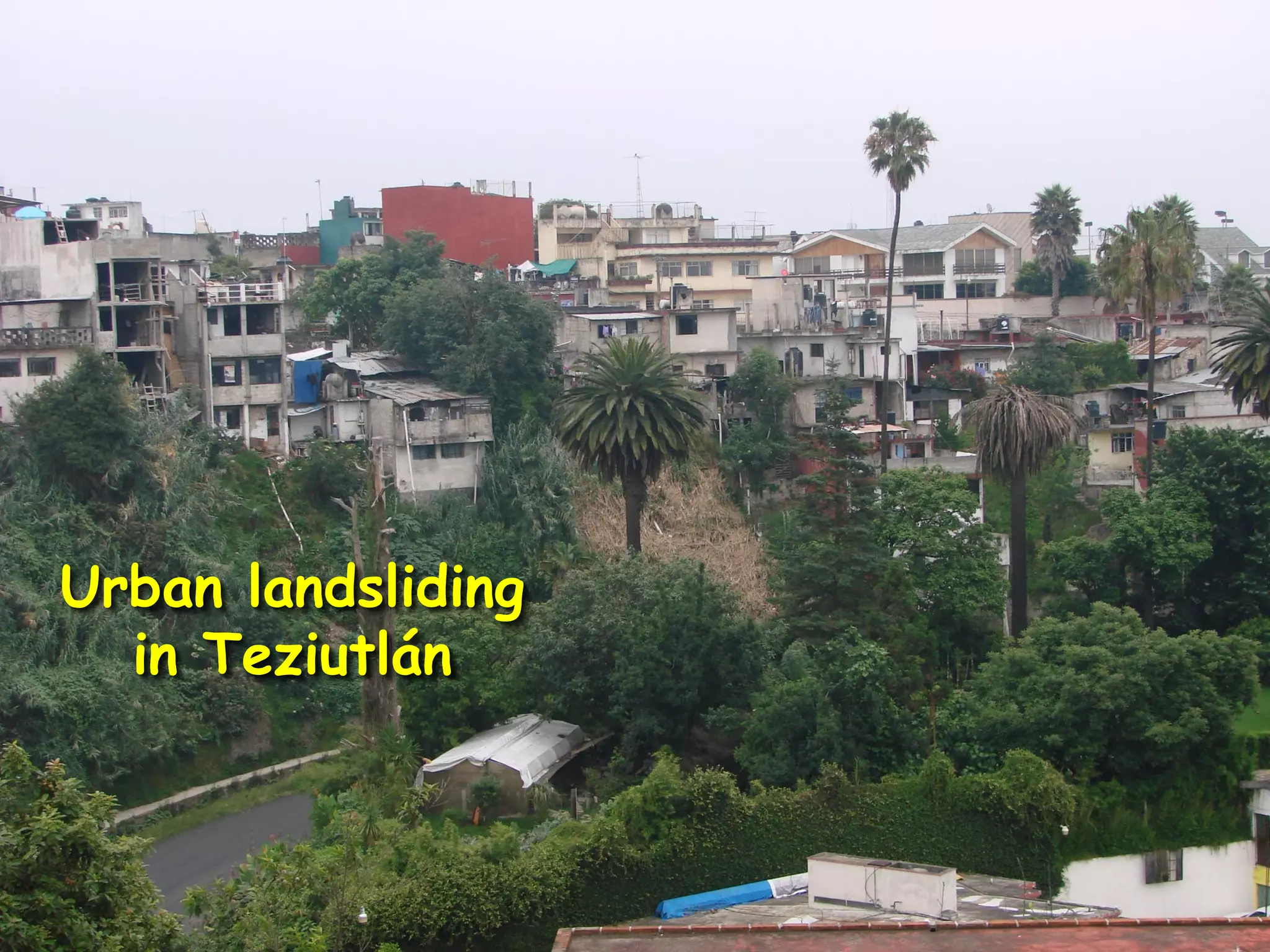
Urban landsliding
in Teziutlán
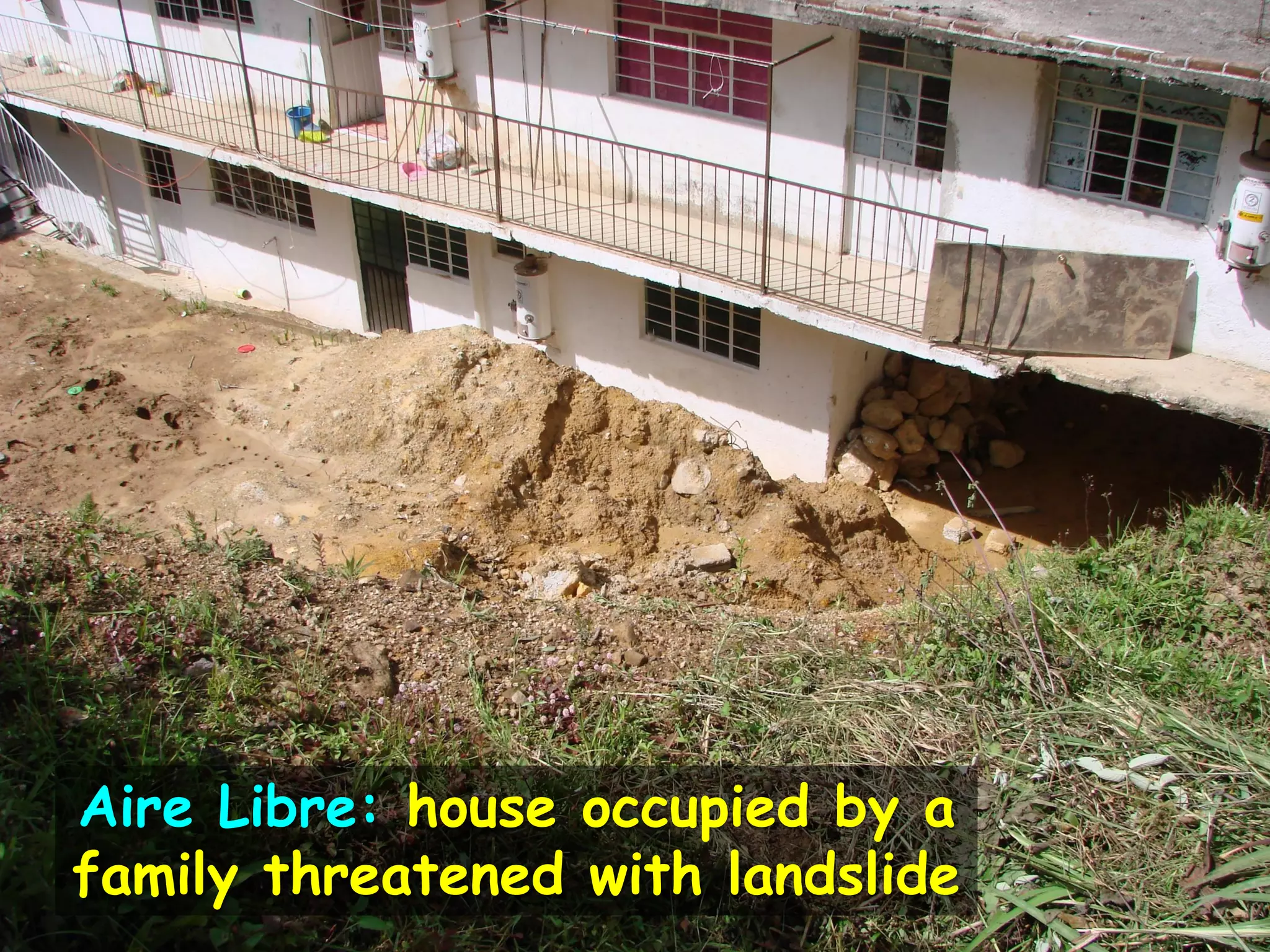
Aire Libre: house occupied by a
family threatened with landslide
Teziutlán: an emerging
civil protection system
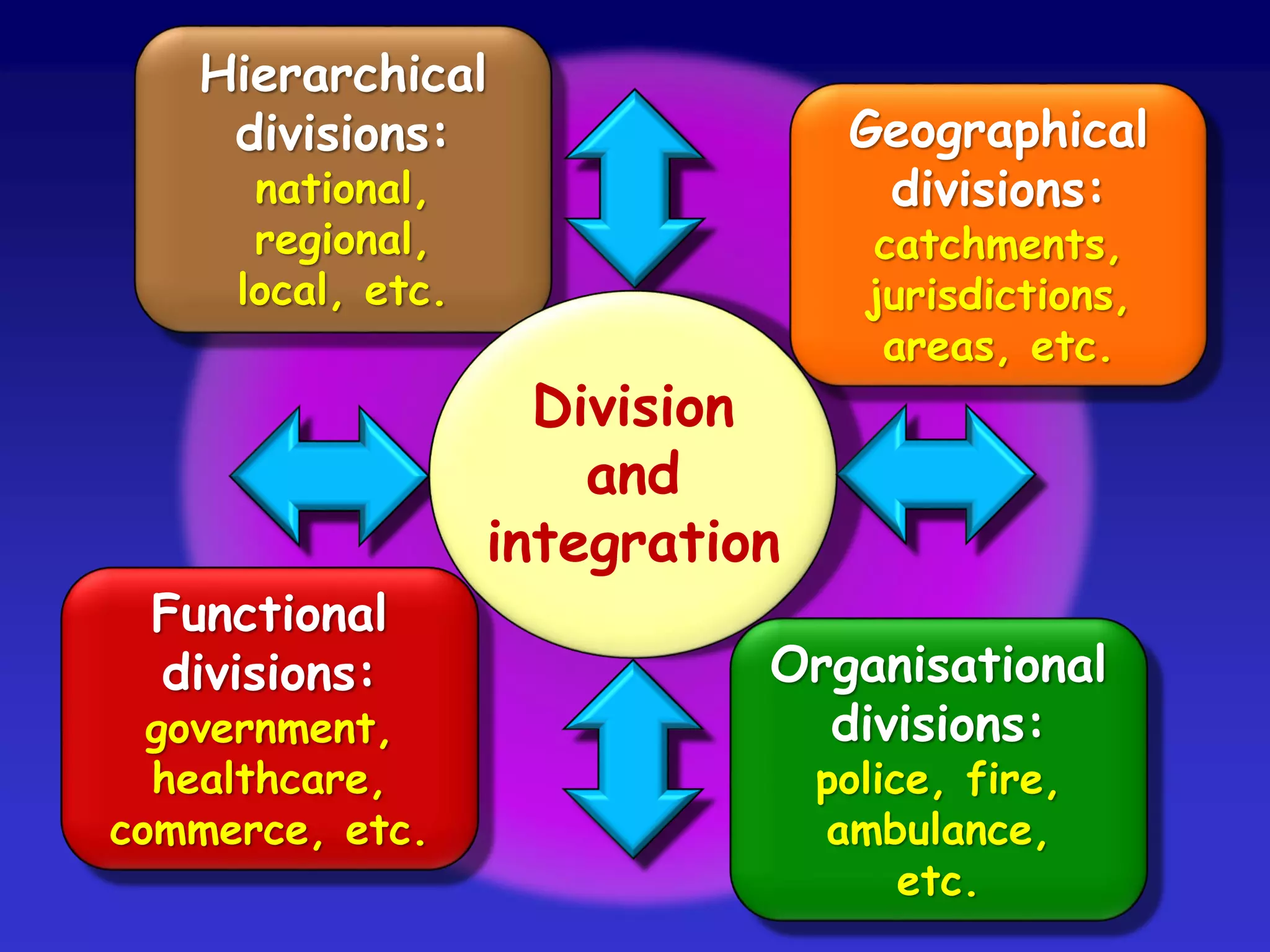
Functional
divisions:
government,
healthcare,
commerce, etc.
Hierarchical
divisions:
national,
regional,
local, etc.
Geographical
divisions:
catchments,
jurisdictions,
areas, etc.
Organisational
divisions:
police, fire,
ambulance,
etc.
Division
and
integration
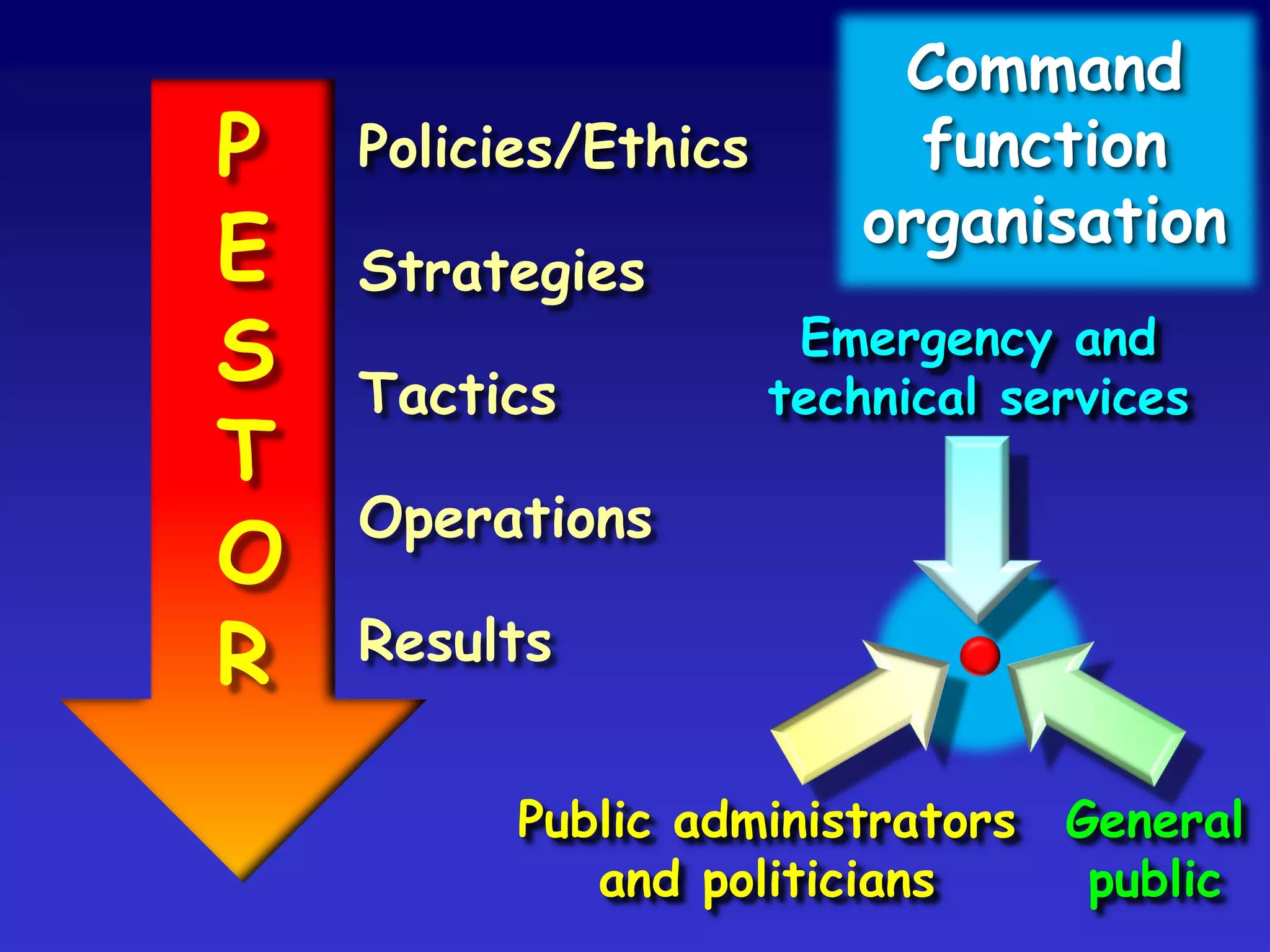
P
E
S
T
O
R
Policies/Ethics
Strategies
Tactics
Operations
Results
General
public
Public administrators
and politicians
Emergency and
technical services
Command
function
organisation
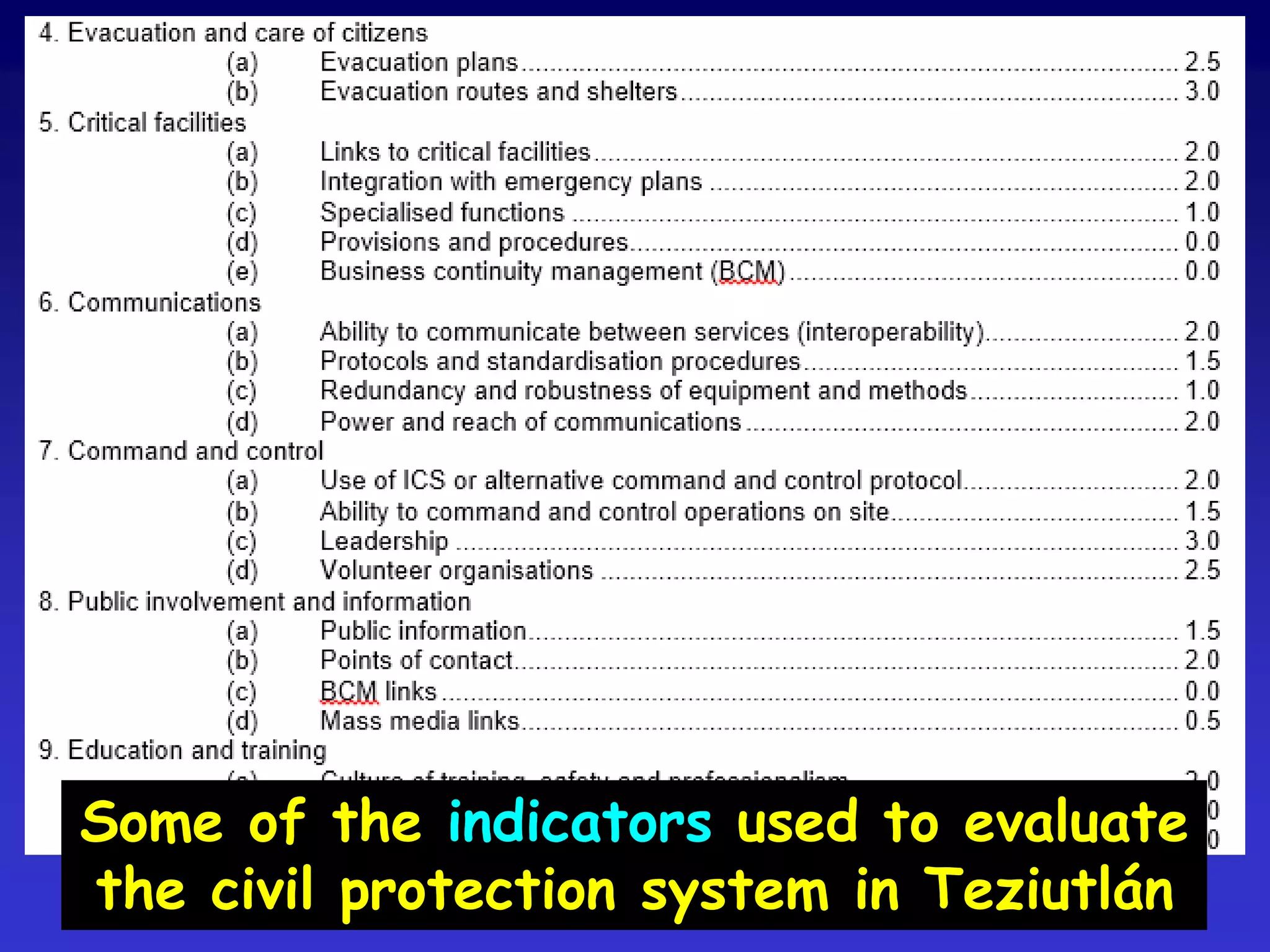
Some of the indicators used to evaluate
the civil protection system in Teziutlán
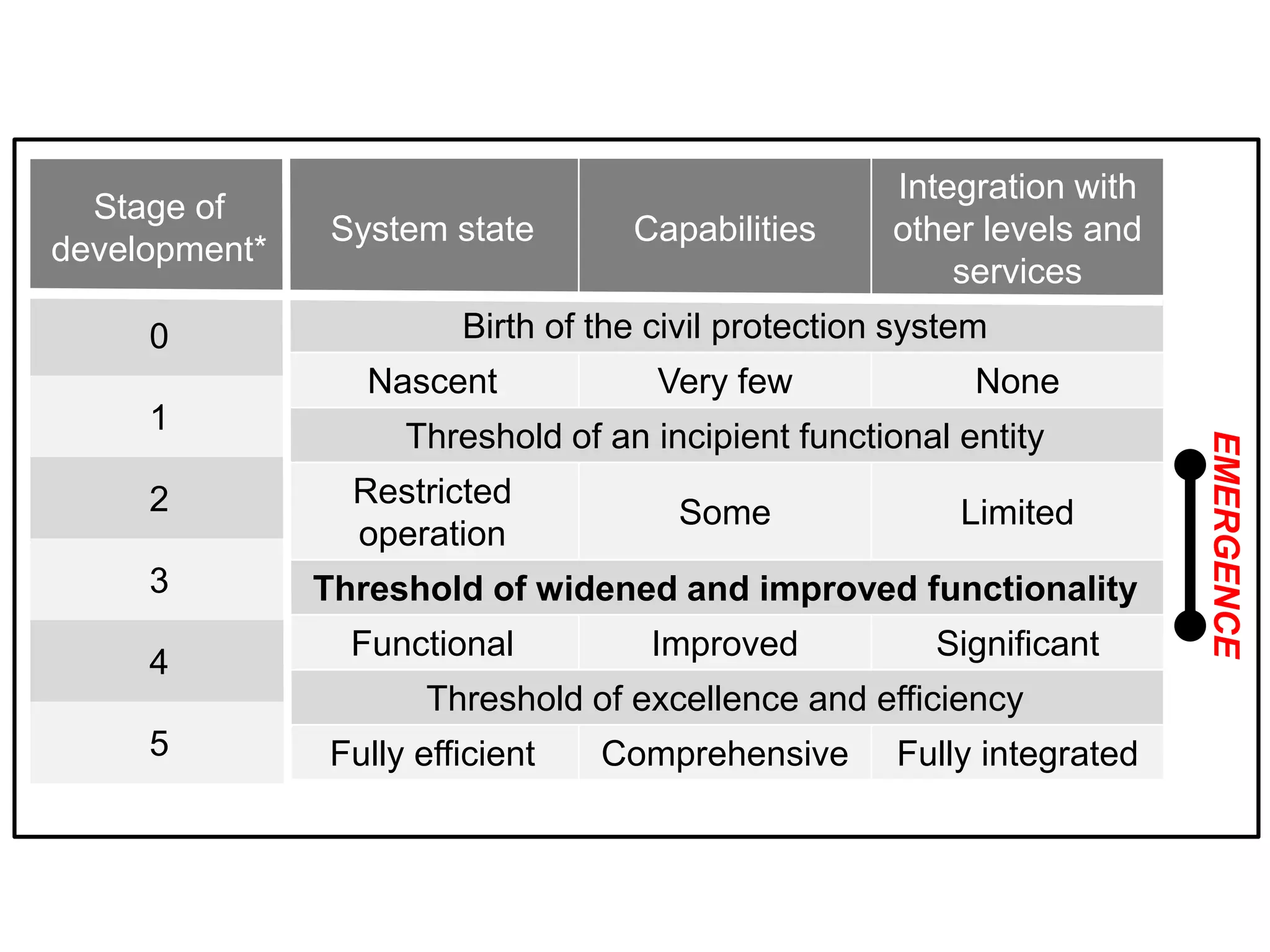
System state Capabilities
Integration with
other levels and
services
Birth of the civil protection system
Nascent Very few None
Threshold of an incipient functional entity
Restricted
operation
Some Limited
Threshold of widened and improved functionality
Functional Improved Significant
Threshold of excellence and efficiency
Fully efficient Comprehensive Fully integrated
Stage of
development*
0
1
2
3
4
5
EMERGENCE
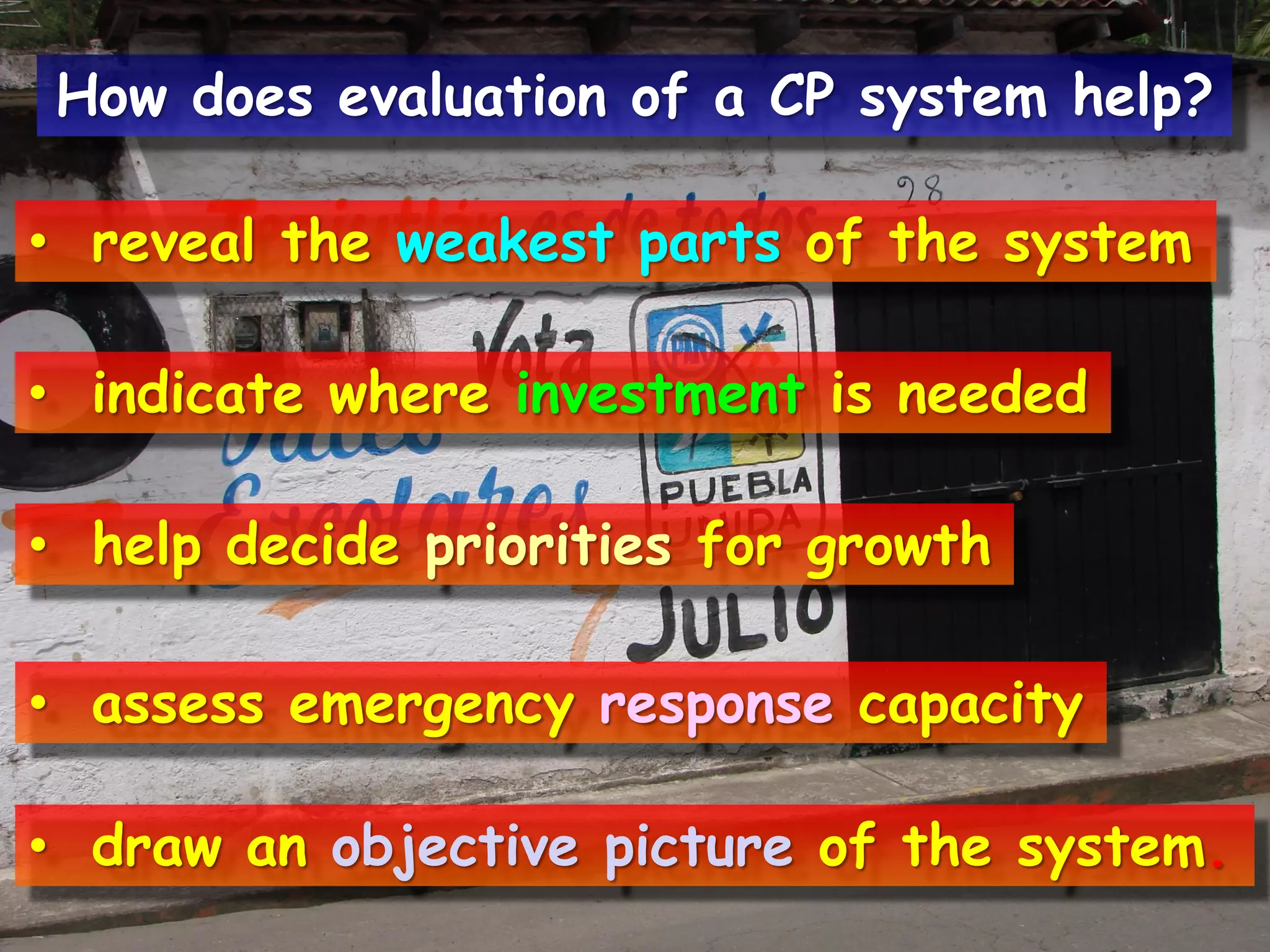
• reveal the weakest parts of the system
• indicate where investment is needed
• help decide priorities for growth
• assess emergency response capacity
• draw an objective picture of the system.
How does evaluation of a CP system help?
Conclusions
There is no doubt
that "we live in
interesting times".
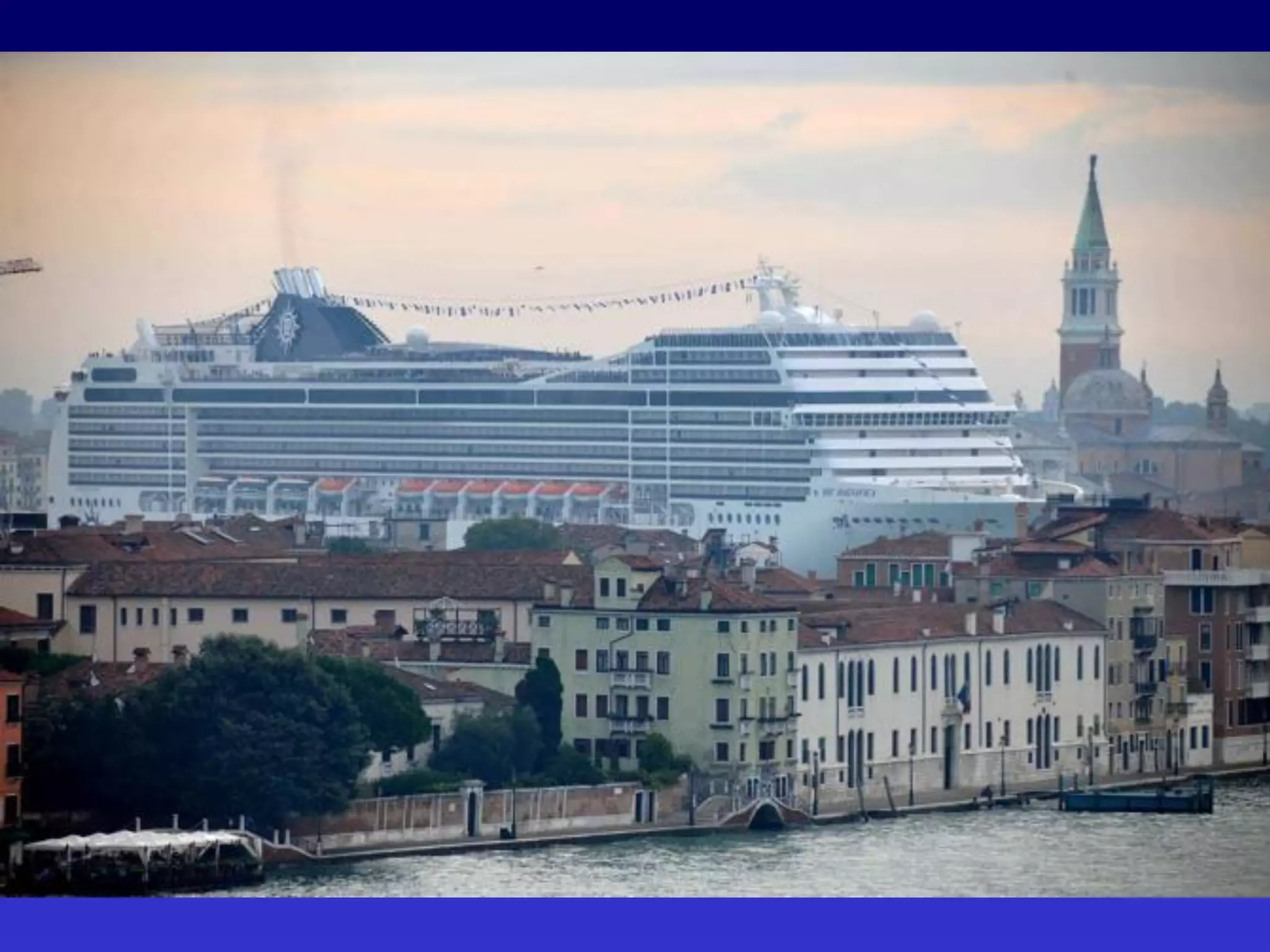
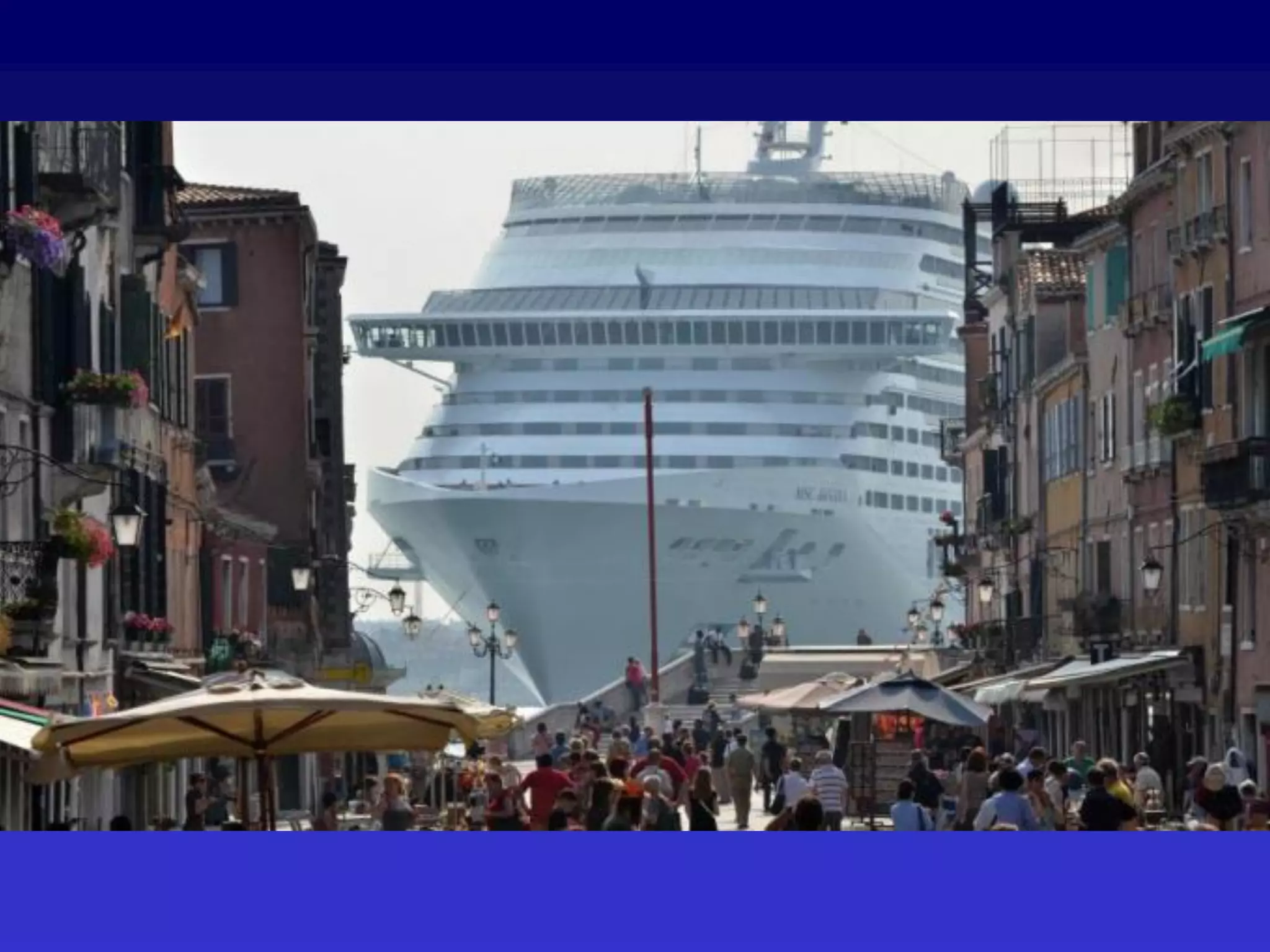
"The City of Venice joined the
[UNISDR Safe Cities] Campaign
as a Role Model for cultural heritage
protection and climate change adaptation."
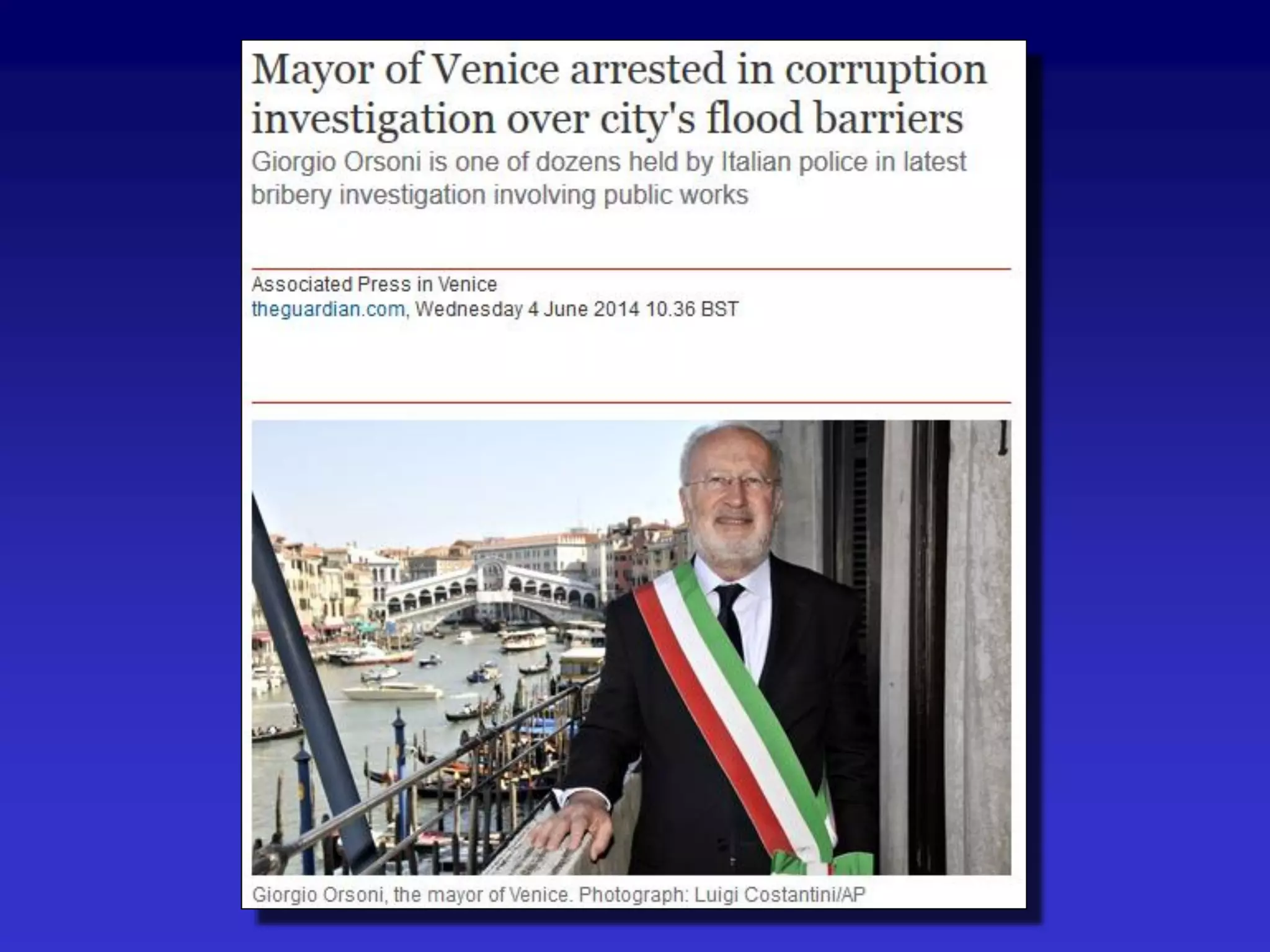
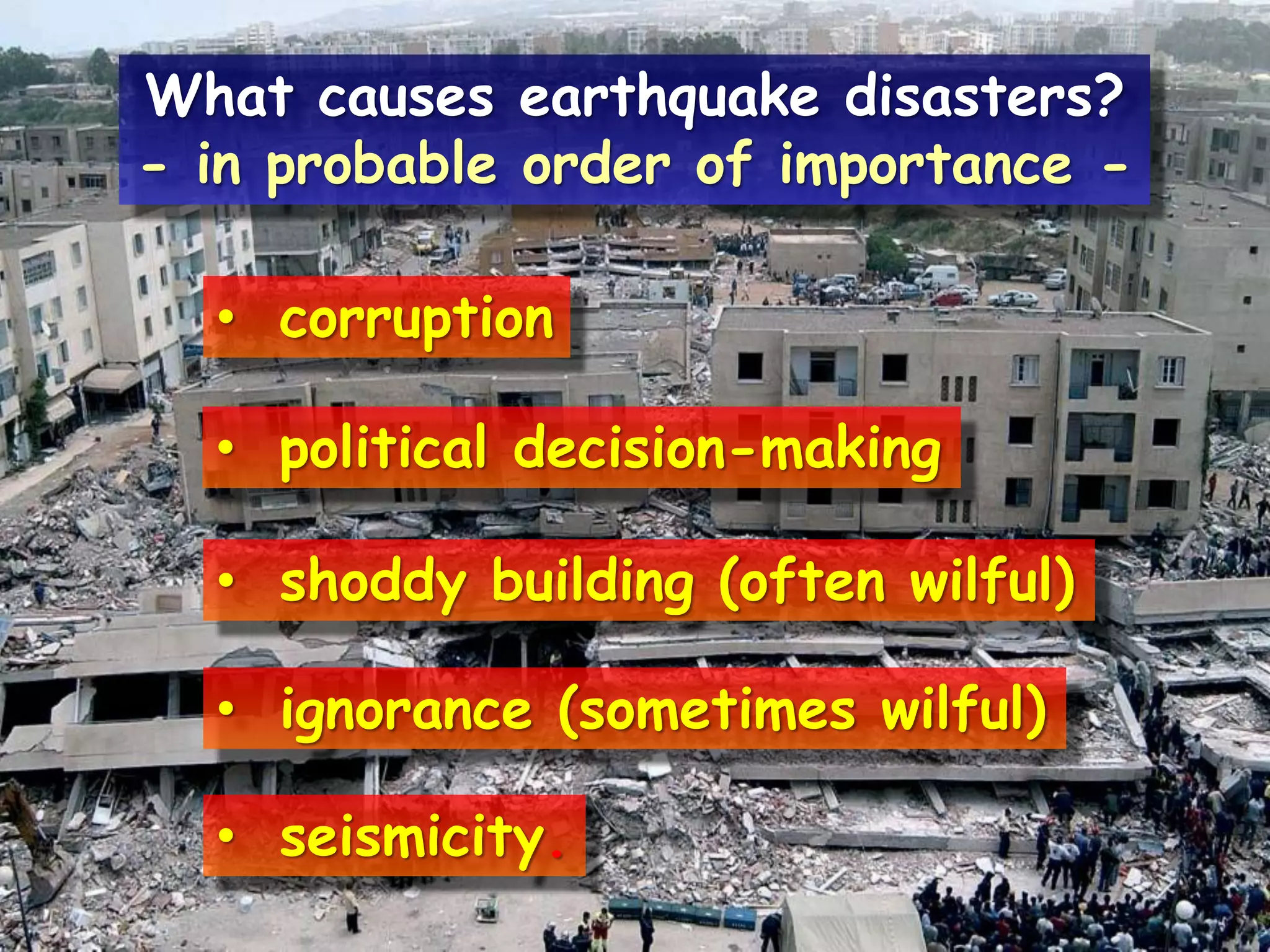
• corruption
• political decision-making
• shoddy building (often wilful)
• ignorance (sometimes wilful)
• seismicity.
What causes earthquake disasters?
- in probable order of importance -
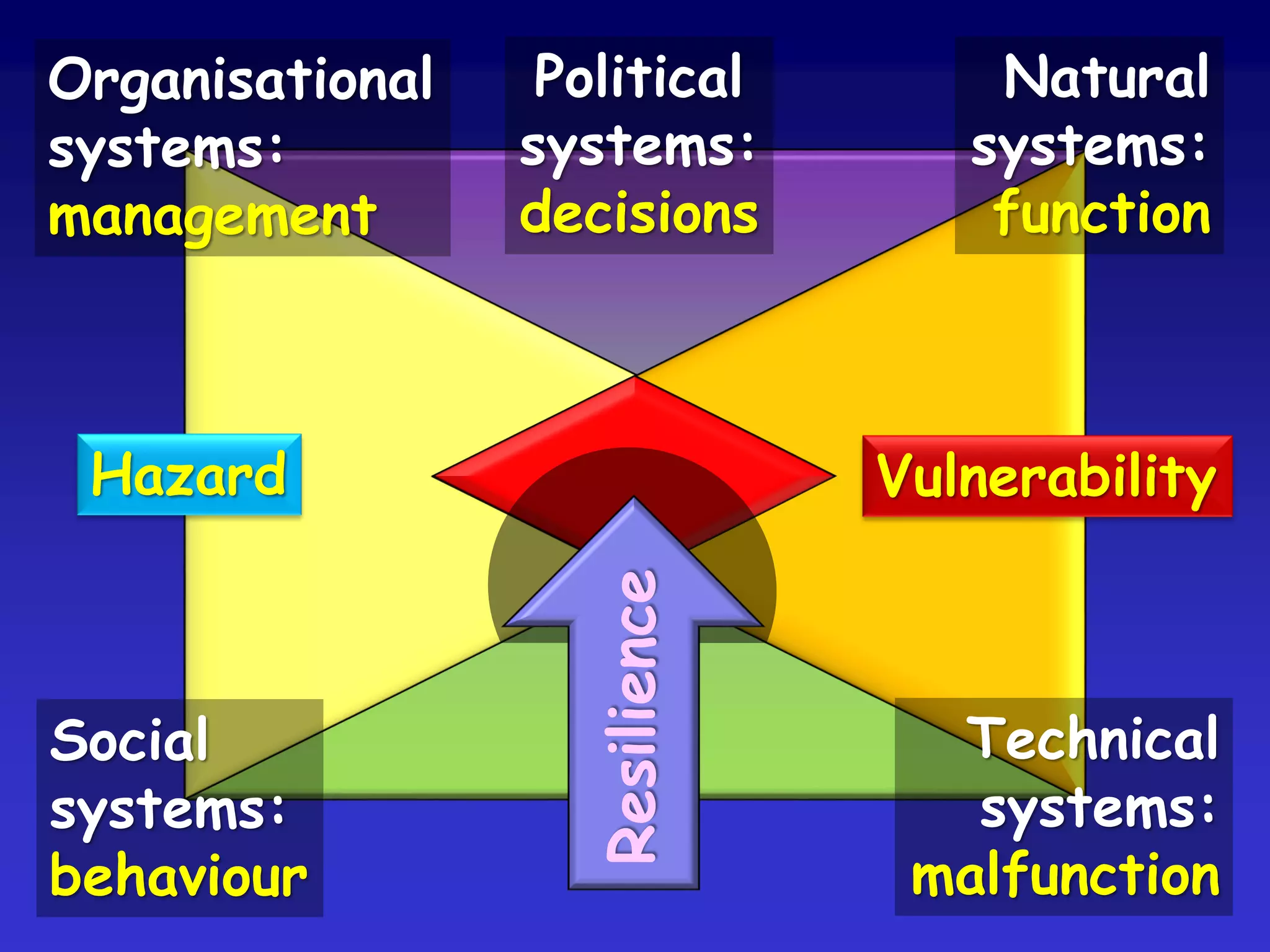
Organisational
systems:
management
Social
systems:
behaviour
Natural
systems:
function
Technical
systems:
malfunction
VulnerabilityHazard
Resilience
Political
systems:
decisions
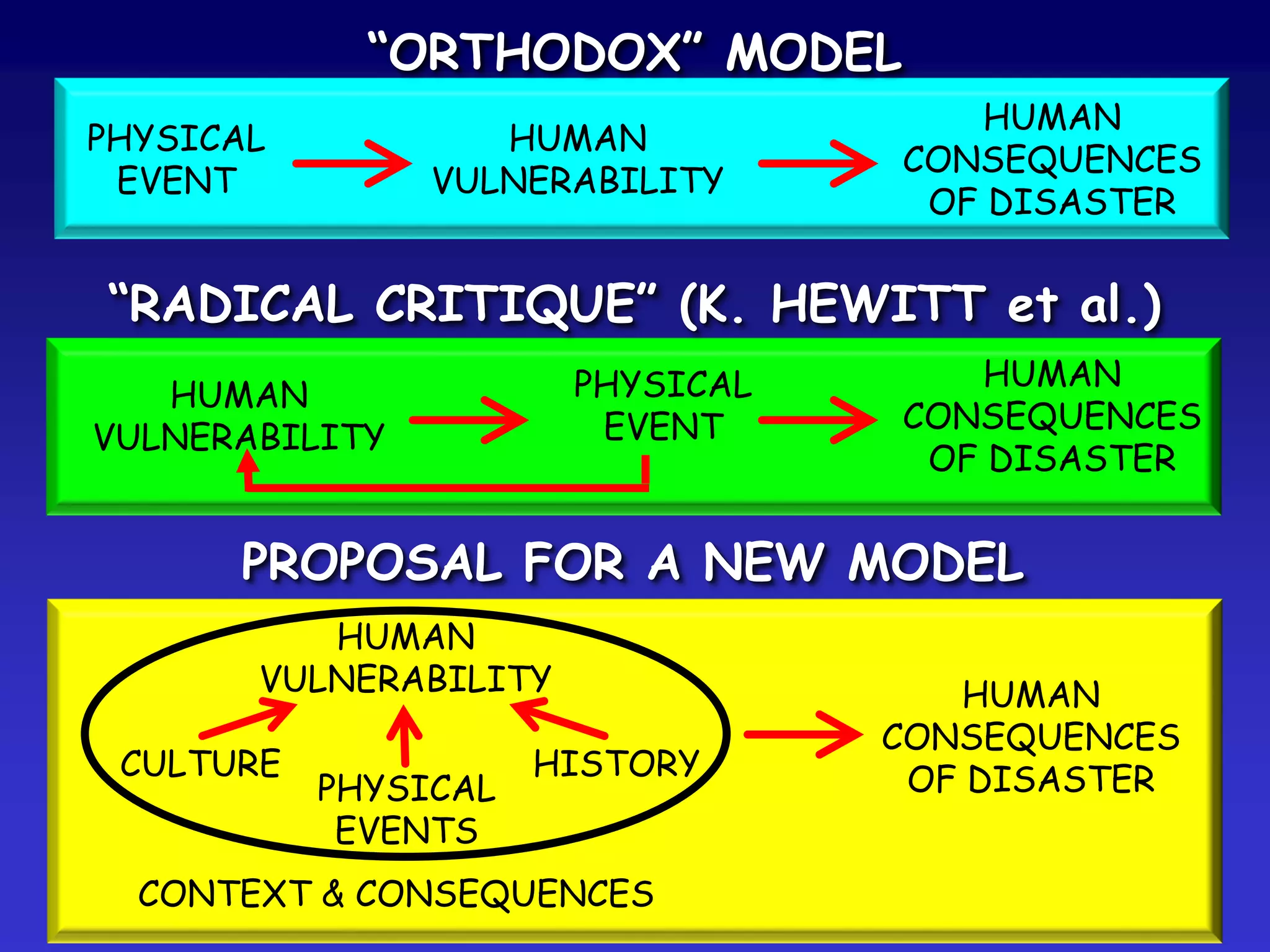
HUMAN
CONSEQUENCES
OF DISASTER
“ORTHODOX” MODEL
PHYSICAL
EVENT
HUMAN
VULNERABILITY
“RADICAL CRITIQUE” (K. HEWITT et al.)
HUMAN
CONSEQUENCES
OF DISASTER
HUMAN
VULNERABILITY
PHYSICAL
EVENT
PROPOSAL FOR A NEW MODEL
HUMAN
CONSEQUENCES
OF DISASTER
HUMAN
VULNERABILITY
CULTURE HISTORY
PHYSICAL
EVENTS
CONTEXT & CONSEQUENCES
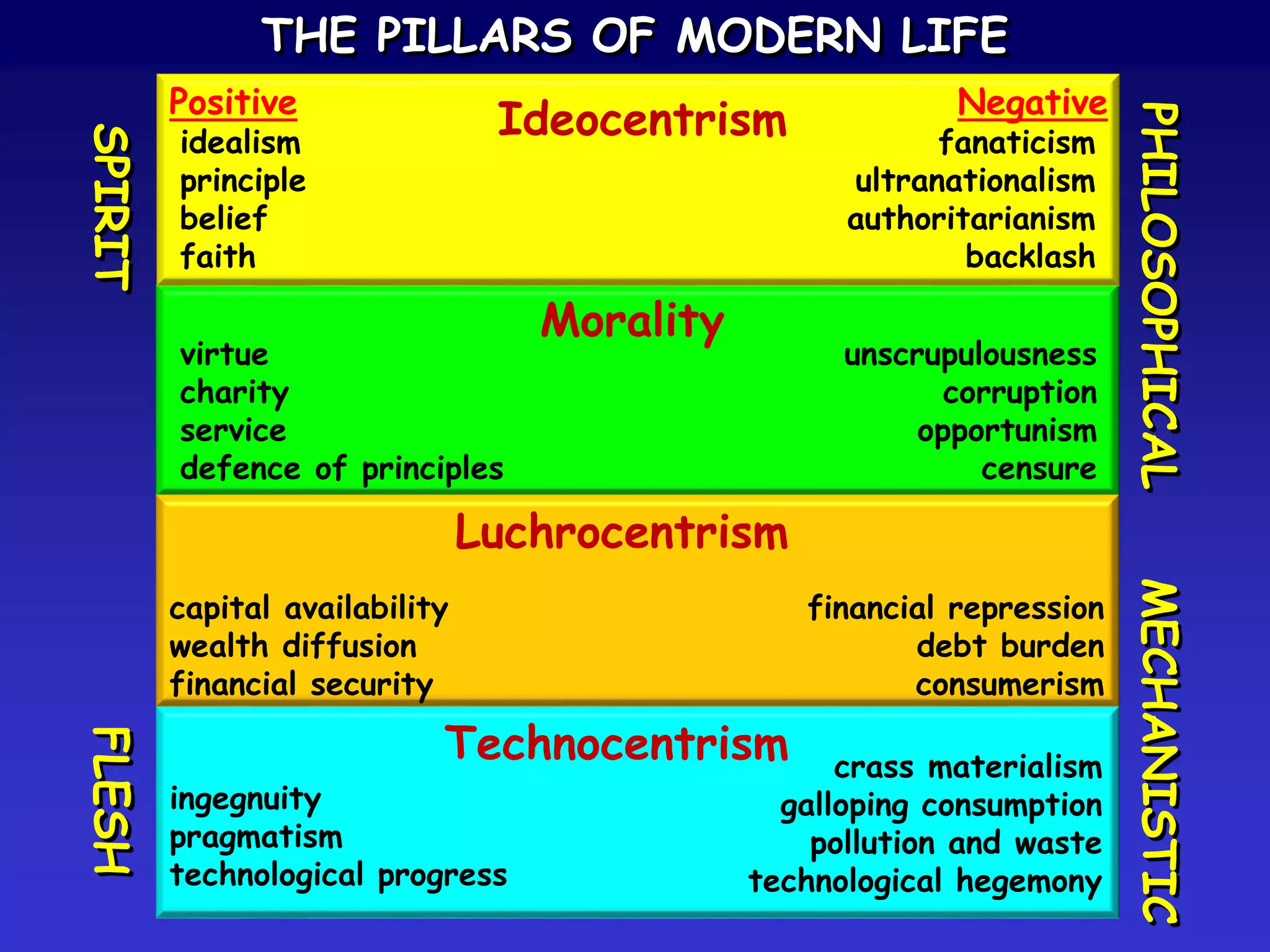
THE PILLARS OF MODERN LIFE
idealism
principle
belief
faith
fanaticism
ultranationalism
authoritarianism
backlash
virtue
charity
service
defence of principles
unscrupulousness
corruption
opportunism
censure
capital availability
wealth diffusion
financial security
financial repression
debt burden
consumerism
ingegnuity
pragmatism
technological progress
crass materialism
galloping consumption
pollution and waste
technological hegemony
Ideocentrism
Morality
Luchrocentrism
Technocentrism
SPIRITFLESH
PHILOSOPHICALMECHANISTIC
Positive Negative
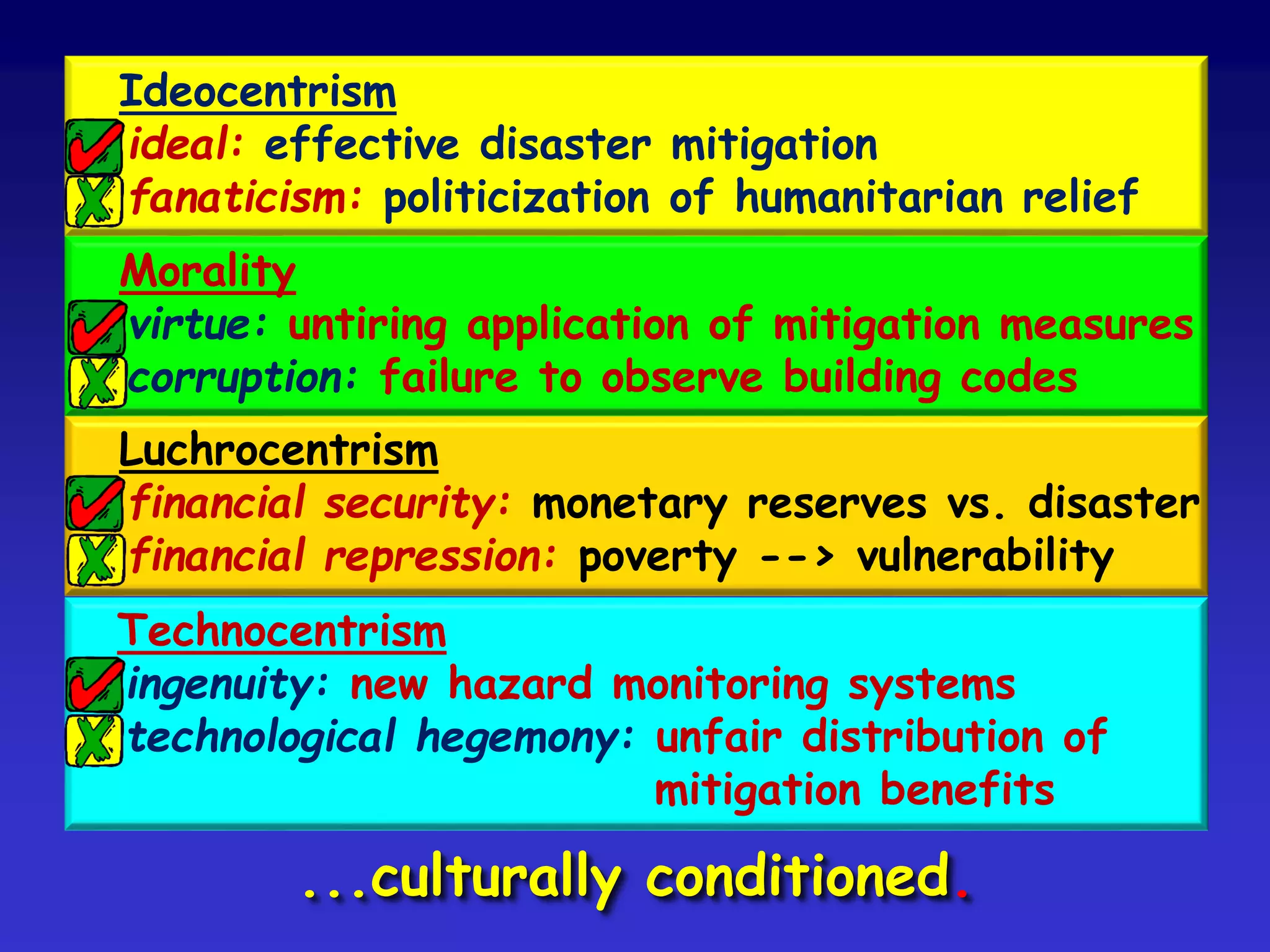
...culturally conditioned.
Ideocentrism
+ ideal: effective disaster mitigation
- fanaticism: politicization of humanitarian relief
Morality
+ virtue: untiring application of mitigation measures
- corruption: failure to observe building codes
Luchrocentrism
+ financial security: monetary reserves vs. disaster
- financial repression: poverty --> vulnerability
Technocentrism
+ ingenuity: new hazard monitoring systems
- technological hegemony: unfair distribution of
mitigation benefits
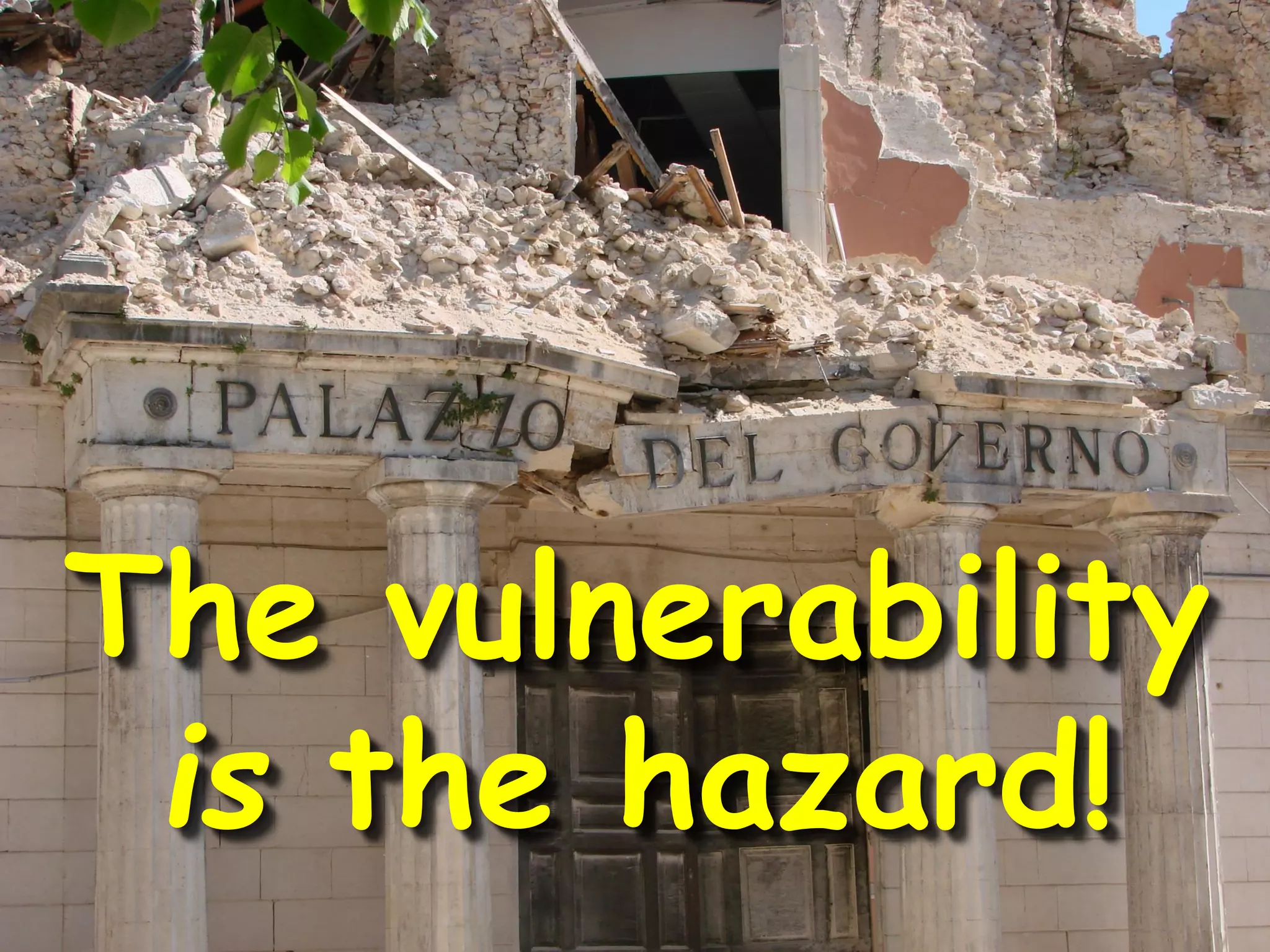
The vulnerability
is the hazard!
david.alexander@ucl.ac.uk
www.slideshare.net/dealexander
emergency-planning.blogspot.com
Ishinomaki

Enhancing Resilience 2