Safety and Security:
How Civil Protection
Grew Out of Civil Defence
Prof. David E. Alexander
Part 1: How It All Started
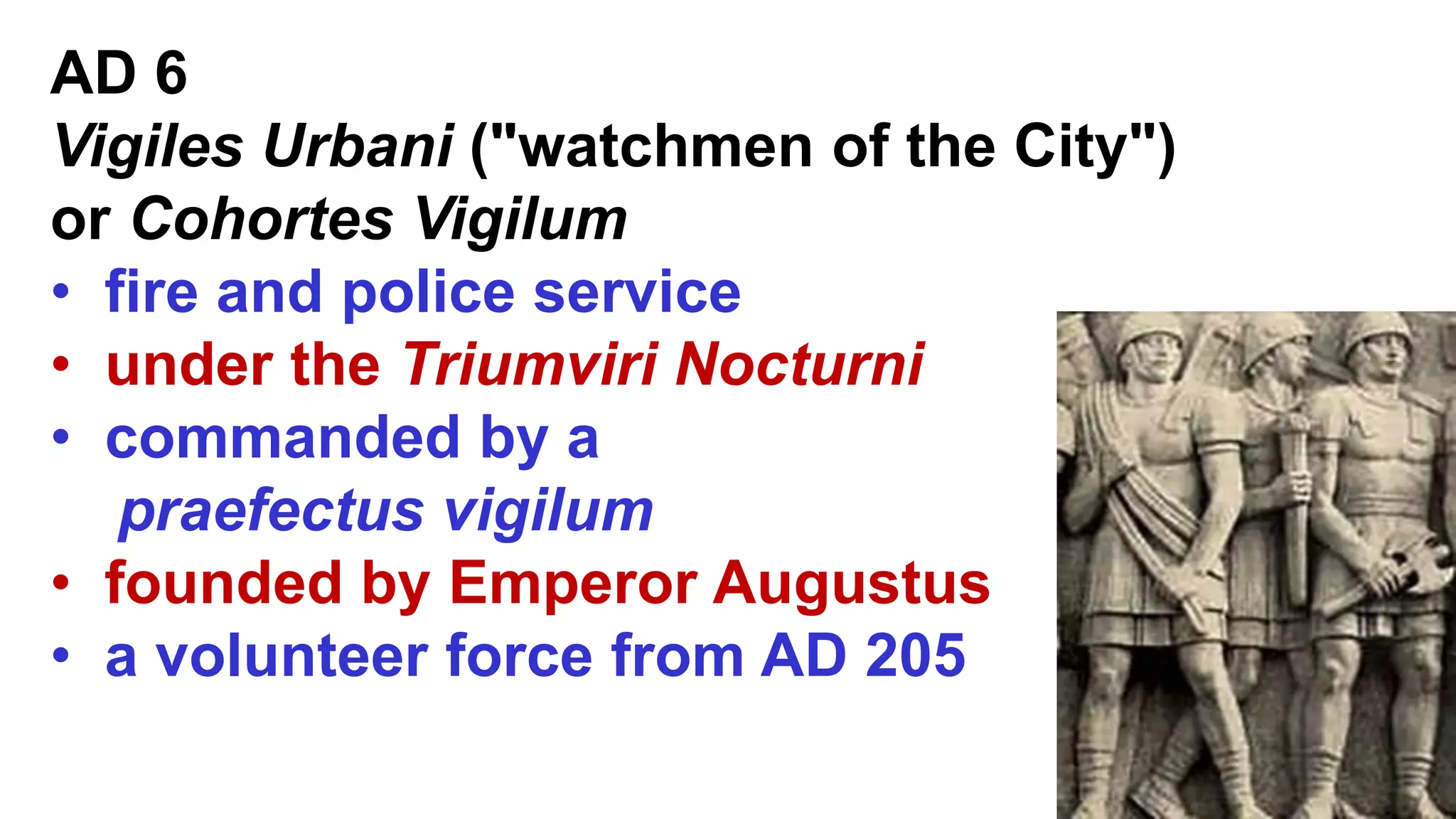
AD 6
Vigiles Urbani ("watchmen of the City")
or Cohortes Vigilum
• fire and police service
• under the Triumviri Nocturni
• commanded by a
praefectus vigilum
• founded by Emperor Augustus
• a volunteer force from AD 205
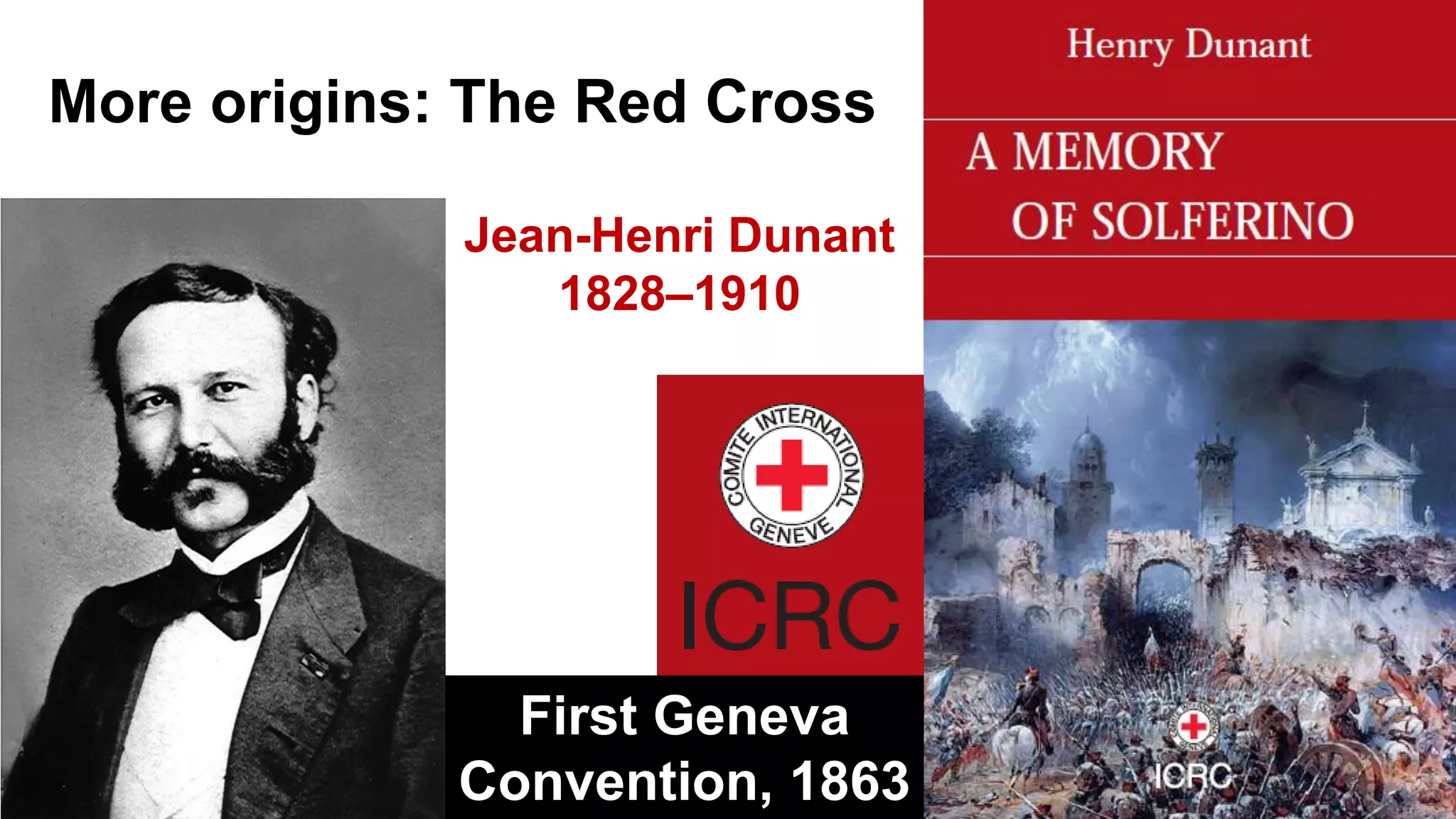
More origins: The Red Cross
Jean-Henri Dunant
1828–1910
First Geneva
Convention, 1863
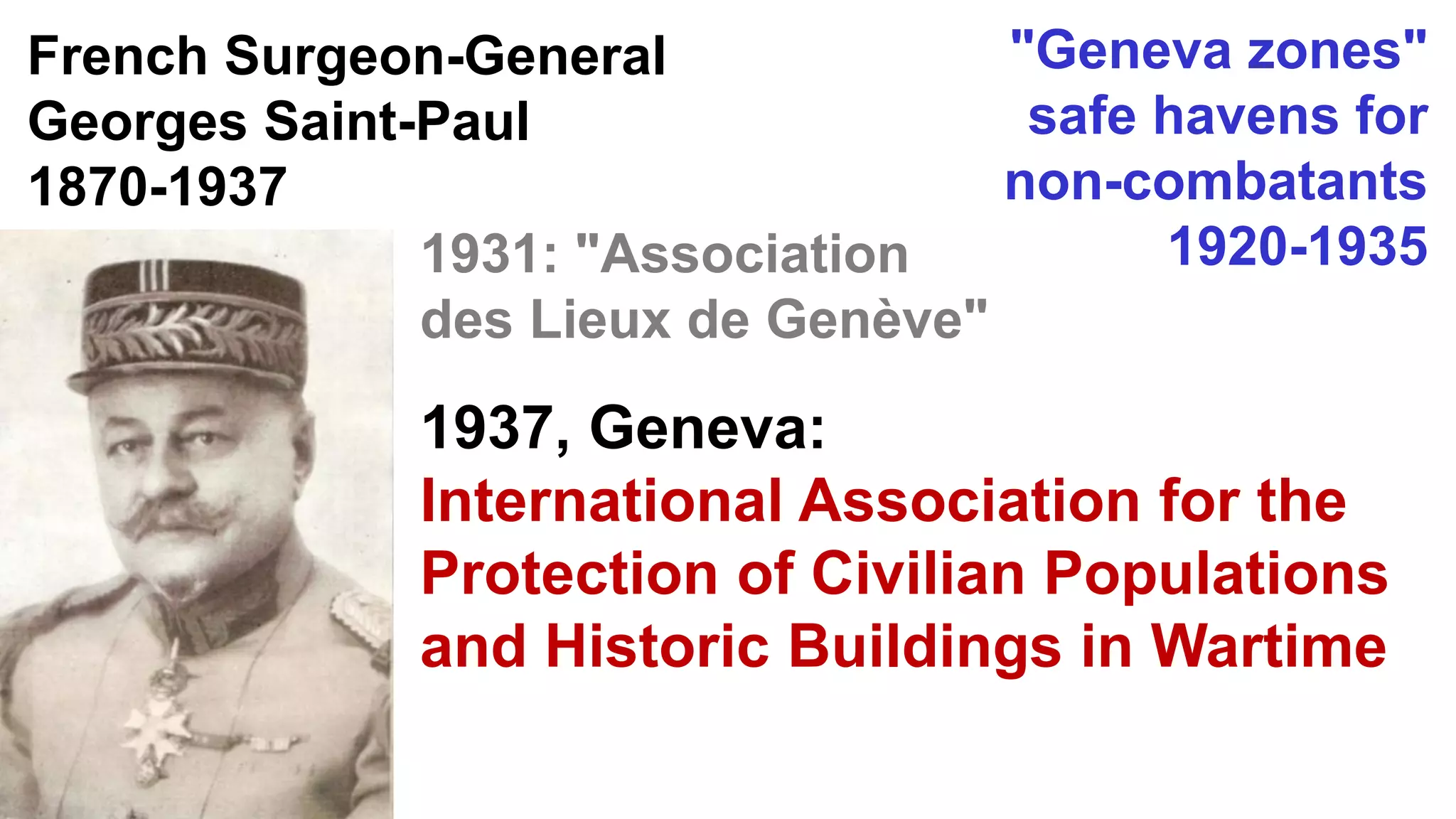
French Surgeon-General
Georges Saint-Paul
1870-1937
"Geneva zones"
safe havens for
non-combatants
1920-19351931: "Association
des Lieux de Genève"
1937, Geneva:
International Association for the
Protection of Civilian Populations
and Historic Buildings in Wartime
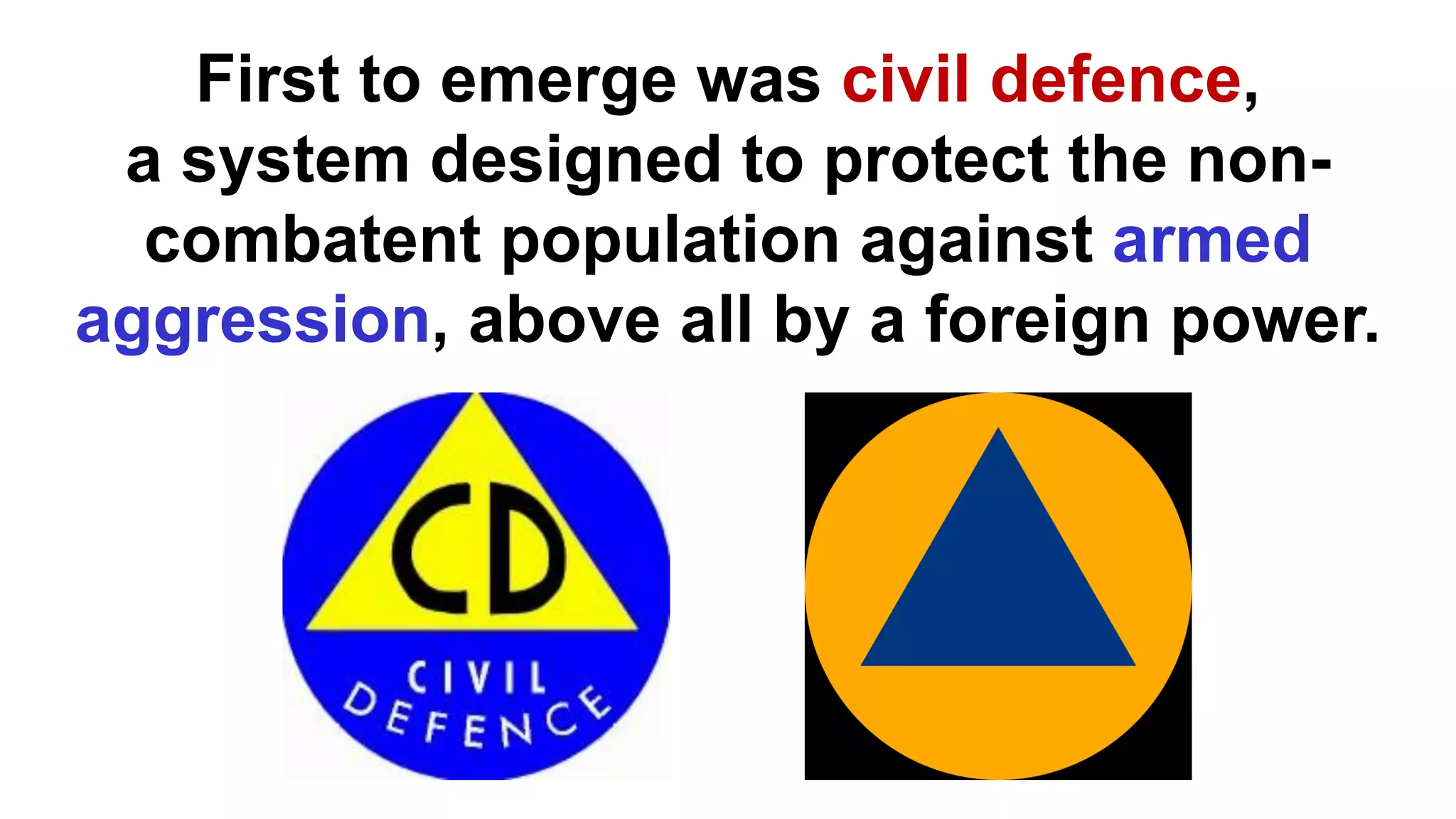
First to emerge was civil defence,
a system designed to protect the non-
combatent population against armed
aggression, above all by a foreign power.
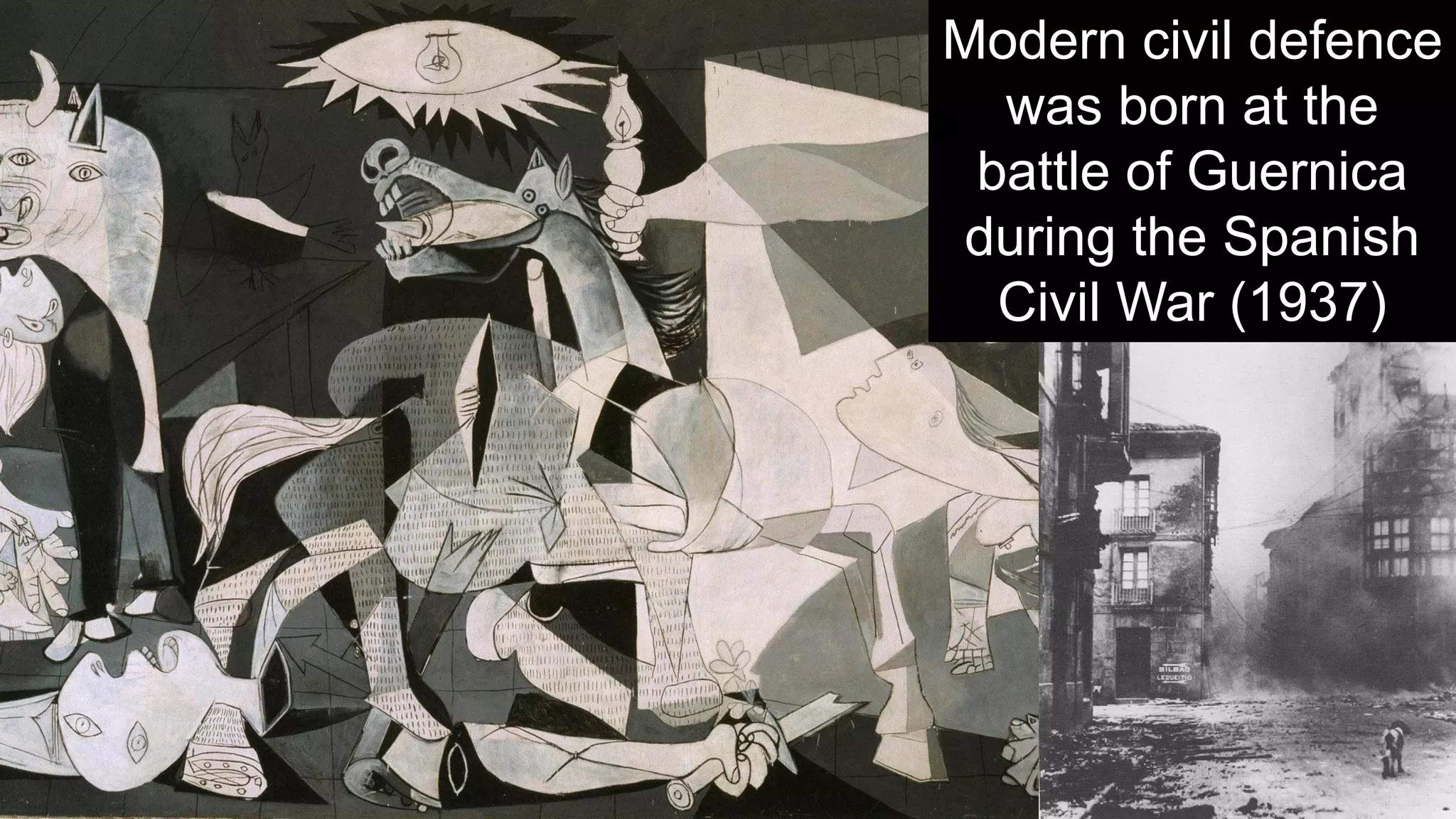
Modern civil defence
was born at the
battle of Guernica
during the Spanish
Civil War (1937)
DEFINITION:
Civil defence means a centralised system at
the level of national government designed to
protect institutions and their employees, and
eventually the non-combatent general
population, against the effects of a state of war
or the risk of fighting on the home front.
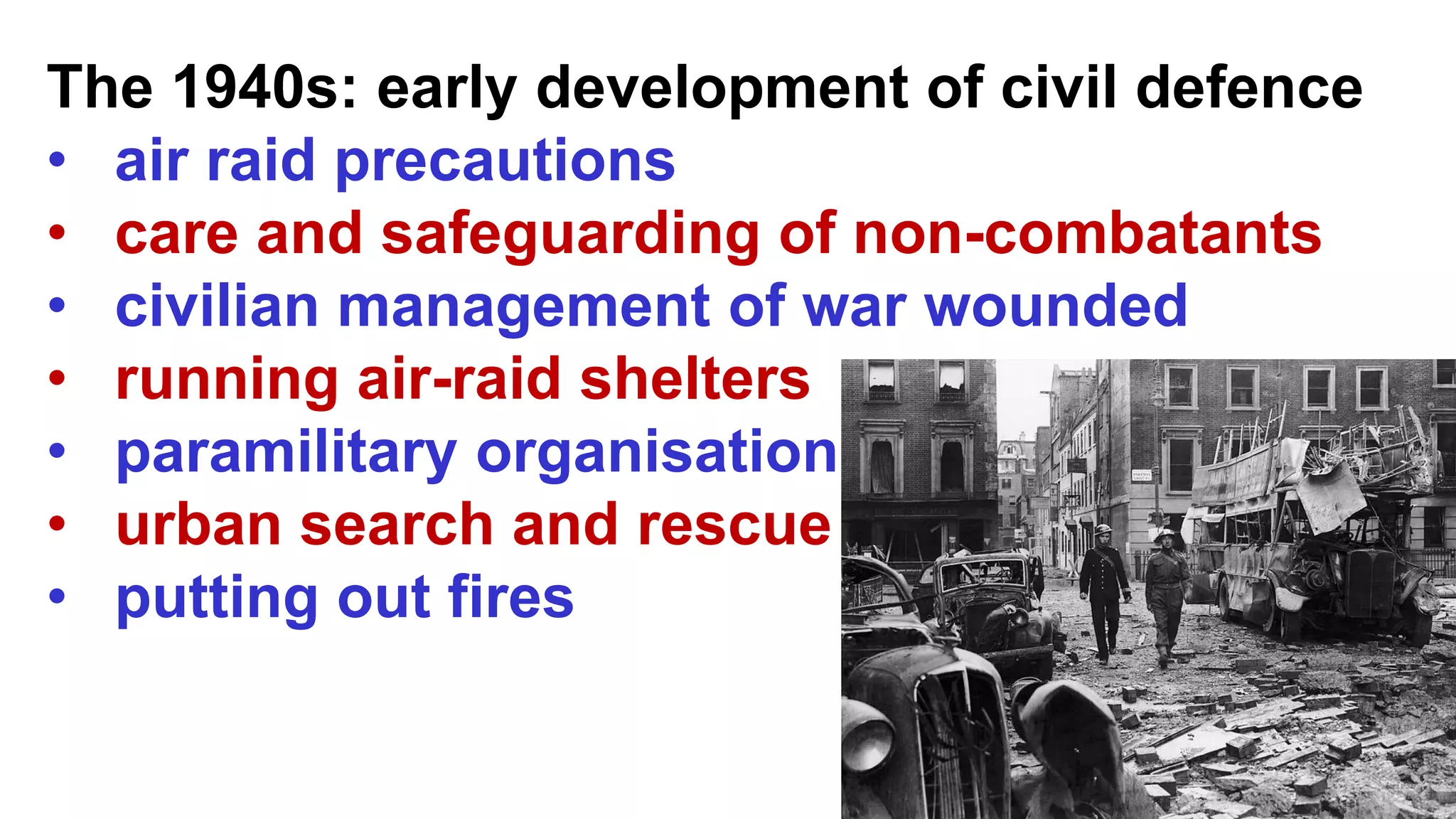
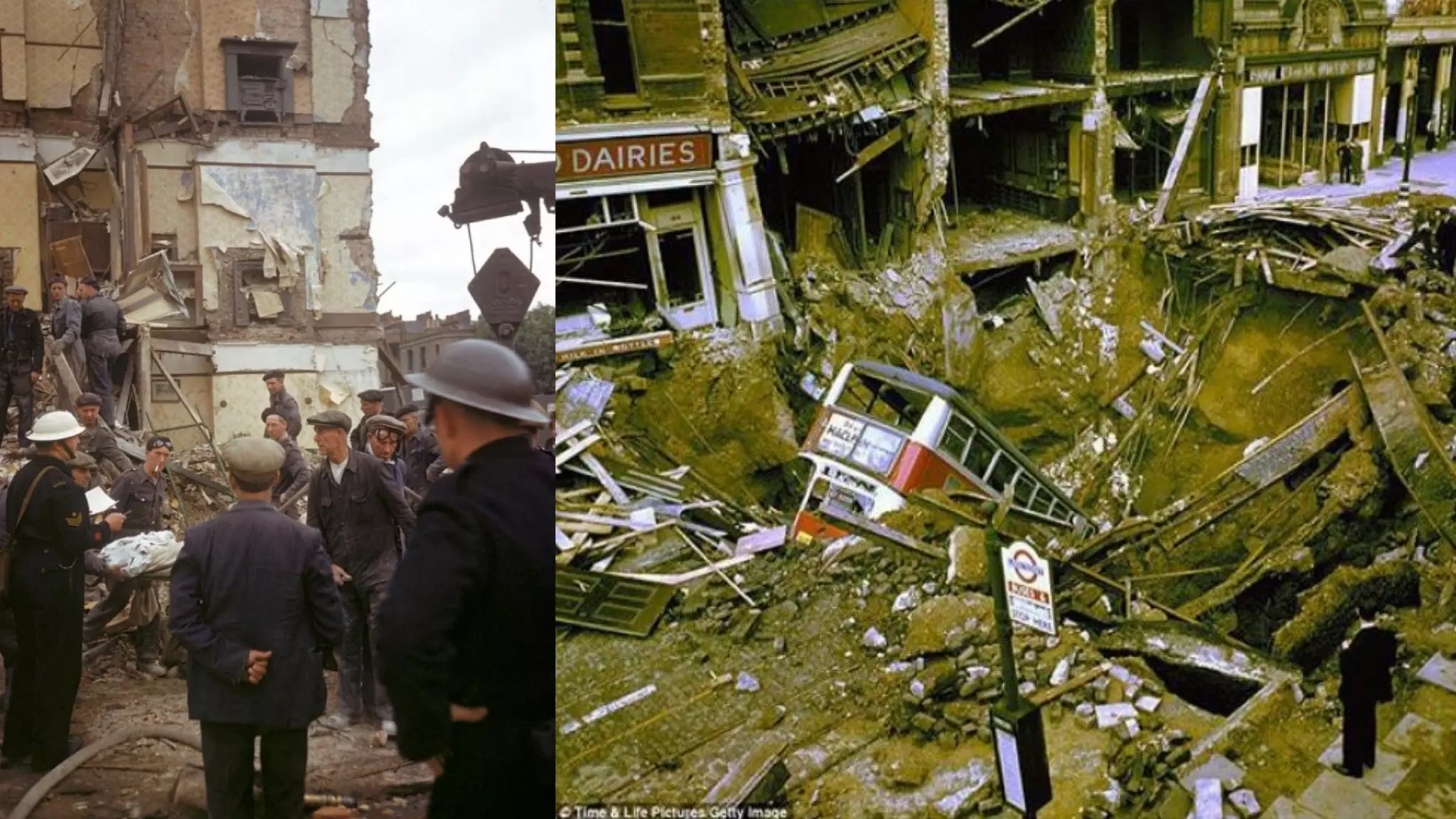
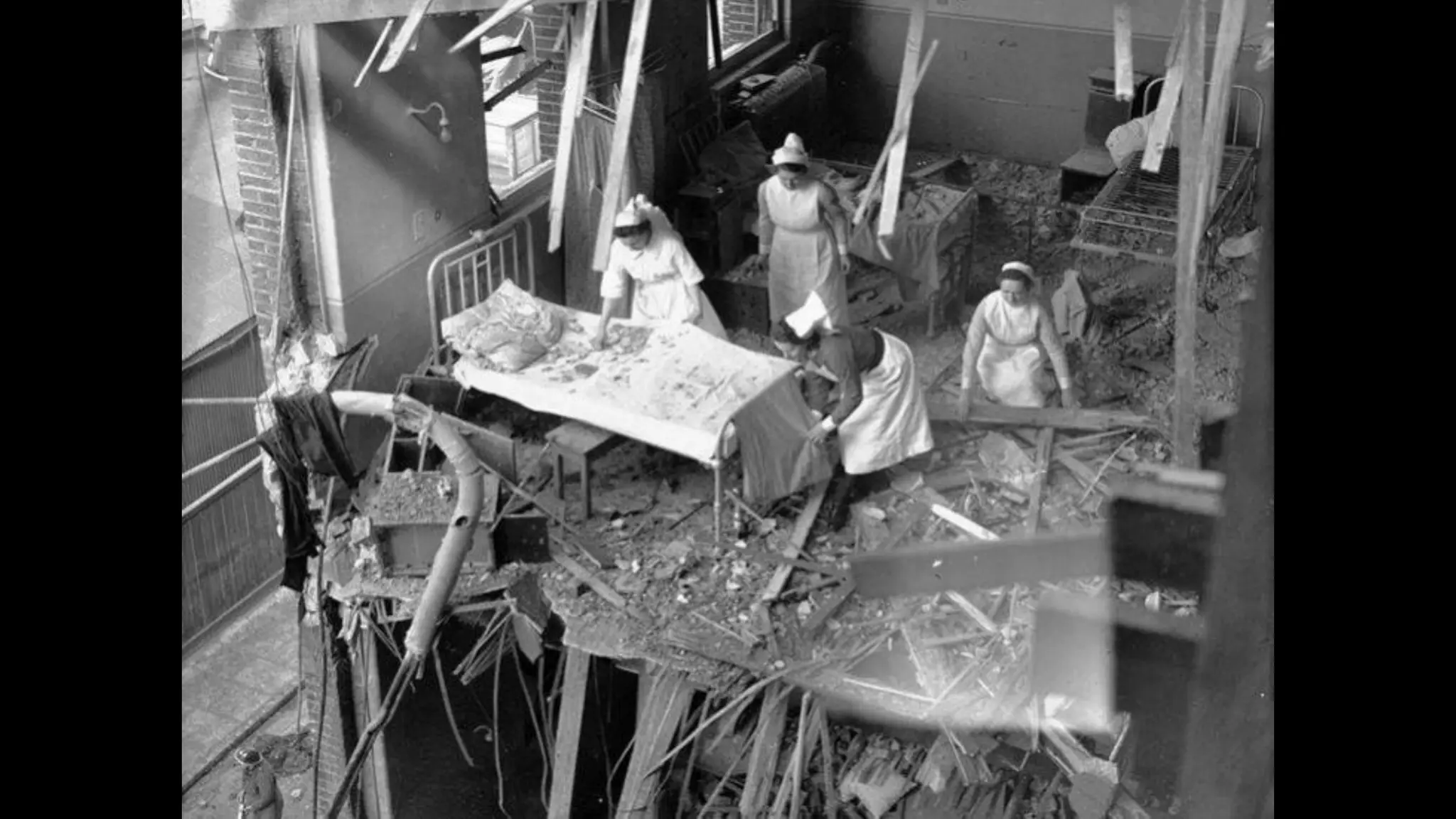
The 1940s: early development of civil defence
• air raid precautions
• care and safeguarding of non-combatants
• civilian management of war wounded
• running air-raid shelters
• paramilitary organisation
• urban search and rescue
• putting out fires
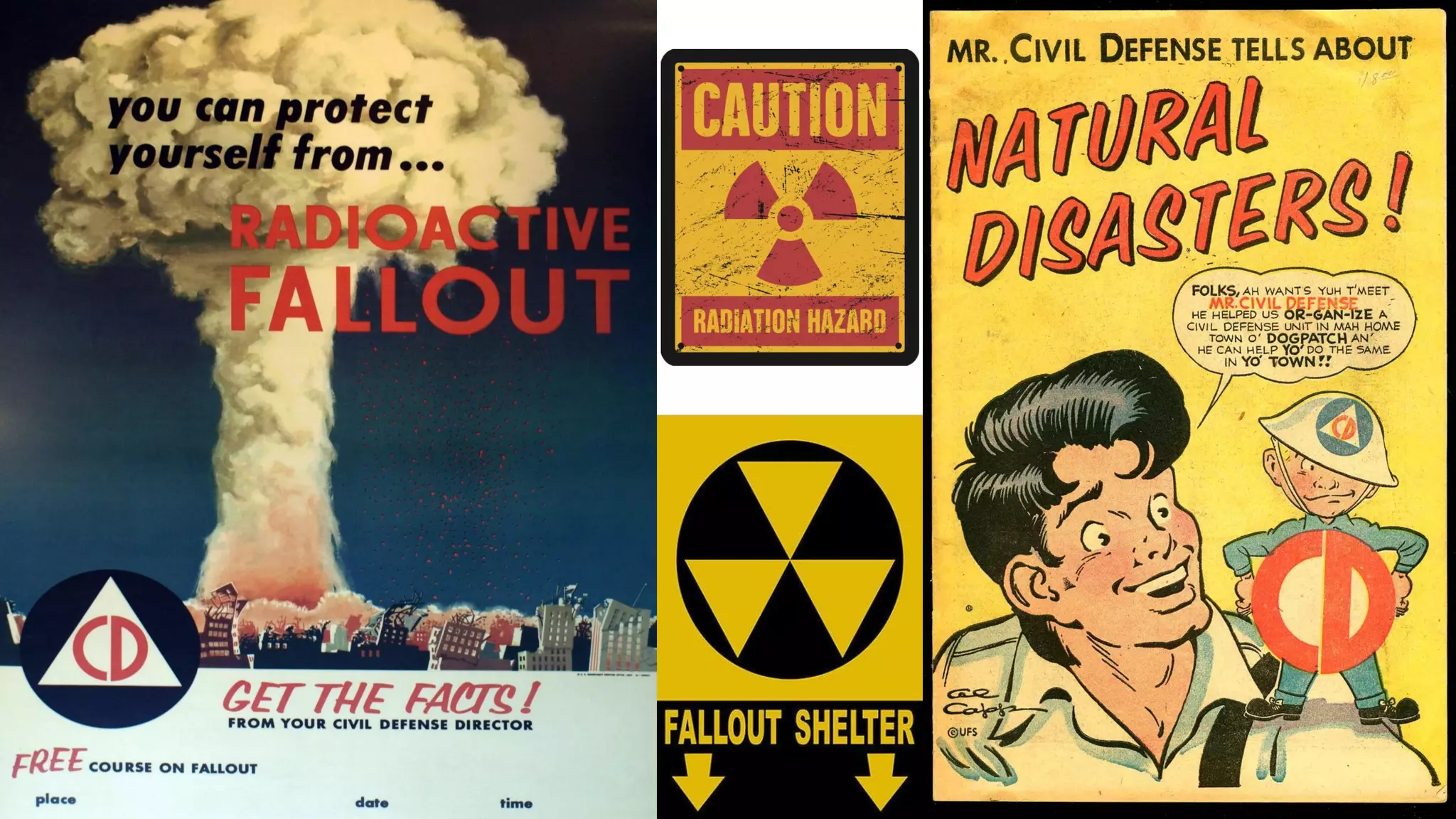
The Cold War:
"From Stettin in the Baltic Sea to Trieste in the
Adriatic an iron curtain has fallen on the
Continent [of Europe]."
Winston Churchill: Speech at
Westminster College,
Fulton, Missouri,
5 March 1946.
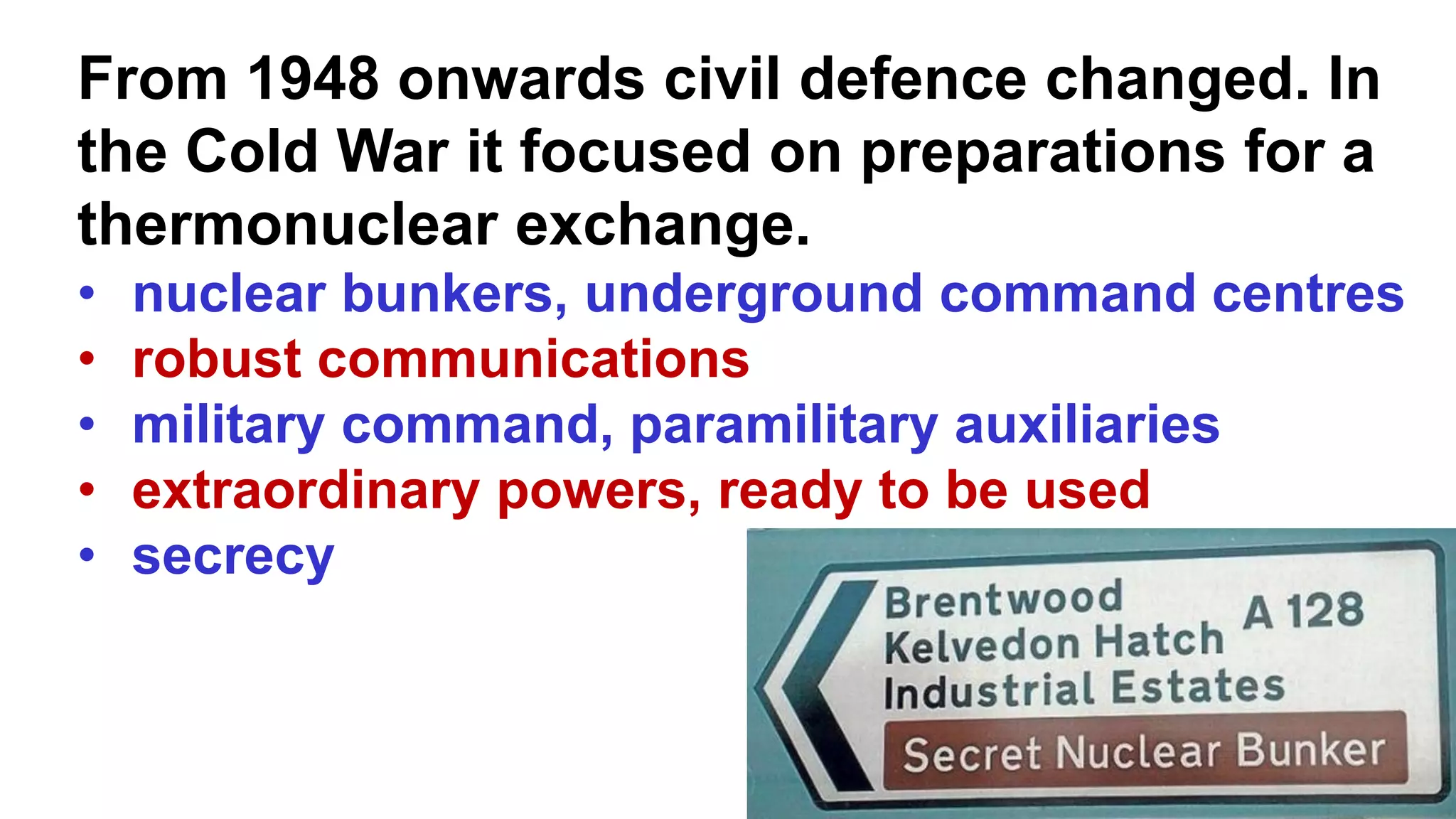
From 1948 onwards civil defence changed. In
the Cold War it focused on preparations for a
thermonuclear exchange.
• nuclear bunkers, underground command centres
• robust communications
• military command, paramilitary auxiliaries
• extraordinary powers, ready to be used
• secrecy
The 1970s and 1980s were a period of
slow decline in civil defence:-
• political détente on the international stage
• withdrawal from the Cold War mentality
• futility of preparations for nuclear war
• increasing impacts of natural hazards
• evident need for new forms of organisation
against disasters
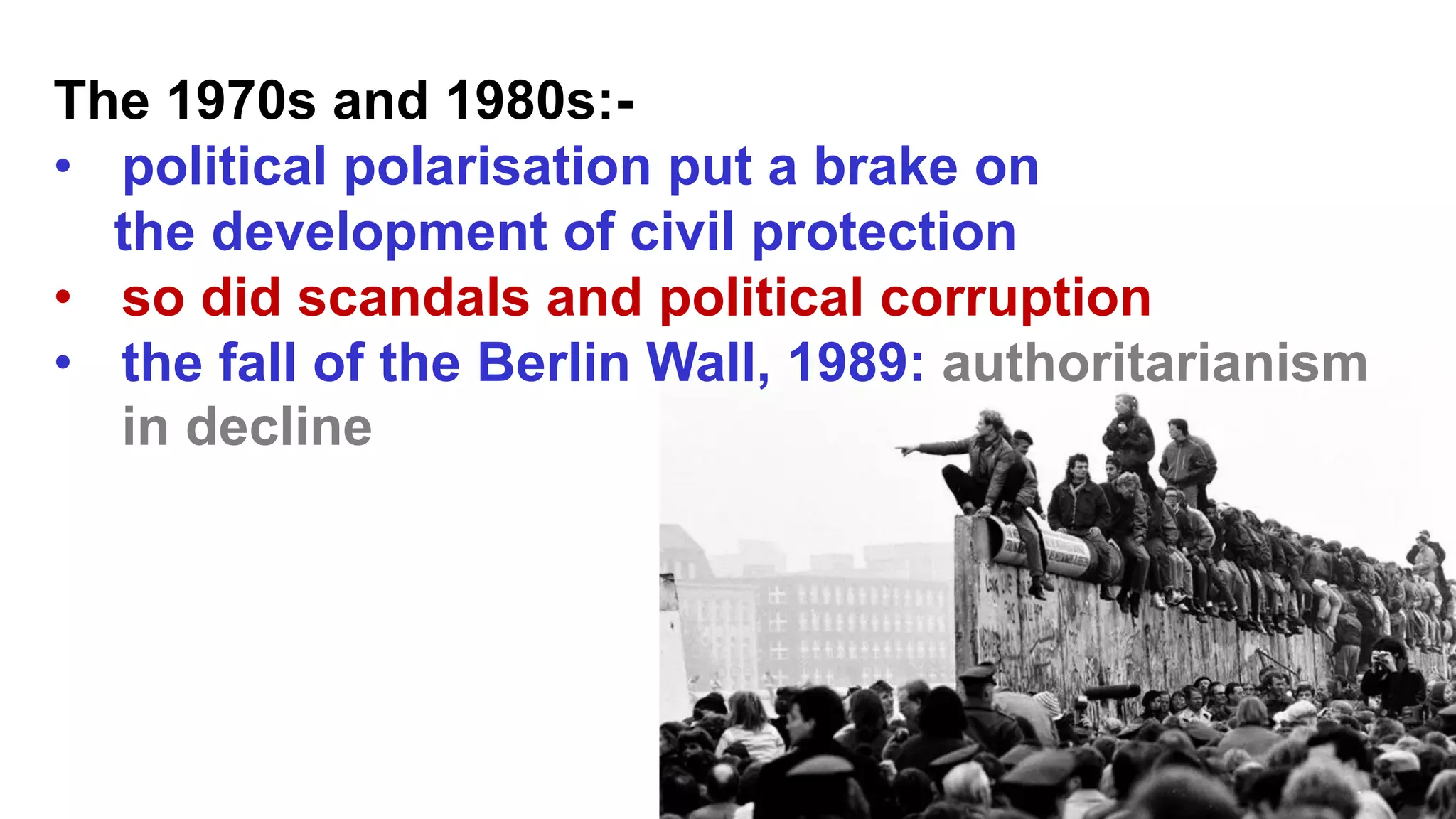
The 1970s and 1980s:-
• political polarisation put a brake on
the development of civil protection
• so did scandals and political corruption
• the fall of the Berlin Wall, 1989: authoritarianism
in decline
The 1990s: civil protection finally emerges:-
• a change in strategic priorities - increased
emphasis on peacetime activities
• with the end of the Cold War there were fewer
excuses to repress the population
• the age of the international disaster began,
humanitarian intervention grew
In 1990 the United Nations inaugurated the
International Decade for Natural Disaster
Reduction (IDNDR):-
• 140 nations established national IDNDR committees
• a few large international projects were created (e.g.,
Radius, project for the reduction of urban seismic risk)
• two large strategic conferences were organised at the
world level
What did the IDNDR achieve?
• managing disasters was put on the
international agenda
• but disaster impacts continued to rise
• international cooperation was strengthened
• a world strategy against disasters began to
emerge
Part 2:
Present and Future
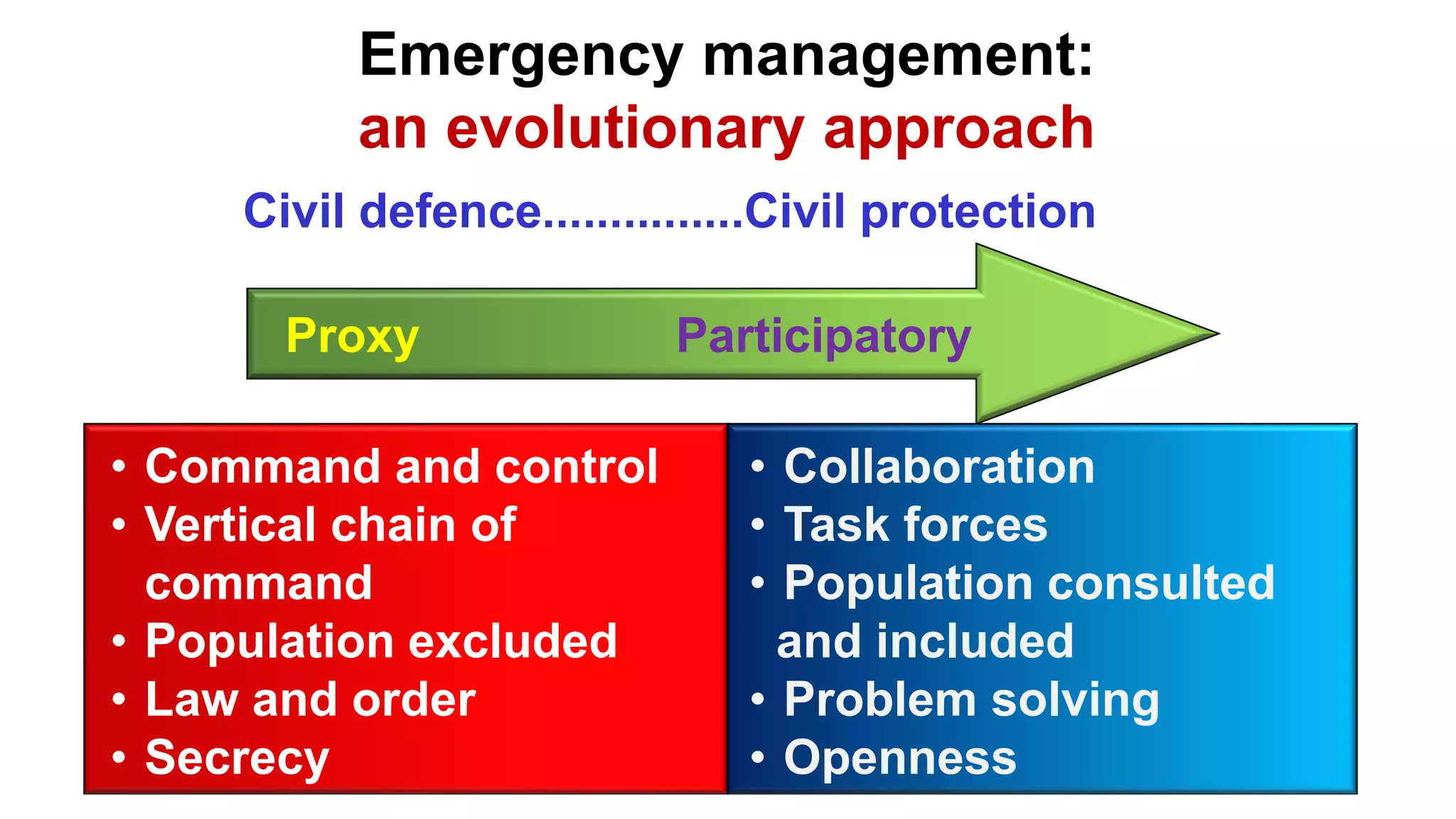
Emergency management:
an evolutionary approach
Proxy Participatory
Civil defence...............Civil protection
• Command and control
• Vertical chain of
command
• Population excluded
• Law and order
• Secrecy
• Collaboration
• Task forces
• Population consulted
and included
• Problem solving
• Openness
New models of organisation of civil protection:-
• increasing impact of information technology
• greater global collaboration
• civilian disaster managers
begin to eclipse military ones
• urgent need to organise
civil protection at the local level
• more disasters, more stimulus, better protection,
more demand for training
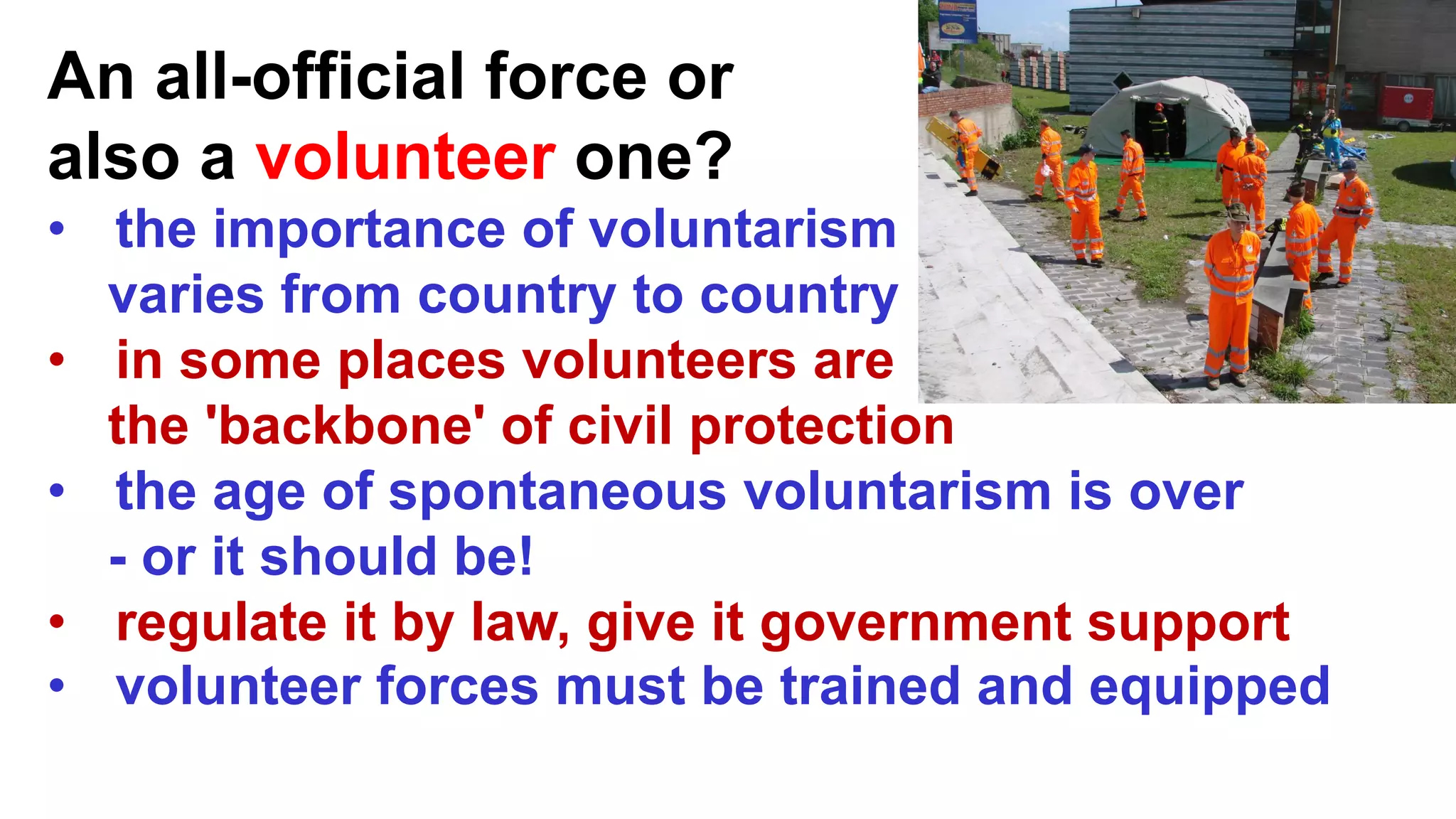
An all-official force or
also a volunteer one?
• the importance of voluntarism
varies from country to country
• in some places volunteers are
the 'backbone' of civil protection
• the age of spontaneous voluntarism is over
- or it should be!
• regulate it by law, give it government support
• volunteer forces must be trained and equipped
Civil protection is finally differentiated
from civil defence:-
• it is organised at the local level, with
harmonisation provided by higher levels
of public administration
• it is more explicitly a service
for the general public
• it must tackle natural and man-made
hazards of a non-strategic nature
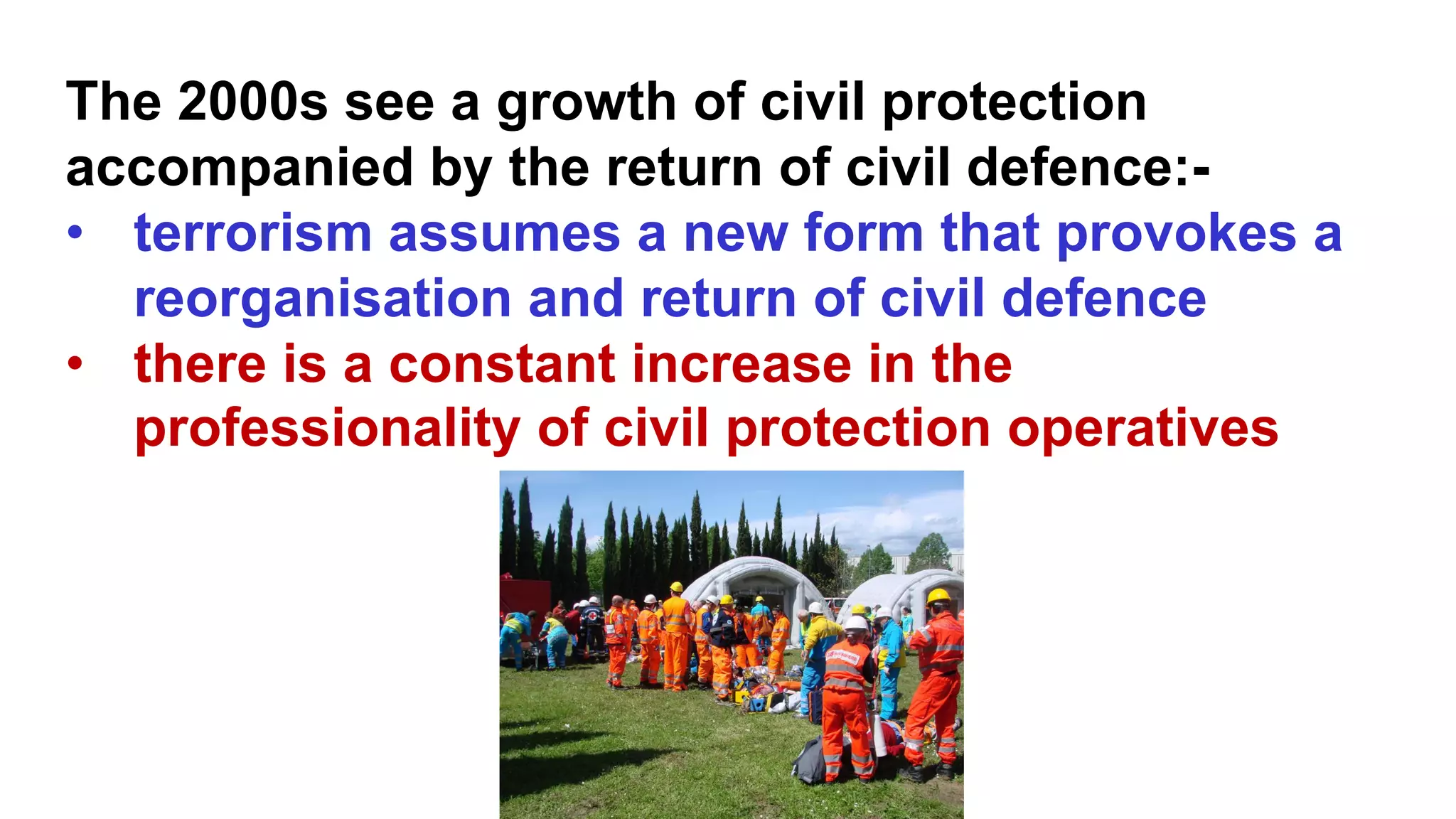
The 2000s see a growth of civil protection
accompanied by the return of civil defence:-
• terrorism assumes a new form that provokes a
reorganisation and return of civil defence
• there is a constant increase in the
professionality of civil protection operatives
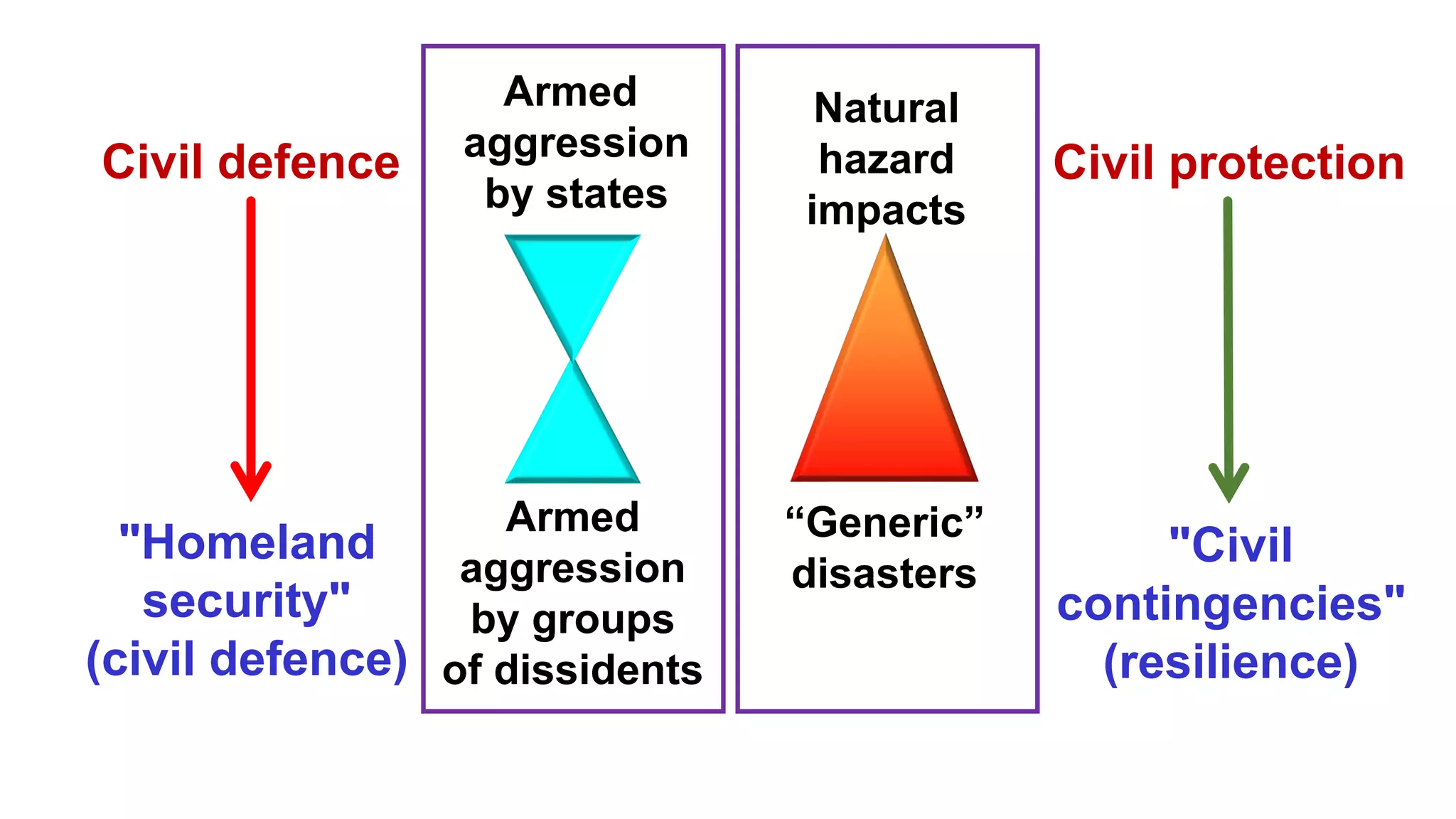
Armed
aggression
by states
Civil defence
Natural
hazard
impacts
Civil protection
Armed
aggression
by groups
of dissidents
"Homeland
security"
(civil defence)
“Generic”
disasters
"Civil
contingencies"
(resilience)
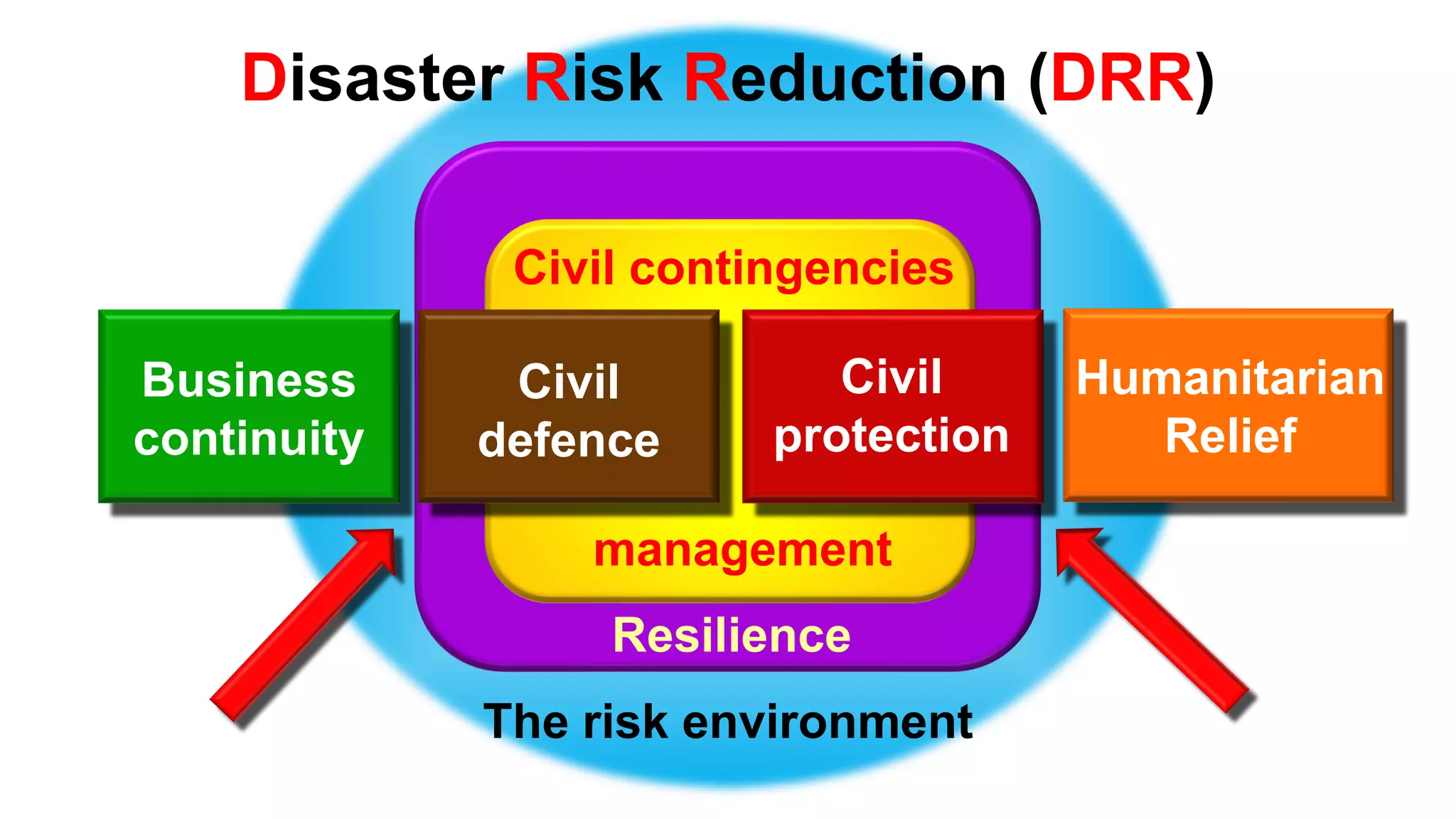
Civil contingencies
Resilience
management
The risk environment
Business
continuity
Disaster Risk Reduction (DRR)
Civil
protection
Humanitarian
Relief
Civil
defence
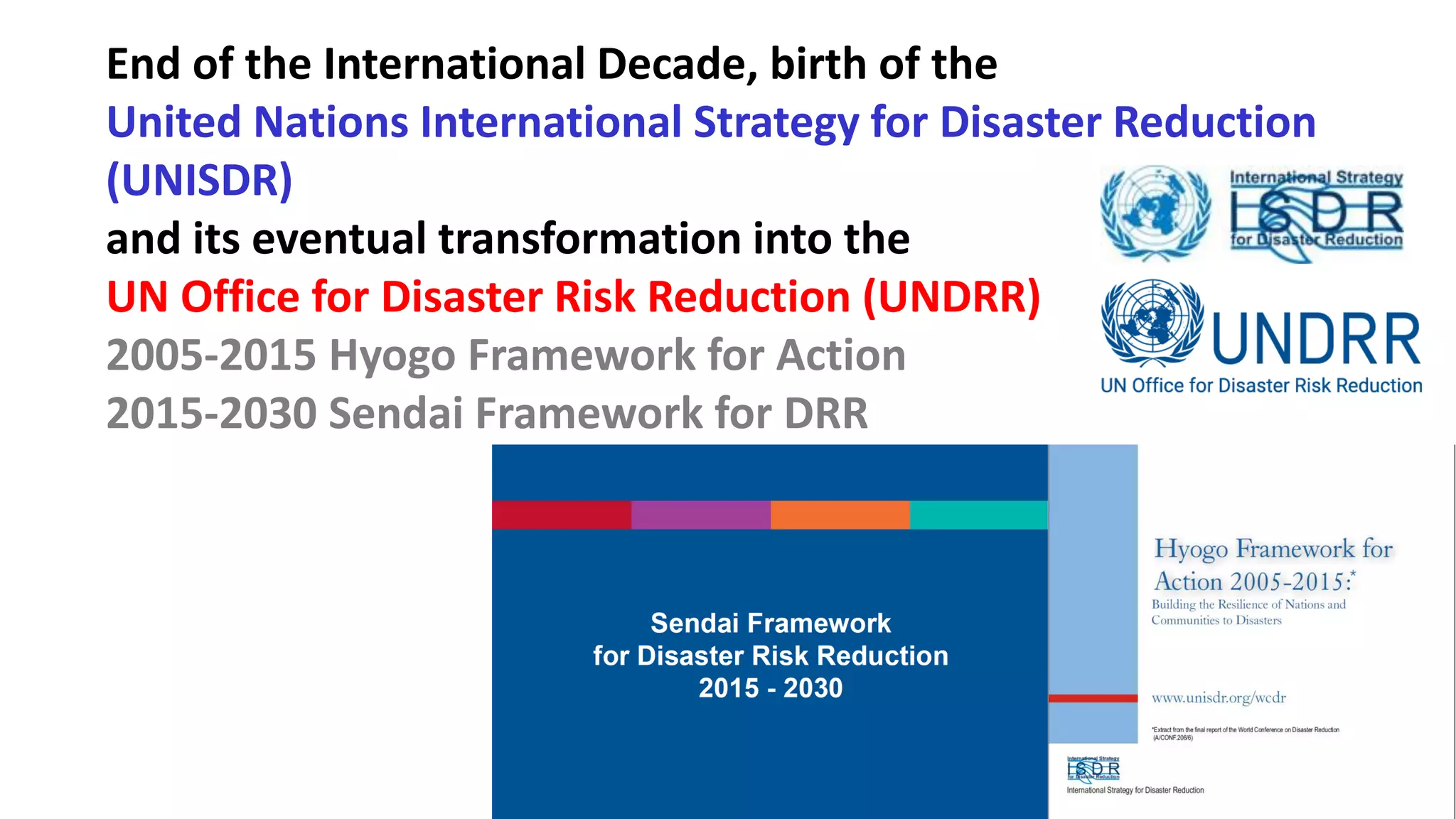
End of the International Decade, birth of the
United Nations International Strategy for Disaster Reduction
(UNISDR)
and its eventual transformation into the
UN Office for Disaster Risk Reduction (UNDRR)
2005-2015 Hyogo Framework for Action
2015-2030 Sendai Framework for DRR
Civil protection must adapt itself
rapidly and flexibly to:-
• changes in hazards and threats
• changes in human society and its vulnerability
• emerging risks, such as viral pandemics
• needs, opportunities and limitations created by
the political system
• changes in the demand for safety and security
from the population, public administrators and
businesses
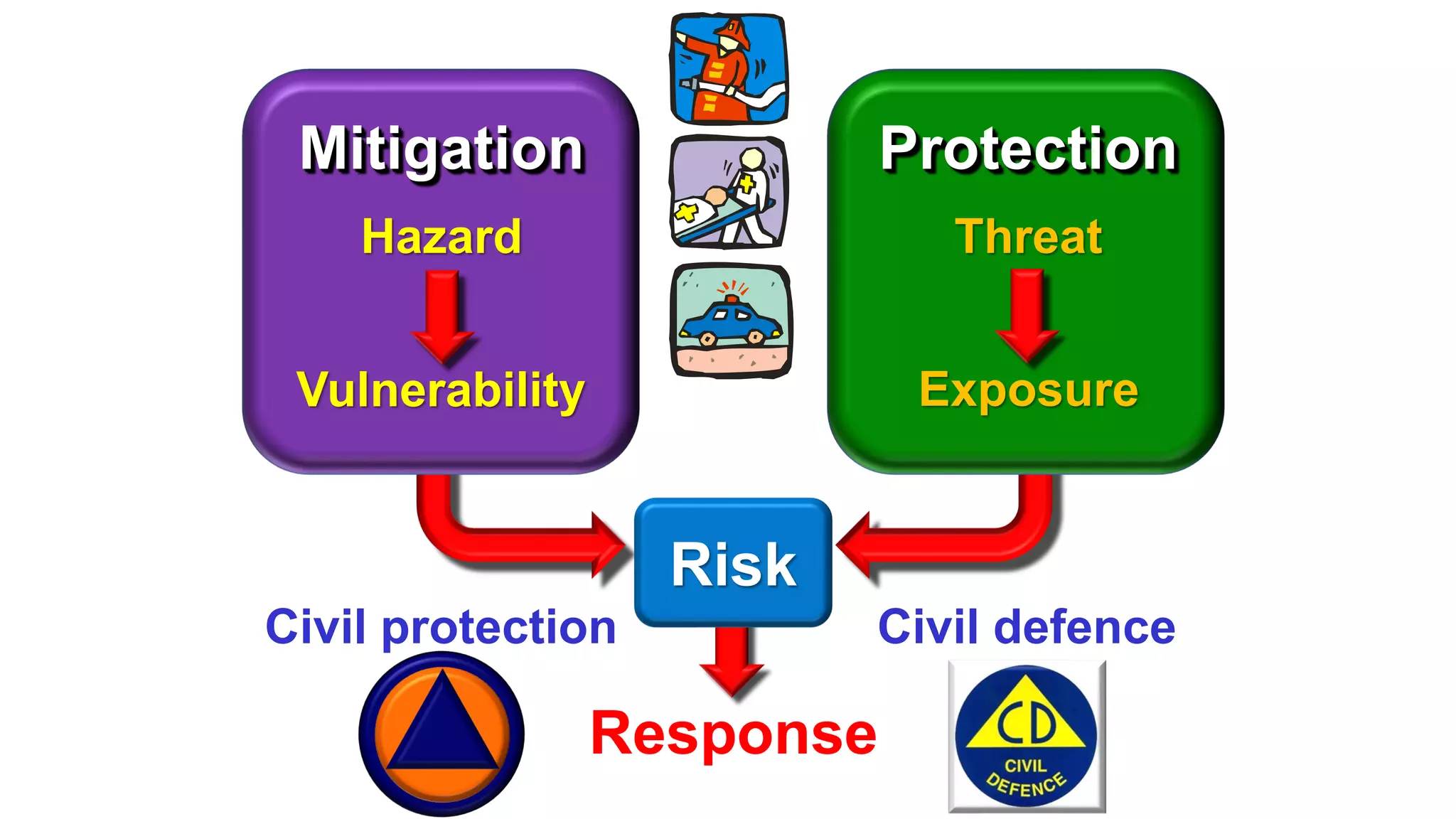
Risk
Civil defence
Hazard
Vulnerability
Threat
Exposure
Response
Mitigation Protection
Civil protection

Civil Defence to Civil Protection (IRDR Taster Lecture)

  • 1.
    Safety and Security: HowCivil Protection Grew Out of Civil Defence Prof. David E. Alexander
  • 2.
    Part 1: HowIt All Started
  • 3.
    AD 6 Vigiles Urbani("watchmen of the City") or Cohortes Vigilum • fire and police service • under the Triumviri Nocturni • commanded by a praefectus vigilum • founded by Emperor Augustus • a volunteer force from AD 205
  • 4.
    More origins: TheRed Cross Jean-Henri Dunant 1828–1910 First Geneva Convention, 1863
  • 5.
    French Surgeon-General Georges Saint-Paul 1870-1937 "Genevazones" safe havens for non-combatants 1920-19351931: "Association des Lieux de Genève" 1937, Geneva: International Association for the Protection of Civilian Populations and Historic Buildings in Wartime
  • 6.
    First to emergewas civil defence, a system designed to protect the non- combatent population against armed aggression, above all by a foreign power.
  • 7.
    Modern civil defence wasborn at the battle of Guernica during the Spanish Civil War (1937)
  • 8.
    DEFINITION: Civil defence meansa centralised system at the level of national government designed to protect institutions and their employees, and eventually the non-combatent general population, against the effects of a state of war or the risk of fighting on the home front.
  • 9.
    The 1940s: earlydevelopment of civil defence • air raid precautions • care and safeguarding of non-combatants • civilian management of war wounded • running air-raid shelters • paramilitary organisation • urban search and rescue • putting out fires
  • 12.
    The Cold War: "FromStettin in the Baltic Sea to Trieste in the Adriatic an iron curtain has fallen on the Continent [of Europe]." Winston Churchill: Speech at Westminster College, Fulton, Missouri, 5 March 1946.
  • 13.
    From 1948 onwardscivil defence changed. In the Cold War it focused on preparations for a thermonuclear exchange. • nuclear bunkers, underground command centres • robust communications • military command, paramilitary auxiliaries • extraordinary powers, ready to be used • secrecy
  • 14.
    The 1970s and1980s were a period of slow decline in civil defence:- • political détente on the international stage • withdrawal from the Cold War mentality • futility of preparations for nuclear war • increasing impacts of natural hazards • evident need for new forms of organisation against disasters
  • 16.
    The 1970s and1980s:- • political polarisation put a brake on the development of civil protection • so did scandals and political corruption • the fall of the Berlin Wall, 1989: authoritarianism in decline
  • 17.
    The 1990s: civilprotection finally emerges:- • a change in strategic priorities - increased emphasis on peacetime activities • with the end of the Cold War there were fewer excuses to repress the population • the age of the international disaster began, humanitarian intervention grew
  • 18.
    In 1990 theUnited Nations inaugurated the International Decade for Natural Disaster Reduction (IDNDR):- • 140 nations established national IDNDR committees • a few large international projects were created (e.g., Radius, project for the reduction of urban seismic risk) • two large strategic conferences were organised at the world level
  • 19.
    What did theIDNDR achieve? • managing disasters was put on the international agenda • but disaster impacts continued to rise • international cooperation was strengthened • a world strategy against disasters began to emerge
  • 20.
  • 22.
    Emergency management: an evolutionaryapproach Proxy Participatory Civil defence...............Civil protection • Command and control • Vertical chain of command • Population excluded • Law and order • Secrecy • Collaboration • Task forces • Population consulted and included • Problem solving • Openness
  • 23.
    New models oforganisation of civil protection:- • increasing impact of information technology • greater global collaboration • civilian disaster managers begin to eclipse military ones • urgent need to organise civil protection at the local level • more disasters, more stimulus, better protection, more demand for training
  • 24.
    An all-official forceor also a volunteer one? • the importance of voluntarism varies from country to country • in some places volunteers are the 'backbone' of civil protection • the age of spontaneous voluntarism is over - or it should be! • regulate it by law, give it government support • volunteer forces must be trained and equipped
  • 25.
    Civil protection isfinally differentiated from civil defence:- • it is organised at the local level, with harmonisation provided by higher levels of public administration • it is more explicitly a service for the general public • it must tackle natural and man-made hazards of a non-strategic nature
  • 26.
    The 2000s seea growth of civil protection accompanied by the return of civil defence:- • terrorism assumes a new form that provokes a reorganisation and return of civil defence • there is a constant increase in the professionality of civil protection operatives
  • 27.
    Armed aggression by states Civil defence Natural hazard impacts Civilprotection Armed aggression by groups of dissidents "Homeland security" (civil defence) “Generic” disasters "Civil contingencies" (resilience)
  • 28.
    Civil contingencies Resilience management The riskenvironment Business continuity Disaster Risk Reduction (DRR) Civil protection Humanitarian Relief Civil defence
  • 29.
    End of theInternational Decade, birth of the United Nations International Strategy for Disaster Reduction (UNISDR) and its eventual transformation into the UN Office for Disaster Risk Reduction (UNDRR) 2005-2015 Hyogo Framework for Action 2015-2030 Sendai Framework for DRR
  • 30.
    Civil protection mustadapt itself rapidly and flexibly to:- • changes in hazards and threats • changes in human society and its vulnerability • emerging risks, such as viral pandemics • needs, opportunities and limitations created by the political system • changes in the demand for safety and security from the population, public administrators and businesses
  • 31.