12/14/2017 1
PERIPHERAL VASCULAR
DISEASE
Shemil
Clinical instructor
DM WIMS
12/14/2017 2
Definition
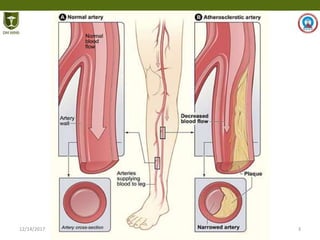
Peripheral vascular disease (PVD) is a
circulation disorder that causes narrowing
of blood vessels to parts of the body other
than the brain and heart.
12/14/2017 3
12/14/2017 4
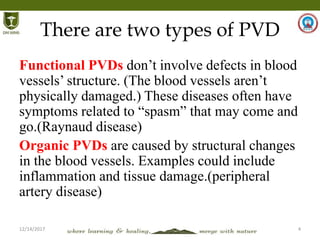
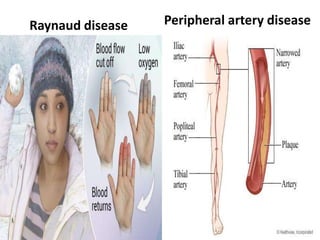
There are two types of PVD
Functional PVDs don’t involve defects in blood
vessels’ structure. (The blood vessels aren’t
physically damaged.) These diseases often have
symptoms related to “spasm” that may come and
go.(Raynaud disease)
Organic PVDs are caused by structural changes
in the blood vessels. Examples could include
inflammation and tissue damage.(peripheral
artery disease)
Raynaud disease Peripheral artery disease
12/14/2017 6
Causes
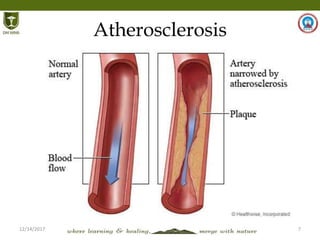
1. Atherosclerosis
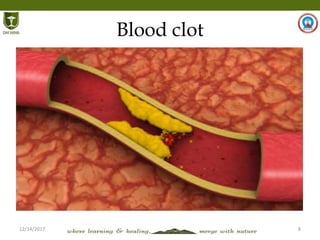
2. Blood clots
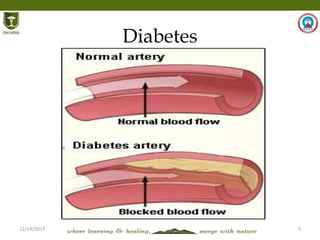
3. Diabetes
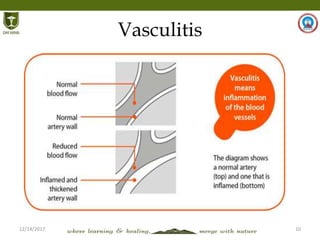
4. Inflammation of the arteries or arteritis
5. Infection(salmonellosis and syphilis )
6. Structural defects
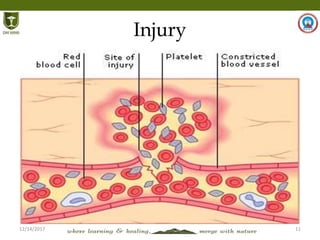
7. Injury
12/14/2017 7
Atherosclerosis
12/14/2017 8
Blood clot
12/14/2017 9
Diabetes
12/14/2017 10
Vasculitis
12/14/2017 11
Injury
12/14/2017 12
Risk factors
• Family history of heart disease, high blood
pressure, high cholesterol, or stroke
• Older than 50 years
• Overweight or obesity
• Inactive lifestyle
• Smoking
• Diabetes
• High blood pressure
• High cholesterol or LDL plus high triglycerides and
low HDL
12/14/2017 13
Symptoms
• Dull, cramping pain in one or both calves, thighs, or
hips when walking, called intermittent claudication
• Buttock pain,
• Numbness or tingling in the legs,
• Weakness, burning or aching pain in the feet or toes
while resting.
• A sore on a leg or a foot that will not heal,
• One or both legs or feet feel cold or change color (pale,
bluish, dark reddish),
• Hair loss on the legs, and
• Impotence.
12/14/2017 14
Diagnosis
12/14/2017 15
1. Edinburgh claudication questionnaire.
2. Ankle brachial index(ABI).
3. Treadmill exercise test.
4. Angiography, or arteriography
5. Doppler ultrasound flow studies
6. Magnetic resonance imaging
12/14/2017 16
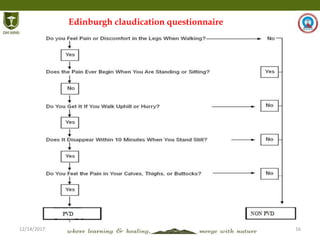
Edinburgh claudication questionnaire
12/14/2017 17
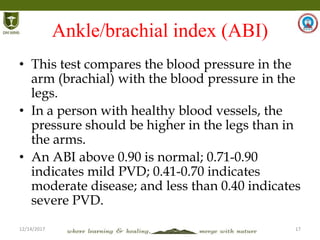
Ankle/brachial index (ABI)
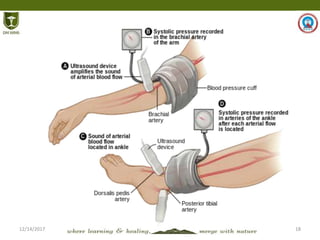
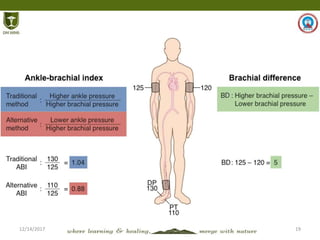
• This test compares the blood pressure in the
arm (brachial) with the blood pressure in the
legs.
• In a person with healthy blood vessels, the
pressure should be higher in the legs than in
the arms.
• An ABI above 0.90 is normal; 0.71-0.90
indicates mild PVD; 0.41-0.70 indicates
moderate disease; and less than 0.40 indicates
severe PVD.
12/14/2017 18
12/14/2017 19
12/14/2017 20
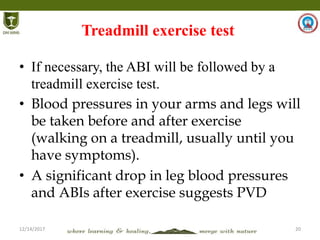
Treadmill exercise test
• If necessary, the ABI will be followed by a
treadmill exercise test.
• Blood pressures in your arms and legs will
be taken before and after exercise
(walking on a treadmill, usually until you
have symptoms).
• A significant drop in leg blood pressures
and ABIs after exercise suggests PVD
12/14/2017 21
• Angiography, or arteriography
• Doppler ultrasound flow studies
• Magnetic resonance imaging
12/14/2017 22
12/14/2017 23
Lifestyle changes
• Stopping smoking (smokers are 4 times more
likely to get PAD and have symptoms of PAD
than nonsmokers.)
• Controlling diabetes
• Controlling blood pressure
• Being physically active
• Eating a diet low in saturated fats
12/14/2017 24
Medicines
• Antiplatelet agents to prevent blood clots
• Cholesterol-lowering medicine.
• Anti hypertensive.
12/14/2017 25
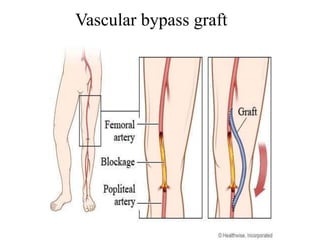
Vascular surgery
A bypass graft using a blood vessel from another
part of the body or a tube made of synthetic
material is placed in the area of the blocked or
narrowed artery to reroute the blood flow
Vascular bypass graft
12/14/2017 27
Angioplasty
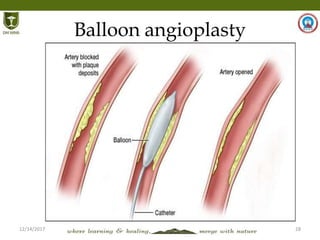
• Balloon angioplasty (a small balloon is inflated inside
the blocked artery to open the blocked area).
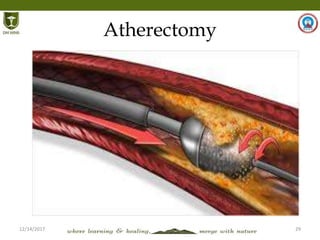
• Atherectomy (the blocked area inside the artery is
"shaved" away by a tiny device on the end of a
catheter)
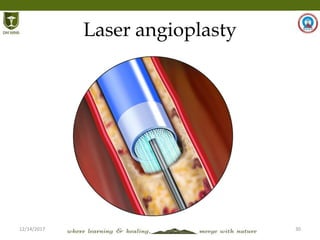
• Laser angioplasty (a laser is used to "vaporize" the
blockage in the artery)
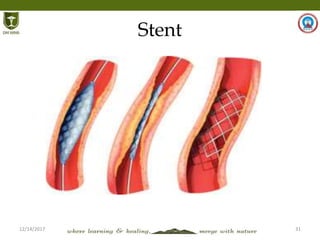
• Stent (a tiny coil is expanded inside the blocked artery
to open the blocked area and is left in place to keep
the artery open)
12/14/2017 28
Balloon angioplasty
12/14/2017 29
Atherectomy
12/14/2017 30
Laser angioplasty
12/14/2017 31
Stent
12/14/2017 32
Complication
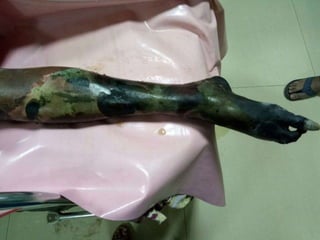
• Amputation (loss of a limb)
• Poor wound healing
• Restricted mobility due to pain or discomfort with
exertion
• Severe pain in the affected extremity
• Stroke (three times more likely in people with
PVD
12/14/2017 33
12/14/2017 34
Prevention
• Smoking cessation, including avoidance of second
hand smoke and use of any tobacco products.
• Dietary changes including reduced fat, cholesterol,
and simple carbohydrates (such as sweets), and
increased amounts of fruits and vegetables,
• Weight reduction
• Exercise plan of a minimum of 30 minutes daily
• Control of diabetes
• Control of high blood pressure
12/14/2017 35
12/14/2017 36

Peripheral vascular disease