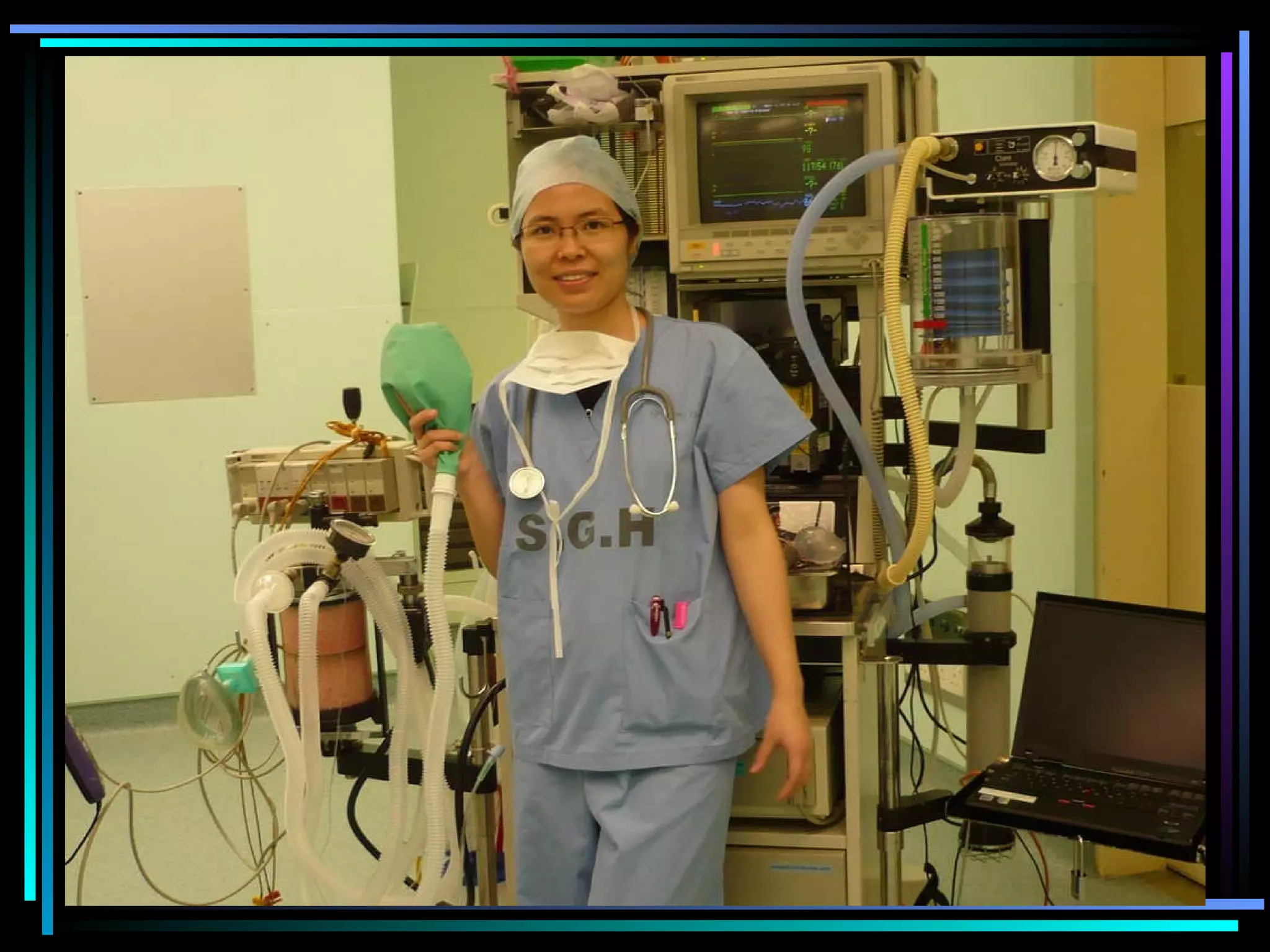
what do you see in the picture? An anesthesia machine A beautiful and smart anesthetist
Administration of General Anesthesia Xiao Ying  ( 肖颖 ) The First Affiliated Hospital of  Sun Yat-sen University Mar 2010
Overview What is general anesthesia? Preoperative preparation Induction: going off to sleep Maintenance: keeping pt asleep  Emergence: waking up  Transport
What is general anesthesia Primary goals Safety is top priority Amnesia: no memory of the event Hypnosis: unconcious Analgesia: free of pain Block certain autonomic reflexes Optimal surgical conditions: immobolity
What is general anesthesia Secondary goals Medical condition Surgical procedures Surgical settings
Examples for secondary goals  Patients with CAD: Oxygen supply-demand balance  Neurosugery: ICP control, brain relaxation and CPP maintenance Obstetrics: anesthetics and fetal depression, difficult airway Day surgery vs Inpatient: which kind of analgesic you should choose to minimize postoperative pain and decrease PONV?
Preoperative preparation Preoperative evaluations Airway examination Interim changes in pt’s condition Medications Laboratory data Consultant notes Last oral intake
Preoperative preparation Intravascular volume Dehydration: adequately hydrate the pt before induction Intravenous access Preoperative medications Anxiety Benzodiazepine: Midazolam Opioid: Morphine or Fentanyl Neutralize gastric acid and decrease gastric volume
Which kind of pt is at increased risk of aspiration of gastric content? Recent meal Trauma  Bowel obstruction Pregnancy History of gastric surgery Increased intra-abdominal pressure History of active reflux
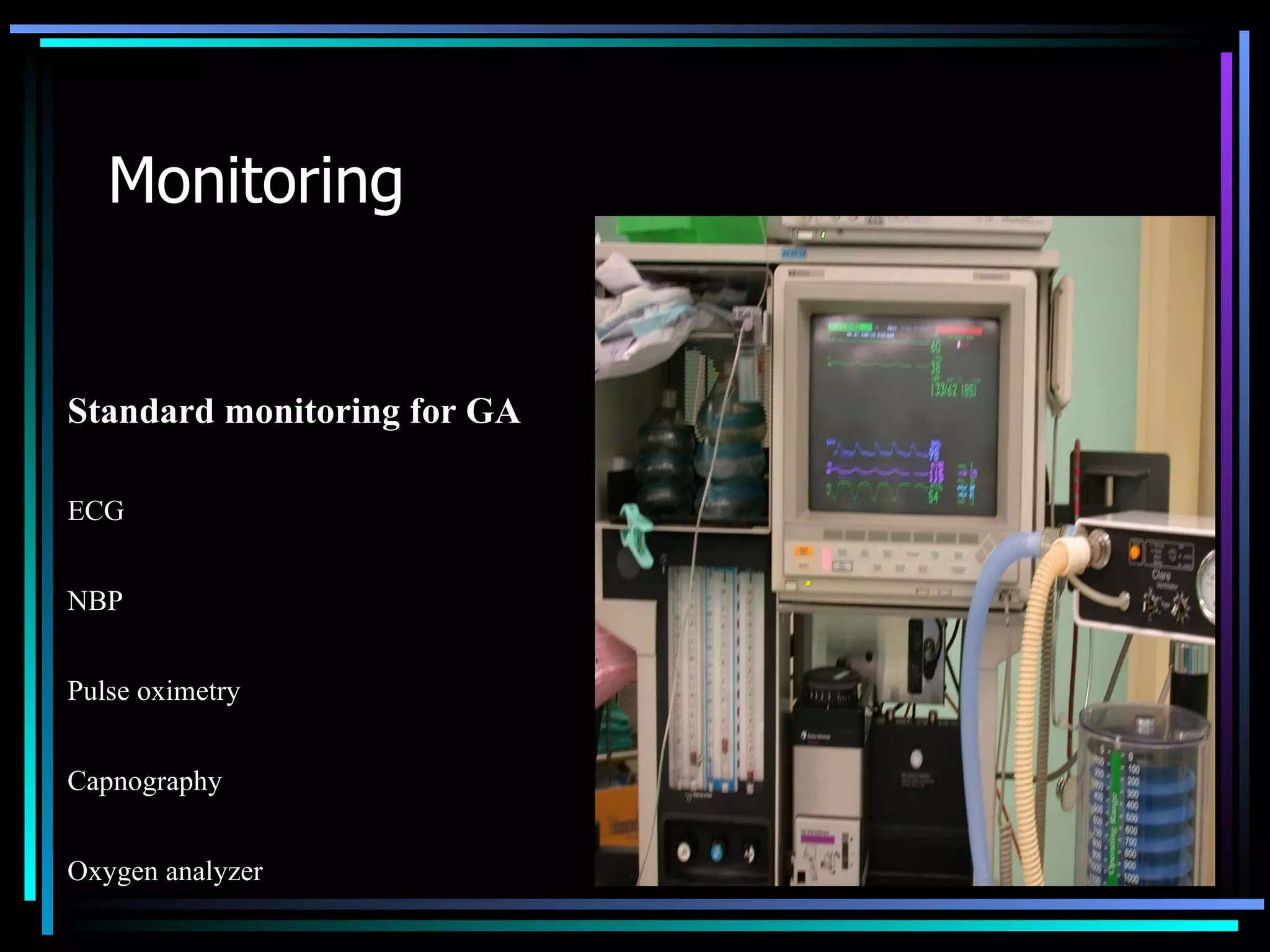
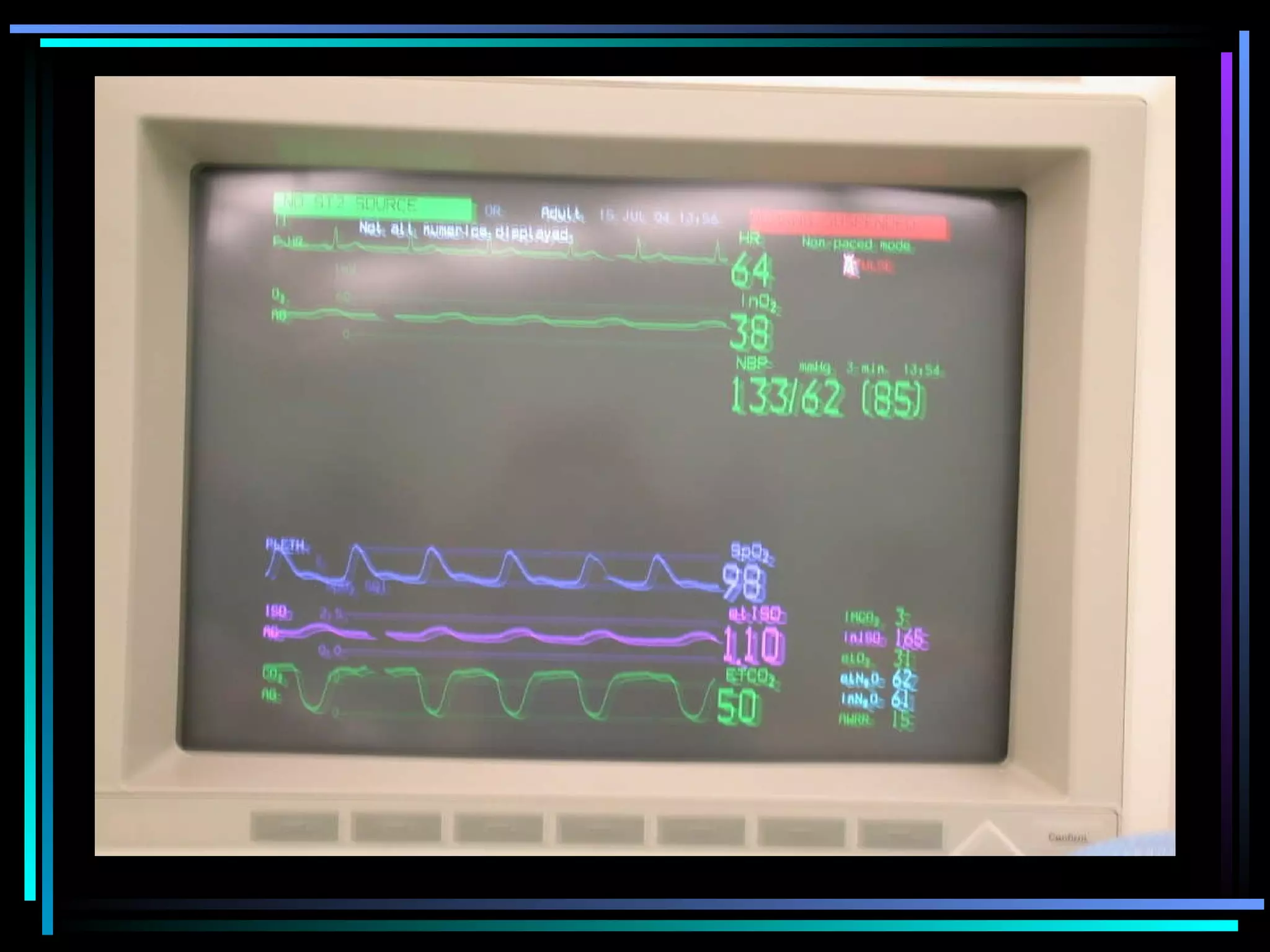
Monitoring Standard monitoring for GA ECG NBP Pulse oximetry Capnography Oxygen analyzer
 
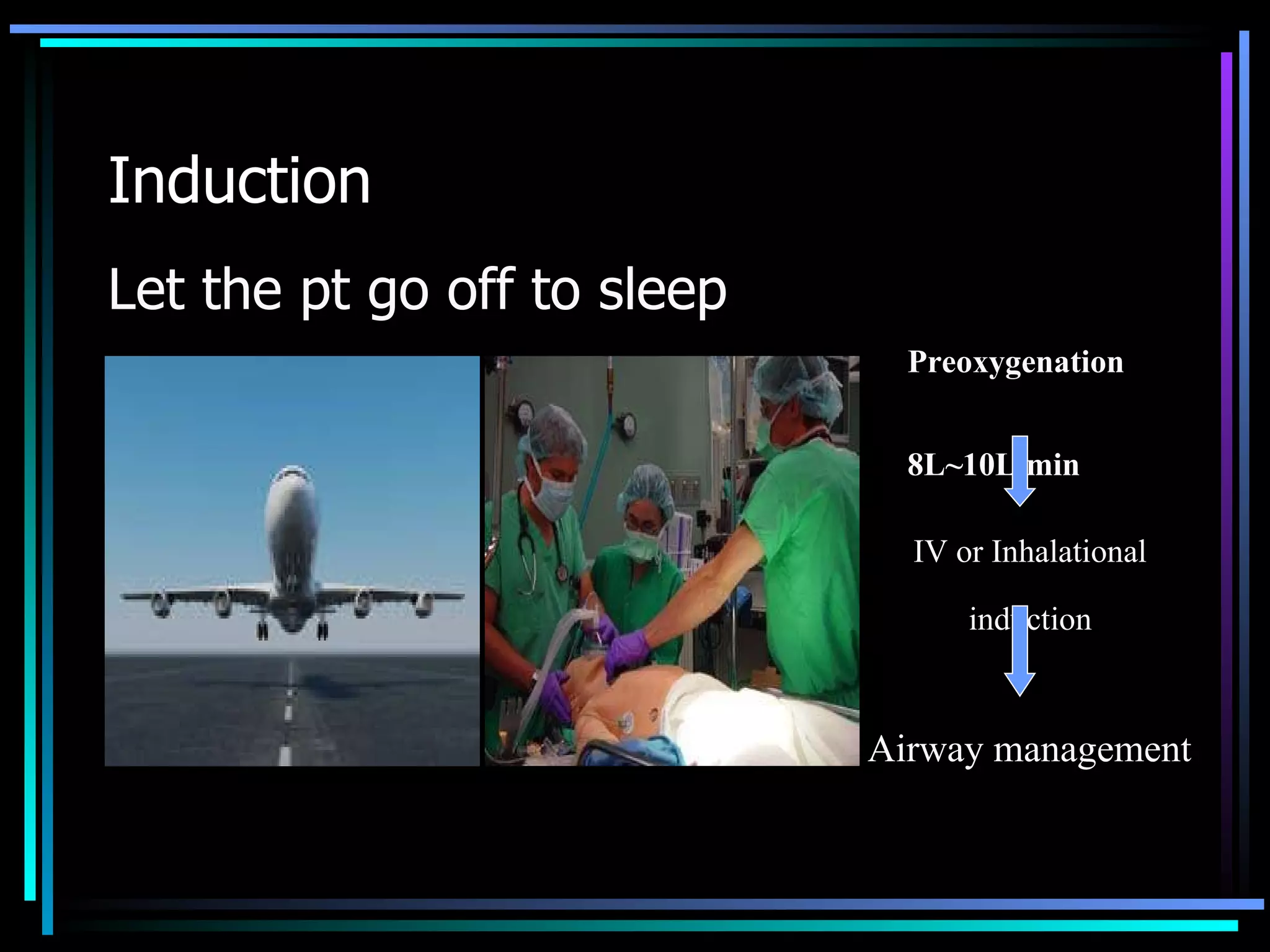
Induction Let the pt go off to sleep Preoxygenation 8L~10L/min IV or Inhalational induction Airway management
Induction techniques Intravenous: the most common method Inhalation: for special pt (pt with difficult airway, pediatric pt) Intramuscular :rarely used,only used in uncooperative pts and young children
Airway management ASA Closed Claims Study( 美国麻醉学会已结案的诉讼) 35 % of claims are RESPIRATORY events 90 % resulted in brain damage or death 90% resulted from Difficulty in INTUBATION or EXTUBATION
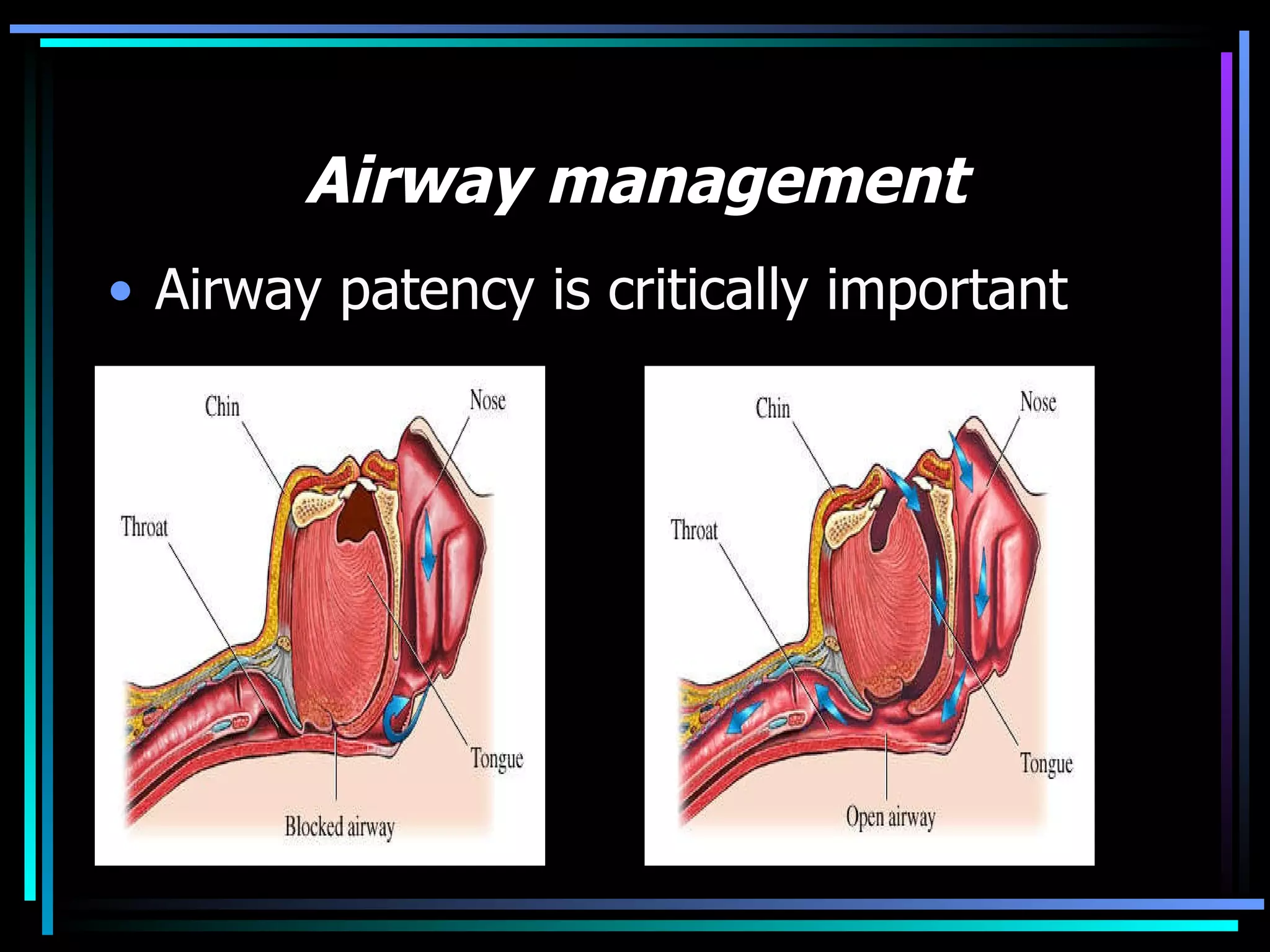
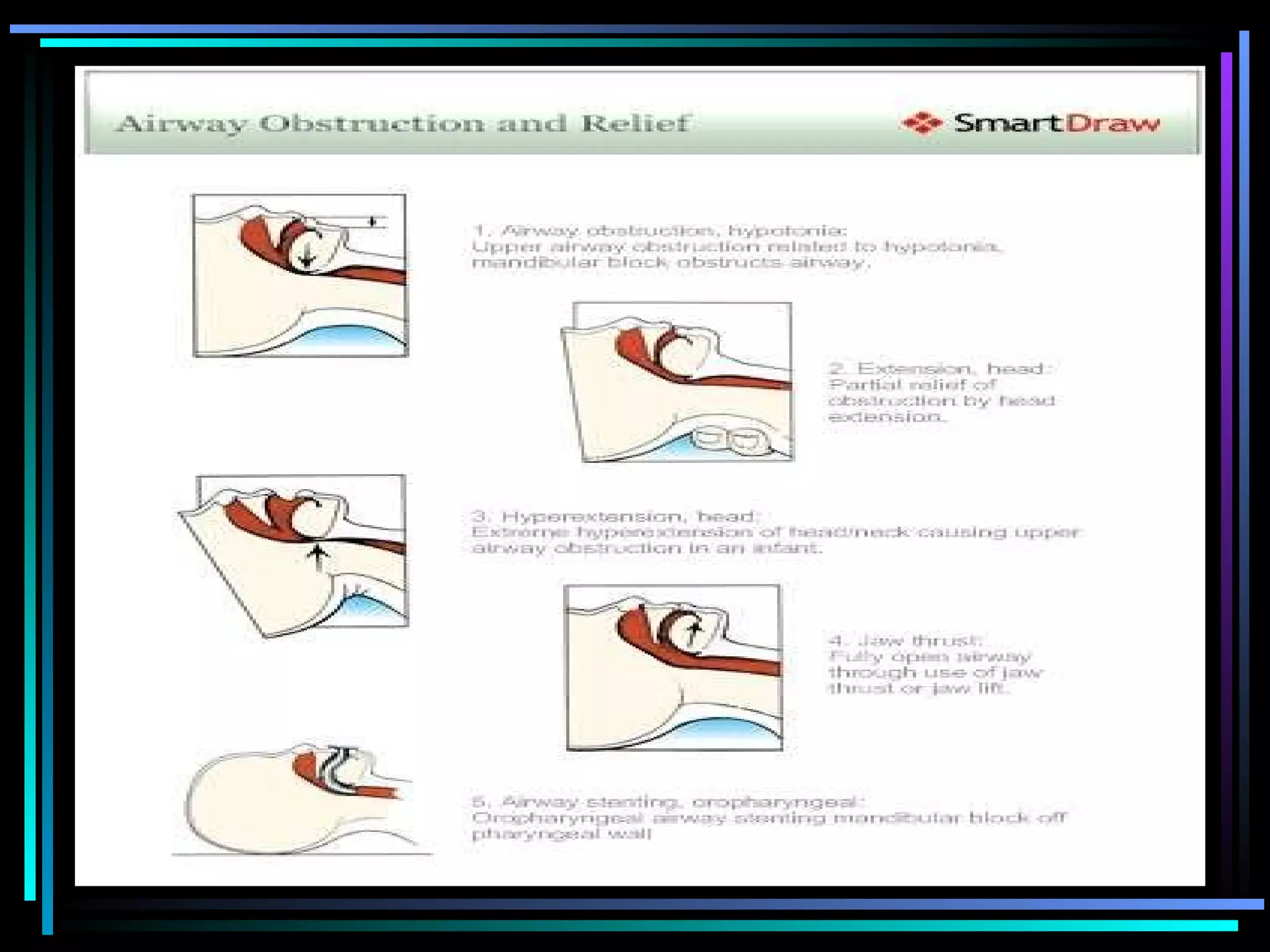
Airway management Airway patency is critically important
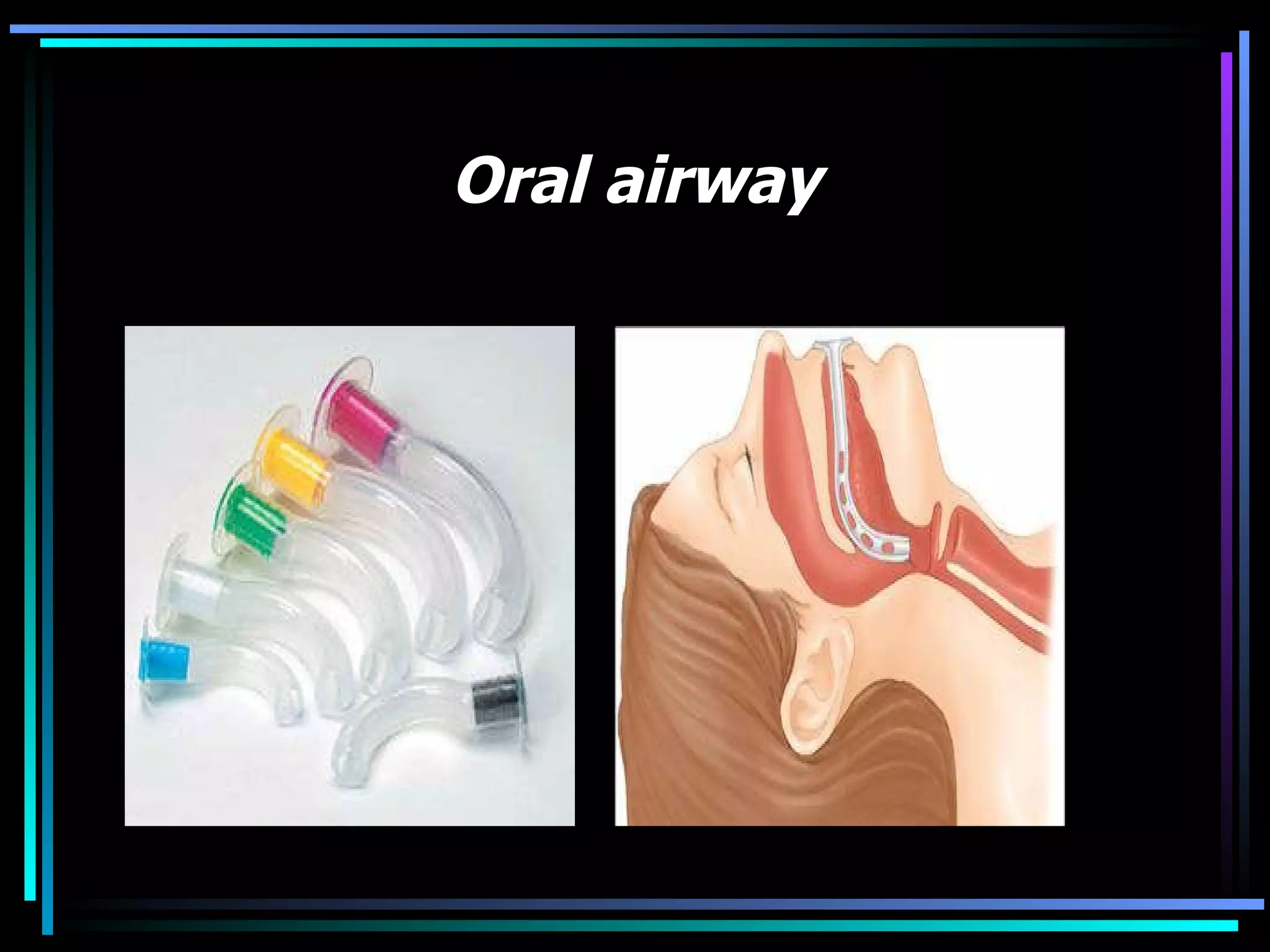
Oral airway
 
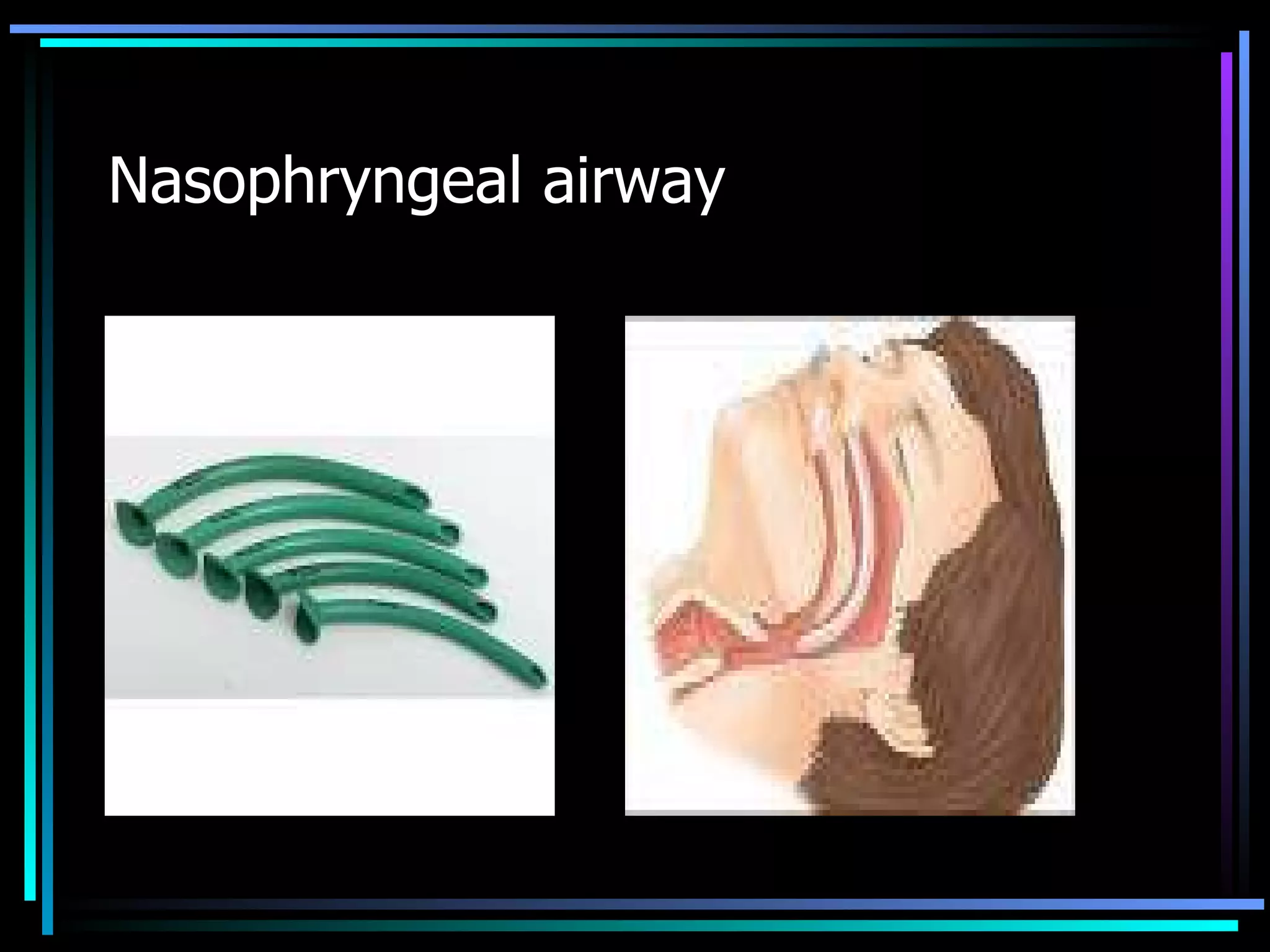
Nasophryngeal airway
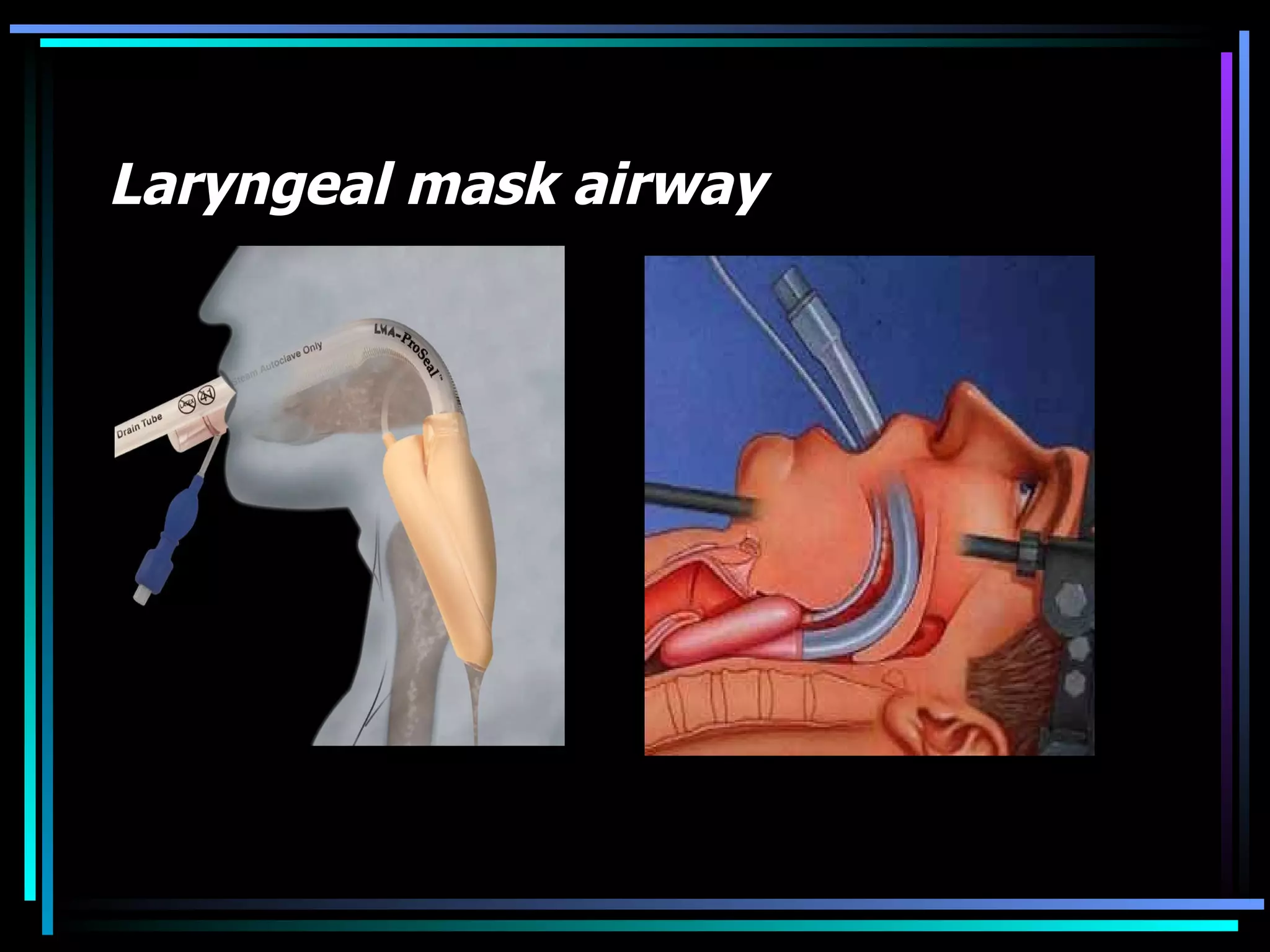
Laryngeal mask airway
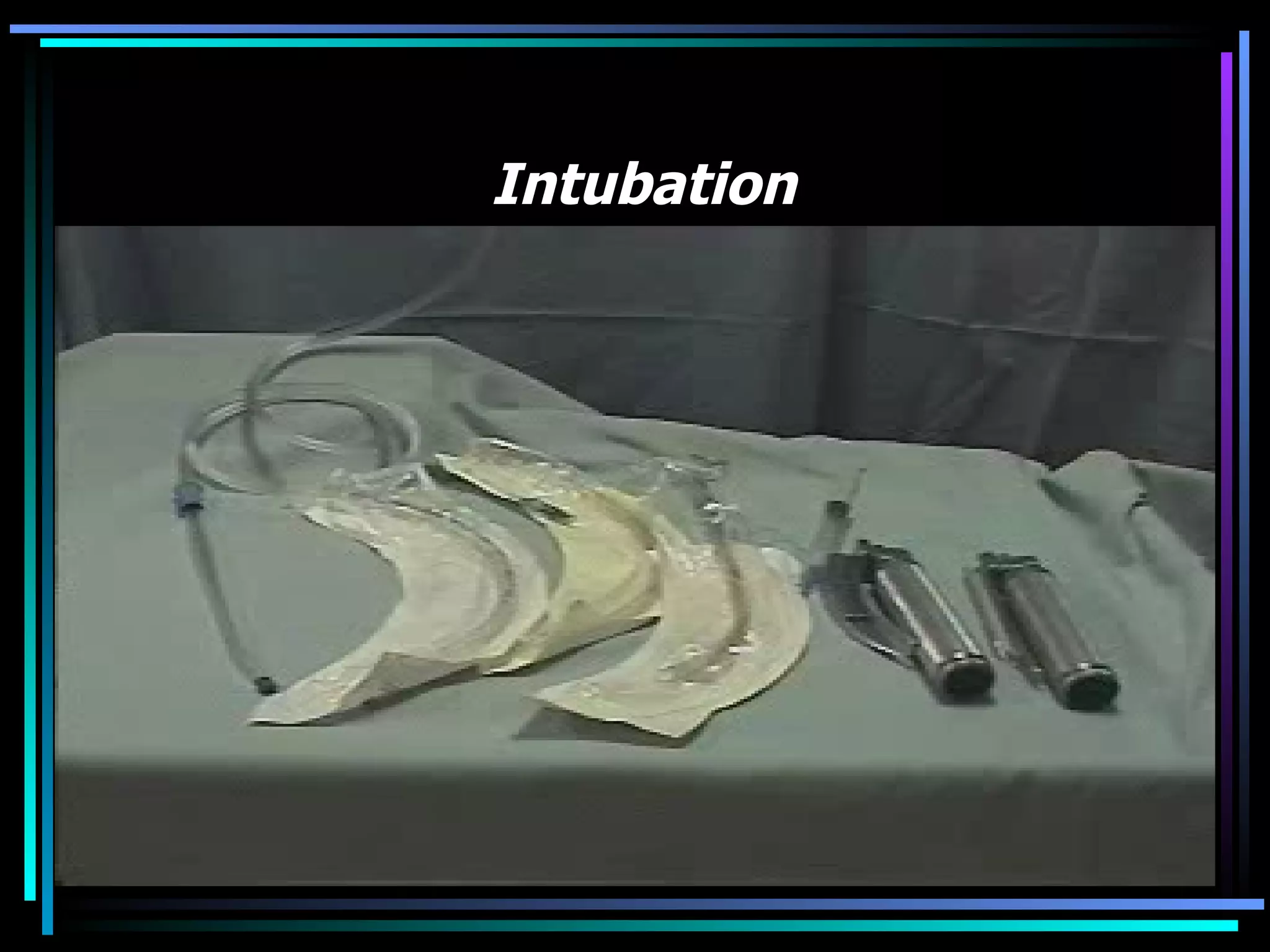
Intubation
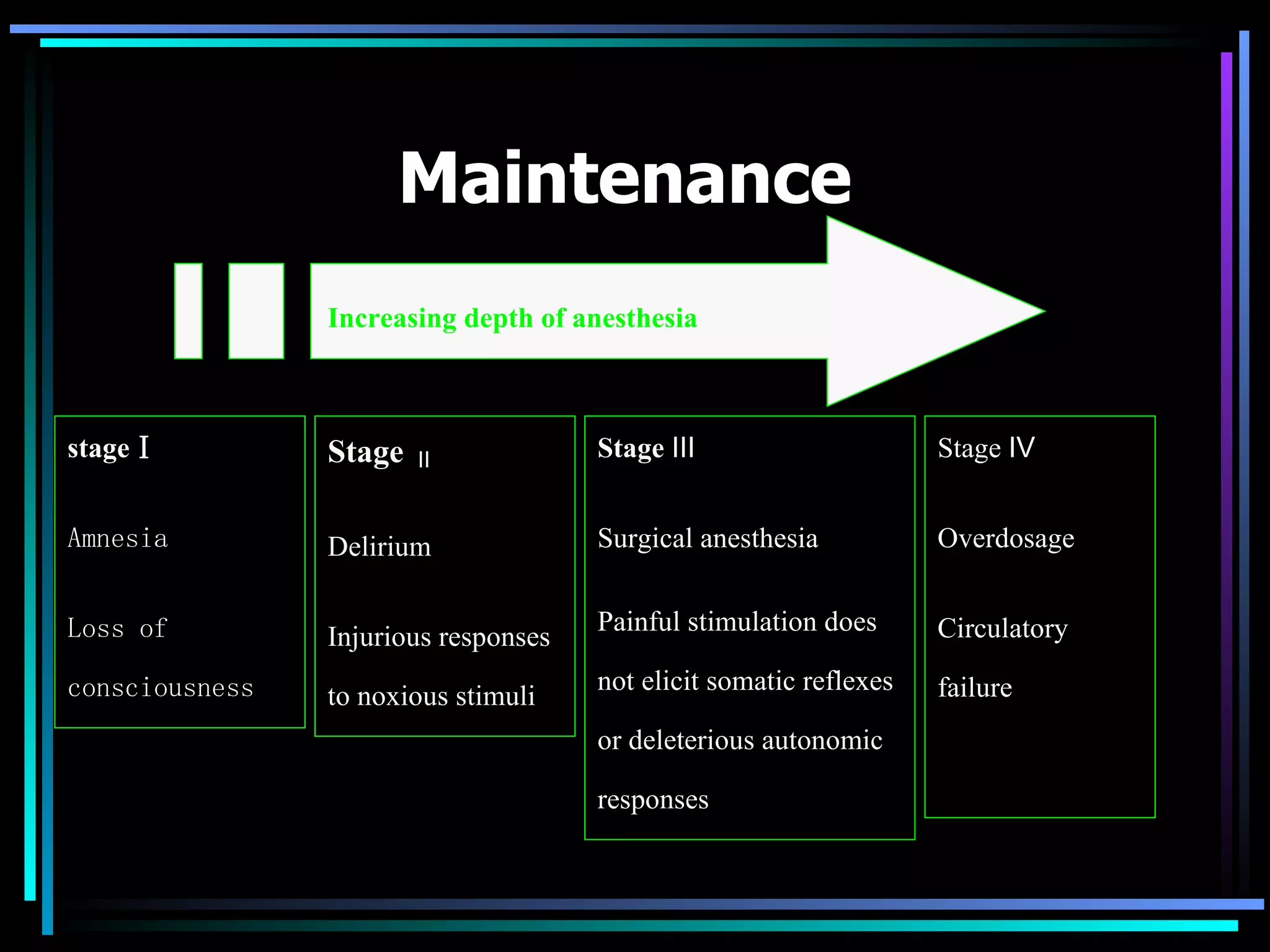
Maintenance Increasing   depth of anesthesia stage Ⅰ Amnesia Loss of consciousness Stage   Ⅱ Delirium Injurious responses to noxious stimuli Stage  Ⅲ   Surgical anesthesia Painful stimulation does not elicit somatic reflexes or deleterious autonomic responses   Stage Ⅳ Overdosage Circulatory  failure
Maintenance  Maintain homeotasis Vital signs Acid-base balance Temperature Coagulation Volume status
Maintenance  Lack of awareness and no memory of the event Incidence of awareness High risk surgical population High risk pt High risk anesthesia method
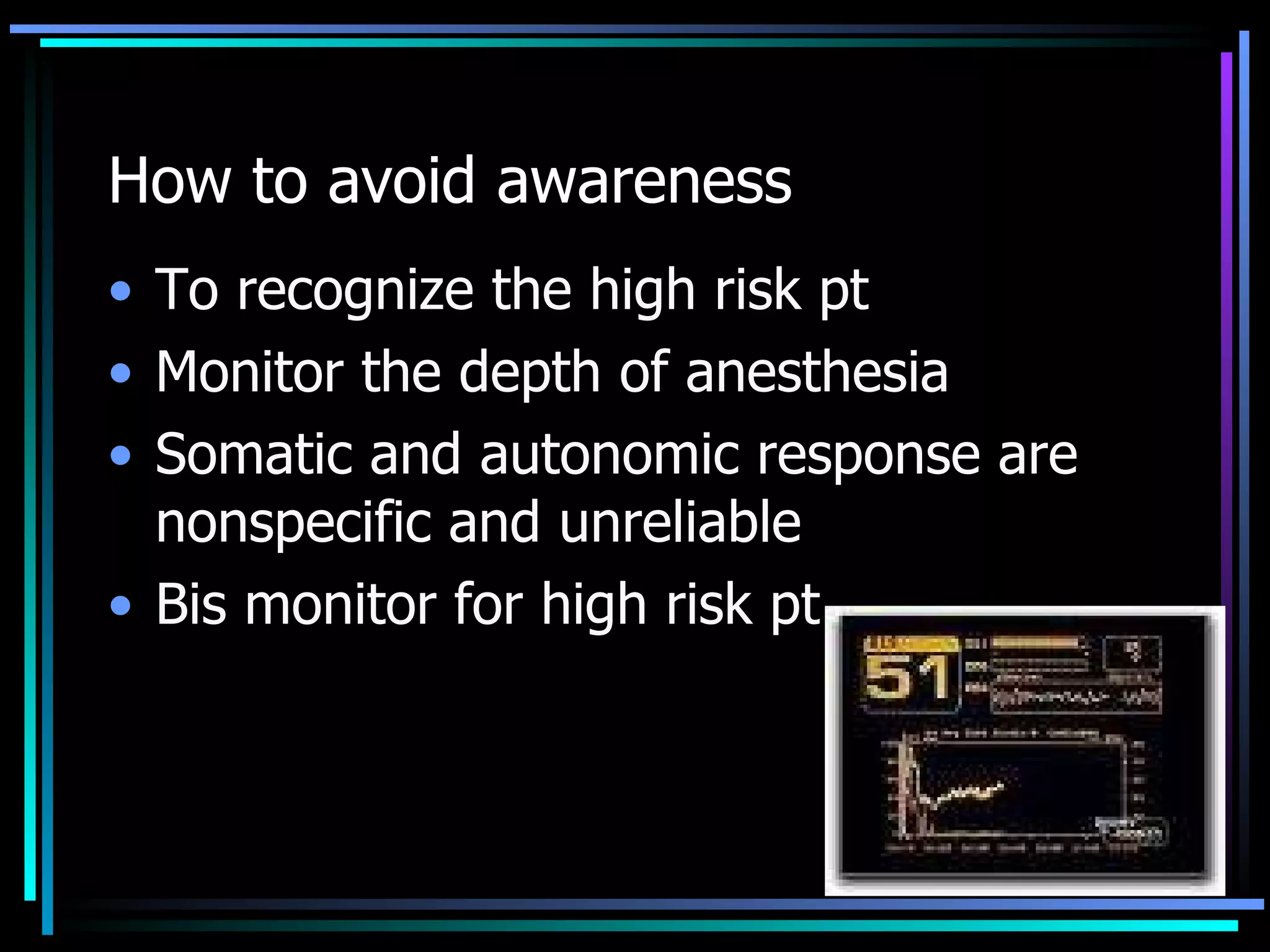
How to avoid awareness   To recognize the high risk pt Monitor the depth of anesthesia Somatic and autonomic response are nonspecific and unreliable Bis monitor for high risk pt
Depth of  anesthesia   Intensity of surgical stimulation Response suggesting inadequate anesthetic depth: Somatic: movement, coughing, changes of respiratory pattern Autonomic: tachycardia, hypertension, mydriasis, sweating, tearing Unreliable and nonspecific Sympathetic activation may be caused by other reasons
Maintenance methods   Volatile (Isoflurane, Desflurane or sevoflurane combined with nitrous oxide) Nitrous oxide-opioid relaxant technique IV anesthesia Combinations General anesthesia combined with regional anesthesia
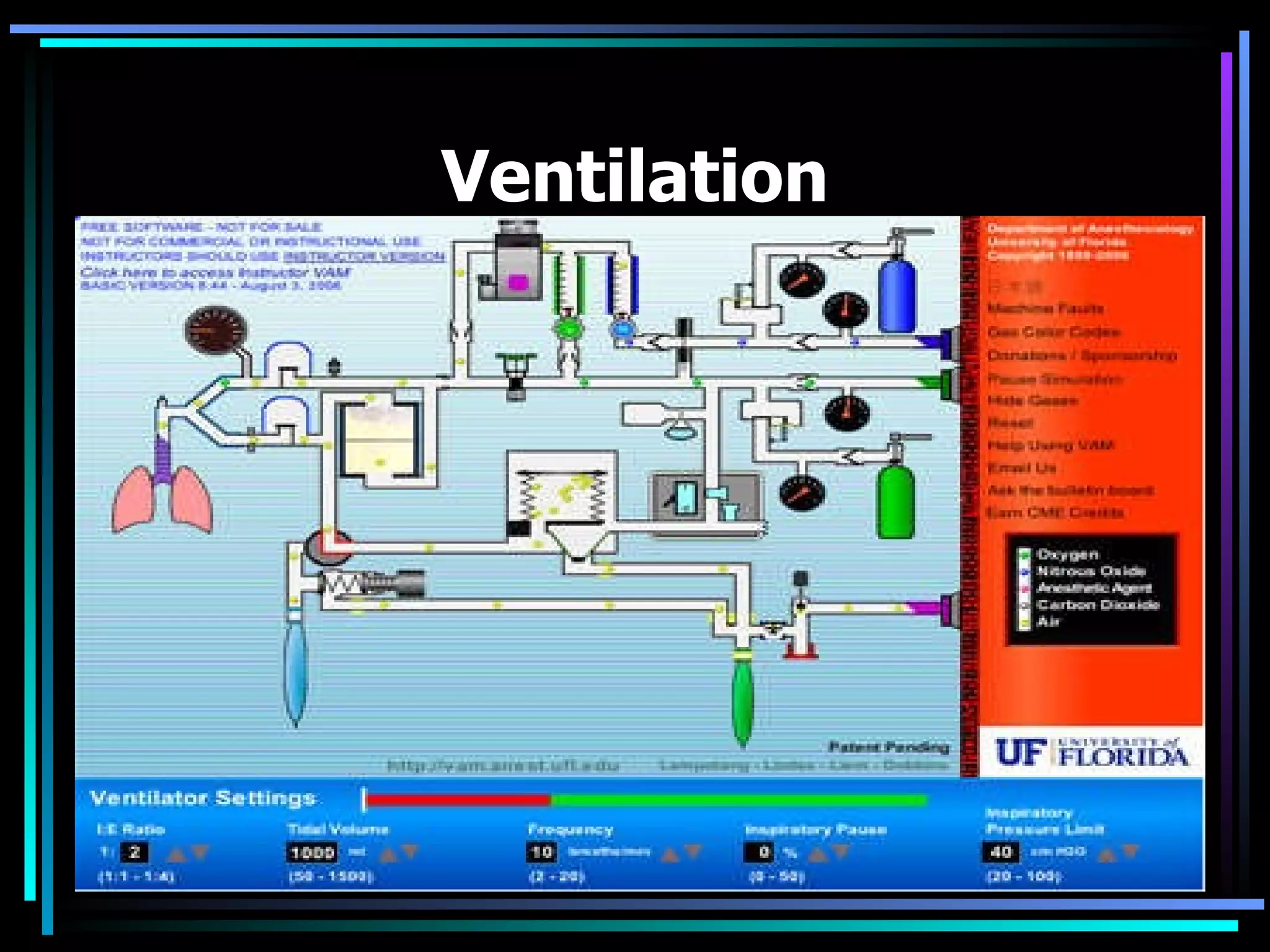
Ventilation
Ventilation 1. Spontaneous or assisted ventilation 2. Controlled ventilation Tidal volume: 10-12ml/kg Respiratory rate: 8-10 breaths/min 3. Assessment of ventilation Capnography Pulse oximeter Airway pressure Reservoir breathing bag Ventilator bellow
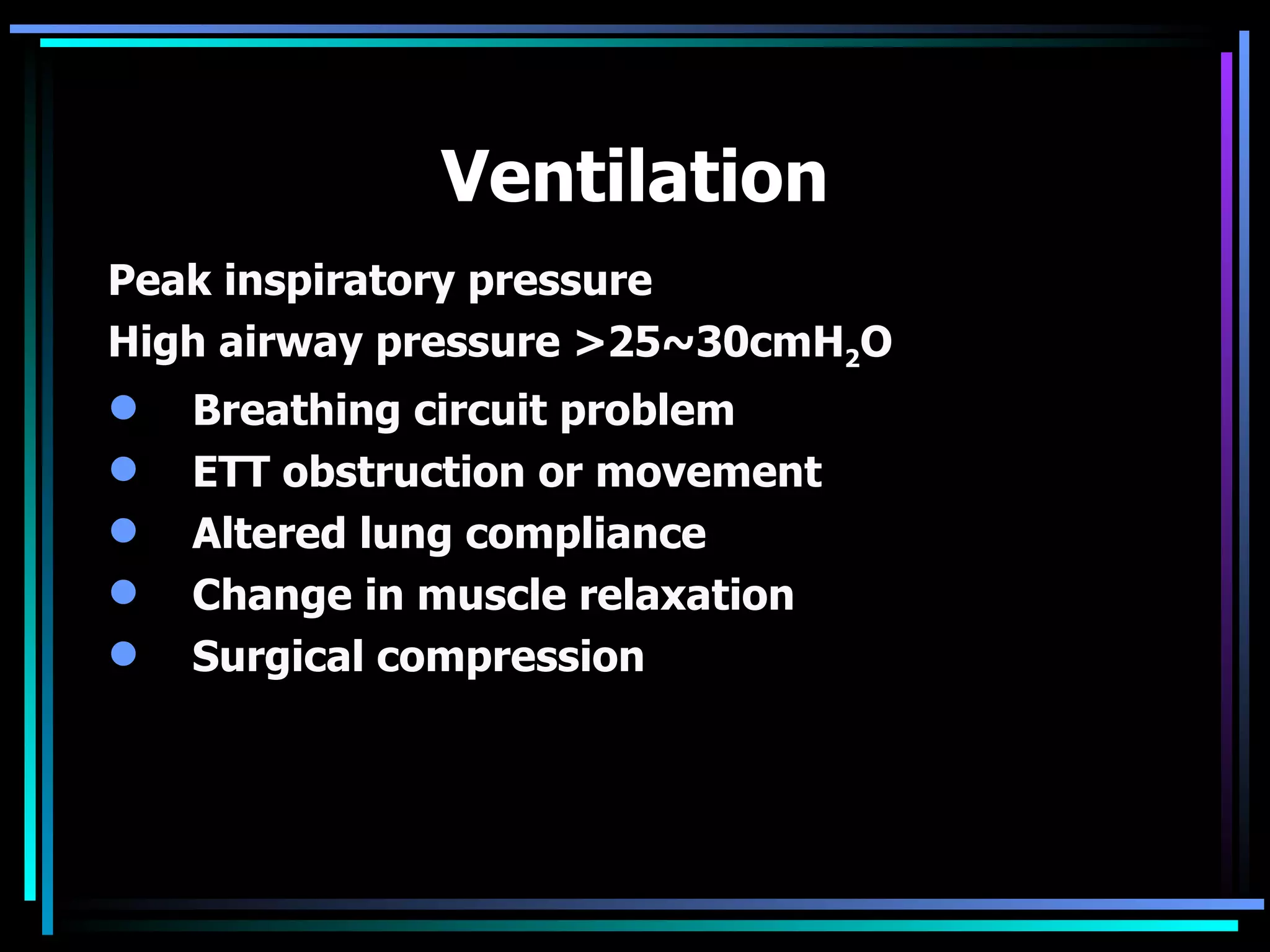
Ventilation Peak inspiratory pressure High airway pressure >25~30cmH 2 O Breathing circuit problem ETT obstruction or movement Altered lung compliance Change in muscle relaxation Surgical compression
IV Fluids Intraoperative IV fluids requirements 1. Maintenance fluid requirements 2. Third space losses and insensible losses 3. Blood losses
IV Fluids 1. Crystalloid sollutions: maintenance fluid requirement, evaporative losses, and third space losses 2. Colloid sollutions: replace blood loss or restore intravascular volume 3. Blood transfusion
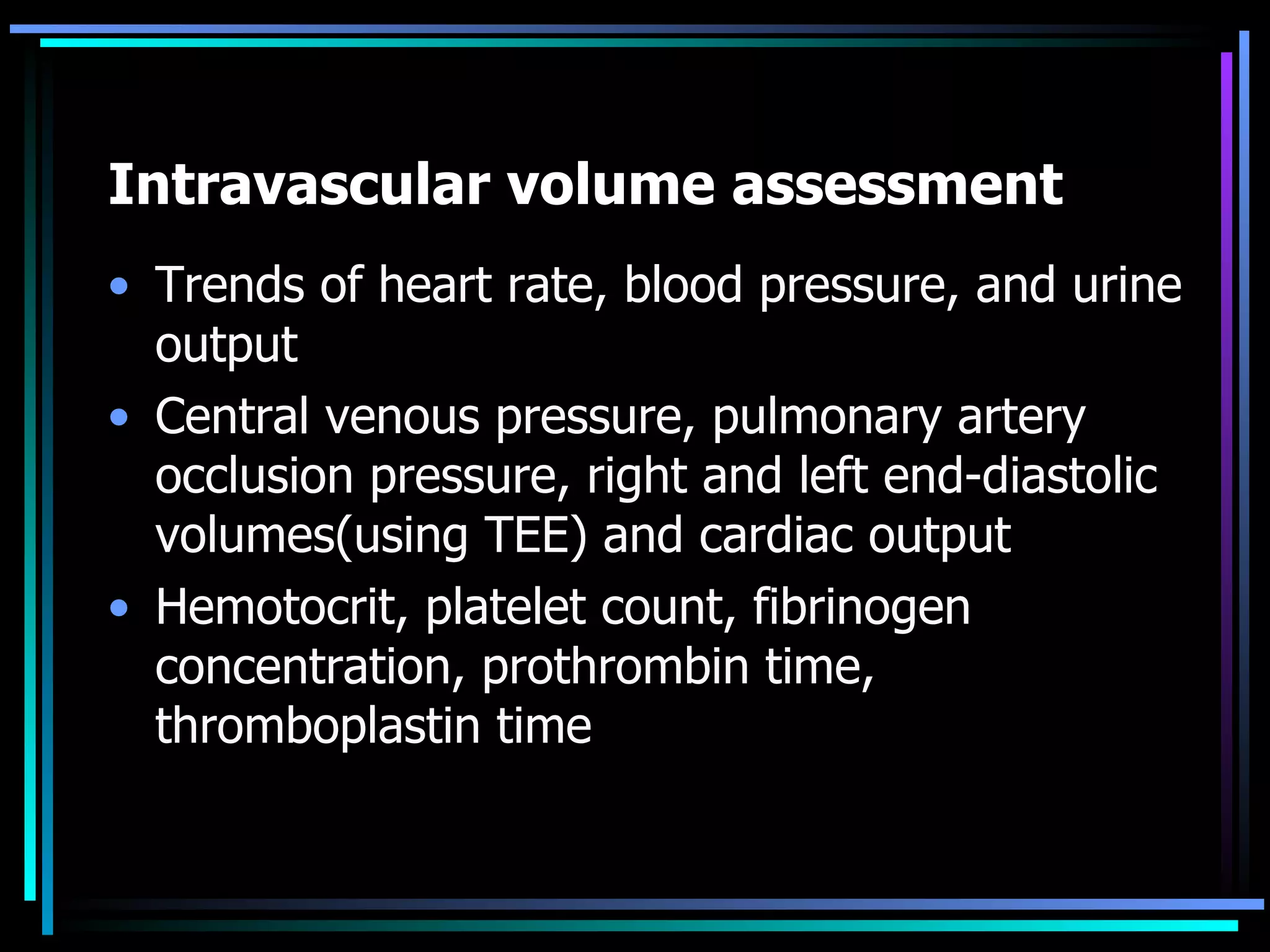
Intravascular volume assessment Trends of heart rate, blood pressure, and urine output Central venous pressure, pulmonary artery occlusion pressure, right and left end-diastolic volumes(using TEE) and cardiac output  Hemotocrit, platelet count, fibrinogen concentration, prothrombin time,  thromboplastin time
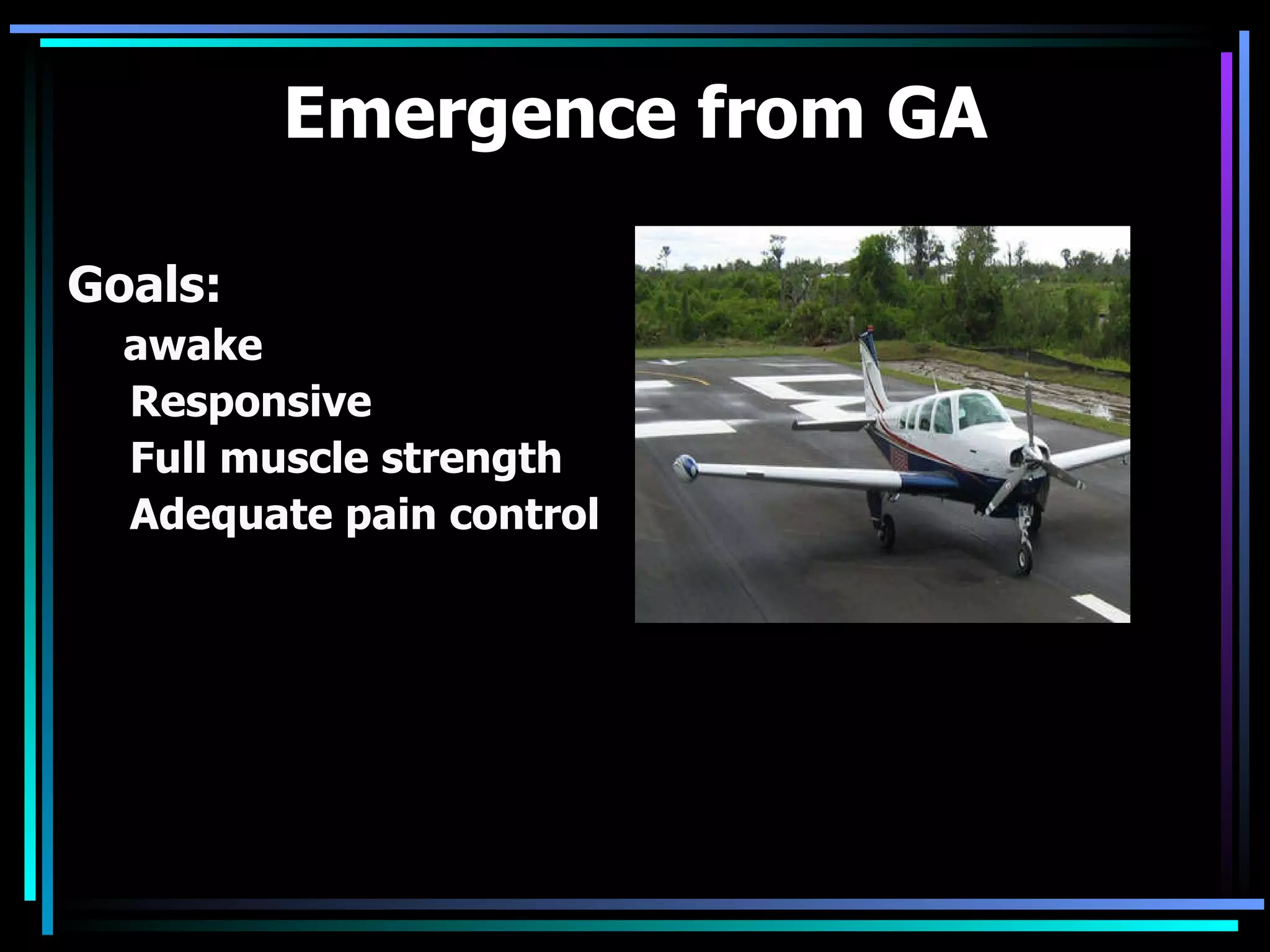
Emergence from GA Goals:   awake  Responsive  Full muscle strength  Adequate pain control
Extubation Awake extubation Indications Risk of aspiration Difficult airways Tracheal or maxillofacial surgery
Extubation Awake extubation Criteria Awake Hemodynamically stable Full muscle strength Able to follow simple verbal commands Breathing spontaneously with adequate ventilation
Extubation Awake extubation Special technique: removal of ETT over a flexible stylette Indication: patency of the airway is uncertain or reintubation may be difficult
Extubation Deep extubation Indications Severely asthmatic patients Middle-ear surgery Open-eye surgery Inguinal herniorrhaphy
Extubation Deep extubation Criteria Sufficient anesthetic depth to avoid response to airway stimulation Spontaneous breathing with adequate ventilation
Agitation Causes Pain Hypoxia Hypercarbia Airway obstruction Full bladder
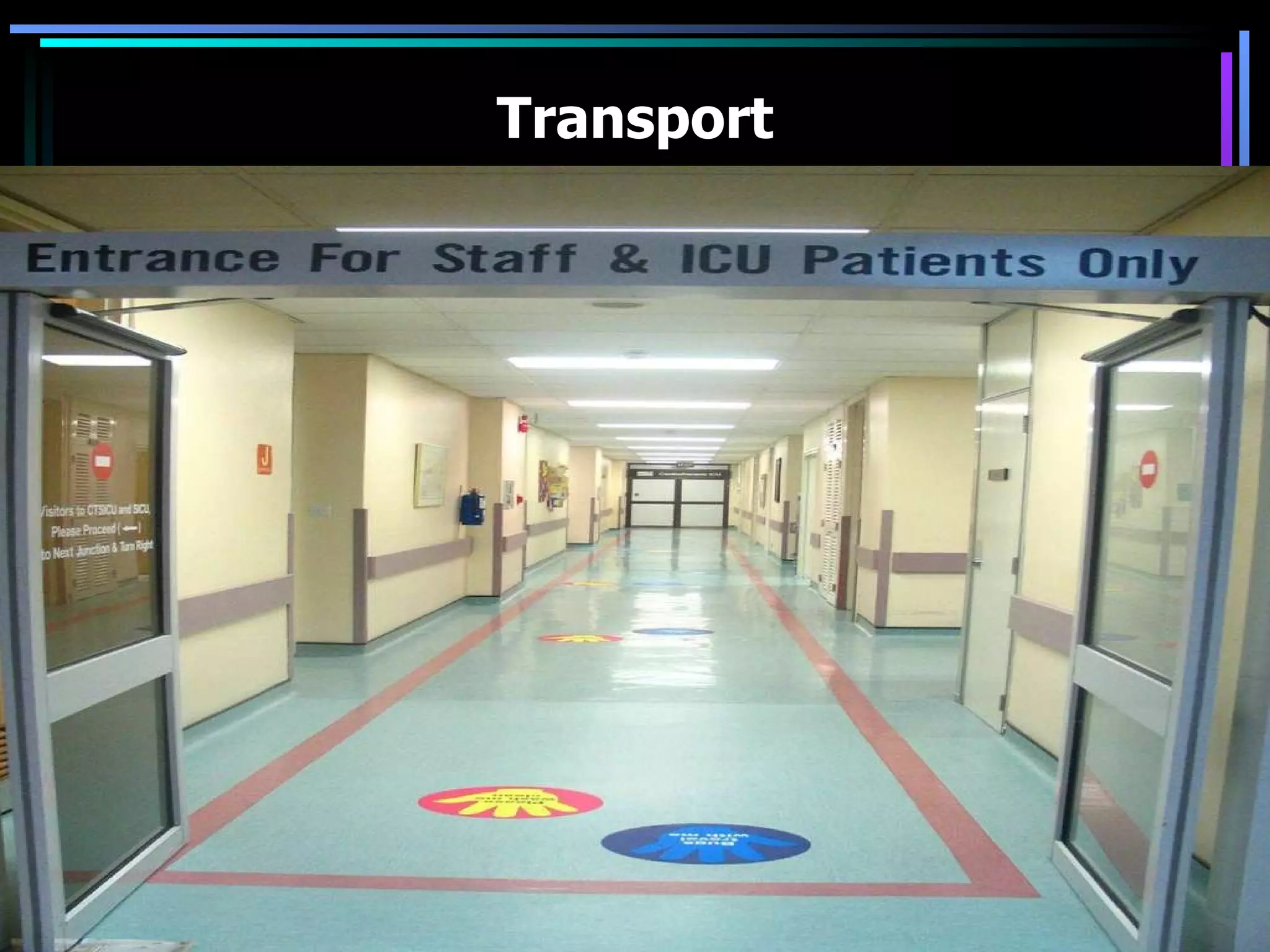
Transport
Questions

Administration of general anesthesia

  • 1.
    what do yousee in the picture? An anesthesia machine A beautiful and smart anesthetist
  • 2.
    Administration of GeneralAnesthesia Xiao Ying ( 肖颖 ) The First Affiliated Hospital of Sun Yat-sen University Mar 2010
  • 3.
    Overview What isgeneral anesthesia? Preoperative preparation Induction: going off to sleep Maintenance: keeping pt asleep Emergence: waking up Transport
  • 4.
    What is generalanesthesia Primary goals Safety is top priority Amnesia: no memory of the event Hypnosis: unconcious Analgesia: free of pain Block certain autonomic reflexes Optimal surgical conditions: immobolity
  • 5.
    What is generalanesthesia Secondary goals Medical condition Surgical procedures Surgical settings
  • 6.
    Examples for secondarygoals Patients with CAD: Oxygen supply-demand balance Neurosugery: ICP control, brain relaxation and CPP maintenance Obstetrics: anesthetics and fetal depression, difficult airway Day surgery vs Inpatient: which kind of analgesic you should choose to minimize postoperative pain and decrease PONV?
  • 7.
    Preoperative preparation Preoperativeevaluations Airway examination Interim changes in pt’s condition Medications Laboratory data Consultant notes Last oral intake
  • 8.
    Preoperative preparation Intravascularvolume Dehydration: adequately hydrate the pt before induction Intravenous access Preoperative medications Anxiety Benzodiazepine: Midazolam Opioid: Morphine or Fentanyl Neutralize gastric acid and decrease gastric volume
  • 9.
    Which kind ofpt is at increased risk of aspiration of gastric content? Recent meal Trauma Bowel obstruction Pregnancy History of gastric surgery Increased intra-abdominal pressure History of active reflux
  • 10.
    Monitoring Standard monitoringfor GA ECG NBP Pulse oximetry Capnography Oxygen analyzer
  • 11.
  • 12.
    Induction Let thept go off to sleep Preoxygenation 8L~10L/min IV or Inhalational induction Airway management
  • 13.
    Induction techniques Intravenous:the most common method Inhalation: for special pt (pt with difficult airway, pediatric pt) Intramuscular :rarely used,only used in uncooperative pts and young children
  • 14.
    Airway management ASAClosed Claims Study( 美国麻醉学会已结案的诉讼) 35 % of claims are RESPIRATORY events 90 % resulted in brain damage or death 90% resulted from Difficulty in INTUBATION or EXTUBATION
  • 15.
    Airway management Airwaypatency is critically important
  • 16.
  • 17.
  • 18.
  • 19.
  • 20.
  • 21.
    Maintenance Increasing depth of anesthesia stage Ⅰ Amnesia Loss of consciousness Stage Ⅱ Delirium Injurious responses to noxious stimuli Stage Ⅲ Surgical anesthesia Painful stimulation does not elicit somatic reflexes or deleterious autonomic responses Stage Ⅳ Overdosage Circulatory failure
  • 22.
    Maintenance Maintainhomeotasis Vital signs Acid-base balance Temperature Coagulation Volume status
  • 23.
    Maintenance Lackof awareness and no memory of the event Incidence of awareness High risk surgical population High risk pt High risk anesthesia method
  • 24.
    How to avoidawareness To recognize the high risk pt Monitor the depth of anesthesia Somatic and autonomic response are nonspecific and unreliable Bis monitor for high risk pt
  • 25.
    Depth of anesthesia Intensity of surgical stimulation Response suggesting inadequate anesthetic depth: Somatic: movement, coughing, changes of respiratory pattern Autonomic: tachycardia, hypertension, mydriasis, sweating, tearing Unreliable and nonspecific Sympathetic activation may be caused by other reasons
  • 26.
    Maintenance methods Volatile (Isoflurane, Desflurane or sevoflurane combined with nitrous oxide) Nitrous oxide-opioid relaxant technique IV anesthesia Combinations General anesthesia combined with regional anesthesia
  • 27.
  • 28.
    Ventilation 1. Spontaneousor assisted ventilation 2. Controlled ventilation Tidal volume: 10-12ml/kg Respiratory rate: 8-10 breaths/min 3. Assessment of ventilation Capnography Pulse oximeter Airway pressure Reservoir breathing bag Ventilator bellow
  • 29.
    Ventilation Peak inspiratorypressure High airway pressure >25~30cmH 2 O Breathing circuit problem ETT obstruction or movement Altered lung compliance Change in muscle relaxation Surgical compression
  • 30.
    IV Fluids IntraoperativeIV fluids requirements 1. Maintenance fluid requirements 2. Third space losses and insensible losses 3. Blood losses
  • 31.
    IV Fluids 1.Crystalloid sollutions: maintenance fluid requirement, evaporative losses, and third space losses 2. Colloid sollutions: replace blood loss or restore intravascular volume 3. Blood transfusion
  • 32.
    Intravascular volume assessmentTrends of heart rate, blood pressure, and urine output Central venous pressure, pulmonary artery occlusion pressure, right and left end-diastolic volumes(using TEE) and cardiac output Hemotocrit, platelet count, fibrinogen concentration, prothrombin time, thromboplastin time
  • 33.
    Emergence from GAGoals: awake Responsive Full muscle strength Adequate pain control
  • 34.
    Extubation Awake extubationIndications Risk of aspiration Difficult airways Tracheal or maxillofacial surgery
  • 35.
    Extubation Awake extubationCriteria Awake Hemodynamically stable Full muscle strength Able to follow simple verbal commands Breathing spontaneously with adequate ventilation
  • 36.
    Extubation Awake extubationSpecial technique: removal of ETT over a flexible stylette Indication: patency of the airway is uncertain or reintubation may be difficult
  • 37.
    Extubation Deep extubationIndications Severely asthmatic patients Middle-ear surgery Open-eye surgery Inguinal herniorrhaphy
  • 38.
    Extubation Deep extubationCriteria Sufficient anesthetic depth to avoid response to airway stimulation Spontaneous breathing with adequate ventilation
  • 39.
    Agitation Causes PainHypoxia Hypercarbia Airway obstruction Full bladder
  • 40.
  • 41.