Types of Anaesthesia

Prof. med. Nabil H. Mohyeddin
  Anesthesiologist & Intensivist
           Board certified
     University Rostock, Germany
       nhm1955@hotmail.com
Objectives
   Short History
   Definition/types of anaesthesia
   General anaesthesia/drugs
   Phases of GA
   Regional anaesthesia
Early history
   Ancient/Medieval period
-   Opium
-   Alcohol
-   Cannabis
History
   1845- Horace Wells- N2O
   1846- William Morton- Ether
   1847- Simpson- Chloroform
   1853-John Snow
   1878- ETT
   1884- Cocaine
   1895-98- Spinal analgesia/anaesthesia
History
   1921- Epidurals
   1934- Thiopentone, cyclopropane
   1942- Curare
   1946- Lignocaine
   1951- Suxamethonium
   1952- IPPV
   1956-Halothane
Definition
 ‘Loss of sensation’
 General

 Regional

 Local
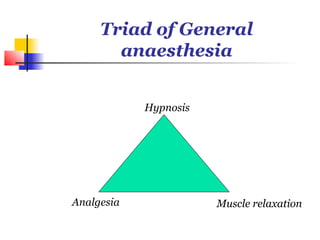
Triad of General
       anaesthesia


            Hypnosis


Analgesia              Muscle relaxation
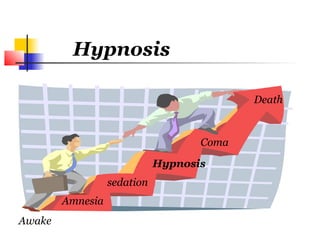
Hypnosis

                                           Death


                                    Coma
                             Hypnosis
                  sedation
        Amnesia
Awake
Hypnotic drugs-intravenous
 Gold standard- thiopentone
 Propofol

  others
 Etomidate

 Benzodiazepines

 Ketamine
Inhalational anaesthetics
   Nitrous oxide-weak
   Isoflurane
   Sevoflurane
   Desflurane
   Halothane
Analgesia
   Good analgesia= good anaesthesia
   Hypnotic sparing effect
   Opiates
   Local anaesthetics
   NSAIDS
   Paracetamol
Analgesia-Opiates
   Gold standard – morphine
   Derivatives- diamorphine, codeine
   Synthetic agents
-   Pethidine
-   Fentanyl/Alfentanil-short acting
-   Remifentanil-ultra short acting
Analgesia-NSAIDS
   Gold standard- aspirin
   Ibuprofen
   Diclofenac
   Cox-2 inhibitors
Muscle relaxation
   Aids intubation
   Helps surgeon/surgery
   Surgery of long duration
   Reduces maintenance dose of
    anaesthetics agents
Muscle relaxants
   Two types
   Depolarising-short acting
    eg;suxmethonium
   Non-depolarising- medium/long acting
-   Tracurium
-   Vecuronium
-   Rocuronium
Prerequisites
   Oxygen
   Suction
   Tilting trolley
   Resuscitation drugs
   Monitoring
   Anaesthetist
   Skilled assistance
   Drugs and machine
Phases of
       general anaesthesia
   Induction
   Maintenance
   Recovery
Induction
   Intravenous- majority
   Inhalational- children, needle phobics
   Monitoring
   Preoxygenation
   Hypnotic/analgesic and or relaxant
   Mask/LMA/ET tube
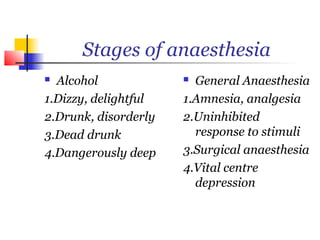
Stages of anaesthesia
 Alcohol              General Anaesthesia
1.Dizzy, delightful   1.Amnesia, analgesia
2.Drunk, disorderly   2.Uninhibited
3.Dead drunk            response to stimuli
4.Dangerously deep    3.Surgical anaesthesia
                      4.Vital centre
                        depression
Maintenance
   Intravenous or inhalational
   Oxygen –40%-100%
   Nitrous oxide
   Muscle relaxant
   Analgesia
Recovery
   Turn off agent
   Reverse relaxation
   Cough reflex
   Extubate when awake
   Recovery position
   Monitor until discharge
Advantages
   No absolute contraindications
   Quick to establish
   Never fails to work
Disadvantages
   Polypharmacy
   Effects on various systems
   Allergic reactions
   Recovery profile
   Post operative Nausia &Vomiting
   Awareness
Regional anaesthesia
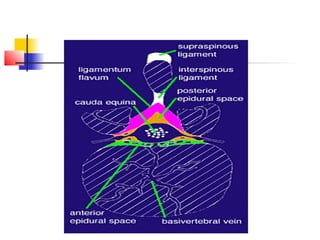
   Spinal/epidural
-   surgery below umbilicus
-   Provides analgesia/muscle relaxation
   Plexus blocks eg brachial plexus
   Intravenous- Bier’s block
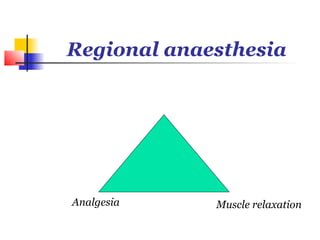
Regional anaesthesia


Analgesia    Muscle relaxation
Local anaesthetics
   Lignocaine- quick/short acting
   Bupivacaine/levobupicvacaine- slow
    and long action
   Ropivacaine- as above
   Amethocaine- topical
   Prilocaine- intravenous
Advantages
   Effective alternative to GA
   Avoids polypharmacy
   Allergic reactions
   Extended analgesia
   Patient can remain awake
   Early drink/feed
Disadvantages
   Limited scope
   Higher failure rate
   Time constraints
   Anticoagulants/Bleeding diathesis
   Risk of neural injury
Types of anesthesia

Types of anesthesia

  • 1.
    Types of Anaesthesia Prof.med. Nabil H. Mohyeddin Anesthesiologist & Intensivist Board certified University Rostock, Germany nhm1955@hotmail.com
  • 2.
    Objectives  Short History  Definition/types of anaesthesia  General anaesthesia/drugs  Phases of GA  Regional anaesthesia
  • 3.
    Early history  Ancient/Medieval period - Opium - Alcohol - Cannabis
  • 4.
    History  1845- Horace Wells- N2O  1846- William Morton- Ether  1847- Simpson- Chloroform  1853-John Snow  1878- ETT  1884- Cocaine  1895-98- Spinal analgesia/anaesthesia
  • 5.
    History  1921- Epidurals  1934- Thiopentone, cyclopropane  1942- Curare  1946- Lignocaine  1951- Suxamethonium  1952- IPPV  1956-Halothane
  • 6.
    Definition ‘Loss ofsensation’  General  Regional  Local
  • 7.
    Triad of General anaesthesia Hypnosis Analgesia Muscle relaxation
  • 8.
    Hypnosis Death Coma Hypnosis sedation Amnesia Awake
  • 9.
    Hypnotic drugs-intravenous  Goldstandard- thiopentone  Propofol others  Etomidate  Benzodiazepines  Ketamine
  • 10.
    Inhalational anaesthetics  Nitrous oxide-weak  Isoflurane  Sevoflurane  Desflurane  Halothane
  • 11.
    Analgesia  Good analgesia= good anaesthesia  Hypnotic sparing effect  Opiates  Local anaesthetics  NSAIDS  Paracetamol
  • 12.
    Analgesia-Opiates  Gold standard – morphine  Derivatives- diamorphine, codeine  Synthetic agents - Pethidine - Fentanyl/Alfentanil-short acting - Remifentanil-ultra short acting
  • 13.
    Analgesia-NSAIDS  Gold standard- aspirin  Ibuprofen  Diclofenac  Cox-2 inhibitors
  • 14.
    Muscle relaxation  Aids intubation  Helps surgeon/surgery  Surgery of long duration  Reduces maintenance dose of anaesthetics agents
  • 15.
    Muscle relaxants  Two types  Depolarising-short acting eg;suxmethonium  Non-depolarising- medium/long acting - Tracurium - Vecuronium - Rocuronium
  • 16.
    Prerequisites  Oxygen  Suction  Tilting trolley  Resuscitation drugs  Monitoring  Anaesthetist  Skilled assistance  Drugs and machine
  • 17.
    Phases of general anaesthesia  Induction  Maintenance  Recovery
  • 18.
    Induction  Intravenous- majority  Inhalational- children, needle phobics  Monitoring  Preoxygenation  Hypnotic/analgesic and or relaxant  Mask/LMA/ET tube
  • 19.
    Stages of anaesthesia Alcohol  General Anaesthesia 1.Dizzy, delightful 1.Amnesia, analgesia 2.Drunk, disorderly 2.Uninhibited 3.Dead drunk response to stimuli 4.Dangerously deep 3.Surgical anaesthesia 4.Vital centre depression
  • 20.
    Maintenance  Intravenous or inhalational  Oxygen –40%-100%  Nitrous oxide  Muscle relaxant  Analgesia
  • 21.
    Recovery  Turn off agent  Reverse relaxation  Cough reflex  Extubate when awake  Recovery position  Monitor until discharge
  • 22.
    Advantages  No absolute contraindications  Quick to establish  Never fails to work
  • 23.
    Disadvantages  Polypharmacy  Effects on various systems  Allergic reactions  Recovery profile  Post operative Nausia &Vomiting  Awareness
  • 24.
    Regional anaesthesia  Spinal/epidural - surgery below umbilicus - Provides analgesia/muscle relaxation  Plexus blocks eg brachial plexus  Intravenous- Bier’s block
  • 26.
  • 27.
    Local anaesthetics  Lignocaine- quick/short acting  Bupivacaine/levobupicvacaine- slow and long action  Ropivacaine- as above  Amethocaine- topical  Prilocaine- intravenous
  • 28.
    Advantages  Effective alternative to GA  Avoids polypharmacy  Allergic reactions  Extended analgesia  Patient can remain awake  Early drink/feed
  • 29.
    Disadvantages  Limited scope  Higher failure rate  Time constraints  Anticoagulants/Bleeding diathesis  Risk of neural injury