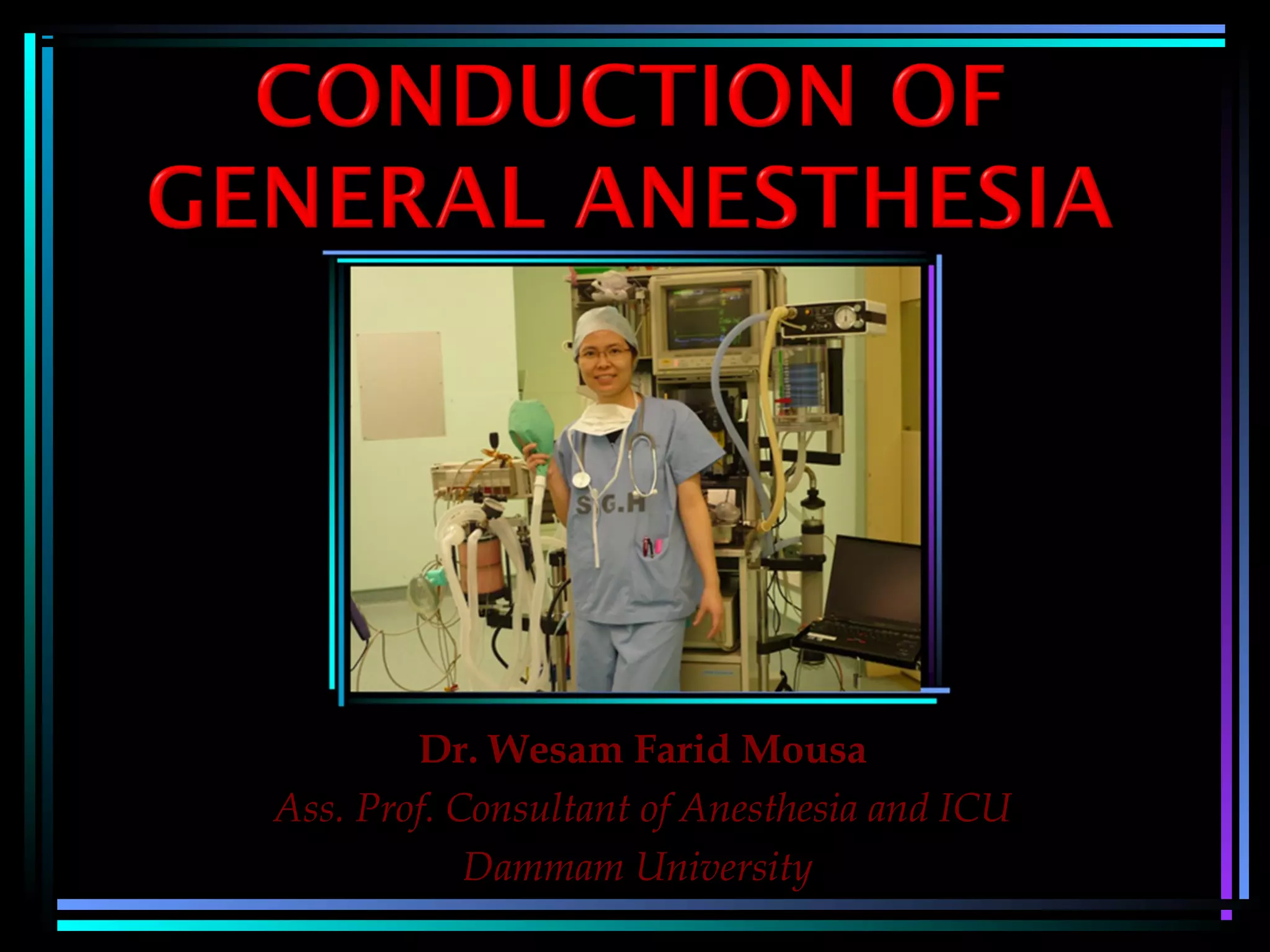

Dr. Wesam Farid Mousa
Ass. Prof. Consultant of Anesthesia and ICU
Dammam University
Overview
• What is general anesthesia?
• Preoperative preparation
• Induction: Deparutre
• Maintenance: Flying
• Emergence: Landing
• Transport
What is general anesthesia
• Primary goals
Amnesia
Hypnosis
Analgesia
Immobolity
• Secondary goals
Medical condition
Surgical procedures
Surgical settings
Examples for secondary goals
• Patients with CAD: Oxygen supply-demand
balance
• Neurosugery: ICP control, brain relaxation
and CPP maintenance
• Obstetrics: anesthetics and fetal depression,
difficult airway
• Day surgery vs Inpatient: which kind of
analgesic you should choose to minimize
postoperative pain and decrease PONV?
Preoperative preparation
• Preoperative evaluations for:
Airway examination
Pt’s medical condition
Medications
Laboratory data
Consultant notes
Last oral intake
• Preoperative hydration and correction of intravascular
volume as needed:
Intravenous access
Fluid or blood transfusion as needed
• Prescribe preoperative medications as needed:
e.g. Anxiety: Benzodiazepine: Midazolam
Pain: Opioid or NSAI
Increased gastric acidity: cimetidine, omeprazole
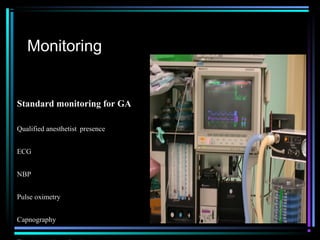
Monitoring
Standard monitoring for GA
Qualified anesthetist presence
ECG
NBP
Pulse oximetry
Capnography
Induction
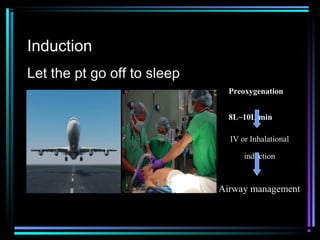
Let the pt go off to sleep
Preoxygenation
8L~10L/min
IV or Inhalational
induction
Airway management
Induction techniques
• Intravenous: the most common method
• Inhalation: for special pt (as pt with
difficult airway, pediatric pt)
• Intramuscular :rarely used, only used in
uncooperative pts and young children
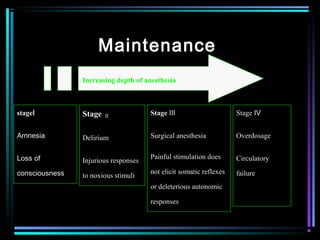
Maintenance
Increasing depth of anesthesia
stageⅠ
Amnesia
Loss of
consciousness
Stage Ⅱ
Delirium
Injurious responses
to noxious stimuli
Stage Ⅲ
Surgical anesthesia
Painful stimulation does
not elicit somatic reflexes
or deleterious autonomic
responses
Stage Ⅳ
Overdosage
Circulatory
failure
Maintenance Anethesia
• Volatile
• Nitrous oxide-opioid relaxant technique
• IV anesthesia
• Combinations
• Maintain homeotasis
Vital signs
Acid-base balance
Temperature
Coagulation
Volume status
Maintain Ventilation
1. Spontaneous or assisted ventilation
2. Controlled ventilation
Tidal volume: 10-12ml/kg
Respiratory rate: 8-10 breaths/min
Maintain Intravascular Volume
 1. fluids
Crystalloid sollutions:
Colloid sollutions:
 2. Blood & blood products
Emergence from GA
Extubation
• Awake extubation
Indications
Risk of aspiration
Difficult airways
Tracheal or maxillofacial surgery
• Awake extubation
Criteria
 Awake
 Hemodynamically stable
 Full muscle strength
 Able to follow simple verbal
commands
 Breathing spontaneously with
adequate ventilation
• Deep extubation
Indications
Severely asthmatic patients
Middle-ear surgery
Open-eye surgery
Inguinal herniorrhaphy
• Deep extubation
Criteria
Sufficient anaesthetic depth to
avoid response to airway
stimulation
Spontaneous breathing with
adequate ventilation
Goals to be met before discharge from
recovery:
awake
Responsive
Full muscle strength
Adequate pain control
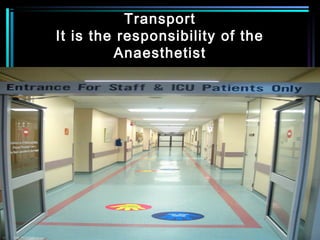
Transport
It is the responsibility of the
Anaesthetist
Questions

Conduction of general anesthesia

  • 1.
    Dr. Wesam FaridMousa Ass. Prof. Consultant of Anesthesia and ICU Dammam University
  • 2.
    Overview • What isgeneral anesthesia? • Preoperative preparation • Induction: Deparutre • Maintenance: Flying • Emergence: Landing • Transport
  • 3.
    What is generalanesthesia • Primary goals Amnesia Hypnosis Analgesia Immobolity
  • 4.
    • Secondary goals Medicalcondition Surgical procedures Surgical settings
  • 5.
    Examples for secondarygoals • Patients with CAD: Oxygen supply-demand balance • Neurosugery: ICP control, brain relaxation and CPP maintenance • Obstetrics: anesthetics and fetal depression, difficult airway • Day surgery vs Inpatient: which kind of analgesic you should choose to minimize postoperative pain and decrease PONV?
  • 6.
    Preoperative preparation • Preoperativeevaluations for: Airway examination Pt’s medical condition Medications Laboratory data Consultant notes Last oral intake
  • 7.
    • Preoperative hydrationand correction of intravascular volume as needed: Intravenous access Fluid or blood transfusion as needed • Prescribe preoperative medications as needed: e.g. Anxiety: Benzodiazepine: Midazolam Pain: Opioid or NSAI Increased gastric acidity: cimetidine, omeprazole
  • 8.
    Monitoring Standard monitoring forGA Qualified anesthetist presence ECG NBP Pulse oximetry Capnography
  • 10.
    Induction Let the ptgo off to sleep Preoxygenation 8L~10L/min IV or Inhalational induction Airway management
  • 11.
    Induction techniques • Intravenous:the most common method • Inhalation: for special pt (as pt with difficult airway, pediatric pt) • Intramuscular :rarely used, only used in uncooperative pts and young children
  • 12.
    Maintenance Increasing depth ofanesthesia stageⅠ Amnesia Loss of consciousness Stage Ⅱ Delirium Injurious responses to noxious stimuli Stage Ⅲ Surgical anesthesia Painful stimulation does not elicit somatic reflexes or deleterious autonomic responses Stage Ⅳ Overdosage Circulatory failure
  • 13.
    Maintenance Anethesia • Volatile •Nitrous oxide-opioid relaxant technique • IV anesthesia • Combinations
  • 14.
    • Maintain homeotasis Vitalsigns Acid-base balance Temperature Coagulation Volume status
  • 15.
    Maintain Ventilation 1. Spontaneousor assisted ventilation 2. Controlled ventilation Tidal volume: 10-12ml/kg Respiratory rate: 8-10 breaths/min
  • 16.
    Maintain Intravascular Volume 1. fluids Crystalloid sollutions: Colloid sollutions:  2. Blood & blood products
  • 17.
  • 18.
    Extubation • Awake extubation Indications Riskof aspiration Difficult airways Tracheal or maxillofacial surgery
  • 19.
    • Awake extubation Criteria Awake  Hemodynamically stable  Full muscle strength  Able to follow simple verbal commands  Breathing spontaneously with adequate ventilation
  • 20.
    • Deep extubation Indications Severelyasthmatic patients Middle-ear surgery Open-eye surgery Inguinal herniorrhaphy
  • 21.
    • Deep extubation Criteria Sufficientanaesthetic depth to avoid response to airway stimulation Spontaneous breathing with adequate ventilation
  • 22.
    Goals to bemet before discharge from recovery: awake Responsive Full muscle strength Adequate pain control
  • 23.
    Transport It is theresponsibility of the Anaesthetist
  • 24.