
Active Learning
g
Definition
‘anything that involves students in doing things
and
thinking about the things they are doing’
(Bonwell & Eison, 1991, p. 2)
Definition
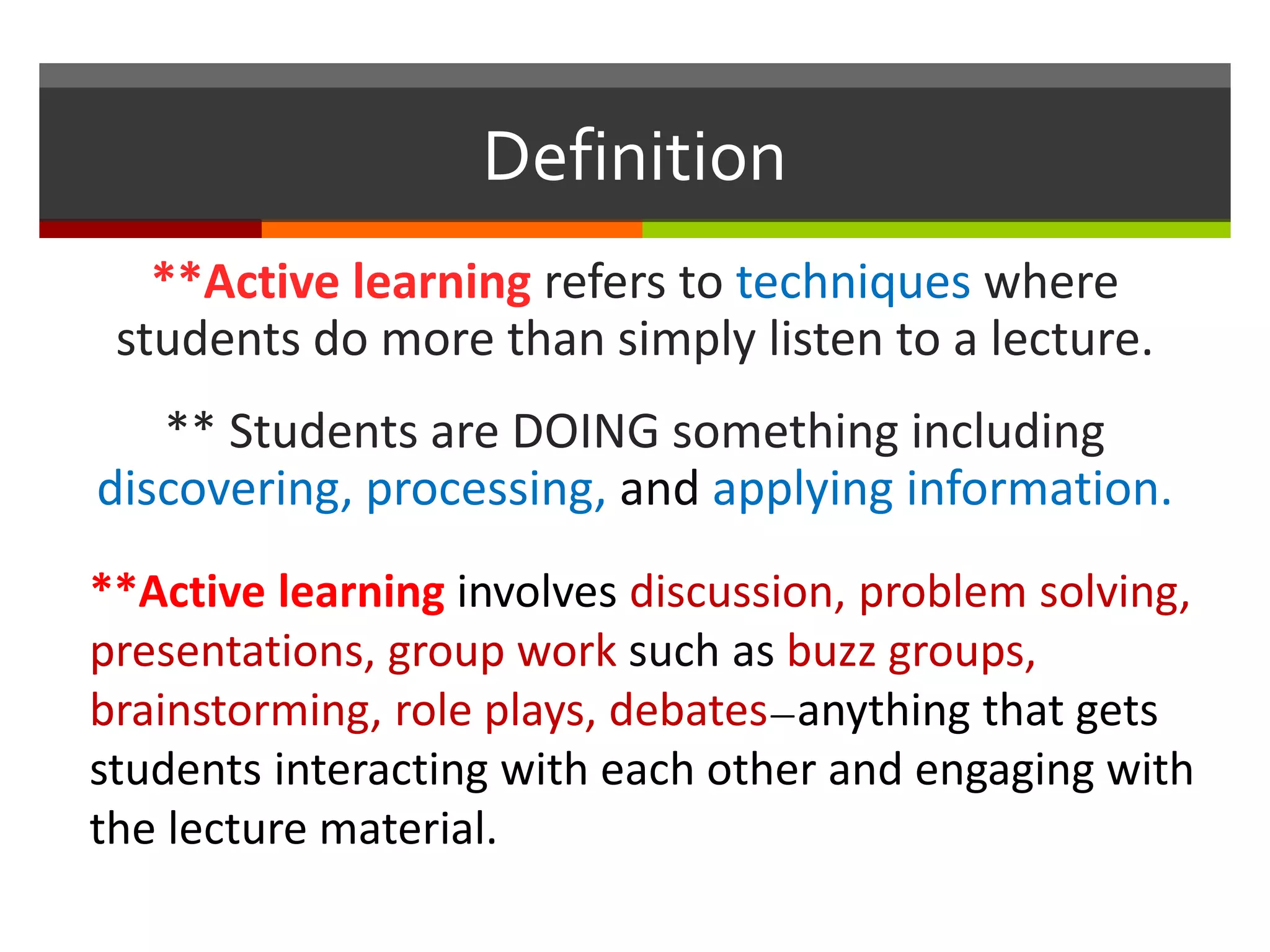
**Active learning refers to techniques where
students do more than simply listen to a lecture.
** Students are DOING something including
discovering, processing, and applying information.
**Active learning involves discussion, problem solving,
presentations, group work such as buzz groups,
brainstorming, role plays, debates—anything that gets
students interacting with each other and engaging with
the lecture material.
Assumptions
 _Active learning is derived from two basic
assumptions:
 (1) that learning is by nature an active
endeavor.
 (2) that different people learn in different
ways.
Some Goals of Active Learning
 Develop communicative skills
 Develop collaboration skills
 Encourage students to take responsibility for their own
learning.
 Practice creating shared meaning.
 *Think-Pair-Share.
 *Collaborative learning groups.
 *Games.
 *Analysis or reactions to videos.
 *Student debates.
 *Student generated exam questions.
 * Mini-research projects ; a class
research.
Some Examples of Active Learning
Methods
*Write and produce a newsletter.
*Concept mapping*
What does active learning look like?
Simple ways to
make a lecture more
‘active’
Using cases or
problems in lecture
Flipped classroom
(lecture)
Team-based
learning
(small groups)
Pausing lecture –
students discuss
what was presented
Pausing lecture;
polling students;
students discuss
answers; faculty-led
tutorial on correct
answer
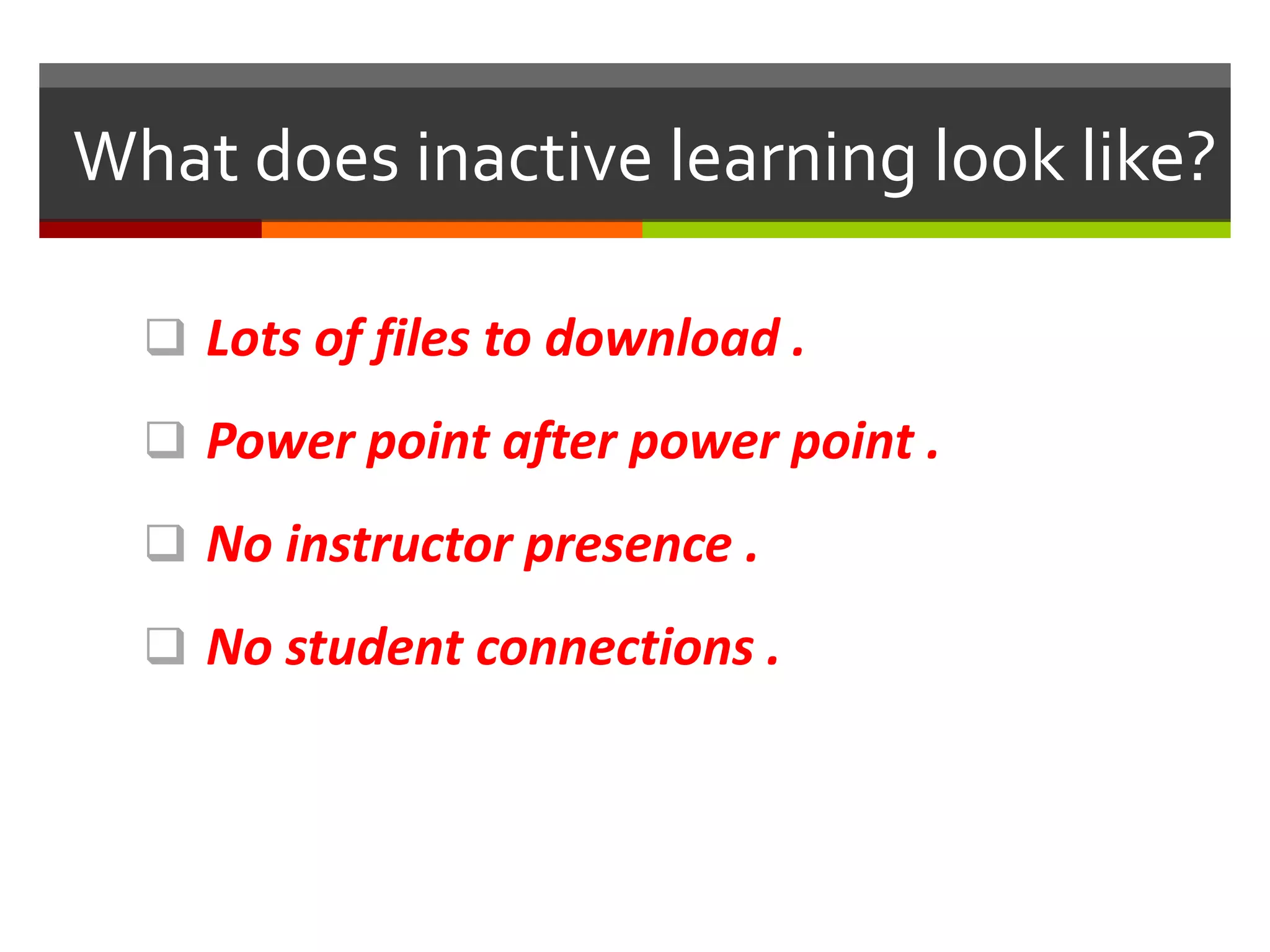
What does inactive learning look like?
 Lots of files to download .
 Power point after power point .
 No instructor presence .
 No student connections .
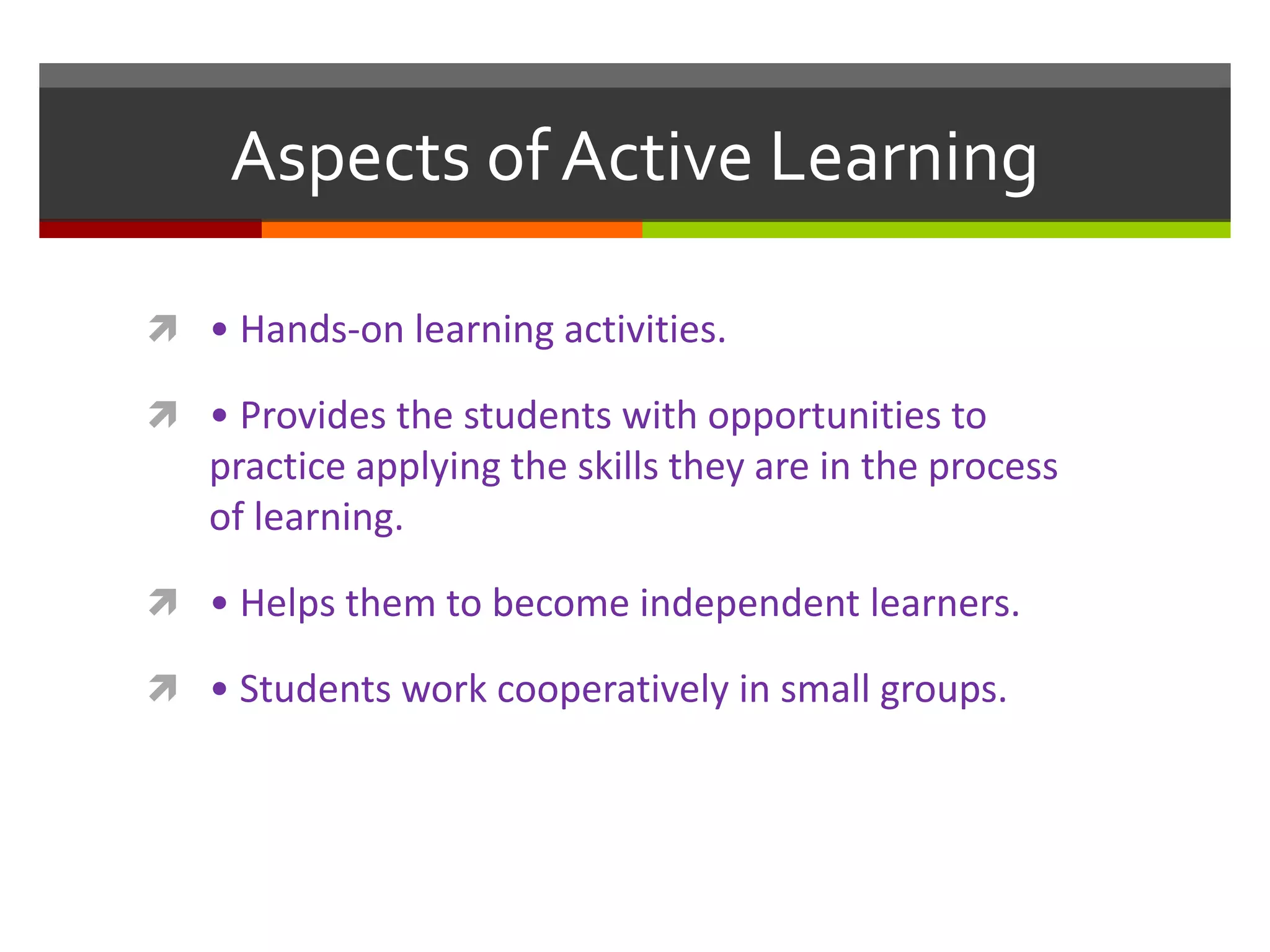
Aspects of Active Learning
 • Hands-on learning activities.
 • Provides the students with opportunities to
practice applying the skills they are in the process
of learning.
 • Helps them to become independent learners.
 • Students work cooperatively in small groups.
How Effective is Active Learning
• It is one of the most effective teaching approaches in
education.
• It increases the effectiveness and efficiency of the
teaching and learning process.
• Active learning strategies involve collaboration with
peers, and provides a secure environment for
growth and exploration of ideas.
(talking and listening, writing, reading, and reflecting.)
 **Active learning takes time to:
 Design → prepare → implement (apply) → evaluate.
 May need support from educators, academic technology team.
“Students are involved in more than listening, less emphasis is placed
on transmitting information and more on developing students' skills,
students are involved in higher-order thinking (analysis, synthesis,
evaluation), students are engaged in activities (e.g., reading
discussing, writing), and greater emphasis is placed on students'
exploration of their own attitudes and values.”
Elements of Active Learning
How to be successful
 Pick a topic you have taught many times before
 Anticipate student questions, areas of difficulty
 Prepare learners for the ‘new’ format
 Safety net: answer keys or ‘lists’; timers
 Add feedback questions on evaluation so you
know where to improve
 Ensure support from administration1
1Bonwell & Eison, 1991
Questions ?!
BY/ Bossy Hamdy .
Eman Gomaa.

Active learning

  • 1.
  • 2.
    Definition ‘anything that involvesstudents in doing things and thinking about the things they are doing’ (Bonwell & Eison, 1991, p. 2)
  • 3.
    Definition **Active learning refersto techniques where students do more than simply listen to a lecture. ** Students are DOING something including discovering, processing, and applying information. **Active learning involves discussion, problem solving, presentations, group work such as buzz groups, brainstorming, role plays, debates—anything that gets students interacting with each other and engaging with the lecture material.
  • 4.
    Assumptions  _Active learningis derived from two basic assumptions:  (1) that learning is by nature an active endeavor.  (2) that different people learn in different ways.
  • 5.
    Some Goals ofActive Learning  Develop communicative skills  Develop collaboration skills  Encourage students to take responsibility for their own learning.  Practice creating shared meaning.
  • 6.
     *Think-Pair-Share.  *Collaborativelearning groups.  *Games.  *Analysis or reactions to videos.  *Student debates.  *Student generated exam questions.  * Mini-research projects ; a class research. Some Examples of Active Learning Methods *Write and produce a newsletter. *Concept mapping*
  • 8.
    What does activelearning look like? Simple ways to make a lecture more ‘active’ Using cases or problems in lecture Flipped classroom (lecture) Team-based learning (small groups) Pausing lecture – students discuss what was presented Pausing lecture; polling students; students discuss answers; faculty-led tutorial on correct answer
  • 9.
    What does inactivelearning look like?  Lots of files to download .  Power point after power point .  No instructor presence .  No student connections .
  • 10.
    Aspects of ActiveLearning  • Hands-on learning activities.  • Provides the students with opportunities to practice applying the skills they are in the process of learning.  • Helps them to become independent learners.  • Students work cooperatively in small groups.
  • 11.
    How Effective isActive Learning • It is one of the most effective teaching approaches in education. • It increases the effectiveness and efficiency of the teaching and learning process. • Active learning strategies involve collaboration with peers, and provides a secure environment for growth and exploration of ideas.
  • 12.
    (talking and listening,writing, reading, and reflecting.)  **Active learning takes time to:  Design → prepare → implement (apply) → evaluate.  May need support from educators, academic technology team. “Students are involved in more than listening, less emphasis is placed on transmitting information and more on developing students' skills, students are involved in higher-order thinking (analysis, synthesis, evaluation), students are engaged in activities (e.g., reading discussing, writing), and greater emphasis is placed on students' exploration of their own attitudes and values.” Elements of Active Learning
  • 13.
    How to besuccessful  Pick a topic you have taught many times before  Anticipate student questions, areas of difficulty  Prepare learners for the ‘new’ format  Safety net: answer keys or ‘lists’; timers  Add feedback questions on evaluation so you know where to improve  Ensure support from administration1 1Bonwell & Eison, 1991
  • 14.
    Questions ?! BY/ BossyHamdy . Eman Gomaa.