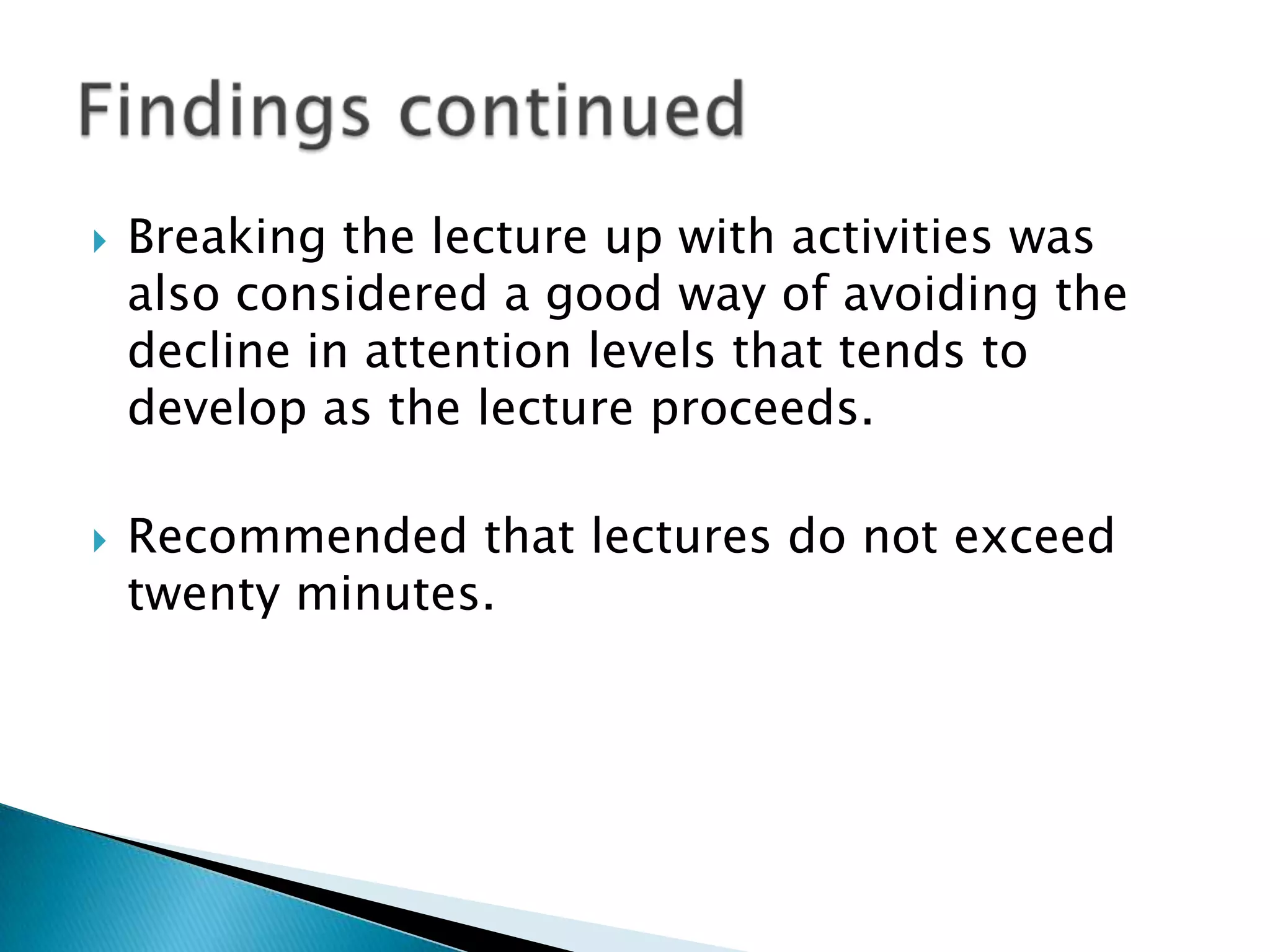
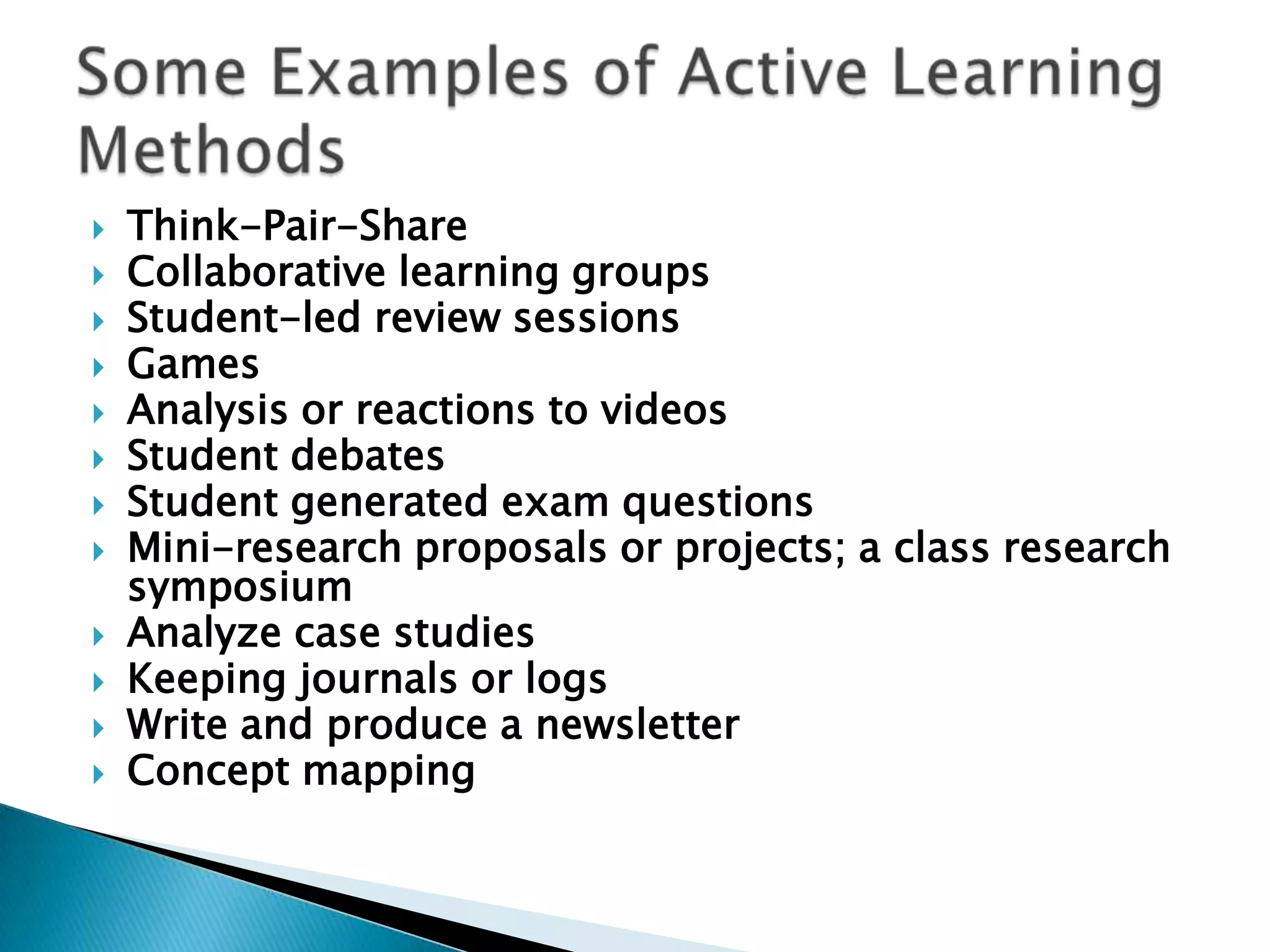
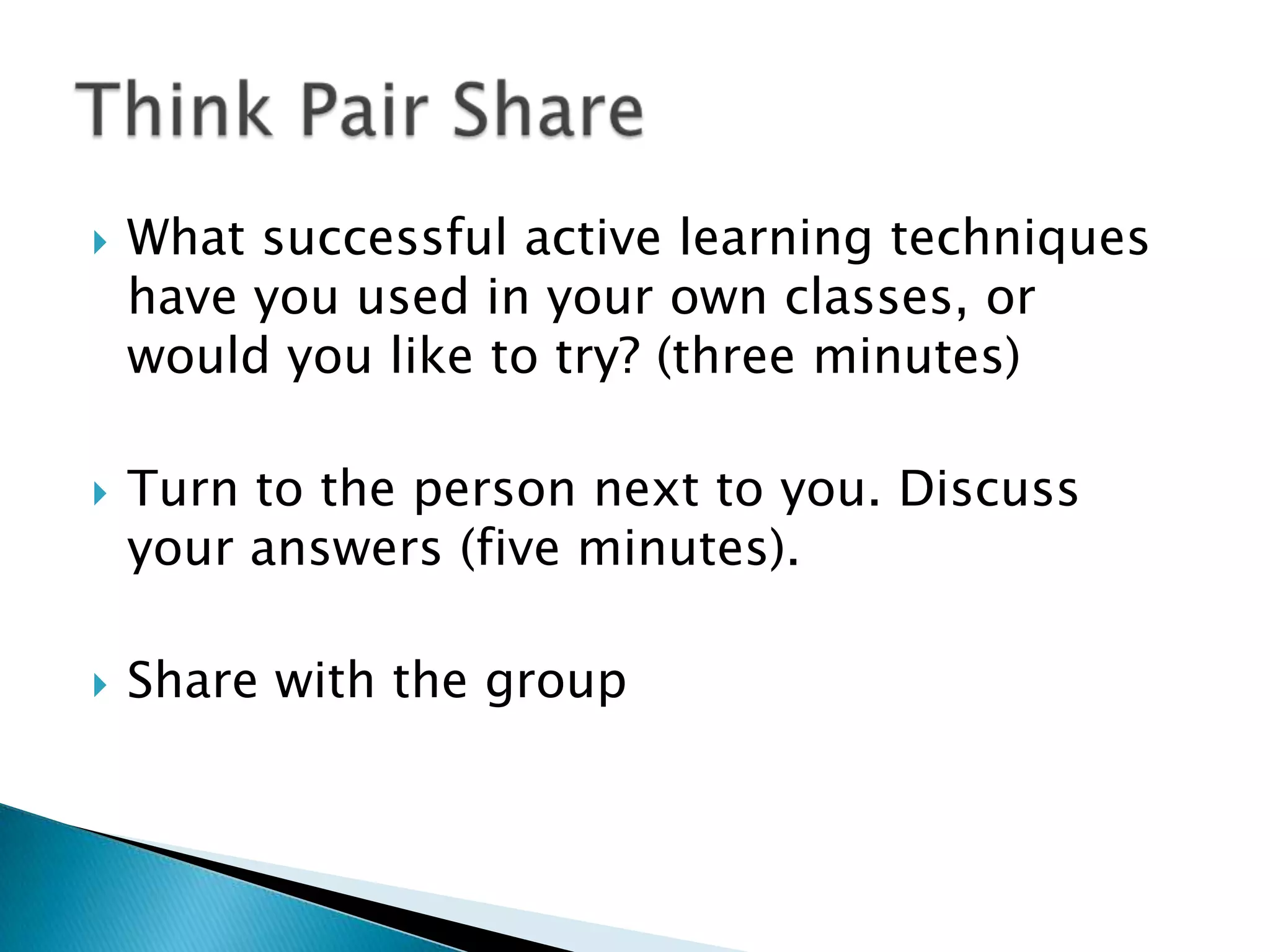
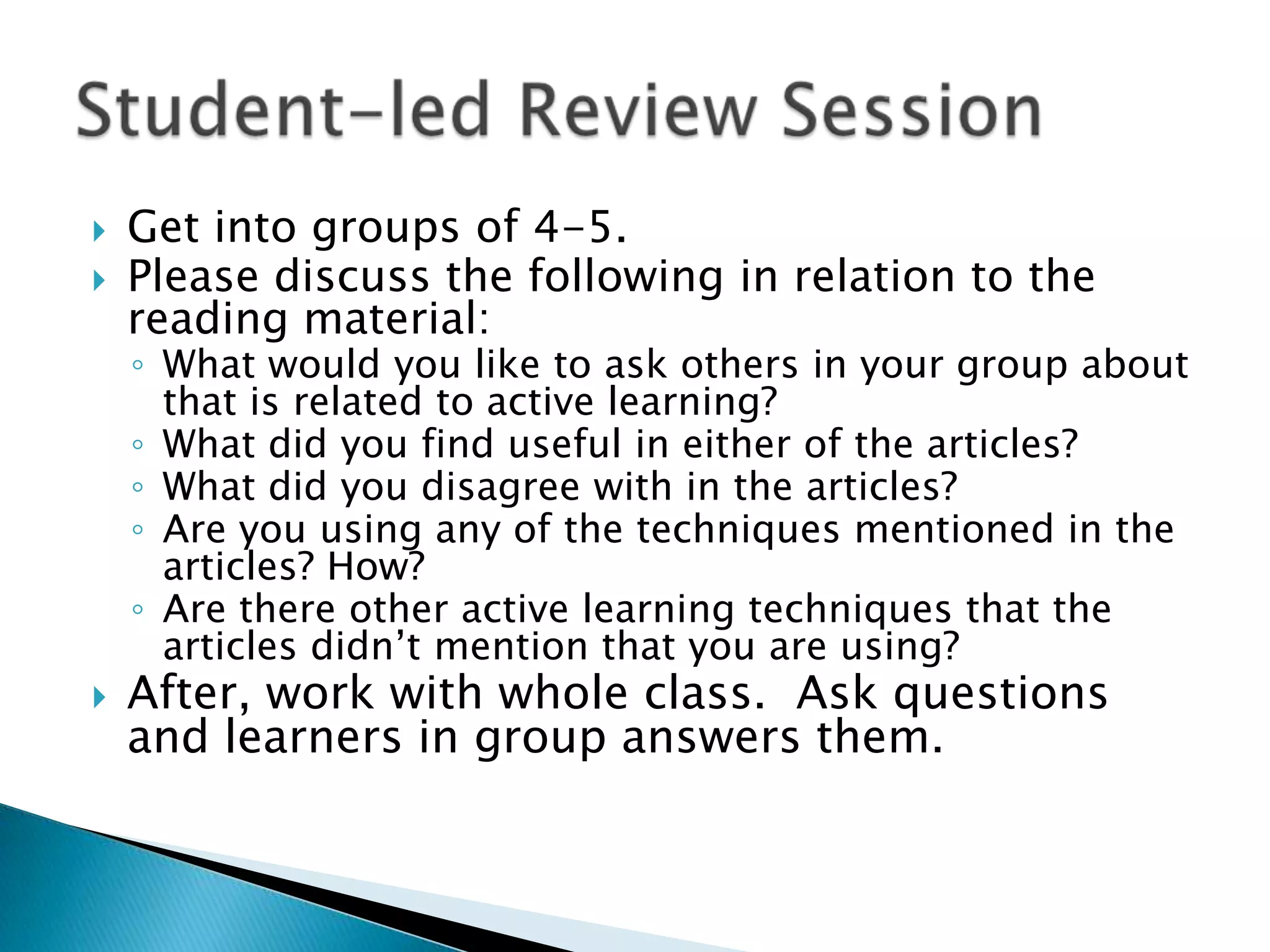
The document discusses active learning techniques that engage students in higher-order thinking. It defines active learning as involving students in activities like discussion, problem-solving, and group work that get them interacting with lecture material rather than passively listening. Active learning is based on the assumptions that learning is active and different people learn differently. Examples of active techniques provided include think-pair-share, debates, and analyzing case studies. The document recommends breaking up lectures with these activities to maintain attention and encourage deeper learning.